At a glance
- Global geopolitical shifts call for a new cartography of competitiveness. In a debate often characterized by vague calls for “cutting red tape” or “structural reforms,” this research makes the case for using productive investment as a proxy for competitiveness and charts a detailed line-by-line map of what investments happen where and why.
- Investment has stalled in Europe, shifted in the United States, and pulled away from the pack in China. This divergence poses different challenges in each region. Europe will need to close its €800 billion annual investment gap, while the challenge in the United States is to increase investment in manufacturing to mitigate risks linked to import dependencies. Meanwhile, China is adding three times more productive assets each year than Europe and the United States combined, but capital returns are roughly 40 percent lower.
- Levelized costs in Europe and the United States are generally at least 50 percent higher than in countries currently attracting the most investment. In manufacturing industries, the gap between advanced economies and China is about 50 percent, driven primarily by higher wages that aren’t matched by higher productivity. In R&D, the gap is closer to 300 percent, and time to market is an important driver. Energy and feedstock price differences further increase costs in Europe, especially in heavy industry. Policy choices factor in these costs, as implicit subsidies differ by as much as eight times between regions while exchange rate effects widen the gap further.
- Rebalancing investment would require a boost in productivity and innovation, specialization in less cost-sensitive industries, and policies to level the playing field. A “what-if” analysis suggests that a 30 percent productivity boost, a convergence of equipment, energy, and materials costs, and an adoption of “China speed” in advanced economies would close 30 to 80 percent of the cost gap. Achieving a new balance would thus also require specialization in future-shaping and other critical industries; a revival of innovation and differentiation in countries with higher costs; and a rethink of industrial policy to address distortions in competition.
A new cartography of competitiveness
In a fracturing world, competitiveness has risen to the top of the agenda. Yet the debate is often muddled. The concept itself is poorly defined—the World Bank’s competitiveness framework, for instance, identifies 1,200 contributing factors, and most economists prefer to focus on productivity, which avoids the fallacy of zero-sum thinking while highlighting what really drives prosperity.1 As global competition for investment, industrial capacity, and technology leadership intensifies, however, productive investment offers a practical way through: It serves as both a proxy for competitiveness and a gauge of productivity growth, warranting a central role in the debate.
Companies invest where they expect to be most successful, and when they feel confident that the framework conditions are in place to make an investment both possible and worthwhile. That makes investment a good measure of a country’s current competitiveness. The proof of the pudding is in the eating, as the saying goes, and proof of a country’s competitiveness is its ability to unlock domestic and attract global investment.
Investment also bolsters a country’s productivity, prosperity, and future competitiveness—as well as its resilience against geopolitical shocks—by expanding its production and innovation capacity. Previous MGI research has found, for example, that tangible investments, like infrastructure and machinery, and intangible investments, like R&D and software, together account for up to 80 percent of productivity growth.2 Economies with more productive capital per worker tend to be more productive because better equipment, systems, and technologies enable workers to create more value with their labor (Exhibit 1). Higher output in turn enables more investment to build and renew the productive capital base, creating a virtuous cycle.3
Investment drives prosperity, and vice versa.
12024 market exchange rates. Includes commercial and industrial buildings. 2024 data used for the US, China, Australia, and the UK; 2023 data used for Japan and South Korea; 2022 data used for EU-27 and all EU countries.

Advanced economies have long benefited from this virtuous cycle of rising investment and economic growth that supported their competitiveness. Over the past two decades, however, their investment engine has stalled. The slowdown is most pronounced in Europe, Japan, and South Korea, but, outside the AI-related investment boom, also is clearly visible in the United States.4
Recent geopolitical tensions have brought into sharp relief the lack of investment in industries that are now seen as strategic. This includes, for instance, energy infrastructure, semiconductor manufacturing, and, in Europe’s case, also defense industries, digital industries, and AI technology.5 Rising costs of capital and shifts from asset-light to asset-heavy business models add challenges, while the technological breakthroughs also create opportunities for a new investment revival.6
In chapter 1 of this report, we analyze the shifting patterns of global investments over recent decades and what that reveals about competitiveness. In chapter 2, we turn to the microeconomics behind this shift, dissecting the line-by-line calculations underpinning virtually all real-world investment decisions for ten industries, including solar and nuclear electricity generation, chemicals and steelmaking, and manufacturing sites for batteries, semiconductors, and pharmaceuticals as well as colocation data centers, R&D projects in automotive, and biotech. Our microscope on business cases, and in particular levelized cost, draws on McKinsey’s proprietary insights about decision-making in industries around the world and helps pinpoint what drives the divergence in investment between countries. In chapter 3, we explore what would be needed to restore investment competitiveness in regions and industries that are struggling to mobilize investment today at the level they are aiming for, bringing policy and business perspectives into full coherence.
Global investment trajectories have diverged
Investment is tightly linked to productivity and competitiveness. Gross investment, including in intangibles like R&D, measures how much capital an industry in a particular country or region is attracting, which is a good measure of current competitiveness. If investors are willing to bet money on the industry in that location, it means the industry is competing successfully for resources there. Net investment, which adjusts for the maintenance and depreciation of aging assets, indicates whether an economy is adding to its productive and innovative capacity, which is a good measure of the future trajectory of competitiveness (see sidebar “How we measure investment”).7 Even if not all investments pan out, how much is invested by firms in an industry in a particular country today is a good directional gauge of how much that country will innovate and produce in the future.
Investment has stalled in Europe, pivoted in the United States, and pulled away in China
How we measure investment
Throughout this report, we focus on nonresidential or “productive” investment by the private and public sectors (exhibit). Productive investment is fixed investment in tangible and intangible assets such as infrastructure, nonresidential structures such as offices and factories, machinery and equipment, and intellectual property products such as software, databases, and R&D.1 This is, of course, different from the concept of investment in finance, which concerns the purchase of equities, bonds, or other claims on the cash flow generated by the underlying real assets we consider here.
We examine productive investment in both gross and net terms. Gross investment is relevant as the most commonly reported metric, which measures how much capital investors are making available to an industry and so is a good measure of current competitiveness. Gross investment inevitably comes with newer capital, and newer capital is almost always more innovative. Moving from gross to net investment allows us to assess whether the investment is sufficient to replace worn-out capital and expand an economy’s productive capacity, a good measure of future trends in competitiveness and the most relevant metric for productivity and GDP growth.
The US example in the following exhibit illustrates the distinction. Total US gross fixed investment was about $6.3 trillion in 2024. Of this, about $1.2 trillion was residential, leaving roughly $5.1 trillion of gross productive investment. But not all of that $5.1 trillion expanded the country’s capital stock: About $4.0 trillion was used to replace worn-out or obsolete productive capital such as infrastructure, aging factories, and old technology. This left only about $1.0 trillion in net productive investment, the investment that adds new productive capacity to the economy. In other words, most US investment is used to maintain the existing capital base, while a much smaller share increases it.
While net investment is a useful measure, it is not perfect. Estimates of capital consumption depend on national accounting assumptions such as useful asset lives, which vary across countries and asset classes.
Our industry-level analyses are in gross terms, because capital consumption data is not reported consistently enough at the industry level across countries.
In this report, we focus on ‘productive’ investments.
Note: Figures may not sum precisely because of rounding.
1Total investment, or gross fixed capital formation (GFCF), measures spending on assets used in a production process for more than one year. It covers tangible assets such as machinery and buildings and intangible assets like software and R&D but excludes assets such as land and natural resources that are not the result of a production process.
2Replacement of worn-out-capital, or capital consumption (CC), is not reported by residential/non-residential in all countries. However, it is almost always available by sector. We therefore use the real estate sector as a proxy for residential dwellings.
The historic macroeconomic data in this report are drawn from OECD databases for advanced economies and from national statistical agencies, supplemented with data from S&P Global’s IHS Markit and Oxford Economics where official data are not available or are insufficiently granular. For example, S&P Global IHS Markit is used for China’s capital consumption and India’s investment figures, while Oxford Economics is used for the sectoral split of China’s investment data. Most historical data are available until 2023 or 2024. The analysis of recent investments in the United States and China, in 2025 and 2026, uses official national statistics. Most data are reported in constant 2024 dollars, converted using 2024 market exchange rates.
At market exchange rates, the United States is the world’s largest economy, followed by China and the EU-27.8 When it comes to investment, however, China is the biggest investor by any measure, followed by the United States. China’s gross investment of $5.9 trillion a year exceeds the $5.1 trillion invested in the United States, and at a rate equal to more than 30 percent of GDP, almost twice that of the United States (Exhibit 2). The European Union, in comparison, invests only $3.1 trillion, a function of lower investment rates and lower GDP alike (see sidebar “How we measure investment”).
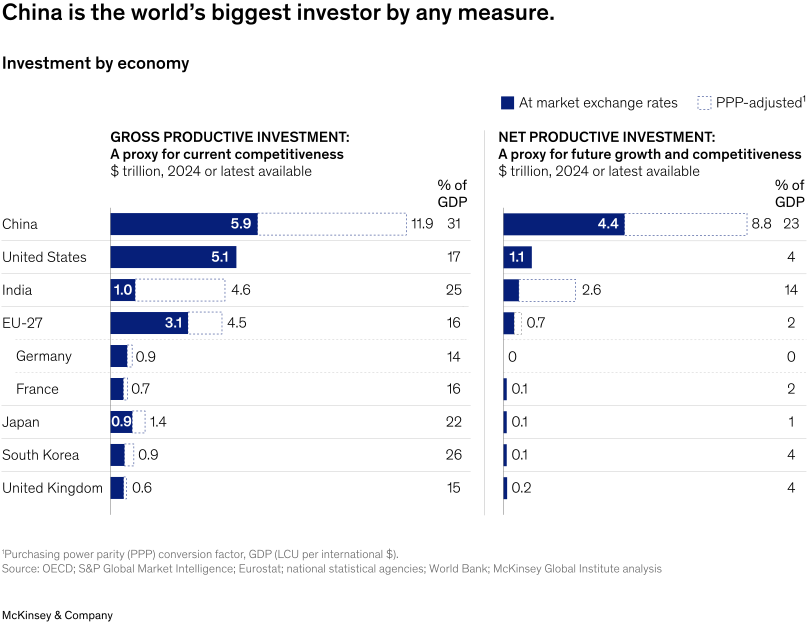
Accounting for local price differences would increase China’s lead further, because every dollar spent there translates into more cement poured or more researchers hired than in advanced economies. Using a typical purchasing power parity (PPP) index as a proxy, its gross productive investments of $5.9 trillion would convert to a whopping $11.9 trillion.9 Using the same approach, the cost gap between the EU-27 and the United States narrows by half because $3.1 trillion in investment in Europe at market exchange rates increases to $4.5 trillion in PPP-adjusted terms.
The difference between the three regions is yet more pronounced in net terms. A large share of Europe’s investment is required to replace aging and obsolete assets, pushing its productive investment rate from 16 percent of GDP in gross terms to just 2 percent in net terms, or about $400 billion of additions at market exchange rates. The US gross productive investment rate translates into net investments of $1 trillion, or about 4 percent of its GDP—more than twice as much as in Europe.
Since China is an emerging market with much less need to replace and maintain infrastructure and manufacturing equipment, the country’s net productive investment rate is 23 percent of GDP, roughly six times higher than the US rate. That amounts to net investments of about $4.4 trillion at market exchange rates, or $8.8 trillion in PPP-adjusted terms. Thus, China adds between three and five times as much to its productive capital stock each year as the United States and Europe combined.10
Some difference in investment rates is to be expected, since China, like other emerging economies such as India, is still building the infrastructure, manufacturing capacity, and intangible capital that underpin urbanization and productivity growth. China’s average productive capital stock per worker remains far below that of advanced economies, at roughly $80,000 compared with about $340,000 in the United States and $150,000 in Europe. Even so, the scale and persistence of China’s net investment remain exceptional.11 Moreover, averages are irrelevant when it comes to individual factories, which are state-of-the-art regardless of where they are built. Similarly, China’s macroeconomic catch-up journey is of little consolation to, say, Western producers of solar panels or electric cars, given the rapid rise of new competitors investing and operating at a vast scale. The rapid growth in Chinese investment thus affects everyone.
This disparity has emerged over the past three decades. In 1995, net productive investments were roughly equivalent in the three regions. Since then, having wrestled with the fallout of the global financial crisis, the Eurozone sovereign debt crisis, the COVID-19 pandemic, and different fiscal and monetary responses to these and other events, Europe has decreased its investments, the United States has stalled in the aggregate, and China has pulled away (Exhibit 3).
Regional investment patterns have diverged over the past three decades.
1Converted at 2024 market exchange rate.
China: Staggering investment pace bolstered growth, but with diminishing returns
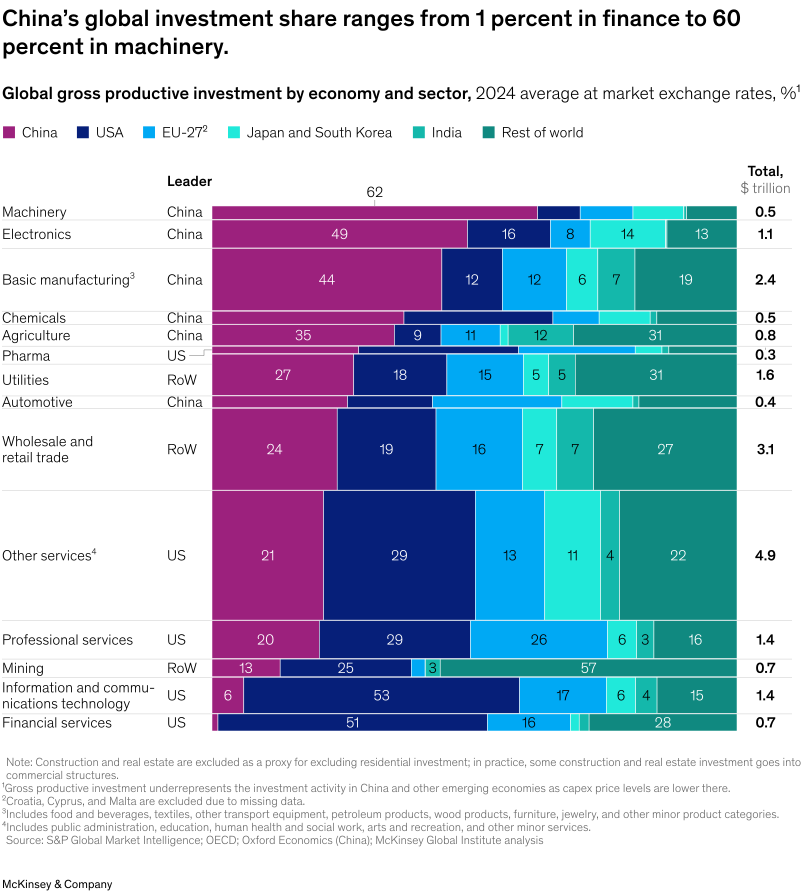
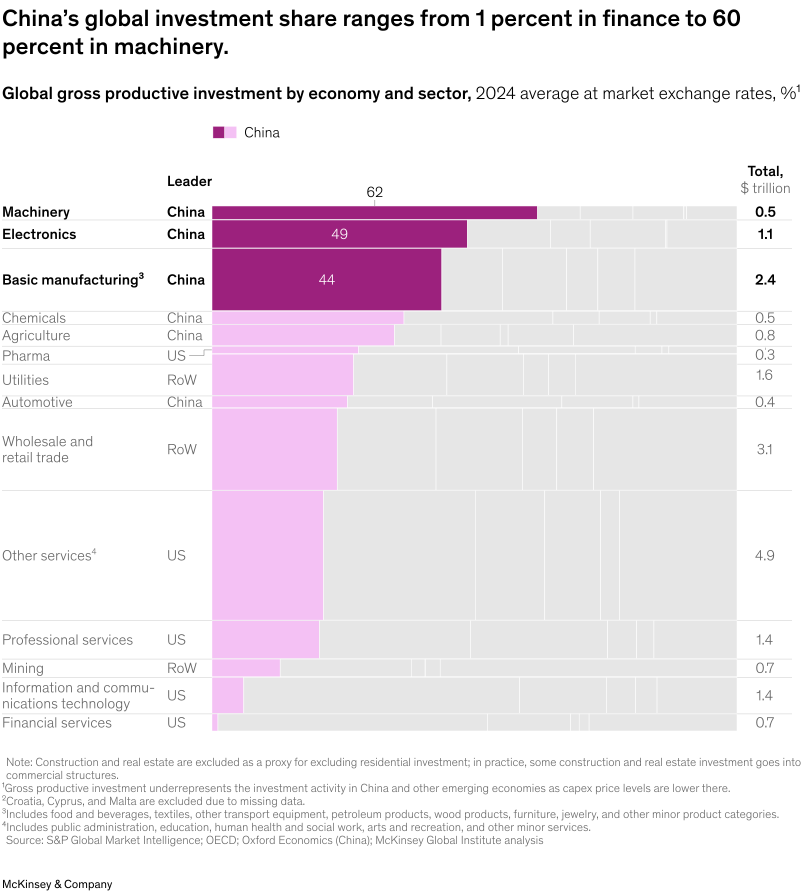
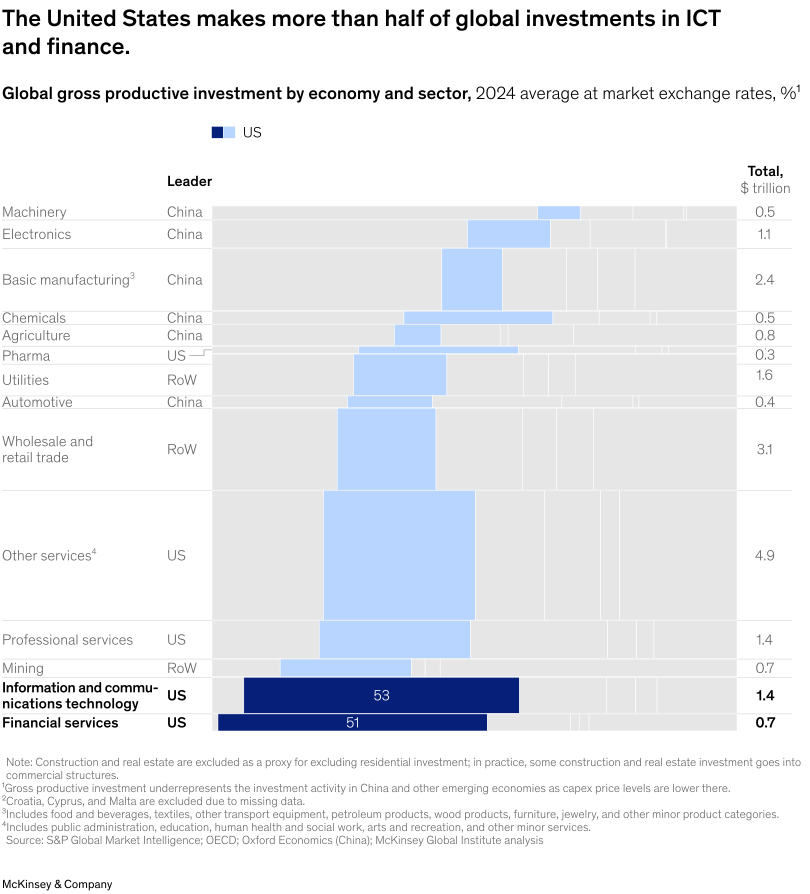
China’s investment boom has bolstered its role in the global economy and is likely to expand it further. Across industries, China constitutes just under a fifth of global gross value added (GVA)—but more than a quarter of global productive investment. Roughly 63 cents of every dollar invested in the global machinery sector ends up in China.12 In electronics industries such as batteries and semiconductors, China attracted 53 percent of all investment in 2024, while in basic manufacturing industries like steel, it won 41 percent (Exhibit 4).13 Most of these investments are funded not by the global market but by the internally generated savings pool.
The majority of investment in manufacturing sectors goes into China, and it is now attracting a sizeable share of investment in most other sectors as well.
The United States attracts more than half of all global investment in ICT and financial services, a reflection of its competitiveness in those industries.
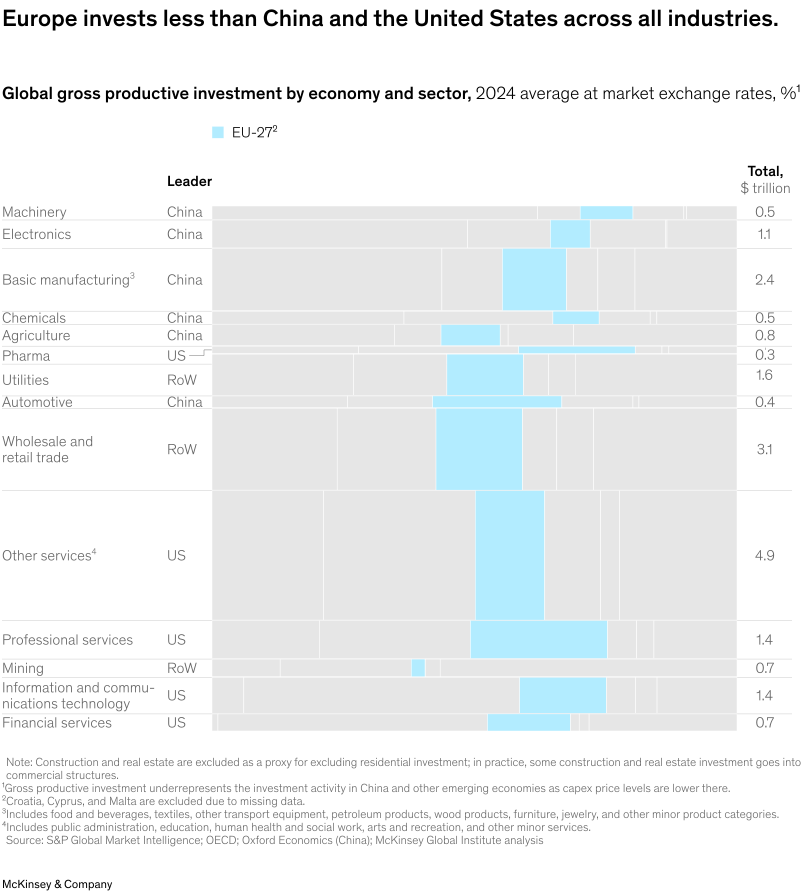
Despite its manufacturing prowess, the EU-27 today receives investment in its manufacturing sector roughly equivalent to similar investment in the United States. Europe still attracts a large share of investment in automotive and professional services but was surpassed recently as the lead investor in these sectors, by China in automotive and the United States in professional services.
However, China’s exceptional investment boom also has a downside: When capital accumulates faster than demand, low capital productivity and low returns result. Compared to the size of its economy, China now has 1.7 times the productive capital stock seen in the EU-27 or the United States, the result of more than twice as much capital deployed in infrastructure relative to GDP (Exhibit 5). This means that the value China extracts from its overall productive capital stock is 40 percent lower. This is partly because the country invested heavily in infrastructure and buildings, assets with lower direct returns in general, which has contributed to rising debt and weaker capital productivity.14 But China also wrestles with excess capacity in many manufacturing sectors. For example, Chinese battery makers complain that they can no longer turn a profit.15 In China, these diminishing returns on investment have been termed neijuan, or “involution,” and the government has adopted policies to tackle it.16
China deploys 70 percent more capital per dollar of output than Europe and the United States.
1Eurozone only.
2Excluding businesses in energy and materials sectors. The economic profit spread is the return on invested capital (ROIC) minus weighted average cost of capital (WACC). A positive spread indicates value creation, as the returns generated exceed the cost of capital.
Total productive investment stopped growing in China in 2025.17 But that headline hides big differences. Notably, China’s investment in energy and utilities grew by almost 10 percent that year. Its investment in high-tech industries, particularly those in which China is directly challenging advanced economies, such as automotive, rail, aerospace, and shipping, grew roughly 15 percent year over year.18
Who is investing has shifted, too. From 2017 to 2021, much of China’s investment growth was driven by private enterprises, which expanded investment by 7 percent each year compared to a 4 percent increase for state-owned companies. This pattern reversed from 2021 to 2024, as state-owned companies expanded their investment by 9 percent per year on average compared to only a 1 percent increase among private enterprises.19 The increasing role of state-owned companies indicates that it may be becoming harder for private companies to find investment cases that add up.
United States: Investment shifted into higher-return asset classes, notably software and the AI value chain
The 2008 financial crisis had a different impact on the United States and other advanced economies than on China and other emerging economies. US net investment, which peaked at about 6 percent in 2000, took a big hit in 2008 and has hovered consistently between 3 and 4 percent since 2010 (Exhibit 6). This decrease is less pronounced than in other advanced economies but has nevertheless dampened growth.
The pattern of net investment has shifted over time across economies.
% of GDP
However, the United States today invests much more in intangible assets, such as software and R&D, than it did before the crisis (Exhibit 7). These assets are thought to produce higher shareholder returns and socioeconomic benefits.20 Indeed, the US economy has benefited from much stronger productivity growth than most other advanced economies over the past two decades.21
Investment has been shifting to intangibles, especially in the United States.
1Nonresidential structures include commercial and industrial buildings and infrastructure.
2Intellectual property products (IPP) include capitalized R&D expenses and software expenditure.
32024 data except for Japan (2023).
Most recently, the race to build AI data centers has attracted a tsunami of investment globally, with the United States at the epicenter. Seven AI-related companies increased their combined capital expenditures and R&D investments 50-fold over two decades, from $15 billion in 2005 to close to $750 billion in 2025. By the end of 2026, total investment among these hyperscalers could approach an eye-catching $1 trillion.22 The AI boom is sometimes likened to the flood of railroad investments in the 19th century, although at a little less than 2 percent of GDP in 2025, technology-related investment falls well below the peak years of that boom, when investment in railroads exceeded 10 percent of GDP.23
A school of thought in Silicon Valley and elsewhere contends that AI and robotics will trigger a broad investment revival by reducing costs across the economy, making traditional manufacturing and services competitive again.24 This view implies that the gap in broad-based capital investment between advanced economies and China is largely irrelevant because AI computing infrastructure is a uniquely transformative input.
United States: Investments beyond tech show a mixed picture
Beyond tech investments, investment in the United States suggests selective growth and broad decline in four distinct areas. In infrastructure, investment has decidedly focused on “green” electricity structures, increasing 12 percent from 2024 to 2025. But investment in oil and gas structures, still the largest infrastructure investment category, contracted by 12 percent over that period.1
Manufacturing investment showed signs of plateauing after initial reshoring-driven momentum linked to the 2022 Inflation Reduction Act and CHIPS Act (exhibit).2 Investment in factory structures declined 6 percent from 2024 to 2025 after peaking the prior year, while general industrial equipment held roughly flat at 1 percent. Specialized industrial equipment grew strongly at 9 percent, hinting at investments in the semiconductor value chain.
In the United States, investment in tech and green energy are up, and nonresidential building has declined.
1Other equipment includes medical instruments, furniture and fixtures, agricultural machinery, household appliances, and other miscellaneous equipment. Other structures include healthcare, communication, transportation, and other miscellaneous structures. Other IP includes entertainment, literary, and artistic investments.
Building investment declined broadly. Investment in office buildings dropped 13 percent, reflecting the entrenchment of hybrid work, while investment in warehouses dropped 12 percent as the pandemic e-commerce surge plateaued.3 Other commercial real estate investment declined by 12 percent.
In transportation equipment, aviation investment recovered after the pandemic and associated manufacturing difficulties, recording a 47 percent increase. Meanwhile, investment in the automotive industry declined 8 percent as the industry recovered from a chip shortage. Investment in other areas was broadly stable. In aggregate, a historic technology build-out has so far shifted the composition of the US economy rather than adding to aggregate investment.
So far, however, the boom in AI investment has not led to a broader investment revival (see sidebar “United States: Investments beyond tech show a mixed picture”). In the United States, investments in data center structures have increased 200 percent in the three years following the launch of ChatGPT at the end of 2022, and broader technology investment increased by 50 percent over the same period. Yet total productive investment as a percentage of GDP in the United States remained flat, because many investments unrelated to technology, software, and R&D declined relative to GDP (Exhibit 8). Recent MGI research on US manufacturing found that addressing the risks arising from the most critical US import dependencies could require on the order of $2 trillion in total additional manufacturing investment—a figure equivalent to about 6 percent of US GDP, putting the current flat trajectory in stark relief.25
AI investment is booming in the United States, but overall investment there is flat relative to GDP.
1Data center investment shown for 2025 reflects structures only and represents a portion of the overall $436 billion invested by hyperscalers.
These patterns could, of course, change in the future, with additional investments in areas such as energy infrastructure to support AI and semiconductor fabrication plants, or “fabs.” If AI investment leads to the hoped-for productivity gains and acceleration of innovation cycles, it could lead to a broader investment renaissance in the United States and globally.
Other advanced economies: Investment in Japan and many European countries is consistent with GDP growth below 1 percent
Investment in other advanced economies was even more affected by the 2008 financial crisis and the policy responses to it than US investment was. Across five advanced economy regions—the EU-27 and United Kingdom, Japan and South Korea, and the United States—net investment is now almost $900 billion less annually than it would have been had those regions invested in line with their previous averages (Exhibit 9).
Investment competitiveness scoreboard: China
Nine metrics across investment intensity, allocation, and attractiveness
1Average 2020–24.
The 2008 global financial crisis and the 2009-10 eurozone debt crisis affected many countries in the EU-27 strongly. The region’s net productive investment rate declined from just below 4 percent of GDP in the years running up to 2008, to just over 2 percent of GDP in 2024. This 40 percent drop was more material than in the United States and further widened the region’s significant investment gap.
This aggregate figure masks large differences between European countries. In Europe’s largest economy, Germany, where policy responses to recent crises focused on debt consolidation (Schuldenbremse), net productive investment dropped from about 2 percent of GDP before the financial crisis to just 0.2 percent in 2024. Growth in the capital stock available per worker has virtually ground to a halt, a brake on economic growth. The countries most exposed to the eurozone debt crisis in 2009-10 have much higher net investment rates than Germany today: at more than 2 percent in France, Italy and Spain, and more than 4 percent in Greece and Portugal.26 Countries in Central, Eastern and Northern Europe have the highest investment pulse on the continent: Denmark and Sweden have net productive investment rates of about 5 to 6 percent of GDP, and the figures for Poland and Romania range from 6 to more than 8 percent.
Perhaps surprisingly, net investment in the United Kingdom, noted for its low investment pulse, has declined less than in other European countries. This is in part because its productive capital stock with a value equivalent to 0.8 times GDP is small compared to other advanced economies, where the capital stock is worth 1.0 to 1.1 times GDP—there is less capital consumption to subtract from gross investments.27
Previous MGI research identified Europe’s low investment rate as the main reason behind its lagging growth, a diagnosis shared by the European Commission and the influential report led by Mario Draghi, former president of the European Central Bank and former prime minister of Italy. To close the investment gap identified in this report and MGI’s research on European investments, Europe would need to increase its investments, largely private, by €750 billion to €800 billion per year, or approximately 4.5 percentage points of GDP—a bold ambition that it is currently far from achieving.28
Advanced Asian economies also saw a drop, albeit from higher levels. In Japan, the net investment rate declined by more than 70 percent to about 1.5 percent of GDP in 2024; in South Korea, it dropped by about half, to just under 4 percent of GDP.
Economies tend to maintain relatively stable ratios of productive capital stock to GDP over long periods, so an economy’s growth rate largely tracks net investment or growth in capital stock.29 This relationship runs both ways: Weaker growth reduces incentives to invest, while lower investment slows the rate of capital deepening and productivity growth, leading to lower economic growth going forward. By that rough yardstick, the United States is investing in line with GDP growth of about 2 percent, while the EU-27 is building productive capacity consistent with just 1 percent GDP growth—around 0.5 percent in Germany, for example—well below the region’s stated objectives.30 Japan’s current rate of investment is consistent with no GDP growth at all.31
The investment divergence foreshadows a remapping of the global economy
Investment is a leading indicator for changes in production footprints, and investment profiles offer another way to assess comparative advantage and growth trajectories beyond traditional trade metrics. Comparing investment with an industry’s current value added across countries shows which economies are building future capacity fastest relative to the size of their existing base. Because investment precedes production, this is also a forward-looking indicator. Countries that consistently invest more than their current production share tend to gain output share over time. This is illustrated by China’s above-average investment intensity in manufacturing sectors over past two decades, which was followed by sizable gains in its share of global output, and by the equivalent for US investment in the information and communications technology (ICT) industry.
Comparing relative investment intensities against current levels of specialization by country and industry provides a good snapshot of current and future trends in comparative advantage and production footprints (Exhibit 10).32
China today is big in all manufacturing sectors, which account for a bigger share of its economy than in the global economy overall—and still is attracting investment at a higher than average rate in each sector. Although it hasn’t traditionally attracted much investment in professional services, that is changing. Today, it invests in services such as legal, R&D, and advertising at a rate 1.5 times the global average.
Investment in the United States continues to flow into ICT and financial services at 1.2 times to 1.5 times the industry rate respectively, building its lead. Investment has also ramped up in automotive, chemicals, and pharmaceuticals, but not in other manufacturing sectors.
Europe has long been a manufacturing powerhouse and continues to attract investment in line with the industry average in pharmaceuticals and automotive. However, investment in other manufacturing sectors ranges between half and three quarter of the global average rate, which puts it at risk of losing its share of output in those sectors.
By investing at this pace, China is likely to increase its lead.
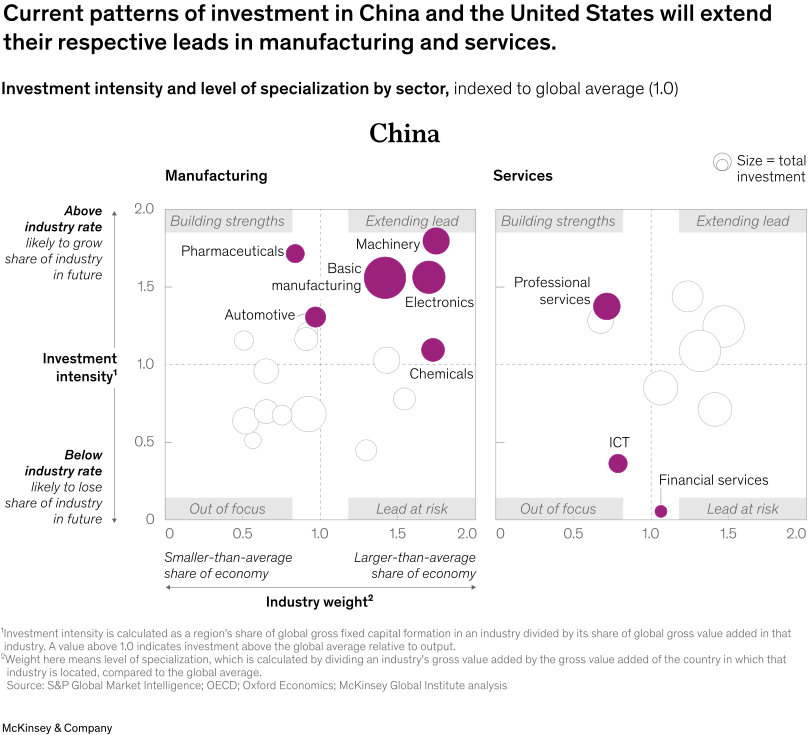
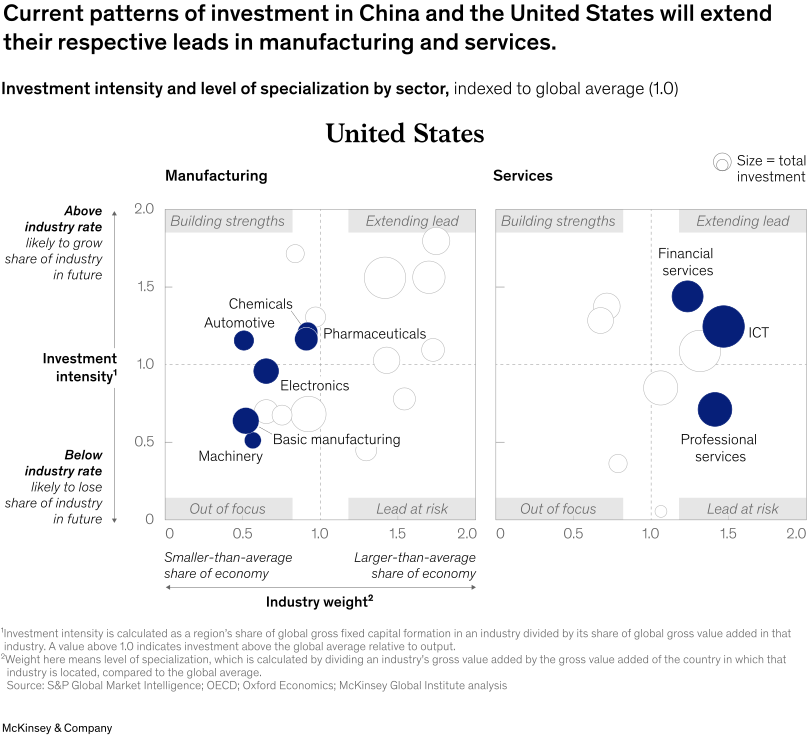
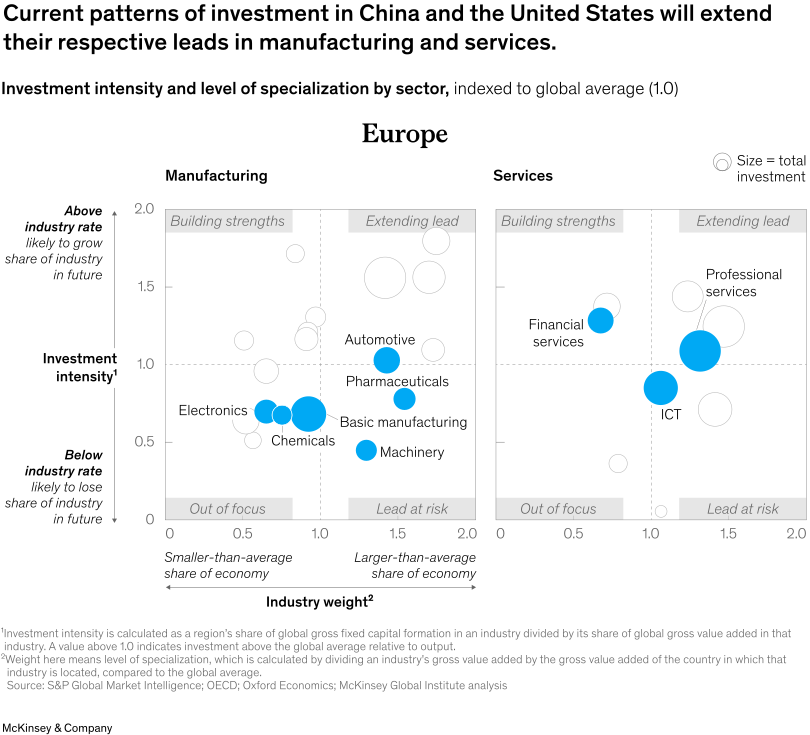
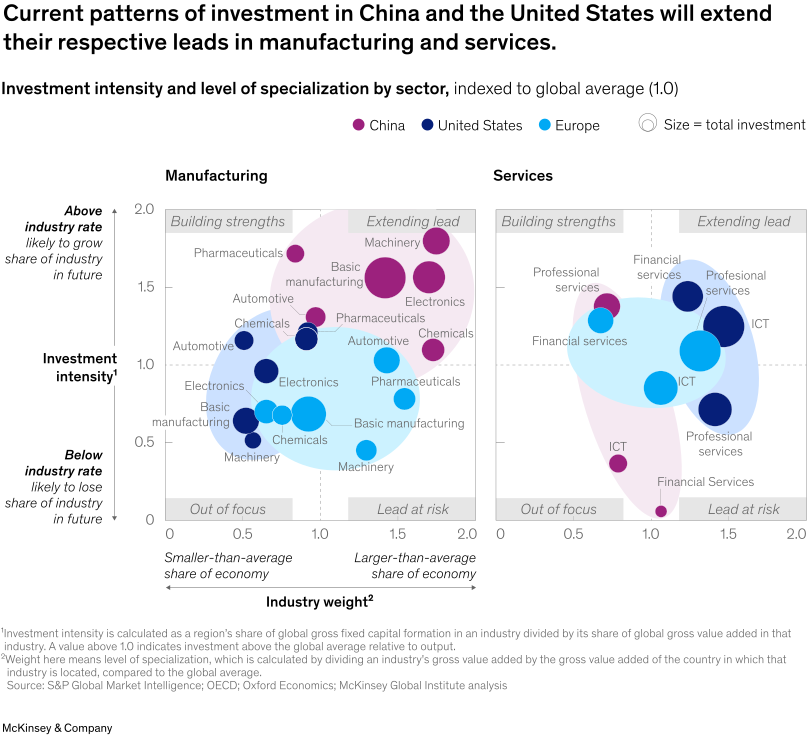
A country’s investment intensity is made up of two parts, its share in an industry’s global value added and its share in global investment. When compared, they offer a clear picture of shifting production footprints (Exhibit 11). China is investing to extend its lead in sectors in which it is currently specialized, namely almost all manufacturing subsectors (increasingly including high-tech industries), an explicit goal of its Made in China 2025 strategy.33 Additionally, China is investing to grow in other industries such as utilities, pharmaceuticals, and professional services. By contrast, it is underinvesting in financial services and—surprisingly given its emergence as the main AI rival to the United States—in ICT. This underinvestment in ICT speaks to either phenomenal capital efficiency in its technology development approach or mismatches in accounting treatments and modeled approximations provided by economic research institutions in the absence of reliable national sectoral statistics.34
The United States is extending its lead in ICT and financial services as well as investing somewhat to expand its footprint in automotive, chemicals, and pharmaceuticals. Europe, with an investment intensity that lags behind its current share of global production, risks losing its lead in many historic strongholds, including automotive, pharmaceuticals, and machinery. Measured by investment intensity, the region is investing for a growing footprint in agriculture and professional and financial services.
The shifting investment patterns around the world are changing the global cartography of growth and competitiveness. Layer on global geopolitical shifts, and the need to establish a new balance comes into focus. To understand why investments are being made so readily in some countries and industries and less readily in others, we take a deep dive in the next chapter into the line-by-line economics of ten business projects spanning the industries discussed in this chapter, including utilities (nuclear and solar power generation), basic manufacturing (EAF steel), chemicals (polyethylene), automotive (EV platform development), electronics (batteries and advanced semiconductors), pharmaceuticals and life sciences (biotech R&D and pharma manufacturing), and ICT (colocation data centers).
The bottom-up case for investment
What drives the divergence in investment trajectories, and what could be done to establish a new balance? Many macroeconomic factors underpin differing investment patterns across regions, including structural trends like the rapid growth of China’s urban middle class, aging populations in East Asia and Europe, varied monetary and fiscal responses to the 2008 financial crisis and the 2009-10 eurozone debt crisis, and the impact of the tech industry in the United States.35
This report, however, focuses on micro-level decisions that shape business investments across geographies, particularly levelized costs. A large share of investment, especially outside China, is made by global companies that commit capital at scale only in places where expected returns are attractive relative to risk. In global markets, this often requires competitive costs.36 In this chapter, we examine ten examples to understand what makes or breaks each investment case and what could be done to improve it.
Business cases must add up to unlock private investment
A range of factors influence investment decisions. Many strategic considerations come into play, including which markets and technologies to expand into or enter, what types and levels of risk are acceptable, where projects proceed quickly and efficiently, and what is needed to build resilience. Industrial policy also impacts investment, encouraging investments in some technologies and steps of the value chain that support nascent industries and to bolster strategic autonomy or avoiding or creating chokeholds, among other considerations. At bottom, a positive business case is a prerequisite for large-scale investments. Typically, a company will require that expected net present value, or the risk-adjusted value of a project’s expected cash flow, is positive and better than other options to proceed with any investment.
The decisions vary by type of industry. “Anchored” industries providing goods or services that aren’t traded on global markets need to decide whether local market structures and prices are attractive relative to the cost of, say, building energy substations or laying fiber optic cables. “Footloose” industries that trade their products far and wide will choose where it is most cost-effective and profitable to make an investment relative to other geographies. To companies in industries that feature rapid innovation and an escalatory investment race to the top—industries we call new “arenas” of competition—being able to move fast and to find partners and investors in local ecosystems matters most.
This research examines line items in business cases in ten industries in order to understand what shapes investment decisions and competitiveness. While these cases don’t represent the entire economy by any means, we selected them because they illustrate relevant and strategically important themes as well as a variety of factor intensities of production, such as capital, energy, and labor.



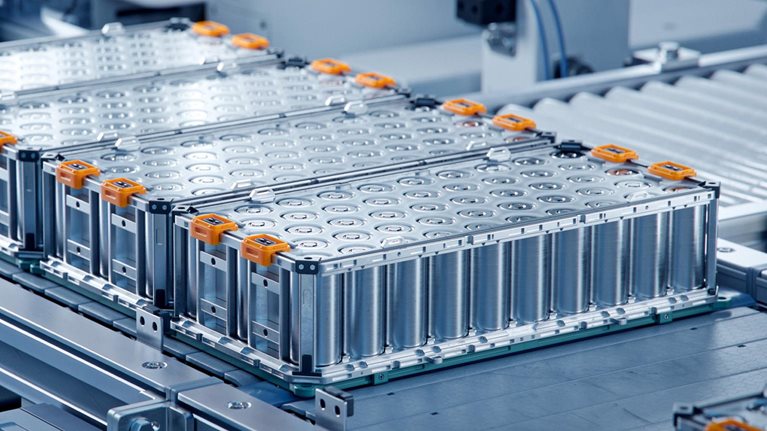

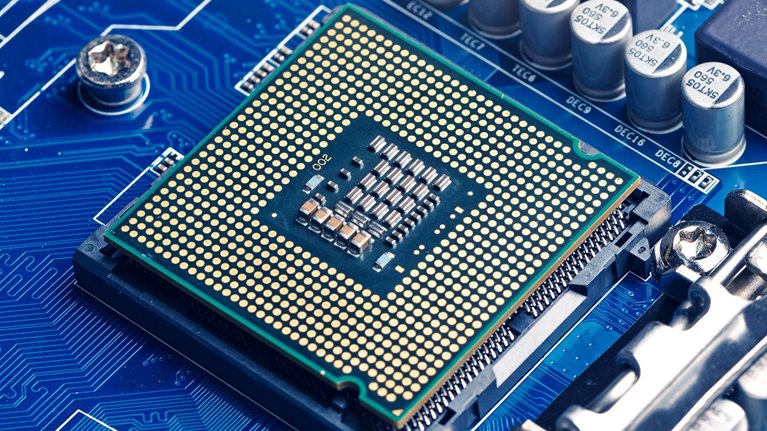

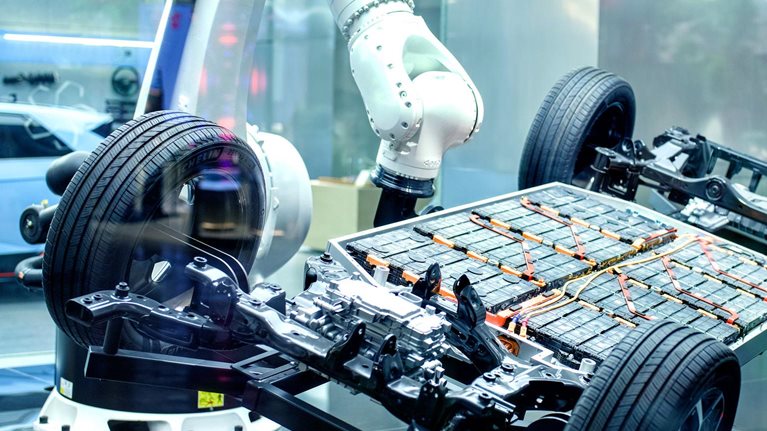
Analysis of ten industries that represent a cross-section of the global economy forms the foundation of this research
The ten cases span the three archetypes—anchored, footloose, and arena industries—with an emphasis on footloose industries, which are most exposed to global competition (Exhibit 12). Two cases, nuclear reactors and solar photovoltaic production with battery energy storage systems (PV and BESS) look at anchored industries. Both are capital expenditure intensive, and construction and equipment costs are key determinants of their business cases. Because anchored industries are not traded much, the main investment decision for them is about competitiveness in a local market rather than across global production locations. For instance, is there enough domestic demand, and are the costs of the electricity generated acceptable to the government or private offtakers?37
Five other cases—steelmaking in direct reduced iron–electric arc furnace or DRI–EAF plants, polyethylene crackers that manufacture commonly used petrochemicals, battery gigafactories, advanced semiconductor fabs, and production sites for pharmaceuticals—focus on footloose industries. These industries’ products are traded around the planet, and so their products are priced in relation to world markets. A business case for a footloose industry is most likely to be positive if its costs after transportation and tariffs are at least as competitive as in other locations where it could produce the same good or service. For instance, could a steel mill in one country compete against a steel mill in another country that has lower energy costs?
Colocation data centers, automotive R&D that underpins a new electric vehicle (EV) platform, and biotech R&D that leads to new molecular therapies are three examples of projects in arena industries. Investment decisions in these industries are heavily influenced by an ongoing need to improve capabilities and an ability to move fast, from permitting to hiring to fundraising, and so on. They often concentrate in geographic clusters where talent, investors, infrastructure, and partners are in close proximity, such as San Francisco–San Jose (“Silicon Valley”) or Beijing, Shanghai, and Shenzhen in the case of AI.38
Ten investment cases are at the foundation of this research.
We compare investment cases using a levelized-cost framework, as well as other factors that influence investment decisions
To compare investment competitiveness in different industries and geographies, we use a levelized cost framework. Levelized cost is the sum of all operating expenses, repayment of debt and accrued interest on initial project expenses, and an acceptable return to investors over the life cycle of a project, based on typical weighted average cost of capital (WACC). It is equal to the unit price that would make a project’s net present value equal to zero over its entire life cycle, rendering that project viable, and it corresponds to the established macroeconomic concept of long-run marginal costs.
This method allows us to compare the cost competitiveness of different industries in different geographies. For each investment case, we analyze a standard set of cost drivers including capital expenditures for construction and equipment, labor costs, inputs such as materials and energy, and performance drivers such as time to market, scaling effects, and financing conditions. Comparing levelized costs across geographies and investment cases can explain which cost drivers contribute to differences in competitiveness and to what degree (see sidebar “About the levelized cost methodology”). The set of economies we analyze always includes Mainland China, the United States, and the leading European country by investment in an industry, plus any other countries worldwide among the top three for global investment in that industry.
About the levelized cost methodology
Our levelized cost methodology converts a project’s full life-cycle economics into a single unit cost. It can be interpreted as the unit price that would make a project’s net present value equal to zero over its entire life cycle, making that project viable, and is in line with the macroeconomic concept of long-run marginal costs.1 The concept is commonly applied in the energy sector, where it is known as levelized cost of energy. We do not consider taxes, subsidies, and externalities, which vary and are hard to pin down.
We model capital expenditures and operating expenditures as time-phased cash flows, discount them using the local weighted average cost of capital and divide by discounted lifetime output to calculate the levelized cost. The line items captured in the analysis include construction costs, equipment costs, labor costs—determined by wages as well as hourly productivity and hours worked—and operating costs such as materials, energy, and maintenance. The modeling includes additional case-specific inputs such as time to market and scale effects where relevant.
To understand how each driver influences levelized cost, we compare each region to the base case by replacing one factor at a time. For example, in the semiconductor investment case, we ask how the cost of producing a wafer would change if a German semiconductor employee paid Taiwanese wages. An interaction effect captures the fact that some drivers influence each other and do not add up perfectly on their own (for example, longer construction duration matters more in a region with a higher weighted average cost of capital).
The case of an advanced semiconductor fab illustrates how the levelized cost method works in practice (exhibit). We analyze a representative facility producing 400,000 units of 300-millimeter wafers a year and use it as a benchmark for the levelized cost of one wafer in dollars in the economy that has attracted the most investment, in this case Taiwan. We compare its levelized cost with the levelized cost of producing the same chip in comparable factories in Mainland China, the United States, and Germany, the European economy currently seeing the most investment in semiconductor fabs.
In industries where market prices are comparable across economies, levelized cost is a proxy for returns on investment. In the case of semiconductors, there are reported price differences of up to 30 percent between chips made and sold in Mainland China and Taiwan, meaning that investments in higher-cost locations can often be profitable.
All figures in the investment case are expressed in 2024 dollars, converted from local currencies using 2024 market exchange rates.
Levelized cost example - Advanced semiconductors.
1We use a 28-nanometer node size in a 400,000 wafer starts per year fabrication plant for comparison.
Our business cases are informed by McKinsey’s work on the ten industries, which provides our understanding of how much capital, labor, energy, materials, and other inputs are typically needed to produce a product—here, a semiconductor wafer—and how long the process typically takes. We price these inputs at the typical costs in a geography, also drawing on the proprietary databases maintained by MGI’s Economics Research team, and typical weighted average cost of capital, drawing on McKinsey’s Value Intelligence platform, a curated global database of corporate financials.
Final investment decisions will consider factors beyond levelized cost. Chief among them are revenues, but also factors such as regulatory stability, domestic market dynamics, local industrial ecosystems, geopolitical shifts and trade impediments, and industrial policy. We take all of these as given. This is an important constraint, especially for anchored industries in which strategic considerations such as supply chain sovereignty, employment, and energy security often weigh as heavily as economics, and for arena industries, where ecosystem and dynamism effects dominate. A government may opt to support a domestic steel plant or refinery to maintain industrial capacity and reduce import dependence, regardless of whether it is the lowest-cost option globally; and technology companies continue to flock to Silicon Valley, even though wages and energy costs are higher than elsewhere. Nevertheless, levelized cost provides a solid quantitative assessment of the financial differences that need to be bridged by other factors, such as revenues, quality of talent, or abundance of financing). Levelized cost ends up providing a fairly solid explanation for where investment actually goes in many industries, which we turn to at this chapter’s end.
European and US levelized costs are 50 to 300 percent higher in many industries than in best-in-class countries
We analyzed cost differences by region by examining the top five investment locations for each industry (Exhibit 13).
Competitiveness varies widely across industries and among regions.
1New C/D segment passenger car EV platform development. 21,000 MW Generation III+ reactor. 3New fast-follower monoclonal antibody drug discovery and development. 4250 MW solar photovoltaic power and battery energy storage system. 51 million metric tons per year of ethylene capacity feeding a 400,000 metric ton per year high-density polyethylene unit. 62.5t hot-rolled coil flat steel from direct reduced iron-electric arc furnace plant. 7100 MW colocation data center, excluding chips. 81,200 kg monoclonal antibody drug substance production plant. 9400,000 wafers per year 28 nanometer logic chip fab. 1050 GWh lithium iron phosphate gigafactory.
The variation in levelized costs is biggest in nuclear power and, perhaps somewhat surprisingly, automotive R&D. When it comes to nuclear power, France’s costs per megawatt for a newly built, third-generation fission reactor are roughly three times the costs in Mainland China and South Korea, which are virtually equal as the lowest-cost locations globally. Although electricity generated by a nuclear power plant isn’t traded over long distances, such differences still determine where a build-out is economical and thus whether it proceeds. It’s no surprise that over the past decade, three in four new nuclear plants built globally were in Asia, more than half in Mainland China.39
Similarly, the cost of developing a new EV platform for a German or US incumbent car company is about three to four times as much as for a Chinese EV manufacturer. From 2021 to 2024, Mainland China’s share of global EV sales grew from 50 to 65 percent, and as of the end of 2025, one in two new car models globally was launched by a Chinese manufacturer.40
Cost differences are much narrower in industries such as advanced semiconductor and battery manufacturing, in large part because costs in these industries are driven by globally tradable input materials. Nonetheless, producing advanced semiconductor chips in Germany or the United States costs about 40 to 50 percent more than in Taiwan or Mainland China, and a similar cost gap holds for producing batteries in Europe and the United States compared to Mainland China. Such gaps can be prohibitive, given that both industries produce easily tradable goods and manufacturing capacity is abundant, especially in the case of batteries. This explains why more than 65 percent of advanced semiconductor foundry capacity and approximately 85 percent of battery cell production capacity are in Taiwan and Mainland China, respectively.41
Capital expenditures, labor, materials, and energy all contribute to the cost gap
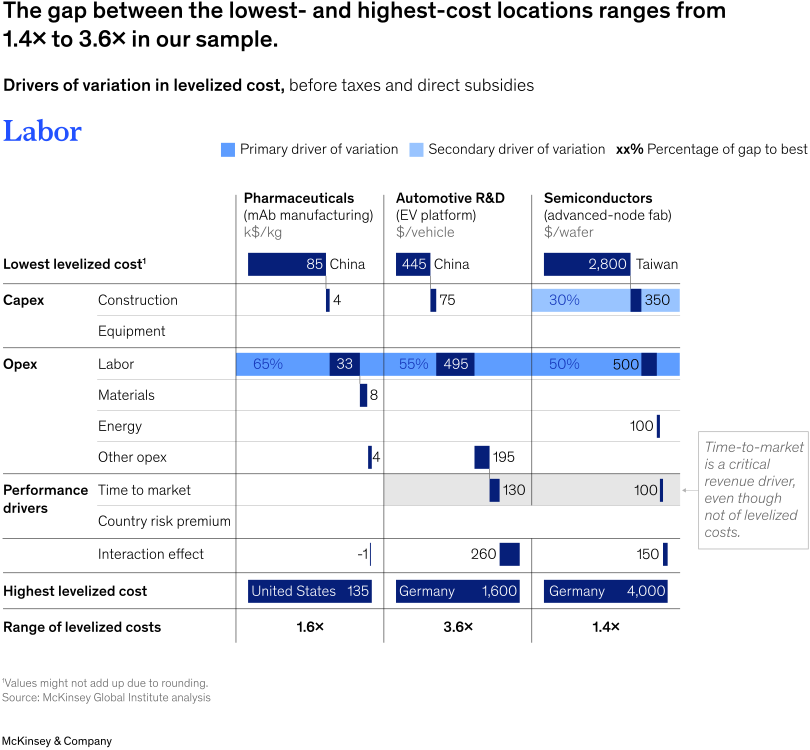
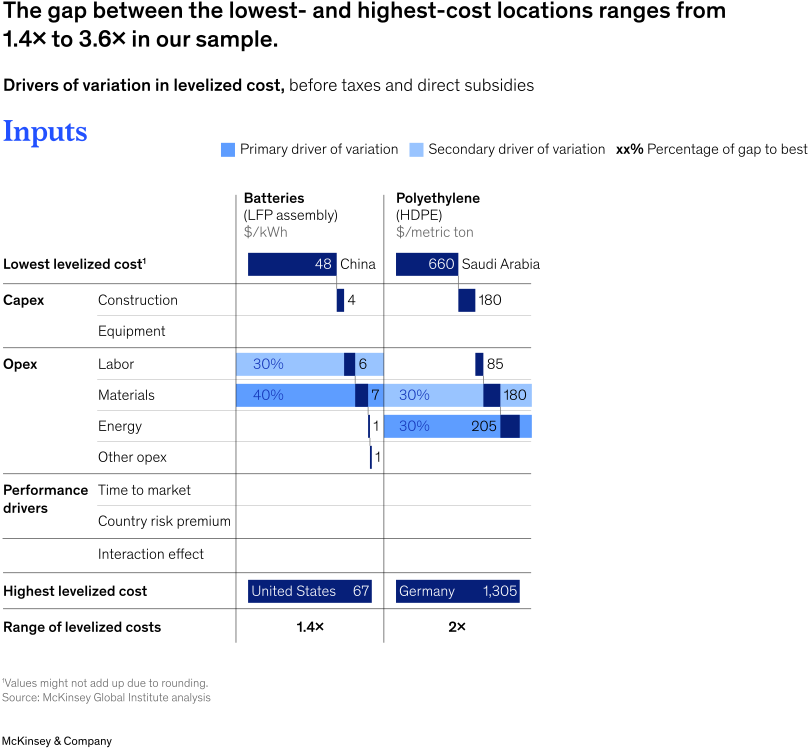
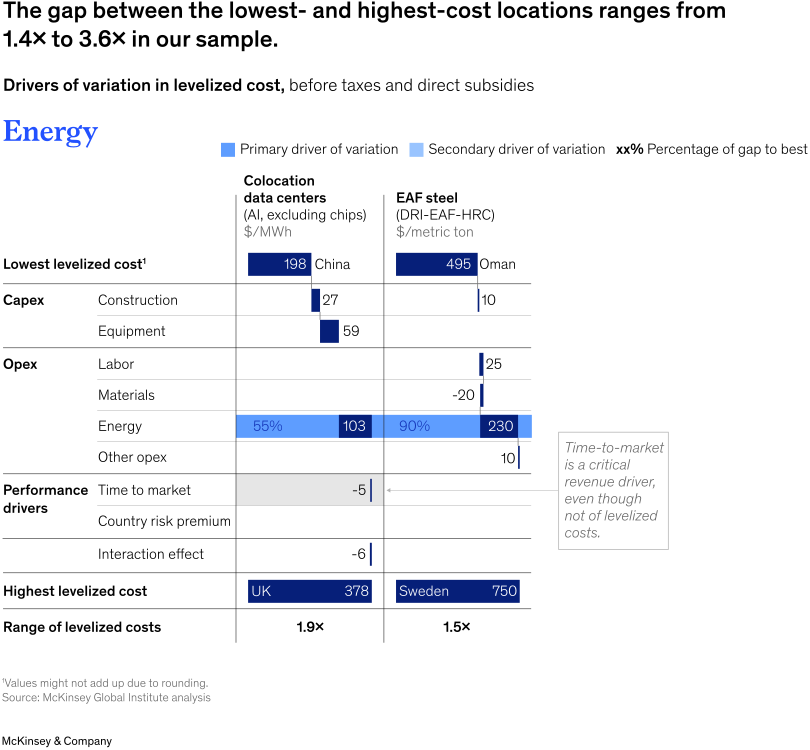
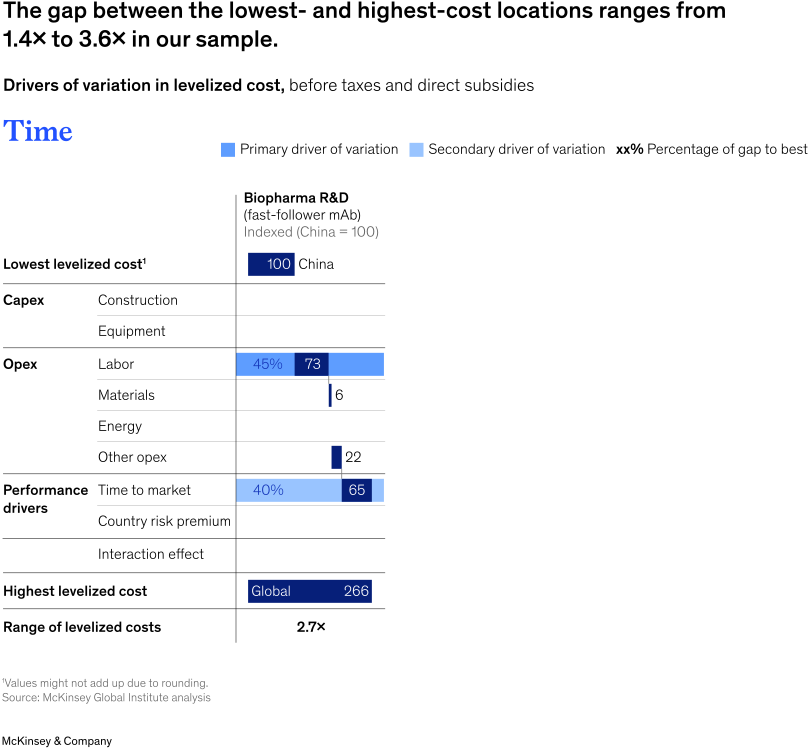
Examining the line items in the levelized cost calculation between countries clarifies the sources of competitive advantage or disadvantage and points to levers that could be used to restore a balance. Exhibit 14 details the cost gap between the base-case location, a country with high investment and low levelized cost, and the highest-cost location in our sample, always including China, a European country, the United States, and any other countries home to major investment in an industry globally. The rest of this chapter discusses each driver of variation in more detail.
Capital expenditures for construction and equipment vary across geographies—but not for the same reasons. Construction costs are determined by input costs as well as by time and efficiency. Costs of, steel, concrete, and construction labor cost are approximately twice as much high in Europe and the United States as in East Asia, and construction times can differ by as much as three times in the case of nuclear. Equipment, on the other hand, is generally sourced on the world market, although differences in plant designs and tariffs or trade restrictions can affect prices. For example, shipping costs and import tariffs on Chinese-made solar and battery equipment make levelized costs for a solar PV project with 95 percent reliability in Texas in the United States about twice as expensive as in Inner Mongolia in China, despite comparable irradiation in these regions.
Labor is the biggest source of variation even in many capital-intensive manufacturing industries. Labor accounts for two-thirds of the cost gap in pharma manufacturing between the United States and China and for nearly half gap in semiconductor fabs between Germany and Taiwan. This is because engineering wages differ by three to five times, while productivity is practically the same in state-of-the-art plants around the world.
Materials, being globally tradable, should theoretically be the great equalizer in investment cases, but there are important exceptions. For example, natural gas and gas-derived products are important feedstocks that are not easily tradable where no pipelines exist. That makes the cost of making polyethylene, which is produced using natural gas byproducts, much less expensive in Saudi Arabia and the United States, which produce natural gas. Europe and East Asia must import naphtha to produce polyethylene, increasing their costs.
Each region has pockets of competitively priced energy, and those places have traditionally been home to industry. Yet energy is a significant factor in cost variation around the world. Electricity prices explain two-thirds of the levelized cost gap of a colocation data center built in China compared to the United Kingdom. In steelmaking using the DRI–EAF process, natural gas and electricity account for more than 90 percent of the cost differential between steel production in Oman and Sweden.
Speed affects project economics in several ways. First, it increases project costs directly by increasing overhead costs, such as in nuclear projects. Second, it reduces the useful life of projects in industries with rapid technological progress, such as in biotech or automotive R&D. Third, it reduces the market value of a product in industries with rapid technical progress or cyclical capacity constraints. As this is not part of levelized costs, the real-world impact of speed is even more important than shown here.
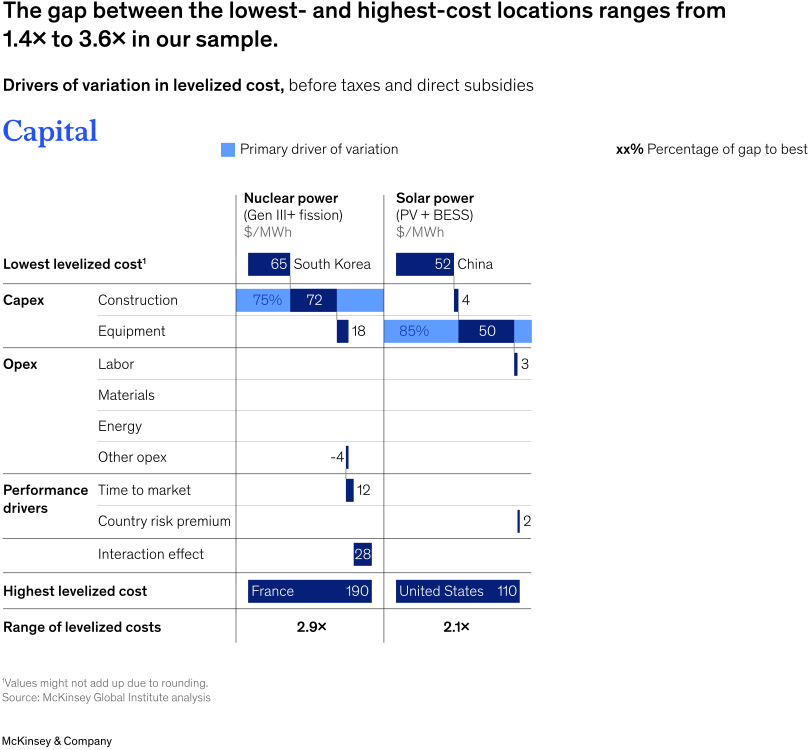
Construction: Differences in costs and timelines explain up to one-third of the cost gap in manufacturing industries and 60 to 80 percent in nuclear energy
Nuclear power is one of the most capital expenditure-heavy and complex industries in the world, and levelized costs of nuclear power generation differ by three times between France and South Korea. Differences in construction costs explain almost 60 percent of that gap.
Construction costs are determined by input costs as well as by time and efficiency. Lower costs of inputs such as cement, steel, and construction labor in some regions change the calculus. Costs of, steel, concrete, and construction labor cost are approximately twice as much high in Europe and the United States as in South Korea, and the gap with China is even more pronounced.
Higher levels of standardization and delivery discipline and lower build times also have an impact on construction costs, further widen the gap. Benchmark programs in China average roughly 70 months, or a little less than six years, from the time concrete is first poured to completion of a unit; that figure is close to 100 months, or a little more than eight years, in South Korea and the United Arab Emirates. By contrast, recent projects in Europe and the United States have taken as long as two decades to complete.
While nuclear power is an extreme case, similar trends are visible in other industries. The construction of a new semiconductor fab in Germany or the United States, for example, costs twice as much as building a fab in Taiwan, whereas equipment costs are the same globally.42 In more standardized industries such as AI data centers, which are secure buildings with power and cooling systems to house racks of chips, the difference in construction time and costs is much narrower, with timelines for permits and licenses being the differentiator.
In our ten cases, project timelines are almost always longest in large European countries. In Germany, the average time for obtaining a nonresidential construction permit is roughly 200 days, compared with about 60 days in the United States, 40 days in Mainland China, and 30 days in India.43 Timelines for operating licenses are similarly varied. In France, obtaining an operating license takes about 115 days, compared to about 20 days in the United States and about five days in Mainland China.44 This absorbs management time and attention, with French managers reporting that they spend more than 20 percent of their time dealing with regulatory matters. These examples illustrate how institutional capacity to permit and deliver complex projects quickly can generate a competitive advantage in capital-intensive industries.
Equipment: Barriers to equipment trade drive cost differences between China and the United States in solar PV and data centers
Equipment is generally sourced on the world market and contributes little to cost differences. However, equipment costs become a key contributor to variation when lower-grade natural resources require more equipment to extract the same output, when plant designs differ, and when tariffs or trade restrictions come into play.
In the case of solar power, shipping costs and import tariffs on Chinese-made solar and battery equipment make levelized costs for a 95 percent “firmed” solar PV project, or a project designed to meet demand 95 percent of the time, in Texas in the United States about twice as expensive as in Inner Mongolia in China, despite comparable irradiation in these regions.
As for data centers, trade restrictions on leading-edge semiconductors have a material impact on Mainland China’s data center costs and performance.45 Our case focuses on colocation data centers, or “colos” as the tech industry calls them. In this model, investors fund the building shell and facilities, and the computing equipment is provided by users who rent space in the data center. In this model, energy is the primary cost driver for the data center player. By contrast, in the so-called hyperscaler model, the data center owner also owns the computing equipment, including chips. In this model, equipment costs constitute most of total costs and introduce a wedge between Mainland China and other markets. This is because export controls on leading-edge US graphics processing units require Chinese data centers to rely on less advanced imported or domestic alternatives. These consume significantly more power per rack and deliver lower performance, meaning that Chinese customers need to install more racks for the same amount of compute or accept lower performance, which increases levelized cost per token by 30 to 35 percent at current levels of chip performance.
Labor: Labor costs for comparable roles differ by a factor of three or more, even though productivity in state-of-the-art facilities is the same across the world
Labor costs matter more than labor’s factor intensity, or the extent to which it is used to produce a specific good or service, would suggest. Our research doesn’t include classically labor-intense industries such as textile manufacturing and electronics assembly. Nonetheless, given the equalizing role of equipment and materials sourced on world markets, labor is the biggest source of variation in many capital-intensive manufacturing industries. Labor accounts for two-thirds of the 1.6 times cost gap in pharma manufacturing between the United States and China and for close to 50 percent of the 1.4 times gap in semiconductor fabs between Germany and Taiwan. In battery gigafactories, which require less specialized labor, labor explains more than 30 percent of the cost gap between China and the United States, and that excludes the labor cost differences embedded in construction capital expenditures.
Differences are also large in R&D-intensive investments such as in biopharma and automotive development projects. Labor represents about a third of development costs in automotive platform development R&D in China, compared to over 55 percent in higher-cost European countries and the United States, for biopharma the labor cost rises from a quarter of the total in China to 37 percent of the total for global players located in Europe or the United States. The differences in labor costs and labor productivity drive 50 to 80 percent of the substantial cost gap between China and its global competitors, with time to market and inputs explaining most of the remainder.
Labor costs in the United States and Western Europe are typically two to three times higher than in Mainland China and Taiwan and up to tenfold for blue-collar workers in steel production.
What may be more surprising to some readers is that this difference is no longer offset by higher productivity. Wages are determined by the overall economy of a country, but productivity is determined by the technology deployed at individual offices and factories, which is increasingly state-of-the-art everywhere. For instance, the output of a pharmaceutical plant in China and the United States is virtually identical, given that the same plant designs are used in both locations. But wages at US pharmaceutical companies are about three times higher than for comparable roles in China, creating a substantial structural cost difference despite comparable output (Exhibit 15). In advanced semiconductor fabs, Taiwan has both a cost advantage and a productivity edge over the United States. Taiwanese engineers achieve about one-quarter more output per worker despites wages that are roughly 2.5 times lower than their American counterparts’.
Wages in the United States are on average three times higher for comparable or lower output.
Note: Productivity is measured by unit output per FTE: % of platform output per FTE R&D EV platform; # mask layer per FTE×year for Semiconductors (advanced); mAb production (kg) / FTE×year for Pharmaceuticals (mAb manufacturing).
1Productivity differences show large dispersion across fabs; regional comparisons sensitive to sample composition.
Source: POBOS (McKinsey proprietary), McKinsey Global Institute analysis
Energy: Costs are structurally higher in Europe’s industrial heartland and Advanced Asia than in China and the United States
Each region has pockets of competitively priced energy. This is true not only in China and the United States, where industrial electricity users in the cheapest regions paid on average $50 to $55 per megawatt-hour in 2024, but also parts of Europe such as Scandinavia, where rates ranged from $40 to $65 per megawatt-hour.46 Industry in China and the United States is largely clustered near this low-cost energy, having moved from early centers of industrialization: from the upper Midwest to the southern United States because of shale gas discoveries, for example, and from the Yangtze River Delta to Inner Mongolia in China, which has high irradiation and wind.47
By contrast, most industries in Europe remain in the old industrial heartland around the Rhine and Rotterdam corridors, which formed around ample coal resources. Electricity in these regions now trades at an average of more than $150 per megawatt-hour, creating a drag on the competitiveness of energy-intensive industries. More recently, new capacity additions for power-hungry industries such as materials processing for batteries have been in Iberia and the Nordic countries, where electricity prices are cheap in comparison. But industry has not relocated to the extent it did in China and the United States, supported by national industrial policy. Japan, South Korea, and the United Kingdom also lack low-cost energy resources (Exhibit 16).
Europe’s industrial heartland has a structural energy cost disadvantage.
1Industrial electricity prices (Eurostat IG band, 150+ GWh, excl. discounts/exemptions) for Europe; EIA industrial average for US; NDRC provincial prices for China. Costs split into energy and supply, network, and taxes; for China, tax reflects VAT (13%) only, other charges are included in energy and supply. Norway shows range across bidding zones. Converted to $/MWh using World Bank average 2024 exchange rates.
Source: Eurostat, EIA, NDRC, KEPCO, ONS/DESNZ (UK), NordPool; McKinsey Global Institute analysis
Among our ten cases, data centers and steel are examples of energy-intensive industries. Electricity prices explain almost 60 percent of the levelized cost gap of an colocation data center built in China compared to the United Kingdom. In steelmaking using the DRI–EAF process, energy, mostly in the form of natural gas and to a lesser extent electricity, accounts for more than 90 percent of the cost differential between steel production in Oman and Sweden.48 To offset this disadvantage, Germany and other European countries are currently subsidizing energy costs for heavy industry, sometimes by more than half the total cost, although the debate is also intensifying about shifting the most energy-intensive stages of production to locations with lower-cost energy.49
The levelized cost perspective in this research focuses on new, greenfield plants, but energy costs matter even more for existing, brownfield sites, where capex requirements for life extensions are lower and operating costs including energy become the main driver of competitiveness.
Materials: The United States has an advantage in fossil feedstocks and Mainland China in manufactured input materials
Materials, being tradable, should theoretically be the great equalizer in investment cases. All companies can source inputs on world markets and should therefore pay similar prices, with any gap due primarily to transportation costs and tariffs. There are two important exceptions, however, related to feedstocks derived from natural gas and to dense supplier ecosystems for manufactured materials.
Natural gas and gas-derived products are important feedstocks that are not easily tradable where no pipelines exist. Prior to 2022, Asian, European, and US natural gas prices traded near parity. The war in Ukraine, however, stopped the flow of piped gas from Russia to Europe, and so markets in East Asia and Europe set liquefied natural gas (LNG) prices, which averaged roughly three to four times US prices from 2022 through 2025. They spiked again after the closure of the Strait of Hormuz in March 2026, to five times the US level (Exhibit 17). In addition to higher feedstock costs, gas-importing regions such as Advanced Asia and Europe are also much more exposed to price volatility.
Gas prices around the world range from three times to more than five times higher than in the United States.
Note: As of May 8, 2026.
1Million British thermal units, a standard unit of energy commonly used to quote natural gas prices.
For example, countries with ample natural gas resources such as Saudi Arabia and the United States can produce polyethylene by cracking ethane, a simple gas derivative. Countries without such resources rely on naphtha, which can only be transported by ship or in specialized pipelines. Germany, a historic stronghold for chemicals production, pays roughly double the cost to produce polyethylene as Saudi Arabia and the United States. The difference in feedstock prices and energy prices together explain roughly two thirds of this gap, with capital expenditure responsible for the remainder. The same challenge applies in other industries relying on inputs derived from natural gas, such as fuels and fertilizers.
Large differences in feedstock prices help explain why even brownfield petrochemical investments are increasingly difficult to justify in Europe, and why the continent has lost close to 40 million metric tons of petrochemical production capacity since 2022.50 While Mainland China also imports LNG, brownfield sites remain operational and even greenfield projects still proceed. In our calculation, lower capital and labor cost cannot make up for the cost difference in gas prices, meaning that Chinese operators may accept lower returns on their projects or receive public support of some sort.
Manufacturing industries such as batteries, semiconductors, and pharmaceuticals rely on manufactured products that are more easily transportable. Yet material costs are much lower in Mainland China thanks to its dense local supplier ecosystem.51 Mainland China accounts for three-quarters of global lithium refining capacity, about 60 percent of nickel manganese cobalt (NMC) cathode active material production, and well over 90 percent of lithium iron phosphate (LFP) cathode active material production and graphite anode active material production.52 This upstream dominance is reinforced by a deep base of equipment suppliers and gigafactory construction, which collectively reduce purchase prices, logistics costs, installation and commissioning costs, and learning-curve losses.
In Europe and the United States, thinner supplier bases, smaller order volumes, and greater reliance on imported equipment and processed materials raise costs and increase exposure to volatility. Competitiveness in materials-intensive industries therefore depends not only on access to cheap energy but also on whether companies operate within dense, scaled, and integrated industrial ecosystems.
Time to market: Especially in industries with rapid innovation cycles and winner-takes-most dynamics, time to market matters
Speed affects project economics in several ways. For example, increasing management oversight or needing to rent a variety of equipment over the course of a project (which we quantify as part of construction costs) can increase project costs directly. Additionally, longer-duration projects reduce the value of a product in industries with rapid technical progress or limited patent durations, such as automotive and life sciences, as well as in industries with cyclical capacity constraints, such as semiconductor chips.53
In automotive, EV platform economics are propelled by major up-front R&D investments that must be recovered over a platform’s lifetime. When development of an EV platform takes 36 to 48 months, which is common for legacy OEMs in advanced economies, revenues are pushed further into the future and discounted more heavily. In Mainland China, establishing such a platform takes 21 to 28 months, and revenue starts rolling in much earlier because EV companies have simpler portfolios and faster ways of working (Exhibit 18). A later launch also limits the period during which a platform can generate full-margin sales before its technology is superseded by, say, electric vehicles with longer ranges or more advanced driver assistance systems. In this analysis, speed explains 10 percent of the substantial cost gap between a legacy American automotive manufacturer versus an EV-only player in China. If we excluded structural factors beyond the control of an individual manufacturer, such as wages and working hours, the share of the cost gap linked to time to market increases to one-third, making it the most important competitiveness driver within a manufacturer’s control.54
Chinese companies are speeding up the R&D cycle.
development cycle, months Battery electric vehicle platform
development cycle, months
In biotech, so-called fast-following Chinese companies can launch drugs roughly two years earlier than firms in Europe and the United States, where a 13-year development cycle is typical. This preserves more of the remaining patent life and thus extends the period in which to generate revenue.55 Time to market is one of the key drivers of the levelized cost gap in biotech R&D, explaining almost 40 percent of the total difference. In the case of pharmaceutical manufacturing, time plays a smaller role because production can be outsourced to contract manufacturers while a company gets its own plants up and running, thus avoiding loss of patent lifetime.
In datacenters, speed of execution has become the primary concern. AI frontier labs and hyperscalers face labor shortages, equipment lead times, permitting delays, and grid queues driven by the AI boom. Lead times to obtain key components such as generators, chillers, transformers, and switch gear have more than doubled since 2019, and some markets have waiting of up to a decade. In the case of AI training datacenters being built by hyperscalers, a one-year project delay can be the equivalent of doubling in electricity costs due to postponed revenues and changes in the pricing environment.56 As revenue and pricing effects are not part of the levelized cost methodology, this is not modeled in this report.
In semiconductors, prices per wafer are far higher when a node is still at the technological frontier and fall steadily as it matures and new entrants arrive, meaning that faster time to market has a direct impact revenue potential. As revenue and pricing effects are not part of the levelized cost methodology, this is not modeled in the waterfalls. Had we analyzed leading-edge or memory chips rather than 28-nanometer fabs or AI data centers driven by scarcity pricing, for example, time to market would have played a major role.57
It is important to note that speed also matters when it doesn’t show up directly in the line items of an investment case. This is because long lead times can limit the ability to capture market opportunities, absorb too much management attention, and conflict with shorter-term corporate growth objectives. As innovation cycles accelerate across many industries, speed is becoming more important.
Financing costs: Financing costs are similar for global corporations in advanced economies and China, but add to costs in developing countries
Across Advanced Asia, China, Europe, and the United States, the weighted average cost of capital reported by listed companies varies more by industry than by region.
Examining the ten industries in this research, the weighted average cost of capital (WACC) in those countries range from 4 to 7 percent in anchored industries, like nuclear and solar; 7 to 8 percent for footloose industries, such as steel and polyethylene; and 8 to 10 percent for arena industries, like automotive R&D and advanced semiconductor fabs. This reflects that risks to investors are lowest in mature industries with contracted or protected revenue and highest in industries that are exposed to multiple overlapping risks in technology, operations and demand.58
It may be surprising to some that Chinese financing costs are closely in line with those reported by Western corporates. Companies in emerging markets typically report higher capital costs than in advanced economies, given higher governance and political risks. In China’s case, such risks may be canceled out by greater access to state-backed debt financing that compresses debt costs. This effect is compounded by sample selection: Listed Chinese companies are disproportionately large, state-adjacent firms, making them more comparable to blue-chip Western corporates than to the broader Chinese corporate universe or Western joint ventures operating in China.
While there are no systematic differences between advanced economies and China in our sample, there are major differences in WACC for emerging and developing countries. Solar PV is a clear example of this: China’s WACC is 4 percent, versus 6 to 7 percent in India and Brazil. The difference in financing costs affects levelized costs in capital-intensive industries directly. For instance, financing costs account for half of the difference in solar PV costs between India and China.
The biggest cost driver is not always the biggest determinant of cost competitiveness
In about half of our cases, the primary cost driver in the base-case location does not determine the difference in costs between countries. Taking a simple average of our ten industries, capital expenditures account for close to 45 percent of costs in the base-case location, and energy and materials an additional 40 percent. Looking at the difference between the highest- and lowest-cost locations, however, capital expenditures explain less than 30 percent of the difference, while the role of labor doubles to 35 percent, and performance drivers such as speed and scale introduce a wedge of almost 10 percent between highest- and lowest-cost locations (Exhibit 19).
The primary cost driver is not always the primary driver of variation between countries.
1Includes construction and equipment costs.
2Includes energy, materials, and other opex costs (e.g., outsourcing in the Biotech R&D case).
3Includes time to market and country risk costs.
Source: McKinsey Global Institute analysis
A more competitive levelized cost often signals higher investment intensity, although other factors matter
In almost all industries, countries in our sample with lower levelized costs have the highest investment intensity compared to their GDP, while countries with higher levelized costs invest less (Exhibit 20).
Cost is a good predictor of investment – with important exceptions.
Note: Levelized cost is before taxes and direct subsidies.
1Range represents legacy OEMS with EV platforms and EV disruptors.
2Regional proxies used where country-level data is unavailable; regions include North America, Middle East, and Western Europe.
Source: International Energy Agency; International Renewable Energy Agency; International Atomic Energy Agency; World Nuclear Association; OECD; S&P Global Market Intelligence; Oxford Economics; SEMI; La Moncloa; Malaysian Investment Development Authority; McKinsey Global Institute analysis
To be sure, the many exceptions to this general rule highlight the importance of other factors that have a role in investment decisions. Markets and ecosystems, as well as fast permitting and building, explain why Singapore builds more AI data centers than its high energy prices would suggest, while Sweden builds less than it could, given its competitive energy costs. Similarly, Germany remains the biggest investor automotive R&D compared to its GDP, despite China’s significant cost advantage. AI data centers and EV platforms are examples of arenas in which ecosystems and speed matter most. Economic geography research suggests that it is extremely hard to manufacture new ecosystems59—but as the example of Shenzhen, China, shows, even complex ecosystems can be recreated if the fundamental economics warrant it.
Industrial policies including subsidies and regulations enable Germany to build more solar energy, the United Arab Emirates to build more nuclear plants, and China to build more polyethylene crackers than their relative cost position would suggest. Nevertheless, business cases clearly are critical for the long-term viability of an industry as well as for the amount of taxpayer money needed to close gaps with industrial policy where that is intended.
Having established the extent of variation in levelized costs in investment cases, we next turn to what companies and governments lagging in investment could do to make themselves viable again.
What it would take to rebuild competitiveness
In the past, different endowments allowed different economies to be more competitive: cheap labor here, cheap energy there, innovation strength or deep capital markets with low financing costs elsewhere. Today, some countries—China chief among them—have unusually large advantages across an unusually broad set of production factors, resulting in a lead in almost all the investment cases we studied (see sidebar “China: Low macro productivity, high micro productivity”). This shrinks the space for specialization in other large economies and means that narrowly targeted responses will be insufficient to overcome the large cost differences. In this chapter, we map out some possible pathways to restore competitiveness (Exhibit 21).
1Typical direct construction cost per square meter, average of benchmark cities in country, reflecting labor, materials, equipment, overheads, and local market conditions, Turner & Townsend, 2025.
2Factory gate cement price, CemWeek, CW Group, Q4 2023.
3Fully loaded hourly manufacturing compensation including direct pay, bonuses, benefits, and labor taxes, Economist Intelligence Unit, 2025.
4Electricity prices for industrial users consuming 70,000–150,000 MWh; including generation cost, network cost and taxes, excluding indirect cost compensation or other subsidy schemes, SNL, Eurostat, Bank of Japan, 2024.
5Hot-rolled band transaction prices, volume weighted, SteelBenchmarker, May 2026.
6Natural gas pricing for industrial users, including non-recoverable taxes and network charges, excluding recoverable VAT, IEA, DESNZ, Eurostat, CEIC, Gujarat Gas, 2024 or latest available.
7Calendar days from completed application to approval, covering construction, expansion, and building permits; EU-27 reflects average of available member states, World Bank, 2025.
A step change in production factors would be needed to bridge half of the cost gap with best-in-class countries
Europe was successful in the industrial age, thanks to high degrees of automation that compensated for higher labor costs, quality leadership in manufacturing, and competitive energy costs, but those advantages are eroding. The United States long accepted large imbalances in manufacturing, instead focusing on technology and services in which it leads globally, although it is now working to address import dependencies. For its part, China has arguably been too successful in manufacturing industries and now struggles with excess capacity, low capital returns, internal and external imbalances, and a need to sustain growth through domestic demand.60
All regions will have to step up to achieve their stated goals. To gauge what it would take to restore cost competitiveness, we ran a directional what-if scenario on the input factors in the ten investment cases. This exercise was an attempt to determine what combination of changes could make these investment cases viable again in advanced economies. It is not a prediction of what will or even should happen.
First, our assumptions:
- For capital expenditures, we assume that half the current gap in construction cost and time would be closed, as would the entire gap in equipment costs. We do not assume full convergence of construction costs because part of the gap reflects structural differences in labor cost structures and standards. We do assume that permitting reform, modular construction, greater standardization, and stronger delivery practices could narrow the gap materially without compromising social and environmental standards.
- For materials, we assume that half the current gap in material cost could be closed by deploying innovative materials, leaner lower-waste processes, and new production technologies. However, fully closing the gap is unlikely due to geography and access to raw materials—for example, steel and polyethylene would see no cost reduction.
- For labor, we assume a step change in productivity of about 30 percent related to broader adoption of AI, automation, and better operating models. We also assume a 10 percent reduction in overall labor cost by, say, reducing social contributions and related nonwage charges through reforms in financing or by making it easier to restructure companies.
- For energy, we assume a sharp reduction in gas and electricity costs in Europe to levels more similar to those in China, which has managed to deliver competitively priced energy through a different system architecture despite a lack of natural energy resources.
- For time to market, we assume a level playing field, reflecting the fact that companies in advanced economies could theoretically move at speeds already achieved in China, as leading disruptors across industries have demonstrated.
A coordinated push across all these factors could close 50 to 70 percent of the cost gap in the United States compared to best-in-class locations and roughly 30 to 60 percent of the gap in Europe. This could bring many investment cases materially closer to viability.
Beyond cost, companies and countries could innovate, specialize, and level unlevel geographic playing fields
Even heroic assumptions about achieving these goals do not translate to sufficient change to fully close the gap, however (Exhibit 22). To escape pure cost competition, companies and policymakers could work by regaining innovation leadership and specializing in differentiated goods and services that play to a country’s strengths or can sustain premium pricing that offsets higher costs.
A coordinated push on competitiveness could close a significant portion of the gap to the lowest-cost producer.
Where the gap remains too wide to achieve a country’s aims, macro-level interventions could level the playing field. Such intervention could include reducing exchange rate distortions, using selective trade policy, deploying industrial policy, and renegotiating any policies that currently tilt the global balance in investment.
Until competitiveness is restored, navigating today’s unlevel playing field will require companies to think through tough trade-offs between investing where costs of production are low, ensuring supply chain resilience, and achieving longer-term competitive goals. Understanding the lessons offered by the lowest cost and best-in-class locations today can raise competitiveness everywhere.
The alternative option to deal with differences in competitiveness and levelized cost is, of course, to simply accept them, along with the trade deficits—and surpluses—that come with them (see sidebar “What is the alternative to restoring competitiveness?”)
Countries seeking to catch up with global investment leaders can push or pull seven levers
Restoring balance to investment around the globe requires more than simply addressing cost differences. Companies and countries can deploy seven levers to level the playing field, though the mix of levers will vary across regions depending on the domestic context and geopolitical priorities.
Capital expenditures: Release the brakes and industrialize construction
Capital expenditures play a decisive role in decisions to invest in infrastructure and energy projects such as nuclear power plants and solar PV. They also play an important role in capital-intensive manufacturing industries, including batteries, semiconductors, pharmaceuticals, and data centers. In the industries we analyzed, construction timelines and costs in the United States and Europe are often substantially higher than in many Asian countries. For example, semiconductor fabs can cost almost twice as much to build in Germany and the United States as in Mainland China and Taiwan, and recent nuclear plants in advanced economies have come in at roughly three times the cost of the latest projects in South Korea.
A meaningful share of these gaps is explained not only by higher input prices but also by how projects unfold. Comparing advanced economies and China, a large part of the gap reflects lower capital delivery efficiency rather than more expensive labor, steel, cement, or equipment. In other words, part of the disadvantage comes not from what advanced economies build with but from how they build, which is shaped by slower permitting processes, longer development cycles, more bespoke engineering, and less learning from one project moving to the next.
By removing friction from the construction phase, governments could materially reduce cost and construction timelines without compromising high environmental or social standards.61 By streamlining approvals and inspections across multiple agencies—for example, by standardizing documentation and centralizing submission processes—building timelines can be shortened. Adequate staffing, training, and use of AI in document review can lead to material acceleration.62 Preapproving sites and putting in place infrastructure can further shorten project timelines.63 Advanced economies have shown that they can move much faster when urgency is high. For example, Germany’s new LNG import terminals began operating 200 days after the war started in Ukraine thanks to fast-tracking permitting and deploying modular floating infrastructure.64
Companies can build faster and at lower cost by adopting proven tactics already used at scale in various markets. Reusable blueprint designs, modular construction, and prefabricated units can cut the costs of bespoke engineering and speed up on-site assembly. In the United States, for example, data center developers are increasingly using scalable reference designs, modular construction, and off-site assembly to accelerate project completion by as much as 50 percent, reducing capital spending by 10 to 20 percent on average.65 Commercial incentives in contracting that link directly to delivered output and project progress can also increase motivation to improve productivity by minimizing paid-to-wait time and cost overruns.
Advanced economies retain strengths in construction such as complex engineering, stringent quality assurance, and high safety standards that result in assets with tight tolerances and reliable long-term performance. The challenge is to combine those strengths with faster, more repeatable, and more industrialized delivery.
Labor: Push the productivity frontier and lead on AI deployment
Labor policies in advanced economies differ from those in emerging economies, and overcoming those differences is challenging. Theoretically, wages or prices in China could increase in tandem with the productivity of its workers. The alternative, letting wages fall in advanced economies, is neither desirable nor feasible. The only way to narrow gaps in labor costs is to achieve step changes in productivity in advanced economies with technology adoption, process redesign, and workforce upskilling. However, state-of-the-art factories are similar around the world, so these steps alone will not guarantee a lead. If US semiconductor fabs achieved Taiwan-level productivity, for instance, it would close 10 percent of the gap with Mainland China.
Reinventing production processes with AI and advanced automation could increase worker productivity, promote faster development of better products, and help companies grow.66 At this point, however, the share of businesses identifying AI as key to transforming their organization is larger in China than in any other major economy.67
Policy change could support businesses seeking greater labor productivity and lower labor costs. For one thing, policy could have a direct impact on the cost of hiring employees by amending which costs are borne by employers and employees. In Europe, nonwage costs and payroll taxes such as social security contributions range from less than 5 percent in Romania to more than 30 percent in France. Second, policy has a direct impact on labor market flexibility. In Germany, restructuring costs are high and dynamism limited, which weighs on productivity compared to countries such as the United States with more flexible employment policies.68 Denmark’s flexicurity program—which allows employers to dismiss workers in response to changing market conditions while also providing workers with a safety net between jobs and supporting rapid reintegration into the workforce—is an example of an alternative in Europe.69
Energy: Secure abundant, competitive, clean energy and locate heavy industry near energy sources
Energy is a decisive factor in competitiveness, and energy costs differ significantly between regionsprices were 25 percent depending on their resource endowments.70 Oil is easy to transport and trades at near-global parity, but gas prices diverge structurally. Regions lacking connection to gas pipelines pay three to four times more to cover the costs of liquefying and shipping LNG, which also influences electricity prices.71 Historically, this was a challenge primarily in Asia, but after the collapse of Russian pipeline gas supplies in 2022, also in Europe’s industrial heartland.72 Disruptions such as the recent US-Iran conflict further exacerbated this gap. For example, gas prices in Europe and Japan were roughly 50 percent higher than before the outbreak of the conflict in May 2026, but US natural gas prices were 25 percent lower than the average price in 2025, a reflection of plentiful domestic supplies.73
In the near term, LNG-dependent countries in Europe and Asia could secure LNG and piped gas from more diversified sources, increase biomass and biogas use, extend the life of nuclear reactors, and accelerate electrification by building the required transmission and storage infrastructure as well as by promoting demand-side flexibility measures. Some countries are also considering deferring the phase-out of coal generation.74
However, countries cannot become energy competitive when relying on LNG that is structurally at least twice as expensive as piped gas, and solar power that is only half as efficient as in sunnier regions.75 Structural options for Europe’s industrial heartland and other energy-disadvantaged regions include building additional gas pipelines, developing domestic shale gas, and deploying nuclear reactors, while also accelerating long-distance grid interconnections and shifting parts of industry to regions with structurally lower electricity costs. Many power-hungry projects are already under construction in the Nordics and the Iberian Peninsula rather than in the Rhine-Ruhr valley that would traditionally attract such industries in Europe. Governments could accelerate and support such a shift by facilitating transformation and developing new, competitive activities rather than cementing the status quo through subsidies.
Innovation can also help overcome disadvantages in energy and materials access. For example, novel solid-state battery technologies could reduce the cost gap relative to the established lithium-ion value chain in China. Similarly, nuclear fusion, if achieved, could address issues arising from fission production. While neither success nor sustainable competitive advantage is guaranteed, thinking outside the box and investing in experimentation and engineering can increase competitiveness.
Time to market: Step on the accelerator and remove regulatory complexity
As innovation cycles accelerate and competition heats up in tech-intensive industries, speed has become a core determinant of competitiveness for companies and countries. This is particularly true in the important arenas of competition, where innovation execution can make or break a business case, as well as in capital–intensive industries in which a large share of the gap in construction costs between countries is linked to speed or delays. Since many businesses in advanced economies are multinationals with global footprints, their strategy includes opting for the most competitive locations for getting things done whenever possible. If one place requires six months more to secure approvals for new products or a permit for building a production facility, all else being equal, companies will invest where they can move faster. Similarly, if starting a new business or restructuring an old one is too slow or expensive, investments will move elsewhere.
Regulatory reforms could enable companies to move faster; especially, in Europe, where regulatory barriers are highest.76 Yet most companies could speed up on their own by compressing product-development cycles, shortening capital-project schedules, and reducing the time needed to move from concept to scale. R&D, for example, could embrace iterative ways of working and parallel development processes. If German automotive companies replicated key elements of the Innovation Execution operating models used in Chinese automotive manufacturing, they could reduce development timelines by more than half, effectively decreasing their levelized costs by 25 percent. American EV disruptors are an example of companies that successfully operate in this way, even in a market where other automotive manufacturers don’t.
Innovate and differentiate to avoid competing on costs alone
In many industries, even heroic efforts to narrow the gap in levelized costs will not level the playing field. Companies in these industries could nonetheless invest profitably in Europe and the United States, where they can sustain higher prices because of performance advantages, customer proximity, and brand recognition and trust. Even bulk commodities industries such as polyethylene often offer distinct performance profiles that limit direct substitution between suppliers; prices of advanced semiconductor chips differ by up to 30 percent depending on where and by whom they are manufactured.
An effective way to secure a premium is to offer a product competitors cannot match in quality or in specifications. This requires innovation. For example, complex pharmaceutical therapies command higher gross margins than traditional small-molecule drugs because they are harder to develop and replicate, giving manufacturers pricing advantages and effective commercial exclusivity windows of ten to 14 years after regulatory approval. Factors such as customer proximity, brand recognition, and trust can further strengthen such an advantage for producers.
AI may turbocharge the processes companies use to develop and provide new products. It is accelerating everything from software development to new drug discovery and is changing how companies interact with their customers. This could lead to faster product development cycles, improved products, and ultimately stronger pricing advantages for companies that are early adopters, affecting global competition especially as access to frontier models becomes less universal.77
Policy can enhance or hinder domestic producers’ capacity to innovate. Recent MGI research highlights the factors underpinning so many successful US inventions, including a favorable environment for foundational and applied research as well as for commercializing innovation.78 Increasing innovative capacity is even more urgent in Europe, which has been successful in creating ideas but less successful in scaling and deploying them. Previous MGI research with the World Economic Forum laid out important public-sector reforms to strengthen Europe’s innovation and investment environment for future technologies (see sidebar “How Europe can strengthen its innovation position in future technologies”).79
Specialize in less cost-sensitive, more critical industries: future-shaping arenas and critical chokepoints
The structural cost gap in many advanced economies, together with increasing costs of capital and growing demand for investment in the capital-heavy AI value chain, make broad-based reindustrialization difficult to justify on financial grounds alone. In this context, specialization becomes even more important, and two criteria are vital: future competitiveness and geopolitical security.
For the first, industries in the next big arenas such as AI, biotechnology, chips and electric vehicles warrant investment because not doing so may foreclose future options.80 These industries also tend to be less cost-sensitive—AI data centers brought to market today can command much higher revenues than those that come online after delays. South Korea’s bet on memory chips and displays in the 1980s and ’90s illustrates this: Underwritten by patient state capital and industrial coordination, the country established competitive positions that are still strong four decades later. Today, many proponents of AI contend that AI computing infrastructure occupies a unique position in this space, as it is a master input capable of reducing costs and restoring manufacturing competitiveness across the board—but even the AI value chain requires large investments into traditional industries.81
The second criterion is for specialized investment in industries that offer greater strategic autonomy and protection from supply chain disruption. The COVID-19 pandemic and the wars in Ukraine and the Persian Gulf have highlighted the fragility of supply chains ranging from energy to semiconductors, while restrictions in access to powerful AI models alerted countries to the strategic importance of leading technology capabilities. Of course, the most resilient system is not the most localized one but the most diverse one. Removing a chokehold is not the only response; counterbalancing chokeholds is also an option.
Level the playing field with industrial policy
An additional option for countries seeking to close their investment gap is to explore a tool kit of policy interventions. The use of industrial policy measures has been on a steep rise since 2011, when the Doha Round of trade negotiations among members of the World Trade Organization failed (Exhibit 23).82
Industrial policy action has surged since 2012.
Note: Adjusted for reporting lag.
1Subsidies and state aid, export incentives and export restrictions, import barriers and trade defense, FDI screening and incentives, procurement and localization policies, and other technology-related and behind-the-border measures.
At the same time, the composition of industrial policy has shifted, with national security and geopolitical concerns underpinning more than half of these interventions.83
The industrial policy catalogue spans a broad set of interventions that promote favored firms or industries. The main measures are direct and indirect subsidies and incentives that reduce the cost base of domestic or foreign companies investing and operating in a country, as well as trade restrictions such as import tariffs, quotas, and local content requirements that increase costs for foreign producers selling into a domestic market.84 The policy tool kit also includes measures such as public procurement, price floors and stockpiling to bolster demand, and market regulations and standards that impact the propensity of firms to invest. Export controls, foreign ownership restrictions that protect strategic positions already in place, capital controls and currency interventions that influence relative price levels are other policies counties deploy, as well as, potentially, sanctions and conflict.85
OECD research indicates that subsidies have almost tripled since before the 2008 global financial crisis and that Chinese firms receive on average three to eight times more support than firms based in advanced economies. Average subsidies received by firms based in Europe amounted to less than 0.5 percent of annual revenue from 2005 to 2024, compared with roughly 1 percent in North America and roughly 2.5 percent in China.86 These estimates include grants, income tax concessions, and borrowing at below-market rates, but don’t capture the full scope of government support. For example, China also offers companies access to land or property free or at low rates, amounting to roughly an additional 0.5 percent of GDP in subsidies.87
Industry-level evidence illustrates a similar pattern. Support for semiconductor fabrication has increased across all major regions, but China’s subsidies are most generous at 10 percent of revenue on average, despite a more competitive underlying cost structure, as shown in this report. By comparison, semiconductor fabs are subsidized by 2 to 3 percent in the United States and Europe.88
Beyond subsidies, the International Monetary Fund estimates that the real effective exchange rate in China was undervalued by 12 to 21 percent in 2025—a finding China has contested.89 This makes exports cheaper than they would be if valued at market rates and therefore helps domestic producers in a manner similar to subsidies. The downsides of such a strategy are that it can widen external trade imbalances, drive up the prices of imported goods for consumers, and reduce the value of household and business assets on the global market. It can also delay development of stronger domestic demand and intensify trade tensions, as has been the case with China’s export-driven development model.90
The playing field is not level today, and there is risk of escalating interventions. In a perfect world, countries could mutually rebalance existing market skews, allowing capital to flow to the most competitive and productive locations. In a period of rebalancing, carefully considered interventions could restore a system that ensures sufficient productive capacity, enriches competitiveness, and advances innovation, building resilience and greater stability around the world.
In a fracturing world, competitiveness matters more than ever. Restoring it where it is lacking will require real change from governments and companies on multiple fronts. The prize is substantial: more growth where it has stalled, more resilience where it is missing, fewer imbalances where they have built up, and more broadly shared prosperity.
Related Articles


The race takes off in the next big arenas of competition