From about 2000 to 2020, many major economies became increasingly unbalanced. Sharp rises in asset values saw the growth in wealth rapidly outpace GDP,1 leaving economies vulnerable to painful inflation or asset price corrections.2 The United Kingdom is an example: Wealth rose rapidly for 25 years, but higher inflation since 2020 reversed some of the paper gains, reducing the imbalance but leaving households almost £4 trillion worse off in real terms. 3
What comes next is critical. Although inflation remains above the Bank of England’s target level, the United Kingdom’s recent correction provides an opportunity to consider how best to rebuild the country’s “balance sheet”—its assets and liabilities across corporations, households, and governments.4 Taking a long-term balance sheet perspective provides insight into where the UK economy stands and identifies possible pathways it could follow to make productive investments on a stronger foundation.
Two decades of balance sheet inflation and rising paper wealth
In recent decades, the world’s balance sheet has become untethered from the economy supporting it. Since 2000, global wealth grew from $200 trillion to $600 trillion, and global assets grew from 6.0 times GDP to 7.5 times GDP.5 In the United Kingdom, sharp rises in asset prices ahead of the Great Recession and again in the latter part of the 2010s outstripped both inflation and real economic growth, leading household wealth to see a nominal increase of 2.5 times in the space of 25 years.6 Yet this wealth was largely on paper, financed by surging values of real estate and equities rather than the accumulation of productive capital. It was also associated with rapid accumulation of debt, which grew at twice the rate of investment.
A healthy national balance sheet is anchored in productive assets such as machinery and equipment, infrastructure, and intellectual property, and its growth is supported by financial liabilities and assets that translate them into wealth and long-term growth. When asset prices rise faster than the underlying economy, wealth creation becomes increasingly financial rather than productive.
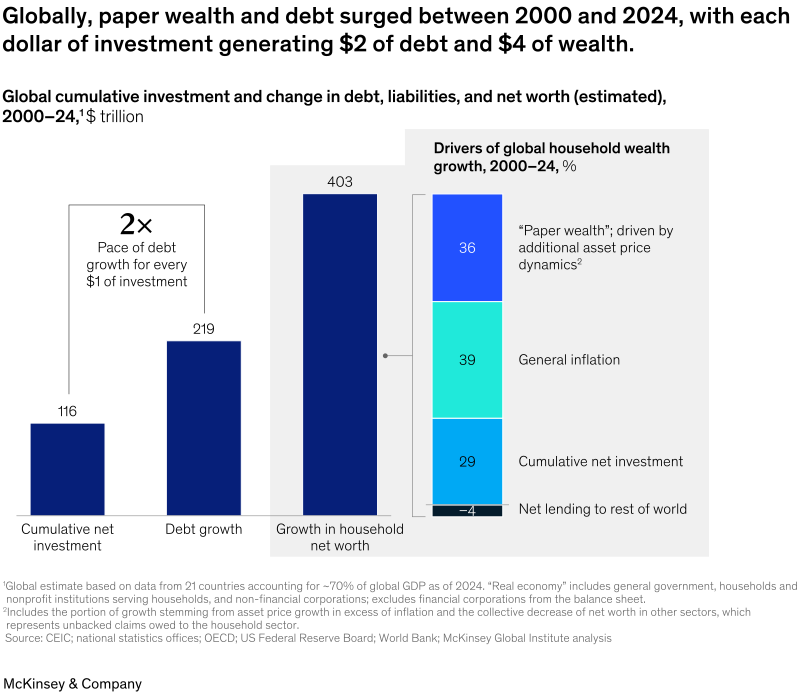
This pattern has characterised much of the world economy in the past two decades. Globally, households gained about $400 trillion in wealth between 2000 and 2024, yet more than a third of that increase was “paper wealth,” decoupled from real economic activity.7 In fact, each dollar of investment in that period generated $2 in debt and $4 of wealth (Exhibit 1), along with widening cross-border imbalances driven by persistent trade deficits or low domestic saving. Some of these imbalances persist despite easing since the pandemic-era peak in 2021.
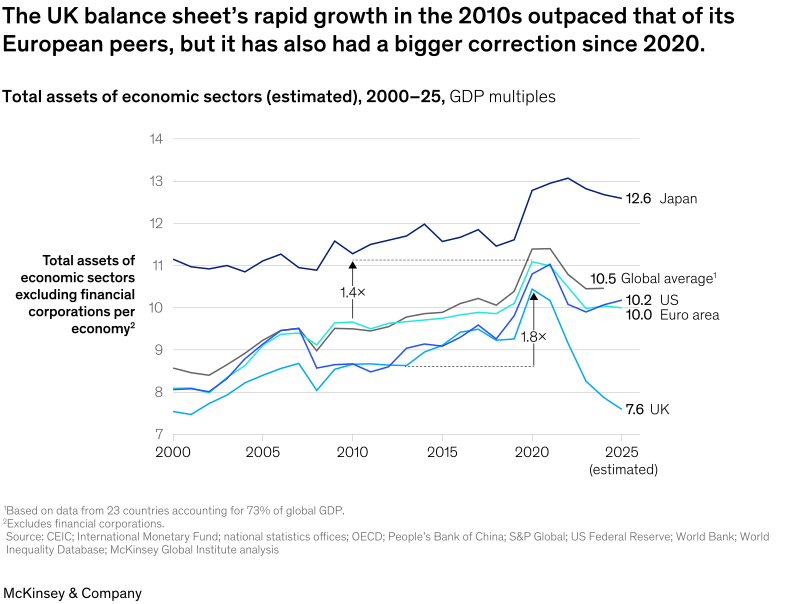
The United Kingdom’s balance sheet mirrors these pressures. Since the turn of the century, the country experienced a sharp rise in asset prices (significantly larger than in comparable European economies) that widened the gap between financial valuations and productive fundamentals (Exhibit 2).8 The result was elevated levels of paper wealth and a highly unbalanced national balance sheet.
The UK balance sheet’s necessary but costly correction
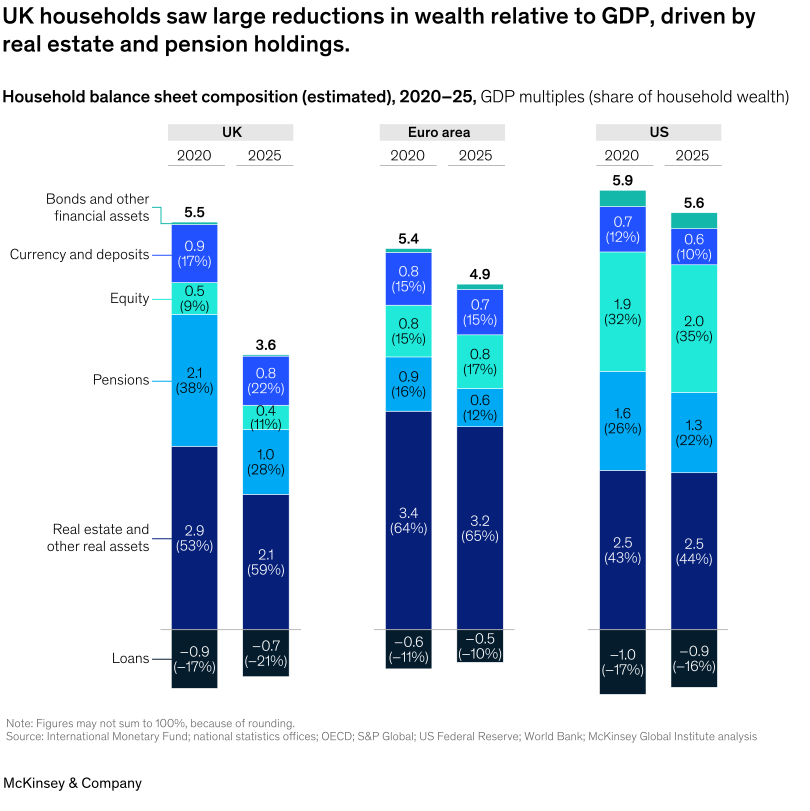
This imbalance began to correct during the pandemic as high inflation and rising interest rates brought down the value of assets—such as traded debt securities—while imposing major costs on households whose wealth and purchasing power fell (Exhibit 3). Wealth decreases can have real, tangible impacts on households’ well-being. Higher wealth may entice families to spend more, which boosts growth, while the confidence generated by rising retirement funds or home values may make it easier for consumers to justify taking on new debt to buy a car, undertake home renovations, or go on vacation.9
The value of real estate has decreased relative to GDP and in real terms
This reduces some of the risks inherent to elevated asset prices as well as household wealth. Real estate is the largest component of household wealth, accounting for 60 percent of the total (compared with about 50 percent globally and about 40 percent in the United States), and declined from its peak of 2.8 times GDP in 2020 to 2.1 times GDP in 2025.10 This was also driven by a spike in inflation, which outpaced growth in house prices between 2020 and 2025.11 Real estate values are now roughly in line with their average in the 2010s relative to GDP, though still above the long-term average of 1.8 times GDP seen in earlier decades.12
The value of financial assets has seen large adjustments in real terms, especially pension assets
The value of pension holdings, the largest financial asset in British households’ balance sheet, declined from 2.1 times GDP in 2020 to 1.0 times GDP in 2025; in nominal terms, the decline was from £4.4 trillion to £3.1 trillion (a 30 percent decrease), due to rising interest rates leading to price declines among long-term securities held by pension funds (although future nominal annuities are not reduced, the expected purchasing power from them is). Overall, households lost about 25 percent of their real wealth to inflation, and nominal wealth then declined by another 10 percent.13 Equity values have also moderated to now stand at about 1.8 times GDP, in line with the 1970–2024 historical average but well below the late-1990s peak of 2.4 times GDP.14 Meanwhile, the ratio of corporate equity to net corporate assets has fallen to a 25-year low of about 75 percent, meaning companies are worth less than the value of the assets they own.15
On the other side of the balance sheet, private debt is at long-term lows relative to GDP
Corporate and household debt stocks in the United Kingdom are now at their lowest levels relative to the economy in more than two decades, at about 60 and 75 percent of GDP, respectively.16 Beyond the impact of inflation, there was true deleveraging. The debt-to-assets ratio for nonfinancial corporations fell from 40 percent in 2020 to about 30 percent in 2025, while the debt-to-equity ratio for financial corporations improved over the same period, decreasing from a multiple of nearly seven down to six.17
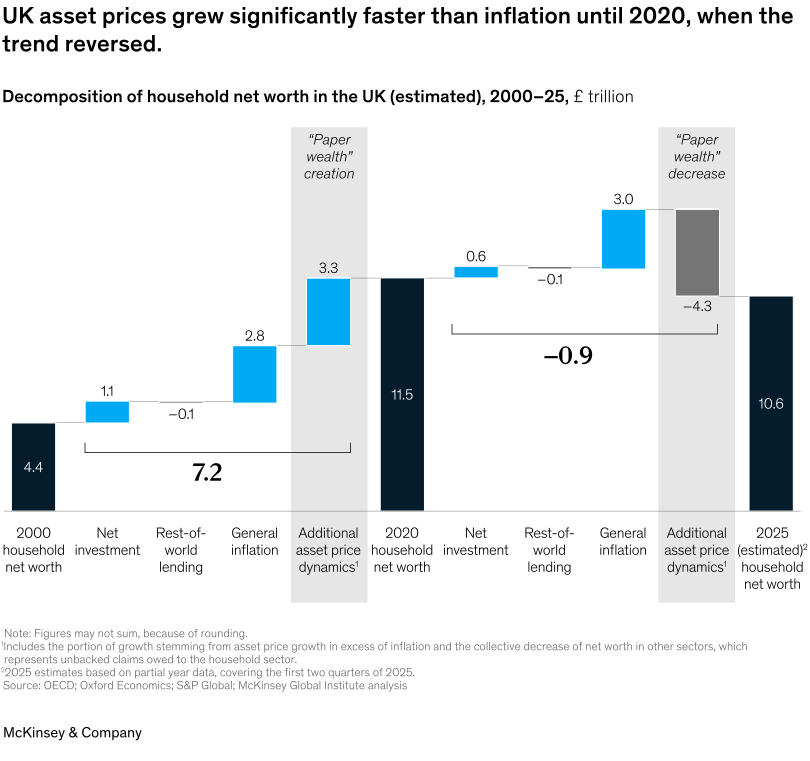
These developments have culminated in a decrease in paper wealth. From 2000 to 2020, rising asset prices accounted for almost half of the growth in wealth of UK households.18 Since then, this effect has reversed as asset prices corrected in real terms, with real estate and pension holdings being the key drivers of this development. Among other factors, the magnitude of this adjustment was due to the high persistence of inflation in the United Kingdom and the correspondingly elevated long-term interest rates dampening real estate price growth.19
While this reduced the gap between paper valuations and productive capital, it also strongly affected households: Between 2020 and 2025, the total real wealth of British households decreased by almost £4 trillion due to high inflation; on average, real personal wealth decreased by almost 25 percent (Exhibit 4).20
The United Kingdom’s lack of investment and balance sheet capacity for growth
While the gradual rebalancing of some elements of the United Kingdom’s balance sheet have reduced the risk of a sudden reset in the future, others continue to present challenges that could curb potential growth and limit future prosperity:
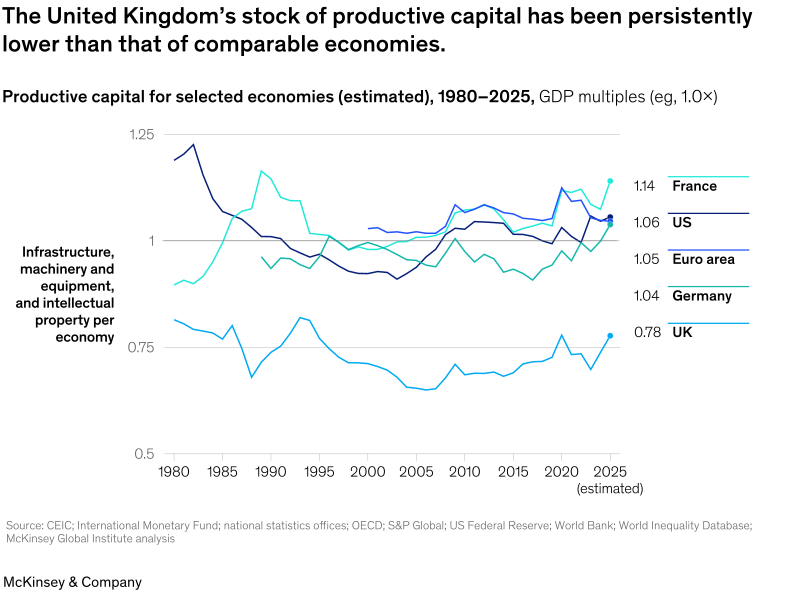
- The country’s stock of productive capital, including machinery, infrastructure, and intellectual property, is undersized relative to the scale of the British economy, at less than 80 percent of GDP, compared with 100 to 110 percent in comparable European economies (Exhibit 5).21 The gap looks unlikely to be bridged soon. UK workers operate with about one-third less capital per hour worked than in peer economies; separate estimates looking at broader definitions of capital estimate a gap as high as about £2 trillion in 2019 and might take decades to fill even with a significant increase in investment.22 Capital intensity (capital services per hours worked) has grown more slowly than hours worked since 2010, and this “capital shallowing” has been a material factor behind the United Kingdom’s productivity stagnation over the past ten to 15 years.23 The stock of intellectual property remains below that of leading economies,24 as does R&D intensity, at about 2.6 percent of GDP. Similarly, gross fixed capital formation trails G7 peers, amounting to about 18 percent of GDP over the 2000–25 period, compared with 21 percent in the United States and 22 percent in France and Germany.25
- Household investment is skewed toward real estate. Real estate dominates the balance sheet of UK households, making up about 60 percent of total assets compared with about 50 percent on average globally. Equity holdings, whose performance has outstripped real estate in recent decades, are comparatively underrepresented, accounting for about 11 percent of household wealth, compared with 14 percent in France, 15 percent in Germany, and 35 percent in the United States.
- The government faces fiscal constraints. The face value of the United Kingdom’s government debt (the amount to be repaid when bonds expire) is about 100 percent of GDP, slightly below its 2020 peak of about 105 percent but well above the average of about 85 percent in the 2010s.26 At the same time, the market value of the United Kingdom’s public debt (the amount needed to purchase all the government-issued bonds on the market) has fallen below 80 percent of GDP, down from an average of about 95 percent in the 2010s due to higher interest rates, eroding wealth for UK and international investors, and households holding that debt as an asset.27
Igniting future growth and sustainable wealth formation
Much is at stake over the next decade. McKinsey Global Institute (MGI) research identifies four potential long-term scenarios for the trajectory of wealth and growth for the United Kingdom and other major global economies, all of which are characterised by some degree of imbalance.28 One scenario sees both sustained real economic growth and wealth creation (“productivity acceleration”), and in the other three scenarios, wealth or growth are reduced to different degrees: a further decrease of real wealth via continued inflation (“sustained inflation”); a shrinking balance sheet due to a prolonged recession and a further decrease in asset values (“balance sheet reset”); or a return to a state of imbalance marked by stagnant growth, low investment, excess savings, and ultralow interest rates (“secular stagnation”).29 Depending on the scenario, UK households could cumulatively gain £35,000 or lose £15,000 in real wealth per capita by the mid-2030s—a 20 percent increase or 10 percent decrease relative to today (Exhibit 6).30
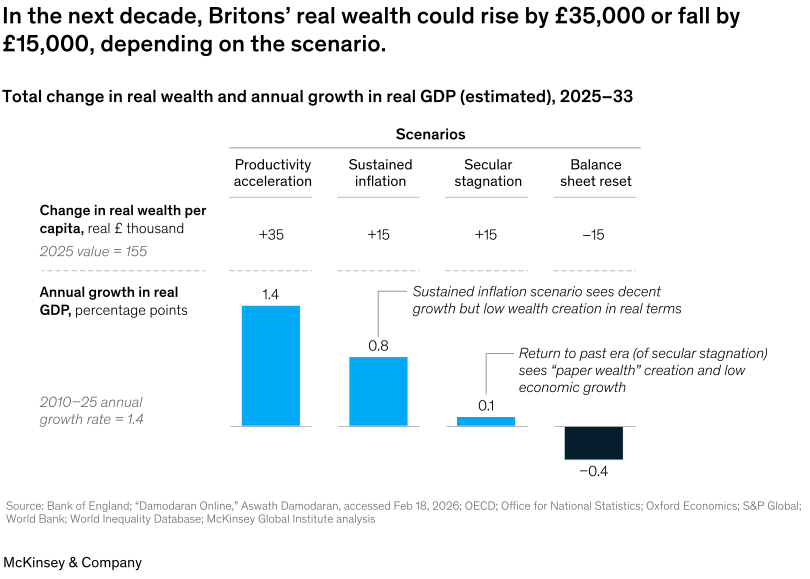
Our analysis suggests igniting growth the United Kingdom needs a step up in productive investment, ending several years of high inflation and a preceding decade of secular stagnation. This would rebuild the country’s balance sheet for sustainable growth and wealth, rather than repeat past episodes of leveraged asset price gains. Such a scenario would include two key elements:
- Rebuilding the stock of productive capital. Building on existing efforts such as the Industrial Strategy,31 there is an urgent need to shift the United Kingdom’s balance sheet by accelerating public and private investment in infrastructure, machinery, and technology.32 This could be supported by efforts to attract more private capital, including foreign direct investment,33 by streamlining permitting processes and making it easier and cheaper to build, and by developing strategies to lower business costs such as energy prices.34 Initiatives that facilitate access to capital sources for enterprises, scale-ups in particular, may also increase business dynamism: The Bank of England recently found that high-growth firms struggle to access capital needed to scale, especially those whose value is based on intangible assets.35
- Strengthening the linkages between capital markets and the real economy. One of the principal features of an unbalanced balance sheet is the disconnect between wealth and growth, because savings flow toward low-productivity assets, leading to paper wealth. This could be mitigated by efforts to channel finance and savings toward more productive uses. This could include changes in the financial sector from risk weights to mortgage support and pension fund allocation, but it could also entail changes in incentives for retail investor capital allocation, such as investor information and education, simple products, or even monetary incentives.36 This would support the long-term growth of households’ wealth, linking it with the productive capital stock fuelling the British economy.
There is a window of opportunity to shape the United Kingdom’s balance sheet, especially by rebuilding its stock of productive capital and strengthening linkages between capital markets and the real economy. All stakeholders have a role to play in determining the trajectory of the country’s economy. And business leaders especially should not be passive observers: MGI research shows just a few standout firms have the capacity to meaningfully accelerate a nation’s productivity growth and contribute to rebuilding the balance sheet sustainably.