The United Kingdom’s economy is navigating a complex convergence of structural and geopolitical challenges. Subdued growth, driven by the drag of “capital shallowing”1 and persistently low productivity growth over the past decade, is now further strained by a volatile global landscape and significant energy-related challenges, including some of the highest industrial electricity prices among advanced economies. Yet within this difficult context lies an opportunity for reinvigoration through renewed international engagement.
While UK companies have shaped global markets for centuries by investing abroad, the inverse is equally vital and sometimes less appreciated: foreign investment flowing into the region has been a crucial ingredient of its economy. Singer, the US sewing machine manufacturer, opened a factory near Glasgow in 1885, dubbed “the largest factory in the world,” and exported sewing machines from the United Kingdom for decades. Ford arrived in Dagenham, London, at the beginning of the 1930s. More recently, global financial-services and technology multinationals have anchored major operations in London and in regional hubs across the country. Although foreign-owned firms account for only around 1.5 percent of UK businesses, they employ roughly one-fifth of the workforce, generate around 30 percent of gross value added, and contribute to a disproportionate amount of R&D expenditure.2
When multinational corporations invest in new projects in new places, it’s not just money crossing borders. Alongside capital, greenfield foreign direct investment (FDI) can transfer know-how, technology, and managerial practices across economies. This can catalyse the development of skilled local labour, strengthen domestic supplier networks, and crowd in additional domestic investment. Through these channels, greenfield FDI can raise productivity and support export growth, amplifying the impact of the initial investment well beyond the value of the capital inflow itself.3
Given the United Kingdom’s relatively low recent investment and productivity performance, greenfield FDI could play a particularly important role in supporting future growth. The United Kingdom has experienced persistently subdued investment rates—among the lowest in the G7 economies—alongside muted productivity growth over the past decade.4 According to the Office for National Statistics, the United Kingdom has experienced “capital shallowing” since 2010, meaning that investment has been insufficient to keep up with the growth in hours worked—a drag on growth.5 Many precedents show how a long-term focus on high-value FDI—supported through consistent policy, investment in skills and infrastructure, and a competitive business environment—can reshape an economy by providing a boost to the capital stock as well as to the ability of industries to harness technologies in a more efficient way. For example, in Ireland, this approach helped attract waves of investment in pharmaceuticals, biotechnology, advanced manufacturing, and digital industries, making foreign investment a cornerstone of economic growth and prosperity.
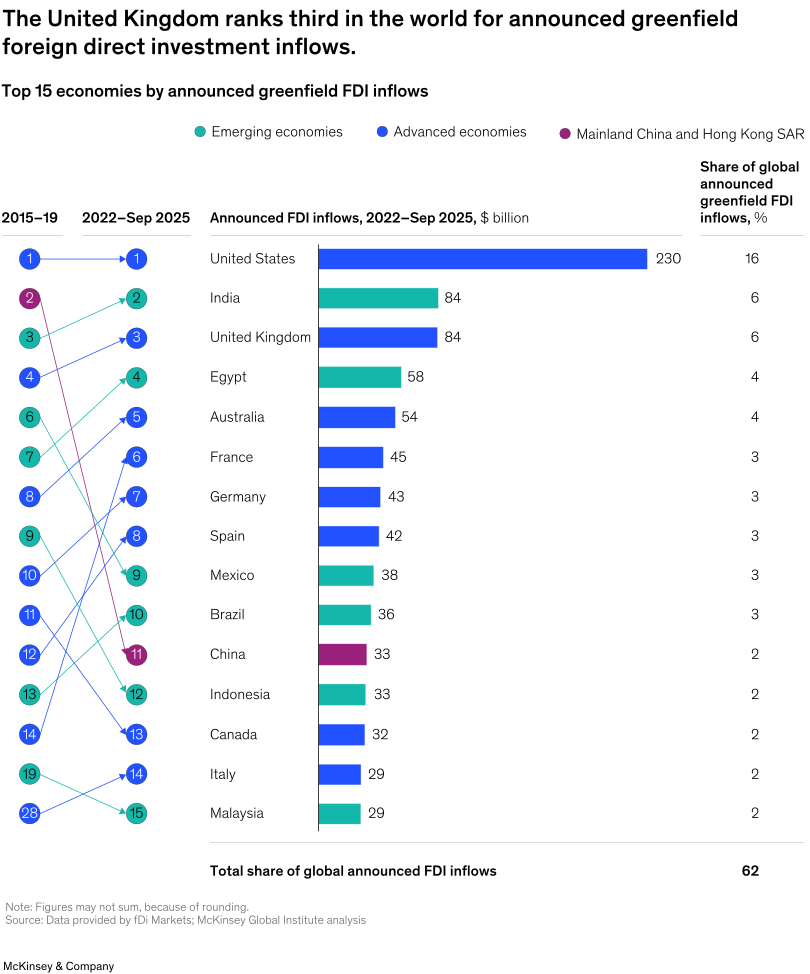
The good news is that announced greenfield FDI into the United Kingdom is growing. From January 2022 through September 2025, inflation-adjusted total announced inflows averaged around $85 billion a year.6 That is about 40 percent higher than annual prepandemic levels and exceeds the roughly 20 percent increase in global announced FDI over the same period (see sidebar, “How we measure FDI and how this translates into actual projects”).7 In 2022–25, the United Kingdom was the world’s third-largest destination for greenfield FDI announcements, behind the United States and on par with India, up from fourth place in 2015–19 (Exhibit 1). It continues to capture around one-quarter of total announced inflows to Europe, both including and excluding intraregional flows.8
However, FDI alone is not sufficient to ignite growth, even assuming that announcements turn into delivered projects. For instance, research from the McKinsey Global Institute (MGI) finds that FDI can help boost exports, but other conditions also need to be in place. These include sufficient human capital and infrastructure, integration into global value chains, and meaningful subsequent domestic investment.9 In addition, there is room for more FDI—if more industries and partners can be tapped. Announced FDI into the United Kingdom is deep but narrow. Much of the new activity is concentrated in clean energy and AI megadeals (valued at more than $1 billion each in inflation-adjusted terms), with relatively little flowing into the advanced-manufacturing sectors that will also shape the world of tomorrow. Around 80 percent of announced inflows come from Europe and the United States (50 percent and 30 percent, respectively), pointing to an opportunity to engage more deeply with fast-growing investors in other regions.
Two-thirds of announced FDI in the United Kingdom targets clean energy and AI
Two sectors have powered growth in announced FDI to the United Kingdom: energy, specifically clean energy, and communications and software, namely AI infrastructure. Between 2022 and September 2025, these two sectors together accounted for about two-thirds of announced greenfield inflows into the United Kingdom—around 45 percent in energy and 20 percent in communications and software—compared with roughly 45 percent globally (Exhibit 2).10 These sectors are highly capital-intensive, and AI is shaped by powerful escalatory investment dynamics as firms and countries race to secure technology leadership. This has raised the price tag of projects, which means that only a few multinationals have the capabilities, financial strength, and risk appetite to develop them.
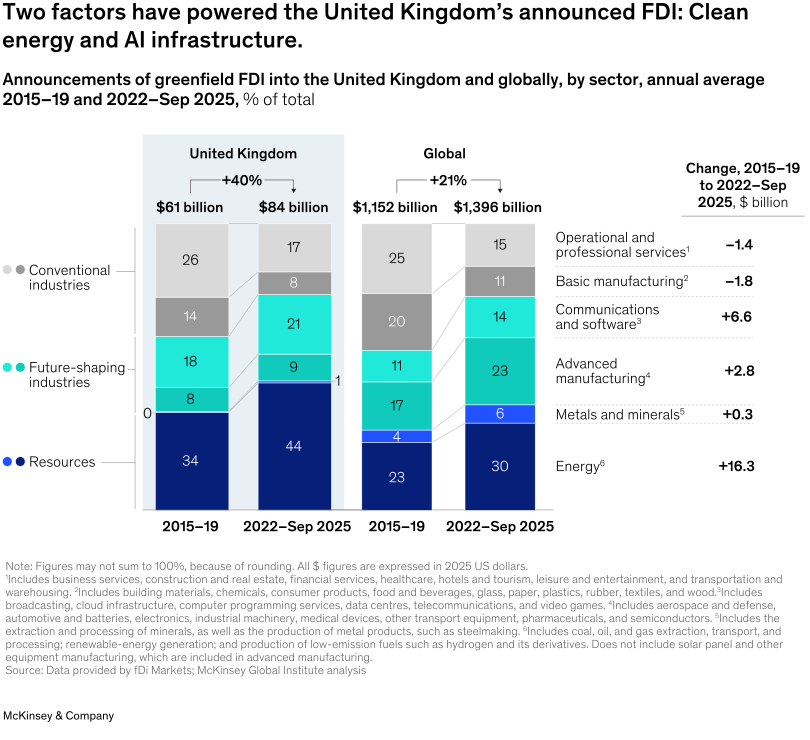
As a result, there has been a surge in announced “megadeals” valued at more than $1 billion each in the United Kingdom. Fewer than ten megadeals per year now account for about 40 percent of the total value of inward greenfield FDI, which is nearly double their share in 2015–19. These large-scale projects have driven around 40 percent of the increase in energy-related FDI and almost all of the growth in communications and software, including AI. Megadeals now represent around 50 and 60 percent of total announced inflows in these sectors, respectively.
Such large-scale projects can serve as flagships for emerging sectors, signalling that the United Kingdom can compete for high-value global investment, which could be transformative. However, in both cases, there are also questions on how to translate these megaprojects into material benefits for the UK economy, especially given that their scale means that delays or cancellations can have an outsize impact compared with a more diversified pipeline.
Energy: Announcements of new clean energy projects surged, while fossil fuel inflows declined sharply
The United Kingdom continues to face significant energy-related challenges. In 2024, it had the highest industrial electricity prices in the OECD, which is weighing on competitiveness. Prices were around 40 to 50 percent higher than in France and Germany, and four times higher than in Canada.11 These elevated prices reflect several structural challenges. For example, gas-fired generation set the country’s marginal electricity price about 85 percent of the time in 2024—well above the European average of 58 percent.12 While a range of levers is needed to tackle the challenges, upgrading the UK energy system (boosting not only supply but also the required storage, transmission, and distribution infrastructure) could contribute to lowering costs in the United Kingdom while also supporting European energy markets as electricity interconnectors are built.
This context creates both challenges and opportunities in the UK energy sector for investments that can play a role. In fact, energy has remained the top category for greenfield announcements in the United Kingdom, rising from $21 billion per year in 2015–19 to $37 billion in 2022–25, a surge of around 80 percent, as the drive toward clean energy ramped up. To date, most of this investment has focused on new supply, rather than broader energy system infrastructure. Announced wind investments have nearly doubled from an already substantial base to represent about three-fifths of the total, driven largely by major offshore projects developed by partners in Europe and advanced Asia.13 And announced solar investments have more than tripled, now accounting for one-fifth of energy-related inflows.
Meanwhile, announced FDI in fossil fuels in the United Kingdom fell by around 80 percent, greater than the global decline of around 30 percent. Investor sentiment may have been shaped in part by policy uncertainty and changes in the fiscal environment in recent years, including the introduction of the Energy Profits Levy in May 2022, a temporary additional tax on profits from oil and gas production in the UK North Sea.14
Delivering the current wave of announced clean-energy investment—while continuing to attract the required additional energy investment from domestic and foreign sources—is a challenge to be managed. Offshore wind, a highly capital-intensive industry, in particular faces significant execution challenges related to sharp inflation, higher interest rates, supply chain bottlenecks, labour shortages, and delays in planning and grid connection. As a result, the pipeline of announced projects may be at greater risk than in other sectors. In recent years, some large projects have been delayed, cancelled, or re-scoped, and developers have called for greater policy clarity and more stable market frameworks to ensure the viability of future auction rounds.15 In 2025, in line with global trends, the United Kingdom has also seen announced FDI in clean energy begin to lose momentum.
In summary, the United Kingdom has a substantial pipeline of clean-energy FDI projects that, if delivered, could play an important role in the country’s energy security and affordability. However, converting this surge in announced projects into operational capacity will require coordinated action to derisk delivery, including timely expansion of transmission and distribution networks, continued deployment of storage, faster planning and permitting, supportive revenue settlements, and sustained policy stability to support financing and supply chain investment.
AI: FDI is a key driver of the United Kingdom’s digital economy
Artificial intelligence is emerging as a foundational technology in the global economy, and the United Kingdom has many strengths it can harness to compete.16 The United Kingdom is home to some of Europe’s strongest universities and research institutions, many large multinational technology firms, and one of the region’s most vibrant start-up ecosystems. Building on these strengths, the country aims to foster the conditions for AI to scale and deliver productivity gains across sectors. Its policy agenda sets out a long-term strategy that combines investment in infrastructure, skills, and research with frameworks to attract private capital and encourage responsible innovation.17 These efforts include expanding data, computing, and connectivity capacity, as well as strengthening regional ecosystems so that AI-driven growth extends beyond established tech hubs.
Announced FDI in the United Kingdom’s digital and AI value chain has expanded substantially. The communications and software sector has grown rapidly since 2022, with announced flows up by 60 percent (Exhibit 3), reflecting the build-out of digital infrastructure to support the expanding deployment of AI. Between 2015–19 and 2022–25, announced investment in data centres climbed 115 percent to $17 billion a year—on par with the 115 percent global increase over the same period. This is all the more remarkable given the United Kingdom’s high electricity prices, and it points to strong underlying demand driven by the scale and sophistication of the UK services economy and the country’s role as a regional hub for cloud and AI workloads. As in other markets, the bulk of this announced investment came from major hyperscalers and developers based in the United States, where the industry is concentrated today. In 2025 specifically, announced FDI into AI infrastructure accelerated.18 Multinational technology companies have announced commitments spanning a mix of activities—from R&D and procurement to technology deployment and start-up investment—including several initiatives that are expected to translate into new greenfield investment as individual projects are developed and brought forward.
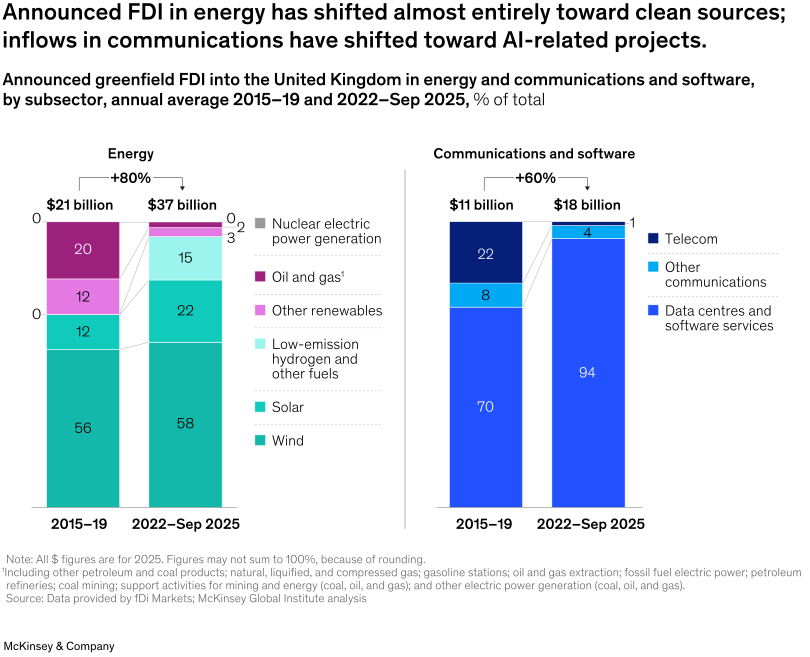
Meanwhile, greenfield FDI announcements into traditional telecommunications in the United Kingdom have fallen by almost 90 percent, faster than both European and global averages. This may reflect the maturity of the United Kingdom’s fibre networks, which may limit scope for new large-scale projects. Inflows haven’t yet shifted to other potential growth areas—such as low-Earth-orbit satellite connectivity, which remains at an earlier stage of commercialisation, or mobile coverage, where investments also tend to be smaller and more incremental.
The continued expansion of AI infrastructure will depend on competitive operating conditions, including lower energy costs and access to sufficient grid capacity. Moreover, while large-scale compute investment is a necessary foundation, it is not sufficient on its own to generate sustained productivity gains or a broader technology boom. Realising the full impact of AI-related FDI will require complementary measures that support adoption and diffusion across firms, strengthen talent pipelines, ensure access to data and finance, and enable UK start-ups and scale-ups to build competitive businesses and scale them globally.
Advanced manufacturing remains a gap in the UK—but some hopeful signs are visible
The United Kingdom’s continued ability to attract large amounts of FDI is impressive. However, amid strong investment in clean energy and AI infrastructure, advanced manufacturing is a weak spot. Since 2022, less than 10 percent of announced FDI in the United Kingdom has gone to advanced manufacturing (Exhibit 4). That’s less than half the share in Europe and one-fifth of the share in the United States, where semiconductor fabrication plants in particular have underpinned a boom in FDI inflows. Other economies, including Germany and Ireland, have attracted multibillion-dollar semiconductor fabrication projects, while Germany, Spain, and Hungary have secured major battery gigafactories.
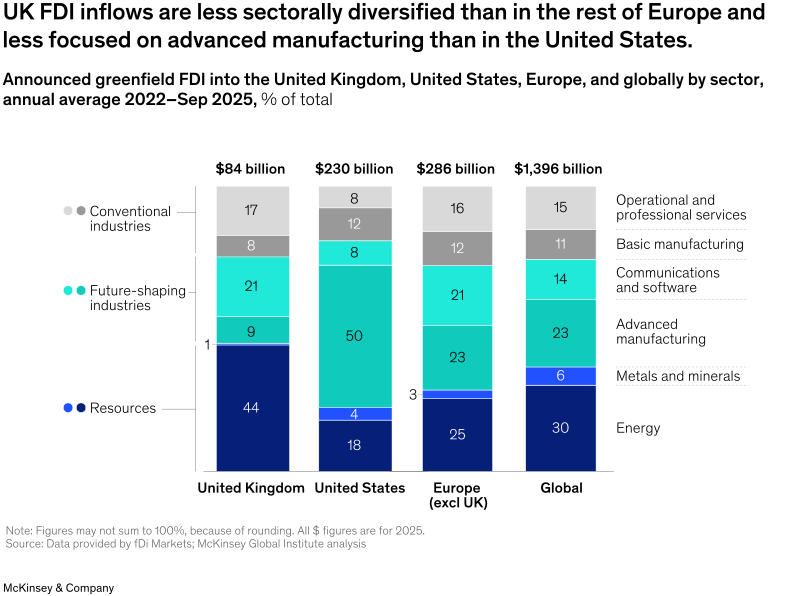
Of course, the United Kingdom is a service-oriented economy, and lower manufacturing inflows than in Germany or Eastern Europe are not necessarily bad. However, the United Kingdom has historic pockets of strength in advanced manufacturing, including aerospace production, and in upstream segments—such as semiconductor design and R&D, as well as pharmaceutical innovation and discovery—that present a strong foundation to expand its footprint.
Capturing more of the global momentum in advanced manufacturing could help rebalance and strengthen the UK investment landscape. There are signs of momentum. Between 2015–19 and 2022–25, announced FDI in the United Kingdom in advanced manufacturing rose by 55 percent. Announced FDI in the electric vehicle (EV) battery and assembly sector increased by a factor of 3.5, powered by investment from multinationals in Germany, India, and Japan. That is roughly double the rate of growth in the rest of Europe. And while FDI in defence has historically been limited, it is growing fast: From January to September 2025, the United Kingdom attracted around $1.8 billion of FDI to the sector.19 Recent experience in freeports and investment zones across the United Kingdom demonstrates that targeted, place-based policy can contribute to attracting capital-intensive industrial activity when incentives, site readiness, and local coordination are aligned.
In a more volatile geopolitical world, 80 percent of the United Kingdom’s announced FDI inflows come from Europe and the United States
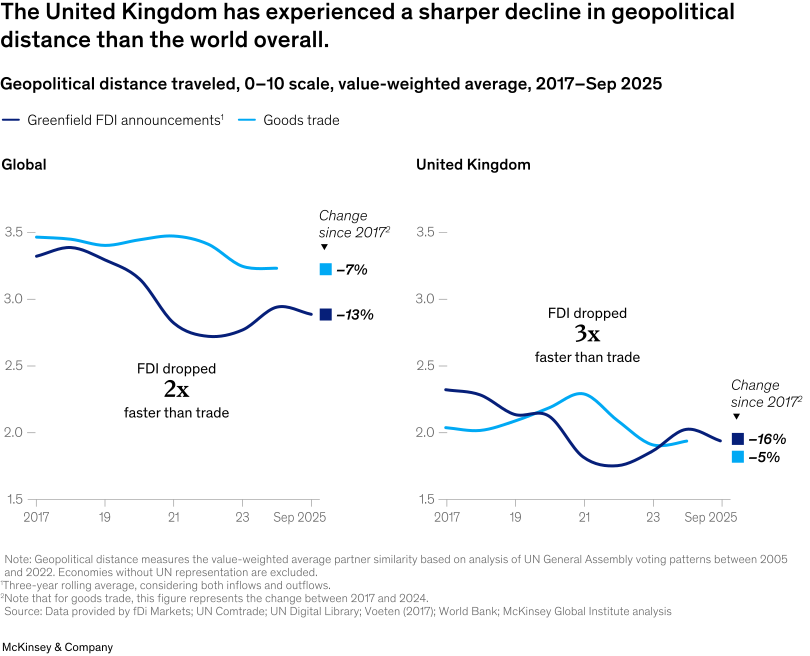
A major force shaping global FDI is its growing alignment along geopolitical lines as part of a broader reconfiguration in global trade patterns. This force applies to the United Kingdom too.20 Globally, the average “geopolitical distance” of FDI has fallen about twice as fast as that of trade.21 Advanced economies announced more investment in one another, particularly in the United States, but reduced flows to China by nearly 70 percent. The United Kingdom is very much part of this realignment. Historically, greenfield FDI announcements in the United Kingdom have been concentrated among close geopolitical partners, particularly the European Union and the United States, giving it a relatively low overall distance of investment ties (Exhibit 5). Since 2017, that distance has narrowed even further: The average geopolitical distance of UK FDI has shrunk about three times faster than that of trade flows—sharper than the global trend—as the country both invests in, and attracts capital from, increasingly aligned partners.
Since 2022, Europe and the United States have been the source of around 80 percent of inbound greenfield FDI announcements in the United Kingdom—50 percent from the former and about 30 percent from the latter (Exhibit 6). Advanced Asian economies contributed around 10 percent of announced inflows, with the rest of the world accounting for smaller shares.
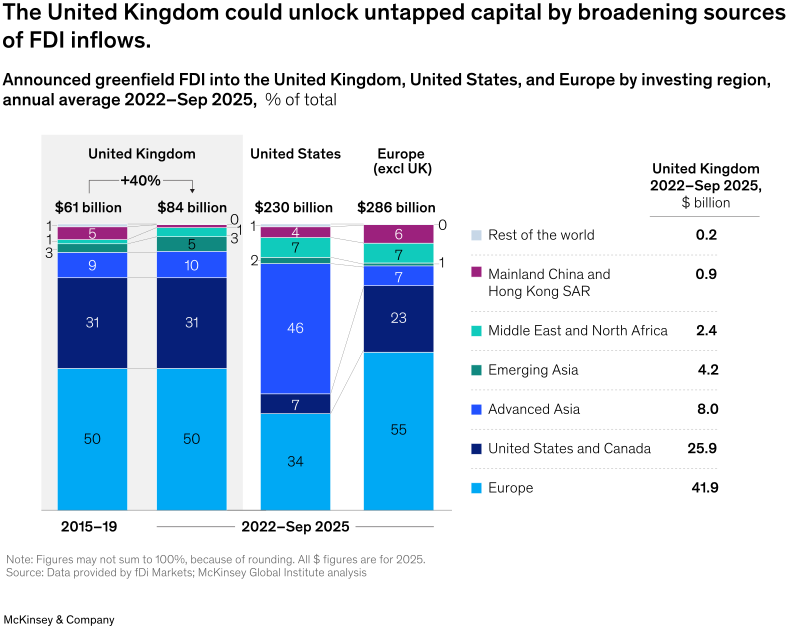
This geographic mix reflects both the broader trend of global FDI announcements aligning along geopolitical lines and the sectoral composition of UK inflows. The United Kingdom is currently most attractive in clean energy and AI, areas in which European and US firms possess leading industrial capabilities and are driving global investment. Thus, seasoned FDI partners appear to be holding steady and providing stability, but the UK profile is still relatively narrowly focused (Exhibit 7).
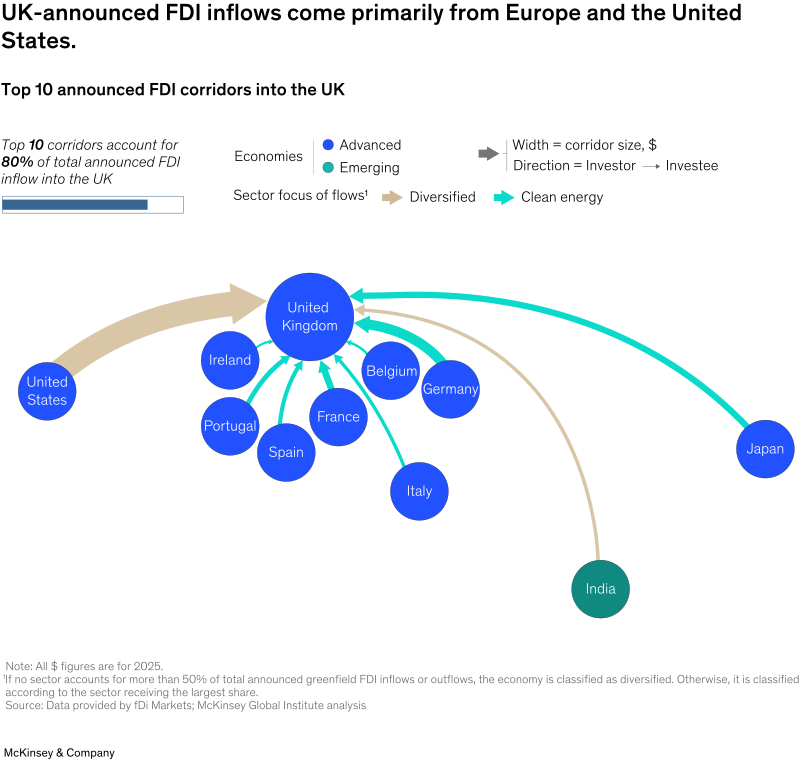
There remains untapped potential among partners that are relatively proximate in geopolitical terms. For example, across the Middle East and advanced Asia, economies such as South Korea, Taiwan, and the United Arab Emirates have been increasing outbound investment, particularly into the United States. Roughly half of announced US inflows now come from these regions, compared with only around 35 percent from Europe. Meanwhile, amid shifting geopolitical dynamics, announced investment from Mainland China and the Hong Kong market has increased into Europe but declined sharply into the United Kingdom. Since 2022, these investors have accounted for around 6 percent of announced greenfield inflows into Europe, compared with around 1 percent into the United Kingdom.
Announced FDI into the United Kingdom shows signs of diversification. Announced inflows from emerging Asian economies have more than doubled since 2022, including, for example, investments in battery gigafactories from partners in India. Flows from the Middle East and North Africa (MENA)—including projects from across the region in energy storage, sustainable aviation fuel, and logistics and port infrastructure—have more than tripled. Yet in both cases, growth is from a low base, and together these two regions account for less than 10 percent of total UK FDI inflows.
Recent country-level partnerships point to how the United Kingdom is beginning to broaden its investment relationships beyond traditional continental and transatlantic ties. New cooperation with Japan, for example, focuses on advanced manufacturing, clean-energy industries, life sciences, quantum, and cyber, while collaboration with Saudi Arabia includes new joint investments in clean energy and transport decarbonisation.22
FDI could help the UK economy shift up a gear—but it’s ‘a seed that needs watering’ to ignite much-needed domestic investment and multiplier effects
Capital investment accounts for up to 80 percent of productivity growth across regions by giving workers access to better technology and by spurring further innovation.23 Since 2010, the United Kingdom has experienced “capital shallowing,” meaning that investment has been insufficient to keep up with the growth in hours worked—a drag on growth.24 As one part of investment, FDI can play a role in building a more productive, more competitive economy. Providing initial funding is just the start; cross-border deals that take root also transfer knowledge and spur ongoing domestic investment, further contributing to economic growth.
The announced inflows into the United Kingdom’s clean-energy and AI sectors provide a good starting point—but they need to be followed by meaningful domestic investment. For instance, foreign investments in clean energy could help strengthen energy security, while AI-related projects form the necessary infrastructure from which the digital economy could grow. However, in both industries, it is important to establish the conditions required for announced FDI projects to be successful and for meaningful domestic follow-on investment to take hold. These conditions include derisking delivery of announced projects (especially in offshore wind), ensuring competitive operating conditions (especially for AI data centres), and encouraging UK companies to adopt new technologies and scale innovations for the global market.
Beyond energy and technology, the United Kingdom could further broaden the types of projects it attracts and the number of partners it works with. Diversifying FDI across a wider set of advanced industries could help build a more resilient growth base. While Europe and the United States remain core partners, engaging more systematically with fast-growing investors in Asia and the Middle East could unlock new capital, emerging technologies, and long-term industrial partnerships especially for manufacturing. Achieving this will require an environment that facilitates long-term, capital-intensive investment, underpinned by stronger delivery conditions such as more efficient planning and permitting, affordable and reliable industrial power, and faster grid connections.
There is reason to celebrate the United Kingdom’s recent success in attracting announced greenfield FDI: It is a sign of confidence in the country’s enduring underlying strengths. The next test is whether it can channel that success across more of the sectors shaping the world of tomorrow, turn announcements into delivered projects, and then “nourish the seeds” to ensure that the investments maximise growth. Doing so could help reinvigorate the economy and strengthen productivity growth.