Battery production has scaled at an extraordinary speed, supported by rising demand for electric vehicles and stationary storage, with demand for lithium-ion phosphate batteries totaling almost 1.6 terawatt-hours in 2025.1 This scale-up has delivered one of clean technology’s most dramatic cost reductions: Utility-scale battery storage costs have fallen by about 93 percent since 2010, driven by growing industrial scale, deepening supplier ecosystems, and relentless factory learning.2 Battery production is highly concentrated in Asia, which produces more than three-quarters of advanced batteries. As decarbonization efforts continue and battery costs continue to come down, demand for batteries is likely to more than double by 2030 to 4.2 terawatt-hours and quadruple by 2035 to 6.8 terawatt-hours, according to analysis by McKinsey Battery Insights.
This investment case is one of ten used in the research for the McKinsey Global Institute’s report, Catalyzing competitiveness: Where investment happens and why. The report examines how variations in the basic economics of comparable projects influence investment decisions in different regions globally and the impact those decisions can have on the future of competitiveness and growth across the world.
Growth in battery demand has put materials, yields, and ecosystems at the center of competitiveness
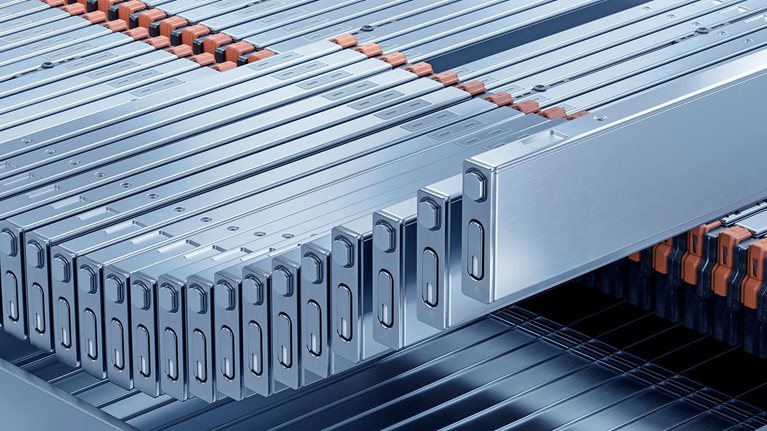
A battery gigafactory is an at-scale plant that produces lithium-ion cells using a standardized manufacturing process to produce fundamental battery components, such as electrodes, and to assemble battery cells that go into battery packs for electric vehicles and stationary energy storage. A 50 gigawatt-hour facility, the scale analyzed here, is typically organized in three to five building blocks, 12 to 20 production lines, and three consecutive manufacturing steps: preparing coated electrodes, assembling cells, and finishing cells through aging and testing.
This analysis focuses on a specific battery chemistry, lithium iron phosphate (LFP). Due to its lower cost and great thermal stability, LFP is commonly used in low- and mid-market passenger electric vehicles (EVs), commercial EVs, and battery energy storage systems. LFP chemistries are projected to account for roughly 60 percent of battery market volume in 2035. The same tools and processes are used for other battery chemistries, for instance, nickel manganese cobalt (NMC), which are commonly used in mid- and upmarket EVs. NMC and related nickel-based chemistries are projected to account for roughly 38 percent of battery market volume in 2035, with other battery chemistries making up the remainder.3 Some gigafactories process LFP and NMC batteries at the same plant, and the conclusions here therefore broadly apply to both types of batteries.
The battery value chain begins upstream with mining and refining the required raw materials. Lithium, nickel, cobalt, manganese, iron, phosphate, aluminum, copper, and graphite are extracted and then chemically processed into battery-grade inputs. Advanced chemistry turns them into active materials for cathodes and anodes and ensures purity and consistency. Advanced petrochemical processes are applied to manufacture materials for electrolytes and separators. These are then assembled into battery cells. Scale and supplier depth matter at every stage because high volumes and expertise lower unit costs and shorten lead times.
This part of the EV supply chain today is highly concentrated in Asia, especially in China, home to most of the global capacity in lithium refining and a dominant share of LFP and NMC battery cathode materials and graphite anodes. That concentration reduces input prices, logistics, and working capital needs for Chinese battery cell makers, while regions with smaller upstream footprints often pay more for the same materials once transportation, tariffs, and compliance are included.
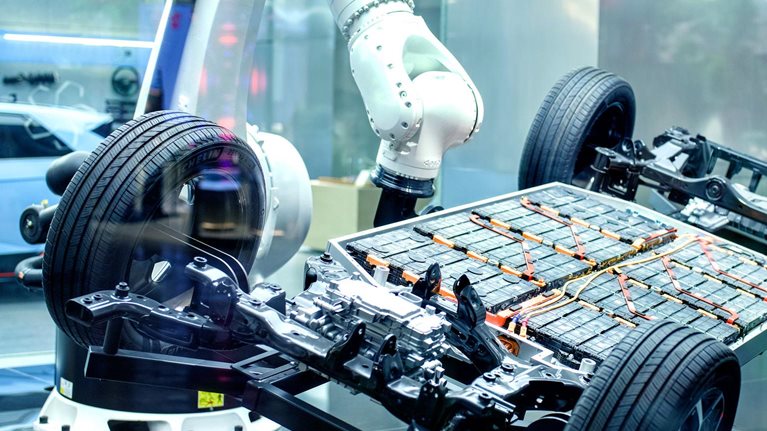
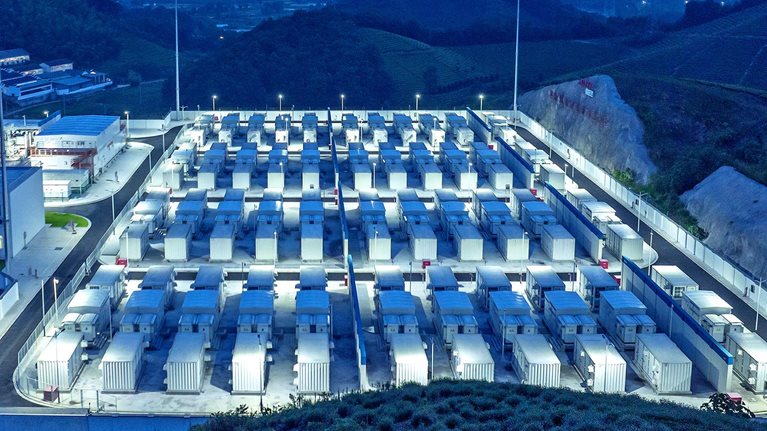
The downstream value chain starts once battery cells leave the factory. Cells are integrated into complete battery packs, which include cooling, housing, sensors, and a battery-management system. Historically, this was done with intermediate modules, but is now increasingly achieved with cell-to-pack and even cell-to-chassis designs that place cells directly into a pack or vehicle.4 Most cells—up to 90 percent of global volumes through 2030—go into EVs, although a growing share goes to stationary energy storage, with packs configured into cabinets or containers for use in a power grid or at customer sites.
At this end of the chain, value comes from safe, reliable integration and from software that manages performance over a battery’s life. After first use, batteries can be reused as spare parts or recycled to recover valuable materials, creating feedback loops upstream. As demand grows, every step of this downstream system is scaling, with particularly fast expansion in grid-scale battery energy storage systems related to increasing wind and solar power generation.
China is the world’s largest battery manufacturing base, although Japan and South Korea are holding their own
China is home to most battery cell manufacturing and has a dense ecosystem of upstream suppliers and equipment makers, making it easier to scale large plants quickly (Exhibit 1). South Korea and Japan are also important producers, supplying global automakers through long-established relationships. Europe and North America have announced plans to expand manufacturing capacity significantly, but their installed bases are small, and many projects face execution, cost, and ramp-up headwinds compared with Asian benchmarks. Recent McKinsey Battery Insights analysis indicates that North America’s maximum production capacity could rise from roughly 0.3 terawatt-hour in 2024 to more than 1.3 terawatt-hours by 2030, while Europe has announced capacity additions of several hundred gigawatt-hours. However, not all announced projects are likely to reach production, and both regions continue to need sustained public support and financing (especially for first-time developers), faster scaling, and localization of midstream supplies such as LFP cathodes and graphite anodes.5
China has manufacturing capacity to supply all of the world’s battery needs.
1Demand is based on EV production location. Solid-state batteries are excluded from demand and supply. Chemistry demand is modeled based on regional end-user preferences, technology performance, and commercial readiness.

Regional demand creates a different picture. At the global level, announced battery cell capacity appears sufficient to cover demand through 2030, and current supply exceeds demand in some parts of the market, especially in China. However, regional imbalances remain significant. China's installed and announced capacity can meet domestic needs and support substantial exports, whereas North America and Europe are expected to continue relying on imports to balance demand, particularly for LFP cells. That dependence is even greater upstream because the cathode-active material and precursors used in LFP batteries are almost entirely produced in China.6 McKinsey Battery Insights analysis indicates that China will remain a net exporter to multiple regions beyond 2030, reflecting its cost position and surplus capacity in parts of the battery value chain.
Public programs are beginning to reshape where battery capacity is built. In the United States, the Inflation Reduction Act and state-level incentives helped spur a strong pipeline of cell plants and upstream investments, although recent federal policy changes have created more uncertainty about some clean-energy and EV-related incentives. Europe has introduced support through the Green Deal Industrial Plan and national measures, complemented by local-content and rules-of-origin requirements. For example, after the United Kingdom left the European Union, the two regions signed a trade and cooperation agreement with rules of origin requiring electric vehicles and their batteries to meet minimum European- or UK-content thresholds to qualify for tariff-free trade.7
Additionally, the EU-27’s proposed Industrial Accelerator Act embeds European-content and resilience requirements into public procurement and clean-tech support.8 These initiatives seek to reduce import dependence, build resilience near key automotive hubs, and secure the industrial foundations of Europe’s auto sector. Absent sufficient domestic battery capacity, Europe risks exposing one of its core industries to strategic dependence and long-term competitive erosion.
China is the benchmark because scale and supply-chain depth lower battery cell costs
The modeled investment case evaluates a greenfield 50 gigawatt-hour factory for LFP batteries in four regions: China and the United States; Spain as an example of a European country with significant battery investment; and Malaysia because it exemplifies the wave of new battery-manufacturing investment in Southeast Asia (see sidebar “Methodology”).9
The levelized cost framework used in this analysis combines the cost of building and equipping a plant, ongoing costs of running it, and region-specific business conditions. In our model, we have not specified the number of individual batteries produced. However, the average EV today has a battery with a capacity of 50 to 70 kilowatt-hours, and a 50-gigawatt factory could, ignoring potential yield loss considerations, produce 700,000 to one million such batteries a year.
China is the natural base case for costs in this industry because its battery companies participate deeply across the supply chain and already operate many plants at scale efficiently. China’s presence is extensive in upstream processing of key materials for LFPs, which reduces input prices and simplifies logistics for local battery makers. The country also produces a leading share of cathode and anode materials and is strong in lithium refining, which reduces the delivered costs of materials and anchors overall cost advantages for domestic producers. Years of government support across the battery value chain have helped build the scale and supplier depth that lower China's costs today, advantages reflected in our levelized cost comparison even though it excludes direct subsidies.10
In every region, materials—anode active materials such as graphite; cathode active materials such as nickel, cobalt, manganese, and aluminum; electrolytes, separators and other components and additives—account for 60 to 70 percent of battery costs. The next-largest contributor to cost is white-collar labor, mostly in R&D and SG&A, accounting for 10 to 15 percent of total costs. Capital expenditures, which are split roughly equally between construction and equipment, represent about 10 percent of costs. Yield losses account for 5 to 8 percent of total costs. Blue-collar labor, maintenance, and energy costs make up the remainder.
China’s aggregate costs are the lowest, a result of denser local supply chains, experienced producers with high yields and utilization, lower labor and energy costs, and lower installed costs of equipment and buildings. Each mechanism reduces the cost per kilowatt-hour that must be recouped through sales (Exhibit 2).
Materials and labor costs drive the economics of battery production.
Cost differences across regions are largely driven by materials costs
Materials, which are the biggest expense in producing a battery and most exposed to potential glitches in supply chains, explain about 40 percent of cost differences across regions. Compared to China, a battery project in Malaysia pays about $3 more for battery materials, and European and US projects pay about $7 more per kilowatt-hour, accounting for 40 to 50 percent of the cost gap. Where production of cathode and anode materials is limited, such as LFP cathode (iron-phosphate) and graphite anode in Europe and North America, local factories typically pay more once freight, tariffs, compliance, and supplier margins are included. China’s proximity to large-scale producers of these inputs reduces delivered prices and working capital needs there. Until midstream capacity is scaled in the United States and Europe, imported materials or long-haul regional sourcing will result in higher costs per kilowatt-hour.
Construction accounts for about 20 percent of the cost differences that separate European and US projects from Chinese and Malaysian projects. Part of this gap is due to construction input prices. In Europe and the United States, building materials, labor rates for installation, and specialized expertise needed in building factories are far more expensive. For example, concrete prices are three times higher in the United States than in China. Additionally, local specialized vendor networks are less dense in Europe and the United States, so factories may rely on international suppliers for installation and commissioning, adding travel time and service contracts. Construction efficiency also explains part of the difference, because the variation in construction costs separating China from Europe and the United States is larger than the difference in inputs. Slower build times add overhead, and more extensive regulations require more complex designs and more advanced materials. The problem is particularly pronounced in Europe, where lower construction efficiency explains a larger part of the gap than differences in direct costs do.
White-collar labor costs vary widely across regions due to big differences in the costs of labor, processes, and ecosystem support. Wages for engineers and other highly skilled roles are higher in Europe and the United States than in China and Malaysia, adding 10 to 15 percent to the cost. Local talent pools grow at different speeds, which raises the cost of in-house R&D and corporate functions such as finance, human resources, and legal. Beyond wages, the maturity of local supplier and service networks also matters. Regions home to dense clusters of specialized vendors and well-established field support can spread technical problem-solving across partners and resolve issues faster, reducing the internal engineering effort and overhead required to coordinate it. Another factor driving these costs is the cadence of product development, which can vary widely. Some battery ecosystems move from concept to production in roughly half the time others take, requiring less engineering per product cycle and fewer years of project overhead.
Energy accounts for roughly 5 percent of additional costs in the United States and about 15 percent in Spain, where wholesale power costs are 2.5 times higher than in China. Electricity is needed continuously for air handling, dehumidification, drying, and formation, so a few cents' difference in grid prices per kilowatt-hour translates into big savings over time. Where grid power is expensive or volatile, energy-efficient equipment and heat-recovery designs become important cost levers, because they reduce operating expenses and emissions.
Yield and scrap discard account for the remaining 5 to 10 percent of the cost difference. If early production inevitably produces some cells that don’t meet specifications, the required materials, energy, and labor must be written off. Regions like China with a deeper installed base of similar factories and a more robust network of factory commissioning and ramp-up specialists typically reduce discards faster and have lower ramp-up costs. Structured ramp-up programs that codify testing, failure analysis, and supplier quality can shorten the learning period and reduce this cost penalty in new plants.
Countries and companies everywhere are seeking to address cost differences
The cost drivers outlined interact with various regional efforts to shape price. In the United States, for example, policy incentives such as the Inflation Reduction Act and import tariffs ensure that eligible, efficient local producers can earn attractive margins even if their pre-incentive costs are higher than China’s. Europe’s situation is different. Announced capacity is large, but the region has a bigger need for LFP imports and has more cost pressure from established Asian producers due to lower import tariffs. Although it faces a steep learning curve, the European battery industry requires fast scaling of gigafactories and rapid localization of critical midstream steps to close the cost gap with China and other Asian hubs.
Business model choices also influence where value is captured. Many automakers have formed joint ventures with cell specialists to secure volume, share the risk of building and operating new factories, and align product road maps. Such partnerships can reduce the time to market because they combine certainty of demand with a cell maker’s process know-how. Building capacity is capital intensive and complex, and joint ventures help distribute cost and execution responsibility in a way that lenders and policymakers often prefer.
Despite increasing policy attention and strategic pressure to localize supply, battery investment follows economics. The underlying costs, shaped not only by the direct costs of production but also by upstream integration, scale, execution capability, and reliable output, determine where new capacity is built. This continues to favor China, which has the raw materials, processing, equipment, and commissioning know-how that underpin a structurally lower cost base and support domestic supply and large export volumes.
Execution also matters. Commissioning delays and slow yield ramp-ups quickly erode project economics, giving regions with dense networks of equipment vendors, service technicians, and experienced local teams a practical advantage.
Local battery capacity becomes more attractive when logistics, incentives, and reliability line up. Where a new battery plant is located increasingly turns on factors not captured by a simple comparison of production costs. Large customers such as automakers and grid-storage integrators value proximity and reliable delivery because batteries are heavy, customized, time-sensitive components. Shorter supply chains reduce the geopolitical risk of freight and working capital needs and enable closer engineering collaboration.
European buyers, for example, report that long supplier lead times can erase nominal price advantages, increasing the value of partners that can support installation, site acceptance testing, and ramp-up on the ground. In the United States, high import duties on Chinese batteries combined with local incentives mean buyers often prioritize domestic or allied-market supplies even when list prices are higher because eligibility and logistics certainty partially outweigh unit cost in decision making. Recent McKinsey Battery Insights analysis found that tariffs can make Chinese imports structurally uncompetitive, leaving room for local producers to price at the upper end of the landed-cost curve and reinforcing a business case for increasing nearby capacity. Europe applies only modest tariffs on imported cells, so its emerging producers compete more directly with Chinese supply and rely more heavily on grants, loans, and local-content incentives to influence where gigafactories are built.
Capital efficiency, ramp-up excellence, and strategic material supply are levers to narrow the gap
Materials price differences explain the majority of the cost gap—and these are, to a large extent, outside a manufacturer’s control. To succeed, companies have a few levers at their disposal, including factory design, ramp-up processes, and sourcing decisions.
First, companies can design a factory around capital efficiency. A layout that shortens travel distances, a competitive tender that tests alternative equipment designs, and value-engineered buildings can reduce the capital invested per annual gigawatt-hour and advance the break-even point.
Second, companies can focus on ramp-up excellence to ensure stable output from day one. Commissioning and deploying plans, training, and service agreements that lock in response times and spare-parts availability can cut months off the journey to stable, high-yield production. That translates directly into lower unit costs and earlier revenue generation. Experience shows that many “opex surprises” in a gigafactory’s first year, such as unplanned downtime or inconsistent yields, are in fact predictable and can be mitigated with good contract design and line-readiness standards.
Third, companies can optimize their strategic sourcing. Local supply is usually more expensive than importing from the lowest-cost locations, so intelligent procurement is important to balance between efficiency and resilience. In the United States, the Inflation Reduction Act incentivizes the development of domestic sourcing. In Europe, local-content rules for key components are expected to tighten over the longer term. Where localization isn't viable economically, long-term supply contracts with strategic partners can derisk critical materials.
Policymakers shape the context in which individual projects succeed. In the United States, the priority could be maintaining clear, durable guidance about incentives and accelerating domestic upstream investment to reduce the cost of locally sourced materials. This combination would protect the emerging cost position of US battery factories and reduce exposure to global price swings.
In Europe, simplifying and accelerating permitting and improving financing for first-time developers would be important to set the stage for local investments, and support may need to extend beyond initial investment and into the early years of operation, including support for bottleneck materials such as LFP cathodes and graphite.
Closing the cost gap with China is a long-term prospect that the industry elsewhere cannot shoulder alone.