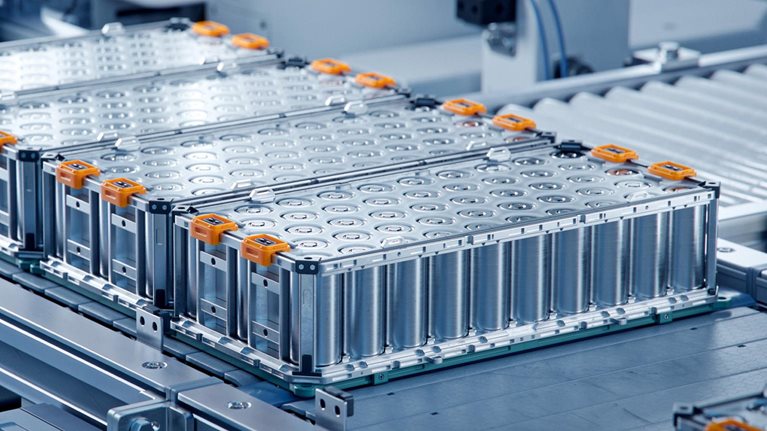
Semiconductor chips are the foundation beneath a range of technologies, and semiconductor manufacturing has become a strategically contested industry as governments race to secure technological leadership, supply-chain resilience, and national security. Roughly $1 trillion in investments are expected to go into chips through 2030. Semiconductors are produced in highly specialized plants called “fabs,” where billions of dollars are committed long before revenues begin to flow. Although equipment and materials account for much of a fab’s cost, they differ relatively little across regions. The real cost gap lies in labor productivity, construction costs, energy costs, and the speed with which projects move from plans to fabs and from steel in the ground to high-volume production. This means the ability to combine capital with productive labor and fast execution can determine where value is captured in the next era of chip manufacturing.
This investment case is one of ten that are the foundation of the McKinsey Global Institute’s report, Catalyzing competitiveness: Where investment happens and why. The report examines how variations in the basic economics of comparable projects influence investment decisions in different regions globally and the impact those decisions can have on the future of competitiveness and growth across the world.
A trillion dollars of additional investment is moving into one of the world’s most complex manufacturing systems
The global semiconductor industry is expected to generate more than $1.6 trillion in annual revenues by 2030, with about $1.0 trillion in planned investment expected.1 Industry demand is led by the boom in AI data centers, as well as by continued growth across computing, wireless, industrial, and automotive applications.
Semiconductor fabs typically specialize by the resolution of patterns, for example, process node and density range, imprinted onto a silicon wafer. These patterns are specified in nanometers, or one-billionth of a meter. The sophistication of semiconductors is continuously evolving. So-called leading-edge semiconductors like those used in smartphones or to train AI models are made with tiny node sizes of three to two nanometers and smaller. These chips are highly complex and currently manufactured by only three companies globally. Advanced semiconductors, with typical node sizes between 22 and 65 nanometers, are global workhorses in many electronics, automotive, and industrial applications and are expected to remain a significant part of installed capacity over the medium term. More manufacturers produce these chips, which are less technically demanding, more established, and supported by a deeper global pool of equipment, process expertise, and operating experience. Finally, mature semiconductors employ node sizes of 90 nanometers and above and are used for simpler, lower-cost functions that don’t require computing density, for example, basic chips that control home appliances and motor drivers in industrial equipment. They are typically produced in older fabs.
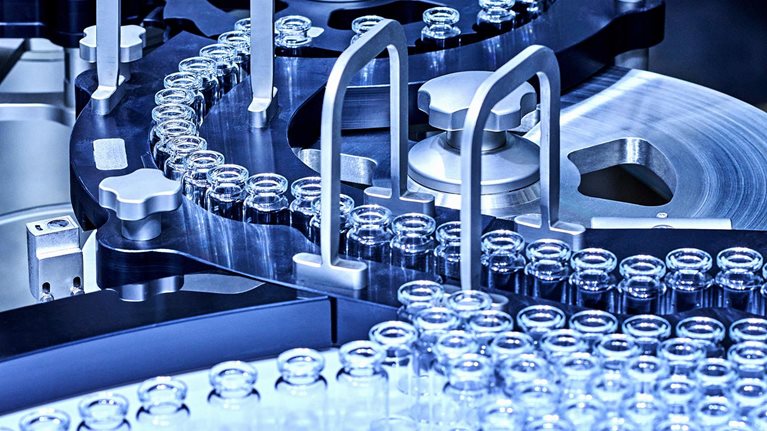
A modern leading-edge or advanced semiconductor fab produces 300-millimeter wafers—thin circular slices of silicon—via hundreds of tightly controlled steps. The chips go through repeat cycles of lithography, deposition of thin films, ion implanting, heating, etching to remove material, cleaning, and chemical and mechanical polishing to create flat surfaces. After fabrication, wafers are tested, cut into individual chips, packaged, and quality checked before being shipped to electronics manufacturers. These final steps, called back-end, are often performed by specialized assembly and testing businesses known as outsourced semiconductor assembly and test companies, or OSATs.
Chip production is centered in Asia even as policy pushes capacity closer to demand
Installed manufacturing capacity for logic chips is concentrated in Asia. This is most pronounced in leading-edge chips, with TSMC and Samsung operating the only foundries that produce them at scale. In advanced nodes, Taiwan and South Korea are the major producers in Asia, while Mainland China has built substantial capacity and is expanding quickly. However, capacity to produce mature nodes has increased most in Mainland China and now exceeds the installed capacity of Taiwan and South Korea to produce those larger-node logic chips. Japan and Singapore also have significant capacity to produce advanced and mature nodes.
The United States and Europe are in a different position. While they have important capabilities and significant production, they rely heavily on imports for leading-edge chips and continue to import a substantial share of advanced-node logic chips.
Across major economies, policy goals start from different points. China’s industrial policy aims to raise self-sufficiency by increasing domestic production of advanced and mature nodes, especially for domestic markets. The United States and Europe are more intent on reducing import reliance, improving supply-chain resilience, and supporting strategically important capacity for existing industries and technology priorities. Fab proximity is especially useful in the automotive and industrial sectors, which suffered from chip shortages from 2020 to 2023.2 Despite these differences, a common policy pattern is clear: Governments are pairing capital support with legislation and other measures to strengthen local fab ecosystems.3
Taiwan anchors the cost comparison as the leading producer of advanced semiconductors
Our base case is a fab that produces 28-nanometer logic chips with a capacity of 400,000 wafers per year. Taiwan is the base-case location because it is by far the world’s top producer of advanced semiconductors.4 We benchmark it against similarly sized factories using the same technology in Mainland China, the United States, and Germany, Europe’s largest semiconductor manufacturing hub by chip capacity.
In the base case, materials like wafers and consumables, including photoresists, specialty gases, targets, and slurries, account for 25 percent of the levelized cost, a measure of the average cost of production over the lifetime of a project. Equipment such as the lithography, deposition, etching, metrology, and related tools needed to run a production line accounts for roughly 35 percent. Utilities and construction account for 10 to 15 percent of the levelized cost each, and maintenance and labor make up the rest of the total (see sidebar “Methodology”).
Taiwan anchors the global comparison operationally, too. The country’s fabs combine efficient execution with supplier proximity and a long track record of manufacturing discipline, which translates into competitive unit costs on a “pure operations” basis. Many leading fabs are headquartered there, and the presence of OSATs and materials suppliers supports speed and resilience (Exhibit 1).
Taiwan accounts for most of the production of advanced semiconductors.
Note: Figures may not sum, because of rounding.
1We use a 28-nanometer node size in a 400,000 wafer starts per year fabrication plant for comparison.

Higher wages and slower construction raise the cost of fabs in Europe and the United States
Labor is the most significant cost differentiator operationally, particularly when comparing Asia to Europe and the United States. Labor costs account for less than 10 percent of costs in the base case but explain more than 35 percent of the difference between Taiwan and Germany and about 50 percent of the difference between Taiwan and the United States. Roughly three quarters of the difference in labor costs between Taiwan and the United States is due to higher American wages. About 20 percent of that gap is related to greater Taiwanese hourly productivity and the remaining 5 percent to Taiwanese employees working more hours. Comparing Germany and Taiwan, 60 percent of the gap is explained by higher wages in Germany, and 30 percent is due to higher Taiwanese productivity and 10 percent to more hours of work per employee there. Although salaries are slightly lower in Mainland China, workers in Taiwan are roughly 30 percent more productive per hour, making labor there more cost competitive.
Labor productivity in fabs reflects the labor intensity required to sustain stable, high-throughput operations. This includes the number of operators needed to run the line, the consistency of production flow across shifts, and the effectiveness of maintenance and engineering teams in keeping critical equipment available. Regions with deep pools of experienced operators, technicians, and equipment engineers can sustain higher effective utilization with lower labor intensity, reducing unit costs. Advanced semiconductor clusters also benefit from talent circulation in fabs, equipment suppliers, and materials providers, which helps spread operational know-how and best practices. This difference in labor costs likely also explains part of the difference in maintenance costs among regions.
Construction costs are the second-largest driver of differences in levelized cost across geographies, explaining 30 to 40 percent of the difference between Asia and Europe and the United States. Excluding equipment, the construction cost of building a plant that produces 400,000 wafers a year is at least twice as much in Europe and the United States as in Taiwan. Excluding permitting and design time, fabs in Mainland China and Taiwan usually start initial production 12 to 16 months after construction begins, but European and US projects typically start production after 24 months. Productivity per construction worker in Asia is higher, largely due to longer work hours in Asia and more stringent regulation in Europe and the United States, which can force projects to adopt costlier designs that take longer to build. Permitting adds a few months but is a less significant cost driver because the fab construction process is highly modular and permitting can occur in parallel with construction.
Energy and utilities are the third-largest driver of differences in levelized costs, with a particular impact in Germany. Average industrial energy prices are 30 percent greater in Germany than in Taiwan, and utilities account for about 10 percent of the cost difference between the two countries. To be sure, energy prices can vary widely from project to project, and certain rebates or long-term power purchasing agreements with more attractive prices may give rise to project-dependent differences. Bringing German utility prices down to the level of Taiwan’s would be equivalent to reducing German labor costs by about 15 percent. Power prices in Mainland China and the United States exclusive of any subsidized price agreements are lower by 20 percent and 40 percent, respectively, than they are in Taiwan. Similarly, without its energy advantage, the United States’ levelized cost gap with Taiwan would be 15 percent bigger.
Equipment and input materials, although a substantial share of total costs, are similarly priced across regions and contribute little to relative differences in the costs of producing semiconductors. Specialty equipment for lithography, etching, deposition, and thermal processing, as well as specialty gases, slurries, photoresists, and wafers, are supplied by a relatively small set of global vendors. While logistics and tariffs matter, base prices and the cost of contract structures are comparable across major hubs.
Explicit incentives and taxes play an important role in cost differences around the world, offsetting higher construction costs in Europe and the United States. Such incentives are hard to quantify with precision because they are project specific. Even within a country, subsidies can vary by an order of magnitude. In Europe, subsidies are typically granted as a lump sum from national governments with approval from the EU-27, whereas the United States grants them through a mixture of federal CHIPS and Science Act funding, investment tax credits, and other tax credits. China’s incentive programs target production of mature and advanced nodes, reportedly offering significant though opaque subsidies in the form of large tax rebates, lower interest rates, and subsidized land-use rights, as well as power price rebates of up to 50 percent for customers that buy Chinese chips.5
Such incentives materially improve the economics of adding domestic capacity and are beyond this analysis. For example, Germany’s support for the recent European Semiconductor Manufacturing Company, a package that amounts to roughly half of the project’s announced investment, could meaningfully narrow the gap.6 In our model, applying similar support to capex and ramp-up costs lowers the levelized cost of a wafer from about $4,000 to $3,000, bringing it close to the Taiwan base case.7 While many subsidies are hard to pin down and project-specific, the most effective measures are transparent subsidies per wafer that can accelerate revenue generation.
Market access and buyer preferences can change the returns on chip production
Semiconductors are easily tradable, but selling prices differ based on buyer preferences and policy controls. Notably, the price for advanced semiconductors in Mainland China is reportedly 25 to 30 percent lower than the price of identical chips made in Taiwan, Europe, and the United States. This seems to be the result of a three-way dynamic. First, Chinese government support and subsidies have encouraged multiple Chinese companies to expand capacity, increasing competition in the domestic market. That added competition has pushed suppliers to price aggressively to win domestic market share, reducing profitability. Finally, customer qualification requirements, export controls, and geopolitical risk may limit demand from some international buyers, increasing pressure to sell chips domestically.
Costs matter, but resilience, proximity, and policy are playing an increasing role in investments
Comparing levelized costs with investment projections indicates that cost competitiveness plays a critical role in investment decisions. Currently, Mainland China, South Korea, and Taiwan are home to 60 percent or more of global capacity in all node sizes and are expected to attract more than 55 percent of global semiconductor capital expenditures through 2029.8
Leading producers in Taiwan and South Korea typically add capacity when a node is still at or near the technological frontier. These chips define the state of the art and command the highest prices from customers that need the best performance. As the technological frontier shifts to smaller nodes, these fabs can keep producing the same node sizes, which are no longer considered leading edge. By entering the market when these chips were leading edge, Asian producers benefit from early premium pricing, years of yield improvement, higher utilization, and lower depreciation over time compared to new fabs entering the market today at an advanced node size (Exhibit 2).
Building an advanced-node fab today means production starts after the best economics have passed.
1Stylized estimate based on average observed data in deep ultraviolet nodes: 16, 28, 45, and 65 nanometers.
Regions building capacity today to produce advanced nodes are thus at a disadvantage. A new 28-nanometer fab in Europe or the United States entering the market after leading Asian producers have already captured much of the early profit pool and operate older, better-utilized, and, in some cases, already mostly depreciated fabs. Slower construction compounds that problem by pushing revenue further into a node’s maturity curve.
However, cost competitiveness is not the only factor determining where investments are made. Considerations unrelated to price or economics increasingly point to where capital for fabs will flow. Automotive and industrial customers often value local supply and shorter supply chains, which supports investments in Europe and the United States even when operating costs are higher than in Asia. Minimum-distance considerations also matter for time-sensitive products and for multisourcing strategies in complex supply chains.
Investment growth is expected to average 6 percent globally through 2029, which is less than the 12 percent projected for the Americas and the 7 percent forecast for the Middle East and Africa. The Americas are projected to overtake China and become the largest destination for semiconductor capital expenditures in 2029, based on considerations including supply chain resilience and public policy that are increasingly shaping where new capacity is built.9
Overall rising demand and the long lifecycles of advanced-node chips, particularly in geographies that pair strong ecosystems with supplier specialization and qualified labor, make investment cases for advanced chip fabs attractive.
Corporate and policy actions supporting innovation leadership, speed, ecosystems, and demand can improve the investment case
Policy choices will determine how quickly fab plans translate into shovels in the ground. Across China, the EU-27, Japan, South Korea, and the United States, support programs pair capital grants with tax credits and workforce development. In practice, the most effective packages align three elements. The first is speed and predictability, enabled by clear regulation and permitting processes that support fast construction and rapid production ramp-up, reducing schedule risk. The second element is ecosystem coinvestment, which emphasizes proximity to suppliers of equipment services, specialty gases, chemicals, OSATs, and spare parts. This shortens ramp-up time and reduces downtime. The third is demand visibility. Long-term customer commitments reduce market risk and improve the business case for advanced-node projects. Such visibility is a key barrier for some projects in Europe. Where speed, ecosystem depth, and demand visibility align, projects are more likely to progress, even when their unit costs are higher than those in the most efficient Asian locations.
These levers can improve fab economics but do not change the broader logic of the node lifecycle. Producers that build at the current leading edge capture more of a node’s economic profit, which decreases as a node matures. Later entrants building advanced-node capacity now compete against incumbents that have already captured the early profits and now benefit from years of yield improvement, higher utilization, and lower depreciation. Building advanced-node capacity may still be attractive when resilience, customer proximity, and strategic supply are sufficiently important. But regions seeking a stronger position in semiconductor manufacturing could also aim to participate closer to the leading edge, where more of the industry’s economic profit is created.