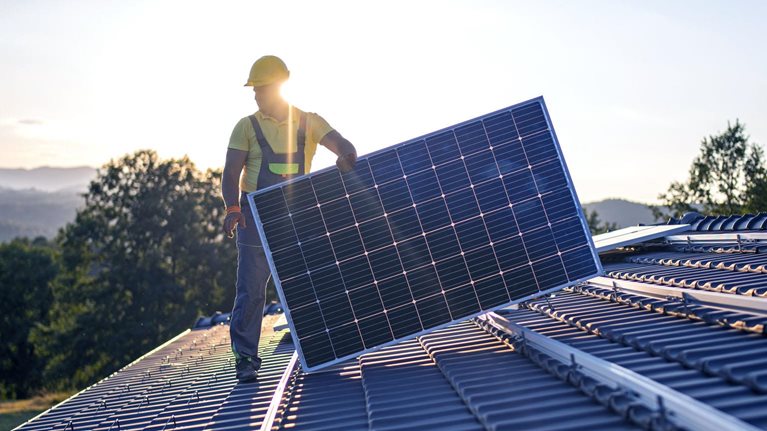
Global solar demand is growing dramatically, a reflection of growing energy use around the world, rapidly decreasing costs of solar photovoltaic and battery storage technology, and the drive to replace fossil fuels with renewable energy sources in many places. Today, China is by far the largest investor in solar photovoltaic (PV) generation and the largest producer of solar panels. But in contrast to many other markets, solar truly is a global growth industry, now representing over 40 percent of the investment in global power generation.1
This investment case is one of ten used in the research for the McKinsey Global Institute’s report, Catalyzing competitiveness: Where investment happens and why. The report examines how variations in the basic economics of comparable projects influence investment decisions in different regions globally and the impact those decisions can have on the future of competitiveness and growth across the world.
Solar energy is one of the fastest-growing energy investments globally
Solar PV systems, which convert sunlight into electricity, typically fall into three segments: utility scale, commercial and industrial, and residential installations.2 Utility-scale systems are ground-mounted installations, often called solar farms, with a capacity of at least one megawatt. They account for about two-thirds of installed solar PV volume in 2024 and are the primary focus of this analysis.3
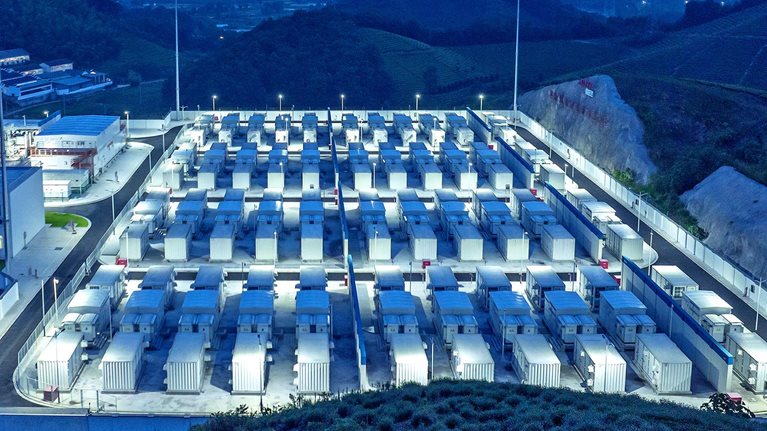
Investment in solar PV in all segments reached about $400 billion in 2025 and is expected to decrease slightly to $365 billion in 2026, which is roughly 55 percent of total renewables investment. It is the single largest category of investment in power generation, ahead of wind, hydro, gas, nuclear, and coal.4 Investment in battery energy storage systems (BESS) is also rising rapidly and reached about $80 billion in 2025. Solar generates power only when the sun is shining, while BESS stores electricity to discharge when demand and prices are higher. Projections suggest investment in storage will exceed more than $100 billion in 2026, reflecting the growth of solar PV.5
In practice, BESS is deployed as a standalone asset and in combination with solar PV. This pairing has become more important as solar deployment has scaled. Solar PV has very low operating costs because, unlike conventional coal- or gas-fired power generation, it does not require fuel inputs. However, it does require significant upfront capital investment in modules, inverters, and balance of system hardware. Those equipment costs have declined rapidly over time. Solar panel prices are down by about 98 percent since the 1990s, driven by manufacturing scale, technological improvements, and supply chain efficiencies.6 A highly industrialized supply chain led by Chinese manufacturers, which supply more than 80 percent of global solar modules and many other components, underpins this cost decline.7
China also leads the supply chain for battery cell manufacturing, supplying more than 75 percent of global production.8 Battery costs have also fallen sharply, declining by about 75 percent over the past decade.9 Solar economics are no longer shaped by generation costs alone but increasingly by the ability to store electricity and deliver it when demand and prices are highest. That is accelerating the adoption of hybrid solar PV + BESS projects in many markets.
Solar deployment is global, although China remains far ahead. However, as solar penetration increases, the economics of solar PV are no longer determined solely by generation costs. The inherently intermittent nature of solar output means that the ability to deliver electricity when it is needed is becoming increasingly important.
China installs more solar than the rest of the world combined
Solar deployment has accelerated globally as project costs have dropped. Over the past decade, the cost of adding one gigawatt of solar PV has fallen by roughly 80 percent, spurring an almost tenfold rise in annual capacity additions.10 Deployment is now widespread in major regions, although the scale and configuration of projects vary significantly by geography (table).
In markets with abundant land and strong solar irradiation—notably China’s western regions, India, the Middle East, Australia, Brazil, and large parts of the United States—developers often build very large utility-scale projects. In more land-constrained markets, especially in Europe, projects tend to be smaller and more distributed. Because solar PV is highly modular, costs generally rise roughly in proportion to project size. In utility-scale solar, doubling project size typically reduces capital costs per watt by about 7 percent, mainly through shared infrastructure.11
Installed utility-scale solar PV capacity and recent additions by country
| Country | Installed capacity (gigawatt, 2024) | Capacity additions (gigawatt, 2025) | Region considered for investment case in this report1 |
| China | 358 | 88 | Inner Mongolia |
| United States | 128 | 35 | Texas |
| India | 78 | 32 | Rajasthan |
| Spain | 31 | 8 | Extremadura |
| Rest of EU-27 | 88 | 30 | - |
| Brazil | 15 | 6 | Minas Gerais |
China is far ahead in utility-scale solar power generation. With about 360 gigawatts installed in 2024 and almost 90 gigawatts added in 2025, its scale reflects a combination of low equipment costs, rapid build-out, and large desert-based projects in Inner Mongolia. Outside China, the main markets are in Brazil, the EU-27, India, and the United States. Sunny Spain is one of the EU-27’s main large-scale solar hubs, producing about 40 gigawatts in 2025 supported by strong irradiation and available land.12
Despite similar irradiation levels, US costs are almost twice China’s
Our base investment case models firm solar power as a direct current-coupled hybrid solar PV and BESS, a 250-megawatt solar installation paired with a battery to secure 95 percent reliability levels.13 In a direct current-coupled design, the battery is connected on the direct current side of the solar array, allowing it to charge directly from solar output before conversion to alternating current.14 Inner Mongolia is used as the base case given its scale and cost advantages (see sidebar “Methodology”).
The levelized cost of firm solar power measures the average cost of delivering a megawatt hour of electricity from a solar PV project paired with battery storage over a project’s lifetime. Our analysis finds levelized cost ranges from about $50 per megawatt hour (MWh) in China to $110 per MWh in the United States. Costs in Brazil and India are $65 per MWh, while costs in Spain are $95 per MWh (Exhibit 1).15 In all these markets, capital expenditures are the primary component of levelized cost, and equipment is the single largest contributor.
Adding BESS raises levelized cost relative to standalone solar PV by about $30 to $70 per MWh, reflecting the added cost of the battery system to deliver power more reliably. This wide range in costs is largely driven by transportation and logistics costs and tariffs because China is the main supplier of BESS.16
The so-called firming premium is the largest driver of cost differences across the industry.
Note: Levelized costs are pretax. Based on 24/7 renewable economics for firm solar and wind; firming premium calibrated to 95% reliability.
1Numbers may not sum precisely, due to rounding.
2A “firming premium” is the extra cost of converting variable solar output into round-the-clock power, covering the additional battery storage and overbuilt solar capacity required to meet a set reliability level, in this investment case 95%.

Tariffs on equipment drive costs in the United States, while financing raises costs in emerging economies
Most of the variation across countries is driven by the additional cost of battery storage and shifting output to deliver continuous, reliable power, known in the industry as a “firming premium” (Exhibit 2). This adds $30 to $42 per MWh to costs in Spain and the United States respectively and explains roughly three-quarters of the cost gap compared to China. Because this premium is almost entirely upfront capital for batteries and extra solar capacity, it largely reflects China’s structurally lower battery costs and cheaper financing.
Firming premiums account for most of the difference in the costs of a solar PV plus battery energy storage systems facility.
Note: Numbers may not sum precisely, because of rounding.
1This analysis is based on a 250-megawatt-direct-current solar PV facility with a firming premium that provides 95 percent reliability.
2A “firming premium” is the extra cost of converting variable solar output into round-the-clock power, covering the additional battery storage and overbuilt solar capacity required to meet a set reliability level, in this investment case 95%.
After the firming premium, solar PV equipment is the largest source of variation in levelized cost, adding up to $10 per MWh. Differences in equipment costs reflect a mix of tariffs and trade policy, supplier mix, and domestic manufacturing premiums.
Financing or cost of capital is another source of variation, adding $7 per MWh in Brazil and India. In many emerging markets, solar can be built cheaply and quickly, but capital is expensive because investors face concerns about currency stability, contract enforcement, and whether offtakers will reliably pay. The issue is often not solar economics itself, but the ability to attract financing. This is particularly pronounced in African countries, which have the biggest unmet need in developing solar projects.
Access to financing can be improved through support from development finance institutions or political-risk assurances such as the guarantees provided by the World Bank’s Multilateral Investment Guarantee Agency, which help lower financing risk and attract lower cost of capital.17 The weighted average costs of capital used in this analysis are market-level estimates meant to reflect such broad differences in financing conditions rather than the terms available to any specific project.18
Storage is critical to maximizing solar revenues
Utility-scale solar projects typically sell electricity through a combination of different revenue mechanisms. Revenues may come from regulated tariffs, contracts for difference, corporate or utility power purchase agreements (PPAs), or direct sales into wholesale power markets where the price is set by other forms of power generation.
The mechanism matters because utility-scale solar power is now among the cheapest forms of electricity in most markets. However, low costs do not guarantee high returns, because solar output is concentrated in the same daylight hours. As more solar power enters the grid at the same time of day, wholesale prices fall or even turn negative during sunny hours.
As more output is sold directly in wholesale markets rather than under fixed-price contracts, solar companies increasingly need ways to improve returns. This is why batteries matter. When paired with solar, BESS can store electricity during lower-priced hours and discharge it later, when prices are typically stronger, creating a potential price increase of $10 to $20 per MWh. Hybridization also increases revenue premiums through tailor-made PPAs based on how closely an asset can match the supply and demand of electricity. At one end, an “as produced” solar power plant simply sells electricity when it is generated. On the other end, an “as consumed” plant aims to match supply and demand much more closely hour by hour and can earn a revenue premium of up to 100 percent.
Batteries also stretch how solar projects earn revenues. BESS revenues typically come from a mix of energy trading. Batteries can supply electricity when prices are higher, help stabilize the grid, and earn capacity payments for providing power when it’s needed. Operators typically optimize across all three to maximize revenues. For example, in the United Kingdom, ancillary services were once the main revenue source for batteries, but energy trading has become much more important as storage deployment has increased and markets have evolved.
Adding BESS to a solar power system also provides a better balance of risk and return. Hybrid projects combining batteries with renewable energy offer a better risk-return profile than single-asset projects, improving the internal rate of return by 1 to 2 percent in mature European markets. AI-enabled dispatch and bidding strategies can lift battery profits by more than 20 percent by helping operators make real-time decisions on when to charge, discharge, and sell into power markets.19 For hybrid solar-plus-storage projects, the implication is clear: As solar penetration rises, performance will depend less on simply owning a low-cost asset and more on shaping output, managing volatility, and selling power in the most valuable form.
Utility-scale solar plants are typically built, owned, and operated by utilities, developers, or independent power producers, which sell electricity to other utilities or large corporate buyers. In practice, a combination of mechanisms is used to structure revenues. Governments in some markets provide support through mechanisms such as contracts for difference, which provide price certainty. Increasingly, however, projects rely on long-term power PPAs, which improve revenue visibility and reduce investment risk. Solar PV plants may also sell electricity to local utilities in regulated markets or directly into wholesale power markets, where prices are set by other forms of power generation.
Whether a solar project is lucrative or not depends not on the levelized cost but on the cost of solar generation compared to other forms of electricity and on market design and subsidy mechanisms.
As solar scales, the key constraint shifts from cost to integration, monetization, and policy
Levelized costs for solar and BESS are falling rapidly. Since 2022, utility-scale battery installation costs have dropped by well over half, thanks largely to technological and manufacturing improvements by Chinese producers including a shift to lower-cost lithium iron phosphate chemistry.20 Looking ahead, costs are projected to fall by about 50 percent over the next decade, making solar combined with BESS even more attractive. However, these declining costs may not fully pass into every market because of tariffs and other trade barriers.21
Cost competitiveness clearly matters because lower-cost solar markets generally correlate with more capacity additions (Exhibit 3). That pattern holds not only across countries globally, but also within regions like Europe and the US states.

But cost does not fully explain where investment flows. The gap reflects factors such as land availability, permitting speed, and grid connection timelines. This is especially important for hybrid solar PV projects that incorporate BESS. Hybrid projects work only if developers can connect to a grid and earn enough value from shifting output into higher-priced hours. Thus, the binding constraint is increasingly not the cost of generating solar power but the ability to integrate BESS and monetize it effectively.
Grid access, revenue levers, and policy design determine investment attractiveness
Grid access is becoming one of the most important constraints in solar power. Even when solar and storage costs are attractive, limited transmission capacity, grid congestion, and slow interconnection processes can delay projects. In the United States, for example, median wait times to connect new solar PV projects are about 60 months.22
For investors, opportunity is shifting from building the lowest-cost generation asset to developing projects that can deliver power at higher prices. The most attractive markets are those with fast and reliable grid connection, clear ways to monetize storage, supportive incentives, and bankable revenue mechanisms such as PPAs or contracts for difference. In these markets, solar PV + BESS can earn more by shaping output, reducing price exposure, and matching customer demand more closely.
For policymakers, the priority is also changing. As equipment costs continue to fall, the challenge is less about subsidizing solar generation and more about enabling deployment at scale while keeping system costs down. That means accelerating permitting and interconnection, expanding transmission infrastructure, creating market mechanisms that reward flexibility and storage, and managing supply-chain risk.
China’s dominance in PV and BESS equipment has lowered costs globally but also raises concerns about resilience and dependence on external suppliers. As solar PV becomes cheaper, the countries benefiting from it the most will be those that can connect it quickly, store and distribute it effectively, increase system flexibility to match its intermittent profile, and thus turn intermittent sunshine into reliable, higher-value power.