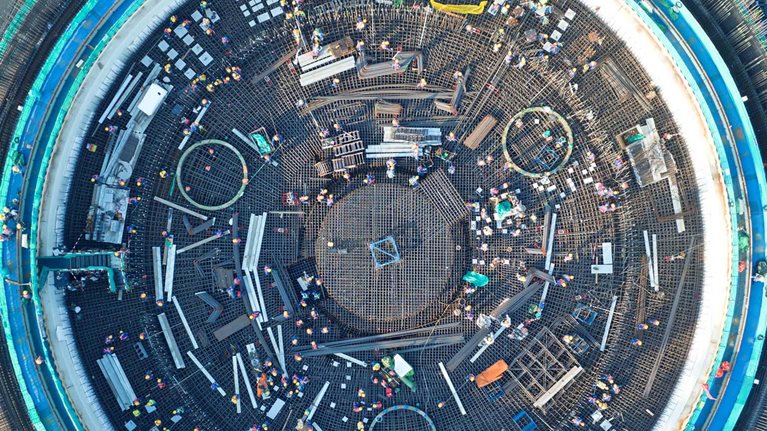
Nuclear power has become sexy again, thanks to expectations of much greater demand for energy, global efforts to reduce carbon emissions, and additional focus on energy security and geopolitical resilience. According to the International Atomic Energy Agency, nuclear power generation could more than double by 2050 as more countries install plants and new models such as small modular reactors (SMRs) and microreactors that can be assembled in a factory come online.1 Although SMRs are still in the early stages of commercialization, they could reshape construction timelines and costs.
This investment case is one of ten that are the foundation of the McKinsey Global Institute’s report, Catalyzing competitiveness: Where investment happens and why. The report examines how variations in the basic economics of comparable projects influence investment decisions in different regions globally and the impact those decisions can have on the future of competitiveness and growth across the world.
AI, electrification, and onshoring are propelling demand for nuclear capacity, but scaling will be challenging
The current standard for nuclear power generation is large-scale plants that produce electricity by splitting uranium atoms to create heat, which turns water into steam that propels a large generator. A technology that has operated for decades in many countries, nuclear reactors deliver steady, around-the-clock power with a minimal carbon footprint. This article focuses on so-called Generation III+ pressurized water reactors to understand what drives cost differences in nuclear power generation across geographies. These reactors typically have a capacity of about 1 gigawatt. Unlike previous generations of nuclear reactors, Generation III+ reactors incorporate layers of passive safety and more robust containment, aiming to operate for a minimum of 60 years while almost continuously online. These features enable the technology to supply a dependable baseload of energy alongside growing shares of wind and solar power.
More than 400 nuclear reactors with approximately 400 gigawatts of capacity produce roughly a tenth of the world’s electricity globally, and at least 60 more reactors are currently under construction.2 Output has started to rise again after a period of flatlining, as new units in Asia and the Middle East and programs to extend the lives of established reactors in advanced economies and elsewhere offset reactor retirements. Looking ahead, the McKinsey Global Energy Perspective’s net-zero scenarios suggest nuclear capacity will at least double and potentially triple by midcentury, meaning up to 1200 gigawatts of nuclear capacity could be available.3
Such scale-up implies significant investment in plants themselves as well as in upstream fuel and key components, which depends on whether countries can build units at predictable costs and pace, establish the needed institutional capacity, and secure public support.
One way to ease some of these constraints is to consider a different reactor model altogether. SMRs, which typically produce less than 300 megawatts, could reshape the industry by enabling more standardization, off-site manufacturing, and serial production, potentially trimming construction times and fitting into regional grids or industrial hubs where gigawatt-scale reactors would not fit. More than 90 SMR concepts are currently in development, with the most advanced moving from blueprint to construction now.4
Increasing nuclear investment requires scaling up complex, highly concentrated supply chains
The nuclear industry is organized around two tightly coupled supply systems, uranium fuel and plant components. The fuel chain runs from uranium mining through conversion, enrichment, and fuel assembly fabrication, controlled at each step by a small number of companies and state-connected enterprises concentrated in a handful of countries and regions. Enrichment is the most concentrated and capital-intensive link in the chain, and demand for the high-assay low-enriched uranium required by next-generation reactors threatens to outstrip today’s limited capacity in Western countries. Rebuilding secure supply is costly: Recent McKinsey analysis estimates the United States alone would need to invest $105 billion to $170 billion across the fuel cycle to meet its 2050 nuclear ambitions.5 This link exposes the industry to policy shifts and trade restrictions as demand grows.
The component supply chain spans reactor “nuclear island” and “turbine island” systems. A small group of original equipment manufacturers (OEMs) set standards for Tier 1 items such as reactor vessels, steam generators, and coolant pumps. These require extensive forging, specialized alloys, and long lead times, making them susceptible to bottlenecks. Tier 2 components such as valves, sensors, piping, switchgear, concrete, and other subassemblies have more suppliers, often found in the aerospace and thermal power industries, though they must still meet nuclear-grade specifications in most cases.
Ownership and operating models vary by region, but in most programs a regulated utility or state-owned operator ensures integration across development, delivery, and long-term operations. Historically, the “owner engineer” model in which utilities maintained strong in-house engineering and project-delivery capabilities was a major source of execution strength, particularly in the United States as well as in France and Japan. Over time, many utilities reduced internal engineering capacity and largely lost these capabilities. Today, European programs are led mainly by state-backed utilities that rely on government-supported financing; US plants are owned and operated by private utilities, backed by federal financing support and overseen by a federal safety regulator, and Chinese projects are vertically integrated state-owned enterprises that span fuel, equipment, construction, and operations.
Regulators, export-credit agencies, and energy ministries provide licensing, safety oversight, and, in some cases, participate directly in financing. In multi-unit programs, the same ownership and operating teams often serve many sites, drawing supply chains into longer-term partnerships with OEMs and engineering, procurement, and construction integrators.
Demand ultimately underwrites this supply chain. Grid electricity buyers anchor demand, with utilities in China, Europe, and the United States buying stable, low-carbon power under a mix of regulated tariffs, power-purchase agreements, and market participation. Beyond the grid, new customers are emerging as Generation IV reactors that have higher output steam temperatures come online. Industries are exploring direct use of nuclear heat and steam for process applications, and some markets are evaluating district heating and desalination links. Additionally, large technology companies are investing in dedicated nuclear power for data centers and digital infrastructure.
Half of recent new reactors are in China, which could overtake the United States as the largest generator of nuclear power by 2035
France and the United States are home to the largest existing nuclear fleets, together accounting for 40 percent of global installed capacity made up primarily of Generation II reactors. Many of those reactors were built in the 1970s and 1980s, when France embarked on one of the world’s most successful serial nuclear building programs, standardizing designs and driving costs down through replication.
China is now deploying standard Generation III+ units and accounts for half of recent grid connections.6 It will soon surpass France and likely overtake the United States as the world’s largest producer of nuclear energy by 2035.7 South Korea offers another example of how standardization can support delivery: The world’s fifth-largest nuclear electricity producer has paired standardized reactor design with disciplined project management, both at home and as an exporter. Countries that haven’t traditionally had nuclear power are investing at scale. The United Arab Emirates, for example, has commissioned multiple units at a single site, and India has set an ambitious target of 100 gigawatts of nuclear capacity by 2047, incorporating private-sector participation and financing for the first time.8 These newer examples of nuclear implementation illustrate that standardized designs, repeatable work, and mature supply chains can lower costs and shorten ramp-up periods.
South Korea has among the lowest costs globally, thanks to design standardization, supplier continuity, and scale
Three practices explain South Korea’s competitiveness. First, projects select a design early and replicate it from unit to unit, reducing costly changes late in construction and making fieldwork more predictable. Second, each project is led by a capable engineering and construction integrator with continuity across major suppliers and site teams, ensuring that learning carries over between units. Third, South Korea has established a strong nuclear supply chain that can produce core nuclear plant components domestically. The size of its program enables not only local capability but also economies of scale. Nuclear plant programs that have deployed these practices, whether in South Korea or at the Barakah site in the United Arab Emirates (built by a Korean-led consortium using South Korea’s APR1400 design) have had lower costs and shorter schedules, consistently achieving full-scale operation in less than a decade.
These achievements, combined with stable financing and strong operating performance, have enabled South Korean projects to achieve competitive “overnight” construction costs, the engineering term for the price to build a plant if it could be completed overnight. This is key because the levelized costs of a nuclear plant are dominated by capital outlays rather than ongoing operating expenses.9 Labor, maintenance, and fuel together account for about 40 percent of a nuclear plant’s levelized costs, with capital costs making up the rest (see sidebar, “Methodology”).
Construction costs account for the largest share of levelized cost differences between countries and this cost is composed of direct construction costs and the cost related to capital expenditure inefficiency (exhibit). We combine these categories because direct costs and inefficiency are closely intertwined: Longer construction times, design changes during construction, and greater project complexity drive both, compounded by higher construction costs for materials and labor regardless of schedule. Compared to the South Korea benchmark, total construction costs add $50 to $60 per megawatt-hour to projects in France and the United States, while in China, these costs are approximately $3 less due to lower materials and labor costs.
Capital expenditure costs drive the economics of nuclear power plants.
Note: Figures may not sum, because of rounding.
1We consider a 1000 MWh generation III+ nuclear fission reactor for this comparison.
2Includes direct and indirect labor costs and maintenance costs.

Direct costs of construction reflect the underlying costs of civil works and buildings, such as materials like concrete and metals, utilities and equipment, rental of equipment like cranes and bulldozers, and construction wages, including specialized labor. Compared to South Korea, US construction labor costs adjusted for productivity are about 80 percent higher, and US concrete prices are roughly 200 to 250 percent higher.
China’s levelized costs are on par with South Korea’s, reflecting a highly standardized, repeatable nuclear build program. Projects follow a consistent script, with some recent reactors moving from first concrete to grid connection in as little as six years.10 A single reactor design family has accounted for more than a third of units completed since 2000, and its successors, together with another model, now make up nearly nine in ten reactors under construction in China and many of those newly approved.11
Capital expenditure inefficiency as a result of longer construction times and bespoke designs adds substantial costs in Europe and the United States. The Hinkley Point C project in the United Kingdom, where construction will take more than a decade, illustrates the pattern. Environmental mitigation requirements alone added £700 million to the project.12 By comparison, Chinese, Emirati, and South Korean nuclear fleets have held overnight construction costs to competitive levels with replicable scope, stable policy environments, and disciplined execution. For instance, the Emirates has deployed a proven Korean design and associated requirements and regulations. That project also illustrates how programs that set design early, build multiple identical units on a single site, and keep the same Tier 1 suppliers from unit to unit reduce construction hours and rework. As teams repeated identical scopes, indirect services and owner’s costs fell sharply at the Barakah plant, helping reduce costs from construction of the first unit to the fourth by roughly 40 percent.
Equipment pricing and sourcing of nuclear-grade items with long lead times such as reactor vessels and components, steam generators, reactor coolant pumps, and turbine islands account for a smaller cost difference of $14 to $20 per megawatt hour in the United States and France. These differences reflect a concentration of Tier 1 suppliers, limited global metal forging capacity, and bespoke specifications that constrain vendor competition. Programs with qualified domestic suppliers or long-horizon agreements can reduce these premiums.
Project financing reflects the cost of capital during a long build. Relative to the benchmark, financing effects add roughly $15 to $20 per megawatt hour in France and the United States. Both countries already deploy concessional financing: France is providing subsidized loans at preferential rates for its European pressurized reactor 2 program and the United States extended $12 billion in federal loan guarantees for the Vogtle plant expansion in Georgia. Without such support, financing costs would be even higher. The premium persists because longer construction timelines keep capital at risk for longer, amplifying interest costs even when financing terms are favorable.13
Time to market reflects the time value of money beyond the cost of time spent on construction and implementation. South Korea has construction times of six to eight years, compared to close to two decades for recent projects in Europe and the United States. Only China builds nuclear plants faster, recently completing a unit in 70 months.14
As noted, construction timelines have a significant impact on the overall cost of building reactors. The “pure” time component, however, represents only about 10 percent of the total difference in cost for France versus the South Korean base case because even though construction in France takes significantly more time, the overall useful life of the reactor as modeled in this investment case comparison is the same at 60 years from start of construction. Countries where median build time is about eight years cluster near the South Korean base case. Time to market adds about $12 per megawatt-hour to the price of nuclear power in France and $3 in the United States, compared with $4 in the United Arab Emirates. In China, it reduces costs by about $1. The causes of these differences are related to the same execution disciplines noted above.
All remaining items such as materials, labor, and other operating costs contribute very little to cost differences between countries.
Nuclear construction is concentrated in Asia; new tactics can close the cost gap in other regions
Momentum for nuclear power is generally stronger in Asia than in Western economies. South Korea continues to add nuclear capacity per capita at a high rate, with four gigawatts under construction for its population of 50 million. China accounts for more than half of new nuclear power coming online, adding 44 gigawatts to the 60 gigawatts it already has. In addition, China plans to build another 48 gigawatts of capacity and has proposals for 172 gigawatts more. Russia has four gigawatts under construction and 22 gigawatts planned, while India has seven gigawatts underway, plans for an additional eight gigawatts, and a goal of 100 gigawatts by 2047.15
By comparison, the United States has no large new reactors currently under construction, although Westinghouse has announced plans to begin construction by 2030 of a fleet of ten AP1000 units that could produce roughly 10 to 11 gigawatts.16 Europe has slightly bigger aims for nuclear power production, with about 5.5 gigawatts under construction, close to 30 gigawatts planned, and another 20 to 30 gigawatts proposed.17
Public perception and government policies are decisive in where nuclear projects proceed
Factors beyond cost also determine where projects go. Some countries, particularly those without abundant domestic fossil-fuel resources, such as France and Japan, value nuclear power’s contribution to energy security and resilience, and the US–Iran conflict in 2026 may strengthen the case for nuclear power further. The levelized cost of a nuclear plant is locked in after construction, and operating costs, which are more insulated from price shocks than gas-generated power, are relatively low. However, concerns around perceived nuclear safety and previous decommissioning decisions still impede the nuclear build-out in Germany and other countries.
Companies and policymakers can take steps to make sure projects are economical, which will ensure nuclear power is part of the energy portfolio in countries that need it.
First, companies can build fleets of plants to reduce cost and time to market. Repeating standardized designs across multiple projects, as China and South Korea do, reduces costs and compresses schedules. Modular construction, integrated project delivery, and aligned incentives across owners and contractors reduce change orders, decrease labor hours, and make execution more predictable.
Second, policymakers could complete licensing before construction begins and take steps to ensure that policy support doesn’t shift in the middle of construction, which creates delays and raises costs. Better coordination across policymaking entities and stakeholders is also critical, as noted by the UK’s 2025 Nuclear Regulatory Review, which found that a single project can face as many as eight regulators with no designated lead.18 Public financing sized for multi-unit programs could bolster confidence in developers and suppliers.
Finally, reducing operational and market risks and reducing financing costs could improve the investment case for nuclear projects, which are increasingly attracting private investment.19 Sovereign support, export-credit financing, loan guarantees, indexed power purchase agreements, and contracts for difference can reduce financing costs. These tools matter most for first-in-country or first-of-a-kind projects that have high execution risk.
The nuclear potential is real around the world. Translating it into nuclear projects requires the discipline to build competitive fleets that attract investment and warrant public approval.