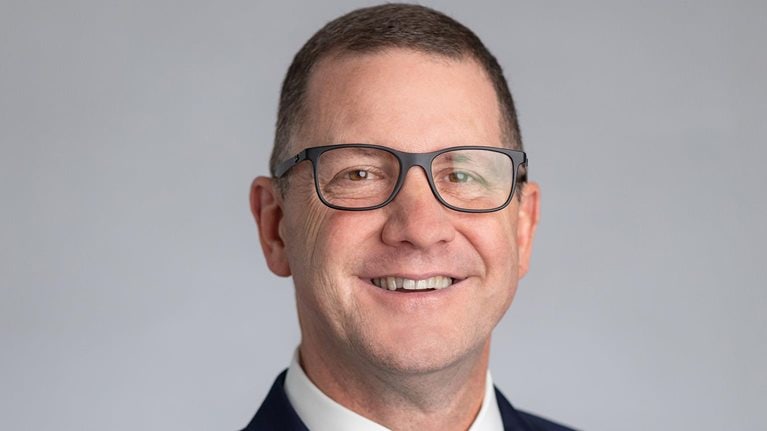
After more than a decade of near-steadiness, North American power demand is expected to grow more than 50 percent in the next 15 years, with data centers as one of the main drivers. This growth, alongside a push for more domestic energy, makes it easy to understand why John Ketchum says now represents NextEra Energy’s greatest opportunity in its history. As chairman, president, and CEO of NextEra Energy—one of the largest electric power and infrastructure companies in North America—and chairman of Florida Power & Light Company (FPL), America’s largest electric utility, he oversees more North American electricity demand than anyone else. NextEra Energy is the world’s largest publicly traded electric utility by market cap, with a portfolio of energy sources that includes natural gas, nuclear, renewable energy, and battery storage.
Ketchum started as a lawyer at NextEra Energy 23 years ago. He credits the company’s former CEO with pulling him out of the legal department and into a succession of 12 other roles in the company, including CFO, culminating in the CEO role in 2022. Ketchum recently spoke with McKinsey Senior Partner Thomas Seitz at NextEra Energy’s headquarters in Juno Beach, Florida, about the future of energy, the rise in electricity demand from data centers, and how FPL has invested in a resilient grid.
McKinsey: Let’s start by looking ahead: How will the energy landscape evolve over the next five years, particularly considering growing demand for electric power? How will the world meet that demand, and what will NextEra’s role be?
John Ketchum: The need for power is going to be more significant than anything we’ve seen since the post–World War II industrial revolution. So, when I think about what NextEra Energy’s opportunity set looks like over the next five years, I approach it from the vantage point of energy realism. In the long run, we know we are going to need an all-of-the-above solution: a combination of renewables, storage, gas-fired generation, and nuclear. Renewables and storage are ready and deploying today. Gas and nuclear are coming. NextEra Energy is unique in that we are in every part of the energy value chain. We have transmission, pipelines, renewables, storage, natural gas, and nuclear at scale.
McKinsey: Data centers are expected to be one of the big drivers of growth in demand in North America. What are the challenges with data centers, and how is NextEra planning to meet them?
John Ketchum: About a third of the country’s power demand growth is coming from data centers. That is a significant amount.
Data centers build out their facilities in phases. Companies may start out with a 500- or 1,000-acre campus (every thousand-acre campus is about a gigawatt of power capacity) and want to take that campus up to 5,000 acres, for example. We’re calling these facilities that can grow from 1,000 acres to 5,000 acres with different power solutions “data center hubs.”
We can grow with them. If companies don’t bring their own power generation, they have to get in a long line, five years or so, for a grid interconnection. But if they show up with their own generation, the process is much faster. To do that, they’ve got to bring solar or storage. That then gives us time to enable future phases with a gas-fired generation build-out or a new nuclear build-out. Being active in all forms of generation gives us a huge competitive advantage, in addition to our scale. These are big bets by the hyperscalers. They’re spending capital at a four-to-one ratio to us. If you’re building out the power solution for a 5,000-acre campus, the capex on our side might be over $20 billion. The capex on their side is north of $100 billion. So they want a trusted partner that they know can get the job done.
McKinsey: You mentioned storage. Can you talk more about the role storage and transmission play in your energy infrastructure business?
John Ketchum: I’ll start with transmission. We have got to get more transmission capacity built to get electrons where the load is. The grid is short of capacity in many parts of the country. We have one of the leading competitive transmission businesses to build new transmission lines and capacity. We’re partnering with customers across the country— whether it’s other rate-regulated utilities, electric cooperatives, or municipalities—and sometimes we go it alone.
From a storage standpoint, we have to be able to store energy to create energy availability during the hours of the day when you need it most. Storage with a four-hour duration could be a perfect answer in almost every situation in many parts of the country.
We have a large footprint of renewable projects across the country, so we can pair storage today with existing generation facilities just about anywhere. The land’s been secured, bought, and paid for. The collector systems, the substation—all the infrastructure’s already there; all we’re doing is bringing the batteries and the modules. We can do it at a low cost and quickly. By 2029 or 2030, we’ll be able to upgrade the four-hour batteries to eight-hour batteries. So we could see a doubling of our storage capacity at sites that are already fully paid for, where the infrastructure already exists
McKinsey: You mentioned nuclear energy. You’re about to restart the Duane Arnold nuclear plant in Iowa as part of a deal with Google. Tell us about the role that nuclear will play in the future of energy in this country.
John Ketchum: The recommissioning of Duane Arnold will create about 4,000 jobs and inject about $9 billion into the economy around Cedar Rapids, Iowa. Google is entering into a 25-year PPA on that facility to support the economics and the build-out. We have the ability to put advanced nuclear there, as well. We have a collaboration agreement with Google to explore developing and building small modular reactors.
McKinsey: Florida Power & Light is the largest electric utility in the country, leading on many metrics including customer satisfaction and average bill per customer. How are you able to deliver that?
John Ketchum: We have the customer in mind in everything that we do. Our focus is to create the lowest-cost energy solutions for Floridians, which is a big responsibility especially as more and more people move to Florida. The state of Florida accounts for about $1.7 trillion of GDP. If Florida were a country, it would be the 16th largest in the world. Having low-cost power is very important to its value proposition.
We made a big investment in gas-fired generation when it was really low cost. From 2013 to 2023, we invested about $62 billion into FPL to make our system more efficient. But the average customer bill stayed relatively flat. It’s only gone up 1.8 percent on average per year over that time period, because we’ve made smart generation choices.
Also, we have a nuclear fleet that’s one of the best-run nuclear fleets in the country at NextEra, and we have two plants in Florida. With gas and nuclear energy combined, we’re really low cost in the electricity that we deliver to Floridians. We’ve had a bill that’s been about 30 percent lower than the national average.
McKinsey: One of the big challenges in this region is hurricanes. How has FPL prepared for hurricanes?
John Ketchum: There’s roughly $3 billion to $4 billion in lost GDP every day our customers are without power. So we take bringing power back as quickly as possible very seriously whenever a hurricane hits. We go through what we call our storm dry runs, where we put the team through simulated hurricanes. We have also made investments in technology: we have a fully automated grid, so when a storm hits, we’re able to pinpoint exactly where the outage is and deploy our crews immediately to get the power back up and running.
It also helps that we’ve hardened our grid. We’ve transitioned our transmission system; we’ve gone from wood poles to steel and concrete poles throughout Florida. And we’re putting our distribution system underground. That’s easy math. Think about $3 billion to $4 billion a day of lost GDP; the simple payback on that is ten days of quicker recovery. In the summer of 2024, Florida was hit three times, and in each instance, we had 95 percent of customers back up in just a few days.
McKinsey: Tell us about the importance of technology for NextEra Energy.
John Ketchum: Technology is a huge differentiator for us. I like to call NextEra a technology company that delivers electricity.
We’re using artificial intelligence to disrupt our own company—the way we do business, the way we originate power solutions with customers. We use our artificial intelligence tools and our data sets to design complex algorithms for hyperscalers on where to locate their next data center.
These algorithms are supported by a digital twin of the transmission grid and all our renewable resource data, transmission congestion data, and gas pipeline data; we also understand fiber latency, water resource, and population density. All these things inform the ideal location for a data center. We also hand that information over to our land team to give us a competitive advantage to make sure that we’ve secured the best sites to build additional energy infrastructure going forward.
At the end of the day, that’s one of the biggest differences between our company and others: We’re a builder. We don’t just trade around existing assets. We are building energy infrastructure. We are going to need a lot of energy infrastructure to power this economy.
McKinsey: As you look even further to the future, what is your vision for electric power in 2050? What will be the biggest changes we’ll see?
John Ketchum: I don’t see demand slowing down. I think we are going to see major transitions in storage. I think we’re going to have cost-effective, long-duration storage solutions by the middle of the next decade. Renewable energy, together with long-duration solutions, will be viewed as a capacity solution going forward. Nuclear energy has a huge runway in front of it as well.
For the customer, what will be different is the way they will be able to leverage technology to control their energy consumption and how they combine different generation technologies. Enormous power demand coupled with lower-cost generation solutions and the ability to leverage AI and technology is going to create a completely different paradigm as we look to the distant future.
McKinsey: Let’s talk about your personal leadership. What have you learned about yourself since stepping into the CEO and chairman role?
John Ketchum: To be an effective leader, you have to be very deliberate about where and how you spend your time—on the things that will really move the needle for the company and grow shareholder value. You have to be a very good listener, know the right questions to ask, and listen to what your team has to say.
And you have to think strategically about the business. You’ve got to take time out and think about what’s next. It’s critically important for the future success of this company to make sure we’re pivoting and moving to where the opportunities are while managing the disruption that can challenge this industry. Being able to find opportunities out of that disruption is one of the things that I love to do.
McKinsey: What do you do to recharge and reenergize yourself?
John Ketchum: One of the things I always tell my team is, family first. I spend a lot of time with them. It keeps me optimistic. I’m also a big believer in getting a workout in early in the morning—from 5:30 to 6:30 every day—as the way I start my day.
Related Articles