The United States is a leading nuclear energy producer, with a capacity of about 97 gigawatts (GW). While US nuclear plants currently generate about 20 percent of the country’s electric power, an additional 100 GW to 300 GW of nuclear capacity may be required by 2050 to improve energy security through the reliable, uninterrupted availability of energy.1
This capacity consideration may become increasingly relevant given the increasing energy demands tied to data center and AI development. Meeting this growth commitment, however, has become more challenging amid significant shifts in the global geopolitical and trade environment.
To achieve the goal of building up to 300 GW of additional nuclear power by 2050, substantial investment in the nuclear fuel supply chain is required. This has become a focus of the current administration, which recently released a request for information (RFI) through the US Department of Energy (DOE), inviting states to seek opportunities to establish Nuclear Lifecycle Innovation Campuses, primarily focused on developing the nuclear fuel supply chain. This RFI signals renewed federal attention to expanding domestic fuel production and strengthening long-term fuel cycle resilience.
To better understand how the United States can navigate this situation and meet its energy goals, we analyzed potential actions and levels of investment needed. We focused on the most aspirational goal—300 GW of incremental nuclear fuel capacity and 100 percent production within the United States—as a benchmark for our analysis, providing an upper boundary for the investment and build-out required. While useful for analytical purposes, it is important to note that the United States will be severely challenged in achieving 100 percent domestically sourced production, and that at-scale investments will require the involvement of multiple stakeholders.
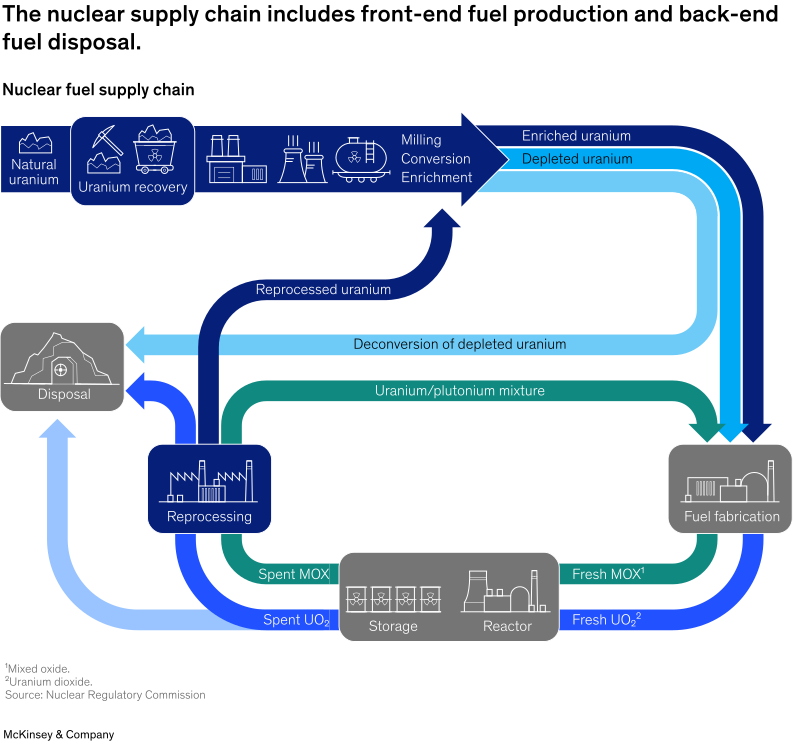
Ensuring reliable, uninterrupted availability of nuclear energy will require focus and investment across the entire nuclear supply chain, from building reactors to upgrading the nuclear supply chain (Exhibit 1).
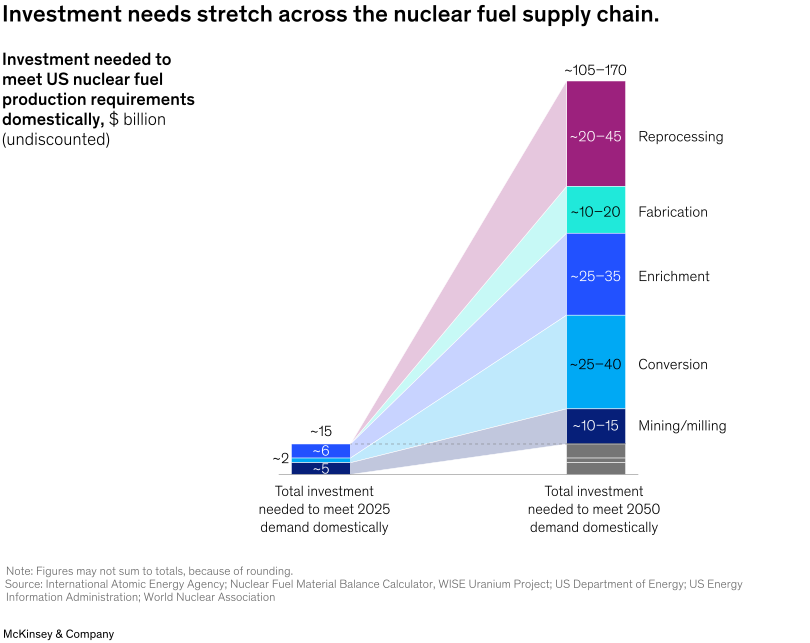
This investment reflects the need arising from changes in the United States’ role in the nuclear fuel supply. In 1985, the United States was the global leader in enrichment capacity, with 64 percent of total production. Global enrichment production has since concentrated in China, Europe, and Russia (Exhibit 2).
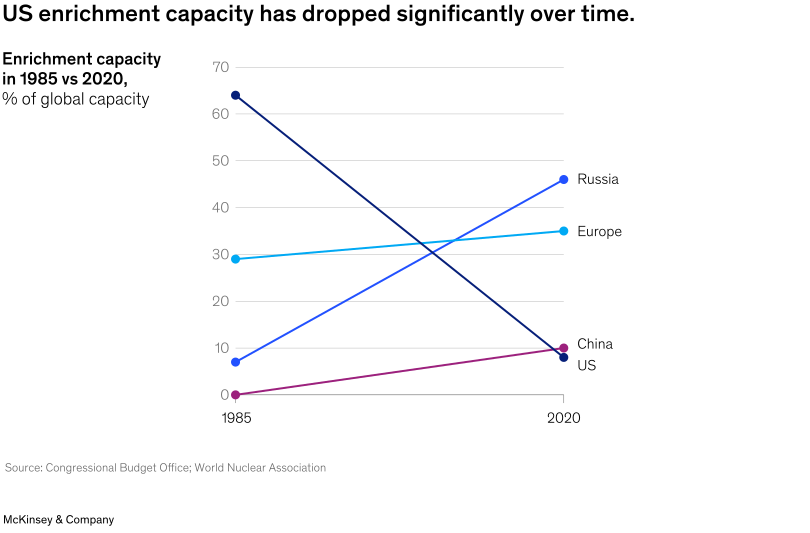
Furthermore, in 2023, the United States imported 27 percent of its enrichment services from Russia,2 introducing potential supply constriction risks.
To ensure the continued operations of its current nuclear capacity and achieve 300 GW of incremental domestic capacity by 2050, the United States would need to invest $105 billion to $170 billion in the nuclear fuel supply chain, based on McKinsey analysis and estimates3 (see sidebar, “What is the nuclear fuel supply chain?”).
What is the nuclear fuel supply chain?
The nuclear fuel supply chain (or fuel cycle) consists of two main stages: front-end fuel production (for example, mining, milling, and enrichment) and back-end fuel disposal (for instance, storage and reprocessing).
The US nuclear fuel cycle operates as an “open” or “once through” system, in which uranium is mined, enriched, fabricated into fuel, and used in reactors before being disposed of as spent nuclear fuel. The United States does not currently engage in large-scale reprocessing.
For these reasons, the US nuclear energy sector should consider a broad set of options, including both strategic and tactical investments across the public and private sectors. This level of mobilization may require the public sector to work with key stakeholders to catalyze capital deployment and continue operations.
Challenges across the nuclear value chain
The nuclear value chain is a complex ecosystem with a host of challenges. Understanding the nature of those challenges is critical to unlocking the full potential of nuclear energy in the United States.
Mining and milling: Limited domestic reserves
Mining and milling is the process of extracting uranium ore from the ground through either in-situ recovery (ISR) or conventional mining, and converting it into concentrated triuranium octoxide (U₃O₈), or “yellowcake.”
While the United States has the world’s greatest uranium demand, less than 1 percent is sourced from domestic mines, though output has increased meaningfully since 2024 as projects in Wyoming and Texas have ramped up. US uranium mining capacity has declined dramatically from its peak of approximately 20 kilotons of U3O8 per year in 1980. In 2023, about 90 percent of the uranium purchased by US reactor operators was sourced from Australia, Canada, Kazakhstan, Russia, and Uzbekistan (Exhibit 3).
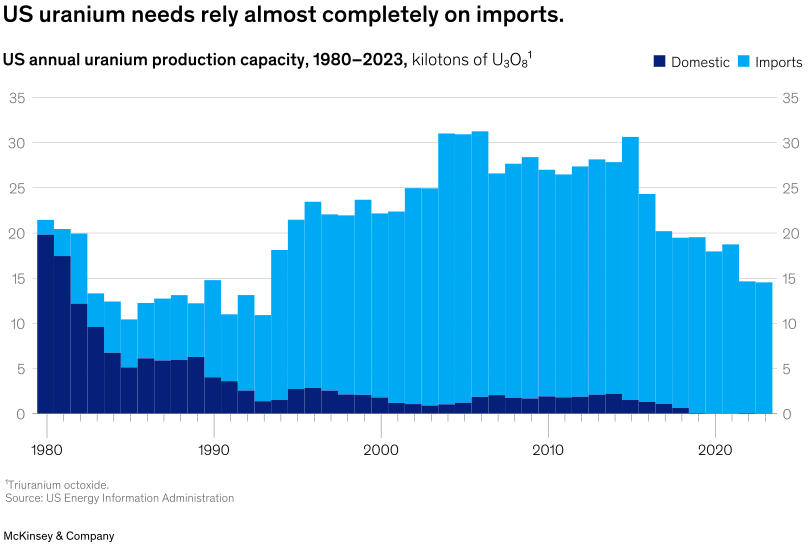
While supplying all US uranium demand domestically remains unlikely given resource distribution and cost considerations, recent policy shifts and higher long-term pricing have improved the outlook for a modest but strategically meaningful increase in US production.4 Known uranium resources are concentrated in Australia, Canada, Kazakhstan, Namibia, and Russia.
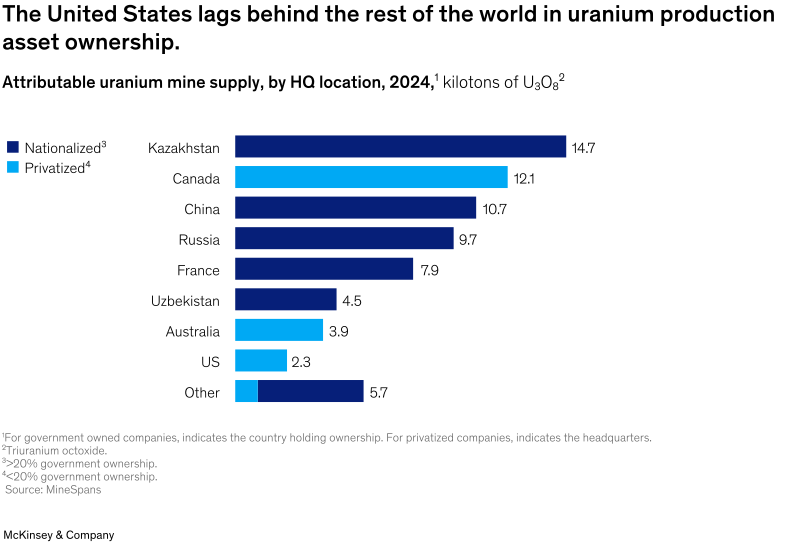
Although the location of mines does not necessarily indicate ownership, the United States lags Australia, Canada, China, France, Kazakhstan, Russia, and Uzbekistan on asset ownership (Exhibit 4).
Conversion: Long lead times
Conversion is the process by which yellowcake (or U3O8) is converted to uranium hexafluoride (UF₆) for use in enrichment facilities. The current US conversion supply will fall short of the demand required by 2050 to support the production needed for 300 GW of additional domestic nuclear capacity (Exhibit 5).
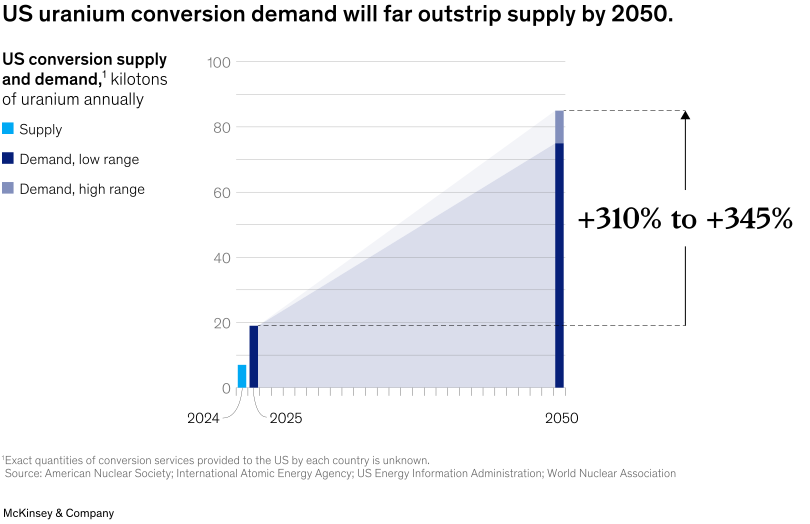
Conversion is a concentrated market, with only five companies active globally. There is only one uranium conversion facility in the United States, which can meet about 50 percent of today’s US demand at its current and projected operating capacity (Exhibit 6). That facility, Metropolis Works (MTW), is owned and operated by Solstice Advanced Materials.
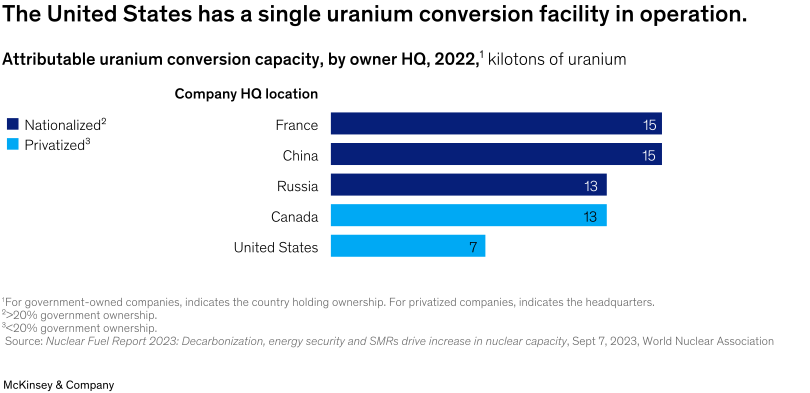
From 2017 to 2023, the facility was idled due to insufficient demand to support its operating costs. In 2024, MTW restarted at a reduced capacity of seven kilotons of uranium per year—around half of its original 15 kiloton capacity—and is expected to increase capacity to approximately ten kilotons in 2026.
Having a single conversion operator creates capacity constraints, so US nuclear operators have relied on imports from Canada, China, France, and Russia, as well as on their own stockpiled reserves in recent years.
While restoring MTW to full capacity could help meet current US needs, growing nuclear power demands in the United States will require an expansion in capacity. The long lead times required to permit, build, and prepare operations for a new facility highlight the importance of investing in expanding conversion capacity soon.
Enrichment: Geopolitical headwinds and growing demand
Enrichment is the third step in nuclear fuel production and is required for both current low-enriched uranium (LEU) fuel and high-assay low-enriched uranium (HALEU) fuel. This step involves increasing the proportion of fissile uranium-235 (U-235) in the fuel. It is the most specialized and regulated step in the front-end fuel cycle.
Today, US reactors use LEU fuel, which is enriched to up to 5 percent U-235. If new advanced reactors under development are scaled, they will need HALEU fuel enriched to 5 to 20 percent U-235, requiring additional separative work units (or SWUs—the unit for measuring enrichment capacity).
In recent history, the United States has depended on imports for much of its enriched uranium because domestic supply cannot meet demand (Exhibit 7).
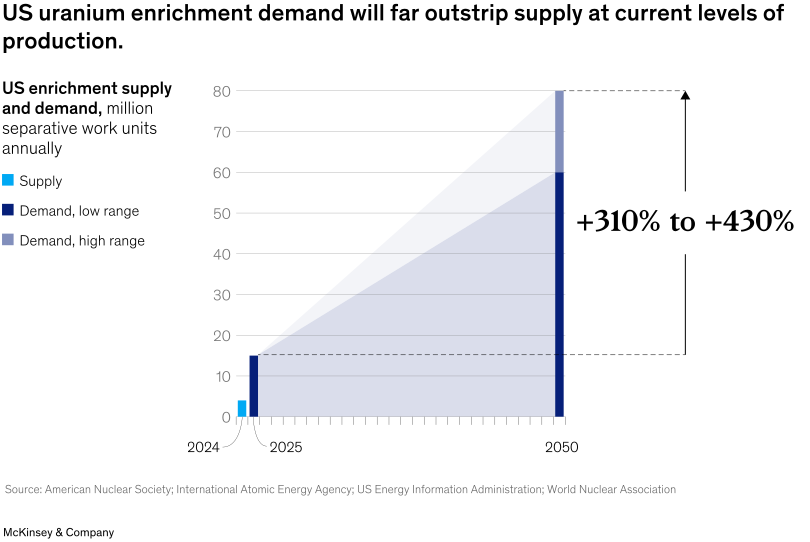
Like conversion, enrichment is a highly concentrated market. In January 2026, the DOE awarded $2.7 billion to boost domestic LEU and HALEU enrichment, splitting funds equally among Centrus Energy, General Matter, and Orano Federal Services ($900 million each). Centrus will expand its Piketon, Ohio, facility for commercial-scale HALEU and LEU production, aiming for operations by 2029 (with options of up to $1.07 billion). Orano will use its award for Project IKE, a $5 billion LEU enrichment plant in Oak Ridge, Tennessee, targeting four MSWU of capacity and a 2031 start. General Matter will develop an HALEU enrichment facility at the former Paducah site in Kentucky under a ten-year, milestone-based contract, with construction expected to begin in 2026, entering into enrichment operations by 2034. Even with this expansion, however, capacity from domestic facilities would likely fall short of demand, requiring continued US reliance on foreign enrichment facilities.
Fuel fabrication: Emerging constraints
Fuel fabrication converts enriched uranium—typically uranium hexafluoride (UF6)—into finished fuel assemblies for reactor use. Core steps include deconversion of UF6 to uranium dioxide (UO2) powder, pellet pressing and high-temperature sintering, loading into zirconium alloy cladding to form fuel rods, and assembly into reactor bundles. Commercial fabrication facilities in the United States are licensed by the NRC under 10 CFR Part 70.
The United States maintains NRC-licensed fuel cycle facilities, including commercial fuel fabrication plants serving the existing light-water reactor (LWR) fleet. The existing fuel fabrication plants are collectively capable of meeting the fuel supply needs of the current US nuclear reactor fleet. The current commercial fabrication infrastructure is designed primarily for LEU fuels, consistent with the historical operating basis of US reactors.
Three developments are reshaping fabrication requirements:
- High-assay low-enriched uranium. Fabrication of HALEU fuels entails enhanced criticality controls, modified material-handling systems, and license amendments under NRC regulations, increasing technical and regulatory complexity relative to conventional LEU operations.
- Accident-tolerant and advanced LWR fuels. The DOE and industry are advancing accident-tolerant fuel concepts and higher-enrichment LEU designs to improve safety margins and fuel performance in the operating fleet. NRC licensing activities for fuels with increased enrichment and burnup introduce additional analytical, testing, and review requirements for fabrication facilities and fuel vendors.
- Advanced fuel design. Many advanced Generation IV (Gen IV) reactors rely on innovative fuel forms beyond conventional uranium oxide pellets, including the following:
-
TRISO (tristructural-isotropic) fuel. This fuel type encapsulates poppy seed-sized uranium kernels within multiple layers of carbon and ceramics. This robust design acts as its own containment system, capable of withstanding extreme temperatures without melting. Because of this safety profile, next-generation reactors can be designed with a much smaller footprint, eliminating the need for the massive, expensive pressure-retaining containment structures required by conventional plants. The fuel does not yet exist at commercial scale, but companies including BWX Technologies, Standard Nuclear, and X-energy are developing and scaling production for advanced demonstration plants, with plans to expand its commercial operations. The NRC recently granted X-energy the first-ever US approval of a Category II fuel fabrication facility for its TRISO facility in Oak Ridge, Tennessee.5
- Molten salt fuels. These fuels dissolve fissile material (such as uranium or thorium) in a liquid salt mixture, which serves as both fuel and coolant. Few designers are currently utilizing this fuel type. TerraPower is testing a molten salt reactor with Southern Company, with fuel being produced at Idaho National Laboratory.6
- Metallic fuel. This is a type of nuclear fuel in which uranium is alloyed with other metals, such as zirconium, providing high thermal conductivity and improved performance. Several advanced reactor designers are planning to use metallic fuels. For example, TerraPower’s Natrium reactor, a sodium-cooled fast reactor, will use a high-assay, low-enriched uranium metallic fuel.7 Short-term fuel supply will likely come from Idaho National Laboratory for initial pilots.
-
Given that fuel fabrication projections heavily rely on future reactor designs, the projected cost to support nuclear growth is difficult to estimate and highly sensitive to the mix between Gen IV reactors and water-moderated reactors (whether small modular reactors or large scale reactors). On a unit cost basis, traditional fuel will likely be much cheaper than new fuel types (for example, TRISO and metallic fuels) used in Gen IV reactors, even after those new facilities move down the learning curve.
Assuming Gen IV reactors make up 20 percent of new nuclear capacity, the United States would need to invest $10 billion to $20 billion to meet ongoing fuel demand, according to McKinsey analysis. Compared with enrichment or reprocessing, however, fuel fabrication is less capital intensive but maintains stringent quality assurance standards, high fixed costs, and reactor-specific product differentiation. As enrichment levels increase and fuel designs diversify (for example, HALEU-based and advanced fuels), fabrication infrastructure must adapt in parallel. Absent durable demand signals and coordinated licensing pathways, fabrication capacity could emerge as a constraint on broader US nuclear expansion.
Fuel reprocessing: Back-end value chain inefficiency
The United States currently uses an “open” or “once through” process that only extracts a small fraction of uranium’s energy potential. A “closed” fuel cycle, by contrast, would reprocess spent nuclear fuel (SNF) to extract additional energy from the fuel and reduce long-lived waste. While closed fuel cycles are not regularly used in the nuclear power industry, spent-fuel reprocessing technology is operational in China and France.
If the United States were to incorporate spent-fuel reprocessing into its energy security strategy, this could further reduce its dependency on foreign supply but would also require significant investment. Reprocessing the current annual output of SNF—approximately 2,000 metric tons—is estimated to cost $10 billion to $15 billion. These costs would increase substantially to meet the US goal of quadrupling its nuclear-generation capacity.
Additionally, the United States has an existing stockpile of approximately 90,000 metric tons of SNF from past operations, which could also be reprocessed but would require an even larger investment.8 To draw down the existing spent-fuel stockpile and reprocess current annual nuclear output, estimated costs range from $20 billion to $45 billion, excluding additional reprocessing requirements from new reactors built and operated over the next 25 to 30 years.9
The financial trade-offs of reprocessing are particularly relevant given recent federal restrictions on imports of Russian uranium products, which have renewed attention to domestic fuel cycle resilience. Although the United States has diversified some enrichment capacity, the disruption highlighted structural dependencies at the front end of the fuel cycle. A closed fuel cycle, while capital intensive, could reduce long-term reliance on foreign enrichment and conversion services by extracting additional value from domestically generated SNF.
The financial and technological barriers to developing scalable reprocessing capabilities remain high. It is unclear whether reprocessing would be more cost-effective than the current practice of storing SNF in dry casks. These issues are exacerbated by a number of obstacles, including the following:
- Regulatory uncertainty. While the US Nuclear Regulatory Commission (NRC) initiated efforts to develop a reprocessing-specific regulatory framework in 2013, this process was discontinued in 2021 due to insufficient industry interest. The absence of a regulatory framework creates significant barriers to innovation and cost analysis. Additionally, public support for such facilities varies. In 2020, the Union of Concerned Scientists, along with other public stakeholders, expressed opposition to advancing a reprocessing rule, citing concerns over nuclear proliferation risks.10
- First-of-a-kind risk and economic uncertainty. Like other capital-intensive industries, nuclear projects face significant risk. Initial facilities often encounter design revisions, licensing delays, supply chain immaturity, and elevated financing costs, all of which can drive substantial cost overruns. The recent expansion of the Vogtle Electric Generating Plant illustrates these dynamics, with multiyear delays and escalating costs reinforcing investor caution toward large-scale nuclear infrastructure. Advanced reactor demonstrations have similarly depended on substantial cost sharing with the DOE to mitigate early-stage risk. A commercial reprocessing facility would likely face comparable uncertainties, given the lack of an established domestic regulatory pathway, making private financing without federal backing complex.11
- Ambiguity in customer base and market demand. The Nuclear Waste Policy Act (NWPA) of 1982 established a federal framework under which utilities paid a per-kilowatt-hour fee in exchange for the federal government assuming responsibility for permanent disposal of SNF. The law ultimately designated Yucca Mountain as the nation’s intended geologic repository, but the project faced intense political pressure and was never completed. As a result, most commercial reactors continue to store used fuel on-site in dry cask systems, and utilities have successfully pursued damages for the government’s failure to accept the material. This unresolved federal disposal pathway complicates the potential market for private reprocessing. It remains unclear whether utilities or private investors would support new financing mechanisms for reprocessing absent a restructuring of federal responsibilities, cost-sharing arrangements, or statutory reform.12
US industrial policy considerations to support domestic nuclear energy development
Sourcing the funds to achieve energy security in the nuclear supply chain and meet production goals over the next 25 years will be a significant undertaking.
To support an expansion of nuclear capacity to 400 GW with the goal of 100 percent domestically sourced nuclear fuel supply, McKinsey analysis and estimates indicate that large capital investments would be required: approximately $15 billion to $20 billion for mining and milling, about $30 billion to $45 billion for conversion, $30 billion to $40 billion for enrichment, $10 billion to $20 billion for fabrication, and $20 billion to $45 billion for reprocessing—totaling about $105 billion to $170 billion.13
The timing, allocation, and disbursement of this level of investment may depend on a range of policy, market, and financing mechanisms. The following considerations can be useful in helping to enable domestic nuclear energy resilience:
- Permitting. Permitting timelines are a key factor influencing project delivery, with stakeholders exploring ways to improve efficiency while maintaining safety and environmental standards. Some jurisdictions have explored process efficiencies, including digital tools and streamlined workflows, while preserving regulatory rigor.
- Imports and domestic production. Domestic nuclear market players—such as ConverDyn or potential new entrants in US conversion—and adjacent businesses could benefit from greater market stability to increase production. Market conditions and trade frameworks can influence private sector investment decisions, with increased clarity and structure providing investment assurance.
- International assets. The public and private sectors could collaborate on foreign investment to secure foreign uranium mining assets abroad, emulating China and France. For example, Chinese state-owned entities are global leaders in uranium production, with more than 70 percent of it located abroad.14
-
Domestic infrastructure development. Lowering the financing burden for US companies to pursue nuclear development is a critical task for reinvigorating the domestic supply chain. In various markets, financing structures such as congressional funding, tax incentives, or grants have been used to support capital-intensive infrastructure.
Additionally, structured demand generation (that is, offtake agreements), such as the arrangement brokered between Centrus and the DOE, could encourage production and capacity. Incentives (for example, tax rebates) for diversified energy portfolios or emissions mandates could also encourage private investment in the sector.
- Advanced technologies. Potential next-generation technologies—such as laser enrichment, reprocessing technologies, and advanced reactor designs (for instance, high-temperature gas reactors, sodium-cooled fast reactors, and molten salt reactors)—offer potentially more benefits in efficiency and scaling, while also reducing depleted uranium waste. Additional funding and research support (for example, from national labs) would likely be needed to support the commercialization of this technology. The US government could also consider supporting other proven techniques, such as “down blending” the current stockpile of high-enriched uranium for use in both LEU and HALEU fuels.
-
Reprocessing. Waste reduction and management incentives, paired with supply side incentives for reprocessed fuel purchases, could encourage the development of reprocessing facilities and a reprocessed fuel market.
If successfully developed and implemented, reprocessing could significantly reduce the demand for domestic mining, enrichment, and conversion. For example, Orano reports that 10 percent of France’s nuclear electricity is currently generated from recycled materials, with the potential to increase that to 25 percent in the future.
The United States faces a significant challenge in meeting its energy demands while securing energy independence. However, a clear view of the costs and benefits provides a starting point for action and a road map for success.