At a glance
- Trade in 2025 did not retrench, despite dire predictions. Both US imports and Chinese exports reached new highs. Southeast Asia deepened its role in global manufacturing, India gained ground in selected sectors, and Brazil expanded commodity exports to China. All told, trade grew faster than the global economy, while advanced economies and China reoriented away from geopolitically distant trading partners.
- AI-related trade emerged as the most substantial engine of growth. Exports of semiconductors and data-center equipment accounted for one-third of global trade growth as Asian hubs—Taiwan, South Korea, and parts of Southeast Asia—supplied markets around the world, particularly the United States.
- China expanded its role as a “factory to the factories.” Increasing shipments to fast-growing emerging economies, it ramped up exports of industrial components and capital goods, supplying the essential machinery and parts needed to power advanced manufacturing hubs worldwide.
- Tariffs triggered trade readjustment, with US–China trade falling by around 30 percent. The United States replaced about two-thirds of the gap with imports from other sellers, while Chinese exporters of consumer goods from electric cars to toys cut prices by an average of 8 percent to find buyers in new markets. ASEAN thrived, increasing trade with both economies, but the European Union faced a double squeeze: more Chinese imports and higher US tariffs.
- Shifts in trade point to some durable trends—and a need for resilience to shocks. AI, emerging market growth, and China’s evolving manufacturing focus are not flashes in the pan, nor is the growing role of geopolitics in reshaping trade—a shift that’s been apparent in the data for nearly a decade. Short-term developments require responses, too. Tariff shifts in 2025 were abrupt—and 2026 has already delivered its own jolts. Companies need long-term thinking coupled with agility.

Listen to this episode of The McKinsey Podcast on how AI, geopolitical realignment, and shifting capital flows are redrawing trade corridors and reshaping competitive advantage—forcing leaders to rethink where and how they grow.
The past year was the most tumultuous in memory for global trade, even beyond the splash from tariff announcements. Longstanding alignments came under strain, and trade relationships were reassessed—not just among geopolitically distant partners, but among historic allies. Yet trade increasingly moved toward more closely aligned economies, while continuing to grow in step with global output.
Building on three years of McKinsey Global Institute research documenting the emerging realignment of trade along geopolitical lines, this report examines how these dynamics evolved in 2025. It traces the way tariffs rippled through the network alongside major waves influencing trade, such as AI and emerging market growth. Our analysis covers more than 90 percent of global trade across ASEAN economies, Brazil, China, the European Union, India, the United States, and their trading partners.1
Developments remain in flux. Geopolitical conflict has sharply intensified in recent weeks. Separately, in February 2026 the US Supreme Court struck down the legal basis for many of the tariffs introduced in 2025, prompting new measures under alternative authorities. Despite these uncertainties, many structural shifts underway in global trade are likely to persist.

McKinsey Global Institute research on the geometry of global trade
The new world of global trade
By the end of 2025, US tariff rates stood at their highest level since World War II. The increases reshaped trade along geopolitical lines, deepening a realignment already underway and pushing more than $165 billion in trade away from the US–China corridor.2
It would be natural to see tariffs as the defining trade story of 2025 (see sidebar “Tariffs in flux”).
Yet other forces proved equally consequential in an increasingly contested global landscape.
One was the artificial intelligence boom, and the race across the world to build data centers. Shipments of the chips, servers, and networking equipment needed for their construction accounted for about one-third of trade growth, much of which was between geopolitically aligned economies.
Another underappreciated force was China’s shift upstream in global production. It exported to a wider range of markets, shipping more manufacturing inputs and capital goods, while exports of finished products fell—changing not just how much trade flowed across borders, but what goods moved. Lower prices helped China’s exporters find demand for consumer goods as access to the US market narrowed.
These shifts rippled across the global trade network. ASEAN and other emerging economies expanded their roles in reconfigured supply chains. The European Union faced growing competitive pressure.
Several outcomes in 2025 ran against common expectations. Despite higher tariffs, global trade did not retrench. Both US imports and Chinese exports reached new highs. In fact, the United States emerged as the largest single driver of global import growth, largely due to firms stockpiling ahead of the tariffs, alongside strong demand for AI-related equipment.
Trade keeps growing but reorients geopolitically
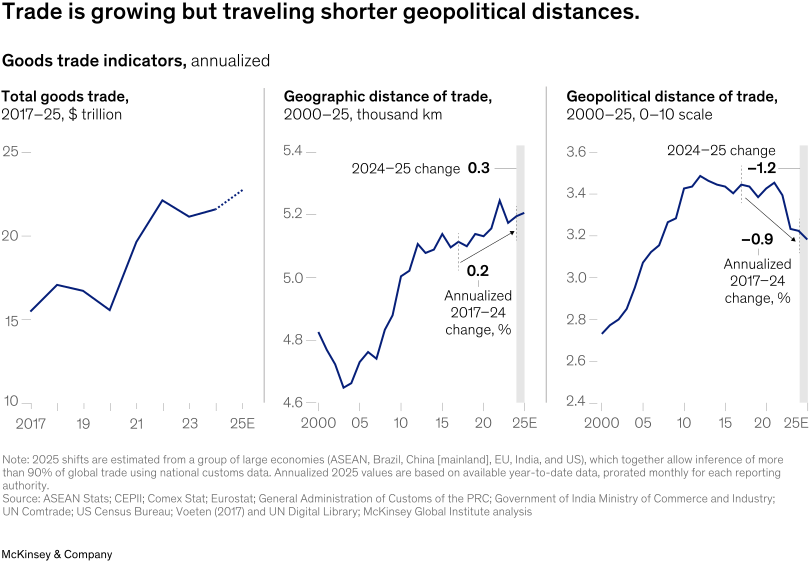
Although global commerce faced significant disruption in 2025, aggregate trade patterns largely followed existing trends (Exhibit 1). Goods continued to travel longer geographic distances and flowed increasingly between geopolitically aligned partners. Routes shifted, yet trade kept expanding roughly in line with global economic growth (see sidebar “Methodology”).3
Methodology
Our analysis covers more than 90 percent of global goods trade, reported in nominal terms. It draws on trade statistics reported by customs authorities in the United States, China, the European Union, ASEAN, India, and Brazil. These reporting economies account for roughly half of global exports and imports, but since nine-tenths of all trade flows into or out of at least one of these economies, mirrored reporting allows us to infer more broadly.
For most economies in this analysis where full-year data was not available at the time of writing, we annualize the latest data reported through the latest available month. In the case of the United States and Brazil, we use full-year data, as reported as of late February 2026.1
We follow the same methodology used in previous reports in our series on Geopolitics and the Geometry of Global Trade, both in how we quantify geopolitical distance and in how we measure and segment trade flows, as summarized below.
Quantifying geopolitical distanceTo quantify geopolitical alignment in a way analogous to geographic distance, prior MGI research developed a measure based on UN General Assembly voting records from 2005 to 2022 (exhibit). Using principal component analysis, we map each voting economy onto a one-dimensional spectrum scaled from zero to ten. This spectrum is not defined relative to any single country or pair of economies. The geopolitical distance between two economies is the absolute difference between their positions on this scale. We treat this distance as fixed over the period analyzed; accordingly, changes in the geopolitical distance of trade reflect shifts in the mix of trading partners, not changes in the underlying distance between any specific pair.
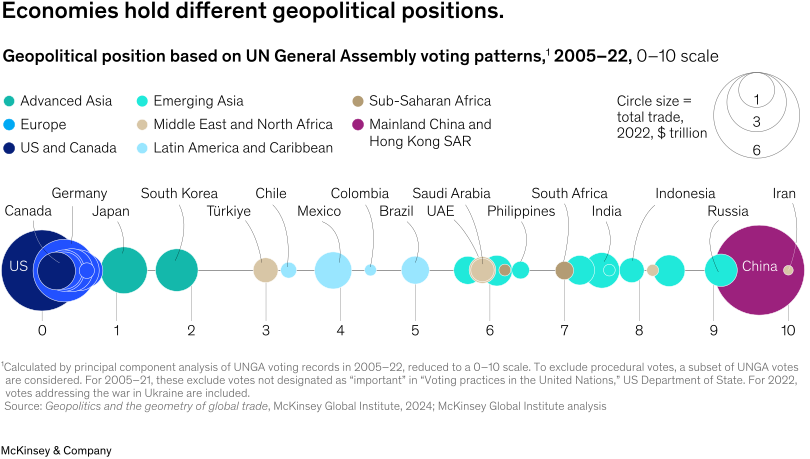
Geopolitical relationships are dynamic, and UN voting behavior is an imperfect proxy: Votes can be noisy and sensitive to the issue set in any given session. Some longstanding alignments may come under pressure, and divergence on high-profile votes can emerge rapidly. Even so, from a commercial standpoint, trade and investment patterns tend to adjust with lags, and observed trade flows in the period covered largely reflect longer-standing alignments and constraints.
Measuring and segmenting trade flowsWe measure goods trade using national customs data of the six-digit Harmonized System (HS6), the most granular internationally comparable product classification, which covers roughly 6,000 product codes. We compile global totals based on import-side data for all reporting economies, with the exception of the US–China corridor where we use US data for both imports and exports.2 Where a reporting authority does not cover a bilateral flow, we use mirrored trade, the partner’s corresponding export or import record, to fill gaps.
Mismatch of bilateral trade statisticsBilateral trade statistics rarely match perfectly across partners due to differences in valuation methods, as well as timing issues, reporting thresholds, and classification practices. We use local trade data when discussing region-specific chapters or exhibits. Figures do not fully reconcile between sections due to reporting differences. For example, China’s exports to the European Union reported in the China section differ from EU imports from China reported in the EU section.
Price effectsAll trade values are analyzed in current prices, expressed in nominal US dollars. As a result, changes may reflect both quantity and price movements, particularly in commodities and other price-volatile categories. Where relevant, we distinguish shifts that appear primarily price-driven from those more consistent with changes in volume effects.
As in prior years, tensions between the United States and China were the single biggest force influencing the geopolitical distance traveled by trade (Exhibit 2). Both economies continued to reorient away from each other and toward geopolitically closer partners, accelerating a trend underway since 2017. US tariff increases, which were applied broadly but were generally highest for China, reinforced the shift.4
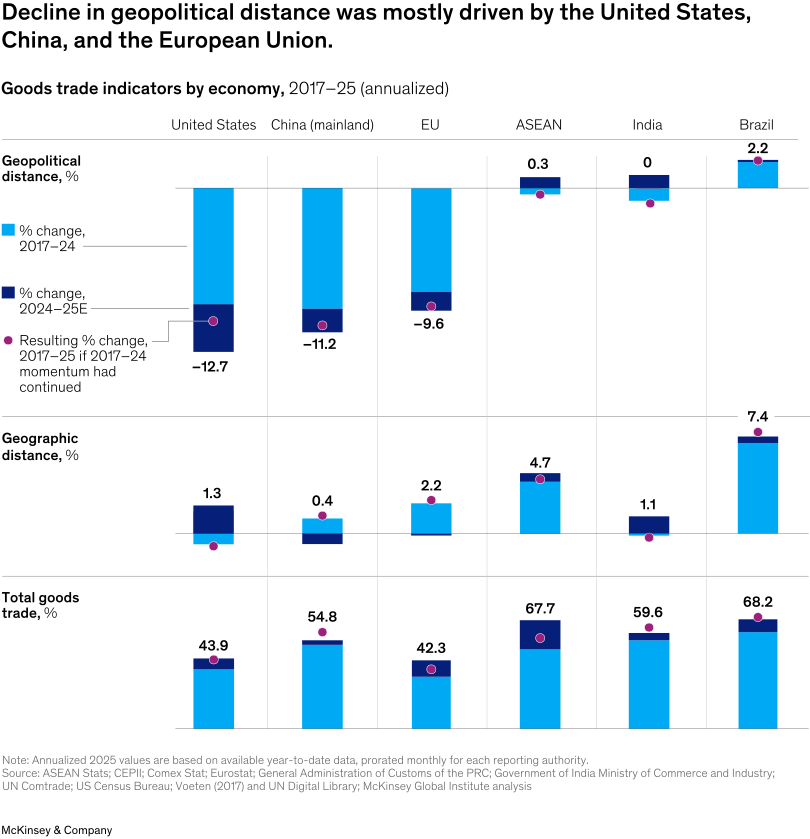
The European Union’s trade also shifted toward more geopolitically aligned partners, largely because exports to China fell. Trade with the United States rose in the first half of the year, driven by large flows of pharmaceuticals and some metals ahead of expected tariff rollouts. Trade with Russia continued to decline, though from a much smaller base than in the years immediately after the invasion of Ukraine.
These shifts can be read as a form of “derisking” in the United States, China, and Europe as firms managed geopolitical pressures. But there was limited broad-based evidence of firms bringing production home or relocating it to nearby partners. Canada’s and Mexico’s shares of US trade declined, contributing to supply chains reaching farther on average.
Outside the largest economies, the picture differed. Major emerging economies continued to expand trade across the geopolitical spectrum. India stood out for a marked increase in geographical distance, reflecting growing shipments of smartphones to the United States, about 13,000 kilometers away.
AI emerges as the engine of trade
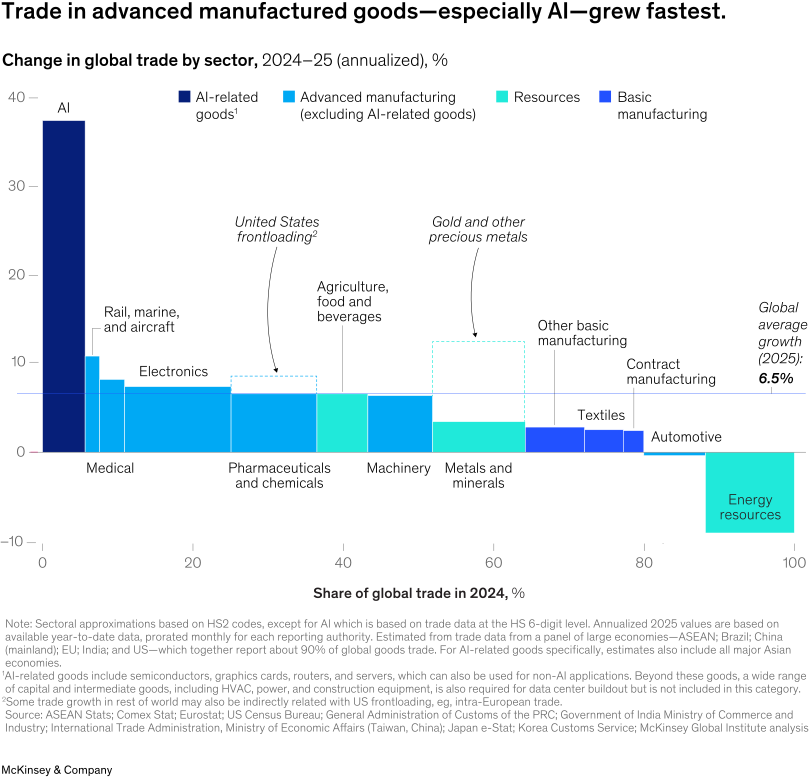
Booming AI investment left a clear mark on global trade in 2025. Shipments of the hardware needed to develop and run the technology increased by almost 40 percent during the year, accounting for about a third of global trade growth—an impact that has received far less attention than AI’s effects on economic growth, investment, financial markets, or jobs (Exhibit 3).5 This expansion unfolded amid heightened geopolitical tensions and tighter trade restrictions.
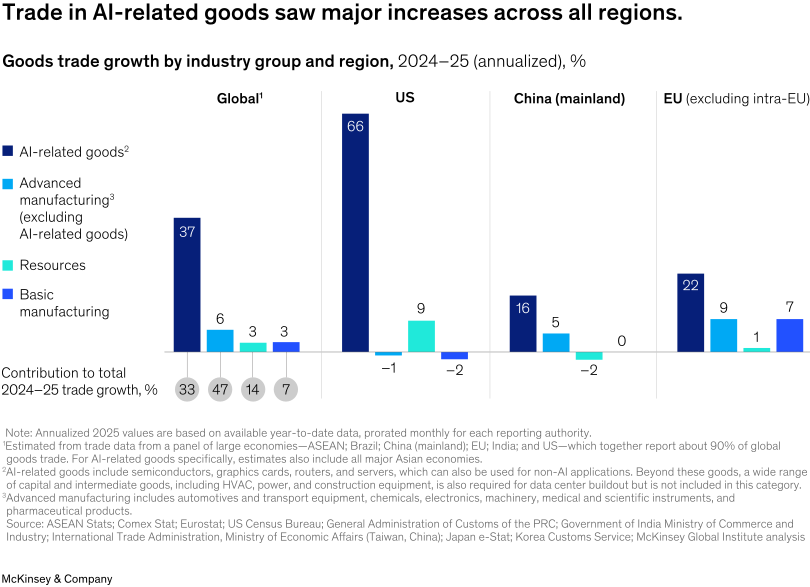
The rapid buildout of data centers required large volumes of semiconductors, servers, and networking equipment from tightly linked supply chains running through Taiwan, South Korea, and parts of ASEAN. The United States added roughly half of the world’s new data center capacity in 2025, making it the largest source of demand.6 US trade of AI-related goods rose by roughly 66 percent, or an estimated $220 billion.
China was the second-largest builder of data centers, but trade restrictions limited its ability to import some of the most advanced chips and semiconductor manufacturing tools for much of 2025, leading it to rely heavily on domestic supplies. As a result, China’s trade in AI-related goods increased by only 16 percent, or an estimated $85 billion.
The European Union added less capacity than either the United States or Mainland China and saw moderate growth, albeit from a low base. At the same time, some of its exports—most notably extreme ultraviolet lithography machines—remained critical to leading-edge chipmaking in Taiwan and South Korea.
Even as AI-related trade surged, policy restrictions shaped where goods could flow.7 The United States restricted exports of advanced computing chips, high-bandwidth memory, and chipmaking tools, coordinating with key partners. The Netherlands and Japan imposed their own licensing restrictions on advanced semiconductor manufacturing equipment, while South Korean chipmakers curtailed exports of high-bandwidth memory and halted technology upgrades at their Chinese facilities. China, for its part, tightened controls on critical minerals used in semiconductor manufacturing.8 Beyond goods trade, several countries imposed restrictions on the transfer of proprietary AI technologies, reflecting differing concerns around national security, data privacy, and intellectual property.9
McKinsey Global Institute research on foreign direct investment (FDI) announcements indicates that the AI infrastructure buildout will continue globally, as new large data center and semiconductor fabs break ground—with flows between US and Asian economies driving most of the activity in semiconductor manufacturing.10 The resulting capacity is likely to support further growth in related trade between aligned economies.
Even beyond AI-related demand, trade in advanced manufacturing categories grew faster than in other sectors. Shipments of trains, planes, and ships were strong, while demand for industrial machinery was driven by emerging economies. This underscores how long-term, global economic waves are affecting trade, and will likely continue to do so, even amid disruptions from tariffs and other forces (Exhibit 4).
Growth in basic manufacturing was more modest, with tariffs reshuffling trade flows rather than expanding them, particularly as US–China trade declined. The performance of resources trade was mixed in 2025, as the value of energy trade fell on the back of lower prices—even as volumes held. Minerals and energy are likely to remain important for trade given their role as critical inputs for advanced manufacturing (see sidebar “Advanced manufacturing drove trade in 2025”).
US–China trade shifts ripple outward
Plummeting trade between the United States and China had widespread ramifications in 2025. The decline in US–China trade reduced global trade growth by about 10 percent during the year, with reduced US imports from China accounting for roughly 85 percent of that decrease.11 Resulting supply gaps in the United States and underutilized capacity in China forced firms to seek new suppliers and buyers. Some economies took on bigger roles in supply chains, while others mainly absorbed displaced Chinese exports (Exhibit 5).
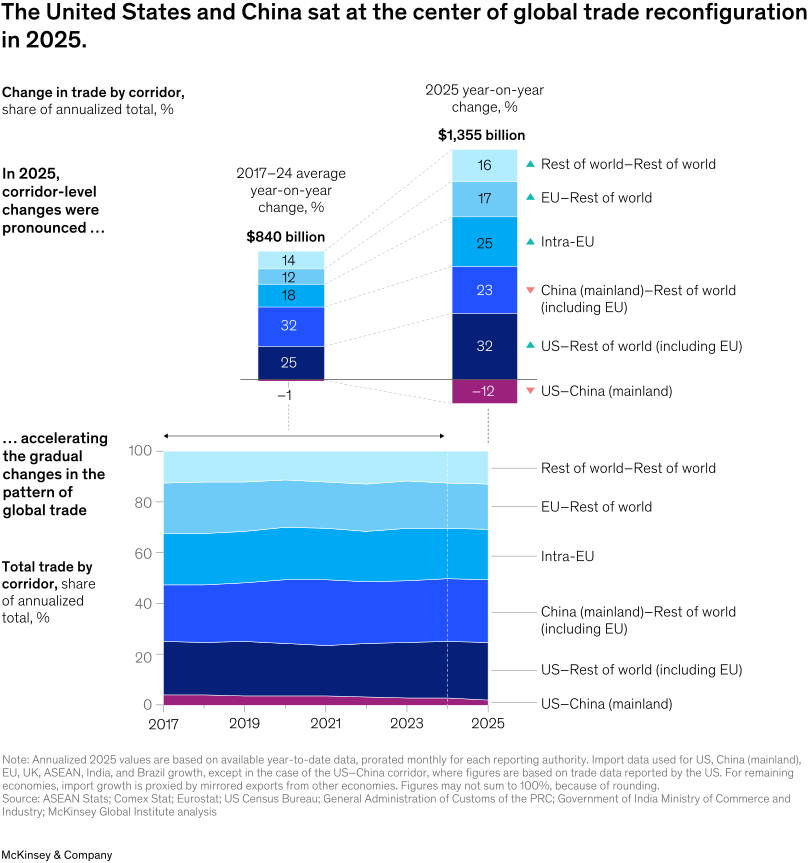
The United States managed to replace about two-thirds of the goods it previously sourced from China—valued at more than $80 billion—by turning to alternative suppliers (Exhibit 6). India, for example, increased smartphone exports to the United States to levels equal to roughly 40 percent of what China had supplied, and ASEAN economies replaced about two-thirds of the value of US laptop imports that had come from China.
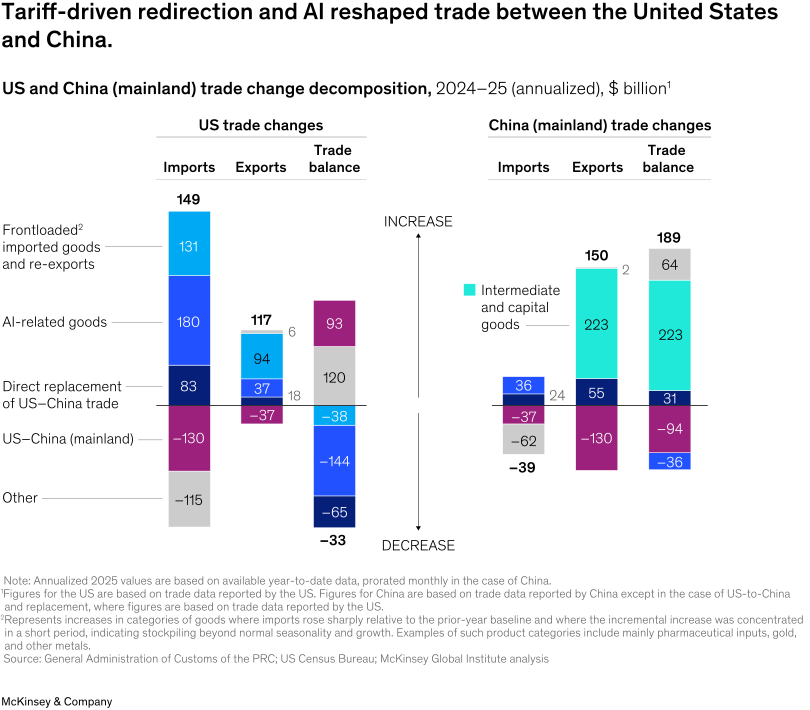
For its part, China also redirected exports away from the United States, although replacement levels were lower than on the US side. Shipments to the United States fell by roughly $130 billion in 2025, of which China replaced about $55 billion on a like-for-like basis.12 Much of this displaced supply flowed to Europe and to emerging economies in Asia, the Middle East, and Africa. These were largely consumer goods, often sold at lower prices, adding pressure—particularly in Europe—on manufacturers of products such as vacuum cleaners, digital cameras, and clothing.
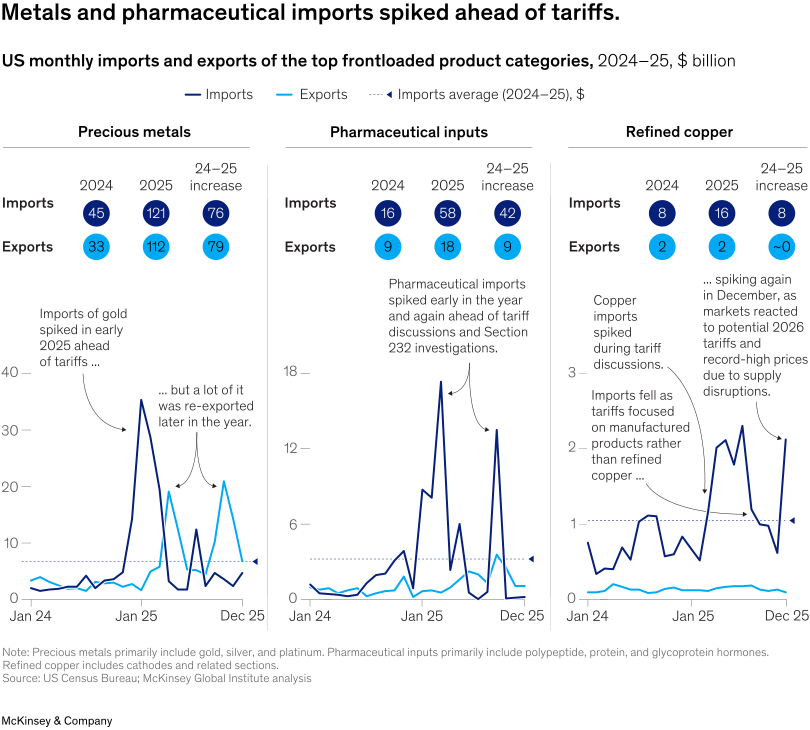
For both the United States and China, trade shifts in 2025 went well beyond replacement dynamics. For US firms, frontloading was another response to announced tariffs. They brought forward nearly $130 billion in additional pharmaceuticals and gold imports ahead of potential tariff increases, later lifting exports as large amounts of gold were re-exported (see sidebar “US frontloading”).
US frontloading
In the opening months of 2025, US imports rose sharply as firms accelerated orders and shipments in anticipation of tariff increases.1 US logistics indicators also showed elevated inventories and warehousing costs consistent with firms storing goods ahead of potential tariffs.2 This buying pattern was widespread, particularly for consumer products ranging from air conditioners to wristwatches and cars.
By the end of the year, however, total imports for most products remained broadly in line with normal annual demand. The timing had shifted, not the total amount imported, as firms pulled forward only enough purchases to cover near-term needs.
Defining frontloaded productsFor a narrow set of products, imports spiked and the impact persisted through the year (exhibit). To identify these systematically, we examined products at the HS6 level for which trade (1) increased by at least 50 percent relative to the 2024 baseline, and (2) most of that incremental rise was concentrated within three months. The total number of such products is short: polypeptide hormones, precious metals—especially gold—and refined copper. We define these as frontloaded products.
Polypeptide hormones are high-value, easily stored pharmaceutical ingredients, particularly those used in GLP-1 type weight-loss drugs—largely sourced from Ireland. Beyond trade data, industry reporting and market analysis attribute Europe’s 2025 pharmaceutical export surge in part to frontloading.3
Precious metals were also frontloaded, as traders exploited price spreads that widened amid tariff uncertainty. Imports from Switzerland, the United Kingdom, and Australia spiked, particularly for gold bars routed primarily by air into New York. Refined copper purchases surged from April 2025 onward, amid concerns that tariffs on copper articles would also extend to refined copper cathodes.4
In all these cases, tariffs did not materialize, but the risk alone was enough to trigger defensive buying.
Note that there are some products, notably AI-related equipment imports tied to data center buildout, for which growth spiked and then was sustained throughout the year. This shift appears structural, and we do not classify such products as frontloaded. Other products, like natural gas imports, exhibit regular seasonal spikes and are also not captured under our definition.
Some US imports did fall—by around $115 billion—much of it in goods subject to tariffs. However, these declines were concentrated in a narrow set of categories, including cars and household goods such as furniture.13 There is limited evidence that domestic manufacturing offset these lost imports. Instead, the shortfall reflected a combination of weaker demand and inventory drawdown.14
In total, US imports rose by roughly $150 billion during the year, driven in part by the increase in AI-related purchases noted above, which were unrelated to the tariffs. All told, US trade with the rest of the world accounted for more than one-quarter of trade growth, exceeding its historical share.
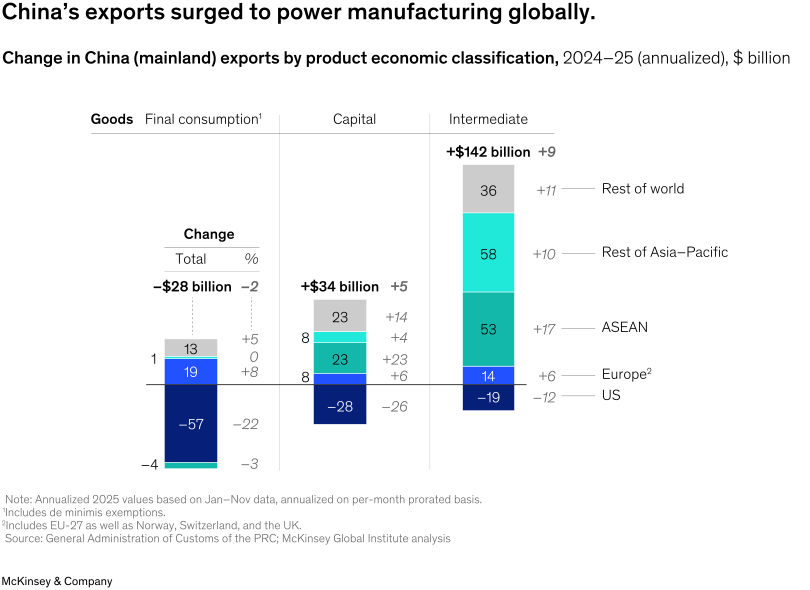
For China, higher tariffs accelerated a shift away from consumer goods exports to the United States and toward components and equipment supplied to manufacturers across the globe. In these categories, exports to the rest of the world grew by roughly $220 billion, pushing the country’s trade surplus to a record.
China moves upstream in production networks
For years, Chinese firms had been increasing production of intermediate inputs used in final goods assembled in the country, supported by domestic policies that encouraged higher local content.15 Exports of those goods have been rising in turn. In 2025, this trend accelerated. Shipments of intermediate inputs—including memory chips, other semiconductors, and industrial components such as valves—rose by 9 percent, up from 6 percent the prior year (Exhibit 7).
Some of these exports amounted to indirect replacement of lost US-bound sales as parts, particularly in electronics, were used by manufacturers elsewhere to make goods later exported to the United States. Smartphone trade exemplified this pattern, with a decline of about $15 billion in smartphone exports, matched by a comparable increase in component shipments, particularly to India.
In many other cases, however, rising exports of parts and machinery were not tied to replacing China’s lost US sales. Instead, they supported the expansion of manufacturing capacity in third markets, particularly emerging economies, deepening China’s role as a supplier of production inputs rather than a final-goods exporter.
ASEAN trade surges, while Europe faces mounting pressure
Regions differed sharply in the extent to which they captured opportunities created by the decline in US–China trade.
ASEAN stood out in 2025 for its rapid trade growth and expanding role as a global connector. Imports of equipment and manufacturing inputs rose, as the region took on processing and assembly work once concentrated in China, while exports of finished goods increased, particularly to the United States (Exhibit 8). Some have questioned the extent to which this reflects a shift in substantive manufacturing, rather than minimal final assembly or even transshipment—passing along goods originating in China to skirt US tariffs.16 While this is a heavily debated topic, some analysts find that Chinese inputs represent well under half of the value of final goods exported from ASEAN economies to the United States.17 Furthermore, the region’s exports grew faster than its imports, indicating that domestic manufacturing is adding more value.
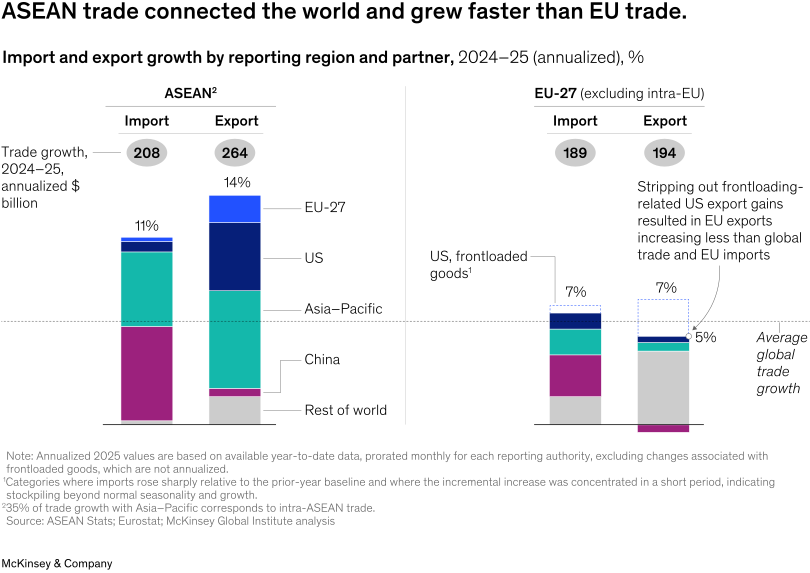
In contrast, the European Union did not fill the gap left by declining US imports from China, even though it produces many of the same goods and could have served as an alternate supplier.18
In 2025, excluding frontloaded shipments of pharmaceuticals and gold, EU exports grew by about 5 percent. Exports to its two largest trading partners—the United States and China—faced headwinds, while exports to emerging economies rose by over 6 percent. Intra-EU trade also expanded at a similar pace.
Headwinds were strongest in the auto sector, which faced steep US tariffs and intensifying competition from China’s electric vehicle (EV) producers. Exports to the United States fell by $8 billion, while exports to China declined by $7 billion. At the same time, imports of Chinese-made vehicles into the European Union rose by about $4 billion despite barriers meant to curb them.19
Tariffs, AI investment, and China’s continued shift upstream in production reshaped global trade flows in 2025. The chapters that follow examine how these forces played out across major regions, as firms rerouted supply chains, responded to shifting competitive pressures, and navigated changes in market access in an unusually unsettled year for global trade.
United States: AI and tariffs reshape trade
On the face of it, the trade surprise of 2025 was the strength of US foreign demand, which became the largest contributor to global import growth even as new tariffs took effect and shipments from China fell.
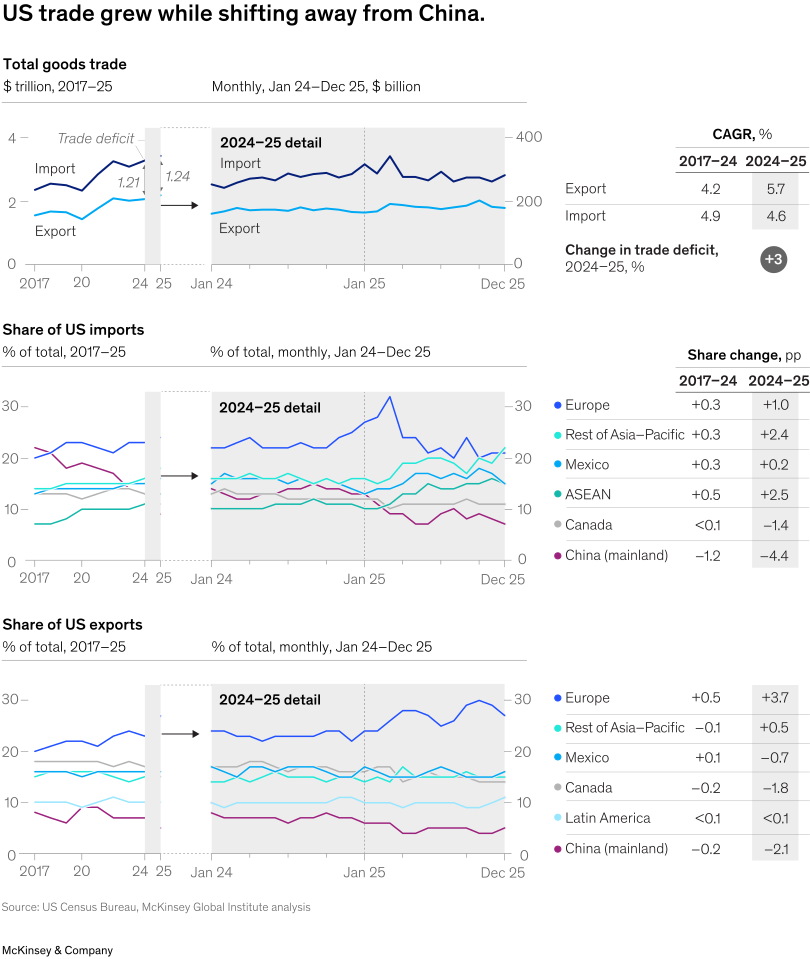
Yet most of this change reflected rushed buying ahead of tariff increases rather than a sustained increase in demand. Frontloading of pharmaceuticals and gold caused large swings in the trade balance, with the deficit widening in the first part of the year as firms stockpiled imports and then narrowing later as inventories were drawn down and gold was re-exported.20 Excluding these effects, both imports and the trade deficit were little changed compared to the prior year.
Beneath this stability, however, the composition of US trade shifted markedly. Purchases of AI-related goods rose sharply, while imports from China continued to fall as firms rerouted supply chains toward alternative suppliers, particularly in ASEAN economies (Exhibit 9).
The United States stockpiles imports amid tariff uncertainty
Promises, and then announcements, of much higher tariffs were the first salvo of change. An immediate and significant impact was frontloading, but it proved short-lived.
As the risk of higher tariffs rose in early 2025, US firms began stockpiling goods. For many consumer products, from air conditioners to wristwatches and cars, firms pulled forward purchases to avoid tariffs. By the end of the year, however, total imports remained broadly in line with normal annual demand: The timing shifted, not the overall value (see sidebar “US frontloading”).
For a narrow set of products, by contrast, frontloading increased full-year import totals. High-value, easily stored pharmaceutical ingredients, particularly those used in GLP-1-type weight-loss drugs, saw a surge, largely from Ireland. Gold imports from Switzerland, the United Kingdom, and Australia also spiked, as traders exploited widening price spreads amid tariff uncertainty.21 In both cases, tariffs never materialized, but the risk alone was enough to trigger defensive buying.
These shifts generated sharp intra-year swings in the trade balance. The deficit rose to 70 percent above 2024 levels in the first quarter before narrowing through midyear as frontloading subsided. By the fourth quarter, it stood 25 percent below year-earlier levels as traders unwound positions and re-exported the bullion, refilling vaults overseas.22 On a full-year basis, the deficit changed little.
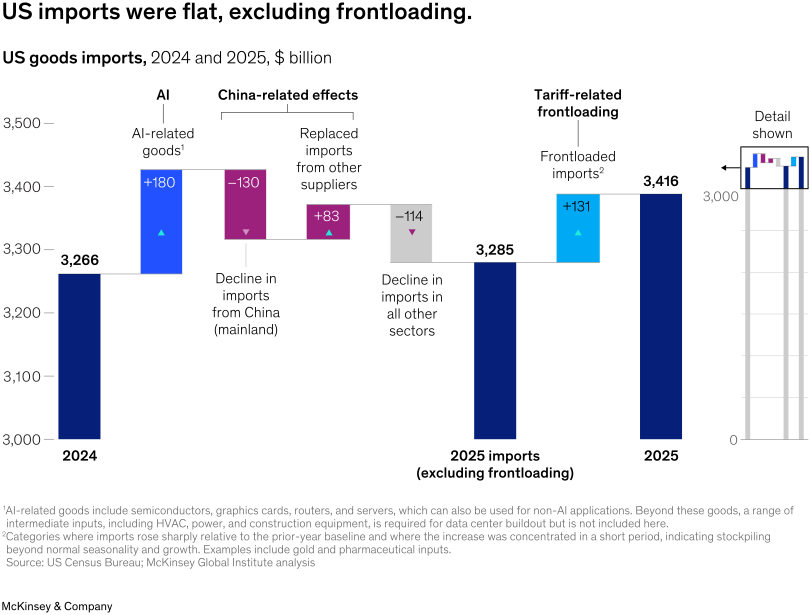
In total, we estimate that about $130 billion of the $150 billion increase in US imports in 2025 reflected purchases pulled forward beyond a typical year’s demand.23 The surge in pharmaceuticals and gold, along with subsequent re-exports, accounted for roughly 80 percent of total import and export growth, a distortion unlikely to recur.
New suppliers replace imports from China
US tariffs and other trade restrictions hit China hardest, and it appears that the impact on US–China trade will persist. Although many US firms had been shifting a greater share of their sourcing from China to other Asian suppliers since 2017, the shock in 2025 forced an even faster adjustment. US imports from China fell by about $130 billion, almost triple the decline in either of the prior two years. Imports from alternative suppliers replaced about two-thirds of the gap, leaving a net decline of about $50 billion.24
The extent to which firms found substitutes varied widely by product. Sourcing was largely replaced in high-value consumer electronics, particularly when producers could move later stages of production without rebuilding entire supply chains. Smartphones, laptops, and other devices were largely substituted by relocating final assembly to Asian economies, particularly India, Vietnam, and Thailand. The key components for these products continued to come from established suppliers, including processors from Taiwan, memory chips from South Korea, and a wide range of other parts primarily from Mainland China (Exhibit 10). This shift, however, led to cost increases; for example, laptops sourced from ASEAN economies were on average 20 percent more expensive than those previously sourced from China.25
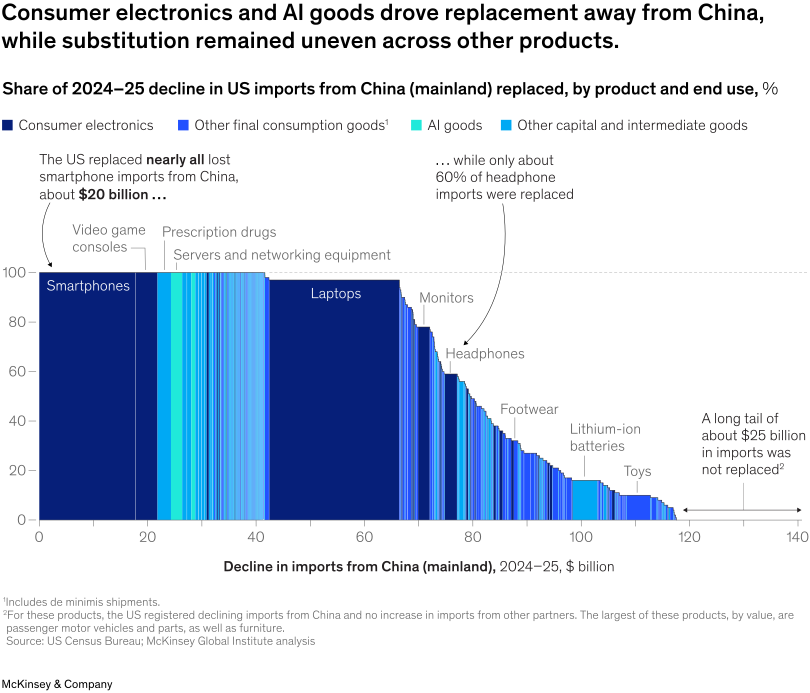
Goods tied to data center construction, including servers, computer parts and cooling equipment, also saw high replacement levels. China had been a relatively small supplier of these products to begin with.
By contrast, replacement proved more limited in lower-value products such as toys and household furnishings, where creating alternative supply chains using existing inputs was less feasible—or profitable.26 In some cases, inventories carried over from prior years may have been sufficient to meet ongoing consumer demand; in others, firms may have substituted similar products instead. There is limited evidence that ramped-up domestic manufacturing replaced a meaningful share of these imports.
Imports of AI-related goods surge
Separate from tariff-driven activity, AI infrastructure emerged as a structural driver of US trade growth. Imports of AI-related goods rose by about $180 billion in 2025. These purchases included advanced logic chips from Taiwan as well as servers and networking equipment—inputs required to build data centers—from parts of ASEAN.
The buildout also required increased shipments of supporting infrastructure, including gas turbines for power generation, HVAC systems for cooling, and fiber-optic cabling for connectivity.27 Demand for all these inputs is likely to remain elevated, given data center construction plans.28
Underlying US imports remained steady
Looking at overall imports, material shifts in composition largely offset one another. Gains in AI-related imports were almost exactly counterbalanced by declines in goods previously sourced from China, alongside lower purchases of fossil fuels and automobiles (Exhibit 11). Excluding frontloading, US imports grew by less than half a percent in nominal terms, slower than the overall economy.29
The story for exports was similar. US exports grew by more than 5 percent in 2025 but increased by just 2 percent after excluding re-exports of frontloaded gold, well below overall US economic growth. Gains in liquefied natural gas and aircraft were roughly offset by declines in crude and soybean exports to China.
Trading partners reshuffle
In 2025, US imports rose from some partners and fell from others, reflecting the combination of forces at play in global trade and differences in export mix (Exhibit 12). Tariffs hit automobiles and auto parts imports disproportionately, reducing trade with major exporters, such as Canada, Germany, Japan, and South Korea; auto exports from these economies to the United States fell by 10 to 20 percent. Inventories cushioned the impact on consumption even as domestic production didn’t increase.30
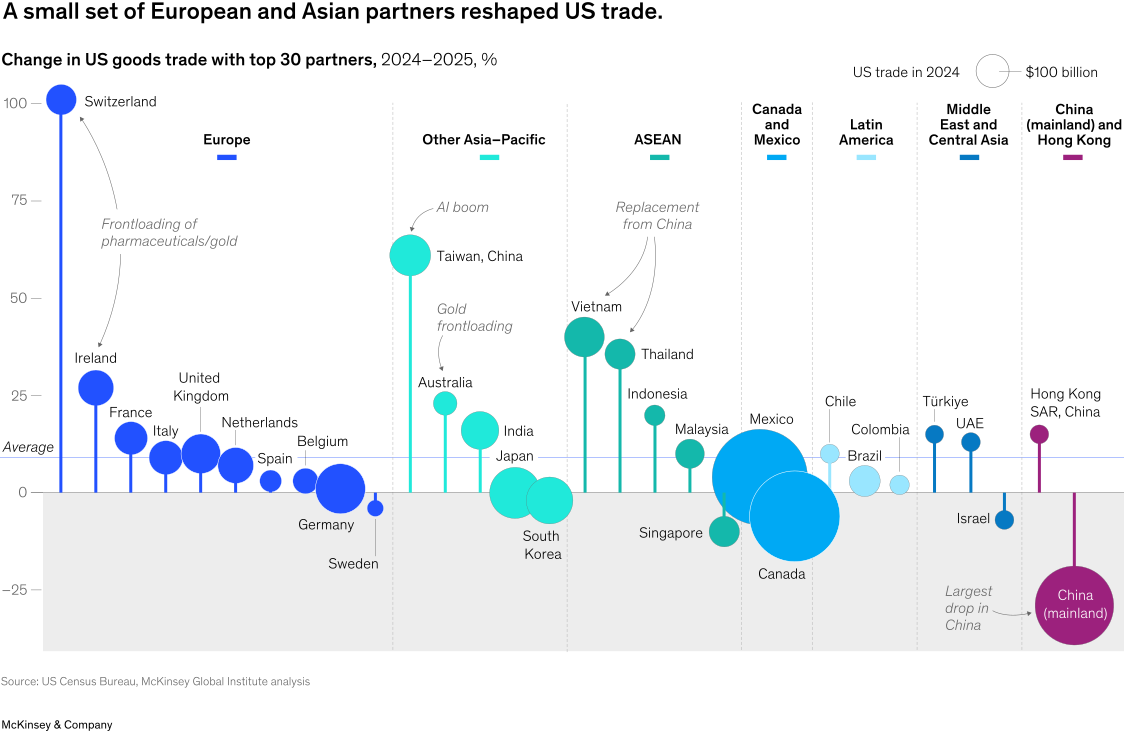
Oil imports also declined, primarily reflecting higher domestic production, with lower oil prices contributing.31 Canada, a major oil supplier, was therefore hit through both channels—autos and energy.
Trade grew most with partners tied to the year’s major shifts: Switzerland, Ireland, and Australia because of tariff-related frontloading; ASEAN economies and India replacing electronics previously sourced from Mainland China; and Taiwan reflecting strong demand for chips.
Despite the highest tariffs in nearly a century, the United States remained the world’s largest importer in 2025, but the mix of purchases and suppliers changed. Some shifts, such as frontloading, were temporary. Others, including AI-related purchases and substitution away from China, are likely to endure.
China: Finding new export markets
China’s goods trade surplus reached a record high in 2025, as exports continued to rise and imports edged down (Exhibit 13).32
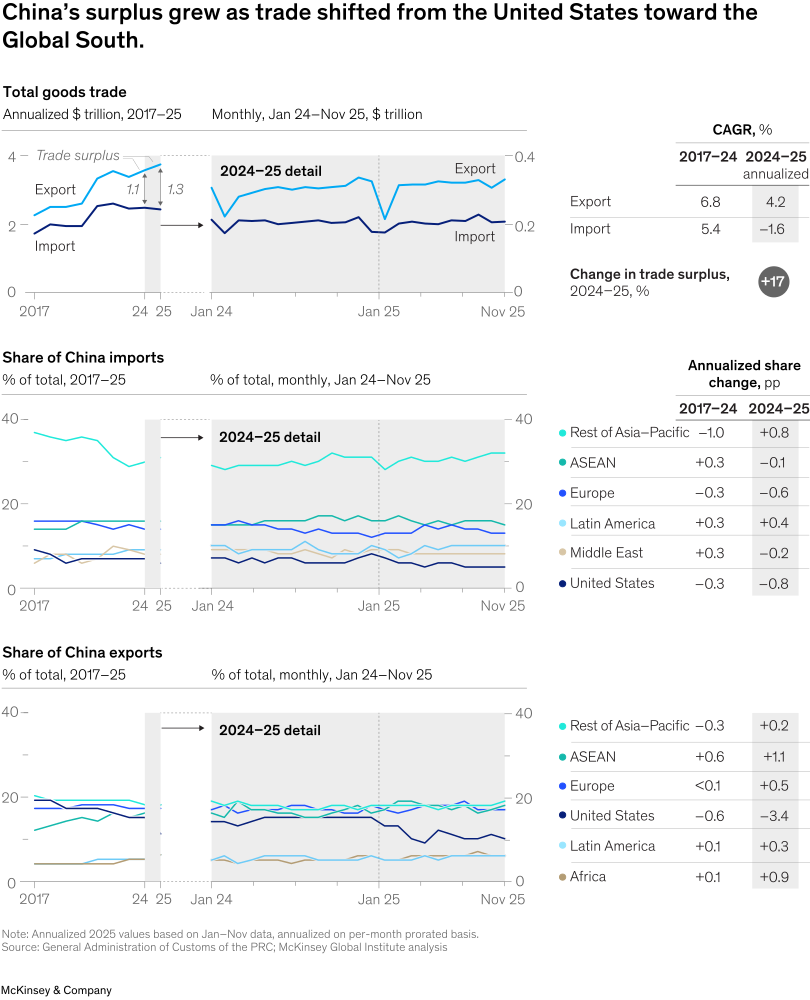
Even as access to the US market narrowed, China’s total export values grew, driven by rising sales of manufacturing inputs to markets worldwide. These gains offset weaker performance in consumer goods, from EVs to synthetic sweaters, where firms cut prices to sustain volumes as they sought buyers outside the United States.
Imports, meanwhile, declined modestly, breaking with their average annual growth of 5 percent over the preceding several years. China spent less on foreign cars and on energy imports, the latter largely reflecting lower oil prices.33
Factory to the factories
China remained the world’s export engine in 2025, but with growing emphasis on intermediate inputs and capital goods. Exports of these products increased by over $175 billion, while consumer goods exports fell for the first time since 2019.34
Long known as the “factory of the world” for mass-producing consumer goods such as electronics, textiles, toys, and furniture, China has gradually increased production of the machinery and materials that underpin manufacturing. Sustained investment, supported by government policy, expanded domestic production capabilities, reducing reliance on foreign sources and increasing exports of these goods.35 As a result, China increasingly serves as a “factory to the factories.”
Facing softer demand in the United States and domestic markets, firms increased exports of intermediate inputs and capital goods in 2025. Growth was led by intermediate inputs, whose exports rose by 9 percent, up from 6 percent the prior year. Segments accounting for three-quarters of intermediate inputs and capital goods exports by value expanded (Exhibit 14). Electronic components—including chips, lithium-ion batteries, and parts used in smartphones and computers—made up roughly half of the total increase, alongside gains in general machinery and oil and gas equipment.
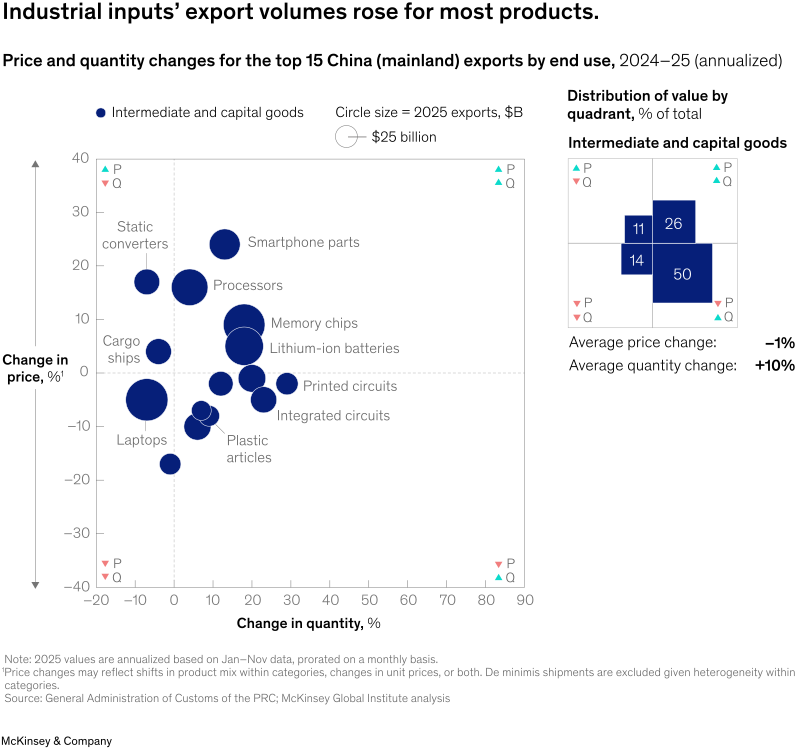
China’s influence as a global supplier of intermediate inputs and capital goods expanded further in 2025. At the start of the year, it accounted for just over 40 percent of global exports in this segment. Over the year, it contributed about half of the global growth in these goods, with gains spread across a wide range of products.36 For example, China’s unit shipments of valves grew by more than 20 percent in 2025, an increase roughly equivalent to half the total annual exports of the product from the United States, the second-largest exporter. Lithium-ion battery shipments grew by about 20 percent, approximately matching the combined overseas sales of Poland and Hungary, the next-largest suppliers.
In many cases, falling prices supported expansion in intermediate inputs and capital goods, with about half of these products recording lower prices alongside rising volumes. Solar cells offer a clear example: A roughly 33 percent price drop helped increase export volumes to the Middle East by 20 percent.37
China ships more consumer goods at lower prices
As Chinese firms lost access to the US consumer market, they lowered prices to secure buyers elsewhere, with prices falling for about 90 percent of consumer products, by value (Exhibit 15).38 While this strategy lifted shipment volumes by 5 percent, it also led to an average price decline of 8 percent, resulting in a $30 billion reduction in export values.39 Light-emitting diode (LED) fixtures illustrate the pattern, with shipment volumes increasing by 4 percent while average prices fell by 6 percent. US sales declined by about $400 million, while exports to other markets, particularly Europe and ASEAN, rose by about $150 million.
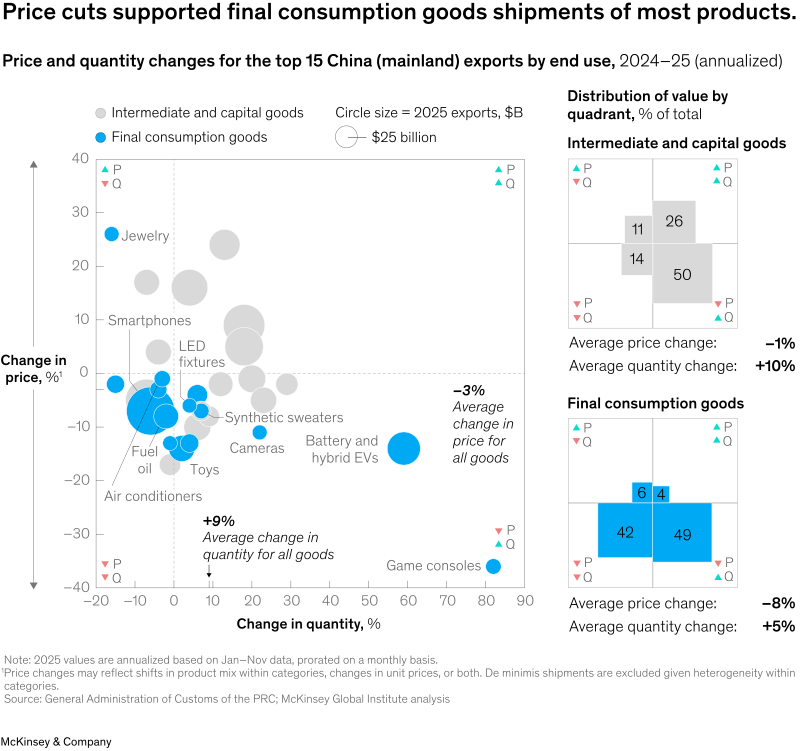
No consumer export reshaped global trade in 2025 more than China’s EVs. A 15 percent price decline on average, supported by a comparable reduction in domestic battery costs, enabled a 60 percent increase in unit exports.40
The impact of price adjustments varied by market. In emerging economies where similar goods are not produced at scale, lower prices expanded access and boosted consumption. Unit exports of battery EVs to Latin America and ASEAN economies, for example, rose by 50 percent. In Europe, by contrast, falling prices for consumer goods, including cars and electronics, intensified pressure on local manufacturers even as consumers benefited from lower costs.
Exports shift toward emerging economies
As China shipped more intermediate inputs and machinery, exports to manufacturing hubs in emerging economies rose to nearly half of total exports, up from one-third in 2017. Growth was driven primarily by electronic components such as chips and printed circuits, as well as smartphone and computer parts, particularly to ASEAN economies and India (Exhibit 16). Shipments of components to the Middle East also increased, particularly power equipment for infrastructure, including batteries, converters, and transformers. Markets for these products included Saudi Arabia and the United Arab Emirates.
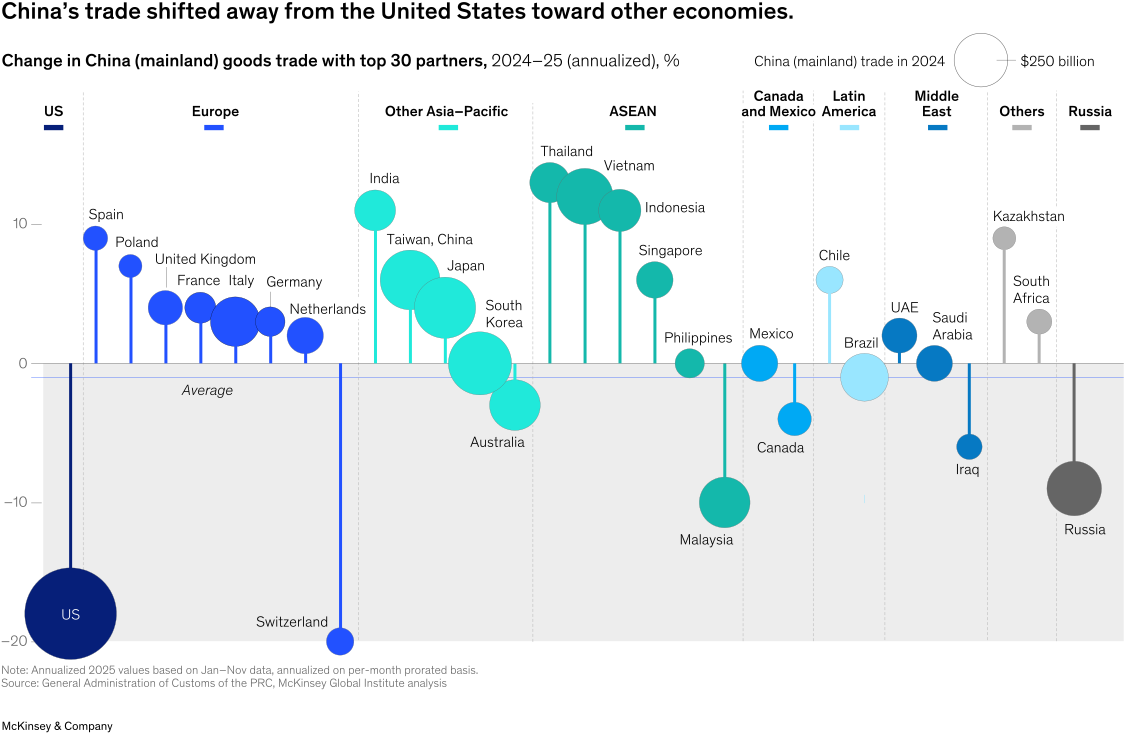
China’s exports to Europe also grew, though they were more concentrated in finished goods. Products such as household appliances and clothing were redirected away from the United States. EVs were another contributor. As prices fell across many categories, shipment volumes rose more sharply than headline export values suggest—a boon to consumers but a challenge for competing manufacturers.
China’s move upstream in supply chains and its declining pricing reshaped global trade and competitive dynamics in 2025. Arguably, nowhere were these pressures more visible than in Europe, as we discuss in the next chapter. Increased Chinese exports, especially in autos, combined with higher US tariffs to create a “double squeeze.”
The EU: Searching for growth amid a US–China squeeze
EU trade grew in 2025, and its trade surplus grew by $5 billion.41 Yet the headline figures masked a loss of competitiveness as the bloc was caught between rising imports from China and higher US tariffs that constrained key exports, particularly cars.
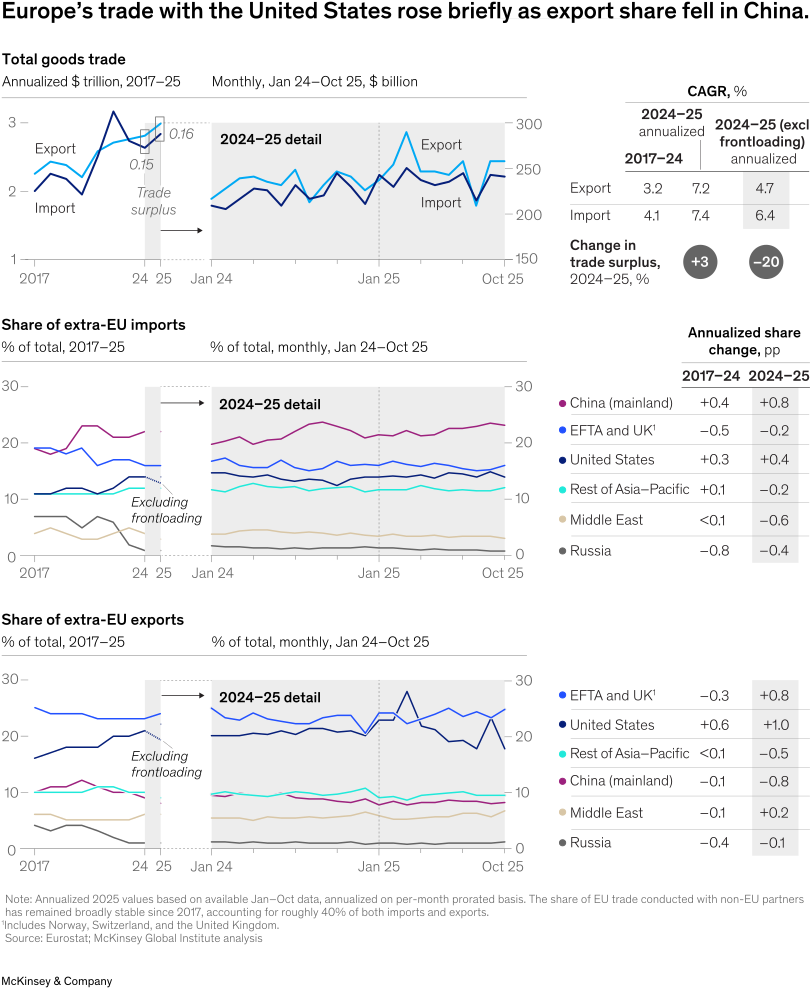
A closer look at the underlying trade flows reveals the double squeeze. The European Union’s trade deficit with China deepened as imports rose and exports fell. At the same time, the surplus with the United States narrowed over the course of the year, with most export gains stemming from temporary US frontloading of pharmaceuticals ahead of tariffs. Without this boost, the bloc’s total trade surplus would have shrunk by about $40 billion (Exhibit 17).42
Most industries face pressure, with autos at the epicenter
Rising competition from China weighed heavily on Europe’s manufacturing base. Imports from China increased by over $60 billion in 2025, reflecting stronger European demand for Chinese products across a wide range of industries. High-value manufactured products, including electronics such as batteries, EVs, and machinery, accounted for a substantial share of this increase, while imports also rose in textiles and contract manufacturing.43 In these sectors, where Chinese producers compete directly with European firms, imports grew faster than exports. Falling prices and increased low-cost e-commerce shipments added further pressure.
In principle, Europe could have offset these headwinds by supplying goods the United States stopped importing from China. In practice, this did not occur. Once tariff-related frontloading is stripped out, the European Union captured less than 3 percent of the US demand previously met by China, largely in a narrow set of pharmaceutical products. In fact, outside of pharmaceuticals, EU exports to the United States dropped, with some sectors experiencing sharp declines, including a 7 percent drop in planes, trains, and automobiles.
Rising imports from China and limited gains in the US market collectively shrank the EU’s manufacturing trade surplus by $70 billion—when excluding frontloading—reflecting a deterioration in the trade balance across nearly every industry (Exhibit 18).44
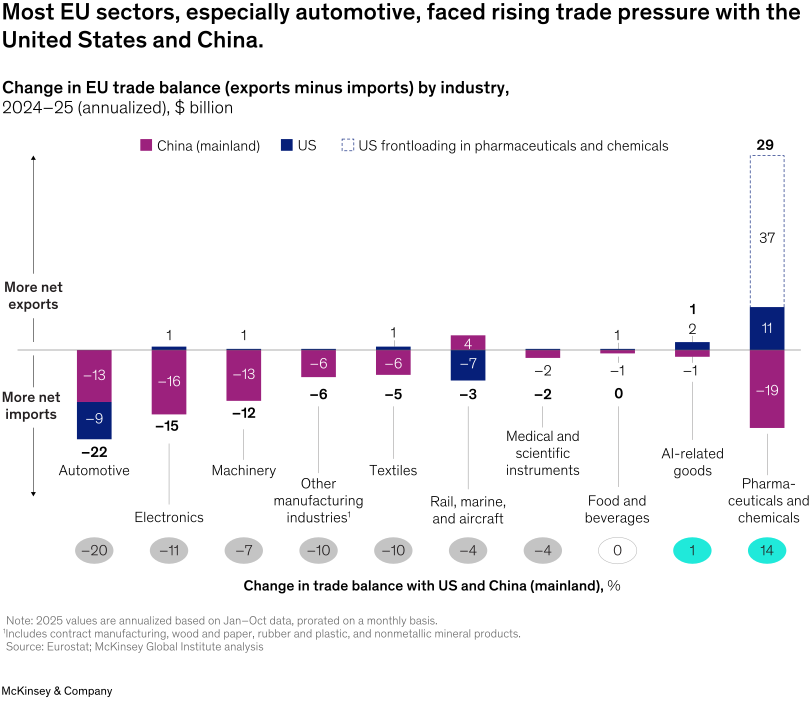
Autos, long central to Europe’s export strength and employment, were hit hardest, as the sector’s trade balance with the United States and China declined by $22 billion.
EU auto exports to both markets fell. Shipments to the United States declined by 17 percent, while exports to China, once viewed as a growth market, dropped by over 30 percent.
Import pressures compounded the strain, with EU purchases of lower-priced Chinese EVs surging to more than 800,000 units, about 50 percent higher than 2024 levels.45 Germany, the region’s largest carmaker for more than half a century, imported more cars from China than it exported there for the first time.46 By late 2025, EVs assembled in China accounted for about 15 percent of EV sales in the European Union.47
Europe found partial offsets in auto exports elsewhere. Shipments to non-EU markets outside the United States and China grew by 5 percent, or about $10 billion. However, in those markets, China’s auto exports grew roughly twice as fast, limiting Europe’s gains. Intra-EU auto trade increased by 6 percent, rebounding from contraction in 2024.
Against this backdrop, the European Union introduced several policy changes, including easing timelines for phasing out internal combustion vehicles—thereby allowing automakers to continue producing them for longer—and introducing incentives to increase domestic content in EV manufacturing. At the same time, firms attracted investment from Chinese EV and battery makers, which have announced about $10 billion of greenfield projects in Europe each year since 2022, more than in any other market. Projects include gigafactories in Hungary and Spain that could roughly double the European Union’s battery production capacity.48 Whether these developments materially strengthen the industry, and whether additional steps will follow, remain to be seen.
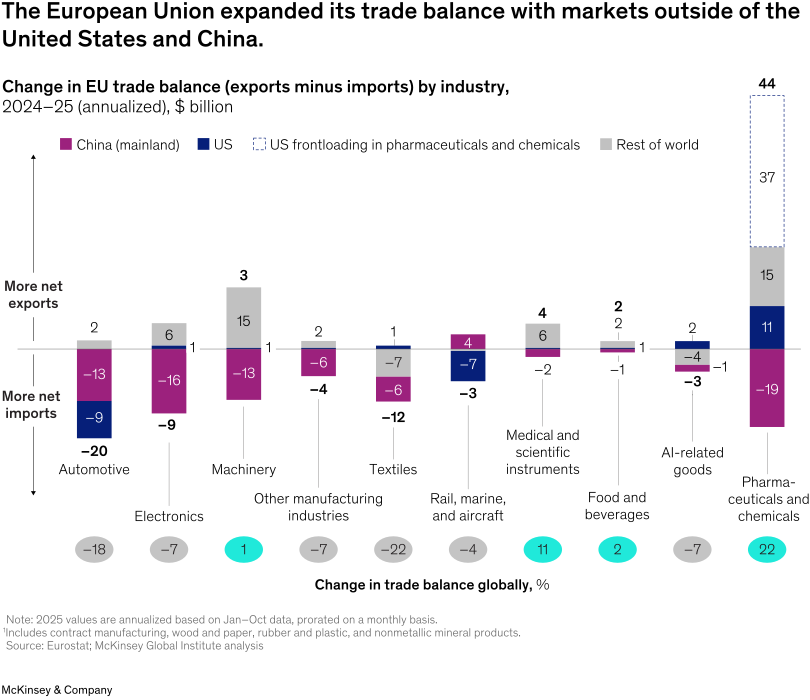
Europe makes some gains in other markets
Europe expanded many of its existing trade relationships beyond the United States and China. In several cases, this translated into export gains. Advanced machinery and industrial electronics drove the largest increases, with stronger shipments of semiconductor manufacturing equipment used in the AI supply chain to South Korea and Taiwan, as well as power generation equipment to rapidly electrifying markets in the Middle East and Africa. Medical and scientific equipment exports, including diagnostic equipment, prostheses, and pacemakers, expanded to fast-developing emerging markets in Latin America and the Asia-Pacific region. Meanwhile, demand strengthened in other non-EU European markets for pharmaceuticals and luxury foods and beverages—including cheese, cocoa, and wine (Exhibit 19).
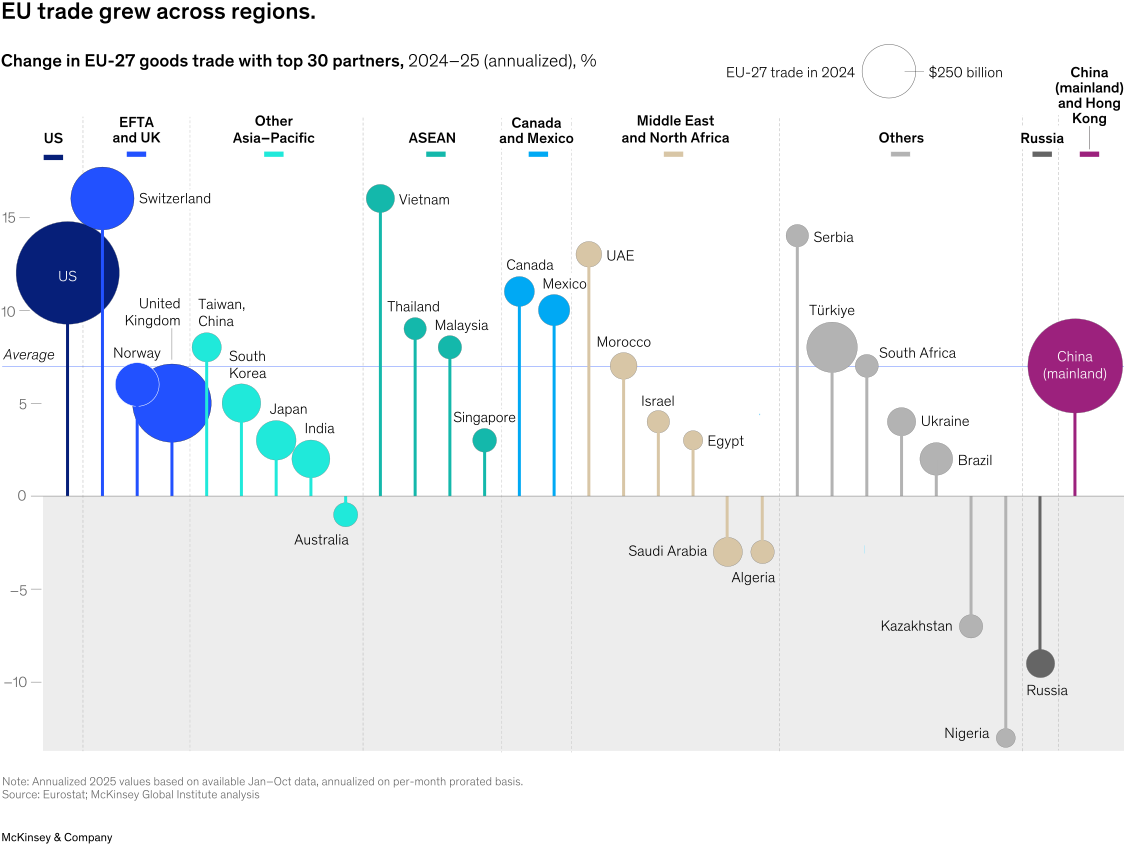
Overall, the European Union expanded external trade with a wide range of partners, driven primarily by exports to the Middle East and imports from Asia, notably textiles and electronics from ASEAN economies, as well as agricultural products, metals, and minerals from Africa and Latin America (Exhibit 20).
Trade expansion and EU competitiveness
Given pressure on its trade balance with external partners, one of the European Union’s stated priorities has been to increase the role of domestic demand.49 Intra-EU trade grew by around 6 percent in 2025, slightly faster than exports when frontloading is excluded, providing some additional demand for EU goods.
The European Union is also looking to further expand trade globally and is pursuing trade agreements with fast-growing markets. In January 2026, it signed agreements with India and the Latin American bloc Mercosur, the latter pending review by the European Court of Justice. Tariff reductions would be substantial in sectors where the European Union is a large exporter, particularly autos and pharmaceuticals.50
Still, the current scale of trade puts these opportunities into perspective. Although the European Union is already the second-largest trading partner after China for both markets, the two together account for less than 8 percent of EU trade. By contrast, the United States and China together represent about one-third.51 These deals are therefore more likely to deepen long-term relationships than to materially shift the EU trade balance in the near term.
With competitiveness at the top of the EU agenda, new trade relationships may be crucial. But economic competitiveness does not necessarily go hand in hand with a larger trade surplus. Building a presence in the industries of the future often requires importing the technologies that underpin them. Expanding AI infrastructure would require greater imports from Asia, including advanced logic chips and other critical components. Imports of these AI-related goods to the European Union have so far trailed those to the United States and China, reflecting lower levels of data center investment.
Europe broadened its trade ties in 2025. While trade with new partners was not enough to offset pressure on domestic industry from rising Chinese imports and constrained access to the United States, the bloc continues to explore new options to engage broadly.
Emerging economies: Finding opportunity across the geopolitical spectrum
Domestic development priorities primarily drove trade decisions in major emerging economies in 2025. In pursuing them, economies including ASEAN, India, and Brazil found opportunities to trade across the geopolitical spectrum, with offsetting shifts keeping average geopolitical distances relatively stable even as geographic distances increased.
How this played out varied, reflecting differences in economic strengths. ASEAN continued to grow as a manufacturing hub, in particular by importing more inputs from China and exporting more finished goods to the United States. For India, trade supported brisk domestic growth, but overall exports were little changed. The one exception was smartphones, where India met about half of the US demand that was previously sourced from China. Brazil stood out as one of the few economies to expand exports to China at scale, primarily by replacing commodities that China had once imported from the United States.
ASEAN trade is booming
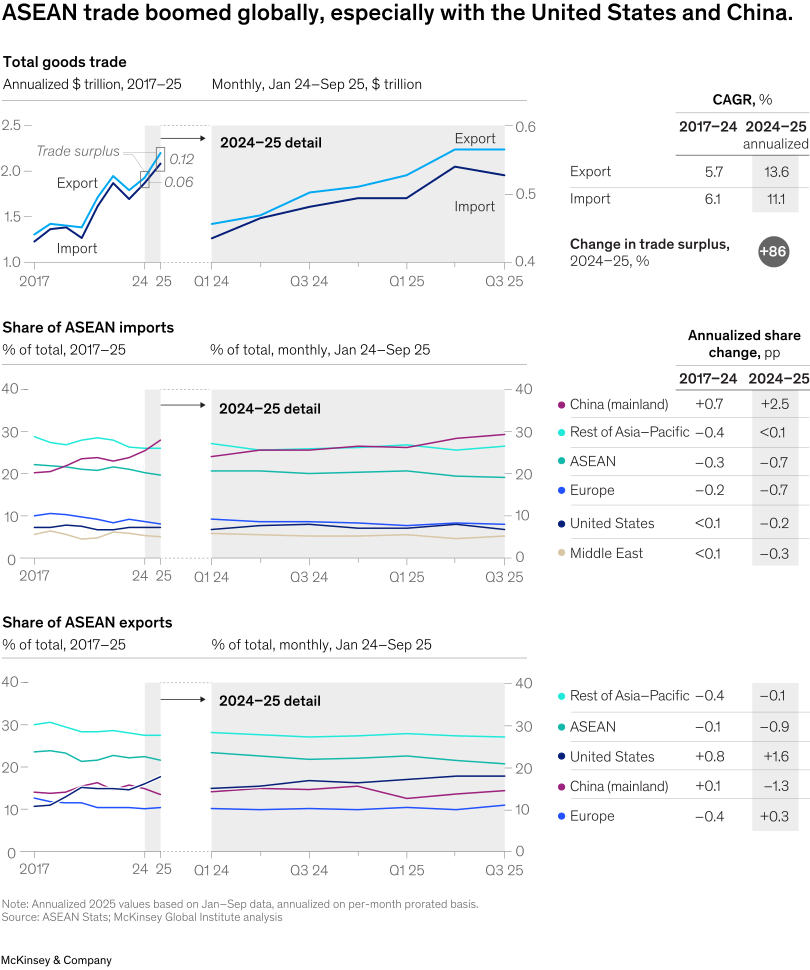
ASEAN economies expanded trade with every region in the world in 2025, with total manufactured exports jumping nearly 14 percent and imports rising by 11 percent (Exhibit 21).52 The largest shifts involved the United States and China. Exports to the United States climbed by about $80 billion, roughly one-third of total export growth, while purchases from China surged by more than $100 billion, accounting for about half of total import growth.
Manufacturing footprint—and trade shifts—vary by country
Electronics remained central to ASEAN economies’ trade in 2025, accounting for around 45 percent of the region’s exports and 70 percent of annual export growth.53 Gains varied by country, reflecting differences in supply chain roles (Exhibit 22).
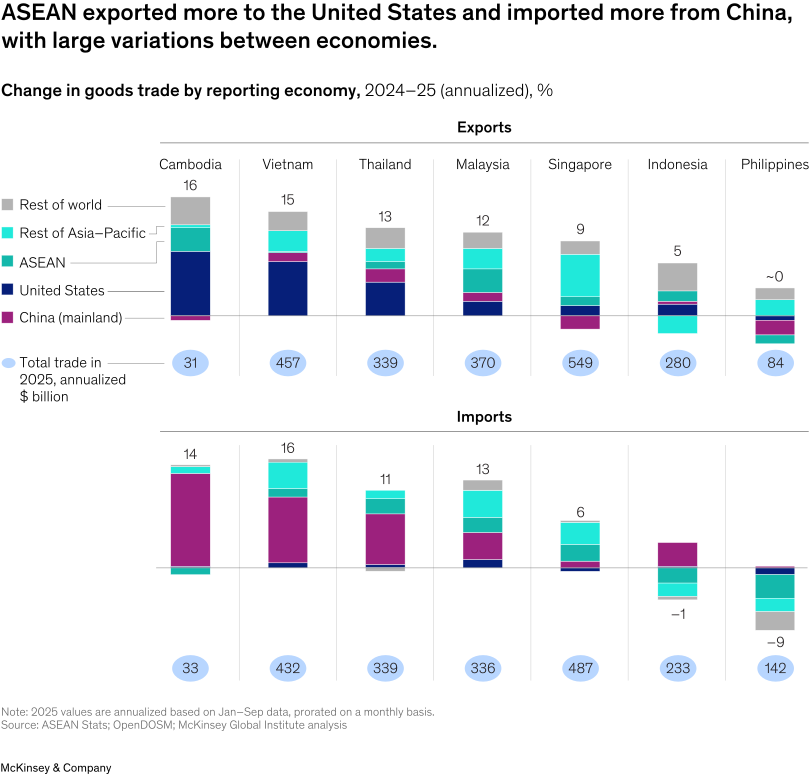
Vietnam and Cambodia saw the fastest export growth. Vietnam expanded the final-assembly of consumer electronics, including laptops, smartphones, and game consoles, while importing more components from China and other parts of Asia. Finished goods were primarily exported to advanced economies, in some cases replacing Chinese exports to the United States. Cambodia played a similar role, but in textiles rather than electronics. The expansion of trade with both the United States and China has prompted scrutiny of rules-of-origin compliance and local value-added requirements, but potential policy responses remain unsettled at the time of writing (see sidebar “Tariffs in flux”).54
Elsewhere in the region, export gains reflected different manufacturing footprints. In Singapore and Malaysia, growth was concentrated in supply chains tied to the AI boom, including chips, networking hardware, circuit boards, servers, and routers, alongside broader advanced manufacturing, notably pharmaceuticals in Singapore.55 Both strengthened their roles as regional hubs, with growth driven more by intraregional supply chain flows than by direct exposure to US demand. In Malaysia’s case, this reflected its role in assembling, packaging, and testing semiconductors produced elsewhere in Asia.
Thailand occupied a middle ground, combining final assembly work and higher-end supply chains, reflected in its mix of consumer electronics, AI-related goods, and some industrial electrical equipment.
But not all ASEAN economies were anchored in electronics supply chains. Indonesia’s exports, for example, were driven by commodities. Growth in 2025 came from minerals and chemical products including steel, fertilizers, and other chemicals sold to a range of partners in Asia, Europe, and the United States. Export growth to China was almost flat, as falling energy shipments offset gains elsewhere. Meanwhile, Indonesia increased imports of Chinese EVs and consumer electronics, but accounted for comparatively fewer manufacturing inputs than other ASEAN economies.
Trade ties grow widely
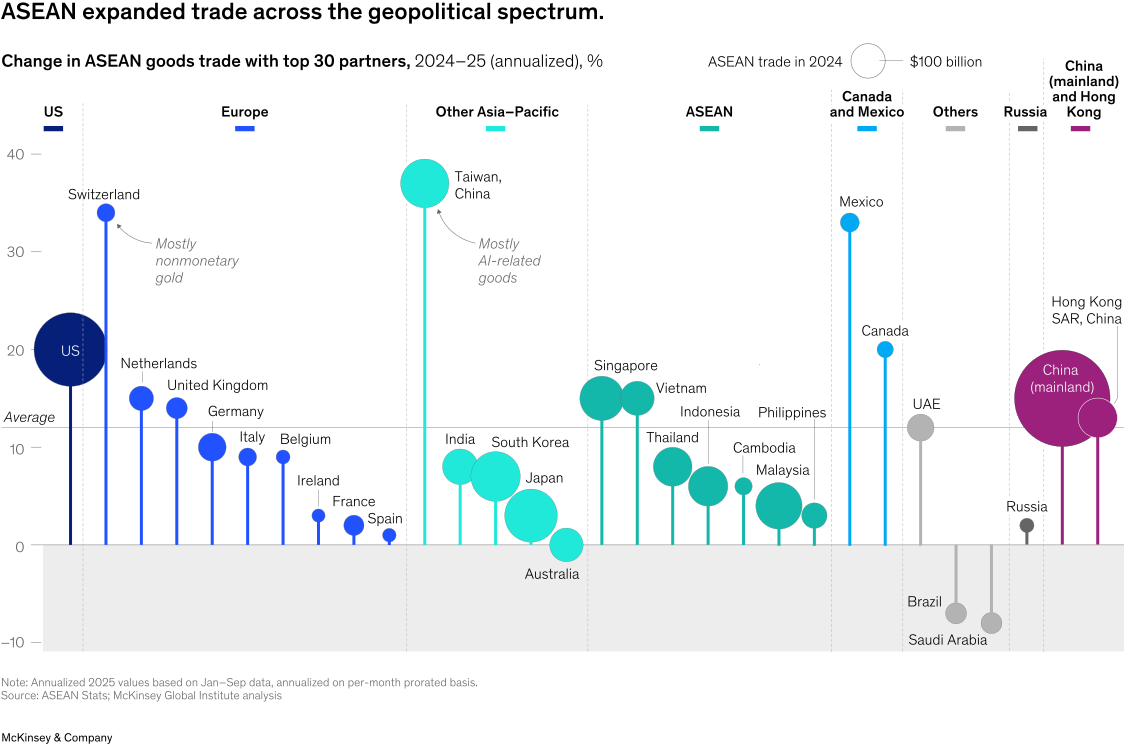
More than half of ASEAN economies’ trade growth was linked to economies other than the United States and China. The region’s growing role in electronics manufacturing and assembly supported exports to other markets including Europe and Mexico while trade of commodities boosted relationships with Canada and the United Arab Emirates.
ASEAN countries also traded more among themselves and deepened ties to the rest of Asia (Exhibit 23). Intra-ASEAN trade grew by 8 percent, including large increases between Malaysia and Vietnam. Trade with Taiwan grew by nearly 40 percent, largely in AI-related goods, while imports from South Korea increased as demand rose for memory and other components used in later stages of electronics assembly.
India’s imports power growth, but manufacturing breadth remains limited
India’s booming economy drove strong demand for inputs to support infrastructure and industrial buildout, even as lower energy prices tempered growth in the import bill in 2025.56
India made progress toward its goal of becoming a global manufacturing hub, though results were uneven (Exhibit 24).57 Smartphone assembly surged as US buyers shifted away from China, while pharmaceuticals and machinery posted solid gains abroad. At the same time, falling commodity prices and rising trade barriers weighed on overall performance, with a sharp decline in refining exports offsetting gains elsewhere and leaving export growth flat.58
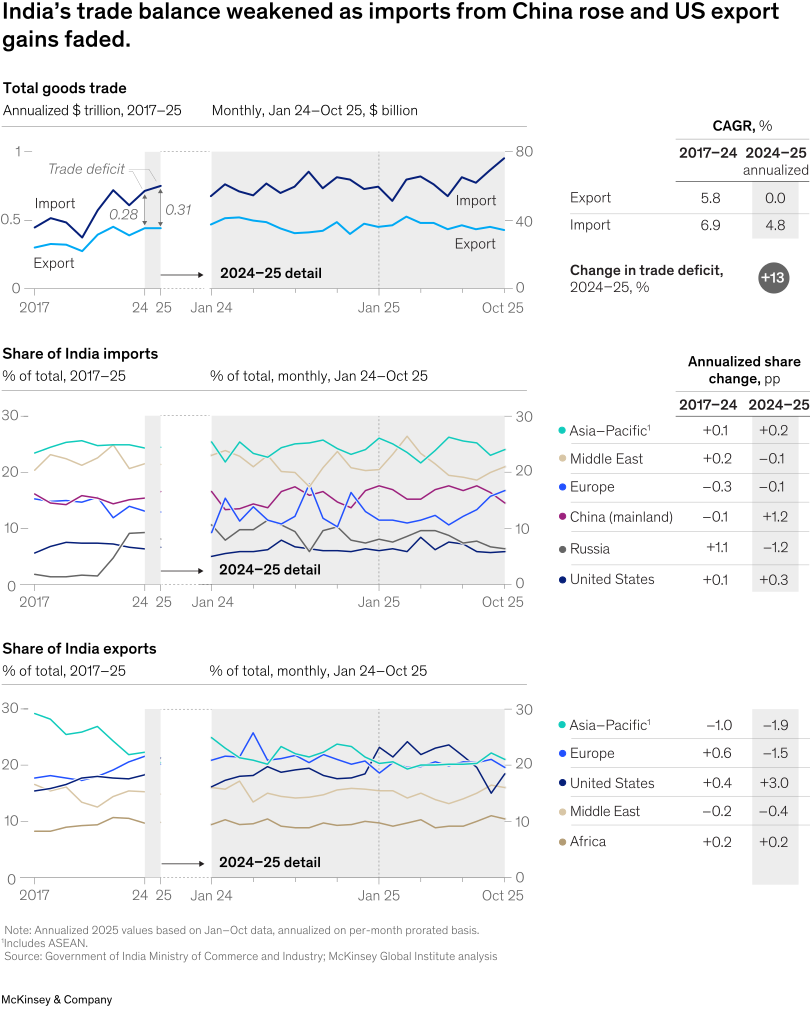
India imported the basic building blocks of economic growth in large quantities, including chemicals from the Middle East and metals from across the globe.59 Its purchases of these inputs increased by 15 percent. To support manufacturing, it also imported substantial amounts of machinery from China, ranging from weaving machines for textiles to transformers. Energy was the only major input that did not grow, not because volumes declined, but because prices retreated, reducing the Middle East’s and Russia’s share of India’s trade.
Industrial policies like “Make in India” aimed to promote domestic manufacturing capabilities and export growth. And in 2025, many more of the world’s smartphones were manufactured in India. These devices, which were exempt from US tariffs, were the largest single contributor to export growth. The United States increased its smartphone imports from India by about $15 billion while reducing smartphone imports from China by around $18 billion.60 This shift lifted India’s electronics exports by roughly 40 percent. Imports of components from China, including batteries, screens, and semiconductors, rose. Ireland also supplied important parts including chips, becoming India’s fastest-growing trading partner in 2025 (Exhibit 25).
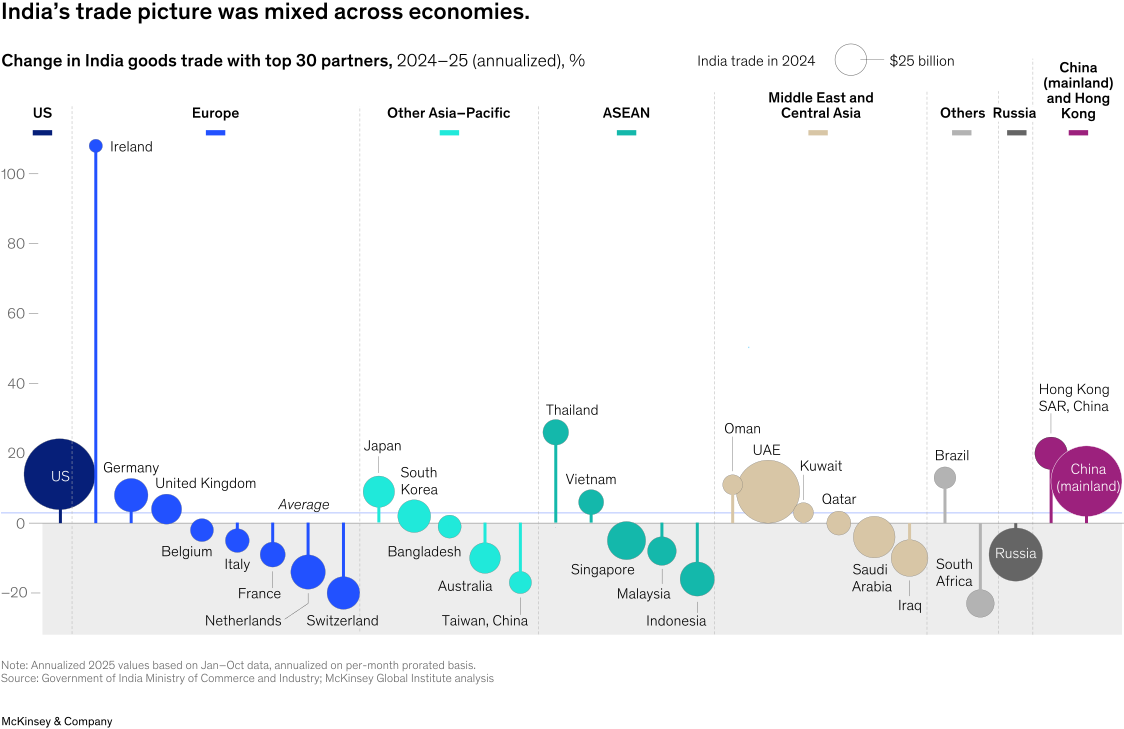
Additional gains came from other advanced manufacturing categories—including pharmaceuticals and machinery—which saw exports increase by almost 10 percent, while electronics other than smartphones grew more slowly than ASEAN exports. Together, these categories added about $7 billion to export growth.61
Export gains, however, were not broad-based. Most notably, exports from India’s global refining hub declined. Fuel exports to Europe and Asia fell, reflecting commodity price declines and some trade restrictions on Russian oil as an input.62 Exports of chemicals also faced intensified competition from Chinese refiners amid softer global demand. In addition, US tariff hikes in July led to sharp declines in shipments of ceramics, building materials, and industrial diamonds, all historically important exports for India. Taken together, these developments left total export growth flat in 2025.
Although US tariffs changed again in 2026, the larger challenge remains structural. As manufacturing gains momentum, benefiting from selective relocation of supply chains out of China, the open question remains whether India can broaden its export base beyond smartphones and pharmaceuticals to meet its manufacturing goals.
Brazil’s exports were led by resources, with some manufacturing gains
Brazil’s commodity exports boomed in 2025, supported by increased demand from China as it moved purchases of agricultural goods and crude oil away from the United States. This boom, in turn, required additional inputs, from pesticides to oil rigs, primarily sourced from China (Exhibit 26).63
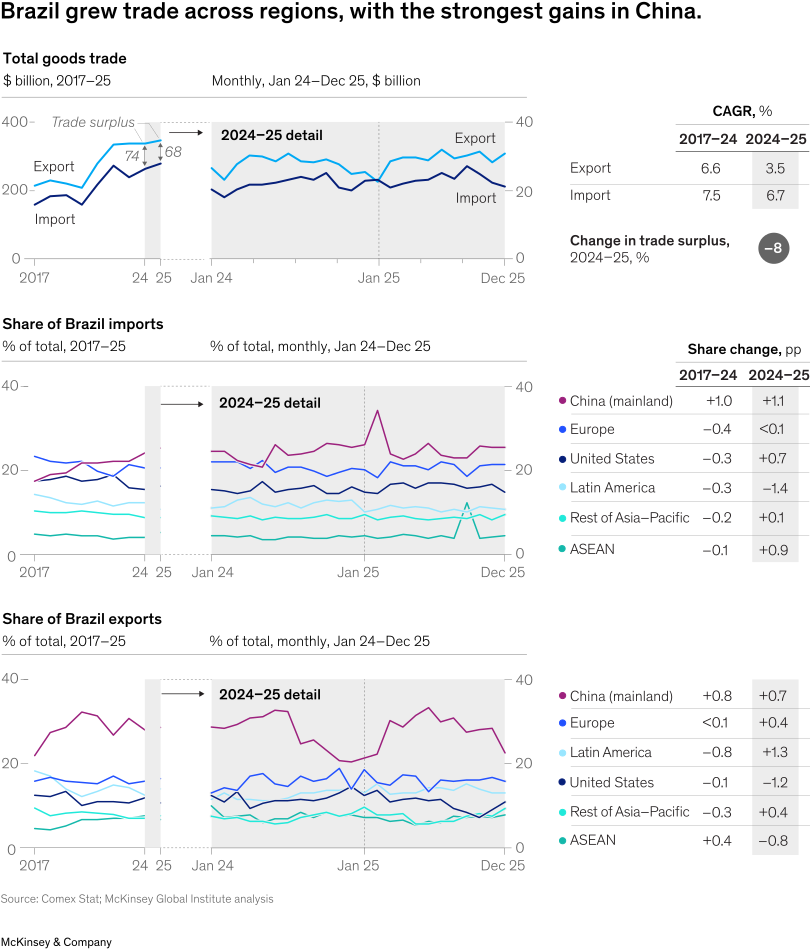
Brazil has long sought to move up the value chain and saw some progress in 2025. Most notably, it boosted exports of manufactured goods within Latin America, particularly cars to Argentina. However, headwinds in US demand limited manufacturing growth, especially in lightly processed goods, while increased imports of lower-priced final goods from China put pressure on some domestic producers.
Agricultural exports to China rose by about 13 percent, or about $5 billion, with more than half of the increase coming from soybeans. In 2025, Brazil provided three-quarters of China’s soybean imports, a product that had been central to US–China trade. Brazil also increased exports of iron ore and crude oil, the latter again replacing US supply. Lower prices for iron ore and crude oil meant volume gains outpaced increases in export value.64
Exports of agricultural goods and minerals to the European Union rose by about 20 percent each compared with 2024, as negotiations over the EU–Mercosur trade agreement moved toward finalization.65
To support this resource boom, imports of machinery and inputs from China increased by roughly $6 billion, or 11 percent, including floating oil production units, agricultural machinery, and agrochemicals.66 Europe also supplied important machinery and chemical inputs, but growth was only about half that recorded from China.
At the same time, competition from Asia put additional pressure on domestic producers, especially automakers, where vehicle imports grew by almost 50 percent in unit terms. This competition affected exports as well: Brazilian textile exports to China and ASEAN economies fell by about a third, reflecting heightened competition from Chinese producers redirecting output (Exhibit 27).
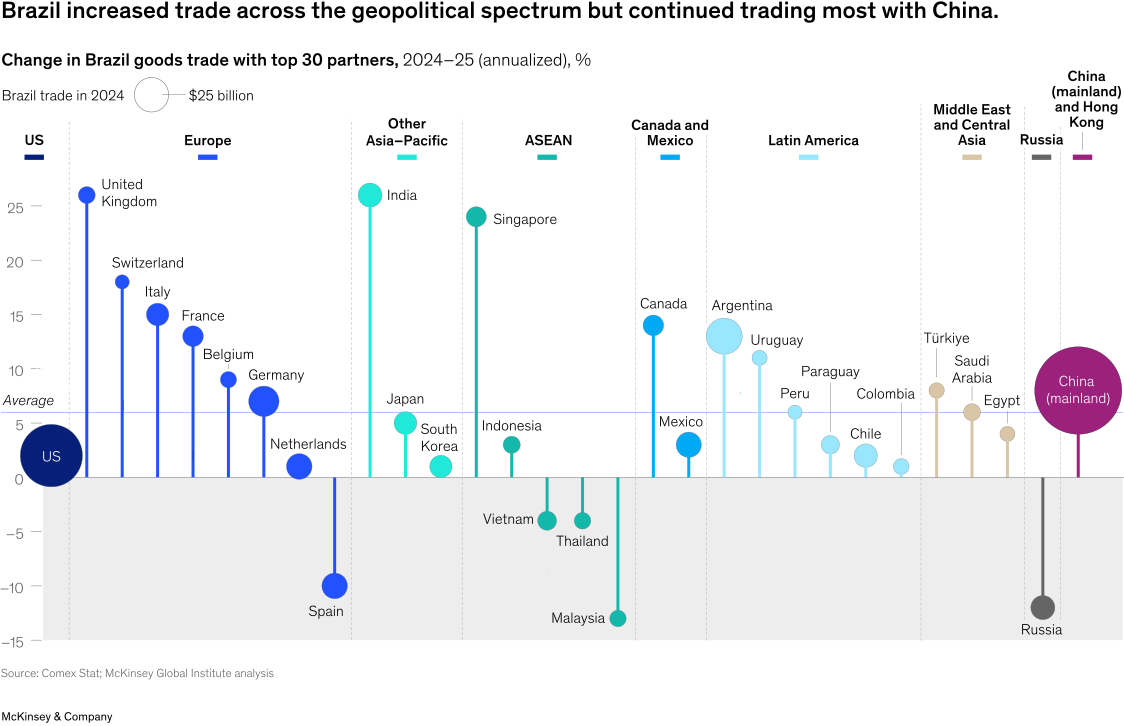
While Brazil’s manufactured exports rose overall, growth was uneven across products and regions. Anticipation of US tariffs, even those that ultimately were not implemented, led to declines in a wide range of goods, particularly lightly processed goods such as furniture, wood products and pig iron.67 Upcoming stricter EU sustainability requirements also contributed to the decline in exports of wood and paper products.68
Nonetheless, more advanced manufacturing categories posted stronger growth, offsetting weakness elsewhere. Exports grew, particularly within Latin America and, to a lesser extent, Europe. Nearly one-third of all export growth came from autos, primarily to Argentina, following revisions to the ACE-14 automotive agreement that lowered trade barriers.69 Argentina, Peru, and Chile also increased purchases of Brazilian machinery, especially for the construction and resource sectors.70 This suggests scope for greater manufactured-goods trade within Latin America, where overall regional trade remains limited.
In 2025, trade reconfigured rapidly and often in unexpected ways, as both short-term tariff shocks and deeper forces reshaped the system. The result was an uneven year, marked by solid trade growth and geopolitical realignment, sharp intra-year swings in US imports, record Chinese exports despite weakness in some major categories, Europe caught in a double squeeze, and new openings for parts of ASEAN and other emerging economies.
Multinationals recognize that trade is evolving rapidly and in hard-to-predict ways. What is often less clear, however, is how to navigate that uncertainty. Our research over the past several years underscores the need for a practical posture: orienting trade strategy toward the structural waves most likely to endure, and building the capability to rebalance quickly as conditions shift.
Scenario analysis helps leaders treat trade exposure as a portfolio of safe bets, cautious bets, and uncertain bets—and to reallocate capital, capacity, and commercial focus accordingly.71 In 2025, for example, trade corridors supported by underlying waves proved more resilient, including parts of intra-ASEAN trade and select Asia corridors such as India–Japan, while uncertain-bet corridors shrank on average, reflecting greater exposure to geopolitical rupture.
The signals do not stop at trade. Our research on FDI announcements points to new capacity coming online in AI infrastructure and advanced manufacturing, and to new production hubs taking shape—particularly across the US–Asia technology stack and in selected emerging-market manufacturing locations.72
Firms need to respond not only to long-term structural shifts but also manage short-term shocks and their effects. Tariff announcements—and the responses they triggered, from frontloading to redirection—illustrate the kind of rapid adjustments this demands. Doing so requires keeping a close pulse on trade developments and accelerating decision cycles—on everything from supply chain reorganization to broader strategic questions such as where to invest or which markets to serve.
The leaders who outperform will not choose between the long term and the short term. They will do both: positioning for enduring structural change while retaining the agility to respond to near-term disruptions—and continually rebalancing their corridor bets as the evidence evolves.
Related Articles

Geopolitics and the geometry of global trade