At a glance
- Amid deepening geopolitical fragmentation, the United States imports $3 trillion in manufactured goods annually. About 25 percent of these are particular “Achilles’ heels”—due to some combination of criticality to national security, supply concentration, and geopolitical distance from trade partners. About 5 percent of manufacturing imports—overwhelmingly computers and electronic products—have all three dependencies.
- We introduce a “ramp-up factor” to quantify what it would take for the United States to produce more at home. For those exposed products in the Achilles’ heel, manufacturing would need to double on average to fully meet domestic demand. In some cases the ramp-up factor is much larger, for example, over five for some active pharmaceutical ingredients and over ten for AI servers. Across all products, the number is smaller: 1.3.
- Running today’s factories at peak capacity would generate $660 billion more in output—but hardly touch the biggest exposures. About 40 percent of this extra production would be in transport equipment and another 40 percent from metals, wood and paper, chemicals, and plastic and rubber.
- Addressing key vulnerabilities would require a transformed industrial base. Building capacity to produce exposed products and their upstream inputs could cost on the order of $2 trillion, about 6 percent of GDP. Funding could be the (relatively) easy part: Specialized skills, supporting infrastructure, sufficient energy, and shovel-ready projects are all needed.
- Nothing will happen without a business case. Maintaining competitiveness in the global economy, and security in a volatile world, may require some domestic ramp-up. But this will entail prioritization and trade-offs, along with new approaches to technology, automation, and skills.
“Made in America” has been part economic policy and part rallying cry for generations. But the United States has been producing less and less of the global total. In 2000, it was the world’s leading manufacturer. Today, the country produces just a quarter of China’s output. The United States did not lose manufacturing dominance overnight, and it remains the world’s second-largest producer. As the global economy grew, trade liberalization, modern shipping containers, and global internet connections unleashed potential for a “great unbundling.” Lower-cost emerging economies took on physical production of many goods, while the United States provided much of the technology and manufacturing know-how.
Should the United States attempt to rebuild its industrial base? For decades, proponents have pointed to the widening trade deficit and shrinking manufacturing base as drags on US growth that drain the economy’s ability to create high-paying jobs. Others counter that the economy operates most efficiently when businesses and consumers can buy the goods and services they want at the highest quality and for the lowest price, wherever they come from, and that the trade deficit arises more from US savings and investment dynamics than from trade policies.
Today’s age of increasing geopolitical competition and rapid technological progress has recast the debate with renewed intensity. Simply assembling goods in the United States may not be enough to alleviate concerns about the manufacturing sector. The materials and components that go into AI technology, smartphones, and electric vehicles are just as crucial. Both economic and national security may hinge on reliable supply chains. For things like ships and chips, the United States may decide it cannot be beholden to others.
It’s not just about limiting risk. In some advanced industries, the rapid innovation that drives national competitiveness and productivity growth increasingly depends on maintaining a close connection with physical production, even where software and design once seemed to be decoupled from manufacturing. For example, like humans, industrial robots driven by AI learn and adapt fastest when they get real-time feedback from the physical world, not delayed, batched input.
For all the current attention, there is limited nuts-and-bolts understanding of what achieving these broad objectives would entail. A great deal of analysis has focused on specific industries critical to national security, including semiconductors, quantum computers, pharmaceuticals, and defense. It gets at important details but is narrow in focus. Another strand of macro-level inquiry looks at factors like balance of trade, labor statistics, and the relative productivity of manufacturing compared to service industries. It is broad but not detailed enough to cast light on specific areas of potential or to quantify trade-offs between efficiency, innovation, jobs, and security.
No matter what, ramping up broad swaths of US manufacturing may seem a daunting prospect. A number of factors would need to be considered. Many thousands of new factories would need to be built. Workers with the right specific skills would need to be available at the right time and in the right places. All of this would require funding, and that would in turn depend on compelling and concrete business rationales—the more expensive the project, the bigger the potential for payoff—and would need to be considered in the context of the policy and regulatory environment. And the transformation would require coordinated shifts of all of these ecosystems across entire supply networks.
But just how daunting is it? Answering that requires first understanding, product by product, the scale of the US production ramp-up needed to fully meet domestic demand. Ultimately, macro-level assessments of necessary labor, funding, sequencing, and timelines hinge on this micro-level data.
This report aims to provide that foundation, focused specifically on the question of existing and needed future capacity, as a critical input for policymakers and business leaders to systematically decide whether and where to prioritize domestic manufacturing efforts. We introduce a “ramp-up factor” for about 5,000 products, to quantify how much more production would be required to meet demand domestically, through some combination of making greater use of existing capacity and creating new manufacturing potential.
Using existing capacity would increase production to the tune of about $660 billion. For a sense of scale, the 2025 US goods trade deficit was $1.2 trillion. But using existing capacity would not make much of a dent against imports where they are most critical and exposed to risks. Producing those products domestically would require building out a manufacturing footprint unlike that in any one place in the world today. Progress is possible but, as with much else, choices will be need to be made.

Listen to this episode of The McKinsey Podcast exploring how the US can strengthen manufacturing resilience through domestic capacity, supply chain diversification, AI, robotics, and breakthrough innovation.
Made abroad: America’s increasing import dependence
Over the past 50 years, US manufacturing has receded in size relative to the economy as the United States shed its position as the world’s manufacturing leader (Exhibit 1). US factory value added fell from more than 21 percent as a share of its gross domestic product in the late 1970s to less than half that today, while employment has decreased from 22 percent of the workforce to 8 percent. The drop from the 1950s was even larger.1
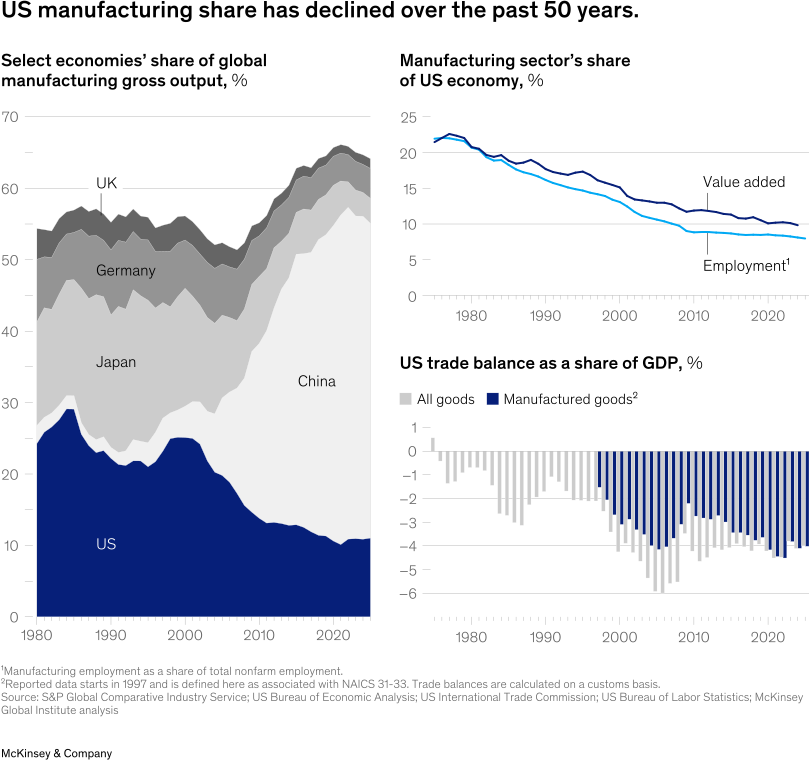
The United States isn’t unique in this regard. Other advanced economies like Japan, Germany, and the United Kingdom have experienced similar trends, but the speed and depth of manufacturing’s declining share in the United States stand out. In contrast, the manufacturing sectors of emerging markets, particularly China, have grown in both size and sophistication. China alone now produces nearly half of manufactured goods globally, reflecting dramatic shifts in the competitive landscape over the past several decades (see sidebar “Measuring manufacturing output”).2
As the production terrain shifted from the United States to emerging markets, US imports of manufactured goods grew substantially. Over the past two decades, they have increased by about 40 percent in inflation-adjusted terms to about $3 trillion in 2025, or roughly 10 percent of GDP. The trade deficit for manufacturing rose from about $550 billion to $1.2 trillion over the same period. Imports now make up about 35 percent of US goods consumption, up one-third over the past two decades.3
Despite all this, the United States remains the world’s second-largest manufacturing producer and exporter, behind China. With a gross output of more than $7 trillion, including in many of the same categories where it imports large volumes, the United States retains a strong manufacturing base (see sidebar “A closer look at US manufacturing by sector”).
A closer look at US manufacturing by sector
US manufacturing has declined in output share and employment and has experienced growing trade deficits. But it is far from a monolith, spanning meatpacking in food processing plants as well as the foundries producing the most advanced semiconductors.
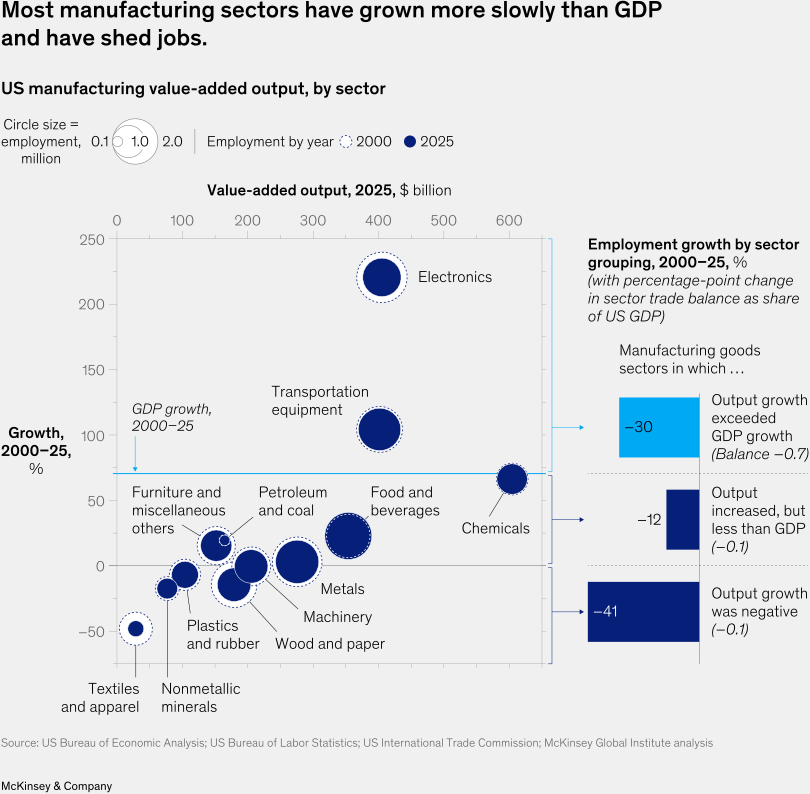
Looking across sectors, most have followed the aggregate manufacturing trend of slowing growth relative to GDP over the past 25 years (exhibit). Two sectors were exceptions: transportation equipment, which includes motor vehicles, aerospace products, and ships, among others; and electronics, which includes computers, semiconductors, household appliances, and other miscellaneous machines. Together these sectors accounted for just over a quarter of total manufacturing value added (the portion of total sales that contributes to GDP). They represented a similar share of manufacturing employment, equal to about 3.2 million US workers, although they have also been shedding workers over time at a relatively rapid clip, recording a reduction of 30 percent since 2000.
Across sectors, electronics has undergone arguably the most dramatic shift, as tech companies shifted most production overseas and focused domestic operations on high-skill activities including R&D and design.1 The sector’s high growth in value added and reduction in workforce have translated to very rapid productivity growth, nearly five times the average for manufacturing overall. At the same time, electronics runs a deep trade deficit, equal to 1.7 percent of GDP in 2025, widening by a full percentage point of GDP since 2000.
The largest segment of value added and employment is based in sectors that have grown in their value added, but not as fast as GDP. These areas employ 5.9 million workers—nearly half of the entire manufacturing workforce—and include chemicals (including pharmaceuticals), food and beverages, metals (such as steel), petroleum and coal, and furniture and other miscellaneous manufacturing. Food and beverages is the only sector that has seen employment growth over the past 25 years. Petroleum and coal is the only one that shifted from a deficit to a surplus in this period, reflecting the country’s reclaiming a net exporter position after 50 years.
The final segment has shrunk in value added over the past 25 years. It collectively holds a fifth of the value but just shy of 30 percent of the US manufacturing workforce, about 3.5 million workers. This suggests lower average levels of productivity compared to sectors of the other two segments. It includes textiles and apparel—which has seen the sharpest employment decline, reducing its workforce by three-quarters since 2000—as well as machinery, nonmetallic minerals, plastics and rubber, and wood and paper.
Achilles’ heels: potentially disruptive combinations of criticality, concentration, and geopolitical distance
The mix of geopolitics and technology has intensified the focus on US manufacturing. The world is interconnected but increasingly contentious. This affects how goods move between countries and whether it makes sense to try to produce them at home. Many goods, like computers and other high-tech goods and materials, are central to resilient supply chains, economic prosperity, and national security.
Product criticality, source concentration, and geopolitical distance of trading partners all introduce important dependencies—and the risk of disruption compounds when they overlap. Of the $3 trillion in annual US manufactured goods imports, 25 percent are exposed to at least two of the three dependencies. We call these products “Achilles’ heels.” (We also refer to them as “exposed” throughout this research.) Five percent of imports sit in the bull’s-eye of all three (Exhibit 2).
In 2025, the United States imported about $1.3 trillion in critical manufactured goods, defined as those central to resilient supply chains and national security.4 For example, advanced semiconductors are required to run power grids and telecommunications; specific active pharmaceutical ingredients are necessary to produce lifesaving antibiotics; specialized high-capacity batteries keep our transportation and defense systems operational. If these products disappeared tomorrow, the modern American economy would at least be heavily disrupted, if not grind to a halt.
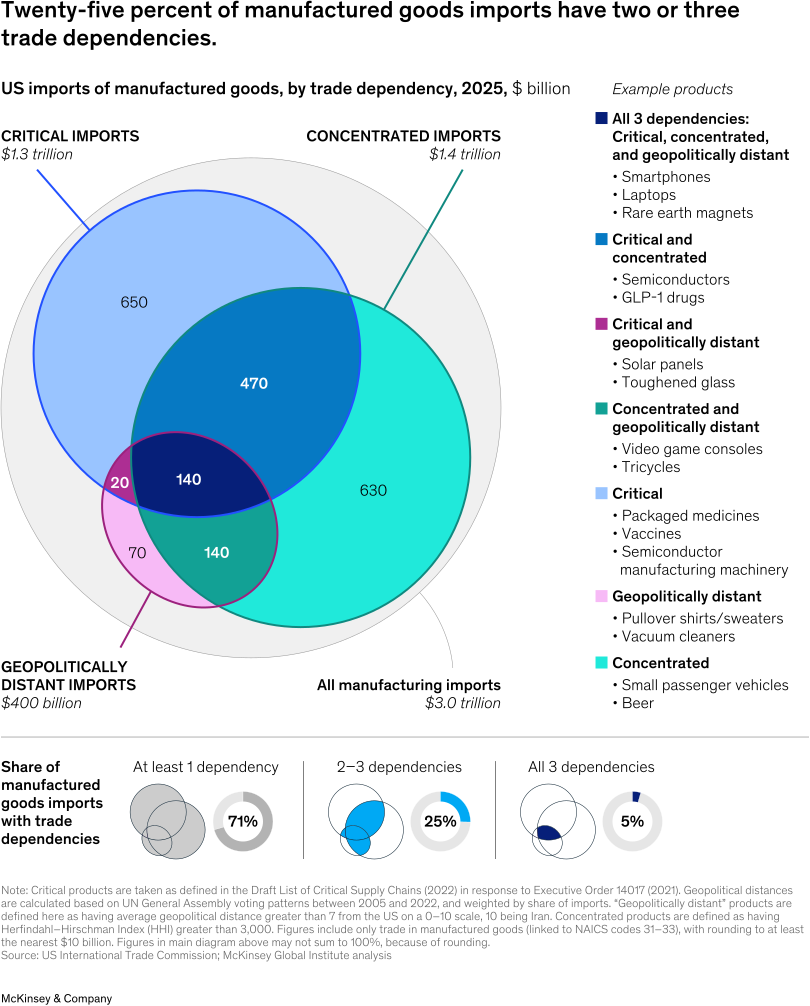
When US imports of a critical product are not entirely reliable, the situation can pose risks. Altogether, about $1.4 trillion in US imports are concentrated—the country relies on three or fewer economies for the supply of a given resource or manufactured product.5 More than half a trillion dollars’ worth of concentrated product imports are also critical.
When things go smoothly, this is not a problem; indeed, sourcing from one or a small group of economies can lead to greater efficiency. But when there is disruption and an economy no longer can or will keep shipping, supply might be shut off. For example, Taiwan and South Korea produce nearly all of the world’s most advanced semiconductors.6 When the COVID-19 pandemic caused new surges in demand for some products and disrupted supply chains, American households and companies realized just how dependent they were on a handful of economies for semiconductors as well as other products they had not previously considered.7 The United States saw temporary shortages of products as varied as face masks and aluminum cans.
Geopolitics adds a new layer of dependency. A little more than 10 percent of US manufacturing imports, worth nearly $400 billion, are of products that mostly come from geopolitically distant trade partners (see sidebar “Defining geopolitical distance”).8 Imports of these products may come under strain when broader global tensions arise. For example, as part of a trade dispute with the United States in 2025, China implemented restrictions on exports of some critical minerals and manufactured goods, such as materials used for manufacturing semiconductors, and rare earth elements and magnets.
Defining geopolitical distance
Previous MGI research developed an analytical measure of geopolitical position, using votes in the UN General Assembly between 2005 and 2022 as a proxy for alignment on global issues.1 We have found that between 2017 and 2025, the average geopolitical distance of trade fell about 8 percent, signaling that economies at each end of the geopolitical spectrum have been trading less with one another. In the United States, the drop over the same period was steeper—nearly 13 percent, of which about four percentage points came in 2025.
Under our measure, Europe, Japan, South Korea, and the United States sit near one end of a spectrum, while China and Russia sit closer to the other end (exhibit). Most emerging markets fall somewhere in the middle.
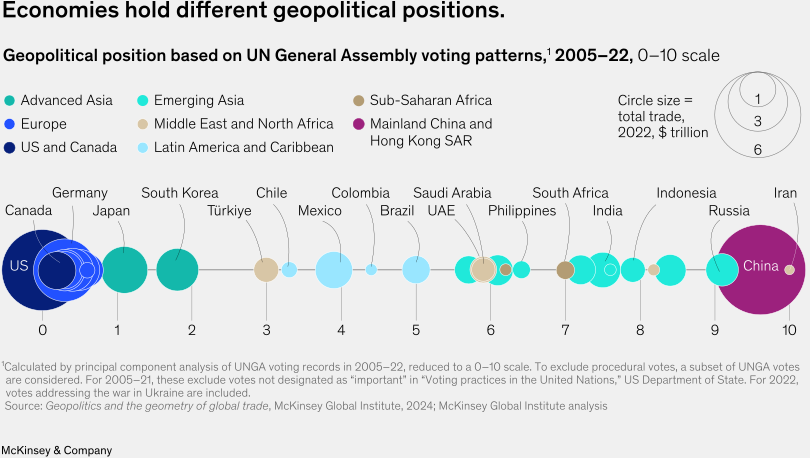
To define this geopolitical distance metric, we used principal component analysis to map each voting country on a one-dimensional voting spectrum from 0 to 10. Explicitly, we did not define this spectrum based on any specific country or pair of economies. We then took the geopolitical distance between any two economies to be their difference on this scale.2 Of course, relations between countries are dynamic. UN votes are a noisy measure of geopolitical alignment, with countries’ voting practices varying from session to session. Time will tell if recent voting patterns signal a more permanent shift in geopolitical relations.
When products are critical and concentrated, like semiconductors and some drugs, risk to everyday life results if supply in one country goes awry. For items that are critical and geopolitically distant, coordinated tension with countries in an opposing bloc can jeopardize procurement. In the case of concentrated and distant products—for example, tricycles and video game consoles—disruption would not endanger lives, but inconvenience and annoyance can be high, and companies can lose money.
A total of $140 billion of US imports sit in the bull’s-eye of exposure: critical, concentrated, and from geopolitically distant trading partners.9 Although small relative to the $3 trillion in overall US imports, this group includes a wide range of exceedingly important goods. What’s more, for more than 90 percent of these products, Americans depend on imports for a similarly overwhelming share of their consumption.
Some products in the bull’s-eye are technologies central to everyday life and whose imports are large. These include smartphones ($59 billion in imports in 2025) and laptops ($49 billion).10 Others have small import values but outsize importance. Rare earth magnets are a prime example of Achilles’ heels. The United States imported only $220 million worth in 2025. But the products they are used in—including electric vehicles, wind turbines, and defense applications—would not run without them.11 More than 90 percent are produced in China, which supplies more than 80 percent of US imports. Another example is pharmaceuticals. China supplies more than 90 percent of US imports by volume for a range of both finished drugs and active pharmaceutical ingredients (including antibiotics and vitamins).12 Indeed, at least 12 types of antibiotics are estimated to be solely sourced from China. It also plays a critical role in the global production of some intermediates for drugs like statins, as well as in making many helper chemicals (such as reagents and solvents) used in producing pharmaceuticals.13
Electronics is the largest, and most exposed, import sector
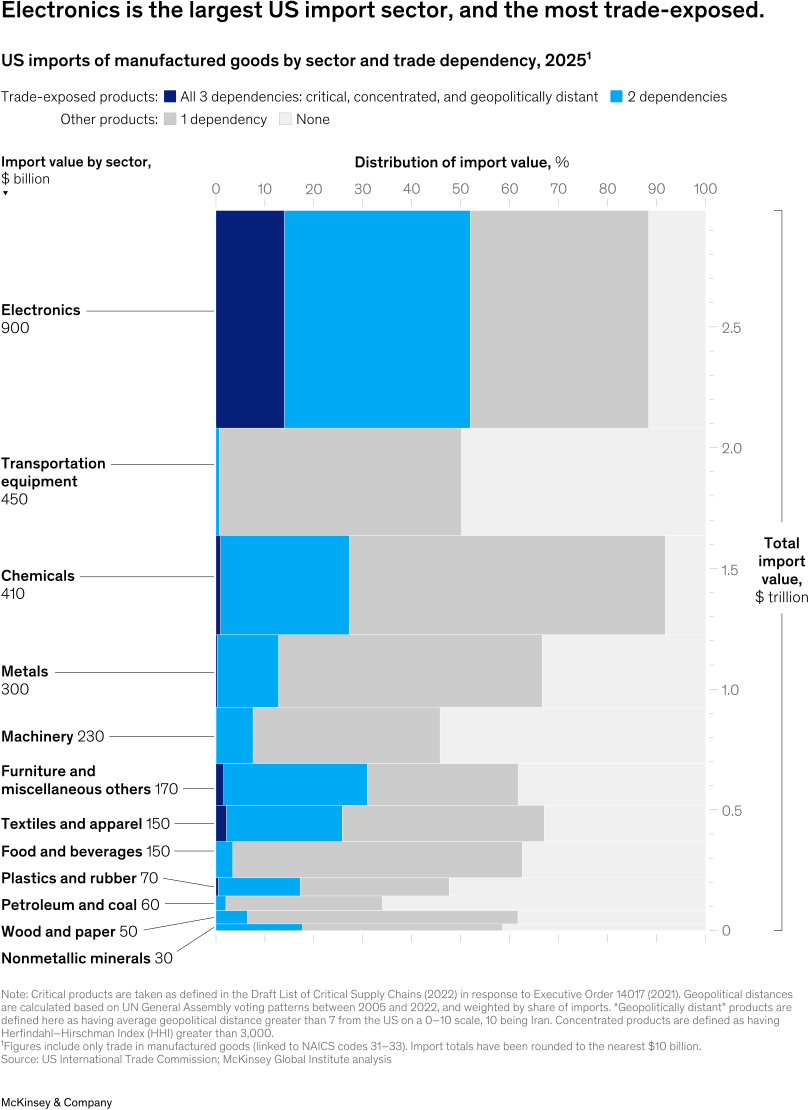
Nearly one-third of US imports—or $900 billion—are electronics, of which exposed products represent 50 percent (Exhibit 3). Fifteen percent of the total is even more exposed: About 50 items, with combined imports worth almost $130 billion in 2025, face all three dependencies. Most of this value comes from just a few products. Smartphone and laptop imports together account for about $100 billion; headphones ($6.5 billion), computer monitors ($5.8 billion), and keyboards ($1.0 billion) round out the top five.
Imports in other substantial import sectors also see dependencies. In chemicals, which include pharmaceuticals and their precursors, most of the 25 percent of imports that are exposed are critical and come mainly from Ireland. Roughly 65 percent of imports are critical but don’t have other dependencies. Textiles and furniture manufacturing also stand out as having more than 25 percent of imports exposed. These products tend to come from small numbers of more geopolitically distant partners, including China.
Other sectors are notably less exposed. Less than 10 percent of sectoral imports are exposed in transportation equipment, food and beverages, and wood and paper. But in these areas, imports are nevertheless concentrated, largely from Canada and Mexico. These countries together supply half of all US transportation equipment imports. Mexico ships more than 80 percent of US beer imports. Canada is a predominant supplier of US soft-wood imports.
US manufacturing comprises a diverse set of companies, industries, and sectors, with different sets of trade dependencies. A one-size-fits-all approach to reducing these dependencies by producing more at home wouldn’t work. To assess what’s possible and what isn’t, we developed a ramp-up factor to provide insights into the scale of effort needed to produce domestically what’s currently imported. We explore the details in the next chapter.
Quantifying the ramp-up needed to replace imports
Two broad possibilities emerge for increasing domestic manufacturing. Manufacturers can ramp up by creating new capacity or by getting more from what exists. These levers have different implications in terms of what’s needed to achieve them and in their impact on US trade and the broader economy.
Determining how long it takes, and the scale of effort required, is difficult without first understanding the hypothetical scale of the challenge. So is assessing how much of imports could be onshored, whether producing in the United States is more cost-effective than producing elsewhere, which firms would be leading, and whether that should even be the goal.
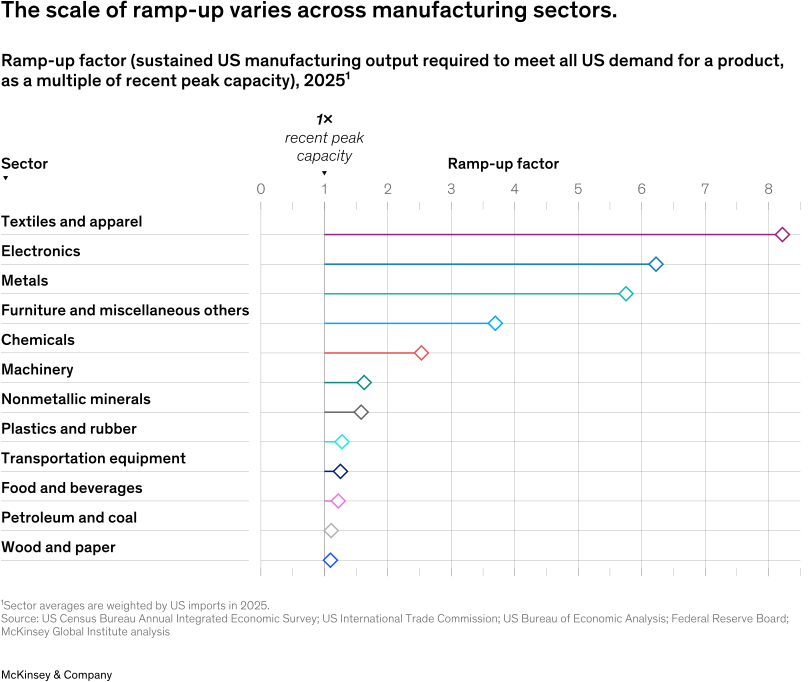
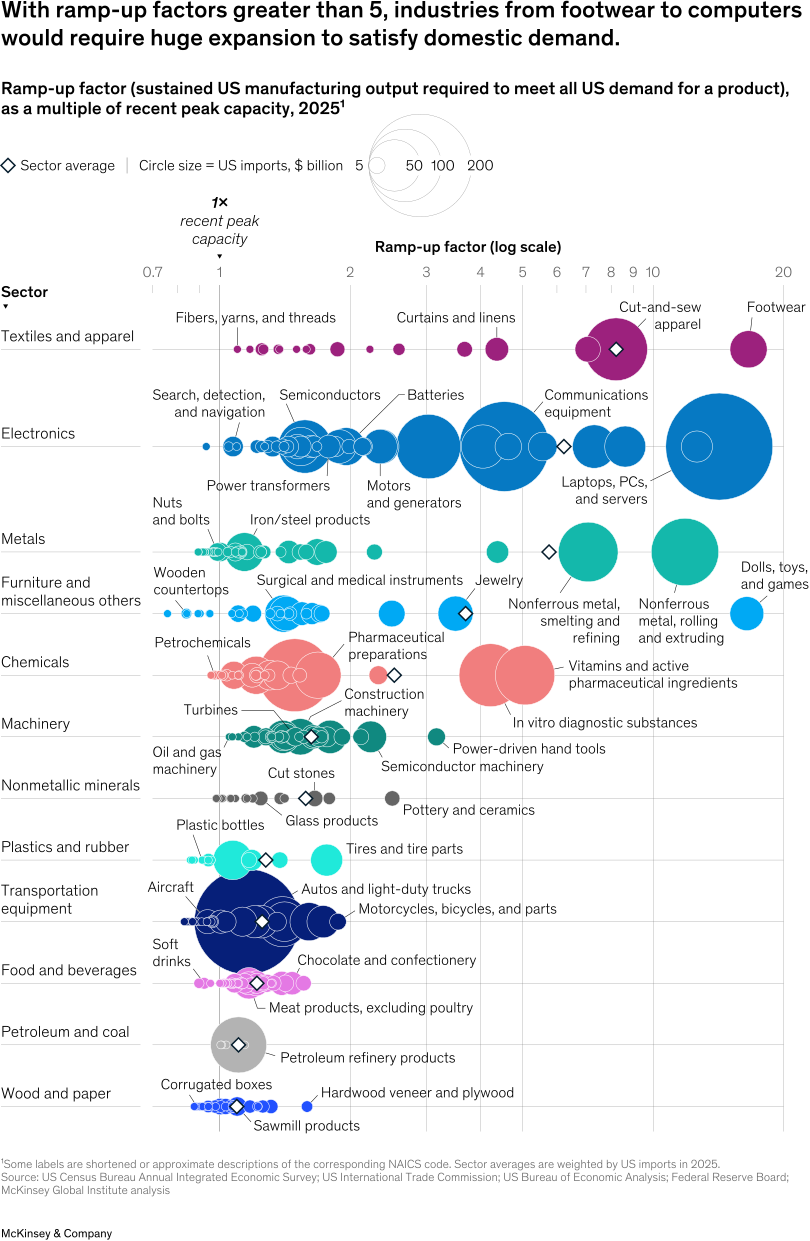
With this in mind, we created a “ramp-up factor” to gauge by how much domestic production would need to increase in order to produce the amount currently imported. We examined almost 350 manufacturing industries to assess how levels of ramp-up vary (Exhibit 4). They run the gamut from longtime staples like aircraft and petrochemicals (pretty easy to ramp up with existing capacity) to more cutting-edge outputs like semiconductors and data center servers, which would require significant investment to replace what is currently imported.
We start by setting domestic production capacity, running at peak utilization rates from the past decade, to 1. For ramp-up factors between 0 and 1, existing capacity is, in principle, enough to support sufficient incremental production to replace current imports. Producers may squeeze more from current capacity without requiring fundamentally new investment in facilities. Only a limited number of products have ramp-up factors less than 1, all in areas where the United States has well-established capabilities and there is slack capacity, like aircraft and truck-trailer manufacturing.
However, for most products, existing capacity is insufficient to produce the equivalent of what the United States currently imports. Correspondingly, they have ramp-up factors greater than 1. It is calculated by comparing what the United States consumes today with what can be produced by US factories running at full utilization.14 For example, take machinery used to make semiconductors. In 2025, the United States imported about $20 billion worth of these machines, while US domestic production capacity was around $15 billion. To produce an extra $20 billion, the sector’s capacity would have to more than double, hence its ramp-up factor is over 2.
Some products have ramp-up factors greater than 5. These mostly consist of capital goods in electronics, particularly servers for data centers as well as laptops. Some consumer goods with similarly high ramp-up factors include personal electronics such as headphones, video game consoles, and smartphones. This is perhaps unsurprising—the US industrial base to manufacture these products is small, and the value of US imports is very large.
A caveat is in order: Our ramp-up factor captures production shifts required to replace what the United States imports directly. Ramping up production to replace the entire supply chain would require more, a topic we return to in chapter 4.
Importantly, ramping up isn’t an all-or-nothing proposition. Even for products requiring new production capacity to replace all imports—namely, those with ramp-up factors greater than 1—increasing utilization of existing factories could lower import dependency. For example, if auto parts factories ran at their rate of ten years ago, the increased production would amount to about 40 percent of current imports. Of course, this is easier said than done. A range of underlying factors have driven declining utilization, most related to the cost of producing parts relative to market size and the prices that downstream consumers are willing to pay (see sidebar “Measuring the slack in US industrial capacity”). We discuss the role of, and potential for, increased utilization more in the next section.
Measuring the slack in US industrial capacity
Manufacturing operations typically run with some slack capacity. It could be a slow month for orders, there could be difficulties finding labor, or capacity could have been taken off line for maintenance. Perhaps some supplies didn’t arrive on time. As a result, manufacturing facilities typically run at less than their maximum sustainable capacity: There’s slack in the system.
Economics plays a central role: When making more doesn’t translate to more profits, factories may curb production. The demand may not be there for increased output at the same price, or raising output might require overtime or other changes in cost structures that would reduce profitability.
Across manufacturing facilities, these often-idiosyncratic reasons for lower utilization roll up to give a sense of how much slack capacity an industry has. The Federal Reserve tracks this “capacity utilization” to help get a picture of how the US economy is doing and whether inflationary pressures may be building. More strictly, it measures current industrial production as a share of maximum sustainable output. Most manufacturing sectors are operating below their peak capacity of the past decade (exhibit).
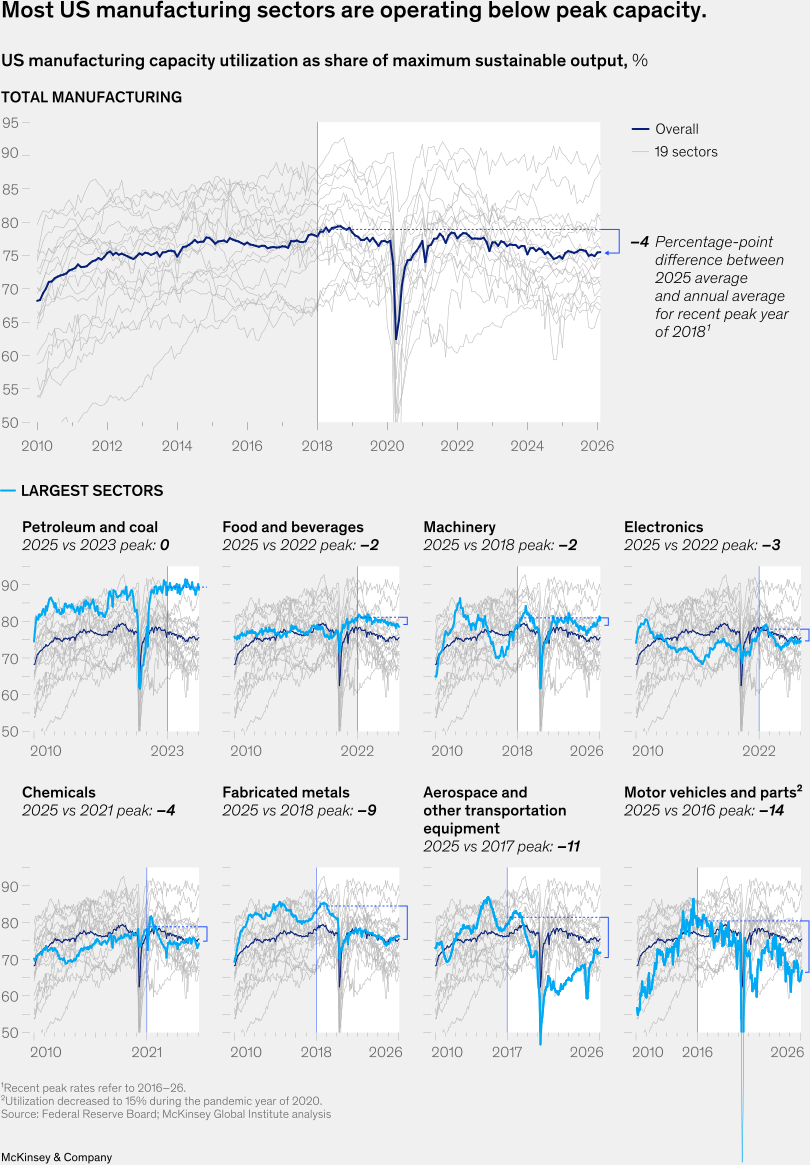
In 2025, US manufacturing operated at utilization levels almost four percentage points less than the past decade’s peak, experienced in 2018. But the story varies by sector. The largest manufacturing sector, food and beverages, is operating close to historical peaks. There’s not much slack. At the other end of the spectrum, transportation equipment sectors are working at about ten to 15 percentage points below their decade peaks, suggesting significant potential to increase output without building new capacity. Most other sectors fall somewhere in between.
Why do plants have spare capacity? The US Census Bureau runs a quarterly survey of plant capacity utilization, including questions that specifically ask why manufacturers are operating below full capacity. The typical, most-chosen answer: insufficient orders (which could refer to lower demand outright or low demand given price points of domestically manufactured goods). Roughly 70 percent of respondents ticked this box in 2025. Insufficient labor comes up about 20 percent of the time, and more frequently in labor-intensive industries like textiles and apparel.
In our modeling of US manufacturing ramp-up, we assume that capacity utilization can increase to the peak of the past ten years. Of course, this depends on orders being booked and workers filling shifts, among other factors.
The US manufacturing footprint for exposed goods is relatively small, and they have higher ramp-up factors
Across all imported products, more than half have a ramp-up factor less than 2, and about a quarter have a factor greater than 5 (Exhibit 5). For exposed products—those with two or more trade dependencies—this picture is flipped: More than half have a ramp-up factor greater than 5, and only 20 percent have a factor less than 2. In large part, this reflects the fact that a greater share of these products are electronics, which also have higher ramp-up factors.
The higher ramp-up factors for exposed products suggest greater reliance on imports—and thus greater potential direct economic impact in the event of a trade disruption. For most non-exposed imports, domestic production represents the majority of domestic demand. If a trade disruption occurred, domestic production could mostly meet US demand.
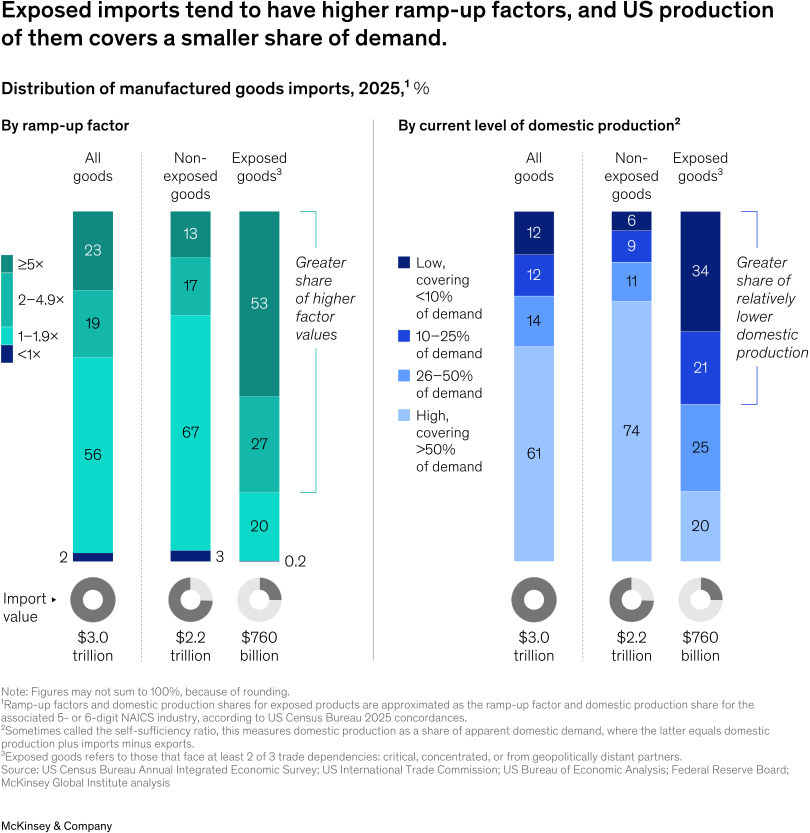
Altogether, a wide range of ramp-up factors suggests varying degrees of feasibility in boosting domestic production to offset imports. As a starting point, it is helpful to understand some of the economic effects of having firms use existing production resources more fully. In the next chapter, we examine the implications for output, trade, jobs, and exposed industries.
Running factories at full throttle
As the world’s second-biggest manufacturer, the United States can produce a lot more just by tapping its slack capacity. Most US manufacturing sectors operate at about 70 to 80 percent of their maximum sustainable output, and some are working as much as 15 percentage points below peak rates of the past decade. Relative to historic highs, capacity utilization today is low in sectors like transportation equipment (autos and airplanes), rubber and plastics, and furniture. Others, such as food and beverages and nonmetallic minerals, are operating closer to recent peaks.
In short: There’s a lot of unused slack out there. But these “slackers” aren’t being lazy or unproductive. There are understandable economic reasons for many US industries to operate at less than full steam. Raising output is pointless without an accompanying ability to sell additional supply profitably. This may be limited by cost structures, labor availability, and demand profiles.
Nevertheless, unused slack capacity is an attractive lever to explore; it does not require designing new factories or putting new capital in the ground. For that reason, we examined what could in theory be achieved with the existing US manufacturing base in the near term.
Slack capacity could accommodate a lot of ramp-up for autos—but not electronics
What would happen if manufacturers were effectively able to “pick up the slack”? Ramping up this way would meaningfully boost production of a few longtime stalwarts that have ramp-up factors of about 1—notably transportation equipment, including aircraft and automobiles.
Sectors producing large volumes of intermediate goods experience smaller gains in absolute terms, but larger shares compared with total imports. For example, current slack capacity for rubber and plastics and for wood and paper represents more than 50 percent of 2025 import value (Exhibit 6).
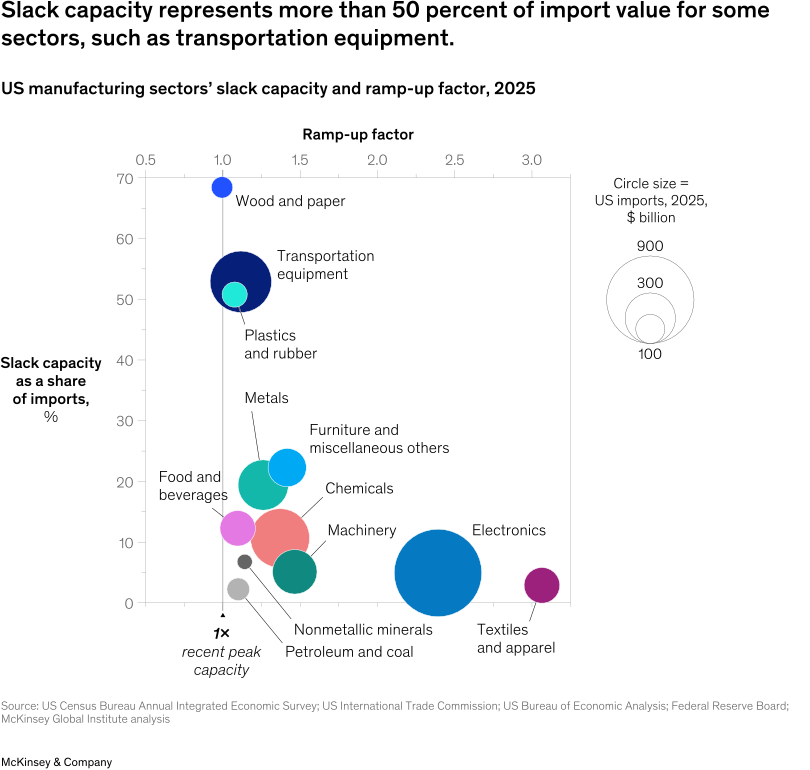
Taken together, this could mean a lot of output. But the impact would be more limited on many future-shaping technologies, including AI, that face many of the trade dependencies outlined earlier. In the electronics sector as a whole, existing capacity cannot support an increase in domestic production commensurate with current imports. Increased production would represent only about 5 percent ($44 billion) of the current US electronics import bill. Correspondingly, it has a high ramp-up factor of 2.4.
Current slack manufacturing capacity is equivalent to two-fifths of today’s goods trade deficit
All told, ramping up the output of existing US manufacturing capacity, by running factories back at decade-high usage, could represent about $660 billion in additional output. More than 60 percent of that value comes from three sectors: transportation equipment ($280 billion), metals ($80 billion), and wood and paper products ($60 billion) (Exhibit 7). These sectors have both a large amount of production capacity and a relatively high level of slack.
Our estimates show that most of this increase in output—about $530 billion of the $660 billion—could in theory replace products that the United States currently imports, equivalent to more than two-fifths of the US manufactured goods trade deficit. The remaining $130 billion could serve domestic or export markets.
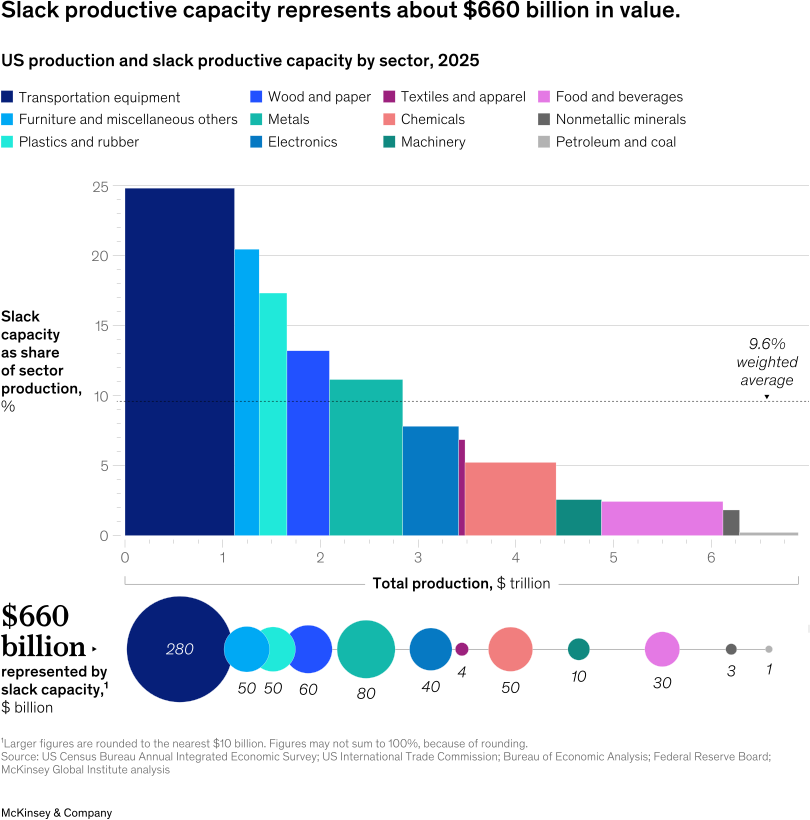
These values represent theoretical approximations. How much more is actually produced, or how much the trade deficit narrows, depends on whether US producers have a market for their goods. Take some familiar beverages to illustrate the point. With a ramp-up factor of 1.3 and relatively low capacity utilization, a lot of whiskey could potentially be onshored with existing US capacity. But some drinkers may just prefer scotch to bourbon. Wine’s ramp-up factor is similar, but connoisseurs may prefer a French Bordeaux to a California merlot. These sectors wouldn’t move the needle in terms of output or the trade deficit, but they’re instructive in showing the real-world issues involved.
For bigger sectors, even if auto capacity could be ramped up, car buyers may prefer Korean SUVs to American pickups. Industrial buyers of chemicals may have long-standing supplier relationships with Swiss manufacturers instead of American ones.
Peak utilization would make little dent on deficits for the most sensitive product-level exposures
What about exposed products, with higher ramp-up factors, that are often at the center of national security? There, the effect on trade is limited.
Zooming in on these imports, like leading-edge semiconductors that are both critical and globally concentrated in their geographic origin, we find that increasing capacity utilization to recent peaks would not make a broad impact. Indeed, increasing utilization would potentially offset 10 percent or more of imports, or only $45 billion of products, representing about 6 percent of exposed products (Exhibit 8). And looking even more narrowly at products in the bull’s-eye of all three trade dependencies, the share falls to just 2 percent.
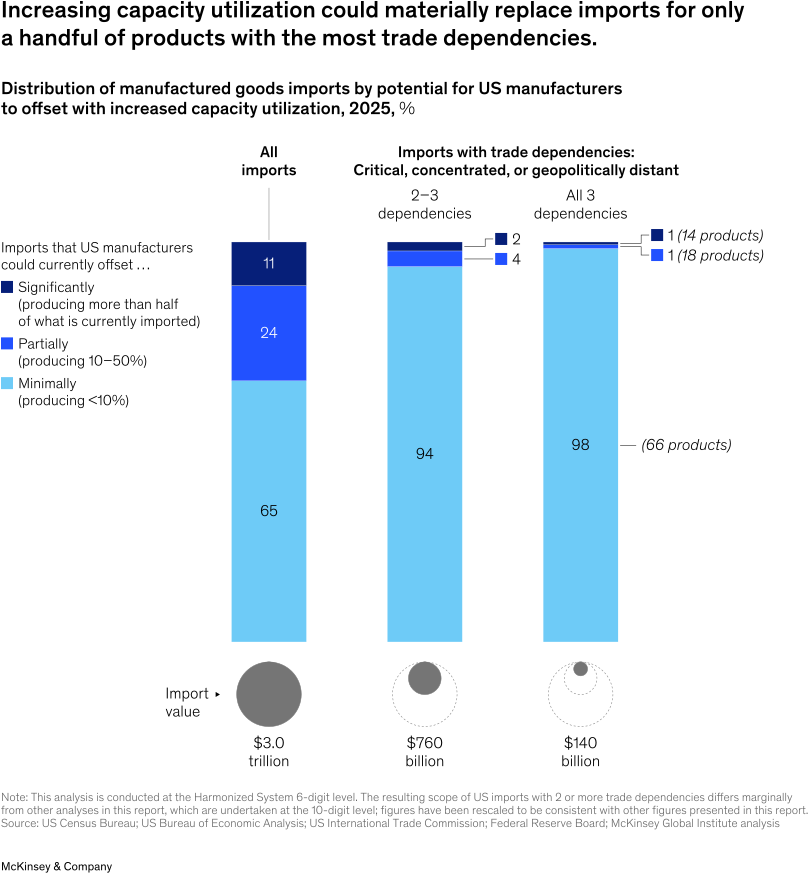
There is also, of course, the question of whether producers may be able to get more from their existing capacity by boosting productivity. Cutting-edge manufacturers provide ever-increasing examples of AI and technology driving innovations and greater automation, and thus further capacity growth.15 However, as ramp-up factors suggest, productivity would need to more than quintuple for over half of products, not something that can likely be squeezed out of existing facilities. As we discuss in the next chapter, some of the most productive factories in the world by output volume, such as those in China known for their advanced robotics, produce at two to three times US levels. Even if US manufacturers made the capital investments to increase productivity of their existing plants, they still would likely not be producing enough to cover exposed imports with existing factories.
In sum, even if the United States ran factories at full capacity and experienced productivity improvements, it wouldn’t produce a lot of the economically sensitive imports that rely on multiple trade dependencies. Addressing that challenge would therefore require transformation in many sectors, as we explore in the next chapter.
The new capacity needed to address trade exposures
The United States imports many important things it needs—from smartphones to sneakers, from dysprosium to data processors, from ships to chips. About $140 billion of imports hit the bull’s-eye of exposure: critical, concentrated, and coming largely from geopolitically distant trading partners.
The most brute-force way to reduce trade dependency is to replace or reduce the use of specific goods that are exposed. This would require innovating product design and production, and some efforts are underway.16 Unless and until such engineering progress is made, these options require some degree of sacrifice or more expense.
Shifting trading partners is another way to reduce dependency. A country can rearrange sourcing to more aligned countries to reduce geopolitical distance and diversify to more trading parters to reduce concentration. Each approach can present challenges. For example, for a host of products—spanning solar panels and LED lamps through to electric handsaws and microwave ovens—China represents more than half of the global export market. Finding alternative suppliers at scale could be tricky.17
Another option—the subject of this research—is to ramp up domestic production to meet more of domestic demand. Increasing production to eliminate trade dependencies would entail fundamentally revamping the US industrial footprint. After all, the reliance on imports exists because of strong and long-standing economic forces. This section examines how different the resulting footprint would need to look from today’s—and from any other individual country’s—and gives a rough estimate of what it might cost.
A key takeaway is that ramping up production of exposed products requires more than a piecemeal approach. Producers basically need to go big with significant, persistent investment and hiring to create the kind of industrial capacity that would make the United States meaningfully less dependent on foreign suppliers. Funding this would require companies and investors to believe in the long-term business case. And funding could be the easier part. Ramping up would also require specialized skills, infrastructure to support flows of goods and materials, and sufficient energy, together with the ability to quickly scale new projects by gaining rapid permitting approvals, for example. Otherwise, ambitions may need to be ratcheted back.
Some manufacturing sectors would require big increases in overall production; others would not
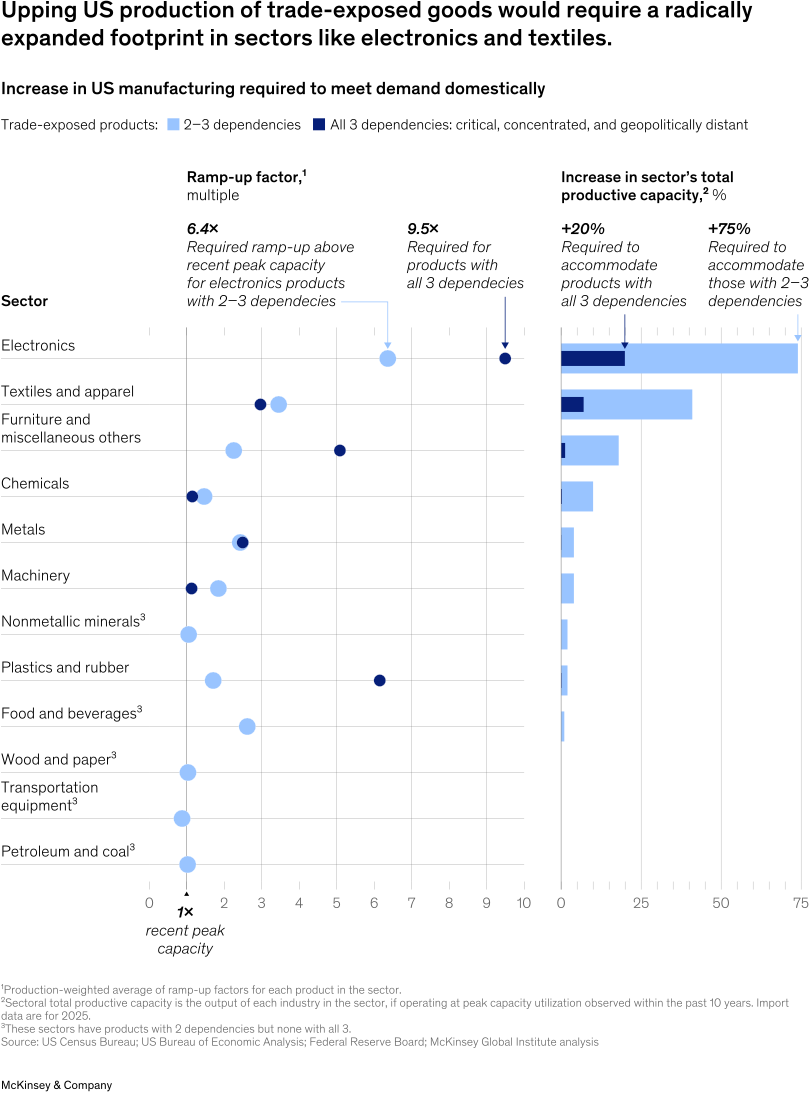
As discussed above, US production of many exposed products would need to increase a lot—by more than a factor of five for over half of exposed imports by value. Looking at the bull’s-eye of trade-dependent imports (critical, concentrated, and geopolitically distant), we find that the average ramp-up factor is about 3 in textiles and apparel, and almost 10 in electronics (Exhibit 9).
For sectors like electronics, textiles, and furniture manufacturing, ramping up production of exposed products wouldn’t just drastically boost manufacturing of those specific products. It would transform the full sectoral-level manufacturing footprint. Most saliently, for electronics, increasing production to match current imports for all exposed products would require increasing the $600 billion US electronics sector’s capacity by 75 percent—a massive undertaking. That’s because so many products in the sector are trade-exposed, and because US electronics production is quite small compared with its enormous imports. The overall increase to match exposed imports would be smaller but still substantial for textiles and apparel (a roughly 40 percent increase versus today’s productive capacity) and for furniture and miscellaneous manufacturing (about 20 percent).
But ramping up production of exposed goods doesn’t always translate to big increases in total production. Take vitamins as an example. They are important for human health, and many are also essential inputs for the US livestock industry. The United States imports more than $1 billion annually, with products often at the nexus of all three dependencies: critical, concentrated, and imported from geopolitically distant China. US manufacturing of many vitamins is negligible, and the ramp-up factor is accordingly high.18 The United States could, in theory, massively scale up vitamin manufacturing. Seen from that view, it would be a huge change. That said, it would not move the dial on the overall footprint of the $1 trillion US chemicals sector. The picture is similar for a range of specialty products across transportation equipment as well as other sectors like plastics and rubber products: Ramp-up factors for exposed products are relatively high, but ramping up their production would imply only modest changes relative to how much these large sectors already make.
No country in the world has the footprint needed to produce all exposed US imports
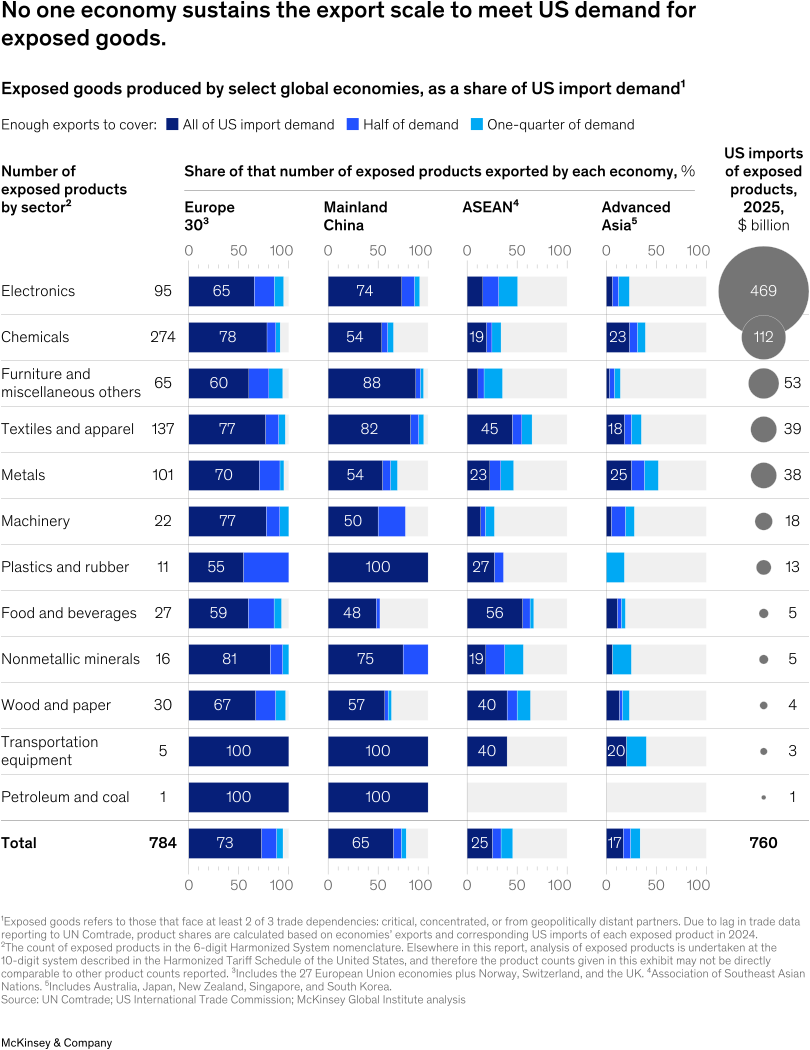
Are there any economies that manufacture exposed products at scale, which could serve as examples for ramping up US manufacturing? Not really. No one economy—not even mainland China—has the full manufacturing footprint the United States would need to replicate (Exhibit 10).
Indeed, China, the world’s preeminent manufacturing economy, exports only about 65 percent of exposed products at the same scale as the United States currently imports them. For the remainder, spanning advanced pharmaceuticals to refined platinum-group metals, China’s own manufacturing footprint does not match US demand. Even taking the aggregated manufacturing power of the Europe 30 economies, these countries together export only about 75 percent of exposed products at US-import scale.19 Gaps in European production include some major exposed US imports, like laptops and smartphones.
And even at the level of each individual sector, often no single economy produces all exposed products to the same degree that the United States currently imports them. Take machinery. China remains a major manufacturer and exports many exposed goods in this sector, such as electric power tools, at scale. But for advanced metal lathes, used to shape metal precisely, only Japan and South Korea have the manufacturing scale commensurate with US imports.
Looking across sectors, only when considered in aggregate do the Europe 30 economies begin to produce most exposed products at a scale comparable to US total imports.
A rough sizing suggests that investment of $2 trillion might be needed to produce trade-exposed goods in the United States
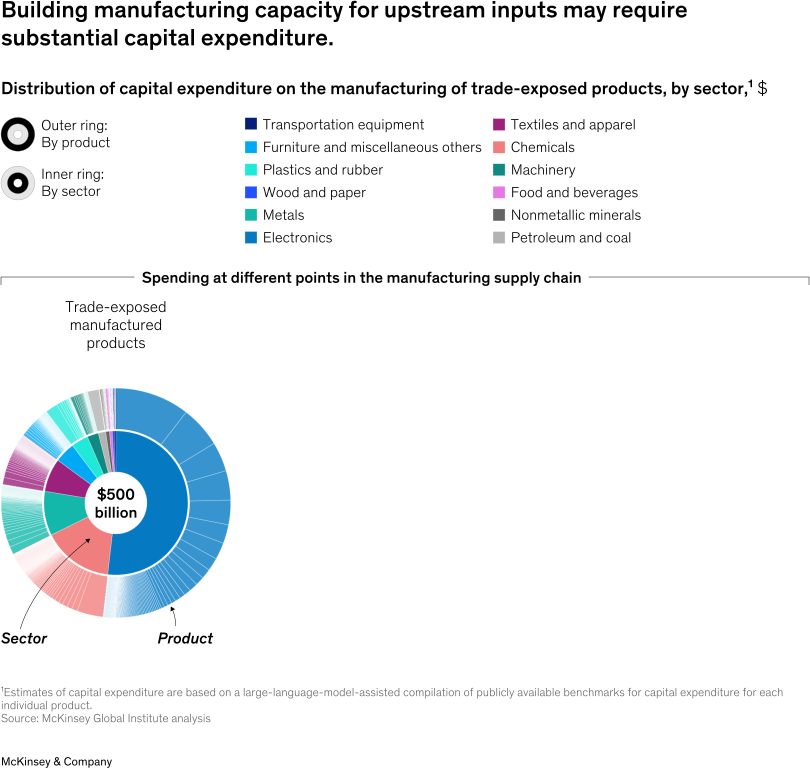
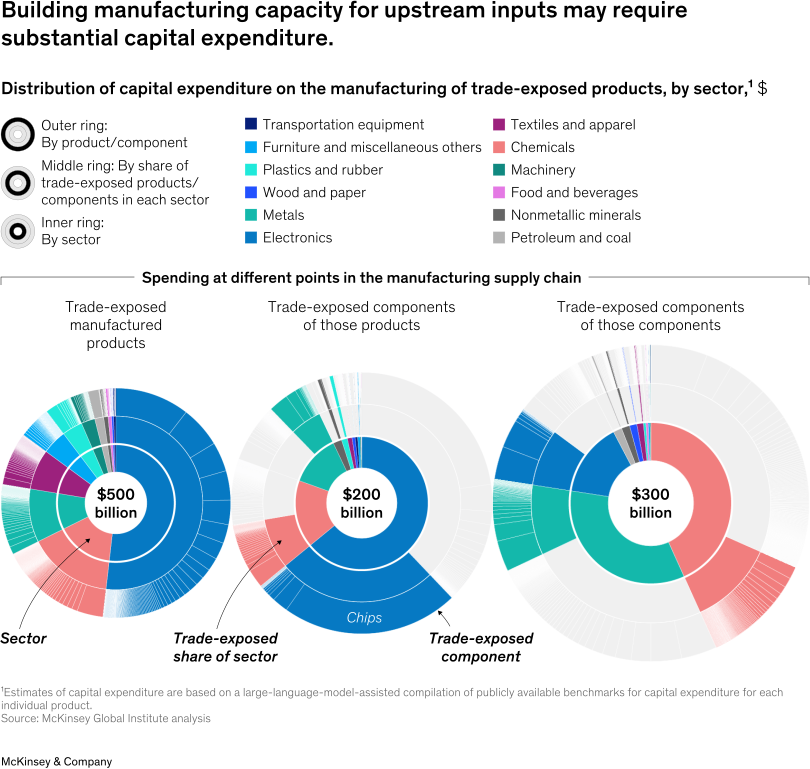
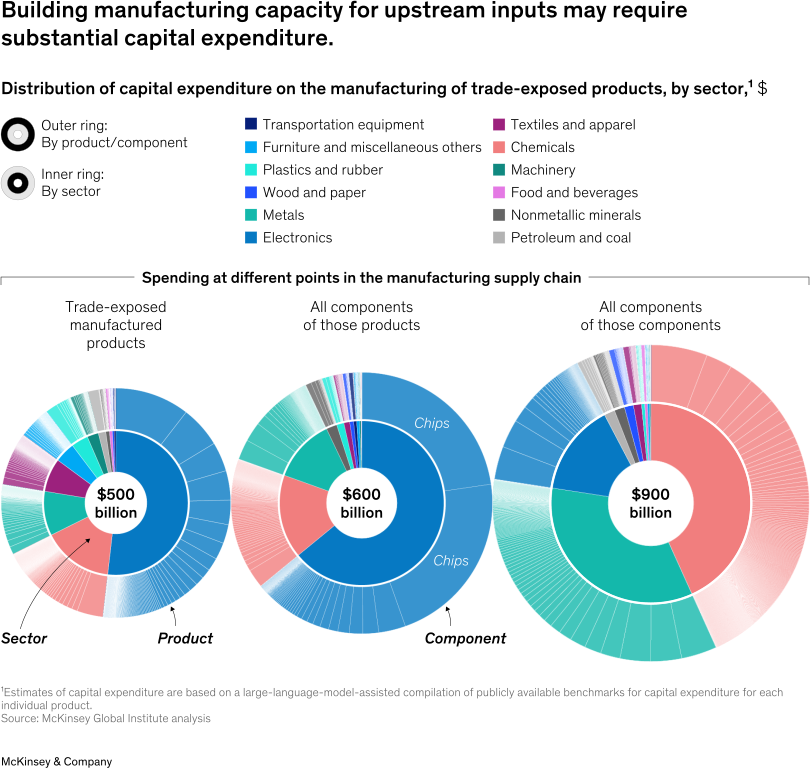
Producing exposed goods in the United States would require a substantial industrial transformation. By our estimates, building and equipping factories to manufacture today’s exposed imports in the United States could require approximately $500 billion in capital expenditure. But this step alone might not reduce US reliance on trade—after all, the components embedded in imports would themselves need to be imported. Rebuilding the upstream US manufacturing supply chain for exposed components of exposed imports would add roughly $500 billion to the bill; think building the semiconductor fabs that make the chips that go into smartphones. A more expansive approach, manufacturing all the upstream components of exposed imports, would add roughly an additional $1 trillion. All in all, manufacturing today’s exposed imports in the United States, plus all their upstream components, could take about $2 trillion in capital expenditure. This is based on our compilation of publicly available estimates at the product level (see sidebar “Estimating the ramp-up in capital investment”).
Two trillion is a big number. For context, it’s about 6 percent of US GDP, more than half the value of current US manufacturing physical capital stock, and eight times the average amount of announced foreign direct investment (FDI) into the United States each year. Even if the number is off by as much as a factor of two, it does not dramatically change the takeaway that it would be a sizable undertaking. Although it is big, this number does not include investment that would need to occur outside the manufacturing base—in energy and infrastructure, say, and in mining the critical minerals that would be key to such an industrial transformation (see sidebar “Critical minerals are embedded in a range of exposed products”).
Critical minerals are embedded in a range of exposed products
The mining and refining of critical minerals such as rare earths, copper, and lithium are both concentrated and done by geopolitically distant trading partners (exhibit). This makes the stability of these upstream resources central to economic security. For 19 out of 20 important strategic minerals, China is the leading refiner, with an average market share of 70 percent. China’s predominant share is particularly striking in the separation and refining of rare earth elements, where it represents more than 90 percent of global refining.1

The United States depends on imports for more than 70 percent of its consumption needs for almost 30 critical minerals, including cobalt, natural graphite (used, for example, in batteries), and titanium.2 Often, US imports of critical minerals are embedded in manufactured goods rather than being the raw materials themselves. One example is neodymium magnets, a rare earth input used in electric vehicles, offshore wind turbines, and industrial motors. In 2025, the United States imported negligible quantities of neodymium but imported $220 million of neodymium-containing magnets, mostly from China.
Rare earths have come into the spotlight given their strong link to national security.3 The United States sources 70 percent of its rare earths (and 100 percent of many heavy rare earths) from China. These dependencies translate directly into national security risk. Each F-35 fighter requires almost 1,000 pounds of rare earth materials, and advanced naval vessels need thousands of pounds.4
Demand for other minerals such as lithium, nickel, and copper is rising rapidly; global lithium demand alone is projected to increase roughly fourfold by 2035.5 Beyond geography, ownership is increasingly coming into focus. For example, Chinese firms own the facilities responsible for refining roughly 80 percent of the world’s cobalt, 70 percent of lithium, 60 percent of nickel, and 40 percent of copper.6 By one estimate, the Chinese government and state-owned enterprises provided $57 billion in financing to copper, cobalt, nickel, lithium, and rare earth mines across 19 low- and middle-income economies between 2000 and 2021.7 In 2025, China’s Belt and Road Initiative saw a record $32.6 billion investment in metals and mining.8
Opening a new factory to produce any form of manufactured good may require immense capital and staffing, but it is theoretically possible. Raw materials, however, rely on natural endowments, such as amenable climates and mineral deposits, many of which are simply not available to the United States. Some raw materials may be available, but a host of other constraints, such as environmental regulations, make them extremely difficult to mine or harvest domestically. Resilience ultimately depends on building a more secure mine-to-market chain for critical inputs, from minerals and refined materials to components and finished goods.
Which sectors would receive more investment? Electronics would see a significant chunk—roughly 40 percent of the $2 trillion figure (Exhibit 11). This reflects the fact that more than half of Achilles’ heels are electronics and that semiconductors are embedded in many of these exposed imports. Chemicals have the next highest share, at about 30 percent. These investments span facilities to manufacture pharmaceuticals through to plants making the basic chemical building blocks for everything downstream. Similarly, metals receive a substantial 20 percent share of the estimated investment need, focused on upstream industries such as making copper wire, forging aluminum and steel, and so on.
Big investment requires a business case
A $2 trillion capital expenditure bill, spread over many years, may be within reach of the $31 trillion US economy—but that does not mean that there is a business case to support it. Currently elevated ramp-up factors for trade-exposed products, and limited domestic production capacity, indicate that there has not been a strong economic argument to produce domestically. The makeup of US manufacturing’s $3.7 trillion physical capital stock, compared with the $2 trillion of new investment needed to ramp up exposed products, points to a similar conclusion (we turn to this in greater detail in chapter 6).20
Recent history provides examples of substantial investment occurring in the United States once the business case exists, and in particular for strategic sectors. The shale revolution led to more than $2 trillion of investment in US oil and gas as well as the build-out of an entire liquefied natural gas (LNG) export industry, with the result that the United States became the world’s largest LNG exporter.21 More recently, the AI boom and policy tailwinds have supported hundreds of billions of dollars of announced investment in the US semiconductor value chain and data centers. Indeed, between 2025 and 2030, cumulative capital expenditure in US data centers may be about $3 trillion.22
However, for some manufacturing activities—typically labor-intensive ones—examples of viable business cases in advanced economies are scarce. Electronics assembly is an example. Although it may be highly automated, the substantial labor component often means that there is a cost advantage overseas. Many Korean smartphones are assembled in India or Vietnam; chips manufactured in advanced economies are often packaged and tested in Southeast Asia.
Notably, the United States has space to become more productive and boost its adoption of AI and robotics. South Korea and Singapore, which have the highest robot densities globally, have more than triple and double the number of robots per worker as the United States, respectively.23 One estimate places China’s produced volume per worker at two to three times that of the United States.24 In electronics specifically, Singapore has capital productivity levels roughly 4.1 times those of the United States, and output per worker is about 4.6 times higher.25
For the business case to make sense, the manufacturing process would have to be reimagined and fundamentally more productive, likely requiring more automation, capital, and skilled workers (which we discuss more in the next chapter). There would also need to be a transformation outside the factory. An expanded industrial footprint on this scale would demand more electricity and fuel, for example, and require more infrastructure to support transport and logistics, connecting inbound and outbound supply chains at greater scale and speed. Scaling new industries is often a regulatory journey, too. Finally, there are the practical considerations of building and equipping facilities: prices and lead times for building materials and capital equipment, and the size and skills of the construction workforce.
Of course, non-market forces can also come into play. A range of government incentives, for example tariffs and industrial policy, can tip the scales in an otherwise loss-making scenario for businesses. A changing global business climate toward resilience (and away from maximized efficiency) may also change the equation. Policies may also have an impact on jobs, for example regulations against using AI and robotics for certain occupations. We explore the potential implications of ramping up on jobs in the next chapter.
Jobs, jobs, jobs?
Ramp-up isn’t only about output and trade. It may matter for jobs, too.
Factory employment has for generations been shrinking as a share of the total US workforce, a trend that has been much analyzed and debated just as manufacturing’s reduced impact on overall output has been. Manufacturing jobs are likely to remain a focal point in the national conversation, making ramp-up not just an economic and national security issue but a labor market one, too. Even if economic forces such as demographics may spur more employment in areas like healthcare, manufacturing jobs often pay more than the national average and tend to be associated with high levels of productivity.
However, ramping up, on its own, doesn’t guarantee that factory jobs will bloom. There are essentially two paths. First, ramping up with existing capacity would generate a big chunk of jobs without too much adjustment. On the other hand, this will happen only if there is a business case to do so, and the steady fall of manufacturing jobs indicates that there has not been.
The second path is through employment at newly built factories of tomorrow. Such jobs will put an extra premium on skills and the flexibility involved in getting the right people into the right roles in the right parts of the country. While it is tempting to calculate a top-line estimate of job creation from such ramping up, we do not do so since the range in potential factory automation and processes remains so uncertain.
Running existing factories at full capacity would entail new hiring
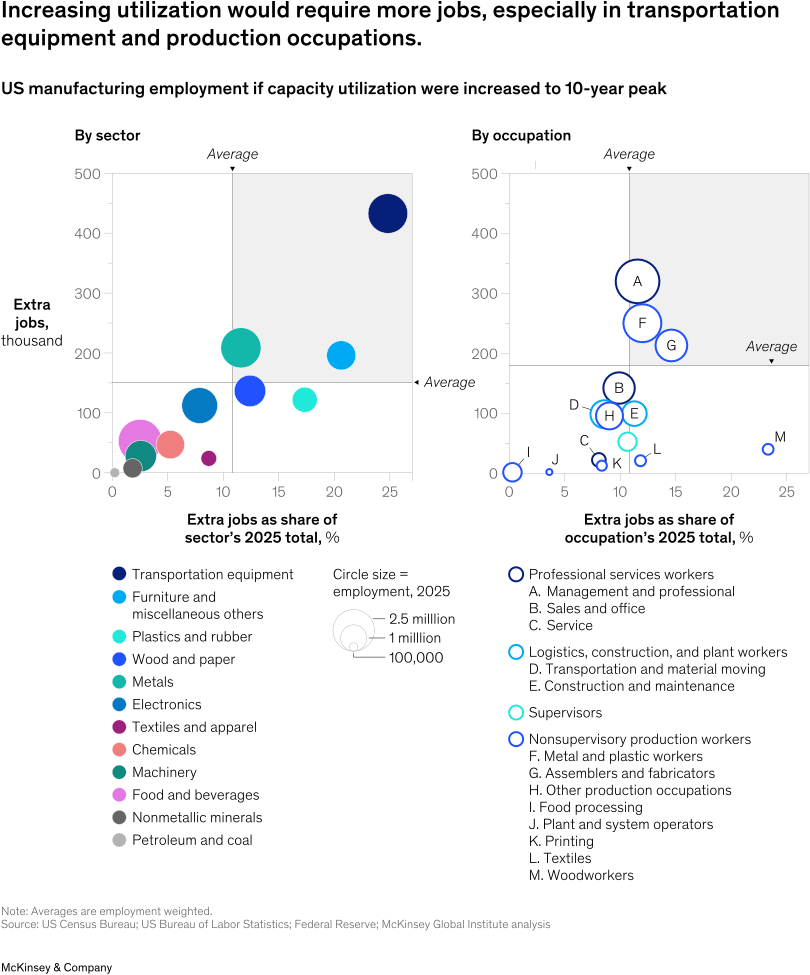
Returning to decade-high utilization would translate to as many as 1.4 million additional manufacturing workers, assuming demand for labor goes up in proportion to output.26 Transportation equipment, metals, and furniture and miscellaneous manufacturing make up more than half of these additional jobs (Exhibit 12).
Against the backdrop of the total US labor markets, this number is relatively modest. It totals about 0.8 percent of today’s workforce. With total US unemployment at around seven million, one may be inclined to view over one million manufacturing jobs as being within reach. Some recent leveling-off of job creation may increase the pool of available workers.27
At the same time, the potential additional workers would represent 11 percent of the current factory workforce and would put manufacturing jobs back to levels not seen since 2006. Indeed, there may not be enough people with the right skills to take these jobs. Only half a million of the current unemployed population comes from prior factory roles. Most come from services. Moving from services like healthcare to the assembly line isn’t seamless. Workers may need retraining for manufacturing work, complicating the adjustment. Any of this is unlikely to happen without a business case.
New factories would also need new workers
Similar to the capital investment requirements outlined in the previous chapter, any estimation of potential job creation from new capacity is bound to face uncertainties. On one end of the range of possibilities would be factories operating at rates of productivity similar to today’s. On the other end would be complete automation.
The answer is likely somewhere between the two. Just as Henry Ford revolutionized the production line, automation and robotics have the potential to transform the factories of tomorrow. This doesn’t necessarily mean human factory workers will disappear, but they may play very different roles, for example troubleshooting and repair of automated systems.28 While fully automated, so-called dark factories are in their infancy globally, AI- and digitally enabled factories are increasingly the norm.29
This means there is no good way to precisely predict the number and nature of jobs required to build the industrial footprint needed to domestically produce currently exposed inputs. It hinges in part, as noted earlier, on the extent of automation and use of robotics, since reduced automation may drive costs higher and make businesses less inclined to produce. Other factors matter, too. Predictive maintenance reduces the time people need to spend repairing machines. Design enhancements can make products easier to build, thereby stripping out some labor. Autonomous supply chains trigger orders, without requiring as many people dedicated to procurement and purchasing. Software systems can increasingly handle scheduling and reporting tasks previously undertaken by supervisors. There are many more potential applications of AI to manufacturing—from operations through to inventory management—all of which may be labor saving.30
But it cuts both ways. Product customization may require more frequent retooling and more complicated, high-mix quality checks. An increase in circular economy practices—for example, to reduce input costs or supply difficult-to-procure or highly exposed inputs—demands both disassembly and sorting of returned materials, tasks requiring dexterity that is difficult to achieve, at least for today’s robots.
So, whereas Henry Ford’s assembly lines replaced the craftsman with the line worker, the exact job demands of the factories of the future are unknown.
One way to peer into the future is to look at announced FDI projects into the United States, since investors tend to announce the number of jobs created along with investment dollars. Based on these announcements, we estimate that roughly one million manufacturing jobs might be created alongside the hypothetical $2 trillion in capital expenditure—our estimated amount required to produce all currently exposed imports and their upstream components in the United States, as discussed in the previous chapter.31
But FDI announcements show a wide range of labor requirements across sectors and products. As mentioned above, semiconductors, one of the industries requiring the most capital expenditure in the hypothetical new footprint, had the lowest rate of announced job creation, at just under 200 jobs per billion dollars of investment. Basic chemical manufacturing is another magnet for FDI into the United States—announced projects in this sector on average create fewer than 300 jobs per billion dollars of investment. If all sectors operate at these levels of labor and capital intensity, total job creation could be less than one million. Of course, the scale of reindustrialization also matters for job creation. If spending the $500 billion to build the factories to produce only the exposed products that the United States imports directly, the new jobs required might be a little less than half a million.
For actual jobs to be created, workers must be available to take them. As mentioned, there are currently half a million unemployed manufacturing workers—less than many of the figures above. Beyond this, future shortages of workers could both hinder the ability to reindustrialize and incentivize adoption of robotics. Production and construction occupations have some of the most rapidly aging workforces, with the share of the workforce older than 55 growing by four and five percentage points since 2011, respectively.32 Current degree pipelines suggest future shortages in engineering, among other critical areas.33 A 2023 report by the Semiconductor Industry Association, for example, estimates that 58 percent of projected new jobs in the semiconductor industry, or 67,000 positions, could go unfilled, based on current degree completion rates.34
Anticipating and influencing what’s next
Ramping up has potentially powerful effects on the US economy. But they vary. For those industries that can do so using the capacity they already have but don’t fully use—meaning a ramp-up factor of less than 1—it could reduce the trade deficit and produce new jobs, all else being equal. But that would not do much for the imports most exposed to trade risks, which include a lot of products used in high-technology industries that will shape the future economy. For these, typically with ramp-up factors well north of 1, new factories would need to be built.
If ramping up does happen, it would take money and time. It’s far too early for definitive conclusions. But it is not too soon to start tracking, nor for firms to influence ramp-up in areas relevant for them.
Recent signs of ramp-up?
Industrial production, as measured by the Federal Reserve’s volume-based production index, increased by a little less than 2 percent year-over-year in the fourth quarter of 2025. This means the United States is making more than it has in several years, via existing capacity or new projects that have already broken ground. But zooming out to a longer horizon, the index is below its postpandemic 2022 level. The recent rise is therefore an encouraging early sign but not nearly enough to signal a renaissance. The near-term picture varies significantly by sector (Exhibit 13).
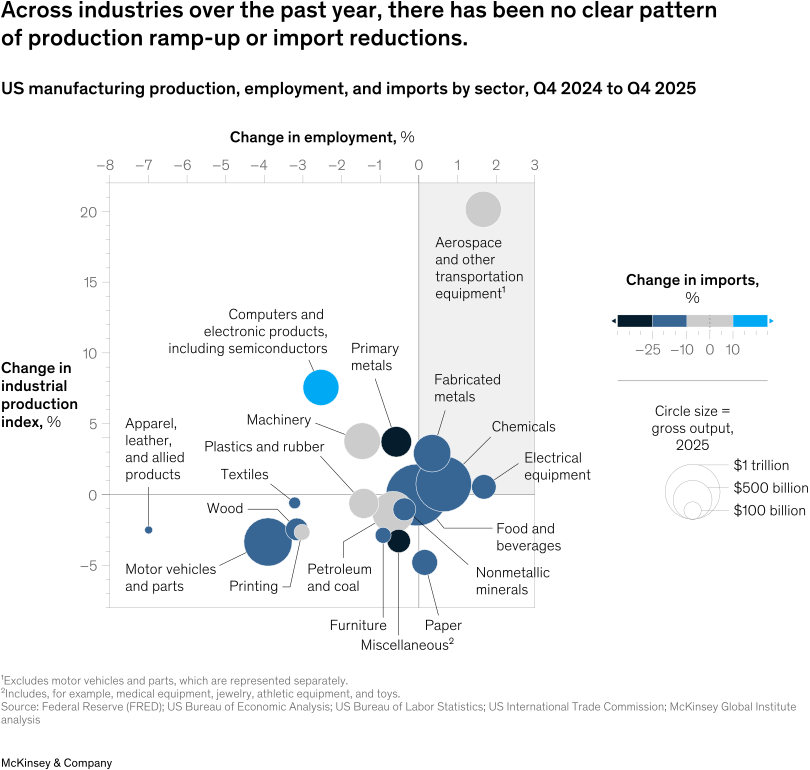
Aerospace and other transportation equipment stands out for having both increased production and jobs between the fourth quarter of 2024 and that of 2025.35 But this is a recovery following a prolonged drop in utilization that started in 2018, from about 80 percent to just over 60 percent. The rise is evident across defense and nondefense aerospace—the latter from both commercial aviation and the space industry. However, the resurgence does not represent clear reshoring; the United States has long been a net exporter in this sector.
There is early evidence to suggest that in some industries, such as primary metals and machinery, US manufacturing is ramping up and imports are declining. Take iron and steel, which are part of the primary metals sector. US imports in this sector fell by about 30 percent in final quarter of 2025 compared with the same period in 2024. US production of iron and steel rose by about 6 percent over the same period, driven mostly by a recovery in capacity utilization. Employment in iron and steel remained stable, but a decline in employment in other primary metal industries drove an overall dip in employment in the sector.
In two of the largest manufacturing employers—food and beverages, and chemicals—both employment and the industrial production index have remained more or less flat even though US imports in these sectors fell 10 to 25 percent year-on-year in the last quarter of 2025. Conversely, in motor vehicle and part manufacturing, an American mainstay, industrial production and jobs have dropped, both by 3 to 4 percent, despite a nearly 15 percent drop in imports.
Production growth over the past year has in some cases been driven by new capacity coming on line rather than by higher usage of existing capacity. Computers and electronics are notable examples. They surged in production throughout 2025, amid the AI boom. While overall US manufacturing production was around 2022 levels at the end of 2025, semiconductor production was about 30 percent higher than in 2022. A similar trajectory is evident for communications equipment, which includes data center networking gear.36 Fabs like Taiwan Semiconductor Manufacturing Company’s in Arizona have helped move the needle nationally. Given an uptick of imports of AI-related goods, on the order of $180 billion in 2025, home-produced chips so far seem to complement, rather than replace, imported ones.37
Recent investment points to some ramping up via new capacity but not yet at the scale needed
Building out new US manufacturing capacity to fully ramp up exposed imports and their manufacturing supply chains would fundamentally transform the US industrial footprint. Tactically, this means a substantial increase in capital investments, especially in electronics (including semiconductors), chemicals, and metals (Exhibit 14).
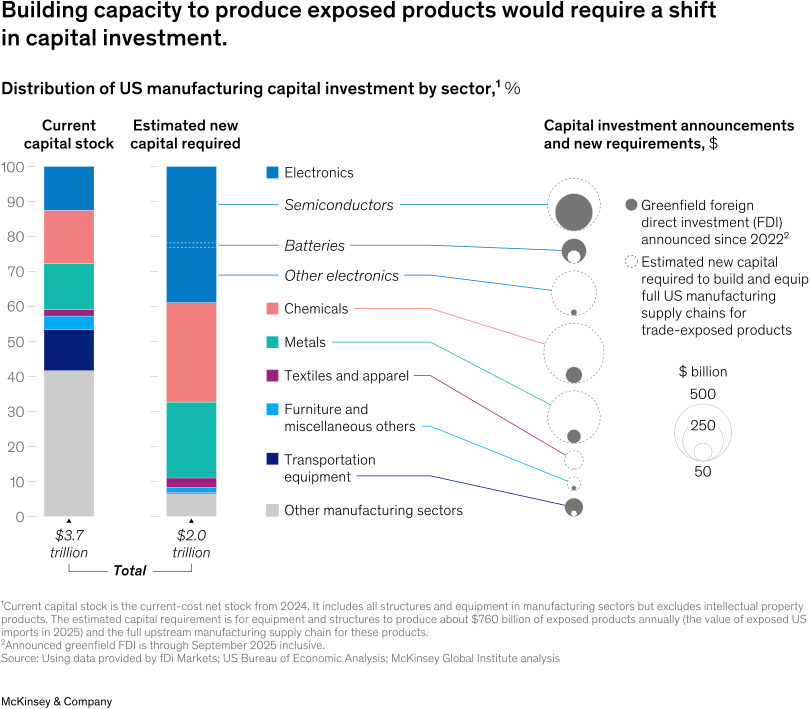
Is this the beginning of a boom in industrial ramp-up? Because new capacity takes time to create, one advance gauge to consider is the amount of new investment that has been announced. Recent MGI research found that the United States has recently been a magnet for greenfield FDI.38 Since 2022, this has tallied nearly $900 billion each year, of which over $500 billion has been directed at manufacturing activities.
Importantly, FDI announcements to date have not been evenly spread. For semiconductors, nearly 90 percent of global greenfield FDI announcements in 2025, through May of that year, were directed to the United States, up from about 40 percent between 2022 and 2024. Announcements of FDI into the United States, and globally, are increasingly taking the form of multinationals making big bets. Since 2022, deals exceeding $1 billion have constituted more than 70 percent of announced FDI value in US manufacturing, up from about 35 percent before the pandemic.39
Outside of FDI, overall investment has not seen a sustained boom. Investment numbers shown in corporate and government data reflect both new capacity and replacements of aging capital, meaning a dollar of investment is not necessarily an equivalent amount of new capacity. However, large tech firms associated with AI have been one clear source of higher investment. They grew capital expenditures and R&D spending nearly 20-fold between 2010 and 2024.40 And leading indicators suggest this AI-driven rise may continue.
In 2025, almost three-quarters, by value, of all announced greenfield FDI into US manufacturing was directed at the electronics sector, targeting semiconductors and similar hardware underpinning the AI build-out as well as batteries.41 Similarly, electronics accounted for nearly half of all construction value put in place for US manufacturing in 2025. US capacity in these fields may continue to grow.
In primary and fabricated metals, new capacity may also be coming on line. Announced greenfield FDI into primary metals more than doubled in 2025 relative to the 2022–24 average. Recent examples include Hyundai Steel’s $5.8 billion steel mill in Louisiana, Emirates Global Aluminum’s $4 billion smelter in Oklahoma (the first new US aluminum smelter in almost 50 years), and Korea Zinc’s $7.4 billion polymetallic smelter in Tennessee, focused on a range of strategic metals.42 US construction value put in place for fabricated metals was up 50 percent in 2025 versus 2024—the largest year-on-year increase of any reported manufacturing sector.43
In other large sectors like transportation equipment and food and beverage manufacturing, evidence for a coming ramp-up is more ambiguous. In each, announced FDI in the United States in 2025 was similar to the level in previous years. And construction value put in place for manufacturing facilities in both sectors was flat through 2025. Indeed, aggregate US manufacturing investment appeared to plateau in 2025—investment growth was sector specific rather than broad-based.44
Importantly, while FDI announcements signal an expansion in future production, these commitments take time to translate into new output potential. Taiwan Semiconductor Manufacturing Company’s Arizona semiconductor manufacturing campus, for example, was announced in mid-2020. High-volume production of chips started there more than four years later, in December 2024. The implication: Today’s announcements may not lead to new capacity until around the end of the decade.
Looking forward: Implications for business leaders
Ramping up is much more than a macro-level, “should you or shouldn’t you” proposition. It involves myriad individual decisions on capital spending, staffing, procurement, and supply chain management, to name just a few. It will ultimately be guided by a desired balance of direct business economics, resilience, and national security—for which not all industries and products are equal. And while this work has not focused on ownership structures, the ramp-up that does occur will in large part be orchestrated by the multinational firms that are the biggest manufacturers and have footprints across global supply chains.
Still, a ramping-up analysis provides context for thinking about these decisions. It is somewhat more straightforward where existing capacity can be ramped up depending on things like consumer tastes, potential demand, and staffing.
It is more complicated, and urgent, for the exposed Achilles’ heels of American production—those products whose imports have two or more of the dependencies we have outlined of criticality, concentration, and geopolitical distance. To eliminate dependencies across these products, domestic US production would need to double on average. And for half of them, it would need to at least quintuple. The industrial base would need to fundamentally transform and may require in the ballpark of $2 trillion in capital expenditures to build full value chains for the exposed products.
These figures are the first steps in understanding the scale of the challenge. Beyond this, feasibility assessments will need to consider whether a business case is present, weighing higher labor costs against potential efficiencies in transportation, and the role of robotics and automation. Relatedly, the scale of the labor force and skills needed should be considered against the pool of workers available or what workforce might be trained in a sufficient amount of time. Of course, matters of scale, prioritization, timing, and sequencing (in the case of ramping up full ecosystems) will also need to be considered.
With this in mind, we see five overarching implications for business leaders.
Employ an ‘all of the above’ approach to reducing trade exposures
While our focus has been on ramping up production, this is just one possible lever to mitigate trade exposure. As we described earlier, others include replacing or reducing the use of certain exposed goods, though these require new innovations, sacrifice, or both. Firms could also rearrange sourcing to reduce geopolitical distance or reallocate sourcing to more trading parters to reduce concentration. Like the other levers, these present their own challenges.
Realistically, strategies to reduce trade dependencies will need to involve all of them. For some products, such as natural graphite and manganese, the United States simply does not have the natural endowments. For others, such as some textiles and robotics, onshoring may still be a long way off with no immediately clear approach to make the economics work. But for others, such as AI chips, it could be worth the effort, as evidenced by an uptick in FDI inflows.
If and when businesses decide to ramp up, in ways big or small, they must consider a number of tactics (see sidebar “Seven practical steps for manufacturers in ramping up”).
Look through supply chains, all the way upstream
Production does not happen in a vacuum; it takes often intricate networks of intermediate goods and raw material suppliers. Simply ramping up the final stage of production will not help much in eliminating dependencies: Forty percent of the intermediate goods that go into the products that are ultimately imported to the United States, consisting predominantly of chips, are exposed. And then 30 percent of the upstream materials going into intermediate goods, mostly metals and chemicals, are exposed.
In sum, supply chains are not linear but rather multitiered, and risks compound as they move upstream. Yet many companies still lack visibility beyond their tier-one suppliers, limiting their ability to anticipate or mitigate disruptions effectively.45 Without that deeper transparency, efforts to localize or scale production risk becoming partial fixes that shift, rather than solve, underlying vulnerabilities.
Relatedly, ramping up means a greater quantity of capital goods to build the factories and intermediate goods that power production. But the United States doesn’t produce many of these things in large volumes. Therefore, particularly if it wants to get going fast, it would need to buy from others—just as it increased imports of AI goods by $180 billion in 2025 to power the data center boom.46
In a world of growing uncertainty, businesses need a more fundamental, continuous approach to supply chain design, grounded in end-to-end visibility and a clear understanding of multitier exposure. They should develop proactive strategies in tandem with their core suppliers to mitigate trade exposures, accounting for the pressures they are under given the countries at play. These strategies might include, but would not be limited to, co-investing in new production capabilities in strategic locations and aligning on contracts that price in resilience.
Ramp up skills for future technologies
Nostalgia for the days when manufacturing accounted for a quarter of the total workforce is understandable. In today’s labor force, that share would mean 40 million jobs (compared with the 13 million actual manufacturing employees). But the economic realities have changed; that world is not coming back.
In this report, we have shared estimates of about one million more jobs that might be associated with operating at full capacity, and potentially another million from ramping up domestic production for the $760 billion in exposed imports.
There aren’t that many workers waiting in the wings, however. Some skilled trades, including construction and engineering, have experienced chronic shortages.47 They also have aging workforces, and talent pipelines are not enough to fill those gaps.48
Workforce constraints often provide incentives to automate, upping the adoption rate of robotics and other forms of automation. But these aren’t silver bullets. It is unclear how much they will cost and how quickly robots could be deployed at scale. Upgrading and automating the US industrial base is no small task and will require companies and jobs focused on the design, integration, programming, installation, and maintenance of advanced robotics and automation systems. The factory jobs in this setting will also require higher skills, for example being capable of working closely with agents and robots, implying another type of ramp-up: in skills and training.49
Ultimately, companies need to be clear-eyed about the skills needed and must do their part to train workers and redesign roles for AI and robotics.
Navigate inflation and macroeconomic uncertainty
Building in resilience will cost money. In part, these higher costs reflect the expense of producing domestically some of the critical products whose global prices have been driven down by excess capacity, steel being one example.50
To what extent higher costs drive a sustained uptick in inflation is a matter of debate and depends on a range of factors, including firm behavior, consumer expectations, and long-run productivity growth. Productivity outcomes are especially uncertain. On the one hand, higher investment, especially in machinery and infrastructure, tends to foster productivity growth in the long term. On the other hand, if profitability takes too great a hit, or if the macro climate is deemed too uncertain, that could hinder investment and thus productivity.51
Future availability and prices of resources and goods also depend on demand signals today. Large procurers can make a difference through purchase and pricing commitments that help provide a business case for making large investments economically viable. In one notable example, the US government committed to a price floor for neodymium-praseodymium, a rare earth alloy crucial for permanent magnets, to accelerate the domestic development of the associated supply chain.52 Large firms could make similar commitments, effectively paying a resilience premium over potentially lower but less certain prices in global markets.
There is a political dimension as well: It is unlikely that American voters, having endured the postpandemic bout of inflation, will be content enduring another. If inflation is too high, this effort would likely stall.
Ultimately, firms should not overindex on general inflationary outcomes and should instead focus on the previously mentioned imperatives: developing multifaceted strategies for reducing trade dependencies; boosting resilience across supply chains; augmenting skills and capabilities for next-generation technologies; and making the numbers work for their own companies.
Everyone is in it together
Boosting supply chain resilience, whether through ramping up or other means, will require new levels of collaboration across entire ecosystems of production. Networks of suppliers, talent, and capital all must act in concert.
A central dimension is the relationship between business and government. Ramping up fundamentally requires a business case and will happen only if firms decide to do so. But the government can tip the scales through incentives, including programs such as the CHIPS Act and the public–private partnership on rare earths.53 The government typically has more capacity to fund projects that are especially long-term and uncertain in timelines.
Zooming out further, government will be an important player through the provision of infrastructure, particularly for energy, upon which any reindustrialization efforts will place major demands. New capital projects will require approval and permits, placing further onus on regulators to streamline processes.54 A less direct, but perhaps even more critical, connection between government and business is market interest rates. High public debt and deficits could weaken investor confidence and demand for Treasuries, which would push up market interest rates. That could crowd out at least some of the private investment needed to ramp up production.
Entrepreneurs, investors, and innovators see opportunities. Much like those in past gold rushes who grew rich selling picks and shovels rather than mining themselves, there is significant focus on the enabling technologies of advanced manufacturing—modern picks and shovels. Tesla is in the process of transforming itself from an electric vehicle company to a robotics company with eyes on transforming the factory floor. Jeff Bezos is raising up to $100 billion for a “manufacturing transformation vehicle” fund to rapidly automate manufacturing companies. Larry Page launched Dynatomics to generate highly optimized product designs for automated processes. On the energy side, major technology companies are placing enormous bets to supply the reliable power and data these systems will demand. Microsoft is involved in a deal to restart a reactor at Three Mile Island,55 while hyperscalers Amazon, Meta, and Google are all pursuing small modular reactors. In the fission energy space, venture capital is flowing from research and design efforts toward infrastructure, deployment, and first-of-a-kind applications.
Ramping up would be an all-encompassing, national effort. It would significantly reshape the US industrial base and usher in a new era for the economy. Whether that transition is smooth, is turbulent, or does not happen at all depends on stakeholder collaboration.
Related Articles

Geopolitics and the geometry of global trade: 2026 update

At 250, sustaining America’s competitive edge
