
While many executives were shaken by geopolitical and trade challenges in 2025,1 we bet that the world’s top M&A dealmakers would once again absorb the shocks and forge ahead with their usual focus and discipline.
Indeed, as abrupt shifts in trade policies settled into a pattern of less threatening change, relief turned into confidence and then a fear of missing out. Economic effects were lighter than anticipated, balance sheets remained strong, monetary policies lowered the cost of capital, and the buzz around AI contributed to growing optimism.
Against that backdrop, and with strategic requirements continuing to loom large, global M&A dealmaking took off. In the third and fourth quarters of 2025, transactions soared, and deal value finished the year up 43 percent to $4.7 trillion, from $3.3 trillion a year earlier—20 percent higher than the ten-year average of $3.9 trillion. Volume stayed flat, and large transactions ($10 billion and greater) took center stage (Exhibit 1).
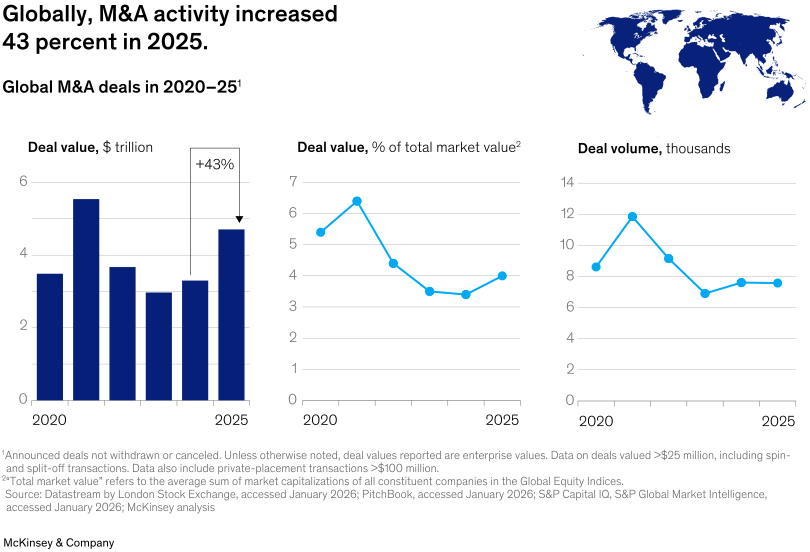
In one of the clearest signs of momentum, global M&A activity landed at 4.2 percent of total market value2 for all of 2025, up from 3.3 percent a year earlier and 3.5 percent in 2023. While still shy of the ten-year average of 5.3 percent, the improvement is significant and suggests room for growth if historical patterns hold.
Major trends should continue in 2026
Powerful trends should support global M&A momentum in the year ahead: dealmaking as a response to change, the search for new sources of growth, sustained interest in large deals, and a continued drive to streamline portfolios in uncertain marketplaces. Meanwhile, private equity (PE) firms’ mountains of dry powder and lengthy hold times will continue to strain the patience of limited partners (LPs).
Dealmaking is increasingly essential in adapting to rapid change
Repeated rounds of external shocks have made executives increasingly aware that they must invest not only in core capabilities and growth but also in transactions that could help control costs, protect margins, and mitigate risks.
Although confidence in the macroeconomic environment and companies’ prospects have improved somewhat, only a third of the executives we surveyed in 2025 said they were confident in their organizations’ ability to manage external challenges such as trade policy changes, major global crises, macroeconomic shocks, and other ambiguous, large-scale forces.3

Strategy and value in turbulent times: The four foundations that drive long-term performance
November 12, 2026, 8:30 a.m. ET / 2:30 p.m. CET Join McKinsey experts Andy West and Whitney Zimmerman for a discussion on what it takes to create and sustain value in an increasingly turbulent environment. They’ll explore four timeless foundations of strategy and how leaders can apply them to today’s hardest decisions.
No surprise, then, that many executives are looking for ways to bolster core competitiveness while also pursuing technological innovation and opportunities to mitigate—or sometimes invert—risk, especially where organic growth is slow or uncertain. These trends are likely to continue in 2026.
Pursuing new sources of growth
While investments in AI and gen AI are accelerating, tech-oriented businesses are increasingly accounting for a larger portion of deal value.4 McKinsey research reveals that 18 fast-growing and highly dynamic industries—so-called arenas that combine business model or technological step changes, escalatory investments, and large or growing addressable markets—could reshape the global economy by 2040, growing to 16 percent of GDP, up from about 4 percent in 2022.
Many dealmakers are pivoting toward a dozen of these fast-growing arena industries,5 which now account for 40 percent of deal value, up from 7 percent 20 years ago. They have an average ratio of enterprise value to EBITDA: 27.1-fold, versus 16.5-fold for established companies (Exhibit 2).
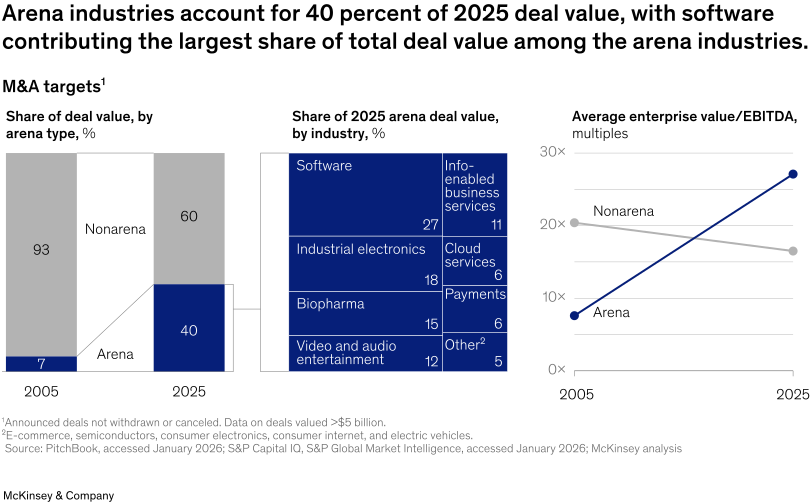
The arena industries, which are rooted mostly in the digital economy but include a few other advancing industries (such as breakthrough weight-loss treatments), are attracting more acquirers across the business landscape.
In 2025, corporate acquirers in established industries accounted for 33 percent of deal value involving arena targets, up from 24 percent five years ago; financial sponsors increased their investment in arena targets to 24 percent from 18 percent over the same period.
We expect these trends to continue, given outsize growth and profitability in the arenas.
Large deals take center stage
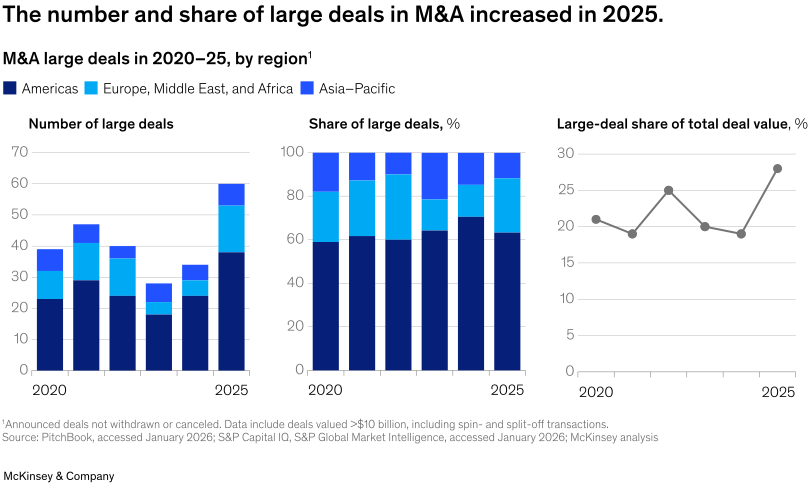
One of the most striking patterns in 2025 was the expansive presence of large deals. The number of deals clearing the $10 billion mark swelled to 60—the most since the M&A peak in 2021 after the COVID-19 pandemic.
The value of large trades more than doubled in 2025 from a year earlier, rising 112 percent to $1.3 trillion—and accounting for 28 percent of deal value, up from 19 percent. Meanwhile, midsize deals (value of $1 billion to $10 billion), which accounted for 45 percent of deal value, also grew a robust 47 percent.
In this most recent period, we also saw ten deals exceeding $30 billion, compared with four in 2024, as well as one of the largest transactions ever recorded: Union Pacific’s agreement to buy Norfolk Southern for $89.5 billion to create the first transcontinental railroad in the United States.
Geographically speaking, about 70 percent of large deals featured targets based in the Americas, compared to about 20 percent in Europe, the Middle East, and Africa (EMEA) and about 10 percent in Asia–Pacific (Exhibit 3). Among sectors, technology, media, and telecommunications (TMT) accounted for ten of the world’s 20 largest deals, which included streaming television, social media, cybersecurity, and AI (including data centers, telecom, and satellites).
Several factors are propelling deal sizes, including higher tech valuations, larger consolidation deals, and the demands of entering new geographies at scale. Many senior leaders, even at large enterprises, feel compelled to pursue consolidation to shore up competitive positions and find cost savings in low-growth marketplaces. Indeed, we found that more than half of deals worth more than $4 billion in 2025 could be categorized as consolidations.
Many firms are also making acquisitions to enter new geographies. In a recent McKinsey Global Survey of executives, moves into new territories accounted for 23 percent of deals, up five percentage points from a year earlier. Other acquirers looked for new platforms or adjacencies, sometimes with a view more expansive than in previous years.
Despite the challenges inherent in managing large integrations, ambitious M&A programs are likely to continue. Leading companies6 have increased their participation in transactions valued at more than $5 billion by eight percentage points: to 25 percent, from 17 percent in 2020.
We expect more big deals in 2026, with continued consolidation and geographic expansion. Some AI players may pull back on major deals this year as they deploy billions of dollars of capital in infrastructure, but the service side of tech could still fuel big-deal fever.
Strategic streamlining transforms portfolios
In an uncertain world, many companies are pursuing more dynamic, and more frequent, portfolio reviews. In 2025, the value of divestitures—spin-offs, split-offs, carve-outs, and sales of assets or stakes—grew 30 percent to $1.6 trillion, the highest level since 2021.
The Americas—where dealmakers continue to make many of their boldest moves—were the biggest center of corporate divestiture activity, accounting for $901 billion (or nearly 58 percent) of separations activity, reflecting portfolio reshaping and separations linked to the region’s supercharged acquisition activity. Corporate divestitures fell 12 percent in Asia–Pacific, though some national governments did more to encourage companies to shed less competitive businesses. In Japan, for example, the number of divestments increased by 32 percent. Meanwhile, EMEA’s corporate divestiture activity remained steady at about $300 billion.
As if shifting geopolitical, trade, and competitive challenges weren’t vexing enough, activist investors got louder and more diverse.7 Campaigns reached a five-year high globally in 2025, up 15 percent from 2024. Activists in the United States led with just over half of the campaigns, followed by Asia–Pacific with about 25 percent.8 About a third of those campaigns were related to M&A, and many activists got the attention of CEOs and boards, winning a record number of board seats in the United States—and faster settlements, as companies sought to avoid prolonged public battles.9
But while over a third of activist campaigns pushed for some form of divestiture, only 23 percent led to spin-offs or restructuring, according to McKinsey research. And 6 percent ended in compromise, with companies acceding to only some of activists’ demands.
We have little reason to believe these efforts will slow down, since crosscurrents and undertows are likely to continue in global marketplaces. Moreover, when done well, divestitures can create substantial value for sellers and acquirers alike. (For more on this topic, see the book excerpt, “The cost of (un)doing business,” by Anna Mattsson, Jamie Koenig, and Tim Koller.)
Private equity gets its mojo back
Continuing a robust rebound, deals led by PE firms in 2025 increased 54 percent in value to $1.2 trillion, from $783 billion a year earlier, outpacing even the healthy 43 percent growth of the M&A market globally. Moreover, PE trades swelled to an average of $890 million, paving the way for another record, as sponsors pursued the efficiency of investing in a few large deals rather than multiple smaller ones. Total deal volume, on the other hand, declined by 1 percent.
Several factors may fuel PE deal activity in the year ahead, including a brighter macroeconomic outlook, increased activity in private credit, and pent-up demand for exits, which have lagged behind historical levels in recent years. Indeed, average hold times increased to 6.2 years in 2025, up from 2009’s average of 4.0 years.10
Sponsors have been waiting for valuations to rise before selling, but investors’ demand for returns and liquidity is reaching a boiling point. Now, PE firms are showing signs of relenting, encouraged by investors’ improved appetite for risk and the market’s acclimatization to trade realignment and lower interest rates.
Not to be overlooked, of course, is the pile of $2.2 trillion in dry powder that accumulated while sponsors delayed exits. As exits begin to pick up pace, fundraising may soon follow, after a long lull. Without exits, investors have less cash to reinvest in new funds, so fundraising has dropped steadily since 2022. It continued to decline by more than 34 percent over the four quarters ending in the second quarter of 2025—to $440 billion, from $671 billion.11
Meantime, some general partners (GPs) have turned to secondary markets, particularly continuation vehicles, to meet liquidity needs. These vehicles allow GPs to move an investment out of an existing fund to a new fund the GP still controls, in turn allowing LPs to cash out or roll over their investments into the new vehicle. As these and other alternative instruments gained popularity, the global secondaries market saw record volumes: The $162 billion value in 2024 was surpassed in the third quarter of 2025.12
There is reason for measured optimism in the PE outlook. Sponsors can continue to focus on sectors less susceptible to changes in trade policy, such as software, domestic services, financial services, and digital infrastructure.13 AI and gen AI will likely continue to fuel much of the investment to come, as excitement about AI’s promise hasn’t yet waned and may even be intensifying.14
Understanding shifts in trading patterns
As deal value soared and continued its recovery relative to market cap in 2025, top sectors shifted positions, new trading patterns emerged, and regions experienced different dynamics, although most enjoyed double-digit gains.
Sectors shift positions
As global M&A value hit a four-year high in 2025, three industry sectors continued to account for well over half of deal value: TMT, global energy and materials (GEM), and financial services (Exhibit 4).
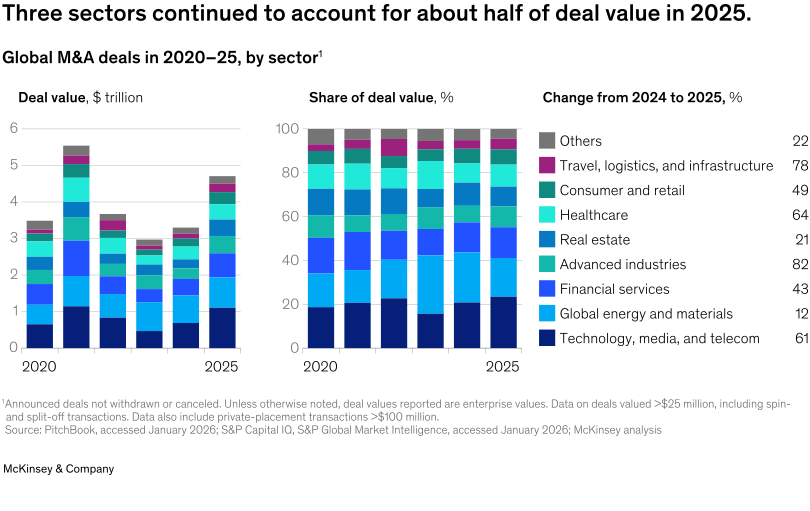
TMT further increased its contribution to 23 percent of global value, growing by 61 percent to $1.1 trillion to regain its top spot from GEM.
We attribute TMT’s larger share mainly to the fact that technology—and the hard-to-find talent that can be part of a tech acquisition—are now enablers of competitive advantage and profitable growth in nearly every major industry.15 In 2025, many PE investors saw high-quality TMT targets as more appealing than ever for their ability to boost productivity while mitigating risks such as regulatory and trade disruptions.16 Companies that offer digital services, software, or video content, for example, are insulated from cross-border friction because their products aren’t tied to physical goods or hardware.
Not so in GEM. While the value of transactions in the sector grew 12 percent to $832 billion, its share of global deal value fell to 18 percent, from 23 percent a year earlier, as energy and materials companies were challenged by trade disruptions (which both raised the costs of materials and services and delayed projects), slower-than-expected energy transition projects, and geopolitical risks.17
Financial institutions’ M&A activity climbed by 43 percent to $660 billion, up from $454 billion in 2024, per McKinsey analysis. This kept the sector’s ranking in global deal value at 14 percent of the total, in line with recent years. The most important themes in 2025 included sharp increases in average deal value and in-market consolidation, especially in Europe. Half of the largest banks in the Middle East have participated in M&A in the past five years, with a focus on Islamic banking. The fragmented US market, with more than 4,000 banking institutions, also presented many opportunities for consolidation, particularly as midsize institutions sought to scale up.
In-region and cross-border shifts
As trade tensions flared, receded, and flared again, within-region trading accounted for 81 percent of the 2025 value of corporate transactions globally, down slightly from 85 percent the prior year. Corporate trading jumped 37 percent within the Americas, and it delivered a more muted gain of 13 percent in Asia–Pacific and 11 percent in EMEA.
Even with the geopolitical tensions (or perhaps because of them), cross-regional trading also rose, contributing 19 percent to global deal value, up from 15 percent a year earlier.
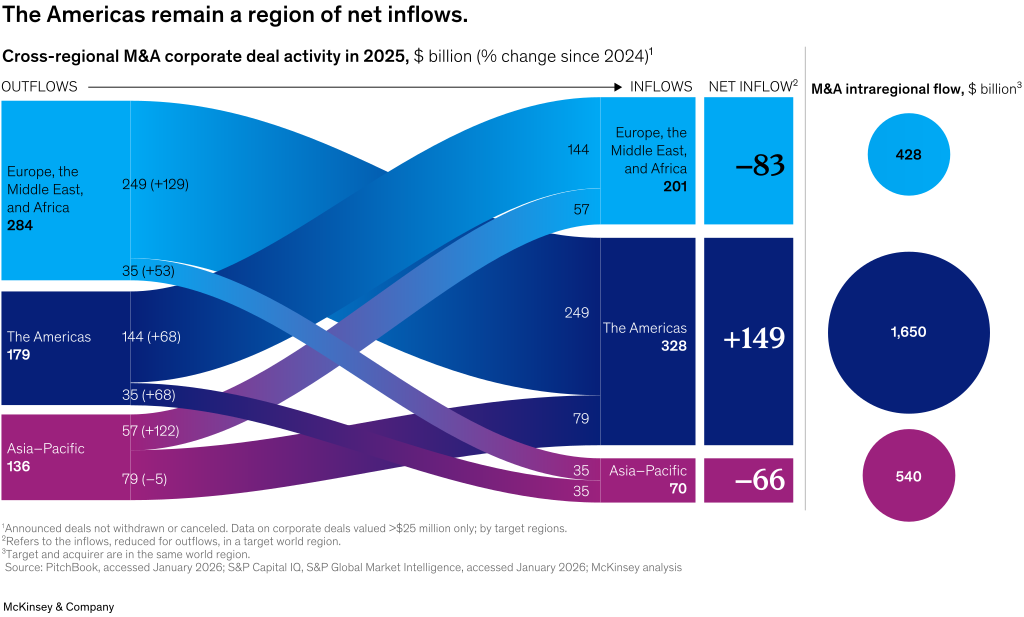
Targets in the Americas attracted the most interest, accounting for 16 of the world’s 20 largest deals, and all but one of the ten behemoth deals that exceeded $30 billion. Swayed by rounds of US-led tariffs and the region’s solid economy, softer regulations, large addressable market, and embrace of business innovation, net inflows from corporate transactions to the Americas rose 70 percent to $149 billion. This was led by acquirers from EMEA, whose investments since 2024 more than doubled to $249 billion.
Meanwhile, cross-regional inflows in the rest of the world also showed healthy increases. Inflows to Asia–Pacific soared 71 percent to $71 billion, as investors from EMEA and the Americas looked for assets there, and rose 80 percent in EMEA, led mostly by acquirers from the Americas. In contrast to the Americas, however, both EMEA and Asia–Pacific continue to be regions with a net outflow: negative $83 billion and negative $66 billion, respectively (Exhibit 5).
The Americas
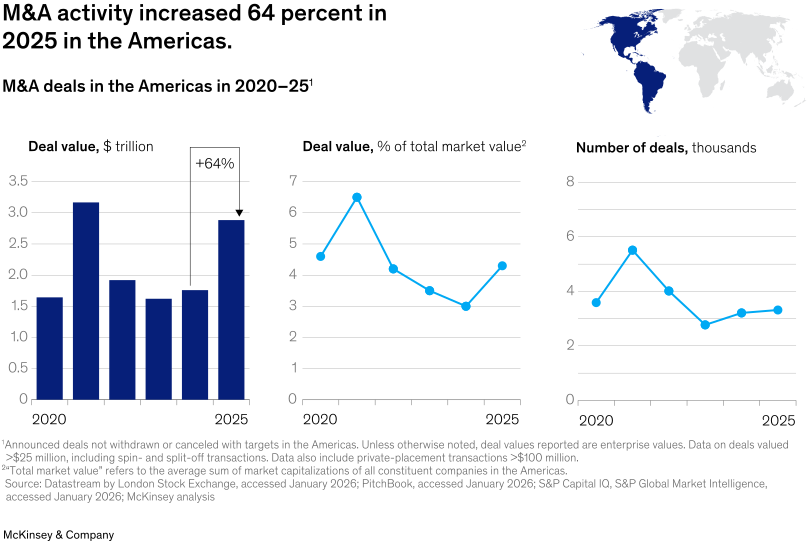
In the Americas, which contributes more than half of global M&A market value, activity jumped 64 percent to $2.9 trillion in 2025, overshooting the ten-year average of $1.9 trillion by 50 percent (Exhibit 6). Despite uncertainties and headwinds, dealmaking was buoyed by a solid US economy with falling interest rates, rising stock indexes, strong corporate profits, and extended tax cuts.
The US Federal Deposit Insurance Corporation approved a proposal in March to reduce the scrutiny of mergers that would create banks with more than $50 billion in assets.18 In July, the Federal Reserve proposed to make it easier for banks to maintain a status of well managed and thus pursue M&A: They would lose this status only with multiple deficient-1 ratings or a deficient-2 rating in one category rather than being penalized for a single deficient-1 rating.19
As of late November, the Department of Justice and Federal Trade Commission had sued to block three mergers in 2025, down from an average of six deals annually in recent years.20
Various US states could increasingly try to close perceived gaps in oversight. Colorado, for example, in August followed Washington State in requiring premerger notifications.21 California and the District of Columbia are considering similar moves. In November, nine Republican state attorneys general asked the Surface Transportation Board, which oversees railroads, to scrutinize Union Pacific’s proposed acquisition of Norfolk Southern Railway, saying the deal could result in “higher prices, less reliability, and less innovation at the expense of America’s producers and consumers.”22
Despite these and other challenges, analysts estimate profits have grown for nine straight quarters, while a roaring US stock market achieved a six-month run-up (April to September) that was unmatched in the past 20 years, except for the periods immediately following the 2007–09 global financial crisis and the COVID-19 pandemic.23 The S&P 500 index closed the year up more than 16 percent, the third consecutive year of double-digit growth.24
Most of the world’s largest deals in 2025 (42 of 60) involved targets in the Americas, with nine exceeding $30 billion. Both corporations and financial investors thrived, with corporate-led deal value increasing 58 percent to $2.1 trillion.
Meantime, the value of PE deals jumped 84 percent to $746 billion as the average PE deal swelled to $1.2 billion, up 89 percent from 2024. Facing high capital deployment targets and LPs weary of long hold times, PE players divested premium assets at high multiples, but some sold assets under duress, with continuation vehicles now accounting for a significant share of sponsor exits.
A boost to PE activity could come from US legislation that would allow 401(k) accounts access to alternative assets such as PE. Such a move would present a substantial new source of capital from US retail investors, which now hold $9 trillion in 401(k)s.25 If enacted, this rule change could ignite PE activity like never before—especially in combination with large PE firms’ push to open the PE market to individual investors, which could double the size of the PE market to $12 trillion within six years.26
Despite some year-end upticks in GDP growth forecasts,27 the US bonanza is showing signs of strain. The dollar experienced a sharp decline in the first half of 2025, government deficits have widened, the labor market is softening, and consumer sentiment has fallen to its lowest level since the University of Michigan began tracking it in 1960.28
And while capital expenditure spending is increasing among the S&P 500, many companies, especially in sectors most exposed to tariffs, anticipate cutting their capital expenditures next year.29 Factors that help offset these strains include likely continued easing of monetary policy from the Federal Reserve and a surge in government spending, which is expected to take root starting in 2026.30
And then there is AI, which has stretched valuations so far that many portfolios are now dominated by a handful of tech stocks. With large tech firms expected to spend nearly $400 billion on infrastructure this year, AI spending ranks as one of the biggest investment booms in modern history—by one estimate, contributing 40 percent of US GDP growth in the past year. The emergence of any kind of “AI winter” would be sure to inflict some pain.31
Asia–Pacific
In the face of abrupt macroeconomic and geopolitical shifts, leading companies and investors in the Asia–Pacific region have reimagined strategies and footprints to find new growth, gain capabilities, build resilience, and mitigate risk in a far more multipolar world.
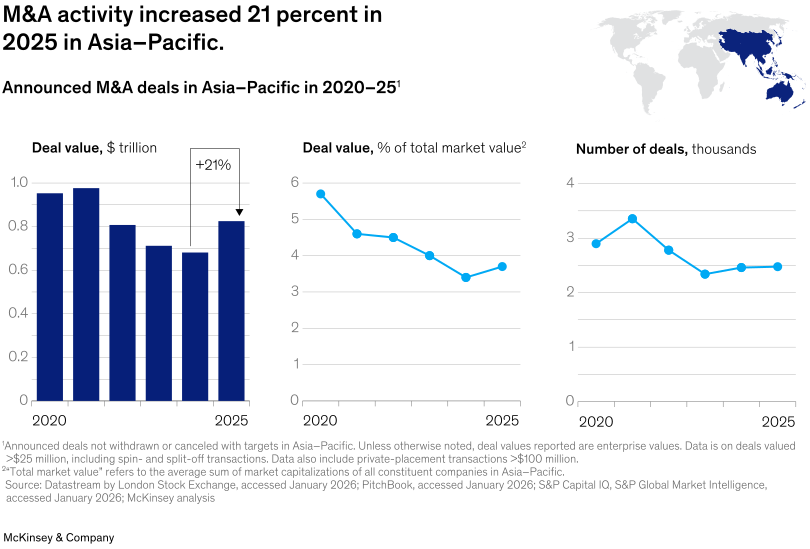
M&A played a major role in these efforts, with activity climbing back from lows in 2023 and 2024. Deal value rose to $825 billion in 2025, up 21 percent from $681 billion a year earlier. While activity rebounded after three years of decline, total value still lags behind the ten-year average of $1 trillion (Exhibit 7).
Companies and investors around the world responded to growing trade tensions by making far more cross-regional deals. Corporate acquirers in the Americas and EMEA invested about $71 billion in Asia–Pacific in 2025, up from $41 billion the prior year. But acquirers from Asia–Pacific invested far more in the Americas and EMEA—a total of $136 billion—resulting in more corporate capital flowing out of Asia–Pacific than into it.
In-region dealmaking also picked up as corporates in Asia–Pacific consolidated domestically to gain scale advantages and build supply chains closer to home in response to trade tensions. Activity topped $540 billion, up 15 percent from $470 billion in 2024.
The top three sectors in terms of deal value remained unchanged from 2024. Advanced-industry transactions took the top spot in Asia–Pacific dealmaking, rising to 20 percent of total value in 2025, up from 16 percent in 2024 and far above the global average of 10 percent. The region’s manufacturers increasingly depend on AI, automation, and robotics and are localizing supply chains for critical inputs such as semiconductors and electric-vehicle batteries. GEM ranked second in the region in deal value during the period, at 18 percent, with total deal value contracting 3 percent. Financial services remained in third place, with 16 percent of deal value.
Most dealmaking was corporate. The value of PE deals jumped 31 percent year over year to $128 billion, and their contribution to total Asia–Pacific deal value rose to 16 percent. However, that number remains far below the shares of 33 percent in EMEA and 26 percent in the Americas. The lower share of value in Asia–Pacific is due in part to a continued PE focus on midmarket deals and corporate carve-outs: Transactions are smaller, but integrations are often simpler, and ROE can be larger.
Big transactions made headlines as 13 of the 20 largest corporate deals in Asia–Pacific were performed by acquirers in Greater China and Japan, for a total of 21 percent of corporate deal value in the region. Deals worth $1 billion or more accounted for 51 percent of total value, up from just 45 percent in 2024, reflecting a range of trends, including lower inflation, more stable interest rates, and more government support for M&A.32
Japan, for example, has made reforms to protect shareholder interests, increase transparency in dealmaking, and encourage companies to improve price-to-book ratios. The country’s dealmaking hit historic levels, rising 61 percent to $151 billion (from $93 billion a year earlier), including a domestic take-private deal worth $39 billion, including debt. Many Japanese firms looked abroad for growth opportunities as domestic demand remained low—GPD growth has remained well below 1 percent for nine straight quarters.33
Based in part on Japanese reforms, Korea’s Financial Services Commission launched its Corporate Value-Up Program to help companies raise valuations to more closely approach those of global peers and attract more investment. Elements of the effort include indexing firms based on shareholder value, encouraging them to disclose strategy, and offering tax benefits for those that improve corporate governance and shareholder value.34
In China, government policies now include streamlined deal approvals, support for consolidation to drive scale and efficiency, and strategic incentives, especially for “emerging and future industries,” such as quantum technology and biomanufacturing.35 Since 2022, foreign direct investment has plummeted in China because of rising compliance risks, labor costs, and tariff uncertainties.36 The changes have been profound: The nation has transformed from being the largest investee to the largest investor in automotive manufacturing and electronics, now accounting for about 25 percent of total outbound investments in both industries.37
While China is still burdened by a real estate crisis and weak consumer spending, it set export records in 2025, finding new customers abroad, which more than made up for a roughly $40 billion decline in exports to the United States and other countries.38 We expect Chinese manufacturers with stronger balance sheets to accelerate their dealmaking overseas. Meantime, Thailand, Singapore, and other Asia–Pacific countries are taking up some of the slack, increasing their exports to the United States by double digits in 2025, which may attract investors at home and abroad.
In India, the value of transactions rose 16 percent in 2025 to $99 billion, from $85 billion in 2024. While about 85 percent of value in 2024 was still domestic, Indian firms are increasingly looking overseas to gain market access and diversify supply chains.
Total deal value fell in Australia, Southeast Asia, and South Korea, owing to national and global political uncertainties that made investors more cautious; a new merger control regime in Australia that may increase dealmaking costs, risks, and delays; and persistent inflation and relatively high interest rates in Southeast Asia.39
We’re cautiously optimistic about dealmaking in Asia−Pacific in 2026 and beyond, given the direction of tariff negotiations, generally lower inflation and interest rates in Asia, expanding access to capital, and government support for corporate transparency, consistent governance, and shareholder value.
Investors still find relative bargains in some regions and industry sectors in Asia–Pacific, although valuation gaps are narrowing, thanks in part to digital transformation.40 In the United States, average P/Es are well over 25.0 at the time of this writing but only about 18.0 in Japan and China’s SSE Composite, 17.2 in Singapore, 17.1 in South Korea, and just 10.2 in the Philippines. India and Australia, in contrast, have P/Es over 20.41
We expect Asia–Pacific countries to invest more in industries that are likely to drive outsize shares of economic growth in the years ahead, including semiconductors, AI infrastructure (such as data centers), electric vehicles, battery manufacturing and renewable energy, and critical minerals. (For more on this topic, see “The next big arenas of competition” from the McKinsey Global Institute.)
Geopolitics will continue to loom large. Public and private sector leaders alike will need to keep working closely with China, the region’s largest economy, and the United States, which remains a vital trading partner for many countries in Asia–Pacific.
Europe, the Middle East, and Africa
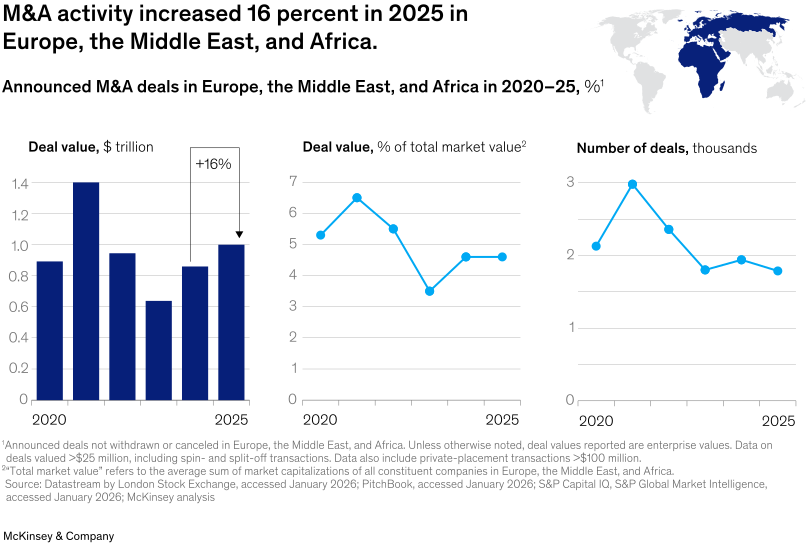
Dealmaking value in EMEA began to recover in 2025 from the lows of the previous three years. Total value in the region rose 16 percent to $998 billion, from $858 billion a year earlier (Exhibit 8).
Dealmaking varied widely by region in EMEA. The total value of deals in the Middle East and Africa grew much faster than in Europe, for example, but from a small base and because of two megadeals, including an acquisition of more than $50 billion of a US-based video game company by a consortium led by a Middle Eastern sovereign wealth fund.
In Europe, the picture was mixed. While deal value grew 12 percent, the total market value of public companies in Europe remained steady at 4.6 percent, below the ten-year average of 5.4 percent. And while growth was driven mainly by acquisitions worth $1 billion or more, the number of transactions declined by 8 percent.
After a slow start in the first half of 2025, dealmaking picked up in the third quarter as the European Union eased monetary policy, interest rates declined from postpandemic peaks in 2024, inflation remained at or below 2.5 percent for the first time since 2020,42 and countries across Europe continued large-scale, multilayered investment stimuli to support digitalization, infrastructure, R&D, resilience, and the green transition.43 As investors and corporate leaders at the largest enterprises became accustomed to uncertainty, more of them turned to M&A as a strategic instrument to drive value in a low-growth environment, a trend likely to continue.
Companies across sectors in EMEA sought growth abroad, with cross-regional deal value increasing faster than in-region value. Corporate acquirers in EMEA invested $249 billion in the Americas, for example, more than doubling their investments in 2023 and 2024. Dealmakers in EMEA also directed $35 billion to fast-growing markets in the Asia–Pacific region, a more than 50 percent increase. Many European dealmakers look abroad because the European Union is a relatively fragmented marketplace with meaningful differences in consumer preferences, legislation, and regulatory scrutiny that make business cases more challenging.
That said, capital flows into EMEA rose in 2025. Corporate acquirers in the Americas, for example, made deals in EMEA worth $144 billion in 2025, up 68 percent from the same period in 2024. Dealmakers in Asia–Pacific also stepped up, more than doubling their investments in EMEA to $57 billion. Acquirers abroad mainly eyed EMEA-based targets in AI, business automation, data analytics, electronics, and other high-tech fields, confirming the value of innovation in Europe, even if the region’s relatively fragmented marketplaces pose scale-up challenges.
Consolidation drove the majority of strategic deals worth more than $2 billion among enterprises based in EMEA, as large companies sought to create value in a low-growth environment. About 40 percent were made in financial services, a sign that the long-awaited consolidation in the industry is now underway, also supported by more stable and slightly more advantageous regulations and capital requirements, especially in banking. The remaining 60 percent of strategic deals were scattered across industries from media to transportation.
In an effort to become more resilient and competitive, companies in EMEA are increasingly engaging in portfolio optimization through divestitures and separations, especially in capital-intensive industries where companies need to adapt to structural changes in their sectors or make large-scale investments to optimize operations, boost productivity, conduct R&D, improve customer experience, or localize and diversify supply chains. Spin-offs, well-established value creation levers favored by boards in the United States, are becoming more important in EMEA.
The value of separations—spin-offs, split-offs, carve-outs, and sales of assets or stakes by parent companies—remained steady at about $300 billion, but the number of transactions that closed exceeded the five-year average as firms across sectors continued to prune portfolios to become more competitive and resilient.
In 2025, separations in EMEA were concentrated in chemicals, steel, automotives, and other cyclical manufacturing sectors facing sustained margin and demand pressure and in situations linked to broader M&A transactions. European industrial groups continued to simplify portfolios to unlock value and improve strategic focus—for example, by creating a steady pipeline of carve-outs in which PE pursued “fix and grow” stand-alone theses. Telcos and utilities remained active sellers, monetizing infrastructure and noncore assets to fund fiber, 5G, and grid investments. In energy and resources, separations aligned with the transition agenda: Some companies divested conventional assets while ring-fencing or scaling renewables platforms to attract specialized capital.
Despite the appeal of divestitures, Europe’s public-offering market remains subdued, with a narrow but functional IPO window.44 The highly selective public offerings were concentrated in sectors with resilient demand and clearer earnings trajectories: healthcare, industrial technology, and consumer and retail businesses. Larger IPOs remain rare, as many issuers wait for more stable market conditions. In contrast, spin-offs continue to offer more robust paths to market, as their execution depends more on corporate strategy than IPO window sentiment.
Financial investors are back in action, with the value of PE deals growing for the second year in a row, rising 18 percent to $331 billion and representing 33 percent of total deal value. While in line with historical levels, PE continues to account for a larger share of deals in EMEA than in the United States, with well-established PE markets in several geographies.
With significant dry powder, an opening of IPO markets, and structural bets on infrastructure, resilience, and European competitiveness, we expect a continued healthy PE market in the coming year.
Acquisitions by sector mostly reflected global trends. Deals in TMT led with 20 percent of total value in 2025, as the value of TMT transactions rose 9 percent to $202 billion.
Six of the 20 largest deals in the region were in financial services, ranking the sector second with 17 percent of deal value, up from 10 percent in 2024, as consolidations picked up speed. Banks, insurers, and financial advisers sought to improve economies of scale, acquire product and distribution capabilities to enhance their client offering, and better cover the costs of regulatory compliance and digital transformations.
Deal value dropped by 32 percent in GEM, as acquirers took a cautious approach to large-scale transactions, driven by geopolitical uncertainty, regulatory concerns, supply chain disruptions, and tariffs. The sector slipped to third place in deal value in EMEA with transactions worth $137 billion, or 14 percent of total value, down from 24 percent in 2024.
In life sciences, dealmakers took advantage of harmonized approval processes to acquire capabilities in diagnostics, new therapies, and digital health; PE firms found targets in the most profitable healthcare niches.45 Dealmaking in life sciences increased by 24 percent in EMEA, reaching about $65 billion in 2025 versus $52 billion in 2024. Of those deals, 15 were worth more than $1 billion each, including seven related to biomedicine and genetics.
We expect dealmaking momentum in EMEA to extend into 2026 and beyond. Like other regions, it’s becoming more insular as trade barriers rise and geopolitical struggles intensify, but we expect more cross-border deals as companies shift long-term strategies to find growth and weather economic and geopolitical shocks.
PE investors are eager to put money to work, and consolidations should continue as enterprises join forces, including in defense and aerospace—and their underlying technologies—to lower costs, accelerate innovation, and improve procurement efficiency.46 We expect them to be particularly interested in rolling up midsize companies in Europe to achieve scale and excellence in manufacturing.
Indeed, we believe M&A could be crucial in helping European companies innovate, scale up across fragmented markets, and become more competitive in fast-moving global marketplaces. Strategic dealmaking could help them gain ground by investing more in high-value products and technologies, especially with better collaboration among policymakers and industry stakeholders.
The European Union still presents challenges to acquirers, such as heterogeneous national regulations and tax regimes, but streamlining is underway in industries from manufacturing and clean tech to finance.47 Meanwhile, the region’s 450 million consumers and tens of millions of companies generate about 17 percent of global GDP, according to a 2024 EU report, and surveys show that their confidence is rising steadily, unlike in the United States.48
Dealmaking in the Middle East should continue to increase as investors abroad seek energy security—and the region’s sovereign wealth funds continue to acquire diverse sources of economic growth abroad and make major investments in the energy transition, as well as infrastructure, technology, and financial services. Favorable macroconditions, including supportive fiscal and regulatory reforms, enhanced investor confidence, and continued economic growth across the United Arab Emirates, Saudi Arabia, and the broader Gulf Cooperation Council nations, further suggest that the region will continue to attract global dealmakers and sustain elevated M&A activity in 2026.
Looking ahead
Anticipating the market in 2026, executives will need to continue to manage through waves of geopolitical uncertainty—a top concern, given its potential impact on growth. The practices below could help dealmakers navigate.
Design robust M&A blueprints to enable bold thinking and faster pivots
When a significant geopolitical shift occurs, acquirers can change course more efficiently and quickly with detailed M&A blueprints in place. “Five steps to strengthen M&A capabilities, no matter the starting point” describes how to build a blueprint that incorporates the markets to be targeted, potential constraints, a road map (including how and where to start), and derisking measures.
Continue to conduct clear-eyed portfolio reviews
For strategic separations, companies can stay flexible by preparing for two different tracks: a public listing, typically via an IPO or spin-off, and a trade or sale to a strategic or financial buyer. While not easy, this approach allows a company to adapt to changing market conditions and provides more time to assess buyers’ interest and attract better offers. Making the right choice between the two tracks requires considering the advantages and risks of each. Key considerations include valuation potential, execution risk, timing, and strategic alignment. (For more on this topic, see “Two can be better than one: Pros and cons in a dual-track separation” and “The power of goodbye: How carve-outs can unleash value.”)
Establish a compelling deal rationale with a full range of synergies
In periods of high uncertainty, investors often demand clearer, stronger deal rationales that meet high-synergy requirements. Strategic deals should be based on more than quick-win cost synergies; revenue and capital synergy targets must be part of every deal as well. Capital synergies improve the allocation and utilization of capital, while revenue synergies enable opportunities for cross-selling and accelerated growth. In many investors’ views, a deal based on a range of synergies has better prospects for long-term growth and value creation, as discussed in “How strategic buyers can outperform financial investors by building a ‘synergy muscle.’”
Maximize use of AI tools—strategically
Just three years after ChatGPT was released, AI and gen AI are transforming M&A. Deal cycles have become 10 to 30 percent faster, and M&A activities are 20 percent cheaper. AI can help dealmakers uncover and capitalize on opportunities in geopolitical realignment, supply chain shifts, regulatory changes, and much more.
The many use cases for gen AI keep evolving and growing stronger. Target identification will advance from a one-off process to an end-to-end, proactive, opportunity-sourcing approach. Diligence and negotiation will become more sector specific and more closely tied to other stages of M&A, with diligence starting during the target acquisition stage and its insights becoming automated inputs into the integration plan. In integration planning and execution, agentic AI will take over more than 50 percent of tasks.
As the authors of “Gen AI in M&A: From theory to practice to high performances” explain, dealmakers need to examine the many tools available and determine which best suits the specific goals, characteristics, and needs of their organization and its M&A strategy.
Create a geopolitical nerve center to identify M&A risks and opportunities
Senior leaders can closely monitor geopolitical developments that could affect their organizations through geopolitical “nerve centers” (as detailed in the McKinsey article “Navigating tariffs with a geopolitical nerve center”). Also helpful are cross-functional foresight teams that can assess how major events and trends may impact each department and function in the near, medium, and long terms. A separate planning team can collaborate to help make quick decisions on how to proceed.
The global M&A landscape is poised for robust activity in 2026. To thrive in a changing M&A landscape, leaders themselves will have to evolve, becoming more flexible as geopolitical, technological, and societal changes accelerate. Most of all, they will need to embrace rather than fear volatility, seizing opportunities while competitors await marketplace stability that may never arrive.