The industry overview
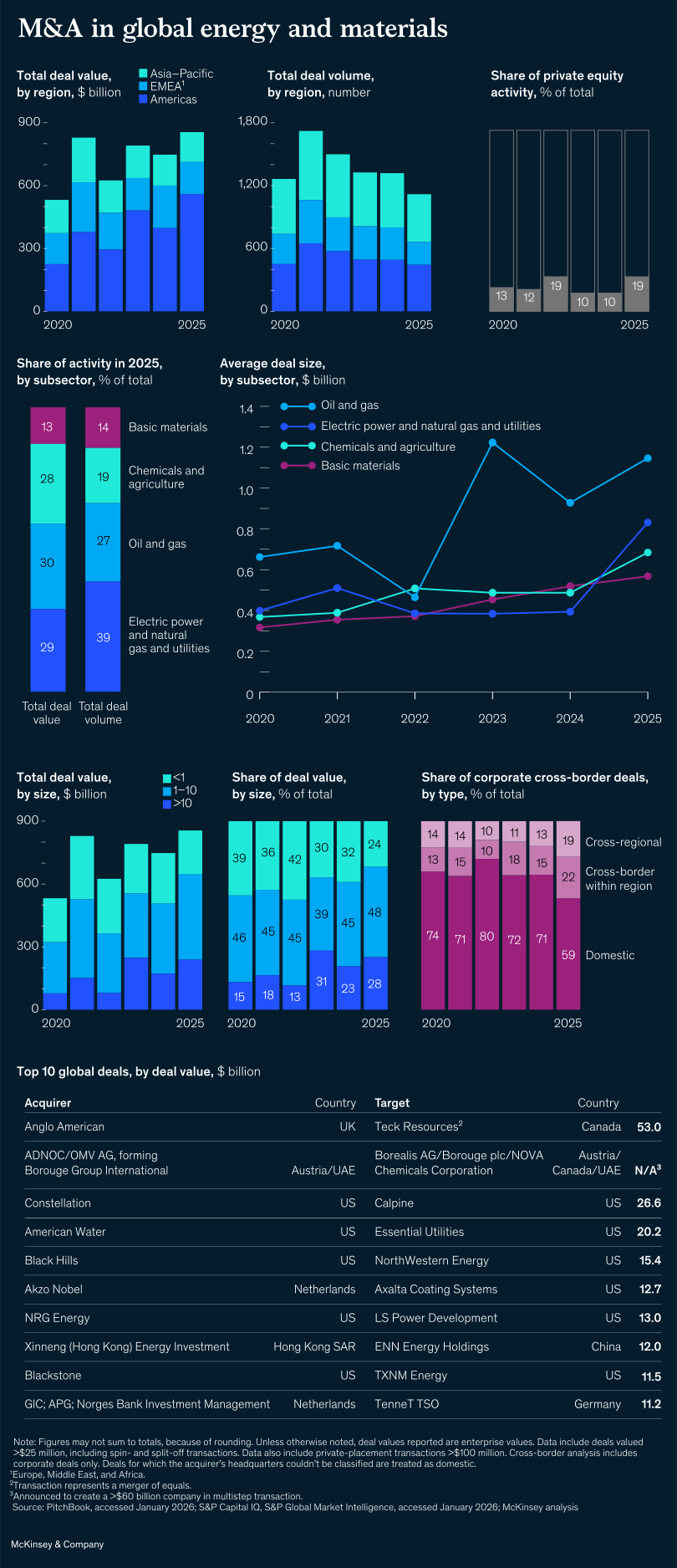
In 2025, M&A activity across the global energy and materials sector rebounded strongly—up 15 percent compared with 2024—registering the largest deal value in the past five years. While 2024 was characterized by smaller deals and consolidation, 2025 has been defined by a wave of megadeals. These include the deal between Anglo American and Teck Resources; ADNOC and OMV’s agreement to form Borouge International by combining Borealis, Borouge, and Nova Chemicals; and the merger of American Water Works with Essential Utilities.
From a geographic perspective, the Americas continued to lead M&A activity, accounting for 65 percent of global deal value. This high level of activity was characterized by megadeals in the oil and gas and mining sectors. By contrast, Asia experienced a mild downtick from the previous year, with deal value falling by approximately 3 percent, to $143 billion, while the Europe, Middle East, and Africa (EMEA) region recorded its lowest absolute deal value in the past five years, reflecting a challenging environment for large-scale transactions in the region.
Private equity has become a central force within the energy and materials sector. Between 2024 and 2025, private equity’s share of total deal value jumped to 19 percent, up from 10 percent, marking a five-year high point. Much of this deployment focused on investments in businesses with performance uplift potential or in high-growth areas such as data center supply chains and infrastructure. Prominent deals include Blackstone Infrastructure’s announcement of its planned acquisition of TXNM Energy and Carlyle and the Qatar Investment Authority’s (QIA’s) announcement of an agreement to acquire a majority stake in BASF’s coatings business.

2026 M&A trends: Navigating a rapidly rebounding market
Subsector activity: Some areas surge, others moderate
M&A activity in energy and materials rebounded in 2025, but with pronounced differences by region, subsector, and deal structure: Electric power and gas showed stark geographic divergence; materials shifted toward smaller, tech-enabled deals; and chemicals and agriculture experienced consolidation. Across oil and gas, both joint ventures and partnerships increasingly complemented traditional M&A.
Electric power and gas: Regional performance diverges
Electric power and natural gas (EPNG), which includes renewables, was the largest subsector in terms of deal value transacted. Deal value in this subsector surged 75 percent, reaching $253 billion.
In the United States, the EPNG sector saw a significant upswing in 2025, reaching its highest deal volume in the past four years. Activity was concentrated in conventional generation, where both deal counts and average deal sizes rose sharply. The rise of conventional generation was primarily driven by growing power demand from data centers and higher energy prices. Integrated utilities and renewable-energy sources (RES) also contributed to the sector’s growth. Although the number of RES deals declined by over 50 percent, average deal size ballooned on the back of a few megadeals, including Alphabet’s announced acquisition of Intersect Power. This helped offset the impact of fewer transactions and highlighted the relative strength of the US renewables market compared with Europe.
By contrast, in the EMEA region, EPNG deal volume fell by 50 percent compared with 2024, bringing activity to among its lowest levels in recent years. This drop was most pronounced in the RES segment, which had a 55 percent decrease in activity compared with the previous year. The downturn in RES was largely driven by a sharp reduction in photovoltaic deals and a 35 percent decrease in average deal size. The decline in deal size reflected lower market valuations, influenced by a less optimistic outlook on capture prices. However, other segments, such as integrated utilities and conventional generation, remained relatively stable, demonstrating some resilience.
The contrast between trends in the EMEA and US markets underscores the differing dynamics at play in the global EPNG sector. While Europe has grappled with challenges in the RES segment and declining deal sizes, the United States has benefited from robust demand in conventional generation and stable performance in renewables, indicating a more optimistic outlook for North America.
Materials: Deal volumes rise, and average deal size declines
The M&A landscape in the materials sector shifted in 2025, reflecting changes in industry dynamics and macroeconomic conditions. A few of the more prominent trends we saw across the subsector were the growing role of digitalization, an increase in partnerships, and adjustments in portfolios to reflect strategy. Companies are favoring vertical integration, critical-materials exposure, and partnerships to derisk development over broad-based consolidation. Overall, deal volume decreased by 12 percent and, as in the rest of the broader sector, average deal size increased, resulting in a deal value decline of only 3 percent.
In metals and mining, demand for green materials is rising, but economies are tightening. Growth is likely to be steady and incremental—driven by supply chains for renewables and electric vehicles—not a demand shock that will transform markets overnight. Customers want low-carbon products but not high premiums, making productivity, recycling, and policy support decisive levers for scale. Tighter financial conditions, limited capital, and declining ore grades pushed companies toward smaller, strategic deals in desired commodities, rather than traditional megadeals.
In the packaging and paper sector, lower valuation multiples and low organic-growth options made acquisitions appealing, but high leverage (averaging about 2.7 times debt to EBITDA) and limited cash flow constrained dealmaking. Despite these challenges, M&A remained a key growth lever, with companies focusing on acquisitions and divestitures to optimize portfolios and drive long-term TSR.
The construction and building materials sector experienced significant momentum, particularly in light and heavy materials, as companies pursued growth and specialization in response to changing demands and government policies. Notable deals included QXO’s acquisition of Beacon Roofing Supply and Holcim’s series of acquisitions in recycling, illustrating increased activity in both light and heavy materials. Engineering and construction firms used M&A to expand regionally and enhance product and service specialization, encouraged by factors such as housing shortages, infrastructure upgrades, and government programs (including the European Green Deal).
Chemicals and agriculture: Deal activity rebounds
Deal activity in chemicals and agriculture rebounded in 2025 after a relatively subdued year in 2024, as larger transactions returned and average deal size rose by more than 40 percent. In chemicals, the low-demand, bottom-of-cycle conditions that characterized much of 2024 set the stage for balance sheet consolidation, renewed private equity interest, and greater investment in higher-margin segments. In agriculture, activity in 2025 was shaped by a number of transformative transactions and greater competition among major players. Looking across the past five years, deal value has stayed in the same range, while deal volume has decreased; in 2025, the trend toward higher deal values continued.
In chemicals, deal value rose 21 percent year over year, from $79 billion in 2024 to $95 billion in 2025. High-profile transactions included the announcement of a three-way deal involving Borealis, Borouge, and Nova Chemicals; the closing of ADNOC’s roughly €15 billion acquisition of Covestro’s high-performance polymers segment1; and the announcement of Akzo Nobel’s deal with Axalta. Private equity activity also gained traction, with notable transactions such as Carlyle and QIA’s announced investment in BASF Coatings.
In agriculture, M&A activity was defined by consolidation and heightened competition among the industry’s largest traders, often referred to as the ABCD players (Archer Daniels Midland, Bunge, Cargill, and Louis Dreyfus). Illustrating this trend, Bunge strengthened its position in global agribusiness by completing its acquisition of Viterra. Deal value almost doubled year over year, from $9.7 billion in 2024 to $18 billion in 2025. Other important transactions included Charoen Pokphand Foods’ announcement that it would purchase the remainder of C.P. Pokphand for $1.1 billion, becoming its sole owner.2
Oil and gas: Partnerships gain ground
After several years of active consolidation with deals like Chevron–Hess (announced in 2023, closed in 2025), 2024 was a year of moderation in oil and gas M&A activity, with 280 deals totaling $259 billion. The pace in 2025 was even slower, with $240 billion across 162 deals. Despite softer volumes, M&A remains a critical tool for portfolio shaping as companies seek advantaged resources, basin scale, and deeper integration across the value chain. Emerging themes include continued US shale consolidation, the rise of in-basin joint ventures, greater refining–chemicals integration, and increased resource access deals as governments become more open to foreign direct investment.
Deal value in 2024 was concentrated in a handful of large transactions, while 2025 saw momentum in partnership-led consolidation and risk sharing. A notable example is Eni and PETRONAS’s agreement to combine select oil and gas assets in Malaysia and Indonesia into a jointly operated upstream platform, reflecting a broader trend by national and international oil companies to pool assets and improve efficiency. Similar partnership structures can be seen in liquefied natural gas and mature-basin consolidation, including North Sea tie-ups such as Adura (Shell–Equinor). In addition to these structures, companies continue to broaden inorganic growth strategies, including pure-play acquisitions, to build scale and upgrade portfolios while focusing on capital discipline.
Opportunities for 2026—and beyond
Many of the factors that contributed to greater deal activity in 2025 are expected to remain relevant in 2026 and beyond, supporting continued M&A momentum. But while we see indicators for increasing M&A activity next year, the growth rate is likely to remain moderate compared with the sharp uptick observed between 2024 and 2025. Continued appetite for portfolio moves to support growth or balance sheet improvement sets the stage for another active year in M&A, albeit with a measured pace of growth.
Read the full report on which this article is based, 2026 M&A trends: Navigating a rapidly rebounding market.