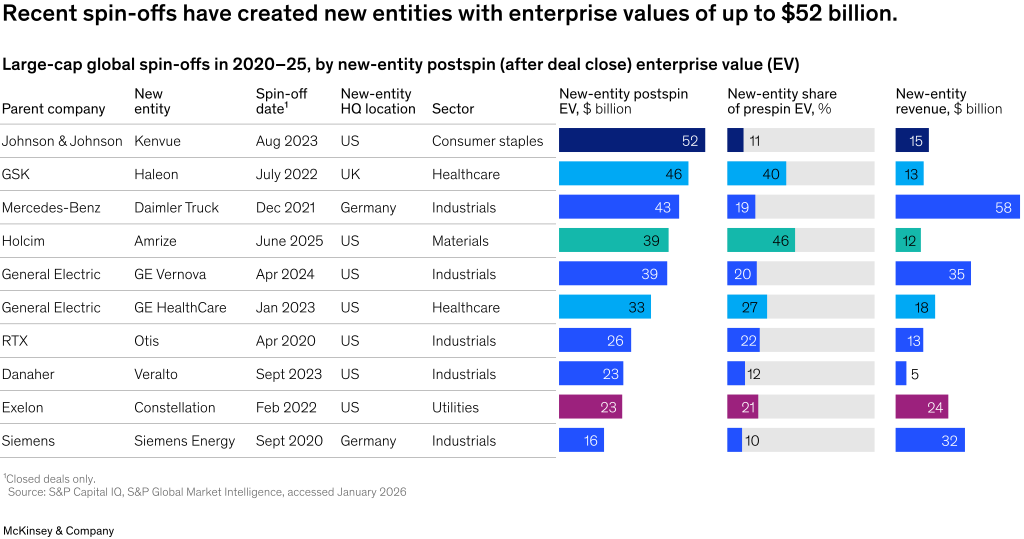
Since the birth of corporate spin-offs—when early-20th-century regulators broke up Standard Oil into several regional companies—they’ve held enormous promise. In the 1980s, amid rising shareholder activism and leveraged buyouts, spin-offs were viewed as an important tool to unlock what was deemed “hidden value.” Over the past 20 years, large spin-offs have become prevalent: There are roughly 20 to 30 large-scale spin-offs every year with enterprise values frequently exceeding $20 billion (Exhibit 1).
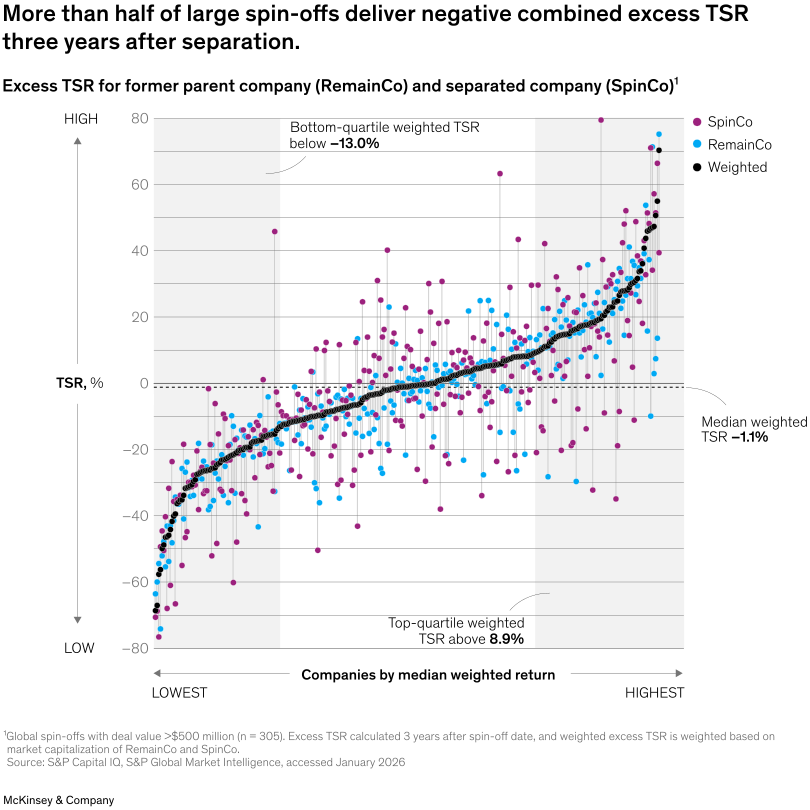
While there are many reasons for a spin-off, 95 percent of executives McKinsey surveyed said that accelerating growth and strengthening financial performance were the primary reasons for executing separations.1 And although the upside can be tremendous, our analysis shows that 55 percent of large spin-offs have a negative weighted-average TSR for both the former parent and new company three years after the spin. In fact, the median weighted combined excess TSR for both entities was –1.1 percent for all large corporate spins that occurred between 2000 and 2022 (Exhibit 2). And this trend is worsening: Post-spin performance between 2000 and 2009 was +5.1 percent, while it has been –4.4 percent since 2010, suggesting that companies have become less effective at producing the expected value of spin-offs.
Why do so many spin-offs fall short, despite the widespread conviction that separating businesses unlocks gains through multiple arbitrage? The short answer: Separations and spin-offs don’t intrinsically create value. Value has to be created the same way that it always has been: through higher returns on invested capital (ROIC) that come from higher growth, better margins, and smarter capital allocation decisions. So-called multiple arbitrage is only realized when investors believe the spin will provide a step change in performance, and executives must then deliver on that performance promise or see their stock decline and the spin-off value thesis come undone.
This article shares five crucial lessons for overcoming obstacles and achieving spin-off success. By putting these lessons into practice, spin-off leaders can strengthen the strategy, operating model, leadership, pace, and value creation orientation needed to capture the full value of spin-offs.
Lesson 1: Define what success looks like for the new company
Standing up a new company that’s no longer constrained by a shared balance sheet or resources is an opportunity to unlock new organic and inorganic growth opportunities. Success starts with setting and pressure testing a clear strategic vision for the new company and with deciding which investments are most crucial to bringing the strategy to life.

2026 M&A trends: Navigating a rapidly rebounding market
Reset the strategy
When working with executives prior to spin-offs, we have frequently heard that they believe their existing strategy is robust and that they see no need for new thinking. Yet by the end of a spin-off process, 90 percent of executives report that they have either refined or fundamentally reset their equity narratives.2
In our experience, companies dramatically improve outcomes when they take the time—through either leadership off-site meetings or other intentional focus efforts—to rethink the to-be spun-off company’s future growth strategy. This is particularly important because once a former business unit becomes a public company, it becomes subject to direct scrutiny by investors and analysts.
For example, a pharmaceutical company announced its plan to spin off its generics-manufacturing division. The designated CEO led an effort to rethink how the new entity would leverage its stand-alone balance sheet for M&A in ways that weren’t possible under the former group structure. The result was substantial M&A activity shortly after the spin-off that created significant incremental value for the new entity.
Use outsiders to pressure test the equity story
After years of operating as part of a corporate group, executives can find it challenging to look objectively at the independent business they’ll lead. Pressure testing the equity story can help executives avoid surprises after the spin-off is completed. Potential pressure testers include investors in the parent company, friendly analysts, and third-party advisers. Some companies also identify and engage the spin-off’s corporate board in an advisory capacity well in advance of completing the spin to create a group of friendly insiders to help prepare the spin-off for public-market scrutiny.
Align on three to five critical investments to make early on
What’s a strategy without investments bringing it to life? Accelerating performance doesn’t begin after the spin is completed; it must be embedded in the separation process to deliver a step change in growth from day one. Reflecting on lessons learned, the CFO from a less-than-stellar spin-off lamented, “We spent a lot of time thinking about what to do to improve performance prior to the spin, but we only got to how after we were public, and that was way too late. We were nine to 12 months behind where we needed to be by then, and investors don’t give you that much grace.”
Lesson 2: Transform the operating model during separation
One of the most common reasons for spinning off a business is to enable the new business (and often also the remaining business) to better tailor its operating model to be cost competitive with peers while investing in the capabilities that give the company its edge. Many executives have tried and failed to run different operating systems in adjacent business units, often resulting in systems poorly suited to all the businesses. Consumer health companies like Haleon and Kenvue are structurally different to their former respective pharma owners, GSK and Johnson & Johnson. As independent businesses, these consumer health giants can invest in new growth opportunities and optimize their operating models to suit the competitive intensity of branded consumer products while GSK and Johnson & Johnson focus on R&D in core therapeutic areas. Rewind to the 2010s, and it was animal health companies like Zoetis and Elanco that unlocked their next chapter of value creation. They were able to rethink their cost structures as entities independent of Pfizer and Eli Lilly, their respective owners, for whom animal health had become a noncore segment.
If there’s so much value at stake from improving the operating model in spins, why do so many fail to provide value? Research shows that many spins fail to transform their operating models and improve efficiency until well after the spin-offs are completed. They may indeed unlock the value, but only years after many investors have cycled out of a likely underperforming stock (and outside our three-year post-spin measurement period).
Consider the separation program to be a transformation program
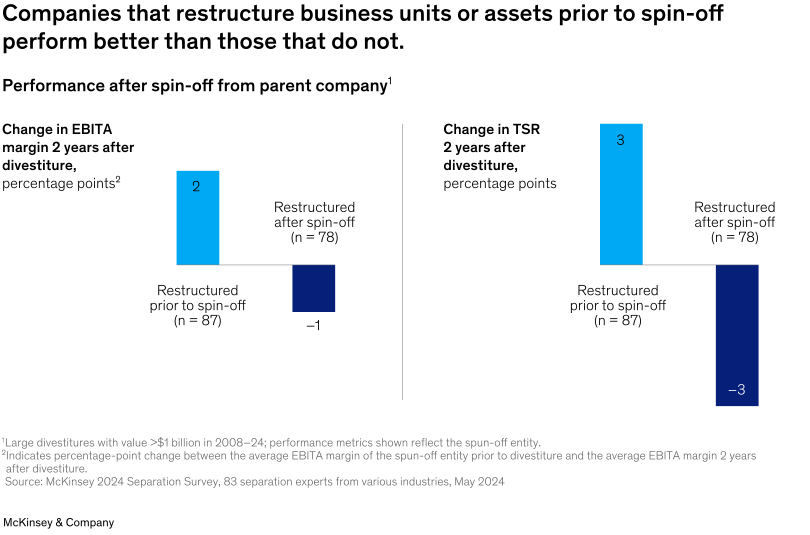
Executing any spin-off requires substantial operational planning and typically involves an organized project management structure and work streams. Executives can embed a transformation approach into the separation program, leveraging the program infrastructure. Teams can rethink the operating model holistically and be held to their cost targets. Functional leaders can look externally for inspiration and avoid a “mini me” or “copy–paste” approach to separation, which typically leads to an oversize organization after spin. Our research shows that companies that restructured units or assets prior to spin-off showed higher EBITA margins and TSR than those that restructured afterward3 (Exhibit 3).
Use peer benchmarks to design the new entity’s operating model
Setting cost targets is a critical part of controlling costs when standing up the spin-off company. In anticipation of creating a new company, many executives lose sight of cost control while planning the separation, and they overbuild the cost structure. Top performers start with a cost envelope for each function by benchmarking it against the new company’s public peers, and they hold executives accountable for building within that structure. Beyond controlling costs, this experience acclimatizes the spin-off’s executive team with how investors will scrutinize their company.
To fully embrace the challenge of being peer competitive, some teams adopt zero-based budgeting. In this approach, management starts from scratch, requiring every function to justify its expenses rather than relying on historical budgets. This method forces leaders to challenge assumptions, eliminate inefficiencies, and ensure that spending aligns with the company’s new strategic priorities.
Lesson 3: Talent first: Build the team that builds the new company
Excellent CEOs deliver outsize results: Top-quintile CEOs create 30 times more economic value than the next three quintiles combined.4 But spin-off CEOs face some unique challenges: In many cases, both they and the executive-leadership team (ELT) are assuming their first public-company roles and have to learn on the job. And although in some cases the spin-off CEO-designate gets to handpick their ELT, in other cases they inherit their team. With so many variables, it’s important to hew to three leadership principles: Identify talent early, prioritize the enterprise-first mindset, and focus on building a company culture that aligns with the strategy.
Prioritize key-leadership appointments early
Building out the ELT for the new company is often a balancing act. On the one hand, leaders want to delay the additional cost of having two ELT teams and streamline decision-making; on the other hand, who better to build the future spin-off organization than the executives who will oversee it? In our experience, tapping key leaders, including the CEO and CFO, at least nine months in advance of the spin-off provides the needed strategic direction and oversight, though significant variability exists from one situation to the next.
Prioritize collective accountability and an enterprise-first mindset
Often, a majority of the members of the spin-off executive team are first-time public-company executives. About 85 percent of spin-off CEOs are internal candidates, most of whom previously held other ELT roles within the spun-off company.5 Of the many new skills these leaders must absorb, a crucial one is shifting from a function-first mindset to an enterprise-first mindset. It’s important to use the time prior to the transaction to prepare the management team to assume collective accountability for the company’s success and to ensure that they’re ready to succeed in the public-company environment.
Besides preparing leaders, the spin-off company’s ELT can work on building trust and establishing a collective leadership model and norms. On building a leadership team, one spin-off CEO shared the following: “I was lucky: I got to handpick my executive team. I picked a team of rock stars. But I realized after the spin that, while I had rock star individuals, I didn’t have a rock star team. I ended up switching out half of my ELT in our first year. Those were tough conversations, but in the long run, it was the right choice—the only choice.”
Intentionally define the company culture
Culture starts at the top and slowly permeates through the layers of the company. A spin-off is a unique opportunity to establish how decisions are made, success is measured, and teammates engage with one another. Leaders can identify the top two or three culture changes they want to make and use the separation program to begin embedding them into the new organization.
Lesson 4: Speed matters—more than most leaders realize
According to a CFO who’s led multiple spin-offs: “Time wounds all deals, and that’s particularly true in a spin.”
Nearly 45 percent of separations are delayed beyond the original deal thesis,6 which correlates to underperformance. Only one in four spin-offs that take more than 18 months have been successful, while those completed within 12 months have almost twice the chance of success.7 This pattern is consistent with our experience and our interviews with spin-off executives. Prolonged separation periods tend to distract business leaders from driving the core business, lead to overall higher execution costs, and elevate attrition risk.
Planned and unplanned delays stem from real challenges, including complex operational disentanglement, negotiated transitional and commercial agreements, and a litany of public-company-readiness obligations. Two moves can help avoid adding delays and ensure fast action when possible.
Define the spin-off perimeter quickly
When a spin-off is announced, the scope is often described in terms of brands, products, or major assets. But executing the separation requires a more detailed view of what will be transferred to the new company, including customers, data, intellectual property, offices, people, systems, and vendors. The faster this full perimeter is defined, the sooner functional leaders can plan their work, structure transitional agreements, and prepare the organization for day one.
Prioritize ten to 20 high-impact decisions
Executing a large spin-off involves thousands of decisions, many made by functional separation work stream leaders. But there are typically ten to 20 decisions or design choices that truly move the needle and warrant senior leaders’ focused attention. These key issues can be identified in the early planning process, and then dedicated resources can be assigned to them while the larger separation program proceeds.
For example, in planning for the spin-off of a global consumer business, the ELT recognized a need for a raw materials supply agreement between the two companies. The ELT assigned a team of colleagues, supported by a third-party adviser, to develop an intricate pricing agreement that covered more than a dozen markets. Developing the agreement ultimately took six months, illustrating that certain issues need special time and attention while the separation progresses.
Lesson 5: Prioritize value, not process, to deliver the spin-off value thesis
Every spin-off has a unique story to tell. In some cases, the spin was used to offload excessive debts or liabilities, and it was always set up for failure. In other cases, the spin was out of necessity, responding to activist investor pressure.
However, even in cases where all parties agree on the primary objective of the spin and what it will take for it to create value, and all hope that the spin-off succeeds, we see a pattern in the overall worsening performance of these transactions: Spin-off preparation has become a process-centric exercise rather than a value-centric exercise, and the result is spins that create two separate companies—but not two better companies. The following three moves can help companies improve their chances of success.
Streamline and accelerate the separation program
We already mentioned how much speed and a streamlined separation approach matter. Rather than relying on generic checklists, leaders can build a comprehensive plan that’s tailored to the specific separation and transformation challenges at hand. All things being equal, it’s better to complete the separation in an intensive six-month sprint than in 12 months with a lighter resource load.
Dedicate teams to drive strategic growth investments early on
The separation program can quickly crowd out strategic growth priorities and investments. Appointing dedicated teams to key growth initiatives ensures that the new company builds needed momentum ahead of the spin-off. Where appropriate, these initiatives can be coordinated through the separation program to manage functional dependencies effectively.
Appoint accountable leaders to the separation
Planning a separation and transformation while accelerating growth momentum isn’t a corner-of-the-desk exercise nor something you outsource. Successful separation programs typically have dedicated teammates accountable for each work stream, while the remainder of the organization is insulated from the program and focused on driving business as usual. Make sure your own leaders decide how the future business will be set up and run, and don’t rely on outside advisers to build something that you’ll have to live with.
Separations stand among the most powerful and challenging tools that boards and management teams can deploy to reshape portfolios, sharpen focus, and unlock long-term value. They represent moments of both risk and reinvention, where disciplined execution meets strategic courage. Success in spin-offs isn’t a matter of luck; it depends on stacking the odds through clarity of purpose, transformative change, alignment at the top, speed of execution, and a relentless focus on what drives value. Those that do so consistently emerge stronger, more focused, and better equipped to thrive in the next chapter of their corporate journey.
Read the full report on which this article is based, 2026 M&A trends: Navigating a rapidly rebounding market.