The industry overview
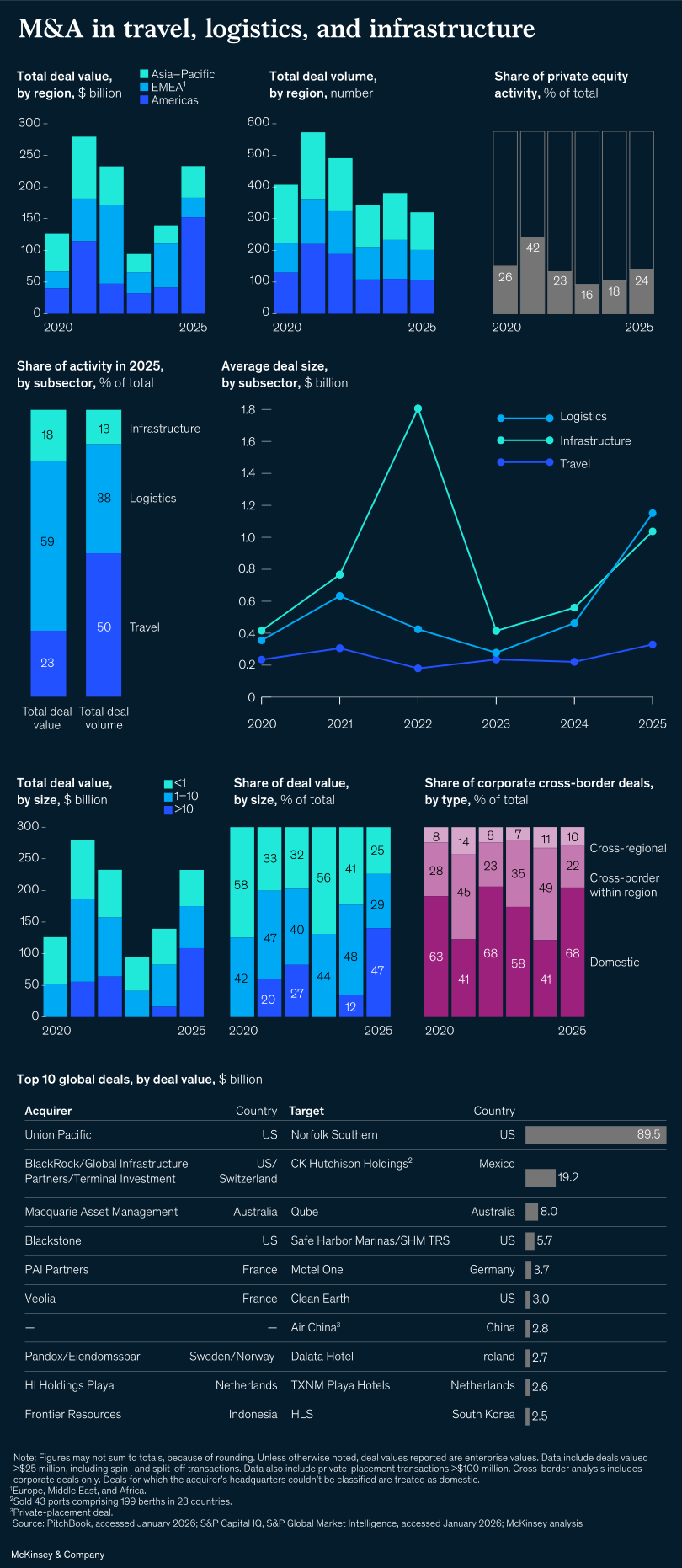
After two years of higher interest rates, uncertainty about tariffs, and a range of geopolitical shocks, dealmaking in the travel, logistics, and infrastructure (TLI) sector began to rebound in 2025, driven largely by a small number of outsize transactions rather than broad-based growth. Global M&A value in TLI rose about 67 percent—from $139 billion in 2024 to $232 billion in 2025—mainly driven by the $90 billion merger announcement between Norfolk Southern and Union Pacific. Deal value in this sector held steady at between 4 percent and 5 percent of all announced deal value across industries globally.
Roughly 65 percent of global deal value in TLI is concentrated in the Americas, and Asia–Pacific and Europe share the rest. Private equity (PE) accounts for nearly a quarter of global M&A value in this sector, with more than $2 trillion in capital still undeployed.
M&A activity evolved differently across TLI subsectors in 2025. Deal volume in the travel subsector, for instance, declined by about 8 percent (from 174 transactions in 2024 to 160 in 2025), while deal value increased by 37 percent, from $39 billion in 2024 to about $53 billion in 2025.
Meanwhile, M&A in the logistics subsector rebounded in 2025: Deal value was up 91 percent—albeit mostly because of the proposed Norfolk Southern and Union Pacific merger. Without this acquisition, deal value in logistics would have dropped about 33 percent, from $72 billion in 2024 to $48 billion in 2025. Deal volume in this subsector dropped by 23 percent (from 156 transactions in 2024 to 120 in 2025), as buyers shifted their focus toward deals involving specialty verticals and solid fundamentals.
And finally, deal value in the infrastructure subsector increased by 45 percent, driven by the approximately $19 billion acquisition of Hutchison Port Holdings by a US-led consortium. Without this acquisition, deal value in infrastructure would have dropped by about 22 percent—from $28 billion in 2024 to $22 billion in 2025. Deal volume in this subsector fell by 22 percent, from 51 transactions in 2024 to 40 in 2025.

M&A Annual Report: Navigating a rapidly rebounding market
Subsector activity
A closer look at how dealmaking is evolving within TLI subsectors highlights a sharper focus on capability-enhancing transactions among travel companies—such as new technology to replace legacy systems, AI-powered search, and revenue management and pricing capabilities—as well as the pursuit of deals involving specialty verticals among companies in the logistics space.
Travel: Selective capital and capability-focused deals
M&A activity in the travel sector increased in 2025. Total announced deal value grew by about 37 percent, from $39 billion in 2024 to $53 billion—the sharpest rebound since 2021. Despite the surge in deal value, deal volume fell by about 8 percent, from 174 transactions in 2024 to 160 in 2025, underscoring a shift toward consolidation: Fewer, larger transactions are defining the M&A landscape in travel.
Meanwhile, PE increased its footprint in this subsector, contributing about a quarter of total M&A value in travel in 2025, up from roughly 18 percent in 2024. Travel-related deals represented about 57 percent of total PE deal volume in 2025 and 87 percent of total PE deal value.
The Americas continues to represent about 73 percent of all M&A deal value in travel, maintaining its lead as the most active region. Indeed, this part of the world has experienced sustained demand for high-end leisure and experiential travel, supported by strong consumer spending and record premium room rates, which have been rebounding since 2019.1
Digital capabilities are also affecting M&A trends in travel. Consumers are increasingly using AI across their travel planning and purchasing decisions—for inspiration and itinerary creation, booking and price optimization, and real-time concierge support. In a recent survey of 5,000 US consumers, 29 percent said they have adopted gen AI for travel-related tasks, and the majority reported improved experiences.2 The same study shows that, between July 2024 and February 2025, traffic referred from gen AI sources to US travel, leisure, and hospitality sites increased by 24 percent and exhibited bounce rates 45 percent lower compared with the industry average.
Clearly, the bar has been raised for all players in the travel ecosystem, reinforcing the focus on tech-related M&A and integration capabilities to enhance, personalize, and streamline the travel experience.
Logistics: Consolidation and a focus on specialty providers
Our analysis shows that deal value in the logistics subsector rose to roughly $138 billion in 2025 compared with $72 billion in 2024, though overall deal volume dropped by about 23 percent—from 156 deals in 2024 to 120 in 2025.
Meanwhile, PE’s share of deal value in this subsector decreased by 40 percent—from about $11 billion to about $7 billion in 2025, the lowest level in the past five years—reflecting PE players’ concerns about rising interest rates and an unstable trade and regulatory environment. Minus an outlier transaction in this subsector (Union Pacific’s proposed acquisition of Norfolk Southern), the average transaction value fell from about $531 million in 2024 to about $408 million in 2025.
Against this backdrop, M&A-driven consolidation in freight forwarding has continued at a steady pace. The market remains highly fragmented—the combined market share of the top ten players adds up to only 45 percent of the market—and larger freight forwarders are gradually increasing competitive pressure on the rest of the pack. Many of these small and midsize freight forwarders have limited capacity to fund investments in the digital and growth initiatives required to remain competitive—creating M&A opportunities for sponsors and strategic buyers.
Our discussions with PE and strategic investors in 2025 indicated greater interest in specialized logistics providers versus generalist providers. Indeed, given rising secular demand for certain specialties, increased complexity in supply chains, and demand for structural support in e-commerce, investors have increasingly sought targets among providers of cold-chain, healthcare, electric-vehicle battery, semiconductor, and aerospace logistics.
Deal activity in these segments was explicitly driven by buyers’ need to acquire capabilities critical to improving or maintaining their value chains—that is, acquiring facilities that comply with good manufacturing practices, gaining access to temperature-controlled networks, acquiring capabilities involved with handling sensitive cargo, or cultivating regulatory expertise. For example, strategic buyers in contract logistics are focused on acquiring specialized companies so they can expand into new verticals, such as pharmaceuticals, and access the required GDP certifications.
Trade policy shocks also played a critical role in logistics M&A in 2025. Higher and irregularly imposed tariffs, frequent renegotiations of trade agreements, and shifting sanctions pushed many shippers to redesign their production footprints and rethink their inventory strategies. While logistics networks continued to trade at a premium, generic, single-capability offerings in forward freighting—without deep value-added services, customs clearance, storage, and delays in transit—have struggled.
Additionally, AI took center stage amid all other logistics-oriented technologies. In freight forwarding and asset-based transport, for example, acquirers increasingly looked to AI for proprietary demand-forecasting models, dynamic pricing engines, and automated planning tools to help reduce the time from booking to execution. In digital freight and logistics software as a service (SaaS), acquirers sought to differentiate themselves by using AI to automate customer service, documentation, and exception management. While most transactions still price businesses on earnings and growth rather than “AI” labels, assets with proven models and real data advantages are beginning to command a visible premium over peers.
While investment in asset-based transport remained active in 2025, many deals were focused on bolstering solid fundamentals and enabling operating discipline. Rail and intermodal deals, such as the proposed Union Pacific–Norfolk Southern transaction, increasingly emphasized extending network reach, achieving long-term contracts, and successfully navigating regulatory changes. In trucking and short-sea shipping, acquirers targeted fleets with strong safety records and embedded telematics that enable differentiated service and lower cost to serve. Logistics SaaS is likely to continue to attract interest from investors—in areas such as transport management, warehouse automation, operational control towers, and cutting-edge analytics that can sit on top of carriers and third-party providers rather than compete with them.
Opportunities for 2026—and beyond
A measured improvement in TLI M&A in 2026 looks more likely than a surge. M&A demand remains resilient in critical areas—for example, leisure travel, experiential hospitality, and specialized logistics in high-growth verticals. However, trade and regulatory environments remain unstable, and freight markets have normalized. In this environment, investors are likely to favor deals grounded in a clear vertical thesis and a well-tested synergy case rather than large balance sheet bets: Across all three subsectors, disciplined buyers will prioritize assets where they can credibly lift revenue, improve unit economics, or deepen capabilities. They’ll be cautious about paying for growth stories that lack a clear path to integration, resilience, and value creation.
Read the full report on which this article is based, 2026 M&A trends: Navigating a rapidly rebounding market.