At a glance
- The power of the few has a message for all
In a sample of 16,200 German companies, 29 companies—or just 0.2 percent—accounted for 47 percent of total productivity growth in the group analyzed from 2019 to 2023. The fault line does not run between industries. What distinguishes these champions is their willingness to make bold strategic decisions. - The ground rules have changed, but bold action remains the exception
Geopolitical turmoil, shifts in lead markets China and the United States, accelerated capital flows, and AI as the new pivotal market force: the strategic plays that worked in the past are no longer sufficient. Those who merely optimize what already exists are structurally losing ground. And yet our data shows that taking disruptive and transformational action is still the exception, not the rule. German companies today generate just 6 percent of their revenues in new growth arenas—less than a third the percentage of Chinese companies. - A new playbook lays out ways to drive productivity growth
Proven strategic plays are no longer enough. The new playbook comprises four strategic levers that lift companies to a new level of productivity: renew the portfolio, accelerate innovation, reimagine scaling, and treat AI as the new operating system. Add to this the human factor as an overarching prerequisite. Every company that sets these levers in motion creates growth that extends far beyond the company itself. - Among decision-makers, the transformation has begun—but it has yet to reach corporate culture and performance
Some 65 percent of C-level executives surveyed see an acute need for disruptive change. Nearly half are beginning to scale AI from pilots across the entire enterprise. Yet, while three-quarters report productivity progress, our analysis of 16,200 companies shows that across the breadth of the German economy, productivity barely increased during the period analyzed. C-suite executives see the greatest obstacles in corporate culture and the regulatory environment—tied at the top with 29 percent each. - Entrepreneurial courage needs the right framework
Growth-oriented regulation, a flexible labor market, and competitive energy costs are not nice-to-haves—they are fundamentals for productivity growth. Germany has considerable ground to make up on all three fronts compared with other countries. At the same time, companies can act without waiting for these external factors to improve. The room to maneuver is greater than the current debate may suggest.
The power of the few
Around 0.2 percent of companies drive 47 percent of productivity growth. The distinction lies not between industries, but between the courageous and the hesitant.
In our report A pivot for Germany,1 we outlined how Germany’s economic growth could be reignited. Boosting productivity is a core success factor in promoting growth, particularly in a country like Germany, where the working-age population is shrinking and structural growth is limited. Growth, prosperity, and the competitiveness of Germany as a business location depend on local companies increasing their productivity.
Analyses by the McKinsey Global Institute show that a small number of companies contribute disproportionately to productivity growth (see sidebar “Methodology”). A sample of 16,200 German companies included 29 that were “productivity champions” between 2019 and 2023. These 0.2 percent accounted for 47 percent of the sample’s productivity growth (Exhibit 1).
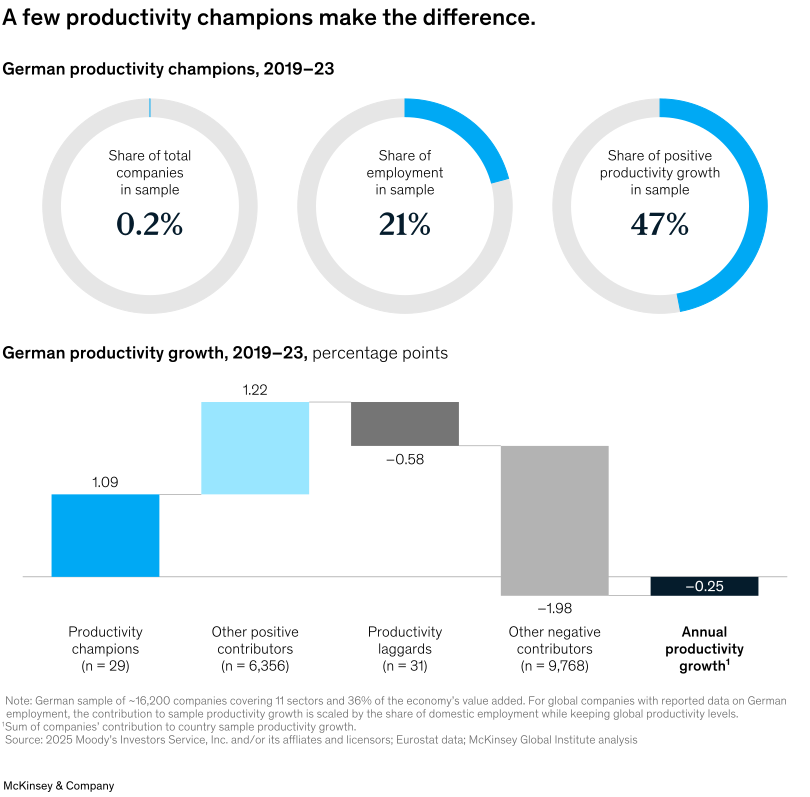
This shows that an economy’s productivity gains are not driven by a majority of companies, but by a minority of top performers. A productivity increase is often contingent on a few companies that make bold strategic decisions to strengthen both their own position and the national economy. Many companies are leaving this potential untapped, forgoing significant opportunities for further gains.
What is striking is that productivity champions exist in all industries, including traditional manufacturing, media, and the pharmaceutical industry. A company’s origin is not the deciding factor either. Both established, large companies (“incumbents”) and midsize or fast-growing companies (“scale-ups”) play in the league of champions. The decisive factor is the willingness to make strategic decisions with rigor. In the past, four strategic plays have stood out:
- Portfolio. Optimize position in core segments.
- Innovation. Rigorously enhance quality.
- Scaling. Expand in China and the United States as lead markets.
- Transformation. Systematically drive efficiency gains.
In this study, we examine past strategic plays among the productivity champions and show how the playbook for productivity can—and must—be reimagined in the face of political, economic, and technological disruptions. Crucially, the power of the few represents a massive opportunity. A small number of companies can propel an entire economy forward and put it on the path to greater productivity and growth (see sidebar “Why is productivity growth important?”).
Legacy Play 1: Optimize position in core segments
German productivity champions sharpened their business and product portfolios with strategic discipline during the period from 2019 to 2023.
Within their business portfolios, productivity champions strengthened their core segments and systematically developed them based on acquisitions and organic growth. During the period analyzed, Deutsche Börse consistently evolved its business toward data-driven and technology-based financial services, increasing revenues from €3.3 billion (2019) to €6.1 billion (2023), with an EBITDA margin consistently around 49 percent.2 Bertelsmann actively expanded its portfolio in segments showing structural growth—particularly in e-commerce and supply chain logistics (Arvato), as well as in education and training in the healthcare sector (Bertelsmann Education).3
Within their product portfolios, productivity champions systematically increased their share of higher-value offerings. Boehringer Ingelheim did this, for example, in the human pharmaceuticals and animal health segments—two areas showing structural growth with substantial value creation depth. The company increased revenues from €19.0 billion (2019) to €24.2 billion (2022), with an EBITDA margin consistently above 25 percent.4
Both levers share a common rationale: They concentrate focus and resources on segments with growth and productivity potential, thus laying the foundation for substantial long-term growth.
Legacy Play 2: Innovate to rigorously enhance quality
Another proven innovation play used by productivity champions during the period analyzed was the continuous, incremental improvement of products and services. Companies using this play often focused on building and defending quality leadership systematically over long periods.
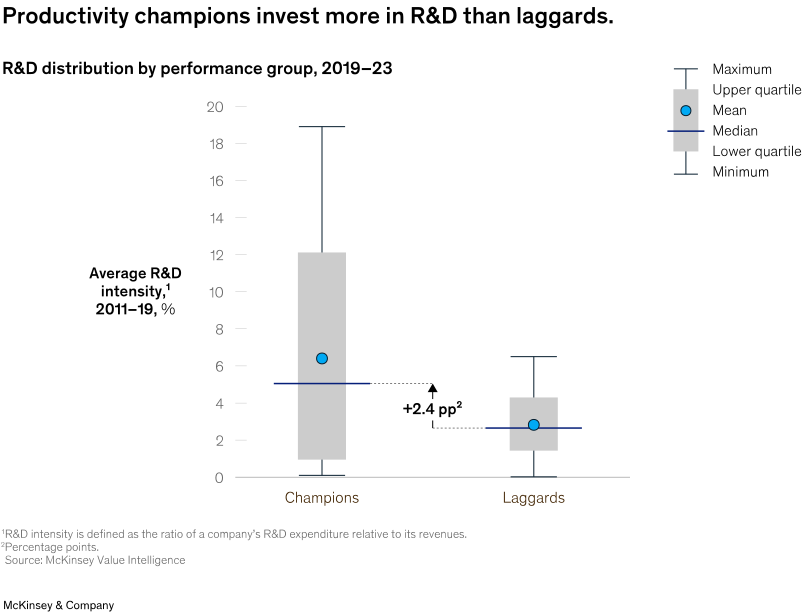
A strong commitment to above-average investment in research and development (R&D) formed the foundation for this success. Our analysis shows that the 2019–23 productivity champions spent significantly more on R&D in the preceding period (2011–19) than laggards—two to three percentage points more of their revenues (Exhibit 2).5 Carl Zeiss, for example, further strengthened its quality leadership in key segments such as semiconductor lithography with continuous investment in precision optics and persistently marketed improved products, thus laying the foundation for above-average productivity growth.6
Legacy Play 3: Scale by expanding in China and the United States
Numerous German productivity champions successfully scaled internationally, frequently focusing on the two dominant lead markets: China and the United States. These two markets, given their sheer volumes, offered the opportunity to drive productivity through substantial economies of scale.
At the same time, the pace of innovation and competitive intensity in China and the United States were exceptionally high. Consequently, companies that succeeded in these countries simultaneously sharpened their global competitiveness. German productivity champions that consistently targeted these lead markets increased their revenues there disproportionately during the period analyzed—through local production capacities, market-specific product variants, and targeted investments in distribution networks.7
Legacy Play 4: Transform to systematically drive efficiency gains
Some champions leveraged efficiency efforts strategically to drive productivity by combining rigorous cost discipline with continuous efficiency gains across processes, structures, and supply chains. Thus, they were able to increase value added per employee.
Schaeffler provides an example of rigorous transformation during the 2019–23 period. The company laid the cornerstone for a profound strategic repositioning during this phase, with the objective of becoming the leading motion technology company. By employing rigorous cost discipline, optimized processes and supply chains, and targeted portfolio realignment toward segments showing structural growth, Schaeffler was able to improve its operational efficiency and value added per employee structurally over the period analyzed.8
This example underscores how powerful systematic efficiency gains can be if they go beyond mere cost cutting. In this case, they enabled the transition to a more future-ready business model while actively involving employees in the process.
Disruption shifts the ground rules
Geopolitics, AI, new competitors—the ground rules are changing faster than conventional planning cycles. For companies today, waiting is the most expensive strategy.
The four legacy plays described in the preceding chapter have enabled companies to become productivity champions in the past, and they remain the foundation for a successful future. But the world that gave rise to them is changing radically. We are observing four forces of change: geopolitical turbulence, shifting lead markets, accelerated capital flows, and AI-driven disruption.
Geopolitical turbulence
Stability and rules-based exchange were long the foundation of global business models. Today, however, export controls, sanctions, and global industrial subsidy races increasingly shape the environment in which companies operate. Developments in Ukraine and Iran show how quickly political decisions can alter economic realities. Traditional export routes and highly efficient, just-in-time supply chains are coming under pressure; new trade routes and centers of gravity are emerging. For companies that built their business models on geopolitical stability, this is a considerable risk. At the same time, the changes present adaptive players with new opportunities.
Shifting lead markets
The two lead markets on which German productivity champions focused their scaling strategies are changing fundamentally, but in different directions. The United States is attempting to strengthen domestic value creation with industrial policy and tariffs, while increasingly decoupling from China as a sourcing and sales market. China, in contrast, is transforming from an import market and production hub into an innovative competitor on the global export market, particularly in key German industries such as automotive, mechanical engineering, and chemicals. Simultaneously, China is diversifying its export focus away from Western markets toward markets in Asia, Africa, and the Global South—and entering into direct competition with German companies in these regions as well.
As their growing strategic rivalry increasingly determines the relationship between the United States and China, the two nations are building parallel ecosystems and forcing third parties, including German companies, to position themselves clearly. The focus on China and the United States that long served German companies well as a scaling lever is thus losing its effectiveness.9
Accelerated capital flows
The speed of capital allocation has undergone profound change. Venture capital now flows faster into new growth arenas, such as space exploration, biotechnology, and AI. New competitors emerge in months, not years. Valuations are becoming less tethered to traditional earnings metrics because growth potential is weighted more heavily than short-term profitability.
For companies with traditional business models, especially in less dynamic markets, this creates pressure. Capital flows out, talent follows, and well-capitalized new competitors shake up established markets. In this environment, anyone relying solely on incremental optimization structurally loses ground—not because they are getting worse, but because others are growing faster.
AI-driven disruption
AI is redefining the fundamental logic of competition more rapidly and more profoundly than any previous technological innovation—for companies, for their customers, for employees, for everyone. What was just a vision of the future a few years ago is now reality: Gen AI automates cognitive tasks previously reserved for humans. Autonomous systems take over entire decision-making processes, and data-driven business models are displacing legacy players at a speed that overwhelms established players with long planning cycles. AI pioneers like Sam Altman predict that a “one-person unicorn”—a $1 billion company run by a single employee—could soon become reality.10
For German companies that built their success on process excellence, patents, and the expertise of their engineers, the new technology presents a historic challenge. First, it makes established strengths vulnerable more quickly. And second, the demand for AI-competent employees is growing dramatically.
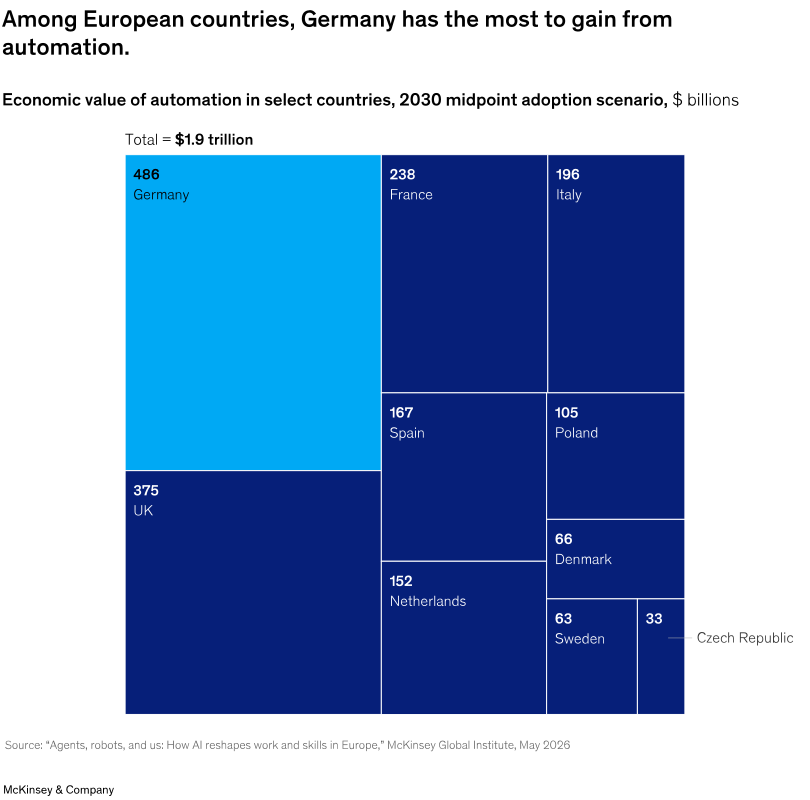
Yet the opportunities outweigh the risks. In a global McKinsey survey conducted in 2025, 39 percent of respondents said AI use was already contributing to their EBIT, albeit still at a modest level (less than 5 percent of EBIT).11 Germany has more to gain here than any other country in Europe. According to expert estimates, the value creation potential from AI-driven automation for Germany stands at $486 billion by 2030.12 This goes to show that AI is not only a challenge for German companies but also part of the solution, helping them drive efficiency gains, tap into new sources of growth, and reinvent business models.
The new productivity playbook
The legacy plays remain only partially effective. Reimagining productivity means acting disruptively and transformationally rather than optimizing incrementally.
While the established legacy plays—portfolio, innovation, scaling, transformation—remain valid, they no longer suffice for future substantial productivity growth. The strategic levers behind the legacy plays must be reimagined fundamentally. In addition, the human factor functions as an overarching prerequisite for these levers to deliver their full impact.
Portfolio reimagined: New growth arenas and decisive exits
Steer capital and focus toward new growth arenas—a crucial lever for greater productivity. Equally important, let go where structural competitive advantages can no longer be achieved.
The proven play of productivity improvement in a company’s portfolio was strategically disciplined with a focus on vertical expansion and existing segments. Going forward, priorities are shifting toward occupying new growth arenas, dynamically allocating capital, establishing cross-sector partnerships, and decisively exiting markets that lack future potential.
Occupy new growth arenas
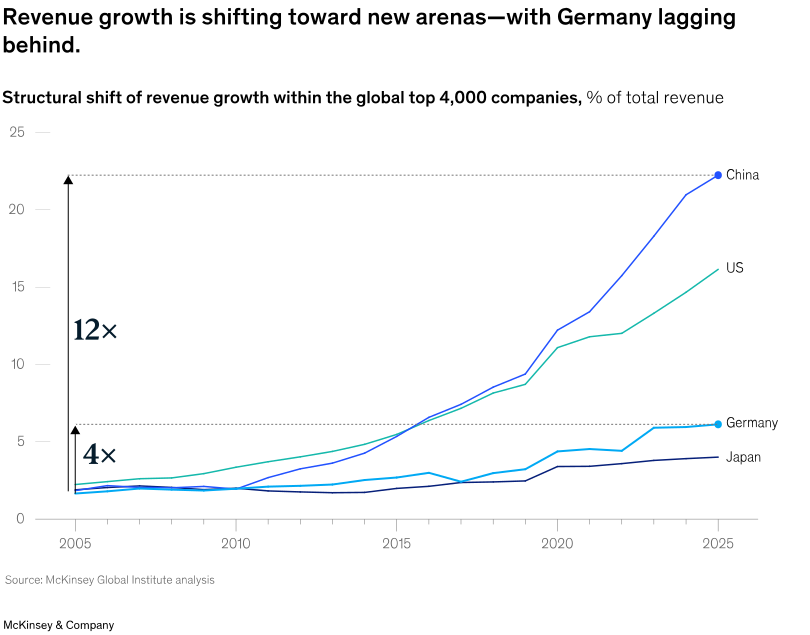
A large share of global economic growth originates from 18 growth arenas (Exhibit 3). From 2005 to 2025, the share of these growth arenas in the revenues of the 4,000 largest global companies grew by two and a half times to 10 percent. In the past three years, these growth arenas have already contributed half of total economic growth. Further acceleration is expected in the years ahead.13
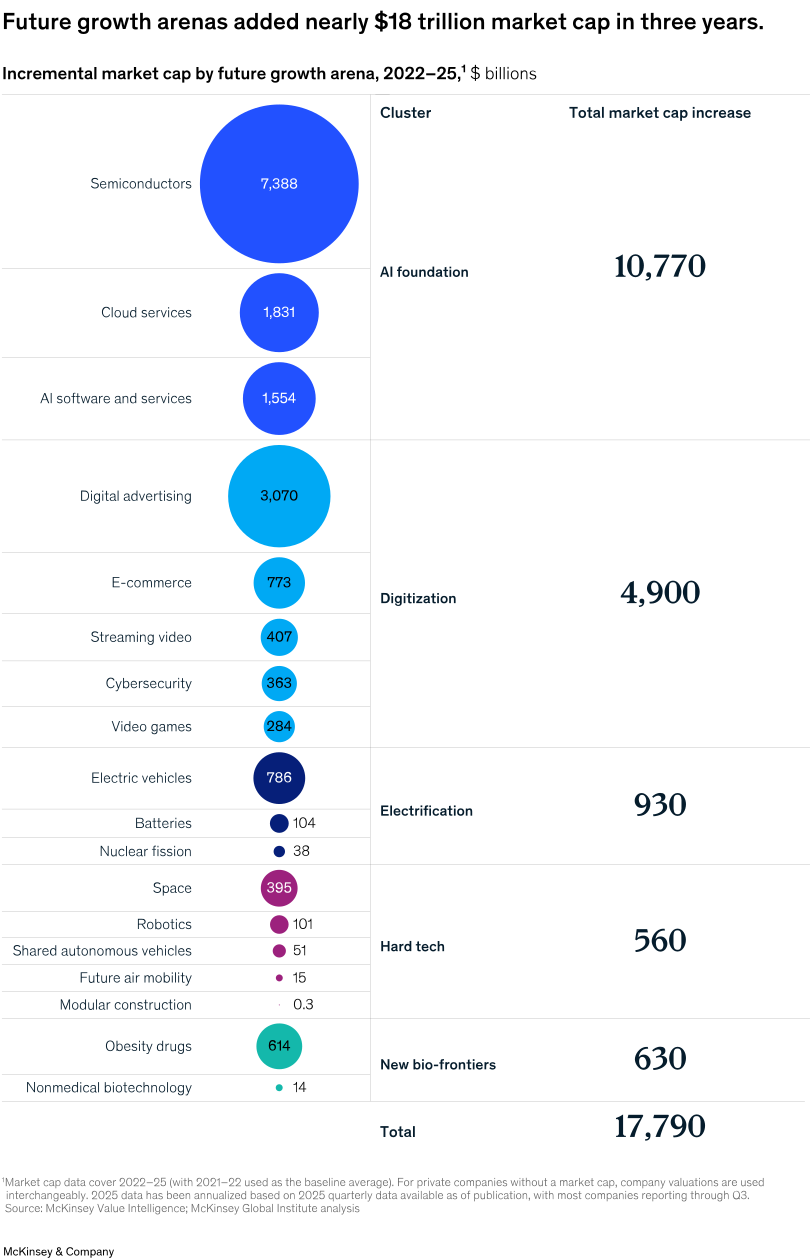
From 2005 to 2025, the share of revenues Chinese companies generated in growth arenas grew more than tenfold to 22 percent, while that of US companies rose eightfold to 16 percent. For Germany, the share only quadrupled, reaching 6.1 percent, up from 1.7 percent in 2005 (Exhibit 4). Germany is particularly well represented in electrification. In digitization and AI infrastructure, however, Germany remains underrepresented.14
Many future productivity champions will be active in these growth arenas. The way to succeed is to seek out opportunities to participate in this growth systematically—directly or indirectly. Participation might, for example, take the form of contributing to electrifying the automotive and mechanical engineering sectors, scaling existing digitization business models, or entering AI, biotech, and hard tech. This does not necessarily mean abandoning existing businesses in favor of growth arenas. Most companies will find specific growth segments within their sectors and ecosystems.
Dynamically reallocate capital
For capital allocation, companies often use a “past plus” method—an incremental adjustment of the previous allocation. A more effective approach in an environment that is changing ever more rapidly is to make capital allocation more dynamic.
International companies that achieve above-average growth over long periods manage their capital with a high degree of agility. Over the course of a decade, they dynamically reallocate up to 50 percent of their capital expenditures between existing business units and particularly into new growth arenas.15
German companies intending to follow this approach may need to shift their thinking away from budget-driven continuity and toward strategy-led capital allocation. This includes regular portfolio reviews, clear criteria for deciding where and when to invest and divest, and willingness to let go of business areas—even when they are profitable but declining structurally.
Use cross-sector M&A as a growth lever
While German companies executed 36 percent of their largest transactions within the same industry, the figure for US companies was only 22 percent, reflecting a greater willingness to cross sector boundaries for major deals.16 M&A can be used systematically to secure a foothold in new growth arenas, acquire technological capabilities, and transform business models. German companies have considerable untapped potential here, particularly in the areas of AI, energy, and biotechnology.
In concrete terms, this means M&A must be reimagined, not only as an instrument to strengthen the core business but concurrently as a systematic tool to unlock new growth arenas. M&A teams will need to monitor markets beyond the core business continuously, and—together with other functions—build the capability to integrate targets outside the core business in a way that creates value.
Decisively exit markets
Capital reallocation has two sides: moving into growth arenas and out of stagnating or declining business areas. Companies that pursue both with resolve achieve higher returns.17 Analysis by the McKinsey Global Institute shows that Germany currently loses 1 percentage point of productivity growth annually because of insufficient market clearing.18
Companies frequently find that exiting is the most difficult discipline. Legacy business units, long-standing customer relationships, and social responsibility for employees and locations create strong emotional and institutional ties, even when the arguments for an exit are strong and clear. Yet this is precisely the defining difference between companies that embrace change and those that are left behind. Companies that view exits as a strategic tool and execute them decisively create the resources and focus necessary to build new growth positions.
Innovation reimagined: Speed and discipline
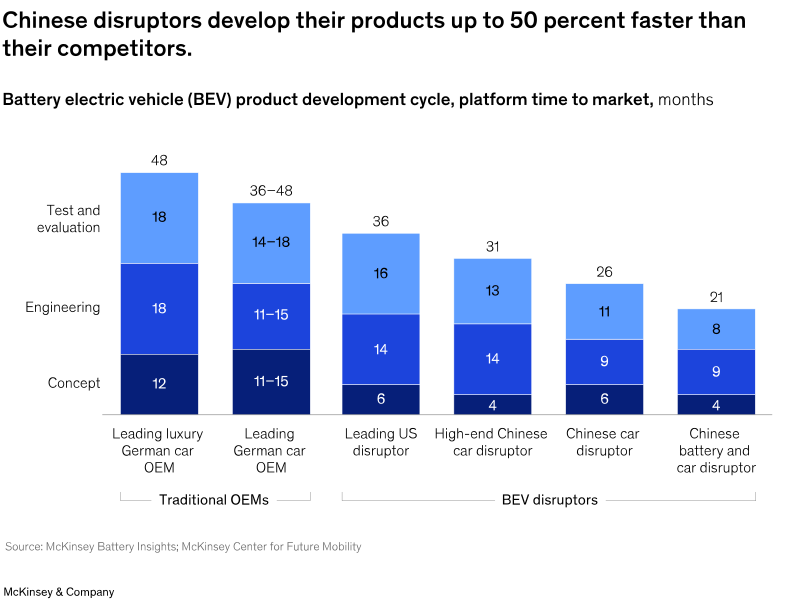
Chinese OEMs need 21 months, not 48, to develop a new vehicle. This is no law of nature; it results from a willingness to rethink processes radically.
The proven play of incremental quality improvement was built for continuity. Future productivity growth will require a disruptive innovation culture—faster, more decisive, and with a stronger execution focus.
Massively accelerate innovation
International comparison underscores the urgency: While patent applications in Germany fell by 13 percent from 2011 to 2023, China saw a surge of 311 percent.19 Today, Chinese OEMs develop new vehicles in just 21 months, compared with 36 to 48 months elsewhere (Exhibit 5), while cutting capital expenditures by more than 40 percent. These disparities are similarly stark in industries as diverse as robotic vacuum cleaners and mining equipment.20 German companies can adopt the underlying principles to compress their own development cycles.
Learn from the Innovation Execution operating model
The practices of highly innovative Chinese companies follow an underlying rationale that McKinsey has described systematically as an operating model it calls the Innovation Execution model. This model combines ambitious cost reductions, technological innovation, and consistent alignment with customer needs.21 Companies that implement the Innovation Execution model achieve annual reductions in product development costs of around 10 percent and realize performance improvements two to three times faster than established competitors—all with lower capital expenditure intensity.22
For companies looking to adopt this model, there are five key starting points:
- Development processes. Don’t just optimize development processes; reimagine them instead from the ground up. Ask this critical question: “How would we design this process if we were starting from scratch today?”
- Collaboration model. Fundamentally renew the collaboration model. Leading companies integrate customers and suppliers into development in early-stage design sprints. Innovations that have already been validated by partner companies in the context of such collaborations typically reach market readiness 40 percent faster.23
- Insourcing versus outsourcing. Make sober decisions about what processes to outsource. Only manufacture in-house where there is a clear cost advantage of more than 10 percent or where strategic independence and resilience require this.
- Product simplification. Reduce product variants. Radical product simplification is not a restriction; it is a prerequisite for speed.
- Customer preferences. Use customer preferences as the primary compass. Product strategy begins not with technical feasibility but with customer needs.24
Utilize radical targets as a forcing mechanism
Mandates like “cut development time in half” or “double the frequency of releases” force fundamentally different approaches by making it structurally impossible to merely optimize what already exists. A leading Chinese battery manufacturer, for example, sets annual cost reduction targets of 10 percent from a baseline already more than 50 percent below the benchmarks of established OEMs.25
Organizations that get results from radical targets use three concrete operational practices:
- For each strategic innovation project, set a target demonstrably unattainable with existing processes. This target is not an aspirational goal but a nonnegotiable operational constraint.
- Link compensation and career development opportunities to setting and pursuing radical targets—even at the board level.
- Ask ambitious guiding questions. Instead of asking, “What is realistic?” ask, “What is the physical limit?” and “Who does this better than we do?”
Roll out disruptive principles in waves
For implementing the Innovation Execution model in traditional organizations, we recommend a wave-based rollout.26 The first wave is a one-product pilot, the second wave involves scaling to additional product lines, and the third wave institutionalizes the innovation with a full rollout (see table).
Table
Wave-based rollout of the Innovation Execution model
| Wave | Content | Time frame |
| Wave 1: Pilot | 1 product, 1 customer, dedicated team develop guidelines | 3–6 months |
| Wave 2: Scale | Apply guidelines to 2–3 additional product lines | 4–6 months |
| Wave 3: Institutionalize | Roll out across locations and departments | 6–12 months |
Companies that consistently commit to the principles of disruptive innovation report increases in development speed of 30 to 50 percent and see improvement in the quality of results achieved.27
Scaling reimagined: Geopolitical shifts as opportunities
One-third of global trade could shift. Those who arrive early and put down roots in growth markets, rather than just exporting to them, secure advantages latecomers can rarely match.
China and the United States remain the largest economic blocs alongside the European Union, but geopolitical disruptions and shifting priorities in industrial and trade policy call for a strategic recalibration and a high degree of adaptability. For German exporters, this creates challenges but also presents opportunities.
Capture new trade routes and establish true market depth
Over the next decade, up to one-third of global trade—a staggering $14 trillion—could shift to new corridors.28 Of the 20 fastest-growing trade corridors, 18 involve Asia. Trade volumes in the ASEAN region grew by nearly 68 percent from 2017 to 2025. India also has firmly positioned itself as highly attractive for investment and sales.29
So-called connector countries could take on exceptional strategic importance. For example, India, Mexico, Türkiye, and Vietnam could disproportionately benefit from realigned global supply chains and act as critical hubs between competing geopolitical blocs.
Securing a position along these new trade routes early on requires targeted market choices and a clear investment rationale. Growth corridors can be prioritized based on competitive intensity, regulatory stability, and strategic fit, with the objective of concentrating resources on a select few markets to be developed with full operational commitment.30 Connector countries can create operational flexibility.32 What ultimately determines long-term success is true market depth, which requires local decision-making authority, rigorous localization of products and business models, and strong local partnerships.32
Capture US growth opportunities and anticipate new ground rules
The precise contours of future US trade and industrial policy remain uncertain. Nevertheless, German companies will have a series of opportunities:
- Seek out growth opportunities in the United States. Under the most probable current scenarios, the US economy is projected to grow roughly twice as fast as Europe’s over the next decade.33
- Fill the void created by US–China decoupling. The United States is actively seeking alternative suppliers for products such as transformers, electrical engineering, and mechanical engineering equipment.34
- Anticipate and leverage new ground rules. Tariffs, industrial policies, and currency adjustments will continue to evolve, and the changes will keep creating new opportunities.35
Recalibrate the China strategy
Chinese players offer cost advantages of 20 to 30 percent compared with European production. In some industries, the difference can be as high as 50 percent. Using the resulting price advantages, they are pushing ever further into the core markets of European manufacturers.36
A recalibration demands fundamental strategic choices:
- Develop a differentiated China strategy. Where can competitive advantages realistically be defended? Where are Chinese providers structurally superior?
- Anticipate competitive dynamics in home and export markets. Identify the segments where Chinese competitors are poised to capture relevant market share. In these areas, companies must overhaul their own product, pricing, and sales strategies proactively.
- Implement scenario management for geopolitical escalation. Prepare the legal, operational, and data architecture prerequisites for a potential decoupling early.
Turn geopolitics into a strategic lever and build resilience
Centralized, efficiency-optimized structures are fundamentally ill-equipped for the instability of a multipolar global economy. Successful companies increase their adaptability and target not just operational resilience but also strategic flexibility. Several structural adaptations are needed:
- Rigorously implement in-the-region-for-the-region models, creating strategic adaptability to changing trade and industrial policy. Companies that outpace and outperform others can expand market share and margins.
- Systematically monitor regulatory developments, funding opportunities, and fiscal incentives—and integrate them into corporate strategy.
- Strengthen balance sheet, treasury, and currency management.
Transformation reimagined: Rewiring the enterprise with agentic AI
AI is no longer a mere tool. It is becoming an enterprise’s new operating system. One in ten companies already describes itself as an AI-first organization. Increasing that share further is a crucial leadership imperative for the years ahead.
Productivity leaders used to drive operational transformation primarily on the strength of continuous process optimization and classic cost-cutting programs. The rapid evolution of AI—specifically in its form as agentic AI—is changing this rationale fundamentally. AI has moved beyond being just another efficiency tool; it is becoming the new operating system, challenging companies not only to optimize individual processes but also to redesign their entire value chain from the ground up.
Germany holds the greatest value creation potential in Europe for AI-driven automation, estimated at $486 billion by 2030 (Exhibit 6). Roughly 80 percent of this potential could be realized by deploying agentic AI.37
Position the bottom line at the center of strategy
Despite widespread adoption, the economic impact of AI remains limited in most organizations. This “AI paradox” is particularly pronounced in Germany: Over 70 percent of large enterprises are already using AI, and 60 percent of executives view it as a decisive competitive advantage. Yet only 6 percent report that they are capturing 50 percent or more of its potential.38
The reason? So far, AI has mostly been deployed as an IT tool on a case-by-case basis—rather than fundamentally transforming the rationale behind value creation. Leading companies place AI’s contribution to the bottom line at the core of their strategy, with strict monitoring and direct accountability at the highest level of executive leadership.
Rigorously agentify the operating model
Many companies still deploy AI merely as a tool to accelerate existing processes, rather than to restructure them fundamentally. Successful companies begin with the target state of a fully agentified function, deliberately setting aside the status quo. The result is a hybrid operating model in which humans and AI agents generate value collaboratively: Agents execute operational tasks, while humans focus on orchestration, interpretation, and interaction.
In parallel, many companies are dissolving the conventional divide between business and IT and organizing instead as autonomous, domain-based units. These are typically co-led by business and technology owners with their own budgets and full accountability for results. By shortening their decision and implementation cycles consistently, they forge a structural competitive advantage.
Treat and manage technology and data as strategic assets
The models themselves are not what determines whether companies can successfully deploy AI; rather, it depends on the availability, quality, and usability of data. Front-runners evolve their conventional IT stack into an AI stack—with an AI-first architecture that makes data usable across the enterprise using a data mesh layer.39
To eliminate redundancies and enforce consistency, leading companies also appoint data owners for each function. They ensure data quality and integrity while specifying precisely which sources must be used for specific purposes.
Scale applications vertically and horizontally
Currently, around 90 percent of vertical AI use cases never escape “pilot purgatory.”40 A two-dimensional approach has proven highly effective in solving this problem. The vertical axis scales solutions within clearly specified domains, such as supply chain or sales. The horizontal axis embeds cross-functional applications across the entire enterprise. Only the interplay of both dimensions unlocks the full value of AI.
Build capabilities and equip the organization for AI
AI transformations rarely fail because of the technology; they fail far more often because the human factor is neglected. Successful companies strengthen specialized roles in technology and data while simultaneously empowering the entire organization to use AI effectively in daily workflows. The greatest value is generated where organizations develop their own AI agents and integrate them into their value chains, rather than relying exclusively on off-the-shelf solutions.
The human role reimagined in the age of AI
Greater productivity and growth with AI—this only succeeds when capabilities and structures are reimagined, from the pioneers who lead the way to the organization that carries the change.
Rarely do AI transformations fail due to technology; they fail because of capability shortfalls and outdated organizational models. The new productivity playbook can be executed only if an organization adapts its structures and closes capability gaps. This requires two things: multipliers at the top and a minimum level of AI competency across the breadth of the organization. Multipliers drive the transformation from within, test new ways of working, and carry them into the organization.41 Our analyses show that within companies, the initiators of change are often individual teams and pioneers, analogous to the “power of the few” at the company level.42 Without a minimum level of AI competency across the entire workforce, however, even the best pilot projects will fizzle out.
Germany lags behind leading nations in building digital and AI-specific skills.43 Thus, developing AI competency is not just a matter of individual upskilling, it is a strategic priority at the enterprise level.
Generate transparency regarding capabilities
Why do eight out of ten large German companies claim they are only tapping into a small fraction of AI’s potential? The primary reason is a massive capability gap. According to a survey of German HR experts, 33 percent of employees in Germany do not have the competencies that will be required for their role in the future—at least not to a sufficient degree.44 In a separate survey of more than 1,000 executives, 79 percent stated that their employees lack even basic AI competencies.45
The solution is to systematically compare the current capability portfolio with the target capability portfolio, based on a forward-looking business strategy, driven jointly by HR, IT, and executive leadership. AI-powered skill-mapping tools enable organizations to analyze capability portfolios rapidly, continuously, and rooted in fact. In Europe, however, such tools still see significantly less use than in the United States. Gen AI is already deployed in 35 percent of core HR processes in the United States, compared with just 19 percent in Europe.46
Make AI fluency a core competency
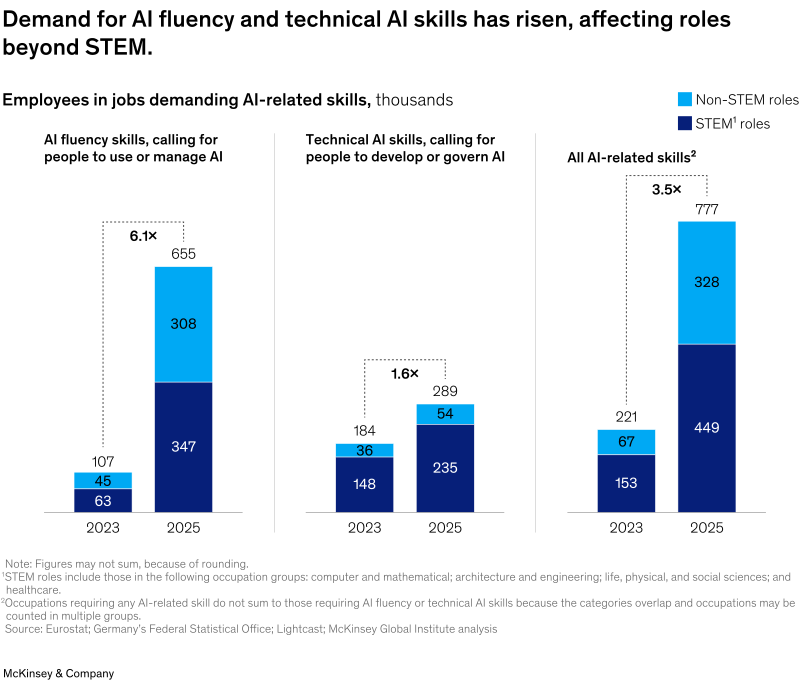
Demand for AI competency in Germany has more than tripled since 2023. Demand for AI fluency (see sidebar “What is AI fluency?”) skills has surged sixfold (Exhibit 7).47 For many knowledge-based professions, AI competency is already a basic requirement. This trend will intensify further in the years ahead. Companies that build AI fluency early and systematically will secure a measurable competitive advantage. In the financial sector, for example, companies with leading digital and AI capabilities ("digital leaders") demonstrably achieve significantly higher total shareholder return.48
This finding is particularly relevant for Germany. Despite high formal education levels, German workers have lagged behind those in countries like South Korea, Sweden, and the United States for years when it comes to building foundational digital competencies and AI-specific skills.49 This capability gap also manifests in daily working life. Currently in Germany, only around four in ten employees use AI regularly at work, compared with almost eight in ten in the United States.50
Strengthen employees based on lifelong learning
More than 70 percent of the skills human employees possess today will remain relevant in the future.51 But the context in which these skills are applied will change fundamentally. Think of the reality of the future AI-driven world of work as a triad. People continue to independently perform some tasks—those where judgment, empathy, and creativity are indispensable. Humans and AI agents collaborate closely on other tasks: The human steers, interprets, and decides, while the agent executes. And increasingly, AI agents act largely autonomously on the remaining tasks (Exhibit 8).52 Some companies already operate with a small number of people steering a large number of agents and without a traditional workforce.
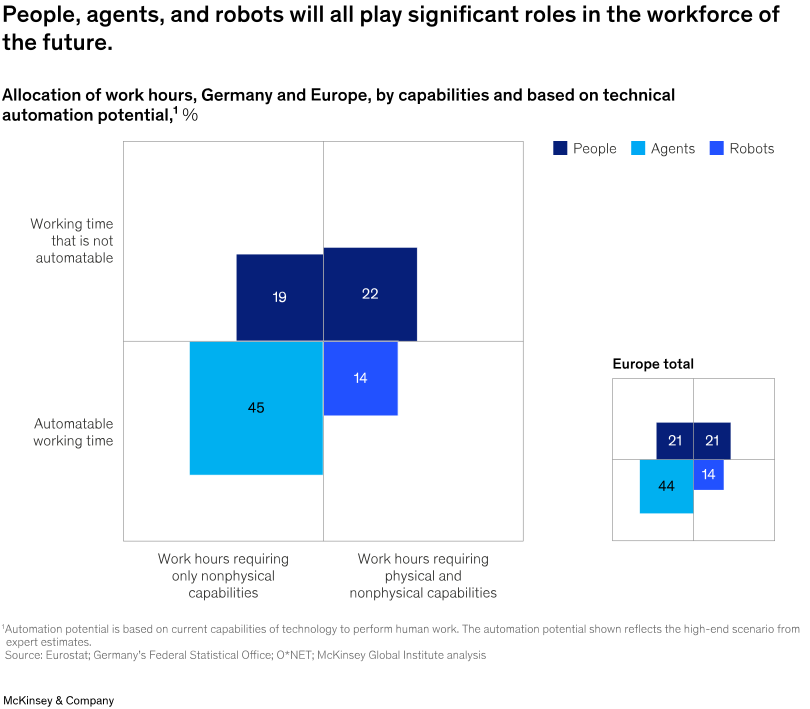
This development changes not only how work is organized but also the relevance of human skills. The ability to execute is losing importance, while the ability to steer and oversee agents is becoming more important. Critical thinking has never been more important than in the age of AI. It is needed for selecting tools, prompting, delegating tasks to agents, and evaluating results and decisions.53
Companies can and must prepare their workforce for this triad with workplace learning infrastructures that enable continuous upskilling as part of everyday work. AI-powered personalized learning agents enable tailored development in the flow of work, making reskilling and upskilling an ongoing operating mode instead of a one-off training initiative.
Redefine leadership and collaboration
In the age of AI, team leaders no longer manage people alone; they manage human–machine teams. For human employees and AI agents to contribute optimally to organizational success, companies need an AI-friendly work culture—one with a high tolerance for failure, rapid learning cycles, and the willingness to encourage experimentation explicitly. Leaders bear a particular responsibility to model these values.
For German companies, this represents an often-overlooked opportunity. German leadership culture, with its embedded values of thoroughness and quality consciousness, is not in conflict with speed and a spirit of experimentation. The path forward is to enhance proven leadership principles with new facets: psychological safety, iterative decision-making, and the deliberate cultivation of unconventional thinking. When leaders actively shape this balance, they help ensure that the new playbook for greater productivity growth in Germany does not remain abstract theory but takes hold in practice.
German executives are ready
Some 76 percent of C-level executives are optimistic—and 65 percent see an acute need for action. The German entrepreneurial spirit is intact. Now it comes down to execution.
Our survey of German C-level executives paints a nuanced picture (see sidebar “About the survey”). The will to change is there, but a considerable gap remains between understanding and execution. Productivity progress tends to be exaggerated, and disruptive action remains the exception—the result of both internal and external limitations, such as corporate culture and the regulatory framework.
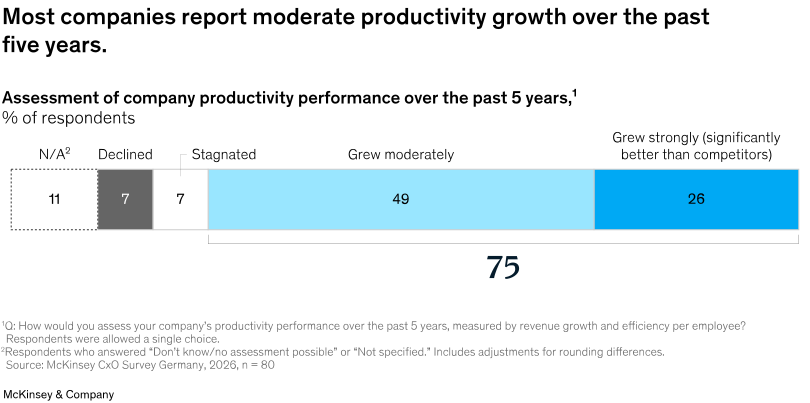
Some 75 percent of executives surveyed report productivity growth over the past five years, with 26 percent reporting strong growth significantly above their peers (Exhibit 9). Still, our broader analysis of 16,200 companies across the German economy shows that productivity barely increased during this period. In real terms (that is, on a price-adjusted basis), a considerable share of companies may have moved backward. Various causes can underlie this contrast. First, the survey deliberately targeted executives of large and midsize companies. The 26 percent who report strong productivity growth could work for the productivity champions we identified in Chapter 1. Second, the period under reviewincludes a phase of high inflation, during which revenues and value creation showed strong gains in unadjusted terms
Productivity growth: A solid foundation with room to grow
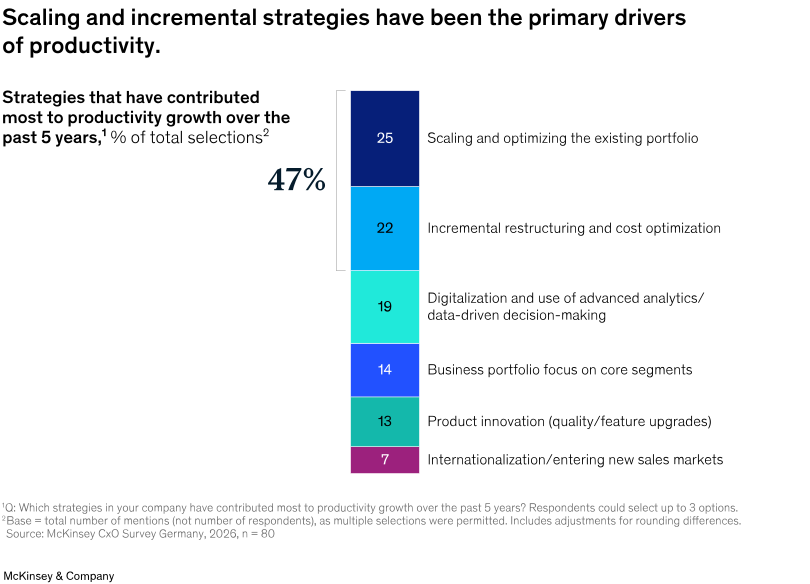
The drivers behind growth to date are clear: Scaling and portfolio optimization (25 percent) and restructuring (22 percent) dominate, followed by digitization and advanced analytics at 19 percent (Exhibit 10). Internationalization—until recently a central lever for scaling—plays a surprisingly minor role at just 7 percent. This confirms the core proposition of this publication: The tried-and-tested strategies have worked but are incremental. Given the disruptions described in Chapter 2, they are no longer sufficient on their own.
Disruptive change: The urgency is recognized
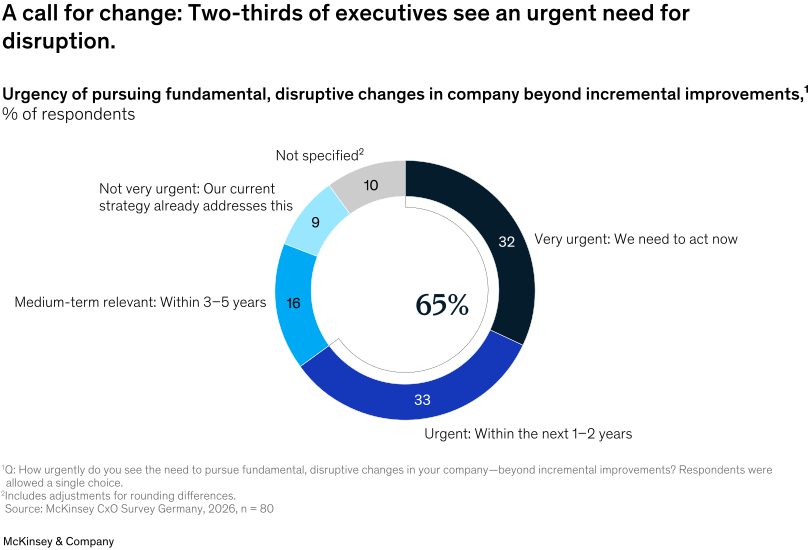
Some 65 percent of executives surveyed recognize an acute need for fundamental, disruptive change immediately or within the next two years. Only 9 percent believe their current strategy already addresses this sufficiently (Exhibit 11). The signal is unambiguous: The necessity of transformation has reached the executive suite. Many companies have already begun adapting their strategies; now it comes down to speed and consistency.
AI transformation: Prioritized but not yet deeply embedded in operations
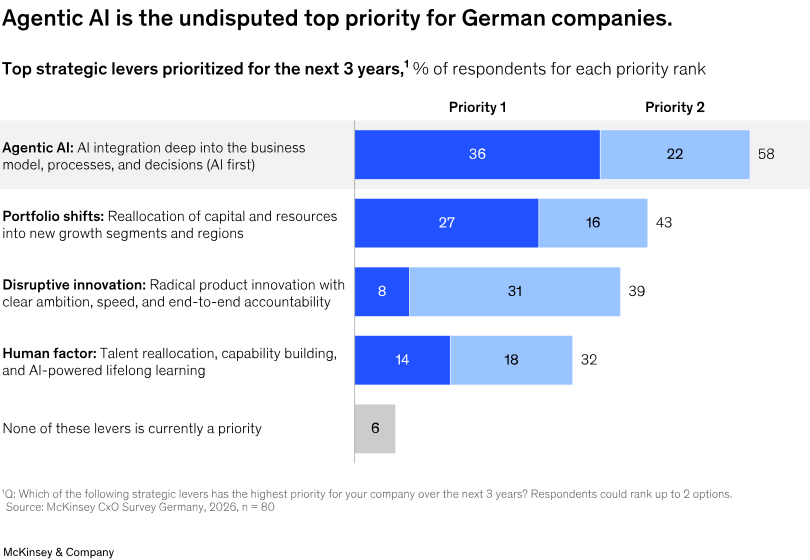
Deploying agentic AI is the clear priority: 36 percent of executives indicate that the most important strategic priority for the coming three years is integrating AI deep into the business model, processes, and decisions. This item lies well ahead of portfolio shifts (27 percent) and the human factor (14 percent). Disruptive innovation is cited most often (by 31 percent) as the second most important strategic lever. Although it is considered important, it is not seen as the pressing initial step (Exhibit 12).
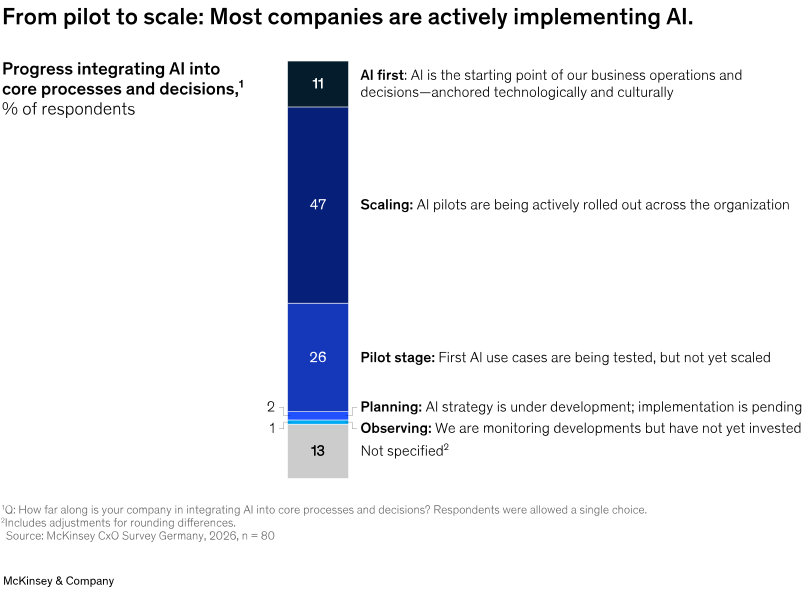
So far, 11 percent of executives surveyed describe their organization as an AI-first organization. Another 47 percent say they are actively scaling AI pilots—a clear signal that the transformation is underway (Exhibit 13). Yet, the “AI paradox” is confirmed empirically: AI is a strategic priority, but operationally, it is not yet embedded deeply enough to generate genuine competitive advantages. The step from scaling individual pilots to enterprise-wide AI transformation remains the central challenge for the years ahead.
The human factor: Prioritized in strategy, underestimated as a lever
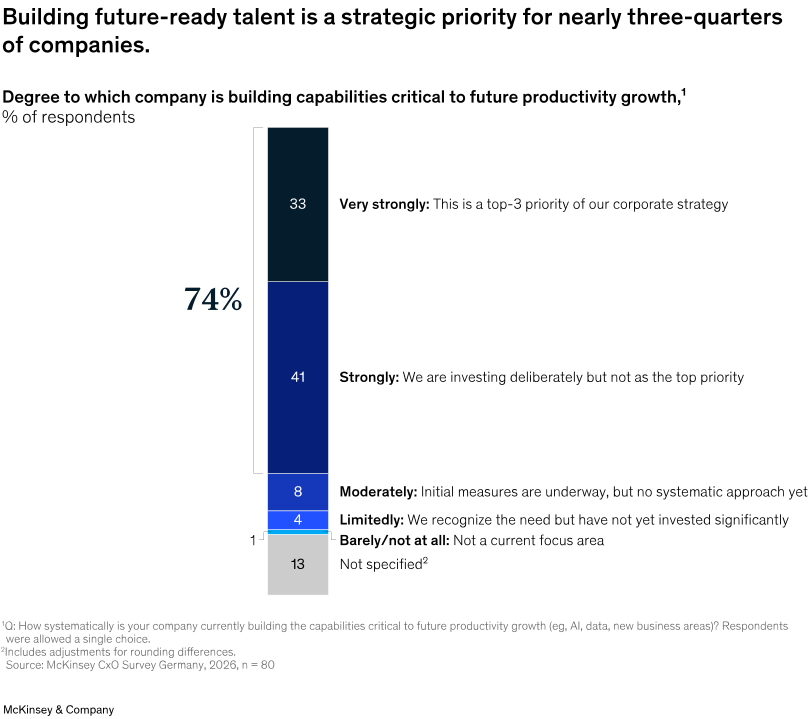
Some 74 percent of executives surveyed say they are investing strongly or very strongly in building capabilities critical to future capability growth, yet only 33 percent identify the human factor as one of their top three levers in the priority ranking (Exhibit 14). This is not a contradiction but a deliberate sequencing decision: Without an AI strategy and without clear portfolio priorities, there is no foundation on which to build the right capabilities in a targeted way. AI strategy comes first, and capability building follows.
The next five years: Confidence despite pressure
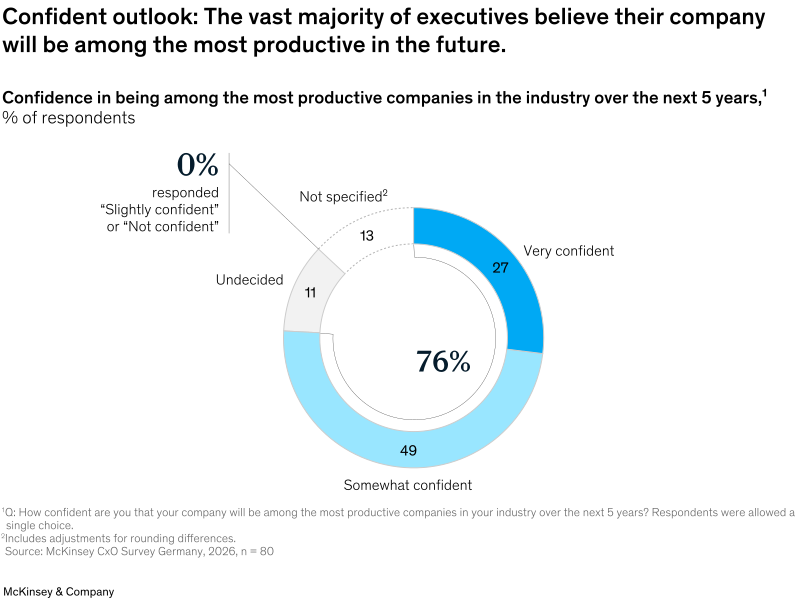
Despite all the ground still to be covered, 76 percent of executives surveyed are confident that their company will be among the most productive in their industry over the coming five years. Not a single executive expressed a lack of confidence (Exhibit 15). This is a powerful signal that the German entrepreneurial spirit is intact. The willingness to act is present, and so is the belief in the competitiveness of one’s organization.
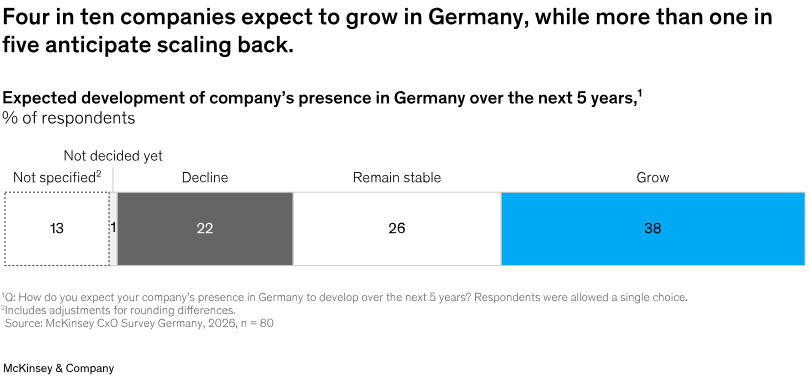
The survey also asked executives about their companies’ future presence in Germany. The responses present a nuanced picture. While 38 percent of companies plan to expand their presence and 26 percent intend to keep it stable, 22 percent—more than one in five companies—anticipate reducing their presence in Germany over the next five years (Exhibit 16).
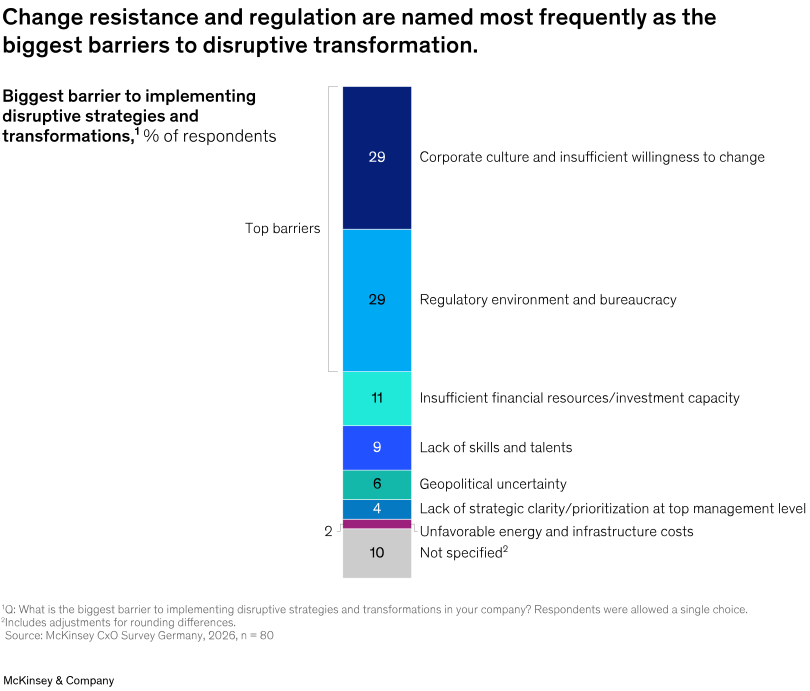
What is holding companies back from realizing their full potential? Executives most often say the greatest obstacle is either corporate culture or the regulatory environment, at 29 percent each (Exhibit 17). This means some obstacles lie within the company itself and can be addressed with decisive internal action, which the new productivity playbook addresses (Chapter 3). Other obstacles, in contrast, lie outside the control of individual companies. To address these, policymakers and public administration must act (Chapter 5).
The right mindset plays a decisive role in overcoming both internal and external hurdles. Implementing disruptive change does not begin with processes or technology but in the mind, with the willingness to question established habits fundamentally and to assume responsibility for change at the leadership level and across the broader organization. This attitude is the starting point for everything else. It is the foundation for the internal transformation outlined in the playbook, and it creates the societal support needed to make the right external factors politically possible.
Entrepreneurial courage needs the right framework
Entrepreneurial courage can only deliver its full impact within the right framework. As long as production costs in Germany are up to 50 percent higher than in other countries, Germany will continue to miss out on substantial investments.
Ultimately, it is up to companies to achieve productivity growth and implement the new playbook. Some have already begun. However, several impediments exist. Some of these lie beyond the control of private-sector actors. This is where policymakers and public administration will need to intervene: regulatory complexity and bureaucracy, rigid labor markets, and energy prices that are too high when compared to those in other countries. Only if these factors change will Germany remain attractive for companies and investors in the future (see sidebar “Germany’s investment climate”). Already, a number of initiatives from business and society—such as Made for Germany—are working to strengthen Germany as an investment location.54 What matters is that impulses translate into concrete action. Otherwise, there is a risk that investment decisions might permanently favor other countries.
Growth-oriented regulation and less bureaucracy
For companies pursuing disruptive innovation cycles and seeking to unlock new growth segments, rapid approval processes and lean bureaucracy are not minor administrative issues, they are hard competitive factors. For the C-level executives we surveyed, regulatory conditions and bureaucracy are the greatest external obstacles to implementing disruptive strategies.
Bureaucracy costs the German economy an estimated €146 billion in economic output every year, equal to 4.6 percent of GDP. Moreover, approval processes on average take six months longer than legally prescribed.55 Centralization and digitization can help structurally accelerate approval processes. In its Best Practice Principles for Licensing and Permitting (2025), the OECD recommends that approval systems be consistently focused on genuine risks, while eliminating unnecessary procedural layers that slow innovation and increase costs.56 In Germany, initial steps in this direction have already been taken: In Bavaria, for example, applications for residential buildings are deemed approved if the authority fails to make a decision within three months—a policy that has been in place since 2021.57 Baden-Württemberg introduced a comparable provision in 2025.58
Still, Germany remains far from a nationwide transformation in its approval processes.59 If these promising approaches can be consistently expanded and supported by digitization, domestic companies will benefit from improved location conditions—and foreign companies will gain incentives for making direct investment and setting up operations in Germany.
More flexible labor market and greater talent availability
One of the greatest structural barriers to productivity growth lies in the labor market itself. Rigid regulations make it difficult for companies to adapt quickly enough to changing market conditions, whether by restructuring or by shifting teams to more productive areas.60 Our analysis shows that Germany forfeits roughly one percentage point of productivity growth annually because legacy structures are adjusted too rarely.61 More flexible working-time models, greater fluidity of workers between companies and industries, and employment protection that enables restructuring without leaving employees vulnerable could make a substantial contribution here.62 The objective is not less protection for employees but a system that rewards mobility.
More than ever, taking advantage of new business opportunities requires a highly skilled workforce. Professionals must be familiar with relevant technological innovations throughout their career to shape value creation. Some 9 percent of the executives we surveyed cite insufficient availability of skills and talent as an obstacle to implementing disruptive strategies. By shifting the focus to workers and their employability, rather than protecting existing jobs, policymakers could encourage and support more of the workforce in transitioning to highly productive roles ('flexicurity').63 With enhanced upskilling, unemployed workers could return to the workforce more quickly. Beyond this, better alignment of childcare and educational offerings with the needs of working parents could help increase workforce participation.64
Activating enough skilled workers to implement the new productivity playbook could involve integrating workers migrating to Germany into the labor market more swiftly than they are today. In addition, Germany could enhance its appeal to highly qualified foreign professionals by offering a coherent, single-source solution that spans administrative procedures, labor market integration, and local onboarding for professionals and their families. A welcoming culture—in the workplace and in society—is just as important as administrative simplification.
The Allianz der Chancen (Alliance of Opportunities) has developed additional recommendations for increasing labor market flexibility and activation. McKinsey Germany serves as the knowledge partner for this alliance.65
A reliable supply of energy at competitive prices
A reliable supply of energy at internationally competitive prices is not a given. It is a fundamental prerequisite for industrial productivity. Currently, industrial consumers in Germany pay between 14 and 18 cents per kilowatt-hour of electricity, depending on consumption volumes. In China and the United States, comparable prices are around 8 to 9 cents per kilowatt-hour.66 This structural cost disadvantage influences investment decisions directly. Companies looking to unlock new growth areas, build AI infrastructure such as data centers, and electrify production processes need affordable and reliable energy as their foundation. Beyond renewable energy sources, this includes dispatchable, low-cost energy sources that are independent of wind and weather—such as gas-fired power plants. Expanding battery storage capacity could also help buffer supply fluctuations and increase resilience.67
Another critical prerequisite for tapping into growth areas like AI, e-mobility, and aerospace is a secure supply of critical raw materials such as lithium, cobalt, graphite, and neodymium. Around one million people in Germany already work in sectors that depend on so-called rare earths like neodymium as raw materials, and Germany is highly dependent on a few supplier countries. Critical raw materials are already a considerable cost factor, and McKinsey analyses indicate that further price increases are likely.68 In addition to diversifying supply sources, five building blocks can help reduce dependency and increase price stability: pooled procurement, strategic stockpiling, joint ventures with suppliers, recycling, and domestic extraction and processing.69 These measures exceed the capacity of individual companies—they are a task for consortia and for policymakers.
Decisively executing the productivity agenda
Productivity and growth do not arise across the board; they emerge where companies resolutely renew and complement the tried and tested. Those bold enough to do so create growth that ripples far beyond their own organization. That is the power of the few—and a great opportunity for Germany.
Germany has the means and the prerequisites to become more productive. The analysis of productivity champions shows that productivity growth is not a question of industry but rather a question of the right strategy and the determination to execute it.
The agenda is clear:
- Portfolio shift. Redirect capital and resources decisively into new growth arenas—horizontally, globally, resolutely. And let go where structural competitive advantages are out of reach.
- Disruptive innovation. Adapt the Innovation Execution operating model with ambitious targets, flat hierarchies, and a high pace of execution, lest German companies fall behind.
- Scaling. Recalibrate the geographic growth strategy. Occupy new trade routes, establish true market depth, and treat geopolitics as a strategic lever rather than a risk to be managed.
- Agentic AI. Employ AI not as a tool for isolated efficiency gains but as a new operating system. Clearly focus on its contribution to the bottom line and embed it across the enterprise.
- The human factor. Redefine the human role in the age of AI—with systematic capability building, lifelong learning, critical thinking, and a leadership culture that rewards courage.
Are these levers fundamentally new? No. What is new is the need for disruptive change. Incremental optimization no longer suffices in a context of geopolitical disruptions, ever-sharper global competition, and AI-driven disruption.
None of these levers works in isolation. Their power unfolds in combination, and all of them fail unless the capabilities and organizational models needed for their implementation are reimagined in tandem.
German companies can achieve a great deal—if the framework is right. This includes growth-oriented regulation, a flexible labor market, and energy at competitive prices. This is where policymakers and public administration are needed urgently as enablers.
The power of the few holds great opportunity—for companies, for Germany as a business location, and for societal prosperity. A handful of companies can set an entire economy in motion with their productivity growth. The question is not whether Germany can take this path. The question is whether Germany will act now.