At a glance
- Work in Europe will increasingly involve collaboration among people, agents, and robots. Across ten countries, 58 percent of current work hours could theoretically be automated using existing technologies—a share similar to that in the United States, though shaped by Europe’s distinct mix of industries. This reflects technical feasibility, not a forecast of actual adoption or job losses.
- In Europe, automation could unlock up to $1.9 trillion in economic value by 2030, but how much is realized will hinge on the pace of adoption. In a gradual scenario, significantly less value would be captured. Factors such as costs, regulation, and organizational readiness will shape adoption.
- Most human skills will endure, even as they are applied differently. Three-quarters of the skills sought by European employers today, including problem solving, writing, and research, are used in both automatable and non-automatable work. This overlap means they are more likely to be applied in collaboration with AI than replaced by it, at least in the near term.
- Demand for AI-related skills is rising in Europe’s workforce, but unevenly across countries. Demand for AI fluency has increased fivefold since 2023 and now appears in job postings across occupations representing 5 percent of employment.
- Leadership choices will shape how AI adoption unfolds across Europe. Capturing the opportunity will require redesigning workflows, investing in skills, and supporting workers as they adapt to working alongside agents and robots.

Listen to this episode of The McKinsey Podcast on what it takes to lead constructive partnerships between humans and AI agents at work.
Artificial intelligence and automation are reshaping how work is done across advanced economies. In Europe, the stakes are particularly high. The region faces a shrinking and aging workforce, persistent labor shortages, and slower productivity growth than peers such as the United States.1 Sustaining competitiveness and living standards will depend on the effective integration of people and technology.
Extending recent McKinsey Global Institute (MGI) research on the United States, Agents, robots, and us: Skill partnerships in the age of AI, this report turns the focus to Europe, examining how AI could reshape the skills that underpin work and, in turn, productivity and growth. We cover ten economies that together account for more than three-quarters of the region’s labor force and GDP.2
Across these economies, some 58 percent of current work hours could theoretically be automated using existing technologies—AI-enabled agents for cognitive tasks, and robots for physical work.3 This reflects what is technologically feasible today, not what is likely to be adopted in practice, and it does not imply widespread job loss. Rather, it signals a fundamental shift in how work is performed. As tasks within jobs become automated, roles will evolve and new activities will emerge, leading to profound changes in how workers across Europe apply their skills.
Country dashboards
The dashboards below offer a data-driven view of automation potential, demand for AI-related skills, and MGI’s Skill Change Index (SCI), which measures how exposed skills are to automation. The full report follows.
Work will increasingly involve collaboration among people, agents, and robots
Automation potential offers a glimpse of how work could be reorganized in the years ahead. In the ten European countries analyzed, 58 percent of current work hours could theoretically be automated using existing technologies—44 percent by agents and 14 percent by robots. The remainder involves activities that require human capabilities, including complex judgment, adaptability in unpredictable environments, and contextual reasoning (Exhibit 1).4
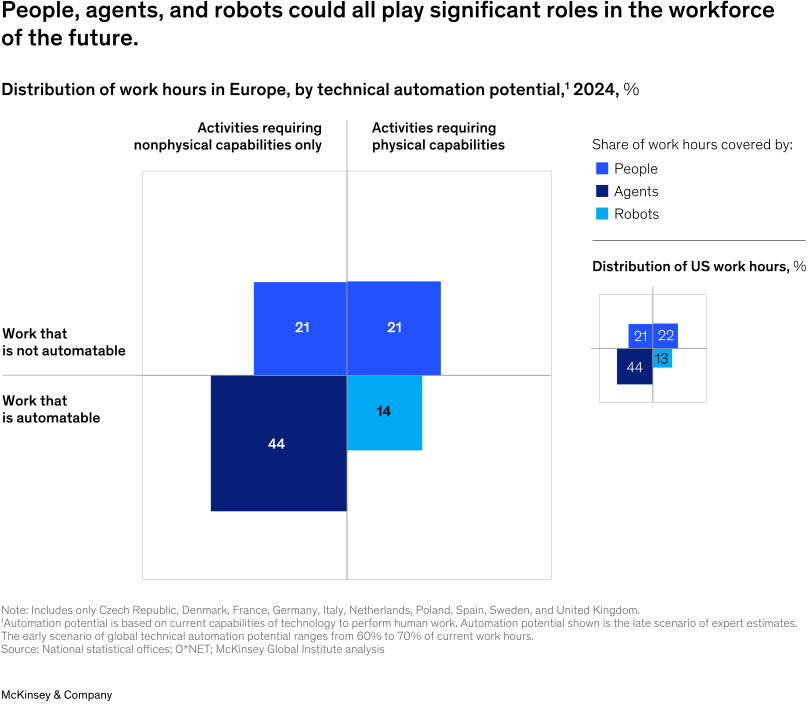
Automation potential is broadly similar in Europe and in the United States, suggesting a comparable scale of transformation. These estimates reflect what is technically feasible today, not what will be adopted, and they do not capture how work itself may evolve as organizations adopt more agents, robots, and other automation technologies.5
We use the umbrella terms “agents” and “robots” to describe machines that automate nonphysical and physical work, respectively. Many technologies perform these functions—some based on AI, including generative AI, and others not—and the boundaries between them are shifting.6
Europe’s mix of physical and nonphysical work shapes its automation pathway
Work comprises both physical and nonphysical activities. This mix varies significantly by sector, occupation, and region, influencing both the type and pace of automation.
Roughly two-thirds of total work hours in the ten European countries studied involve nonphysical activities, including information processing, analysis, and coordination (Exhibit 2). These are concentrated in occupations such as office and administrative support, business and financial operations, and computer and mathematical roles.
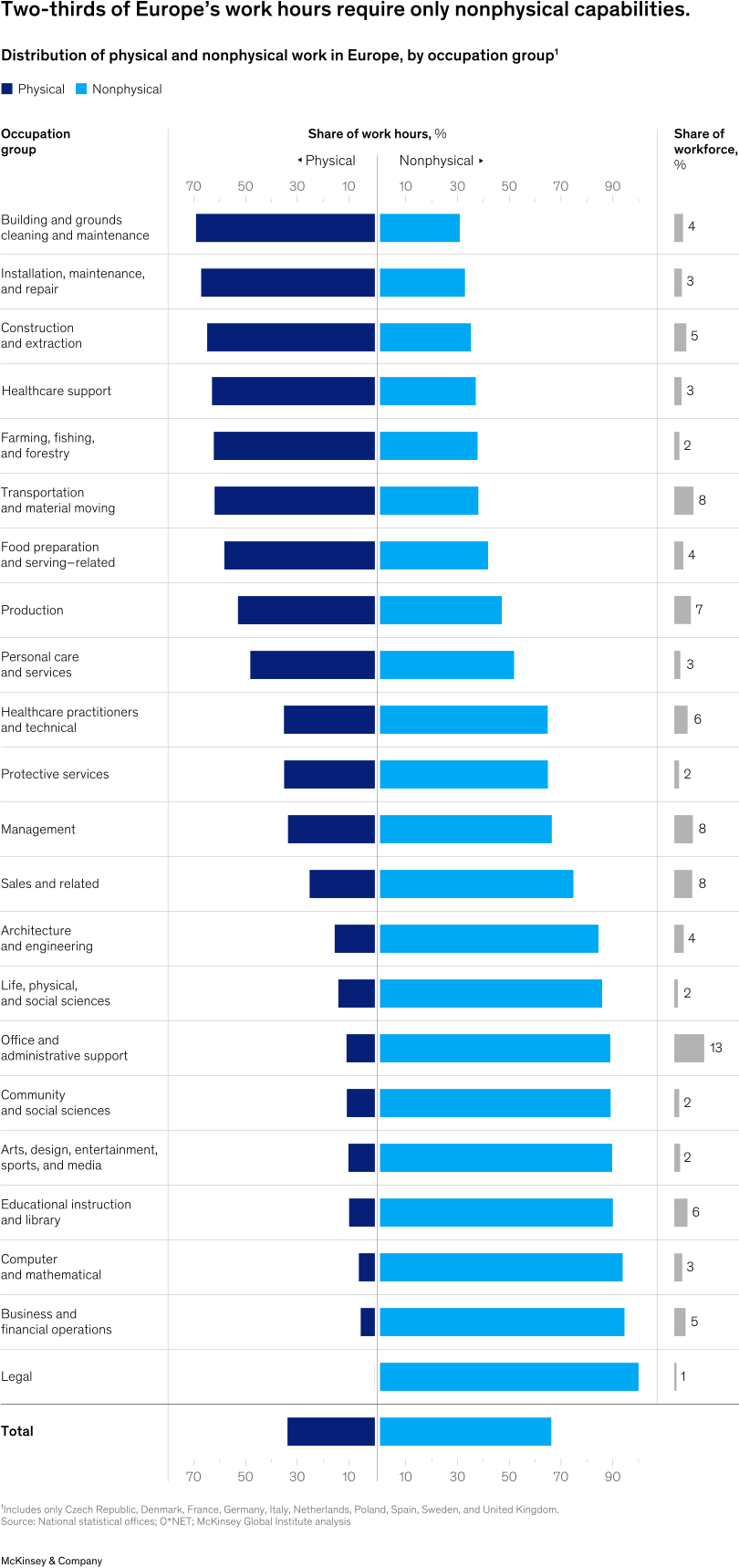
The remaining one-third of work hours require physical capabilities—operating equipment, handling materials, and performing manual tasks. Physical intensity is concentrated in occupations such as maintenance, installation and repair, and construction.
Jobs fall into seven archetypes combining people, agents, and robots
Technology plays different roles in different types of work. Drawing on an analysis of roughly 800 occupations, we identify seven work archetypes—broad categories defined by the relative contributions of people, agents, and robots (Exhibit 3).
People-centric roles account for about 31 percent of employment in the ten European countries. These occupations rely heavily on human judgment, interpersonal interaction, and adaptability in unstructured physical or social environments. Examples include roles ranging from janitors to healthcare practitioners to general managers.
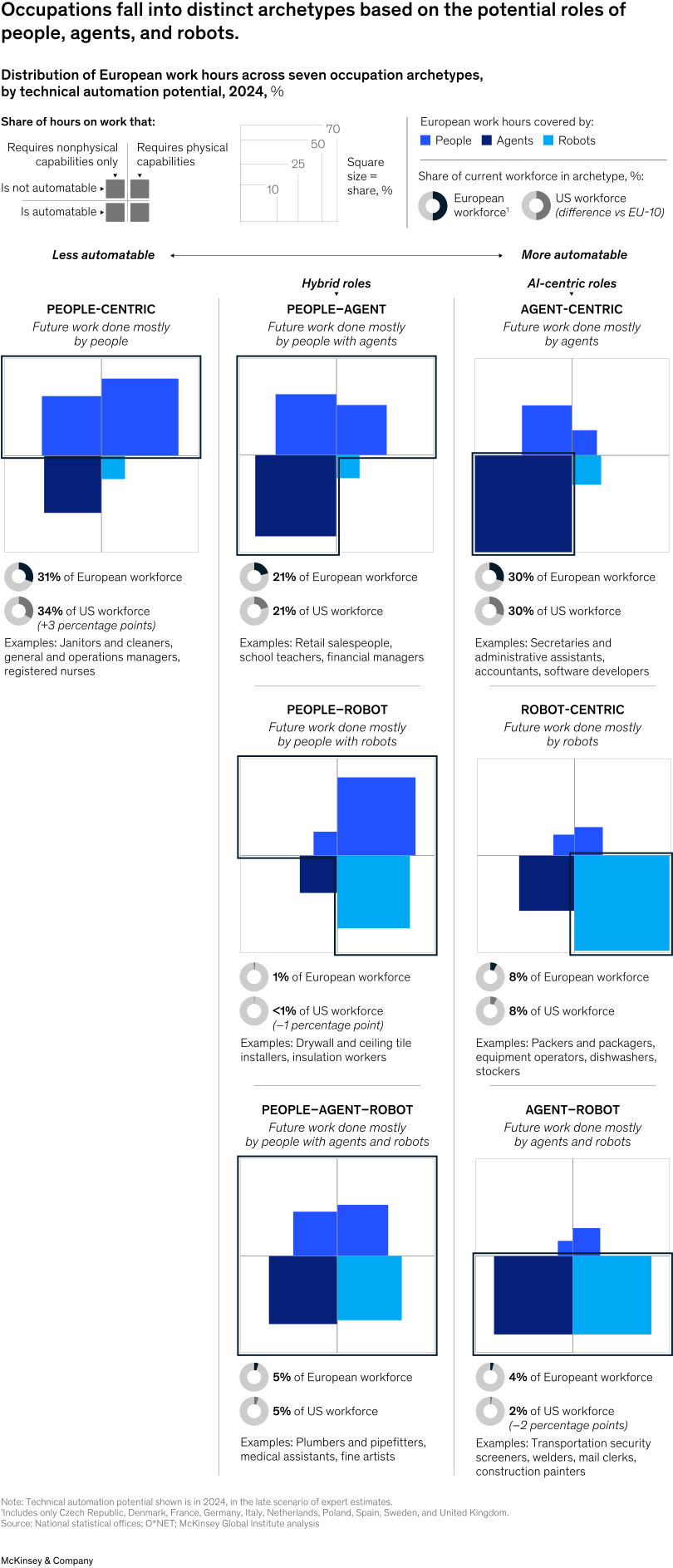
Twenty-seven percent of employment falls into hybrid roles, in which people work alongside agents, robots, or both. In these occupations—such as salespeople, plumbers, and medical assistants—humans remain central, but workflows may shift so that people focus on higher-value activities while agents or robots handle more structured tasks.
The remaining 42 percent of employment is concentrated in occupations that could become AI-centric. These occupations tend to involve structured and codified tasks. Examples include accountants, equipment operators, and security screeners.
Differences in the mix of these occupational archetypes can lead to similar levels of automation potential across economies, even as the underlying drivers vary (see sidebar “How occupational archetypes shape automation potential in Europe and the United States’’).
Automation could unlock up to $1.9 trillion in Europe—depending on the pace of adoption
Major new technologies have taken decades to scale, from electricity to industrial robotics to cloud computing, which is still expanding. The pace of AI and automation adoption will hinge on cost-benefit considerations, investment levels, and organizational readiness, as well as the time required to develop and deploy systems.
We model two scenarios based on historical patterns of technology diffusion. In our midpoint scenario, up to $1.9 trillion of economic value could be unlocked from AI and automation in Europe by 2030 (Exhibit 4).7 In a more gradual scenario, this value is closer to $1.1 trillion—a substantial gap, reflecting how strongly outcomes depend on adoption speed.
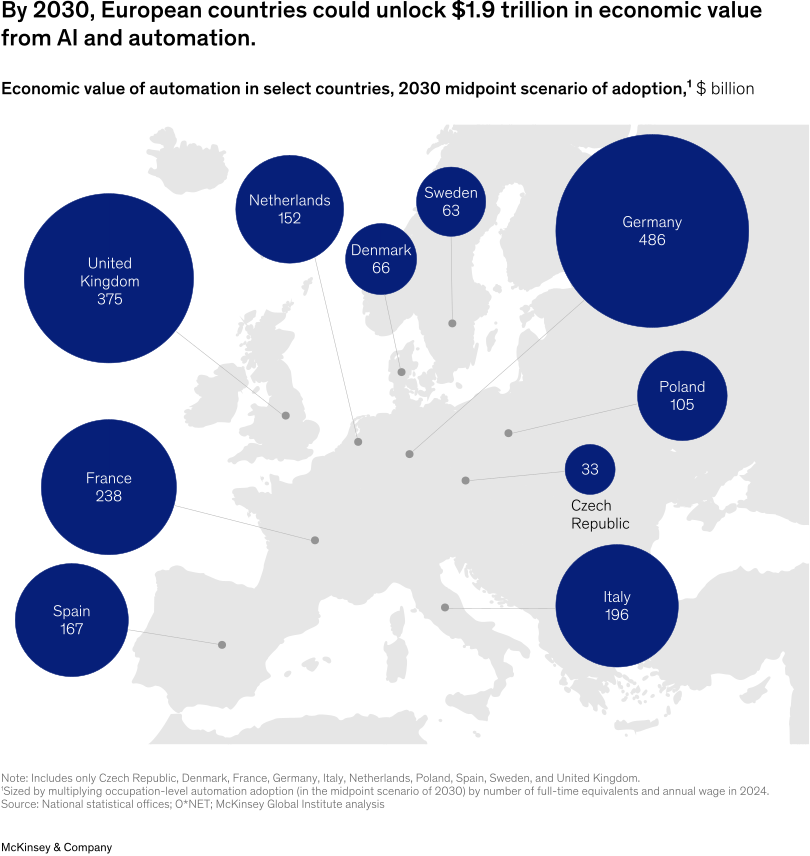
These estimates describe potential benefits at the organizational level rather than direct increases in GDP (see sidebar “How we estimate the economic value of automation adoption”).8 They capture both the continued diffusion of established technologies such as robotics, already widely used in manufacturing and logistics, and the emergence of newer, AI-enabled agents.
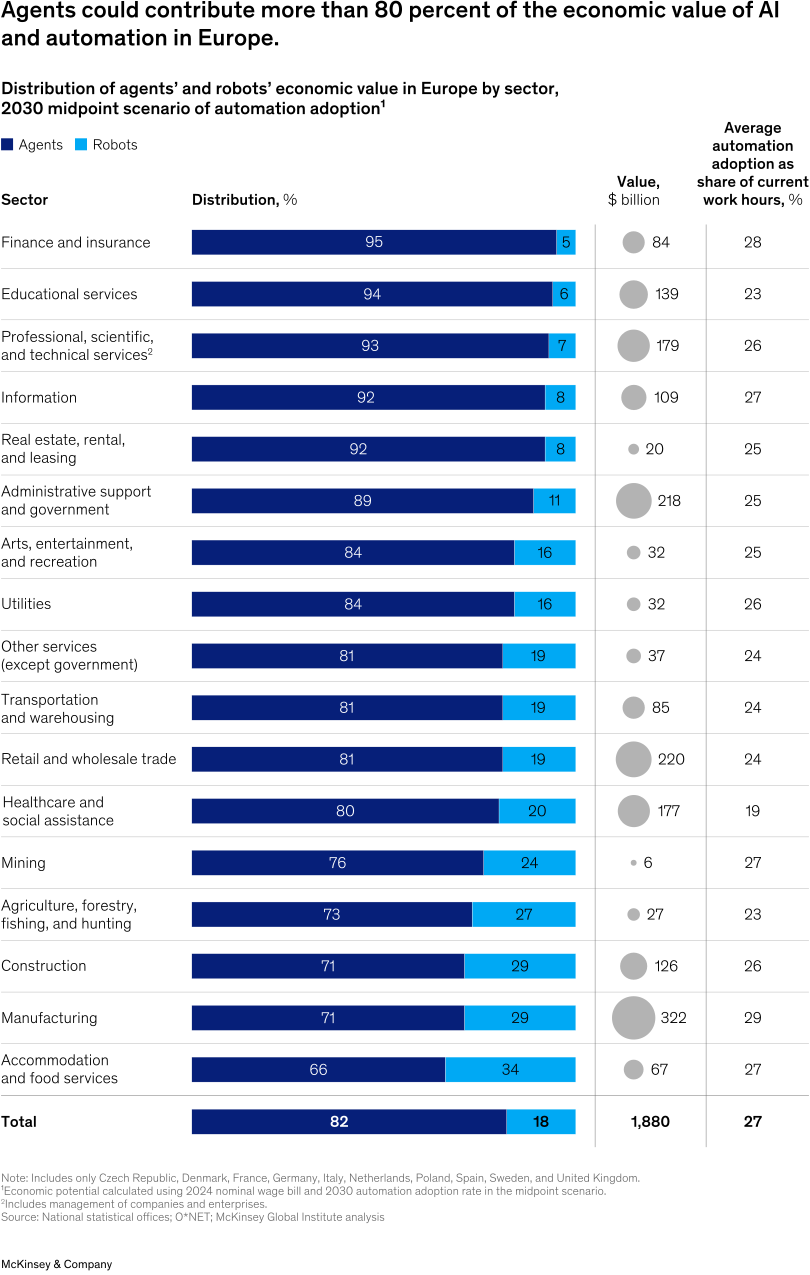
AI-enabled agents account for about 82 percent of the total potential value from automation in Europe, with robotics making up the remainder (Exhibit 5). This reflects the prevalence of nonphysical work and the different economics of deployment: Robotics typically requires higher up-front investment and longer implementation timelines, while agent-based systems can be implemented and scaled more quickly. Even in physically intensive sectors, such as manufacturing, as much as 71 percent of projected 2030 value stems from agent-based systems in planning, quality control, procurement, and supply chain coordination.
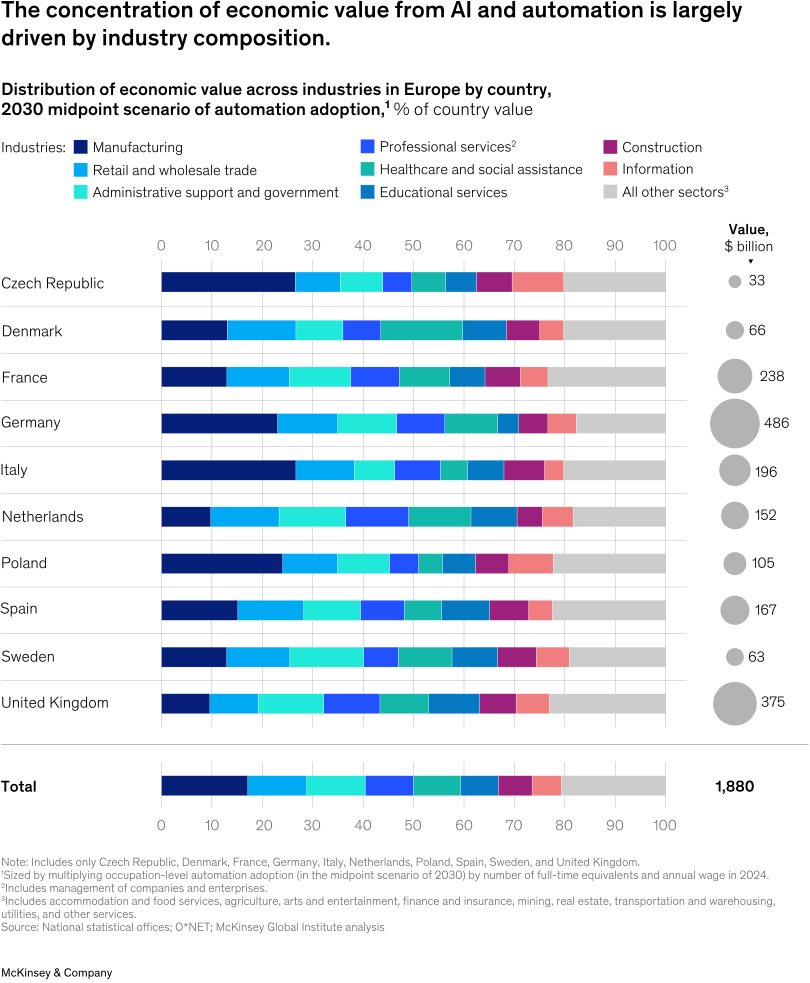
Sector composition shapes where potential value is distributed across economies. In most countries, value is spread across a range of sectors, while in others it is more concentrated—for example, manufacturing accounts for a larger share in the Czech Republic and Italy than elsewhere (Exhibit 6). How much is realized depends not only on adoption speed but also on how organizations reconfigure work to integrate these technologies.
Redesigning workflows is key to capturing value
Workflows—the multistep processes organizations use to complete work—are where value from automation is realized, but most were designed for a pre-AI environment. Applying AI to isolated tasks within legacy processes often yields limited benefits, since inefficiencies in the broader process remain. Incremental improvements at the task level rarely translate into meaningful gains. This may help explain why nearly 90 percent of companies report regularly using AI, yet fewer than 40 percent see measurable results.9
Redesigning workflows—collapsing handoffs, reducing coordination layers, and integrating activities fragmented across roles or systems—is what enables organizations to embed AI and automation into core processes.
Case studies of successful AI adoption show how these changes are starting to take shape. At a global technology company, for example, AI agents automate the early stages of the sales process, leaving more time for employees to focus on relationship management and strategic engagement. A pharmaceutical company uses AI to produce clinical documentation, shifting the medical writers’ role from manual drafting to reviewing, refining, and ensuring accuracy and compliance.10
As workflows shift, the structure of roles changes. Tasks are redistributed between people and machines, reshaping how skills are applied in practice.
Workers will increasingly apply their skills alongside agents and robots
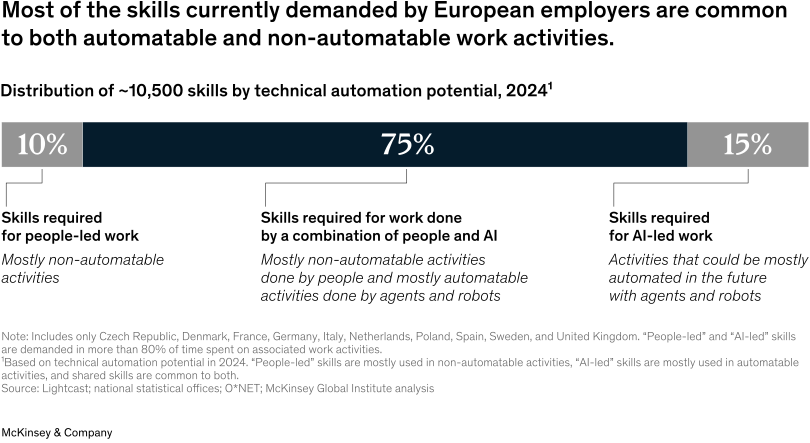
Our analysis finds that roughly 75 percent of skills currently demanded by employers in Europe are used in work activities that are both automatable and non-automatable (Exhibit 7; see sidebar “How we assess skill exposure to automation”).
Because most work processes combine automatable and non-automatable tasks, skills often cannot be cleanly divided between people and machines. Instead, they will be applied in collaboration with AI rather than replaced by it. As AI takes on more common and structured tasks, people will spend less time executing them directly and more time using automated systems.
Language competency, for example, may involve an AI agent drafting responses in multiple languages or translating documentation while a person ensures precision and calibrates cultural nuance. Similarly, quality assurance, which is common in manufacturing and service operations, may involve automated systems flagging defects or inconsistencies while a person makes corrections and ensures compliance with safety or regulatory standards. In both cases, the skill is shared: Machines flag patterns or issues, while people apply judgment and ensure accountability.
An additional 15 percent of skills are mainly associated with automatable activities. Over time, these skills are more likely to become embedded within agent-led or robot-enabled workflows. Examples include operating machinery in advanced industries, invoice processing and bookkeeping in financial operations, and language interpretation in call centers.
The remaining 10 percent of skills are mainly associated with non-automatable activities that rely on interpersonal interaction or contextual decision-making, including leadership, clinical judgment, negotiation, and conflict resolution.
This breakdown suggests that most skills could be reshaped through collaboration between people and AI rather than replaced outright.
The shift toward a hybrid human–machine workforce has already begun.
Employers are already demanding more AI-related skills
Job postings show the spread of AI-related skills across the workforce. Today, nearly one-fifth of occupations in Europe require AI-related skills, with the share having more than tripled since 2023 (Exhibit 8).
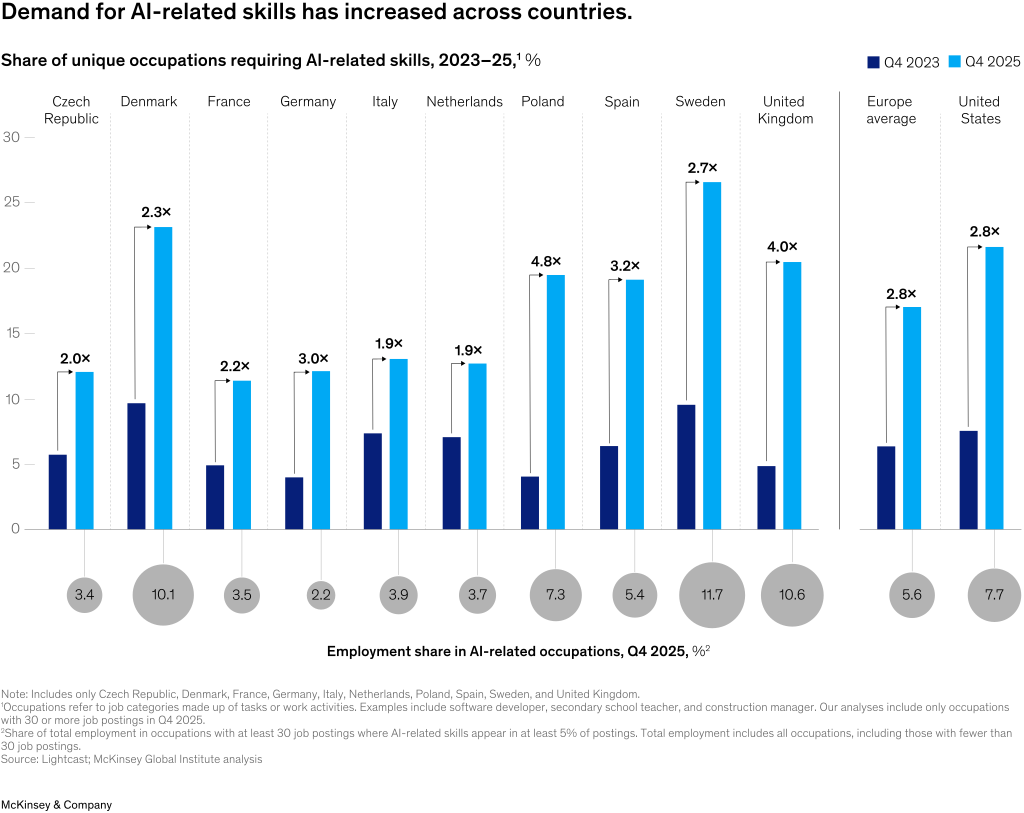
Demand for AI-related skills varies by country. Since 2023, job postings show employer demand increasing most rapidly in Poland and the United Kingdom, indicating broad-based diffusion in both emerging and mature labor markets.11 In 2025, more than one-quarter of occupations in Sweden required AI-related skills, the highest level in the region, although faster growth elsewhere suggests that this lead may narrow over time.
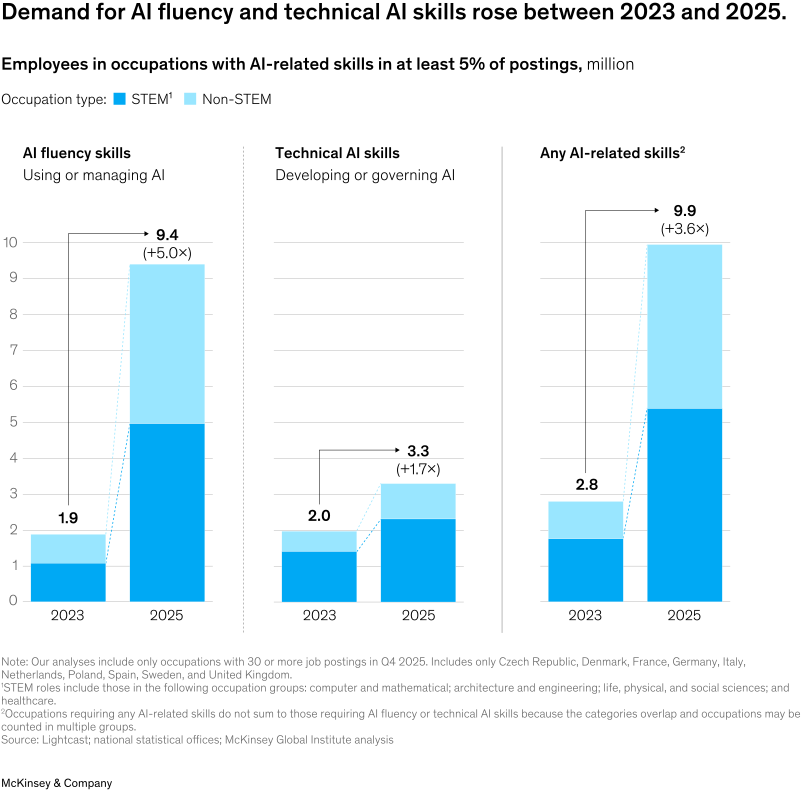
Across the region, demand for AI fluency is growing much faster than demand for technical AI skills (see sidebar “What is AI fluency?”). From the fourth quarter of 2023 to the fourth quarter of 2025, demand for AI fluency—the ability to use, manage, and increasingly create with AI systems—has increased fivefold and now appears in job postings across occupations representing about 5 percent of employment (Exhibit 9).12 Demand for technical AI skills, which involve building and deploying those systems, grew a more modest 1.7 times.
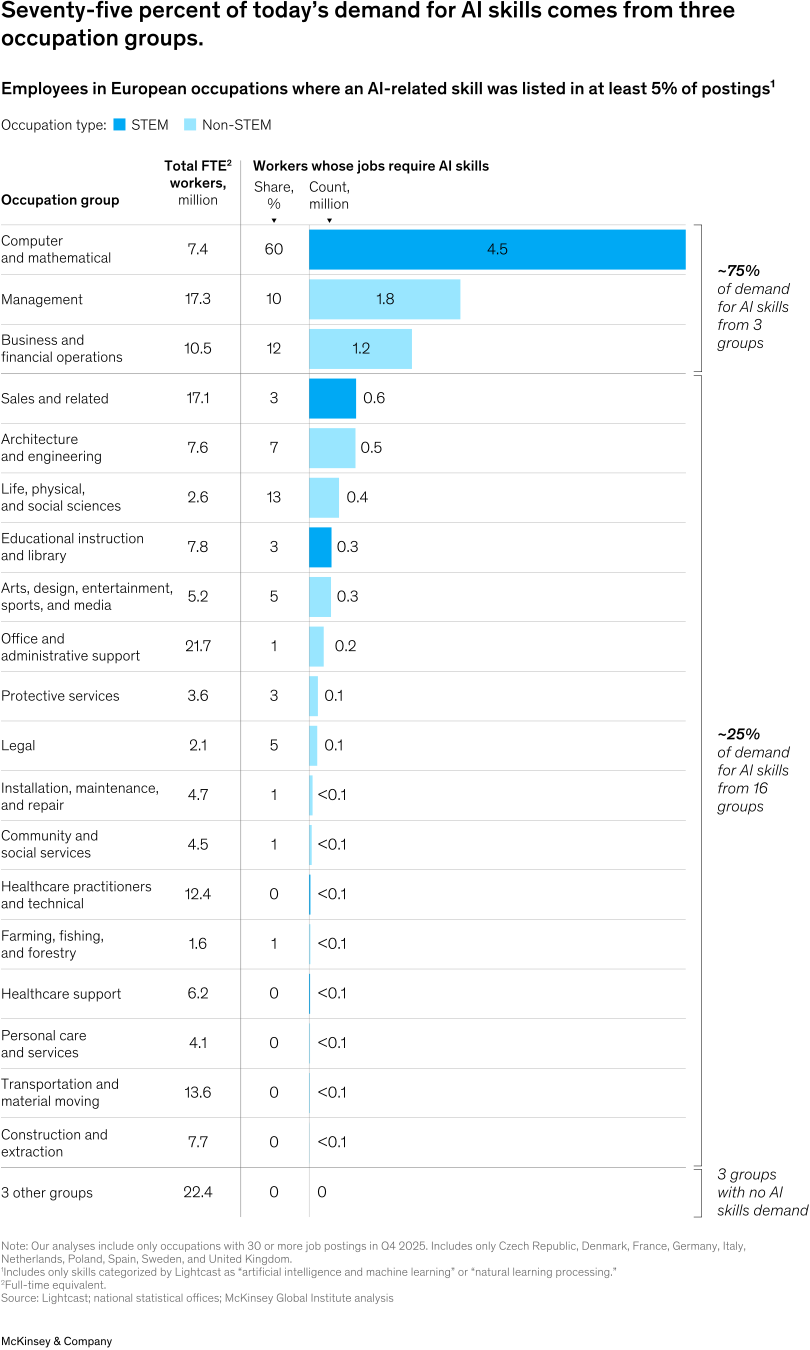
By occupation, demand for AI skills is beginning to spread beyond a narrow set of roles. Seventy-five percent is concentrated in three occupation groups—computer and mathematical, management, and business and financial operations—which together account for roughly one-fifth of total employment. The remainder is distributed across a wide set of occupations (Exhibit 10).
This diffusion is visible in nontechnical roles. Job postings for logistics coordinators, HR specialists, compliance officers, and many skilled trades increasingly call for familiarity with AI tools and analytics platforms. In these contexts, AI is not replacing domain expertise but changing how it is applied.
Greater use of AI in business processes drives demand for complementary skills, including process improvement, business analysis, and quality assurance (Exhibit 11).13
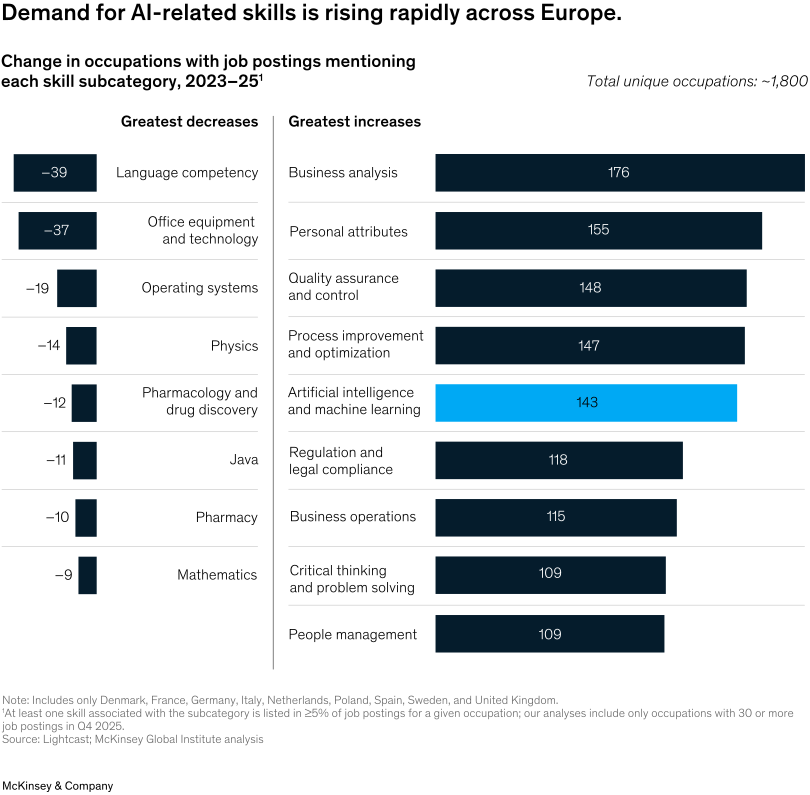
Overall, growing demand for AI-related and complementary skills signals the beginning of broader changes in how skills will be applied as AI adoption increases.
The Skill Change Index points to widespread shifts in skills by 2030
To gauge how skill demand may change, we apply the Skill Change Index (SCI) developed in earlier MGI research—a time-weighted measure of potential exposure to automation in different adoption scenarios (Exhibit 12; see sidebar “How we assess skill exposure to automation”). The SCI indicates most skills will be affected to some degree.

Digital and information-processing skills are among the fastest changing and most exposed skills, particularly programming languages and routine data entry. Examples from other sectors include invoicing, reconciliation, and transaction monitoring in financial services, and operating machinery and mechanical aptitude in advanced manufacturing.
Skills rooted in leadership, communication, and empathy are less exposed, meaning they are more likely to be augmented by AI rather than replaced. Clinical decision-making in healthcare, negotiation in professional services, and teaching in education are among the skills likely to change less even as AI plays a supporting role.
Most of the top 100 skills commonly demanded across our ten European countries face at least some exposure, indicating that skill change will be widespread.
Automation could unlock substantial economic value across Europe, but capturing that opportunity will depend on how organizations redesign work around people, agents, and robots. The transition underway represents more than the introduction of new tools; it signals a broader reorganization of tasks, workflows, and responsibilities.
Workers will shift from executing tasks themselves to orchestrating systems that perform them. As automation spreads, the most significant changes may lie in how human skills are applied within jobs.
Workers will need greater AI fluency, while businesses will need new workflows, governance models, and investments in the skills required to work effectively alongside AI systems.
This is not the first technological revolution. As with previous shifts, some roles and activities are likely to decline even as others emerge. Preparing people for these changes in roles and skills is a central challenge.
The outcomes are not fixed. Choices made now by companies, policymakers, and educators will shape how AI adoption unfolds and how workers adapt. Navigating this transition effectively is critical to raising productivity and sustaining competitiveness across Europe.
Glossary
Adoption: The deployment of AI and automation technology into real work activities and workflows within an organization or labor-force context, determining how much of the automation potential is captured, how fast, and how broadly.
Agents: Machines that perform work in the digital world, augmenting or substituting a person’s nonphysical capabilities (for example, natural language generation, social and emotional reasoning, creativity).
AI-powered agents: Agents with AI embedded, allowing them to act more autonomously and orchestrate workflows; also known as agentic AI.
AI-powered robots: Robots with AI embedded, allowing them to act more autonomously and orchestrate workflows.
Artificial intelligence (AI): The ability of software to perform tasks that traditionally require human intelligence, potentially augmenting or substituting people’s capabilities.
Capabilities: Physical or nonphysical abilities that support the application of skills, assessed based on human levels of performance required to perform work activities. Nonphysical capabilities include cognitive (for example, natural language, logical reasoning, creativity, navigation) and social and emotional capabilities.
Generative AI: Applications of AI that take unstructured data as inputs and generate unstructured data through foundation models (large artificial neural networks trained on vast amounts of varied data).
Nonphysical work: Work that involves cognitive or social/emotional capabilities rather than physical movement, such as problem solving, information processing, creating, and collaborating with others.
Occupations: A set of jobs that share similar tasks or work activities that can be described in terms of their skills, work contexts, and other qualifications. We use the United States’ formal classification of occupations, maintained by the Bureau of Labor Statistics. Occupations can be synonymous with “roles” and are not to be confused with employment.
Physical work: Work that involves direct interaction with the physical world, requiring motion-based capabilities such as gross motor skills, fine motor skills, and mobility. These tasks typically include operating or moving objects, tools, or machinery; assembling or positioning materials; and performing actions that depend on human strength or dexterity.
Robots: Machines that perform work in the physical world, augmenting or substituting a person’s physical capabilities (that is, gross motor skills, fine motor skills, or mobility).
Skills: Knowledge, competencies, and attributes that people deploy to perform work activities, often acquired through formal education, training, or work experience. Lightcast and ESCO provide market-driven classification systems for skills.
Technical automation potential: The share of work hours that theoretically could be automated with certain levels of technical capabilities. We assessed economies’ technical automation potential through an analysis of the detailed work activities of each occupation, completed for about 800 occupations in each of the ten European countries.
Work activities: Observable work behavior that represents what people do to accomplish the objectives of an occupation. In the United States, activities are formally classified by O*NET into detailed work activities (DWAs).
Workflows: A structured sequence of work activities that collectively advance work toward a defined goal, guided by processes (for example, rules, dependencies, information flows) and involving people and technologies.
Related Articles

Agents, robots, and us: Skill partnerships in the age of AI