For more than a decade, telecom operators (telcos) have pursued successive waves of digital transformation to offset slowing growth, rising capital intensity, and limited product differentiation. Most delivered incremental gains, but not the type of overarching structural change that the industry requires at a time when the pace of innovation, competition, and challenging secular issues show no signs of slowing down.
Agentic AI may be the first technology capable of altering that trajectory. Unlike earlier automation tools that improved individual tasks, AI agents have the potential to reshape entire workflows, even helping make operational decisions and coordinate work across functions. This shifts AI from being a powerful productivity tool to a full-scale execution layer that can fundamentally change how telcos design operations, deploy capital, and create value.
The question for telco leaders is no longer so much about where exactly to apply AI, but how to redesign the enterprise to operate with and optimize it.
Over the past few years, much of the sector has learned the hard way that there is no quick way to make that happen. But even as most telcos have failed to gain real value from their growing AI investments, rolling out too many fragmented or duplicative AI use cases and pilots, a smaller number of forward-thinking players are showing how the rapid emergence of agentic AI can be a paradigm shift, offering a rare opportunity to reorient the industry’s prospects.
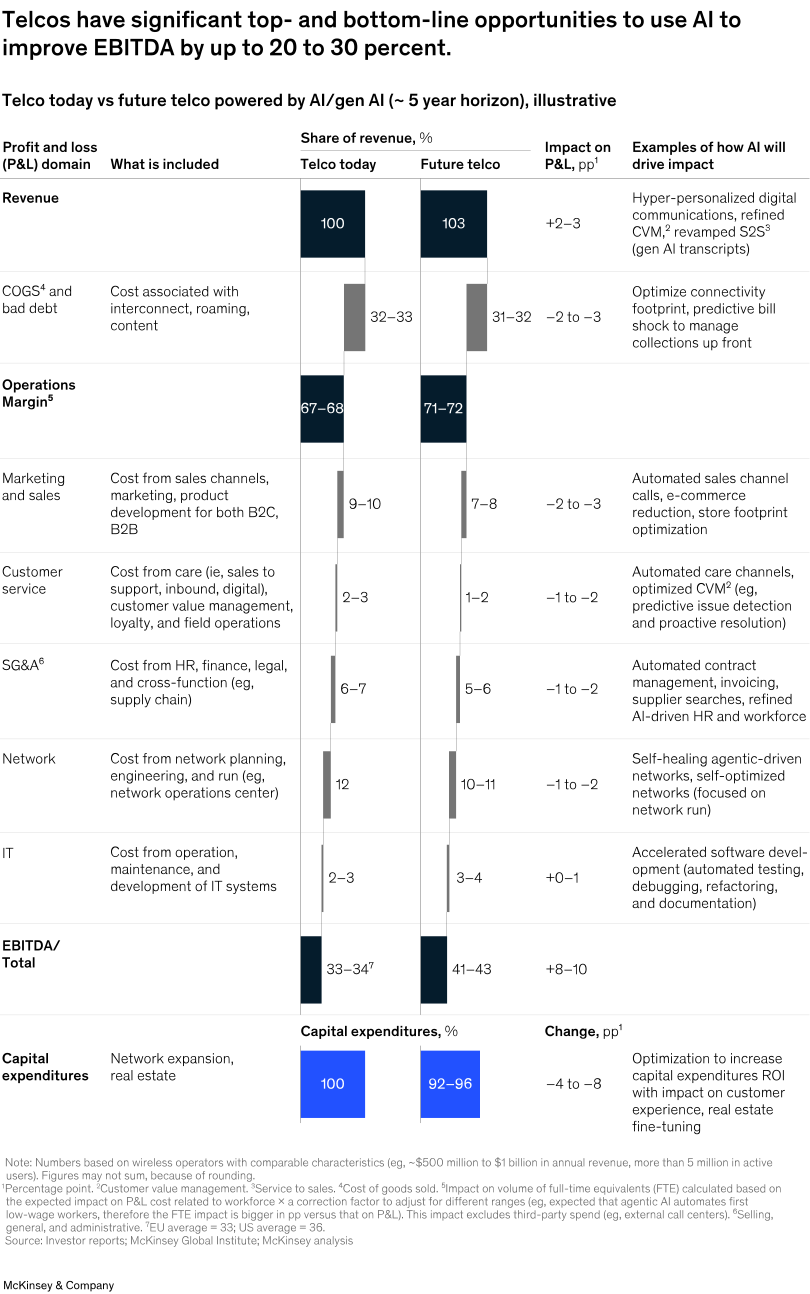
The telco leaders in harnessing AI to generate significant impact have already demonstrated it requires a sustained, long-term approach that includes CEO-led sponsorship, disciplined organizational transformation and change management, and a clear focus on end-to-end processes rather than individual tasks. This article, based on a recent survey1 of top telco executives and our experience working with clients on AI deployments, provides industry peers with a road map to similar success, with the possibility to increase both ROIC and EBITDA margins by as much as ten percentage points within five years.2 It lays out several key elements of a coherent agentic AI operating model that is necessary for telcos to capture that scale of new value and growth over the coming years and highlights the current state of telco AI adoption and impact for both leading, early-moving telcos and the rest of the industry.
The state of AI for telcos
While telco executives increasingly recognize the importance of AI to their future, relatively few have seen sizable impact from their embrace of the technology. And that embrace has grown significantly in recent years.
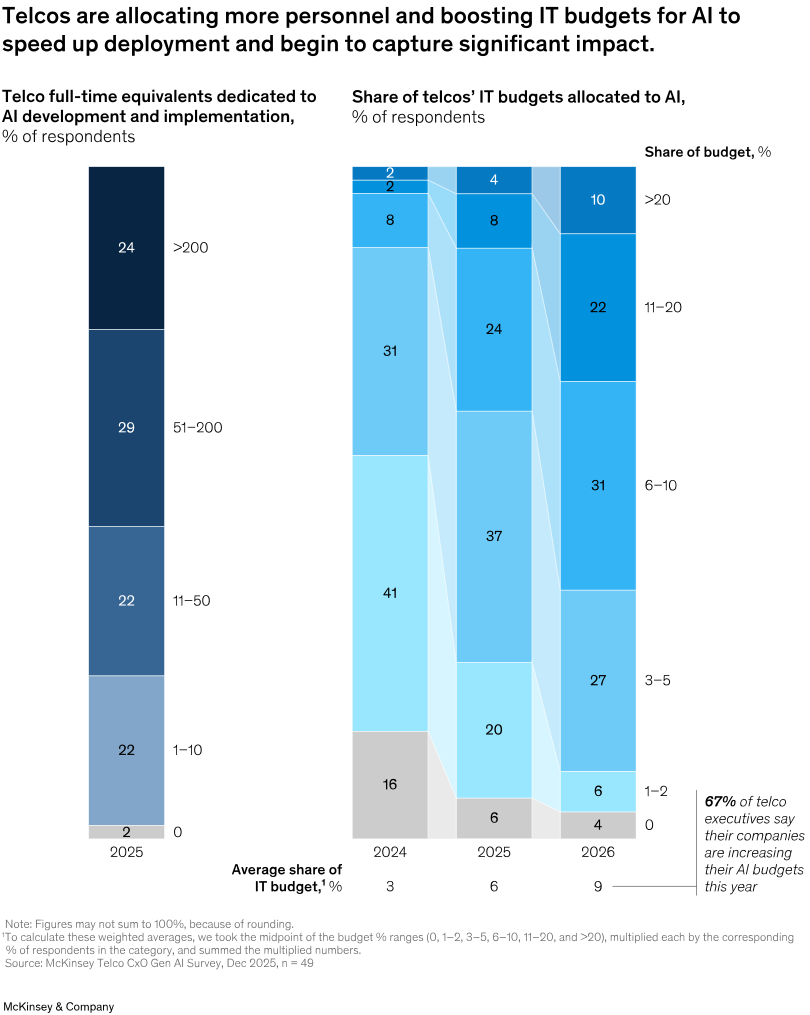
Just over half of the telcos we surveyed have at least 50 full time equivalents (FTEs) dedicated to AI, and fully two-thirds expect to increase the AI portion of their IT budgets this year; roughly half of that segment anticipates devoting more than 10 percent of that spending to AI, with the average industry allocation growing to 9 percent (Exhibit 1).
Though virtually all telcos we surveyed are piloting AI, only 57 percent report scaling use cases across multiple domains, led by customer service and networks, virtually unchanged from almost a year ago. Far fewer—just 16 percent—characterize AI as the “new normal” across their organization. At the same time, only 51 percent view AI as a “blockbuster technology” that will fully transform the industry, compared to 61 percent in the prior survey.3 Most of that shift in sentiment was toward a more sober view that the technology is “something relevant that will generate impact in the industry,” which is now shared by 47 percent of respondents, up from 36 percent the previous year.
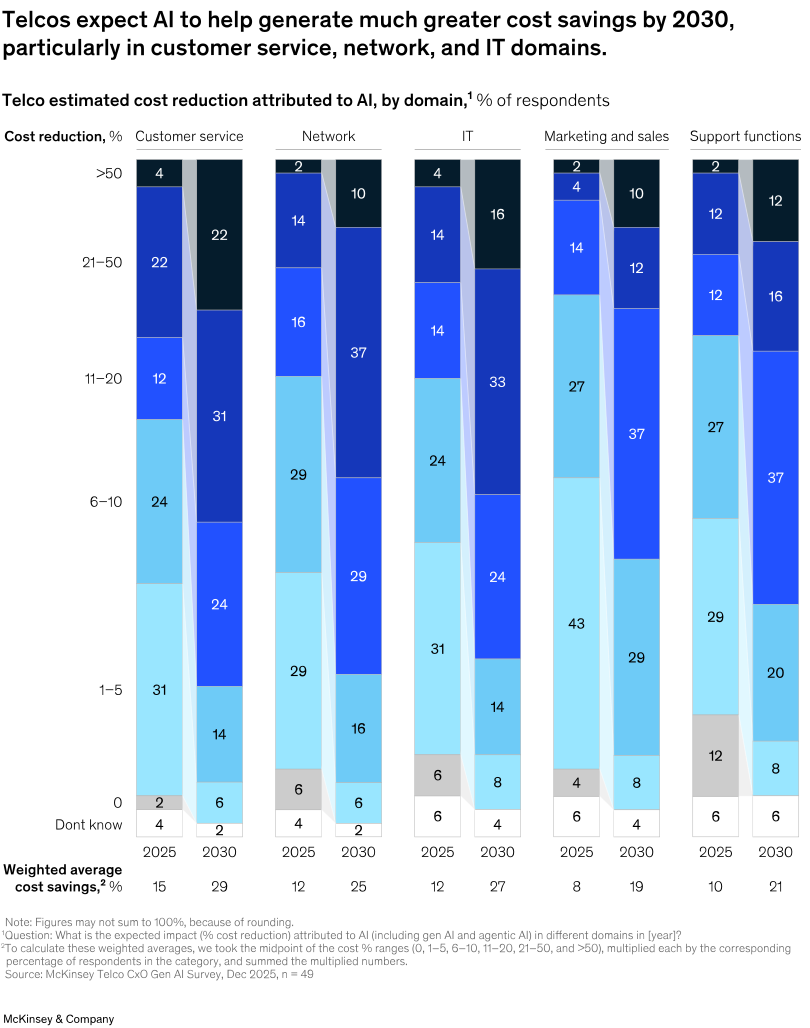
This more realistic, but still bullish, mindset, which is focused on tangible results rather than the technology’s seemingly limitless capabilities, reflects the industry’s initial experiences with incorporating AI. While telcos have seen meaningful cost savings in certain areas, most have yet to realize widespread productivity gains. Only 12 percent of respondents report having already captured sizable impact, with most others caught in what we call “the money step,” where investments have yet to yield any real balance sheet benefits despite spurring other impacts. A majority of industry leaders, however, remain cautiously optimistic that those benefits will materialize toward the end of the decade; they view the most fertile areas as customer support and network functions, followed closely by IT, where most telcos expect to enjoy at least 10 percent cost savings over the next one to two years and close to 30 percent by 2030 (Exhibit 2).
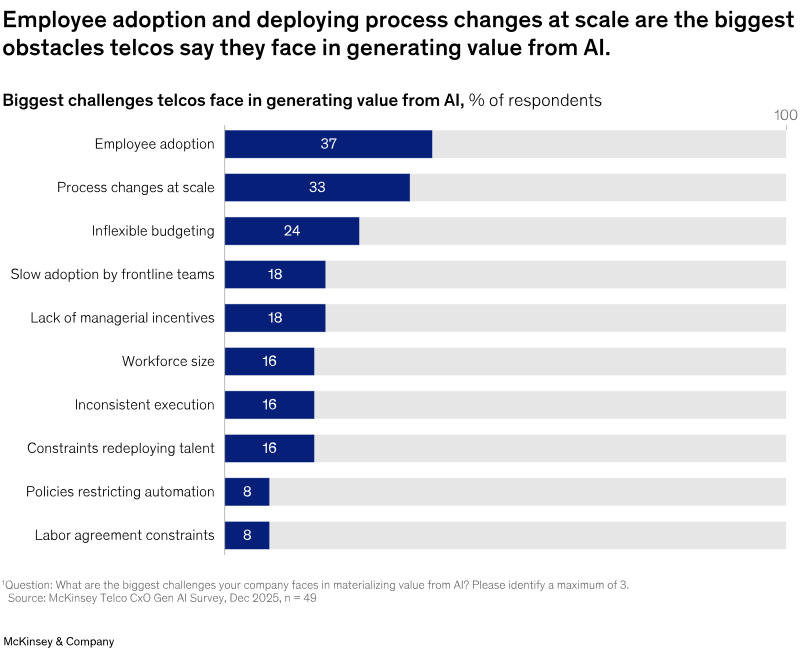
Despite that relatively rosy long-term view, telco executives acknowledge the substantial challenges they face in scaling the impact of AI, such as moving beyond limited productivity gains from isolated use cases. More than three-quarters of those surveyed agree that immature operating models, data limitations, and lagging adoption due to ineffective change management are the top issues. When it comes to translating impact into measurable, substantial value, there is less consensus (Exhibit 3). A little over half of respondents identify employee or team adoption as the biggest hurdles, while a third point to the difficulty of implementing process changes at scale, and a quarter noted inflexible budgeting as the key obstacle.
Telcos’ AI inflection point
A critical reason for telcos’ relative bullishness about overcoming those challenges is the recent emergence of agentic AI. Unlike previous AI tools, which have largely enabled impressive but still incremental improvements, agents represent the possibility of an automation-driven inflection point for industry. By 2030, according to the McKinsey Global Institute, AI automation could create as much $16 billion in new economic value for the telecom sector in the United States alone; and redesigning workflows around human-agent collaboration, whether for sales reps, equipment installers, or electronic engineers, may be key to capturing it. Roughly half of the industry’s workforce may have the potential to be remade with collaborative human-agent automation, more than double most other sectors. That prospect of using agents to redefine (or re-create) workflows means the industry may be able to move beyond the same outdated operational processes and models that have proved to be stumbling blocks to unlocking new value.
While much of the industry discussion around agents a year ago was largely theoretical, more than half of telco survey respondents now say they are deploying agentic use cases across at least one function. Several early movers are already showing how the technology can be leveraged to capture sizable value, as the following examples across different functions illustrate.
Customer service
Across European telecom operators, rising customer service volumes and high call center costs have made improving efficiency in customer care a strategic priority.
At KPN, this has translated into developing voice-to-voice agentic AI to handle customer care interactions end to end. To build this voice-to-voice agent, the team took a three-step approach. They first used call volumes and transcripts to identify and analyze interactive voice response end points; next, they drilled down into “subintents” (such as fixed line no dial tone, defective modem or router replacement, or mobile voice/SMS roaming issues) and customer journeys to assess feasibility and agentification complexity; and then they built use cases based on impact value and development complexity and feasibility.
Leveraging this analysis, the operator prioritized six of the 18 use cases, including invoice agent, generic Q&A, and authentication for initial piloting. As a result, the operator is aiming to reduce the average handling time of calls requiring human experts, significantly reducing the run rate in overall call center spending within a year.
Network
For two leading network operators serving savvy, demanding customers in very different regions—MASORANGE in Europe and NTT DOCOMO in Asia—a deep understanding of network customer experience (CX) recently surfaced as a key competitive differentiator. This happened at a time when capital expenditure (capex) levels heightened the need for more-efficient investment decisions.
In response, each operator has used an AI for CX index, creating a daily metric that correlates the operator’s network performance with customer satisfaction and risk. As a result, the operators were able to identify customers unsatisfied with the network, determine the primary cause of their subpar experience, and link those insights to capital interventions (such as site upgrades) or other new customer offerings to help improve customer retention. For example, sites with low CX index and high revenue were identified as priority sites for the operators to invest capex.
To optimize the opportunity, both operators redesigned capex planning workflows and led efforts to upskill network teams on this AI application and ensure sustained adoption of the new decisioning approach across areas and branches. With this approach in place, the operators either assessed CX along the most heavily used commuting lines (affecting an estimated 5 million to 10 million users, for example) and reprioritized their 2025–26 capex plan, or identified areas where customers were the most sensitive to network performance fluctuations and drove actions to improve the network and help enhance the loyalty and experience of those customers. (For more on NTT DOCOMO’s use of the AI for CX metric, see sidebar, “NTT DOCOMO: Using AI to keep communities better connected.”)
Would you like to learn more about our Technology, Media & Telecommunications Practice?
Marketing and sales
Most telecom operators now use AI-augmented agencies and in-house tools to accelerate core marketing activities such as copy generation, promotion design, and campaign execution. At the same time, some operators are extending AI into frontline sales and contact center operations to unlock additional value from existing customer interactions.
The business process outsourcing (BPO) unit of leading South American telco Entel, for instance, faced a common challenge in its contact center operations: Changing customer expectations and engagement patterns were driving a decline in outbound sales, while the company continued to handle hundreds of thousands of inbound service calls each month. Yet fewer than 1 percent of these calls was systematically analyzed, limiting visibility into sales opportunities, agent performance, and evolving customer needs. This gap represented a significant value opportunity.
To unlock this value, Entel Connect, in partnership with a hyperscaler, implemented an agentic AI tool that processes and analyzes 100 percent of inbound calls daily. The solution decomposes each conversation to identify leads, flag missed opportunities, and track customer sentiment while also generating personalized coaching insights for every agent and actionable dashboards for supervisors. The tool was designed to operate at scale, processing large volumes of calls overnight at very low unit cost, while continuously refining recommendations based on real operational feedback. Over time, the contact center evolved from a reactive service operation into a proactive, data-driven sales and learning engine. Within ten weeks, inbound sales increased by 40 percent, driven by a doubling of sales attempts during service calls, with no negative impact on customer satisfaction.
Support functions
A South American operator whose finance team was spending a disproportionate amount of time on repetitive, manual tasks decided to build an agentic solution to tackle the long turnarounds of basic analyses and manual data preparation and free up capacity for higher-value work.
The team defined more than 200 recurring question archetypes across operating expenditures, capex, and profit and loss, had the solution ingest more than 15 structured and unstructured data sources, and deployed a multiagent architecture (including intent recognition, entity extraction, query generation, visualization, and guardrails) to deliver accurate, explainable answers to questions of what, why, and how. This solution automated roughly 90 percent of management report findings and produced more than 95 percent accuracy on core use cases, allowing the teams to turn their attention from manual analysis toward faster, informed decision-making.
Building a winning agentic telco
A year ago, in Scaling the AI-native telco, we outlined the key elements for telcos to scale AI efficiently.4 These include targeting domain- and workflow-specific transformation opportunities, building scalable, modular AI platforms, implementing adequate data foundations, and fueling adoption with change management best practices. While those overarching pillars remain valid, our recent experience in helping telcos deploy AI has highlighted some critical, more granular lessons about what it takes for telcos to build a coherent agentic operating model capable of unlocking sustainable new value and growth.
1. If AI isn’t in the budget, it isn’t real (like its impact)
One of the primary pitfalls of early AI initiatives across both telcos and other industries has been the failure to explicitly tie them to, and track their progress against, clearly defined, benchmarked goals. Several leading organizations from the telecom sector and beyond are already taking this approach, rigorously reviewing their budgets to pinpoint where AI can deliver measurable impact and tying it to a clear business case. That impact can be significant (Exhibit 4). In this way, companies can prioritize what drives value on both the top and bottom lines rather than pain points or challenges that they think AI could help solve. This approach gives business leaders tangible, measurable targets to achieve and be judged by. As part of this, AI should be a key component of the entire budgeting process; for instance, if a division expects a certain amount of impact from its AI initiatives in the coming year, then the company may consider adjusting budgets accordingly to reinforce accountability for delivery on the goal.
2. Isolating key tasks and jobs to be done are essential for redesigning workflows
Much of AI agents’ transformative power stems from how they can be leveraged to fundamentally reinvent end-to-end workflows across business functions. Yet most telcos continue to capture only a fraction of this value. Nearly three-quarters of the surveyed leaders report using AI primarily to support minimal or moderate redesigns of existing processes rather than fundamentally rethinking how work should be done in an AI-first environment. As a result, AI often accelerates legacy ways of working instead of delivering notable improvements in cost, speed, and effectiveness.
Leading operators shift the focus of redesign from processes to tasks and the accompanying skills that they require. By systematically decomposing priority value chains into their underlying activities and isolating the essential capabilities, they create a clear, detailed view of the work that is performed and what it takes to get it done. Each activity is then reassessed based on its suitability for automation, human-AI collaboration, or continued human ownership (Exhibit 5). This granular approach allows operators to redesign workflows deliberately, rather than layering AI onto inherited structures.
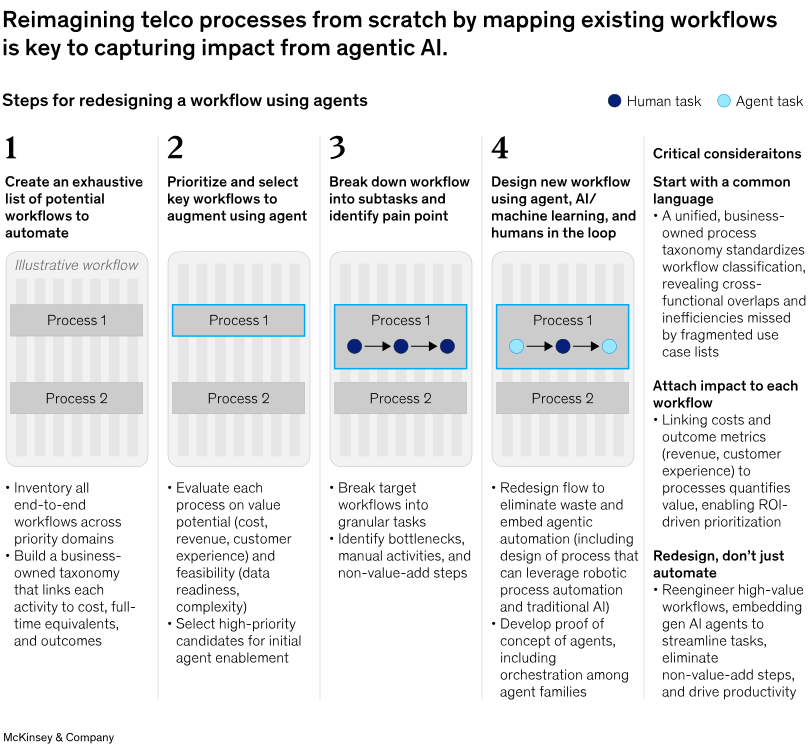
One North American operator applied this approach to its marketing and commercial operations. It started by mapping various teams’ day-to-day activities to ground the transformation in existing opportunities. It then fully redesigned all major workflows (such as evergreen, always-on marketing) with AI at their core. Only after the redesigned workflows were clear were technology choices and organizational changes finalized.
This approach is critical because it can fundamentally change outcomes. By redesigning workflows from scratch (looking only at the “necessary steps”), entire stages, handoffs, and coordination layers are eliminated, with additional value unlocked. By contrast, embedding AI into existing processes mainly accelerates the status quo, just as applying AI to isolated tasks often shifts bottlenecks rather than removing them, resulting in limited productivity gains. Telcos that redesign end to end, anchored in task-level clarity and AI-first assumptions, can unlock sustained improvements in cost, cycle time, and output quality that incremental automation cannot achieve.
3. Give agents and humans clarity about their new roles
Redesigning workflows is just the first step of the organizational overhaul telcos will need to generate substantial impact from AI. It’s equally important to transform their operating structures and both agent and human roles to fuel lasting gains in cost efficiency, cycle time, and overall capacity.
A critical aspect of this is explicitly defining how AI agents are embedded within teams—what work they perform end to end, how they collaborate with humans, how exceptions are escalated, and how performance is tracked and improved. Once telcos have identified the opportunities for embedding AI agents into workflows, they can turn to redefining human roles and responsibilities. Research by the McKinsey Global Institute shows that while 30 percent of all telecom workforce hours could realistically be automated by 2030, fully 91 percent of all sector jobs will require fundamental redesign and rethinking to make the most of automation. Even as traditional roles in areas such as DevOps (software development and IT operations), product marketing, customer support, and field engineering are likely to experience declines in numbers, positions like solutions sales specialists, forward-deployed engineers, product builders, and network performance analysts are just as likely to grow; entirely new roles, including AI workflow architect and AI risk manager, will also emerge and gain prominence.
Today, many responsibilities that could be automated or orchestrated by AI agents are fragmented across numerous roles, teams, and functions. Without rethinking the structure to consolidate those responsibilities into clear, accountable roles, the impact of AI is likely to remain limited. Organizing these evolving roles around employees’ skills and expertise, based on a chapters model, helps create belonging and clarity regarding role expectations. As employees rely less on cross-functional coordination, team interactions become faster and more agile. Individual employee capabilities, however, will shift to include designing, supervising, and continuously improving agents.
The benefits of these moves are manifold. Clearly defining how agents are integrated reduces structural overhead by removing layers of supervision, coordination, and approvals. Shifting roles, team structures, and agent ownership allows AI to take on end-to-end work while freeing up human capacity for higher-value tasks, rather than just making those individuals marginally more productive. And transforming operating structures and roles along with workflows helps prevent humans from serving as bottlenecks in these new, AI-driven processes.

The telco reinvention: How AI can fuel value creation
4. Change management can’t be a one-off exercise
Telco leaders often assume that technical upgrades and AI pilots will eventually translate into commercial impact. Our research shows otherwise. Slow adoption, rooted in weak change management, is the primary barrier to scaling AI value. Converting AI capability into sustained productivity and margin improvement requires an operational discipline that hardwires new behaviors into daily work.
Leading operators pair a CEO-led mandate with frontline execution teams, including change managers, analytics translators, and product owners, that are embedded directly into sales and service teams. Large language models (LLMs) make it possible to measure AI usage and adoption at the individual level, enabling much finer-grained visibility into how work is done. This data foundation allows operators to track behavior with greater precision, hold supervisors accountable for reinforcing usage, and shift incentives from outcomes to inputs to drive company effectiveness and efficiency. Such proximity ensures that adoption is measured daily at the individual level, frontline supervisors are accountable for reinforcing usage through coaching and structured performance conversations, and behavioral levers such as incentives and gamification are used to normalize AI usage. Finally, change teams cannot be treated as a short-term tactic; they must remain embedded with frontline operations. Together, these practices ensure that increased AI usage translates directly into measurable improvements in sales and service performance.
At Indosat Ooredoo Hutchison (IOH), CEO Vikram Sinha has framed the company’s AI transformation approach as “70 percent people, 20 percent process, and 10 percent technology,” underscoring that sustained adoption depends primarily on organizational change.5 IOH paired this vision with a scaled capability-building and change program: the full C-suite team convenes quarterly for immersive AI sessions, AI translators have been trained across every function, and employees participate in gamified recognition programs that encourage experimentation and reward impact. These efforts embed AI directly into day-to-day work and build a broad base of AI champions, creating the momentum needed to drive adoption across the organization.
Operationalizing these lessons requires concrete program design. Capability building must be role specific and reinforced through coaching incorporated into daily routines. Core workflows should be rebuilt so that AI outputs are always factored into decision-making, with clear ownership and transparent tracking of adoption. Senior leaders must model AI use, while progress is communicated frequently across the organization. Sustained engagement comes from running short, focused campaigns that combine incentives, targeted learning, and rapid iteration based on frontline feedback.
Ultimately, to turn AI into a durable source of competitive advantage and value creation, telcos need to convert change management from a one-off program into a repeatable operating rhythm.
5. AI factories model success and accelerate value capture
Telecom leaders eager to move their AI initiatives beyond a handful of “pilot purgatory” or isolated use cases often run into the same problems: fragmented efforts, high costs, slow scaling, and insufficient risk management. In practice, this often means duplicative model builds, inconsistent foundation model choices, and limited reuse of data, prompts, or agent architectures. This is even more relevant in the current market, where users increasingly leverage AI solutions in their day-to-day work (such as for code development) without clear guardrails or training, thus posing a potential risk for their organizations.
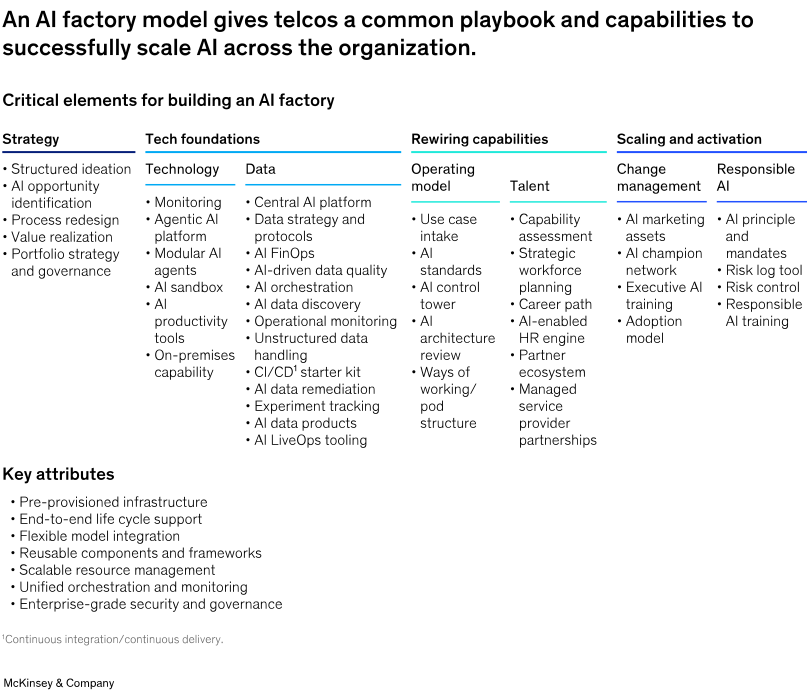
An AI factory model addresses these issues by introducing a common playbook and set of capabilities to guide how the organization delivers and scales AI responsibly. By bringing together the right process, talent, and technology, it accelerates time to value and makes it easier to redesign workflows with greater automation and consistency (Exhibit 6). Rather than creating one-off solutions for every new project, the factory model treats AI assets—platforms, tools, and reference architectures—as standardized, core capabilities that can be built once and reused. These assets can include reusable agent frameworks, shared model environments, and standardized governance controls.
Without such standardization, scaling AI across the enterprise can become very difficult. Teams tend to develop solutions independently, adopting different tools, design patterns, and operational practices, which often lead to fragmented or siloed implementations that are hard to govern and even harder to scale. Over time, this fragmentation can increase technical debt, raise inference and infrastructure costs, and create uneven performance across similar AI use cases. This inconsistency also increases complexity and introduces significant risk, particularly around security, compliance, and data governance.
The AI factory also acts as a connective layer between an organization’s varied AI efforts and senior leadership, increasing transparency and helping prioritize the most valuable, cost-effective opportunities while making trade-offs explicit. By centralizing visibility into use case value and model performance, it strengthens accountability for AI impact.
When standing up an AI factory, organizations must be focused on the highest-priority use cases. This discipline determines which capabilities are established first and defines the road map for scale. The AI factory is built on a modular set of capabilities, including a structured intake process to assess and prioritize use cases, and shared, reusable components that enable teams to leverage off-the-shelf solutions.
- Intake provides a standardized process to review and prioritize AI initiatives, ensuring that resources focus on the highest-impact opportunities. Some telcos now deploy AI agents within the intake workflow to assess readiness, recommend development stage (proof of concept, scale, or deprioritize), and define a clear action path.
- Shared, reusable components reduce development time while maintaining quality and consistency. With proven assets such as propensity model blueprints and enablement tools, teams avoid reinventing solutions for each use case and accelerate delivery at scale.
In addition to these two core capabilities, an AI factory can take on some or all aspects of talent and change management. It is not a static construct but a living capability that must be built and sustained within the organization, providing a repeatable model for moving from isolated pilots to enterprise-level results.
6. Moving forward: Agents must understand the business and the data to truly unlock its power
As telcos transition toward AI-native, self-directing enterprises, the industry is approaching a structural inflection point. The next generation of agent-led operating models will likely not be limited by algorithmic capability, but by whether AI systems can truly understand the business and the network they are meant to help run. Even the most capable LLMs struggle when key concepts, policies, and dependencies are scattered across systems or left implicit.
As they work to address this, leading operators are starting to invest in knowledge frameworks (semantic data layers) to become a foundational layer of AI-native telco architecture. Those conceptual models represent the institutional knowledge “locked” in the organization. Sharing this knowledge with agents can unlock new capabilities, cut down on duplicate efforts, reduce technical complexity, and enable agents and workflows to build on one another, turning fragmented business and network data into trusted, reusable intelligence.
This approach can have multiple applications. For example, in network operations, when service quality drops, agents can analyze the network layers to narrow down root causes, identify affected customers and services, and understand effects on service-level agreements. Instead of speeding up ticket handling, agents can determine whether a single network fault is driving multiple incidents, weigh different remediation options, and guide engineers toward the best intervention. For example, a large Australian telco has accelerated service automation 30 percent by encoding engineer’s knowledge on the network into agents.
One implementation approach to enable LLMs to understand enterprise data has been the use of ontologies and knowledge graphs. These explicit conceptual models of core business entities—and the relationships between them—aim to provide a shared, consistent representation of the organization’s data landscape for both humans and AI agents.
While powerful in theory, ontology-driven approaches can be costly and complex to design, govern, and continuously update at enterprise scale. In practice, many organizations struggle to operationalize them quickly enough to keep pace with evolving business needs.
An emerging alternative is the use of modular, context-specific AI “skills”—reusable workflows or capability layers that encapsulate business logic, decision rules, and data access patterns in a structured but lighter-weight way. Rather than requiring a fully harmonized enterprise data model up front, AI skills allow organizations to operationalize AI around well-defined tasks (for example, pricing analysis, customer segmentation, and root-cause analysis) and progressively build capability through repeatable, composable units. Tools such as Claude Skills illustrate how this approach could enable faster deployment, clearer governance, and more pragmatic codification of institutional knowledge across AI agents.
While telcos’ initial efforts to incorporate AI have shown genuine promise across pilots and fragmented use cases in areas such as customer service, network, and marketing and sales, only a small number of operators have been able to capture significant value. But as those operators are showing and their peers are learning, the emergence of agentic AI may present telcos with an automation-driven inflection point, in which agents’ ability to redefine entire workflows is critical to leveraging AI’s ability to radically improve customer experience and operational efficiency.
The development of a coherent agentic operating model is essential to take advantage of the new agentic opportunity. This involves prioritizing the agentic redesign of some end-to-end processes, tying AI initiatives to clear financial goals and budget outcomes, defining and clarifying new roles and responsibilities for both agents and humans, building ontologies to give agents the necessary business context, and implementing comprehensive change management to drive adoption. Finally, AI factory models help bring together all these elements, creating reusable trusted data assets and processes that can be harnessed broadly across the organization to help lower unit costs and improve economics as scale increases.
Telcos that treat agentic AI as simply another layer of tooling may see marginal productivity gains and growing complexity. Those that commit to building a coherent agentic operating model will fundamentally reshape how work gets done—and, in doing so, unlock material improvements in ROIC, margins, and customer experience. As agentic AI advances, the gap between these two groups could widen. For telecom leaders, the question is increasingly less about whether AI can create value, but more focused on whether their organizations are prepared to operate differently enough to capture it.