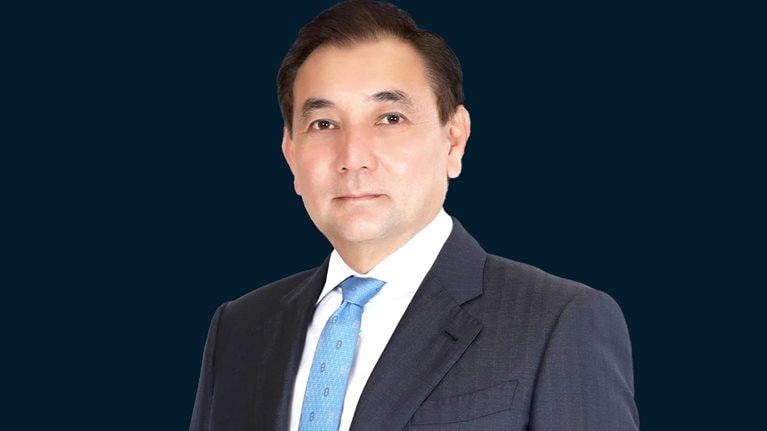
As CEO of Indosat Ooredoo Hutchison, Vikram Sinha heads up one of Indonesia’s top telco service providers. When he took the position in 2022, he brought two decades of leadership experience with him, having worked for major companies in multiple industries across Africa and Asia. Sinha’s pursuit of transforming Indosat into an AI-native telco is underpinned by his ambition to build a sovereign AI infrastructure in Indonesia—all of which are powered by his focus on clarity, energy, and optimism.
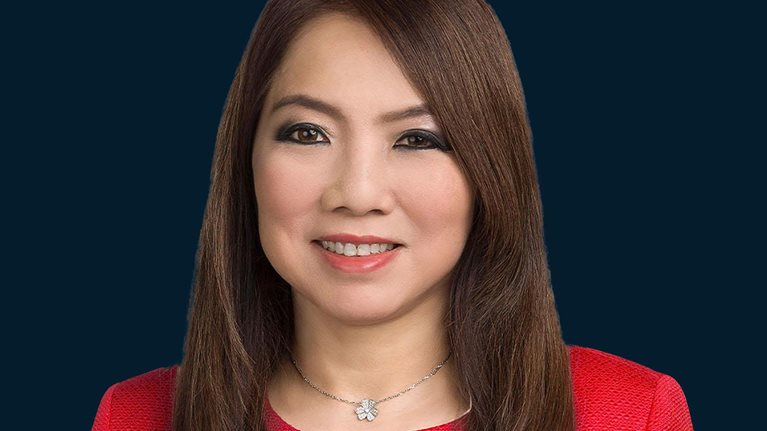
In this Leading Asia interview, Vikram Sinha talks with Khoon Tee Tan, a senior partner in McKinsey’s Jakarta office, about Indosat’s AI transformation journey. Through the interview, we learn about his people-centric approach, with a focus on change management, that has been so successful in getting thousands of employees to join leadership in scaling Indosat and empowering Indonesia.
This interview is part of the Leading Asia series, which features in-depth conversations with some of the region’s most value-creating leaders on what it takes to realize bold ambitions and take them further.
Khoon Tee Tan: Vikram, we know that Indosat has been on an AI transformation journey for a year now. I remember when you announced that you wanted Indosat to become an AI-native telco. How did you come up with such a bold ambition, and what has that journey been like?
Vikram Sinha: In 2022, we went into a merger [with Hutchison 3]. There were a lot of doubts about telco mergers because historical data showed the failure rate was over 90 percent. But we kept our heads down and made sure that we focused on delivering what we had promised.
The outcome was that, within two years, it was a very successful merger, which gave us scale and confidence. Now, we are a company with 100 million customers.
We had momentum on our side, so we asked ourselves, “What’s next?” In August last year at our Capital Market Day, we spoke about our AI North Star. It has three pillars. First, we want to become an AI-native telco. Second, we want to become an AI techco—we called that out very clearly because “techco” has many definitions. What is a techco for us? It is one with a sovereign AI cloud and security.
And the third, very important pillar—because we are a purpose-driven company—is for us to galvanize all our employees to get behind this mission and our greater purpose of empowering Indonesia. We said we wanted to help Indonesia and enable it to become an infra[structure] creator, not just a consumption country. That was when we launched Sahabat AI, our sovereign large language model.
Khoon Tee Tan: How did you overcome the challenges that you must have encountered?
Vikram Sinha: I think the most important thing is that we get it right on being an AI-native telco. In this process, the most important thing is your quality of data.
Second, are you structured horizontally, not vertically? These things are easy to talk about; the difficult thing to address is the people and change management.
The last, most challenging thing is making sure that we are very clear on how it is helping us on our P&L [profit and loss]. There has to be a right balance between the short term, midterm, and long term.
Khoon Tee Tan: How do you balance between these?
Vikram Sinha: I’m a strong believer that we have to learn what not to do. What is very important is not to get into a tactical use case approach. If your foundation model of data is not done properly, if your design is not reusable, and if these things are not structured properly, you will not scale up, and things will not reflect on your P&L.
I think we learned when we incorrectly presumed that some of the use cases would start delivering from the first month. The reality is data gets trained, it learns, then it starts delivering. You need to have a real focus on not taking shortcuts.
The reality is data gets trained, it learns, then it starts delivering. You need to have a real focus on not taking shortcuts.
Another learning is, don’t work into a use case, work on a domain. Pick up a domain and start training your data properly so that multiple use cases will come on that domain. You can focus on high-value use cases, but don’t lose sight of getting the whole organization to work along with you. It should not be just a few use cases for a few functions—there has to be a two-stream approach. Three high-value use cases will help generate impact on P&L, but don’t lose sight of 15 more use cases that will give you results after 12, 15, or 18 months, because the whole organization has to come behind this. It should not become a functional mandate.
Khoon Tee Tan: I’ve heard you say that AI and growth transformations are also people transformations. What are some of the things that you’re doing on change management, and how do you ensure that no one gets left behind?
Vikram Sinha: This is extremely important. I’ve been on record saying that 70 percent of success will depend upon change management and people transformation. How do you make people believe in it? The best way to do it is to drive growth. A lot of AI use cases will bring efficiency and productivity, but I’m a growth manager. And what do people love doing? They love working on a growth mandate. So, how do you design your whole AI mandate? For me, an AI-native telco is how we can get to double digits or close to double-digit growth. That doesn’t mean I’m not doing things that generate efficiency and productivity. I do that but [need to consider] how I reinvest it into growth.
Making sure that people are coming along with you starts from the top, but it doesn’t stop there. The Indosat management team has been spending a lot of time together looking at this, because we are all learning. Then we immediately think, how do we take it to the next 100 leaders, to the next 200, 500, 1,000? It’s a journey, but the key element is getting people to come along in terms of the growth mandate.
The other important learning is that we need to be very clear. One of the metrics that we are chasing—and personally, I look at it too—is what percentage of our employees are using AI. And what percentage of them are working on creating products around AI. That is how we make sure we get people [to come] along. When the entire organization starts enjoying it, you will see results on a very different scale.
Khoon Tee Tan: Can you talk more about Indosat’s contributions to Indonesia’s AI aspirations?
Vikram Sinha: My biggest learning during the merger was that we were able to succeed because every employee got behind our larger purpose, which is to empower Indonesia. Indosat is an iconic brand. Anywhere you go, even villages, people expect a lot from Indosat. So, when I say that our purpose is empowering Indonesia, I mean it. Every employee contributes much more when they connect to our vision.
Also, you have to stay true to what you say. In terms of helping Indonesia accelerate its AI mandate, we have created an AI factory to make Indonesia a manufacturing country. This will bring a lot of opportunities, such as being the creator of Sahabat AI, which still has a long way to go.
We have just announced the Indonesia AI Center of Excellence. It is not just Indosat; many others are involved. This is about demonstrating the power of an ecosystem. We are taking concrete steps in terms of demonstrating how we are contributing to this AI North Star.
Khoon Tee Tan: You mentioned that building and attracting talent—especially digital and AI talent—can be a challenge across all sectors. What strategies are you prioritizing to attract and build the right talent?
Vikram Sinha: I see AI as an opportunity. Compared to Indonesia, many countries have the advantage of engineering colleges with many engineering students passing every year. But AI is a leveler. You don’t have to be a coder; you don’t have to be an engineer.
So, how do we invest in human talent? How do we make sure we create an ecosystem where we ensure that people are getting plugged in? This is why I keep saying that every dollar invested in technology needs to be supported by a dollar in people. Otherwise, you will not be able to unlock the full potential. It’s a people game. I keep hearing that AI will take jobs. Yes, there will be a lot of jobs displaced, but there will be new opportunities, and if you continue investing in people, it will be more sustainable in the longer term.
… every dollar invested in technology needs to be supported by a dollar in people. Otherwise, you will not be able to unlock the full potential.
Khoon Tee Tan: In your personal leadership journey since becoming CEO of Indosat, how has your leadership philosophy evolved?
Vikram Sinha: The most important thing that I have learned is how important it is to be resilient. Another thing is that if your ambition is bigger than your resources and you believe in it, you must just go all in. I think the mindset of having the ambition, believing in that ambition, and getting the whole organization with you is very important.
Khoon Tee Tan: What advice would you give to CEOs who are navigating this AI transformation journey?
Vikram Sinha: My main piece of advice will be that you have to go all in. And make sure that the design is something that you are doing correctly. If the designs are correct, it will scale. Then, you have to make sure your employees are behind you. Technology is easy to solve, but the really hard thing is whether you get the people and the change management right—that is what will create impact at scale.