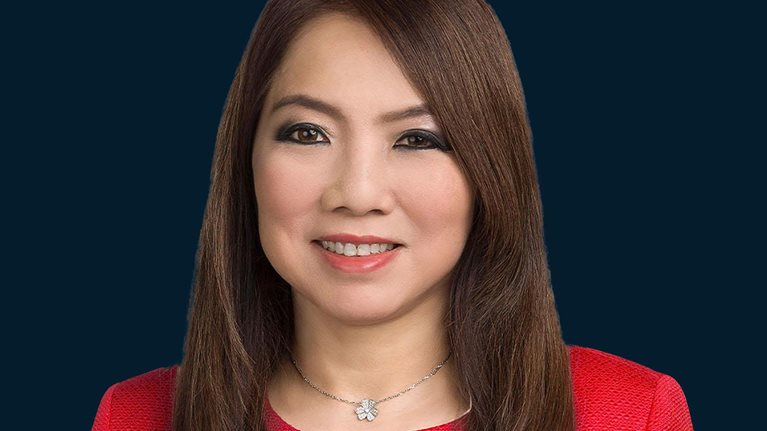
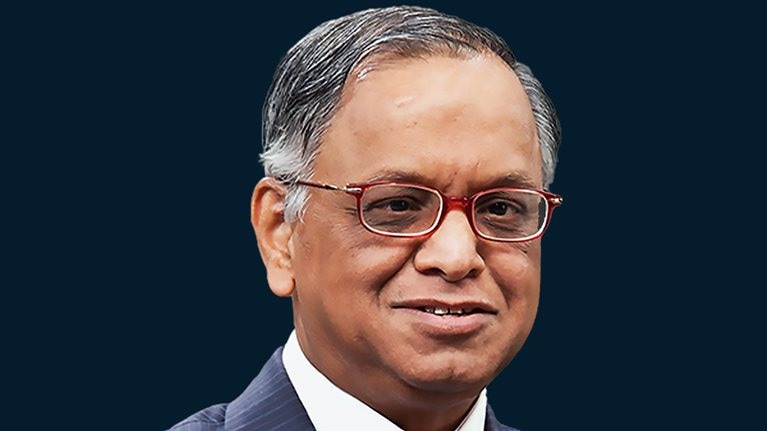
This interview is part of the Leading Asia series, which features in-depth conversations with some of the region’s most value-creating leaders on what it takes to realize bold ambitions and take them further.
Gulf Development (GULF) entered Thailand’s energy sector at a time when the country was experiencing rapid growth but didn’t have the power capacity to keep up. Now, 30 years later, the company has not only helped Thailand with reliable energy, it has also expanded into other sectors including data usage and storage and offshore wind.
Along the way, GULF’s founder and CEO Sarath Ratanavadi’s approach can be described as that of an “integrator”: a leader who listens to his teams and helps bring out the best in them. To Ratanavadi, being a leader means placing people in roles that allow them to maximize their strengths, keeping an open line of communication across all levels of the organization, and trusting his teams to make decisions that will honor the company and its stakeholders—and stepping in as an advisor when they need him. At the same time, he maintains his original sense of national contribution in his decision-making, ensuring GULF’s initiatives help further the Thai economy and its community.
McKinsey’s Asia Chairman Gautam Kumra speaks with Ratanavadi to learn more about his approach to leading and expanding GULF. Ratanavadi shares how his team captures opportunities presented to them—inside and outside energy—and how his mindset changes based on the business he’s working in. He also discusses how he helps employees feel empowered to keep the business moving forward.
An edited version of their conversation follows.
Gautam Kumra: Tell us a bit about your journey to GULF and some of the big decisions you made to start your business.
Sarath Ratanavadi: Every generation will experience some disruption to the business landscape. In 1995, I was a part of an energy-related business as a consultant. At that time, Thailand was expanding but its GDP was quite small. To match with GDP growth, the government had to invest in infrastructure, so the World Bank suggested that Thailand look at stimulating public–private participation in the energy sector.
The challenge was that businesses that wanted to build factories would not come to Thailand because of power shortages in the country, which made the national energy supply inconsistent. That’s where we saw opportunity, and GULF was the first to get involved as an independent power producer (IPP) in Thailand.
Locally, we lacked the knowledge about the financial, legal, and commercial markets behind the energy sector, so we partnered with a company called Edison Mission Energy from the United States that was familiar with creating this type of business and was capable of building a privately-owned power plant. We also got Thai companies, Siam City Cement and Lanna Lignite, to be partners because we needed to have local capital and a secure supply of fuel that could be sourced locally.
Because GULF was a new start-up back then, it was difficult to get people to come and work for the company. We started hiring a few people we knew—who didn’t have a background in the private power sphere—to work in the business, without knowing whether it would be successful. These same people are now in senior leadership roles at GULF.
Gautam Kumra: What was your approach to operating within the ecosystem when you started GULF?
Sarath Ratanavadi: Initially, we planned to build a coal power station, in line with the government’s power development plan at the time, but there were a lot of protests against this, so we pivoted and built a gas power station. In hindsight, we’re lucky to have had the direct experience with communities’ concerns around coal as it put us on a more sustainable path right from the start, which we are still following today.
That’s the foundation we’ve been building on over the past 30 years. We have good partners from Japan, such as J-Power (JP) and Mitsui, that bring in capital knowledge and financing from the Japan Bank of International Cooperation (JBIC), the Asian Development Bank (ADB), and others. Rather than being just a domestic company, we’ve become more familiar with international bankers and legal systems, which has allowed my team to gain more experience.
Part of this can also be traced back to 1997, when we faced the financial crisis in Thailand. Our project went through some difficulty in terms of the valuation—costs became expensive, and our partners were in trouble financially on the corporate side. From that experience, our young team learned how to develop the market, and manage people and financial pressures. Tough tests gave us good lessons, and we grew stronger from that experience.
Now, when we face some difficulty, we’re quite prudent and work to resolve the problem from every angle. But I also trust that my people can solve the problems they face every day. I see my job as being the support my team needs to find solutions.
Gautam Kumra: For 30 years you’ve focused on energy expansion, but at some point, you also started to diversify. What guided your thinking as you started placing bold bets beyond your core business?
Sarath Ratanavadi: Our energy business is always expanding—that’s GULF’s fundamental. But we try to look at other businesses that will allow us to keep growing so we don’t have to be locked into one area.
During the COVID-19 pandemic, we had to decide whether we would be conservative, focusing just on minimizing impacts to our current operations, which is what many companies were doing, or try to do something different and make an investment in something new that could create long-term value. We ended up completing two major investments: We bought an offshore wind company in Germany because we had a good partner there, and we invested in AIS, one of Thailand’s main telecom providers.
That was our first step away from energy into the digital business, but we still saw a strong connection. As the world changed to become more digitalized and data started to be monetized, we began to see data usage as similar to the energy business—a purely data or cloud data center is, in essence, a type of utility business. But to move from the energy business into data, we had to find a bridge to take us there. That is why we decided to invest in AIS, whose strong reputation, shareholders, partners, and management have opened the door for us to become more involved in data centers, cloud services, and other digital businesses.
You could say that the COVID lockdowns showed us how important data and digitalization are for the whole world. This is why we felt it was the right move to invest in opportunities in this area, in addition to growing our core business.
Gautam Kumra: I’m keen to understand your approach to recruiting, retaining, and managing people. What have you learned, and what’s your philosophy?
Sarath Ratanavadi: We’re lucky to have people who are committed and contribute to the company. We are quite close to one another, and we try to keep things casual so we can keep an open stream of communication, rather than setting up formal meetings, for example.
The leadership team we have has been together for a long time, but it’s still important to understand our younger employees and guide them. Our management team continues to mentor people who show potential, and it’s common for younger colleagues to be present during strategy and decision-making discussions. I encourage this because I want our employees to understand the thinking that has led to GULF’s success so far.
The way I see it, I'm the least knowledgeable person in the company—but I have good people on top of everything. We try to assign projects to employees based on their unique abilities and strengths. My belief is that as long as people are committed, we can help place them in the right position to bring out their full potential.
It can be challenging to keep up with the changes happening around us every day. But GULF’s strength is in how we communicate. We meet as a group and discuss the most relevant issues. We share ideas and try to look at every angle of the situation. Those kinds of discussions make our company and our thinking healthier. It shows people how decisions are made and helps everyone learn.
Gautam Kumra: Your model is very people-centric. Has that been one of the keys to your success?
Sarath Ratanavadi: To me, the people are the most important aspect of any business because the business relies on them to function and succeed. If you can develop your people to be trustworthy and reliable, you’ll be ensured a certain level of success. The people at GULF are good problem-solvers, so I see my role as supporting them to find the solutions they need. It’s also important to attract people who have outside knowledge—they will bring ideas and present new solutions and ways of thinking to the organization.
We believe that helping our people and our society grow will also help our company grow. That has been one of the key driving forces behind our actions for the past 30 years.