This interview is part of the Leading Asia series, which features in-depth conversations with some of the region’s most value-creating leaders on what it takes to realize bold ambitions and take them further.
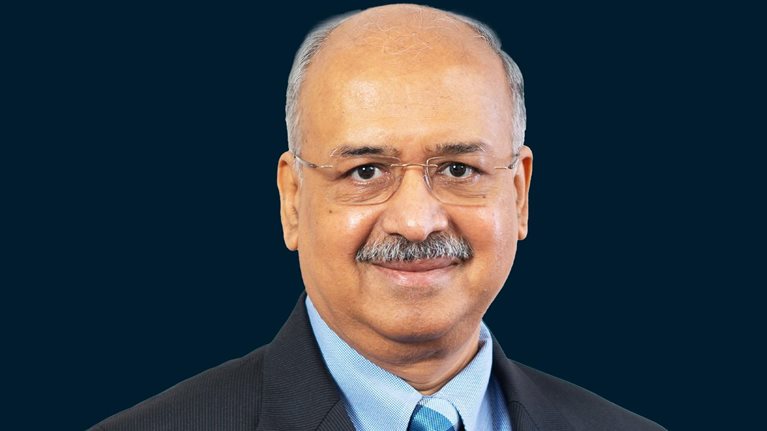
In this Leading Asia interview, Gautam Kumra, chairman of McKinsey’s offices in Asia, talks to Narayana Murthy about how his values—centered on respect, fairness, and compassion—have led him to grow Infosys into a global technology powerhouse. Murthy discusses how important earning the respect of all stakeholders, including society’s, has been in creating long-term success and sustainable growth. He talks further about his belief that the primary task of a leader is to be a catalyst for transformation, and emphasizes that leading by example and communicating well build trust in employees and inspire motivation and productivity.
Gautam Kumra: Today I have the privilege of speaking with Narayana Murthy, one of the most admired business leaders of our time. His journey has been guided by a deep commitment to fairness, integrity, and purpose. In this conversation, we explore the values that have shaped his vision, his reflections on leadership, and the enduring idea that respect earned from every stakeholder is the true measure of success.
Mr. Murthy, you have had an extraordinary journey from your early days in a modest household to building one of India’s most respected companies. What were some of the early influences or values that shaped your vision, both as a person and as an entrepreneur?
Narayana Murthy: I come from a lower-middle-class family. My father was a high school teacher who taught English, physics, and mathematics, and my mother managed the household. From early childhood, they drilled into me that the most important thing in your life was to become respectable in society. Their emphasis was on seeking good values, using those values to conduct fair transactions with others, and earning respect.
Therefore, when I founded Infosys in 1981, my vision was to make it India’s most respected company. Later, in 1999, when Infosys was listed on the NASDAQ, I changed that vision for Infosys to become one of the most respected companies in the world. My belief always has been that pursuing respect will bring success in all business parameters—that is my North Star.
Gautam Kumra: You worked in Europe early in your career and then you decided to return to India. Yet, being a businessman in those times was generally not a respected profession in India. What made you come back to the country?
Narayana Murthy: When I worked in Paris [for a French software engineering company in the 1970s], I reevaluated my socialist views. I decided to return to India to see whether entrepreneurship would make our society better in some small way. I believe it is the responsibility of entrepreneurs to come up with innovative ideas to create new products and services, to create a lot of jobs, to add value to society, and most important, to pay adequate taxes. Later on, when I observed the mindsets of capitalists in India, as well as on Wall Street, I defined a term called “compassionate capitalism,” a good combination of capitalism with socialism.
Gautam Kumra: As you reflect on the journey, what role did you and Infosys play in shaping and operating in the broader ecosystem?
Narayana Murthy: I believed that earning respect from our stakeholders would be the best way to strengthen the company. Because, at the end of the day, our stakeholders are customers, employees, investors, venture partners, and the government and society.
If you want to earn respect from your customers, you have to deliver what you promised on time, within budget, and with higher-than-expected quality.
If you seek respect from your employees, you have to conduct yourself in a fair and transparent manner in every action. You have to protect the dignity and respect of every individual. You will then be able to create an environment where everyone says, “I belong to this company.” Of course, you have to make an effort to create a sense of ownership for them, and that’s where our stock options come in. If you do all this, your employees will become your brand ambassadors.
If you gain the respect of investors by being transparent, avoiding related party transactions, and ensuring you do not create governance deficits, they will become your long-term investors. If you are respected by your vendor partners, they will help you in difficult moments because you have demonstrated that you’re an honest person. And, if you are a respected person and a respected company, my experience with bureaucrats and politicians has been that they will do everything possible to encourage you by creating industry policies that will accelerate your growth.
Respect from society is the ultimate respect, because society creates all these stakeholders. And to gain society’s respect, you need to ensure you do not endanger the overall environment and that it’s as clean as possible.
Gautam Kumra: How did you think about the impact your company would have in India, and how the country would provide leverage for you to build the business globally?
Narayana Murthy: My first business, Softronics, failed in 1976. This was because there was no market for software development in India at the time. There were hardly any computers, and those that were here were with the government, which did not believe in outsourcing.
Then, in around 1979, super minicomputers emerged. The beauty of these was that they were almost as proficient at computing and handling commercial applications as mainframes, but they cost a fraction of the price. In the mid-1980s, these super minicomputers released relational databases with online transaction processing monitors, which you need to install commercial applications. Transaction processing monitors bunch together a set of related physical updates to the database as one logical update so that the consistency of the database is maintained. A relational database is one of the most useful tools in commercial applications or any online query system.
That was when I realized that something extraordinary was going to happen, not in India, but in the United States. Because these super minicomputers were inexpensive, many mid-tier corporations, and even some large ones, in the United States would start using computerized commercial applications.
I saw that there was going to be a huge explosion in the demand for software developers and people in software services. In India of that time, many engineers were unemployed, even those from the Indian Institutes of Technology (IITs). So I thought there was a great opportunity for building a company if I could match demand from the US side with supply from the Indian side.
Respect from society is the ultimate respect, because society creates all stakeholders.
Gautam Kumra: What is your philosophy when it comes to managing and developing talent? And what are some of the lessons that have served you well?
Narayana Murthy: A leader who had a great effect on me was Mahatma Gandhi. He was unique because he led by example; he walked the talk during the Indian freedom struggle. So, in answer to your question, leading by example has always been my guiding light.
Instead of lecturing employees, telling them to come to the office on time, or do this, do that, I realized it would be easier if I just did what I wanted them to do. Walking the talk and practicing the precept is the most effective way for a leader to instill values. Also, as I am an engineer, when it came to any transaction, I insisted on using data and facts—like the saying, “In God I trust. All others must bring data.”
Something else I used to do, to the extent possible, was to try not to be influenced by past bias or transactions when deciding the current transaction. I’m not saying that I achieved that 100 percent of the time; after all, I am only human.
Gautam Kumra: What do you mean by “transaction”?
Narayana Murthy: I mean any discussion, any decision, any action, any approval, et cetera. For example, a person whose suggestion I didn’t favor or whom we didn’t promote—when they came to talk to me, they should have left thinking, “This man was fair. He gave me all the opportunities possible.” I’ve always said, “Fairness is my god.” I learned that from my mother.
Fairness is all about following the golden rule: In a given transaction, do unto others what you want them to do unto you. If your actions are based on fairness, it raises people’s confidence. You use data and facts for decisions and you are courteous. That’s why we used to say, “You can disagree with me, as long as you are not disagreeable.” Once you, as a leader, take action and don’t just talk, people will move alongside you toward your vision.
Gautam Kumra: What is your definition of a leader?
Narayana Murthy: For me, the primary task of a leader is to be a transformation agent and create a noble vision. Transformation requires a change of mindset and a lot of hard work. You also have to create subgoals for employees, so that when those are reached, everybody is a winner. They have to achieve something; otherwise, people won’t rally with you. A leader has to have good communication skills, because without compelling communication, people will not buy into your logic. And then, of course, communication alone has no value if you don’t walk the talk.
Walking the talk and practicing the precept is the most effective way for a leader to instill values.
Gautam Kumra: How do you get the best out of your leadership team?
Narayana Murthy: I was lucky. I had assembled some of the brightest and most values-based people. Infosys’s byline when I was CEO was “Powered by intellect. Driven by values.” No professional will ever succeed without intellect, or what I used to call learnability, and values. I had some extraordinary people with me. My responsibility was to assess their strengths and weaknesses and assign them responsibility in the areas of their strengths. In most cases, they excelled; in some cases, they didn’t.
At the end of the day, the best you can do is to tell them, “Don’t worry, go ahead. I’ll be your safety net in your areas of weakness.” That’s very, very important. Once you assemble a team of people who have a mutually exclusive but collectively exhaustive set of competencies and experiences, all of them should have the same enduring value system. That will enable them to grow.
Gautam Kumra: You pretty much invented the global delivery model. How did you think about innovation and the role of innovation in the journey at Infosys?
Narayana Murthy: By and large, I believe in the adage, necessity is the mother of invention. But for that, you have to be proactive. It wasn’t easy to be proactive previously in India—due to its history, Indians can be static observers. We were told, “Don’t speak up unless elders ask you to.” It’s a cultural issue where Indians don’t insert themselves into a situation to try to change it.
Therefore, in Infosys, we had to create an environment that overcame apathy. People have to take ownership and, to do that, they have to realize that whatever they are doing will benefit them. For example, in 1991, when Infosys had about 150 employees, we held our first conference on innovation. A few days after the event, the janitor in charge of maintaining our conference rooms asked me to explain what innovation meant. I told him, “When you work in the conference rooms, ask yourself each day what you could do faster, cheaper, and with better quality than yesterday. These questions apply to everybody, from the chairman down. In some cases, they may invent something new; in others, they may improve something. That is what is called innovation.”
I think we need to demystify innovation. We need to accept that innovation is not the prerogative of one department. Each day, every department and every employee must consider how to do things faster, cheaper, and better. Creating that type of mindset will be sufficient. However, you have to connect whatever employees do to the betterment of the corporation, because unless it improves the bottom line, it has no value.