B2B technology and telecom growth is entering a new phase—one defined less by disruption than by rebalancing. Core connectivity remains a critical foundation, but it is no longer sufficient to define where value is created or where growth accrues. Instead, growth is increasingly shifting to higher layers of the stack, where security, intelligence, seamless engagement, and trust shape customer outcomes.
Insights from McKinsey’s latest Global Technology and Telecommunications B2B Survey, based on more than 3,000 enterprise decision-makers across 11 industries and 18 countries, show that several fundamentals are holding. Overall investment intent remains positive, driven primarily by large enterprises, even as growth in core connectivity continues to lag behind higher-value domains such as security and agentic AI. Customers increasingly recognize operators’ relevance beyond the network, and omnichannel engagement has become a baseline expectation across the buying journey.
At the same time, new openings for growth are emerging. Investment momentum is broadening as small and medium-size enterprises (SMEs) spend more decisively. Customer stickiness toward telecom operators is stronger than expected, though loyalty is becoming more conditional and increasingly anchored in security and trust rather than connectivity alone. Quality of experience has emerged as a decisive swing factor, shaping how customers engage and transact across channels.
Agentic AI is beginning to reset the growth equation. Adoption is accelerating across customer segments and regions, reshaping how enterprises buy, interact, and operate. As customers themselves become more AI-enabled, digital channels are moving from a supporting role to a primary growth engine—enabling larger, more complex transactions to be executed end to end and raising expectations for frictionless, outcome-driven engagement.
For telecom operators, these shifts create a dual imperative. Agentic AI offers a tangible lever to improve internal efficiency and service performance today, supported by strong customer openness to AI-enabled assistance. This makes operational deployment an immediate priority, with clear potential to reduce cost to serve and scale service quality. Over time, these capabilities may also provide a foundation to extend offerings beyond core connectivity into trusted, AI-enabled solutions. The ability to materialize these opportunities will depend less on technology access than on disciplined execution—specifically, operators’ ability to deploy reliably at scale and maintain trust in an increasingly regulated, AI-driven environment.
1. Growth fundamentals are holding
While the competitive landscape is evolving, several structural dynamics from prior years remain firmly in place.
Investment outlook is positive, with core connectivity lagging behind
Survey results show that more than 60 percent of respondents plan to increase technology and telecommunications spending, driven primarily by large enterprises. This momentum reflects a broad recognition of the need to invest in innovation and remain competitive at the forefront of technology.
The trend holds across geographies, though optimism varies significantly. Africa (74 percent expecting growth) and Asia–Pacific (70 percent) show markedly stronger investment intent than Europe (54 percent), where macroeconomic pressures appear to be dampening spending appetite.
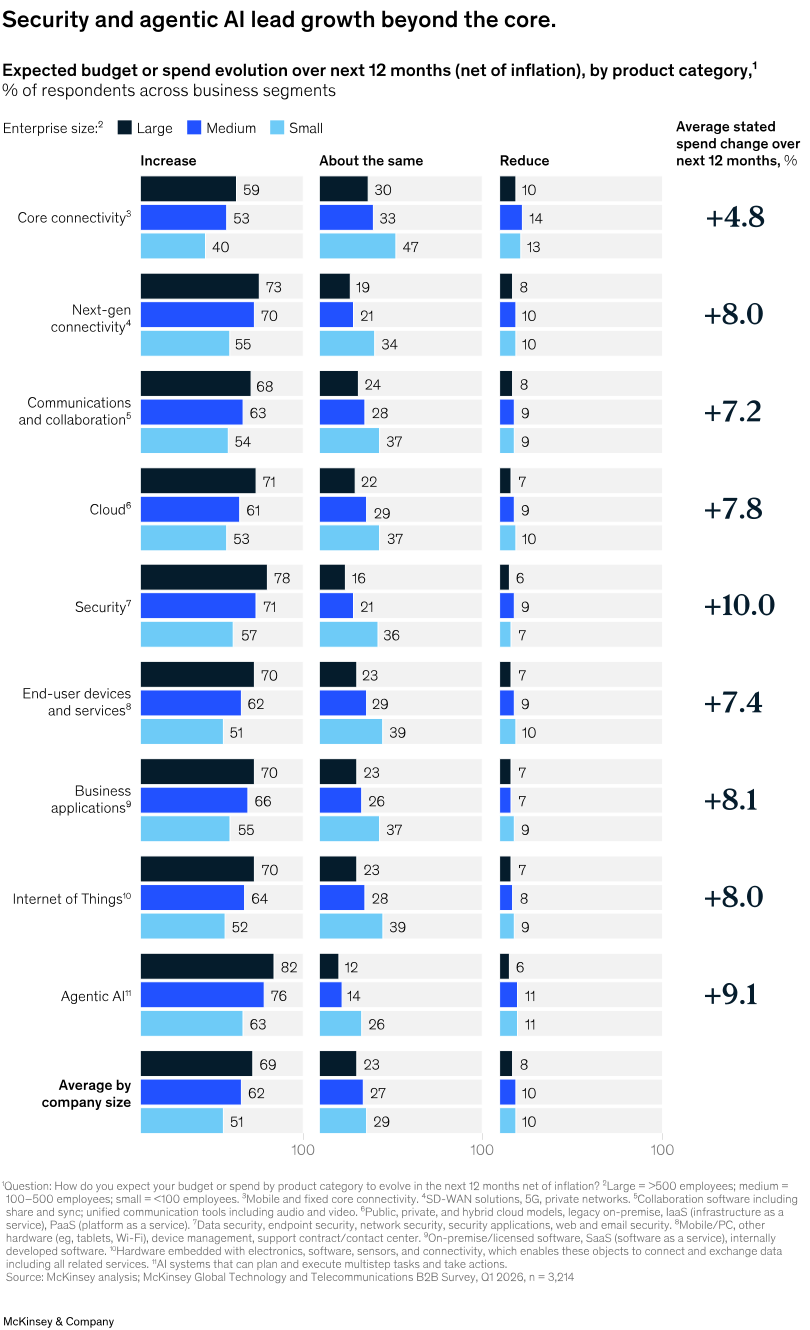
Growth expectations also diverge sharply by product domain. While core connectivity remains foundational, the strongest momentum has shifted to higher-value areas centered on protection, intelligence, and automation. Security and agentic AI are the fastest-growing domains (Exhibit 1), each expected to expand by more than 9 percent over the next 12 months. Core connectivity, by contrast, is projected to grow at less than 5 percent, making it the slowest-growing major category in the portfolio.
Operators have a right to play beyond core connectivity
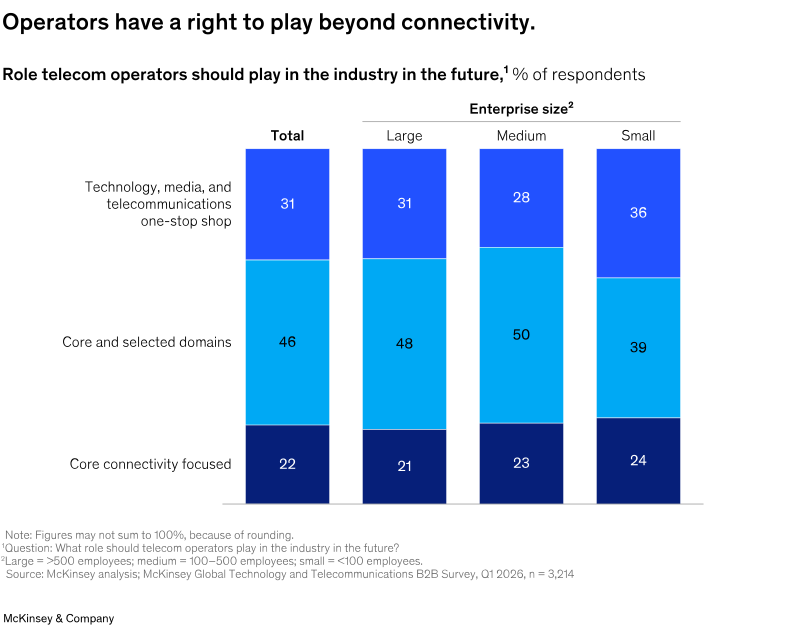
B2B customers now expect operators to act as integration partners and end-to-end solution providers, placing greater emphasis on the ability to orchestrate complex, multidomain solutions rather than on network assets alone (Exhibit 2). As expectations rise, execution has become the primary constraint.
Nearly 80 percent of survey respondents recognize operators as relevant players beyond mobile and fixed connectivity, particularly in areas such as network orchestration, security, cloud provision and hosting, as well as the delivery of AI capabilities. Customer preferences, however, vary by segment. Small enterprises show the strongest interest in one-stop-shop offerings. Medium enterprises are more selective, favoring operators that concentrate on a defined set of domains. Large enterprises sit between these positions but show growing interest in advanced, integrated solutions as agentic AI adoption accelerates.
As B2B customers increasingly expect operators to act as integration partners and end-to-end solution providers, success hinges less on network assets and more on the ability to deliver complex, multidomain solutions at scale.
Customers want omnichannel
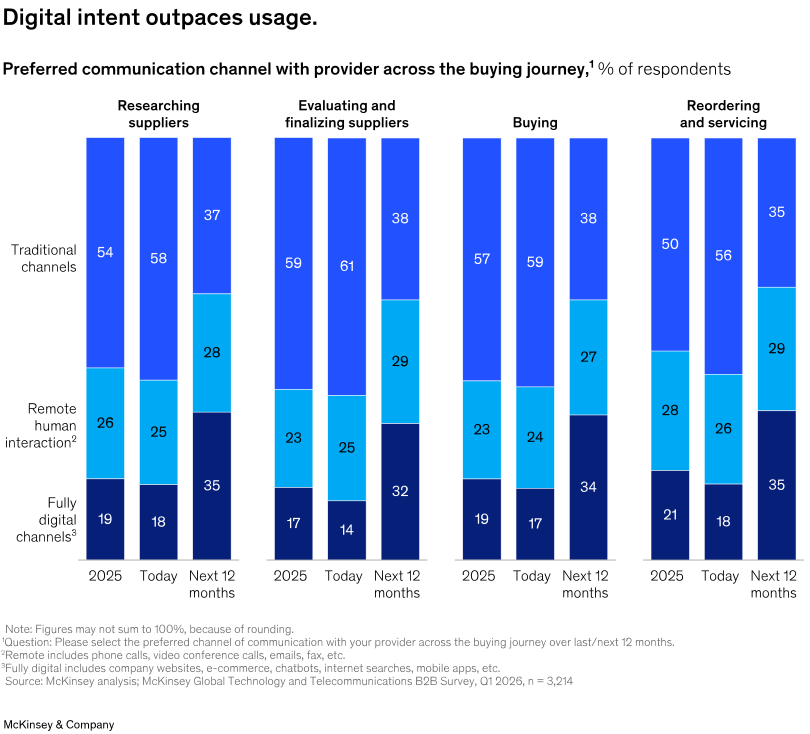
Delivering on the promise beyond core connectivity increasingly depends not only on what operators offer but on how they engage customers across channels—particularly digital ones. After a period of restraint, appetite for fully digital engagement is rebounding. Survey respondents indicate that approximately one-third of B2B customers expect to rely on digital-first interactions over the next 12 months (Exhibit 3). As a result, technology and telecom providers are being assessed less on channel availability and more on their ability to deliver seamless, consistent experiences across digital interfaces and human touchpoints.
This orchestration matters most where relationships are strongest. Nearly 60 percent of B2B survey respondents prefer hybrid engagement models that combine digital and remote human interaction, particularly in reordering and servicing journeys. Customers want the efficiency of digital channels without sacrificing continuity or trust built through existing relationships.
2. New trends are creating renewed openings for growth
At the same time, shifts in demand, retention, and digital behavior are opening new paths to growth.
Spending intent is rising, led by SMEs
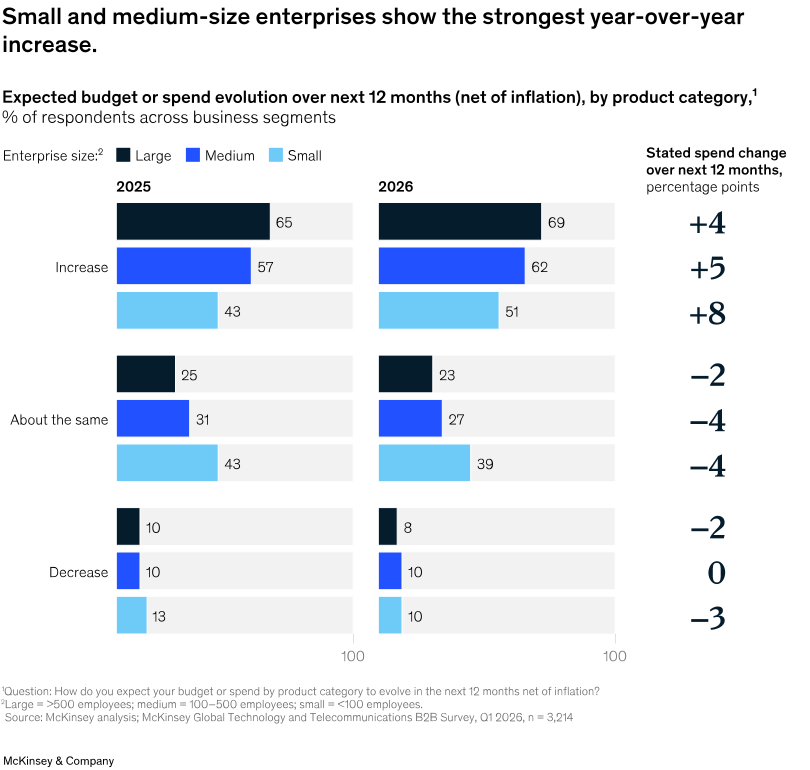
Enterprise technology budgets point to a solid growth outlook for the year ahead. Survey results indicate that more than 60 percent of companies plan to increase technology spending, driving a 7 percent year-over-year increase in overall budget-growth intent (Exhibit 4).
This renewed growth expectation is no longer driven solely by large enterprises. SMEs, often more cautious, are showing renewed confidence, with budget-growth intent among small and medium-size enterprises rising by eight percentage points year over year.
While large enterprises continue to account for the majority of absolute spend, the broadening of confidence marks a structural change from prior years. As SMEs reenter the market more decisively, the addressable growth base is expanding and competition for incremental demand is intensifying, particularly in high-growth domains beyond core connectivity.
Customer stickiness is stabilizing, but loyalty is increasingly conditional
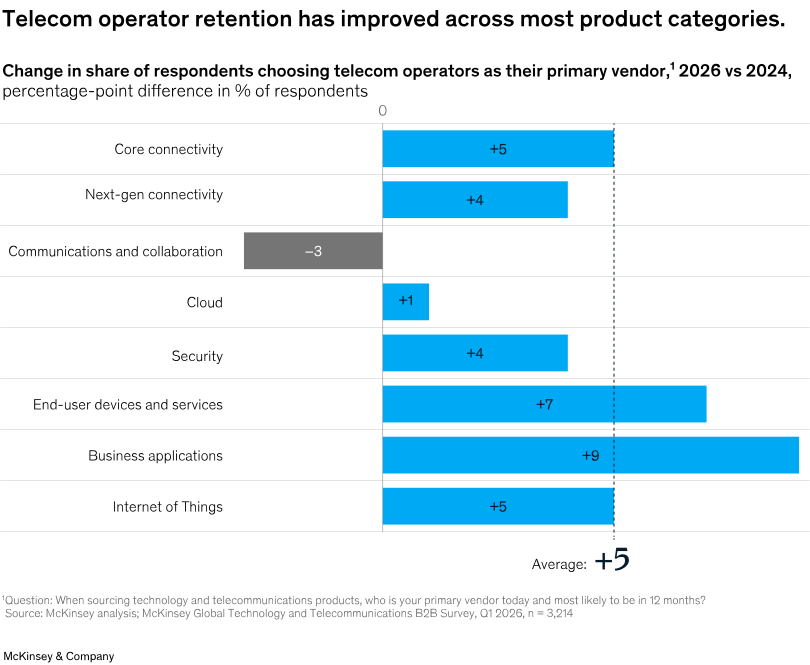
After a period of elevated churn risk, B2B customer stickiness toward telecom operators has begun to stabilize. Nearly three-quarters of surveyed customers report no intention to switch provider types over the next 12 months, up from roughly two-thirds in prior years (Exhibit 5). This shift points to a more resilient customer base and suggests that competitive pressure is translating into more selective switching rather than broad-based defection.
This resilience, however, is uneven across the portfolio. Stickiness is strongest, and improving fastest, in business applications and end-user devices and services, where customers report a seven- to nine-percentage-point increase in their likelihood to remain with telecom operators between 2024 and 2026. In these domains, operators appear to be consolidating their role as trusted delivery partners.
By contrast, other domains remain structurally contested. Communications and collaboration, as well as cloud services, show flat or declining stickiness, reflecting intense competition and a crowded supplier landscape. In these areas, incumbency alone offers limited protection, and customer relationships remain more fluid.
When customers do consider switching, the underlying drivers are also shifting. Among the roughly 30 percent of surveyed B2B customers that report having switched providers in the past year, cybersecurity has emerged as the leading trigger, overtaking traditional factors such as price, coverage, or service reliability. Even in relationships that are primarily connectivity-led, security considerations now rank as the number one reason for defection.
Taken together, these patterns point to a fundamental change in loyalty. While switching behavior has not yet increased materially, stable churn rates should not be mistaken for durable loyalty. Customers are no longer anchored to operators by connectivity alone; instead, loyalty is becoming increasingly conditional and must be actively earned through credible, outcome-driven security and trust capabilities. For operators that meet this expectation, cybersecurity can serve as a powerful lever to defend and expand share of wallet. For those that do not, incremental demand—and eventual erosion—is likely to accrue, especially in favor of cloud and technology providers rather than remain within the telco ecosystem.
Customer experience is a swing factor for channel choice with AI-forward customers driving digital channel growth
According to the survey, B2B customers continue to prefer hybrid engagement models that combine digital channels with human interaction. At the same time, new evidence suggests that quality of experience has become the decisive swing factor in channel choice. Rather than channel availability, improved quality and reliability of digital journeys is supporting adoption growth. As digital experiences improve across the buying cycle, customers are increasingly willing to rely on digital-first interactions, particularly where journeys are intuitive, consistent, and frictionless.
While these improvements have supported steady growth in digital usage, customer experience alone explains only part of the shift. The rapid advancement of agentic AI among B2B customers seems to be an even more powerful “accelerator,” pushing digital channel adoption, as well as the size of digital transactions.
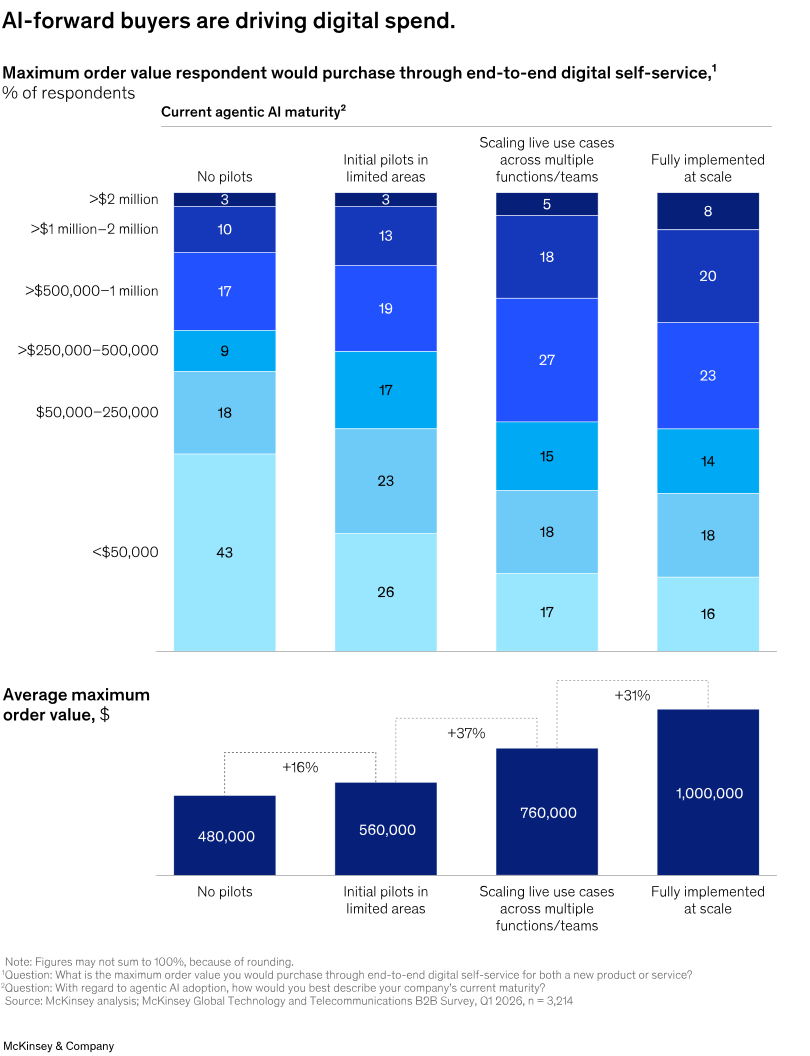
Enterprises that have fully implemented agentic AI at scale in at least one use case, or that are actively scaling live use cases across functions, show a materially higher willingness to transact through fully digital, end-to-end channels. For these AI-mature customers, the average “ticket size” for digital transactions exceeds $1 million—roughly twice the level reported by peers still in early pilots or without operationalized AI. As customers become more comfortable delegating decisions and execution to AI-enabled workflows, digital self-service seems to increasingly extend to complex, high-value purchases (Exhibit 6).
This relationship appears systematic rather than episodic. According to the survey, as customers progress along the agentic AI maturity curve—from experimentation to scaled deployment—the value they report being willing to transact digitally increases in lockstep. Each step up in AI maturity is associated with a self-reported 20 to 45 percent increase in the absolute dollar value customers are prepared to execute through operators’ end-to-end digital channels.
This pattern holds across enterprise sizes but is most pronounced among large organizations. According to the survey, large enterprises with agentic AI fully implemented at scale report a willingness to transact up to one-third more value digitally than peers using AI in more limited or selective ways.
Taken together, these dynamics point to an impending acceleration in digital channel adoption. Improvements in customer experience have laid the foundation, but agentic AI is now changing how enterprises buy—reducing reliance on human-mediated interactions and increasing comfort with automated, end-to-end digital journeys. As agentic AI adoption continues to expand rapidly across customer segments, digital channels are likely to shift decisively from a complementary interface to a primary growth engine, enabling providers to scale sales productivity and support larger, more complex transactions online.

The telco reinvention: How AI can fuel value creation
3. Agentic AI is resetting the growth equation
Agentic AI now sits at the center of these shifts, accelerating change across buying, operations, and delivery models.
Agentic AI adoption is already widespread but not at the same pace everywhere
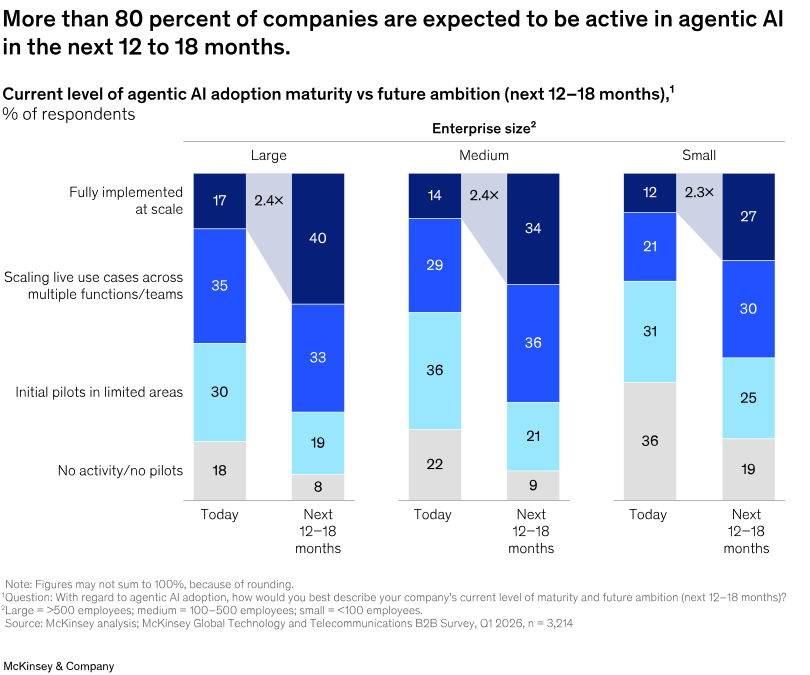
Roughly 80 percent of surveyed large and medium-size enterprises report having agentic AI in place in some form, ranging from early pilots to fully scaled deployments (Exhibit 7). Adoption among small enterprises is lower but still material, with approximately 65 percent of surveyed B2B customers reporting some level of implementation.
The more meaningful distinction lies in maturity. Among large and medium-size enterprises, about 40 to 50 percent report to have already moved beyond experimentation, with agentic AI either fully implemented at scale or actively scaling across multiple domains. In contrast, only about 30 percent of SMEs report to have reached a similar level of maturity.
Over the next 12 months, companies across all size segments expect the share of fully implemented agentic AI solutions to increase by a factor of 2.3x to 2.4x. This signals a decisive shift from isolated use cases to enterprise-wide execution, bringing fundamental changes to operating models, decision-making, and system architectures. For B2B operators, the customer base is becoming more automated, more digital, and more capable of engaging through AI-enabled, end-to-end journeys. Portfolios, sales motions, and service models will need to evolve accordingly to remain relevant.
Across regions, momentum in agentic AI adoption remains very strong, with roughly 70 to 80 percent of surveyed large enterprises actively engaged, ranging from initial pilots to fully implemented, at-scale use cases. While this high level of activity is evident globally, meaningful regional differences are beginning to emerge.
Asia–Pacific and Latin America stand out as the most advanced regions, with more than 80 percent of large B2B companies with already initiated or scaled agentic AI. This reflects faster progression from experimentation to enterprise-wide deployment.
By contrast, Europe and the Middle East have a lower share of enterprises having implemented agentic AI fully at scale or at scale-up stage. More than 20 percent of large B2B companies report no active involvement in agentic AI, indicating a slower transition from pilots to scaled implementation.
While these gaps may appear moderate at first glance, they are strategically meaningful. Geographies further along the adoption curve are likely to experience earlier shifts in buying behavior, greater reliance on digital self-service, and rising expectations for AI-enabled engagement. As these expectations evolve, competitive dynamics will increasingly be shaped by how quickly providers adapt their capabilities to customer readiness and local market conditions, rather than by technology availability alone.
Data privacy and sovereignty are becoming non-negotiable
Rising geopolitical fragmentation and expanding regulatory scrutiny are elevating data privacy and sovereignty from compliance considerations to decisive buying criteria. Across regions and industries, surveyed B2B customers increasingly view sovereign compliance as a prerequisite for engaging with technology and telecom providers, an expectation that is intensifying as agentic AI becomes more deeply embedded in enterprise operations.
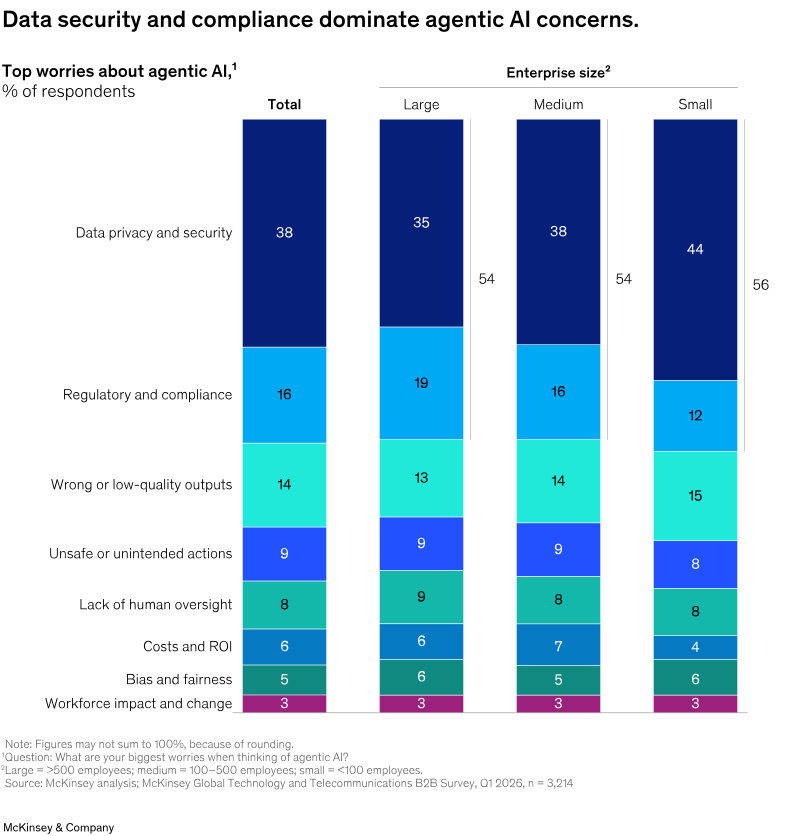
Data privacy and regulatory compliance now rank as the single most important customer concern, cited by more than half of respondents (Exhibit 8). Sensitivity is particularly acute as AI agents gain broader access to enterprise data and take on more autonomous decisioning and execution roles. At the same time, regulatory frameworks (most notably around AI governance in the European Union) are becoming more explicit and consequential, raising the stakes for customers seeking to deploy AI at scale without regulatory risk.
As a result, providers that fail to meet sovereignty, security, and compliance expectations are increasingly excluded from consideration, regardless of price or functionality. Trust has become a gating factor rather than a differentiator. Telecom operators enter this environment with a structural advantage, grounded in decades of experience operating under stringent regulatory regimes and managing critical infrastructure. Operators that can simplify compliance, provide transparency, and absorb regulatory complexity on behalf of customers have an opportunity to convert a baseline requirement into a source of differentiation, particularly in the context of agentic AI-enabled solutions.
Concerns are most pronounced among small enterprises, where nearly half of respondents cite data privacy and security as their top consideration, significantly higher than among large and medium-size enterprises. This gap reflects structural differences in internal capabilities—smaller organizations typically lack dedicated security and compliance resources and therefore place greater reliance on external providers to manage risk on their behalf.
Across all segments, customer preferences converge on a clear deployment mandate. Nearly two-thirds of respondents require their data to run in private cloud environments they directly control or within on-premise infrastructure. Appetite for less restrictive models remains limited, with only a small minority expressing comfort with public cloud or provider-hosted environments. Innovation and scalability matter, but they do not outweigh the need for control.
Looking ahead, these dynamics are likely to intensify. As agentic AI adoption accelerates and enterprises delegate more data access and operational authority to autonomous systems, expectations around privacy by design, sovereign deployment, and regulatory assurance will rise in parallel. Providers that can natively support flexible deployment models and embed trust into AI-enabled offerings will be best positioned to capture growing demand. Those that cannot, risk being structurally sidelined as AI-driven buying behavior reshapes the market.
Agentic AI adoption is growing, especially within customer care use cases
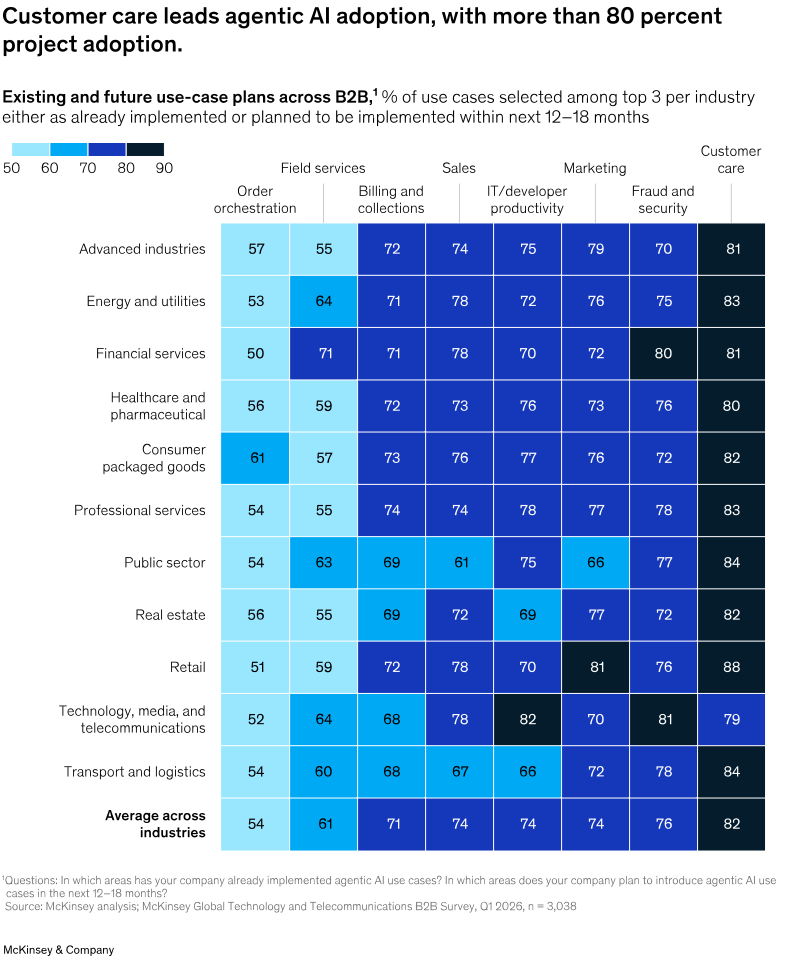
As agentic AI adoption moves from experimentation toward broader deployment, B2B customers are converging on a clear set of priority use cases. Customer care has emerged as the primary entry point: 80 to 90 percent of respondents report they have already implemented, or plan to implement, agentic AI in customer service processes (Exhibit 9). This consistency across industries reflects both the maturity of available solutions and the immediate, measurable impact on service efficiency and experience.
Beyond customer care, adoption is expanding into more operationally complex domains. IT and development functions, along with fraud and security, represent the next wave of high-prevalence use cases, with more than 70 percent of surveyed customers indicating active or planned implementation. Revenue-facing applications—particularly in sales and marketing—are more uneven but feature prominently in advanced industries such as technology, media, and telecommunications; retail; financial services; and energy and utilities, where competitive intensity and growth pressure increase the value of AI-enabled engagement and decision support. Taken together, these patterns suggest that agentic AI adoption is evolving toward more differentiated, industry-specific deployment paths rather than a one-size-fits-all trajectory. For B2B operators, understanding which use cases customers prioritize for optimization through agentic AI also provides a clear signal on where to focus internal efficiency efforts. By mirroring customer priorities internally, operators can accelerate capability development, prove impact at scale, and subsequently monetize these capabilities through deployment at customer sites.
Despite strong intent and widespread experimentation, however, at-scale implementation remains the exception rather than the norm. Among surveyed customers that have initiated agentic AI adoption, only 3 to 11 percent report full-scale deployment for any given use case. Even when including organizations that are actively scaling AI across multiple domains, adoption reaches only 7 to 21 percent. Across use cases, the largest share of respondents remains in the pilot phase, highlighting a persistent gap between ambition and execution.
This execution gap is evident even in customer care, the most advanced and mature use case. While the majority of organizations are either piloting or scaling agentic AI in this domain, only around one in ten surveyed customers report having achieved full-scale deployment. Nearly half remain in early stages, with a substantial share still working to move beyond pilots and isolated team-level implementations.
Taken together, these findings point to a critical inflection point. Customer demand for agentic AI is increasingly well defined, but the ability to execute reliably at scale remains constrained. Providers that can bridge this gap—by integrating agentic AI into core processes, operating models, and governance frameworks—will be best positioned to capture value as adoption accelerates from pilots to enterprise-wide deployment.
4. Agentic AI creates immediate efficiency and a longer-term growth option for operators
For operators, this creates a dual opportunity: capture near-term operational gains while selectively building toward differentiated AI-enabled offerings.
Agentic AI improves efficiency while preserving customer trust
Agentic AI presents telecom operators with a near-term opportunity to materially improve internal efficiency. Applied to high-volume, operationally intensive interactions, agentic AI can reduce cost to serve, extend service availability, and improve responsiveness, while preserving human-led engagement where commercial stakes and relationship value are highest. Rather than replacing human interaction, agentic AI enables a more effective allocation of human effort.
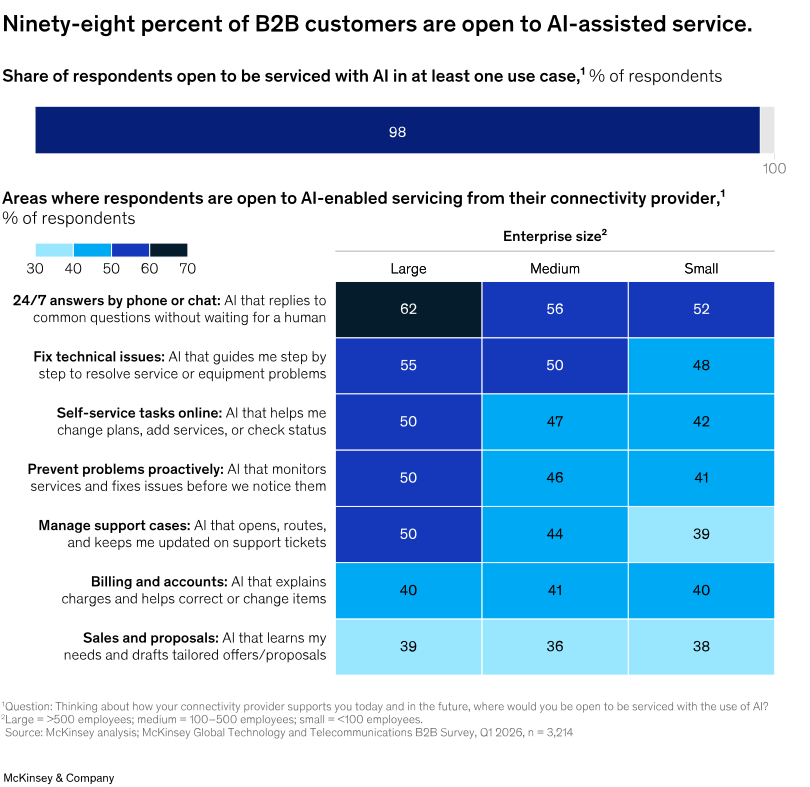
Customer acceptance provides a strong foundation for this shift. Across surveyed B2B segments, 98 percent of customers indicate openness to receiving AI-enabled assistance in at least one interaction (Exhibit 10). Acceptance is highest in service and support contexts, where speed, availability, and consistency are most critical. Between roughly half and two-thirds of respondents are open to AI-assisted 24/7 phone or chat support, and close to half would accept AI guidance when resolving technical issues consistently across enterprise sizes.
By contrast, tolerance for AI involvement is lower in commercially sensitive interactions. Only around one-third of customers are comfortable with AI support in sales and proposal activities, underscoring that trust, judgment, and negotiation remain distinctly human domains. This boundary is instructive. It suggests that the value of agentic AI lies not in full automation, but in intelligent orchestration.
For operators, the winning model is therefore hybrid by design. Agentic AI should be deployed to absorb volume, complexity, and variability at scale, freeing human experts to focus on high-value interactions that drive growth, differentiation, and long-term relationships. Operators that successfully rebalance this mix can unlock meaningful productivity gains in the near term, while strengthening service quality and customer trust rather than eroding it.
The provider market remains highly contested
As agentic AI adoption accelerates, enterprises are making a clear build or buy choice and are increasingly opting to buy rather than develop capabilities in-house. Across use cases, the survey shows that roughly 80 percent of B2B customers prefer to source agentic AI through off-the-shelf solutions, managed services, or third-party-delivered custom builds. This preference holds consistently across major use cases, from customer care and sales to billing, marketing, and field services.
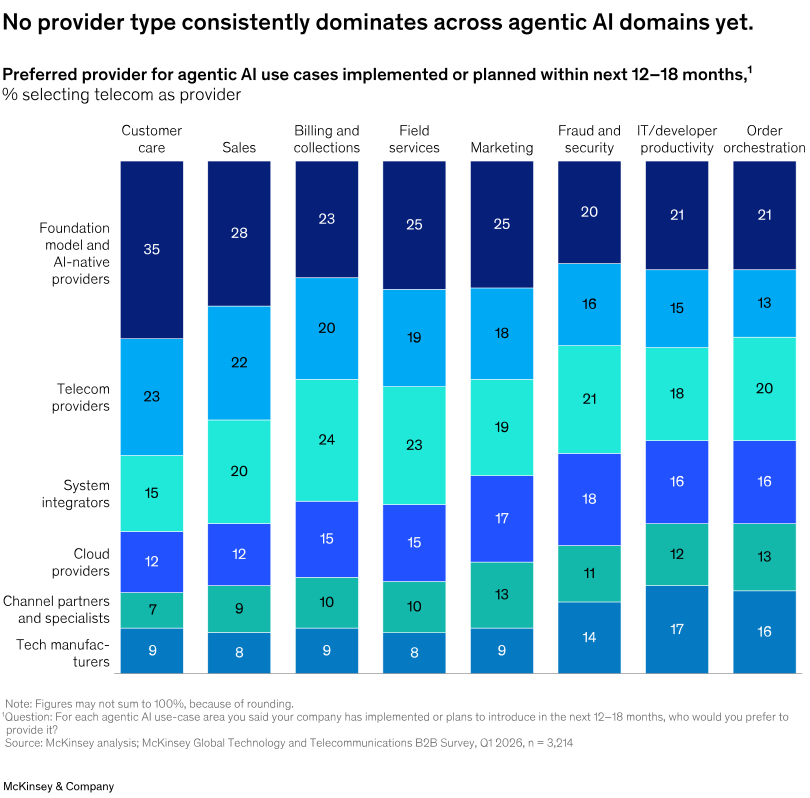
Despite this strong demand signal, the provider landscape remains fragmented. No use case requires a fundamentally distinct delivery approach, and no provider type has yet emerged as a clear winner. Customer preferences vary by application. Surveyed foundation model and AI-native providers currently lead stated preferences, particularly in customer care and sales, reflecting their early internal adoption and proven functionality. System integrators follow as a credible alternative.
More unexpectedly, telecom operators also feature among the top three preferred provider types (for the next 12 to 18 months) across several use cases. This signal should not be read as a reflection of today’s market reality; few operators currently offer a clearly defined, scaled agentic AI proposition. Rather, it appears to reflect a latent customer expectation—or even aspiration—around the role operators could play, anchored in trust, operational reliability, and deep integration into existing processes.
This lack of consolidation could be strategically significant. While customer openness to buying agentic AI solutions is clear, no operator has yet established a clearly defined, scalable agentic AI proposition with a proven go-to-market model (Exhibit 11). As a result, the opportunity for operators exists in principle, but remains early, uncertain, and largely untested. Realizing it would require rethinking value propositions, delivery models, and commercial packaging rather than extending existing offerings.
Customer behavior further clarifies where this opportunity is, and where it is not. When speed, standardization, and ready-to-deploy functionality are the primary decision criteria, enterprises gravitate toward AI-native, off-the-shelf offerings, which are preferred roughly twice as often as custom-built or fully managed alternatives. By contrast, integrated, managed, and domain-embedded deployments (those requiring deep process knowledge, trusted operations, privacy controls, and long-term accountability) remain less clearly served.
It is in these environments that telecom operators could selectively explore a differentiated role, particularly in domains such as customer care, sales, and billing, where they already own customer relationships and process context. Whether this opening can be translated into a scalable and repeatable business will depend less on technology access and more on disciplined execution, clear value articulation, and the ability to operate agentic AI reliably at scale in a fast-moving and still-maturing market.
Connectivity still underpins B2B telco value, but it no longer defines where growth is created. As value moves up the stack, agentic AI is accelerating both efficiency gains and new ways for operators to engage customers beyond the network. Capturing this opportunity will depend less on technology access than on execution, combining security, digital experience, and thoughtful AI–human orchestration.