Agentic AI is expected to have a transformative impact on banking operations over the next decade, and many banking leaders are now seeking clarity on how AI and agentic AI can be harnessed in operations to optimize workflows, delight customers, cut costs, and increase productivity.
Unlike previous technology waves, however, success with agentic AI and multiagentic systems will require an organization-level mindset shift and a fundamental rewiring of the way work gets done, and by whom.1
McKinsey research highlights ten key domains within banking operations that offer significant opportunity for reimagination, especially when approached holistically and through a fleet of nine enhanced agentic AI ‘operations transformers’ (Exhibit 1). These AI agents are reusable across functions, composable across journeys, trainable to institutional knowledge, and, most importantly, scalable to new use cases with minimal effort.
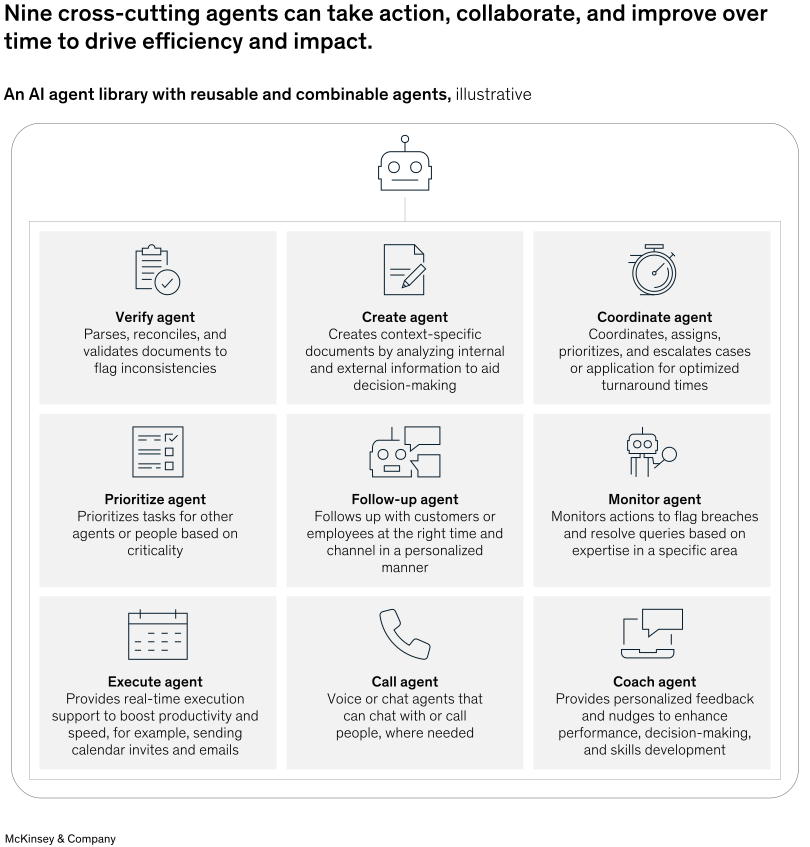
Banking operations are ripe for reimagination
Against a backdrop of rising customer expectations and a challenging operating environment, three drivers help illustrate AI’s potential in banking operations:
AI is expected to disrupt the operations function more than any other lever. With end-to-end operations representing an estimated 60 to 70 percent of a bank’s cost base, based on McKinsey’s research and engagements, transforming operational processes could be an unprecedented value unlock in the financial services sector. In one example, a global bank has used AI and gen AI to streamline its Know Your Customer (KYC) processes by minimizing documentation requirements, enabling a faster, more seamless onboarding experience for customers.
Financial services companies are uniquely positioned to absorb the power of AI across customer-facing, inward-facing, and support processes. Recognizing this potential, financial services companies spent $35 billion globally on AI in 2023, with investments projected to reach nearly $100 billion by 2027.2
Regulators are increasingly open to AI-driven innovation, creating tailwinds for adoption. While regulators across Asia are keenly alert to the potential risks of AI adoption in the highly regulated financial services space, many national regulators are now encouraging banks to innovate with AI.3
By effectively acting as coworkers, today’s multiagentic systems can boost the productivity and efficiency of operational teams and make possible previously unimaginable business process transformations. They also represent a step-up from both predictive AI models and single large language models (LLMs) in their ability to automate complex, multistep workflows, get better over time, and perform tasks within clear guardrails (Exhibit 2).
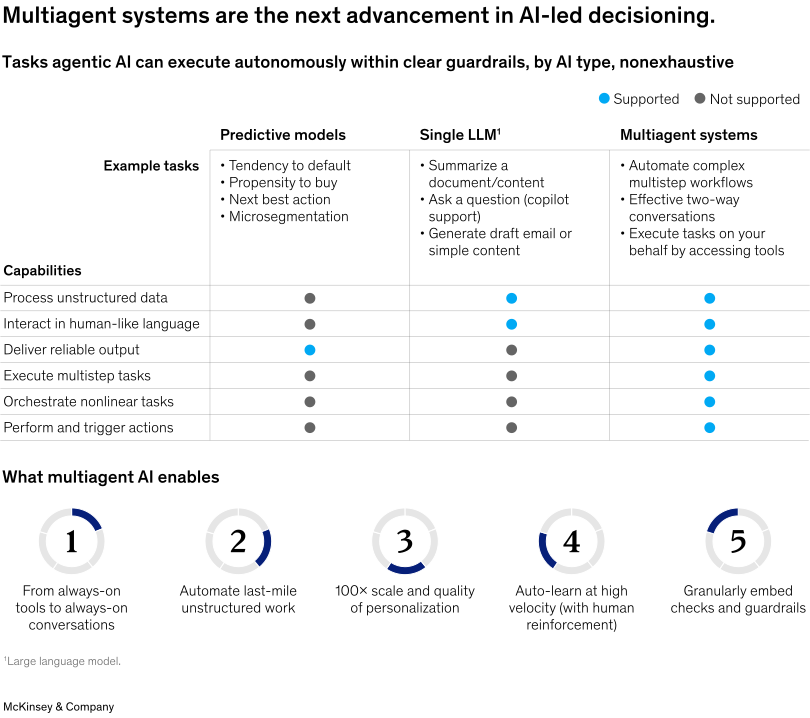
Banks today have an immediate opportunity to harness agentic AI to fundamentally transform their operations. The prize that beckons: breakthrough gains in efficiency and customer experience, and enduring competitive advantage.
To get started, leaders need to embrace a mindset shift, from a technology-first approach to a business-first outlook. Ultimately, any undertaking to reimagine banking operations through AI is not simply a technology program; it is a strategic reinvention and rewiring of workflows. A clear vision, disciplined prioritization, and a road map that balances ambition with scalability can help to keep organizations on track.
With endless AI-related opportunities to consider, such an approach could help banks remain focused on value and position themselves to capture the full promise of AI-driven operational excellence.
To read the full report, download the PDF here.