Artificial intelligence (AI) is no longer a future trend in retail. The technology is already reshaping the entire retail value chain, from making it easier for consumers to discover and buy products to improving how retailers make decisions and speeding up how goods move from warehouses to homes.
This is happening amid intensifying global competition in AI. The technology has reached an inflection point where its commercial value is becoming clearer, attracting trillions of dollars in capital from both incumbents and new entrants. Add in geopolitical implications and the result is a market developing winner-take-most dynamics: For many, positions no longer feel secure, investment horizons are compressed, and the rate of capability improvements continues to accelerate.
AI is developing across three main areas:
- Analytical AI remains the foundation, delivering measurable value in areas such as demand forecasting, pricing optimization, and customer segmentation. For consumers, this means better product availability, more relevant offers, and fewer out-of-stock frustrations.
- Generative AI is boosting productivity and changing how retailers interact with customers, especially in marketing and content creation—leading to more personalized, engaging, and timely communication.
- Agentic AI is emerging as the next step, where systems can act more independently to handle decisions and tasks on their own. This is extending to “agentic commerce,” where AI tools help B2C and B2B customers discover, compare, and even purchase products on their behalf, making shopping faster and more seamless.
Yet tangible results from the scaled application of AI remain uneven, despite strong conviction and rising investment. Many retailers are still struggling to adopt AI at scale to deliver measurable financial impact, highlighting a growing gap between ambition and execution. As the pace of innovation accelerates, the window between experimentation and obsolescence is rapidly narrowing.
This creates a dual challenge for leaders: balancing investment in modernization while continuing to strengthen the human experience. Success will depend not on isolated use cases but on the ability to scale AI across the enterprise and embed it into core workflows.
This report gathers relevant and actionable perspectives on the impact of AI in the retail sector. We have combined EuroCommerce’s policy and sector knowledge with McKinsey’s global expertise and analytical rigor, enriched by a survey of 36 retail executives and an analysis of market data and retailers’ strategic investments in Europe. In addition, we conducted in-depth interviews with five executives across retail subsectors and more than 20 domain experts to gather real-life lessons from senior leaders. All research on which this report is based was conducted in early 2026.
AI is here. We trust this report sheds light on the technology’s impact on retailers and their customers, highlights collaboration across the value chain, and provides a practical perspective on how European retailers can navigate AI and capture its full potential.
The value map: Finding value in retail’s complex landscape
Key takeaways:
- At scale, end-to-end AI transformation could unlock about €240 billion to €320 billion in economic value across Europe’s retail sector in the next five years.
- Softline retailers (sellers of consumable products made of “soft” materials such as clothing, shoes, and beauty) are likely to see the largest upside given more generous EBITDA margins, assortment complexity, less predictable demand, and consumers’ needs for greater personalization. Commercial merchandising is likely to have the largest impact through the optimization of pricing, promotions, and assortment.
- While there are quantified financial impacts from revenue growth, margin improvement, and productivity gains, retailers crafting the “AI value map” for their organization should consider the technology’s critical impact on nonfinancial areas such as the customer and employee experience, capacity building, and supply chain collaboration.
Retail sits at the intersection of high decision density, structurally thin margins, and labor-intensive operations, making it uniquely positioned to capture value from AI. Across the value chain, the technology is already reshaping how decisions are made, initially through analytical use cases and increasingly through more advanced, autonomous, agentic applications. While many retailers have begun deploying AI in isolated instances, its full value potential emerges only when these capabilities are scaled end to end across the enterprise.
The macrodomains of AI impact
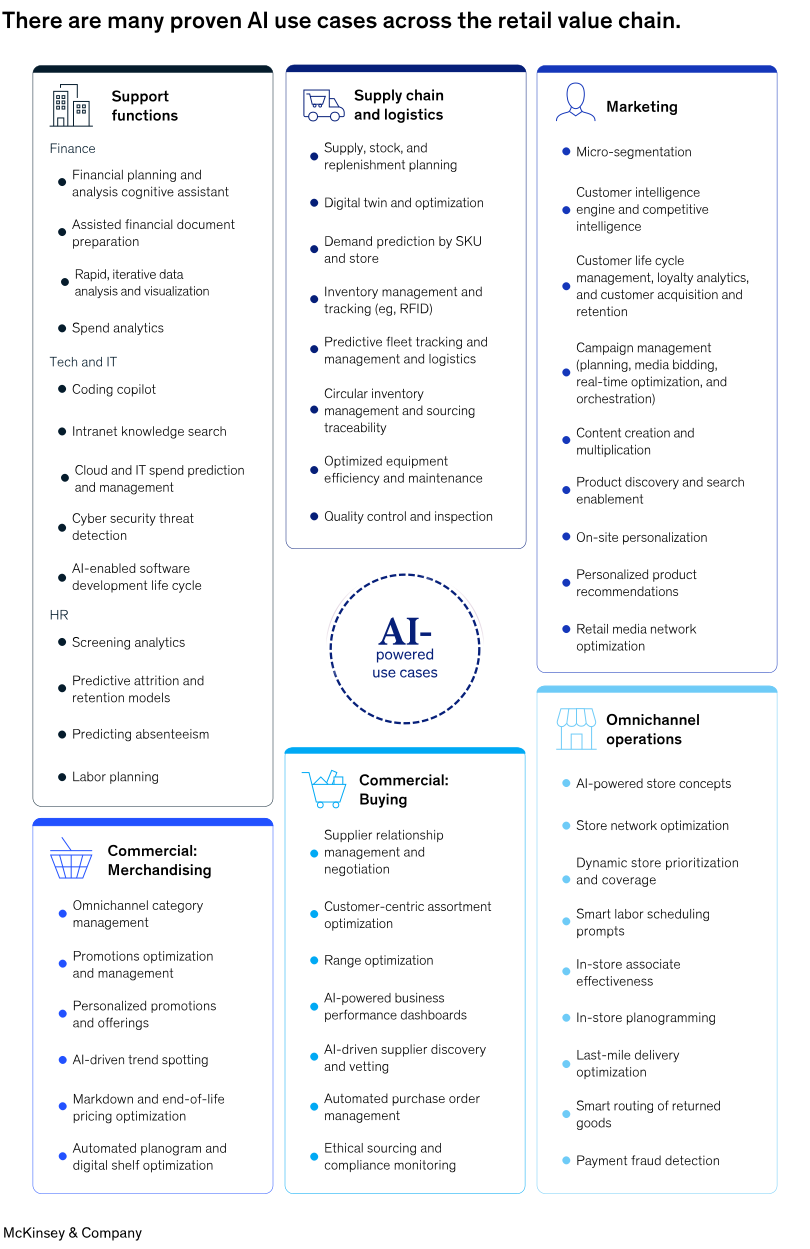
AI’s impact in retail can be understood across six macrodomains (Exhibit 1). Within each, the technology already has multiple proven use cases corresponding to critical decisions and workflows.
Our research shows end-to-end AI transformation can deliver an overall improvement in EBITDA of 4 to 10 percent, driven by a combination of revenue growth, margin improvement, and productivity gains (Exhibit 2). On the revenue side, commercial and marketing levers, such as pricing, promotions, and personalization, act as primary value drivers, directly fueling top-line growth. In addition, AI may positively affect working capital as a result of supply chain and logistics improvements.
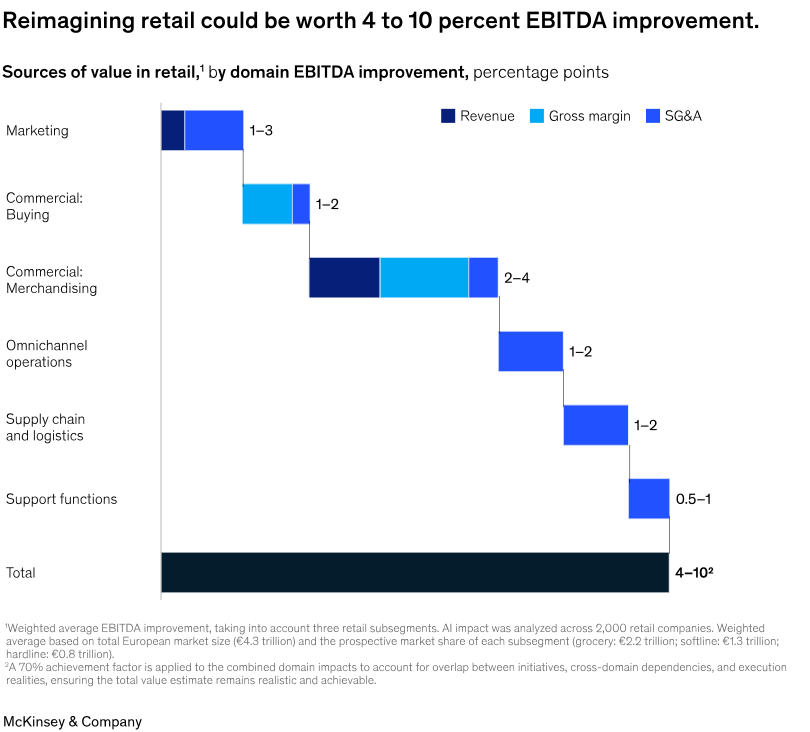
AI adoption and scaling has the greatest impact on the commercial macrodomain, spanning buying (a 1 to 2 percent improvement in EBITDA) and merchandising (2 to 4 percent). For example, Zara’s in-house AI platform identifies emerging trends three to four weeks faster than traditional methods, optimizes assortment to better match local demand, and enables more precise allocation and replenishment, driving higher availability, full-price sell-through, and ultimately sales.2 McKinsey’s Merchant AI Accelerator has seen improvements of 2 to 3 percent in gross margin and 2 to 5 percent in revenue from equipping merchants with the skills, technology, processes, data, and operating model needed to make better, faster decisions.3 This can include daily insight generation and action prescriptions, vendor funding optimization with real-time shopper data, and AI-generated strategies and simulations on supplier performance to support negotiation and sourcing.
Another domain seeing impact on both the top and bottom lines is marketing, although its overall EBITDA impact remains constrained by the slightly smaller contribution of marketing spend compared with other sectors such as consumer packaged goods and banking. Still, the deployment of gen AI copilots within marketing teams in retail is unlocking significant productivity gains by streamlining campaign planning, automating content generation, and enabling more precise targeting, driving reductions in agency spend of about 15 percent while improving conversion by up to 40 percent, according to McKinsey analysis. Zalando has taken personalization to the next level, for example, by combining real-time behavioral data, advanced recommendation models (including graph-based systems), and gen AI assistants to tailor everything from homepage ranking and outfit curation to size recommendations. This has driven about 20 percent of recent revenue growth and reduced return rates by up to 7 percent.4 In parallel, the company is leveraging gen AI to transform content production, cutting image creation timelines from six to eight weeks to just three to four days; by the fourth quarter of 2024, about 70 percent of Zalando’s editorial content was AI-generated.5
On the cost side, AI is unlocking substantial efficiency gains, with operational improvements across omnichannel operations, supply chain, and support functions reducing labor intensity and materially improving asset productivity. Increasingly, these gains are being driven not only by digital AI models but also by physical AI—robotics, computer vision, and autonomous systems embedded across warehouses and stores translating intelligence into real-world execution at scale. Zalando’s ZEOS Fulfilment solution reduces costs by about 25 percent compared with drop-shipping (a decentralized model where retailers bypass holding inventory by transferring orders directly to suppliers for fulfillment) by optimizing stock placement, order routing, and warehouse operations across its network. It also achieves 75 percent satisfaction among marketplace merchants through faster delivery, lower operational complexity, and more efficient returns handling.6 As retailers move toward more automated, high-frequency fulfillment models, particularly in e-commerce and replenishment, such physical AI capabilities will become critical to sustaining both cost efficiency and service levels.
AI’s impact by subsectors
The magnitude and source of AI-driven value varies significantly across retail subsectors, reflecting underlying economics as AI amplifies rather than reshapes the fundamental profit engines of each model. Exhibit 3 highlights how value pools differ across domains and retail subsectors.
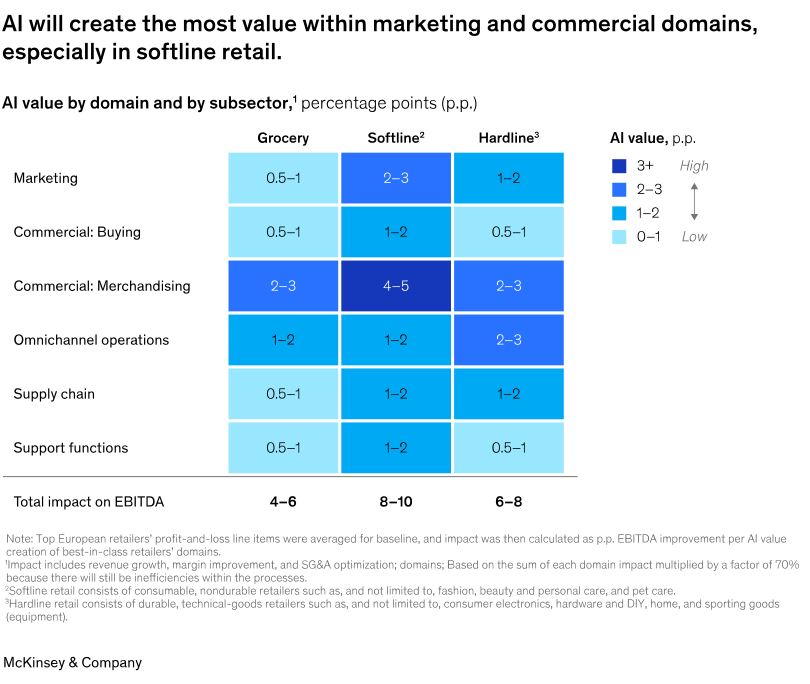
In grocery, where margins are structurally low, McKinsey analysis indicates that AI-driven EBITDA improvement for European retailers is typically in the range of four to six percentage points (translating to a total increase of €90 billion to €130 billion), with most of the value coming from frequent, incremental improvements in areas such as supply chain efficiency, waste reduction, and more-targeted promotions. In contrast, softline retailers (sellers of consumable products made of “soft” materials such as clothing, shoes, and beauty) can achieve EBITDA improvement of about eight to ten percentage points (€100 billion to €130 billion), driven by greater pricing attractiveness and better matching of assortment with constantly changing consumer preferences. Hardline retailers (sellers of nonapparel, durable goods such as electronics and appliances) typically fall between these two extremes, with a more balanced mix of commercial and operational value levers resulting in an expected EBITDA improvement of six to eight percentage points (€50 billion to €60 billion).
Overall, this level of impact translates into an increase in economic value of €240 billion to €320 billion for Europe’s retail sector. A subset of AI leaders is on track to capture this level of impact. What differentiates them is not the breadth of use cases deployed, but their ability to scale and embed use cases across the enterprise. Achieving this requires a step change transformation of operating models, data foundations, and ways of working, making it one of the most complex—yet most consequential—challenges of AI adoption.
Capturing the EBITDA uplift requires committed capital and rigorous measurement of technology ROI. Depending on technology maturity, organizations should anticipate capital-expenditure and operating-expenditure investments ranging from 1 to 2 percent of revenue on AI and underlying technology, in addition to current capital expenditures and operating expenditures totaling 1.5 to 3.0 percent of revenue on legacy technology and digital transformation. These ranges differ by subsector: Based on McKinsey analysis, grocery has a range of 0.5 to 1.0 percent of revenue, while softline is at 1.5 to 2.0 percent due to both a higher willingness to invest and the lower ROI of investments resulting from the greater underlying complexity of the subindustry’s value chain.
The retail AI value map
AI is not a uniform lever. Its impact is highly dependent on context, shaped by the economic and operational characteristics of each business, with value rarely driven by isolated use cases but by how effectively retailers scale it across domains to capture compounding gains. Our survey found just 15 percent of AI investment among Europe’s retailers is in the commercial domain, despite it representing the largest opportunity, while a disproportionate share flows to marketing and support functions, suggesting a degree of risk aversion (Exhibit 4).7
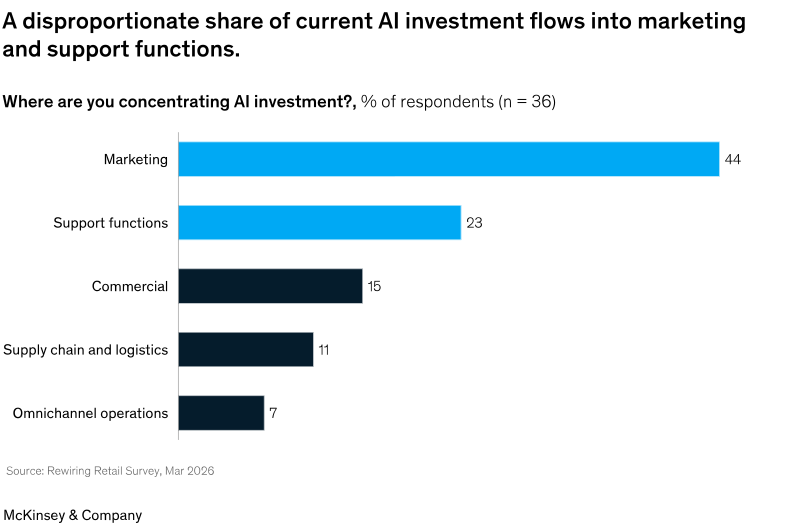
The implication is clear: A large part of AI’s impact on productivity will likely be reinvested into price, and failing to capture potential value will affect retailers’ competitiveness in the long term. Retailers need to design a unique AI value map for their business at a domain level and drive their investment focus accordingly. This map should take into account not only the financial value at stake but also how AI may affect the customer experience (through hyper-relevant, real-time engagement), employee experience (through decision-making augmented by AI and the automation of manual, low-value tasks), and sustainability (through reduced waste and optimized logistics).
Rewired: Critical enablers to unlock value
Key takeaways:
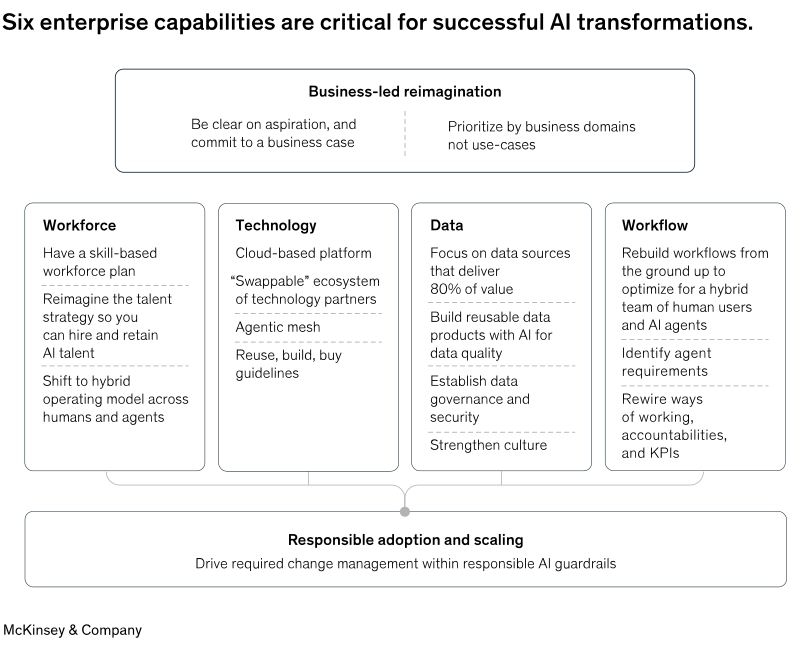
- A successful AI transformation in retail often depends on foundational excellence across six core capabilities: a business-led AI road map, workforce, technology, data, workflow, and responsible scaling.
- These capabilities must be built and scaled in tandem, not sequentially, to unlock sustained commercial and operational impact. Weakness in any one area acts as a constraint on overall commercial and operational performance.
Six core capabilities for retailers
While most retailers are investing in AI, few organizations are ready to translate that investment into measurable impact. Nearly nine in ten companies report adopting AI, yet just as many report no meaningful impact on the bottom line, a disconnect that reflects what many executives describe as the “AI paradox.”8 At its core, this gap stems from fragmented deployment models, where isolated use cases fail to scale into enterprise-wide capabilities. Structural barriers, particularly fragmented data, legacy systems, and capability gaps, continue to inhibit impact at scale.
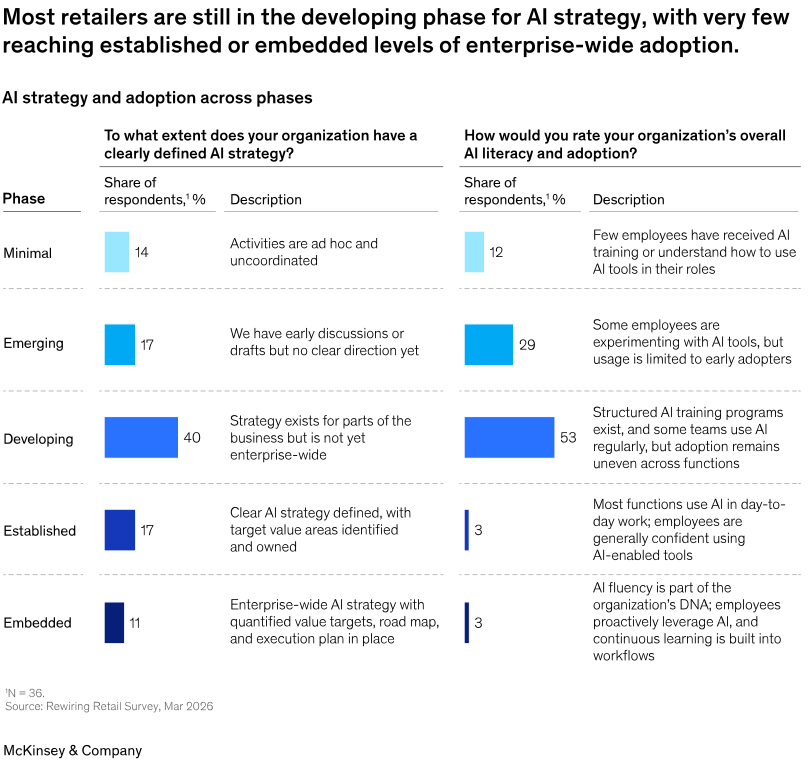
This gap is reflected in maturity data. While 40 percent of organizations report having a developing AI strategy, fewer than 30 percent have reached established or embedded levels, and more than 80 percent remain in the emerging or developing stages of AI literacy and adoption. The bottom line: Most organizations remain far from scaling AI effectively (Exhibit 5).9
Transformational success is not driven by isolated use cases or superior algorithms but by disciplined execution against six core capabilities: strategy, data, technology, talent, workflow, and governance (Exhibit 6). Retailers must reach a minimum threshold across all to unlock value. A modern retail technology stack cannot compensate for poor data, and even the most advanced AI models will fail when not embedded into day-to-day workflows and actively adopted by buyers, planners, and store managers.
Business-led reimagination
At the center of a successful AI strategy is a business-led road map focused on deep transformation within specific business domains rather than pursuing a fragmented portfolio of isolated use cases. Leading retailers sequence value creation, focusing on one domain at a time to drive change before scaling further. For example, Inditex invested early in digitalizing its merchandising backbone (RFID, real-time inventory, and integrated systems) and then layered AI on top to enhance demand sensing, allocation, and replenishment decisions.10 However, many organizations continue to pursue scale through volume rather than focus. Our survey found that while more than a quarter of executives prioritize more than 50 use cases for implementation, fewer than 15 percent have been scaled, a signal of fragmentation that dilutes effort and slows value realization.11
Workforce, technology, data, and workflow
Delivering against a business-led road map requires integrated capability-building across talent, data, and technology—executed through agile, cross-functional teams. These teams combine data scientists with deep retail expertise (such as pricing and assortment), engineers capable of working with granular SKU-level and transaction data, and business leaders who can translate customer and operational insights into scalable, value-accretive use cases. Leading retailers are already deploying these capabilities at scale. For example, Ocado deploys AI-enabled teams and digital twins to simulate thousands of scenarios, testing the equivalent of 270 years of warehouse operations in 12 months.12 At the same time, it orchestrates fleets of robots in real time that communicate with each other about ten times per second. This enables rapid experimentation, continuous optimization, and lower-cost operations at scale.
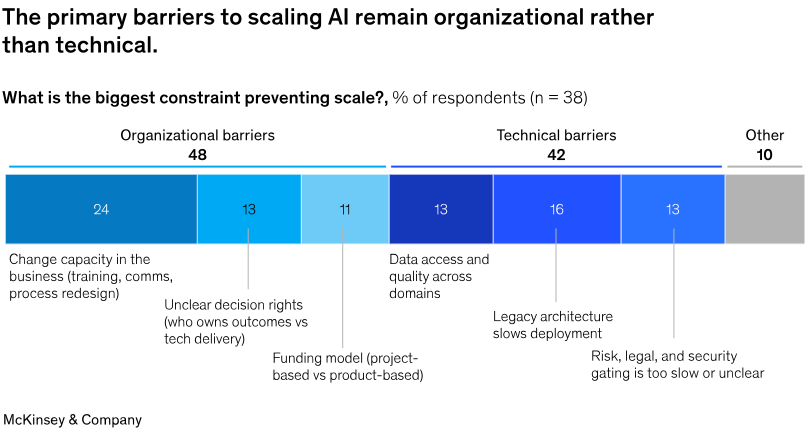
Despite progress, the primary barriers to scaling AI remain organizational rather than technical. Our survey found that 24 percent of executives cite change capacity (training, communication, and process redesign) as the single largest constraint (Exhibit 7), while only 41 percent of respondents believe they have the right talent in place to deliver and scale AI.13
A modern, modular technology stack enables the rapid development, testing, and deployment of AI solutions with minimal reliance on legacy systems. It should be complemented by accessible data foundations built on integrated product, customer, and supply chain data, which enable reuse across use cases and ensure scalability in production. However, these enablers alone are insufficient to realize AI’s potential.
Retailers that succeed embed AI directly into frontline workflows, equipping buyers, planners, and store teams with tools that enhance real-time decision-making. Critically, this is reinforced through workforce reskilling and structured change management, performance tracking systems, and governance mechanisms, ensuring solutions are adopted, scaled, and aligned to business outcomes. For example, multiagent AI architectures on Amazon Bedrock enable supply chains to respond to disruptions in minutes instead of hours, coordinating specialized agents in real time. In a hypothetical case, the system managed a disruption affecting 47 shipments within a 72-hour window, preserving $28,000 in revenue while reducing costs by $4,300.14
Responsible adoption and scaling
Recent McKinsey analysis of 20 companies rewiring their organizations with AI found an average EBITDA increase of 20 percent and a threefold return for every euro or dollar invested.15 Yet as AI becomes embedded in real-time and autonomous decision-making, governance is emerging as a critical enabler of scale. Yet maturity remains limited: Only around 30 percent of organizations report advanced capabilities in AI governance, risk, and control, while a further third are still at an early stage or lack formal frameworks altogether.16 This gap creates both risk and opportunity, as retailers embedding governance (for example, through explainability, auditability, and antibias monitoring) directly into AI systems can meet regulatory requirements while building trust and competitive advantage. Leading players are already acting. For example, REWE treats AI governance as a core pillar of its transformation, managing security, legal compliance, and worker alignment centrally while embedding human-in-the-loop controls for sensitive use cases.
Ultimately, capturing value from AI requires focused, end-to-end transformation, not fragmented experimentation. Leading retailers prioritize high-impact domains and scale solutions tied to clear profit-and-loss outcomes where even targeted use cases, such as AI-powered customer service, can deliver meaningful returns. Those building strength across capabilities while managing their interdependencies are best positioned to translate AI into sustained bottom-line impact.




The future of retail enterprise: From digital to agentic
Key takeaways:
- Retailers need to redesign workflows entirely to realize step-change improvements in speed, cost, and decision quality. Agentic organizations operate as flat, outcome-driven networks, where small, multidisciplinary teams own those end-to-end workflows.
- Many retail roles will undergo a structural shift beyond mere task automation. Reskilling must evolve from incremental training to continuous capability-building, combining AI fluency with critical thinking, collaboration, and judgment.
Retail is entering a new organizational era, moving beyond digital transformation toward AI-native, “agentic” organizations. As decision-making increasingly moves from static workflows to dynamic, AI-orchestrated systems, traditional hierarchies give way to more-fluid, networked structures, with profound implications for roles, capabilities, and how work gets done.
Operating models: From hierarchies to agentic networks
Traditional retail organizations are structured around functions—from merchandising to marketing and supply chain—with most manual processes designed around human capacity, often resulting in heavy coordination and slow decision-making. In contrast, agentic organizations deploy AI agents as active participants, operating in a model comprising flat, outcome-driven networks where small, multidisciplinary teams own end-to-end workflows (Exhibit 8).
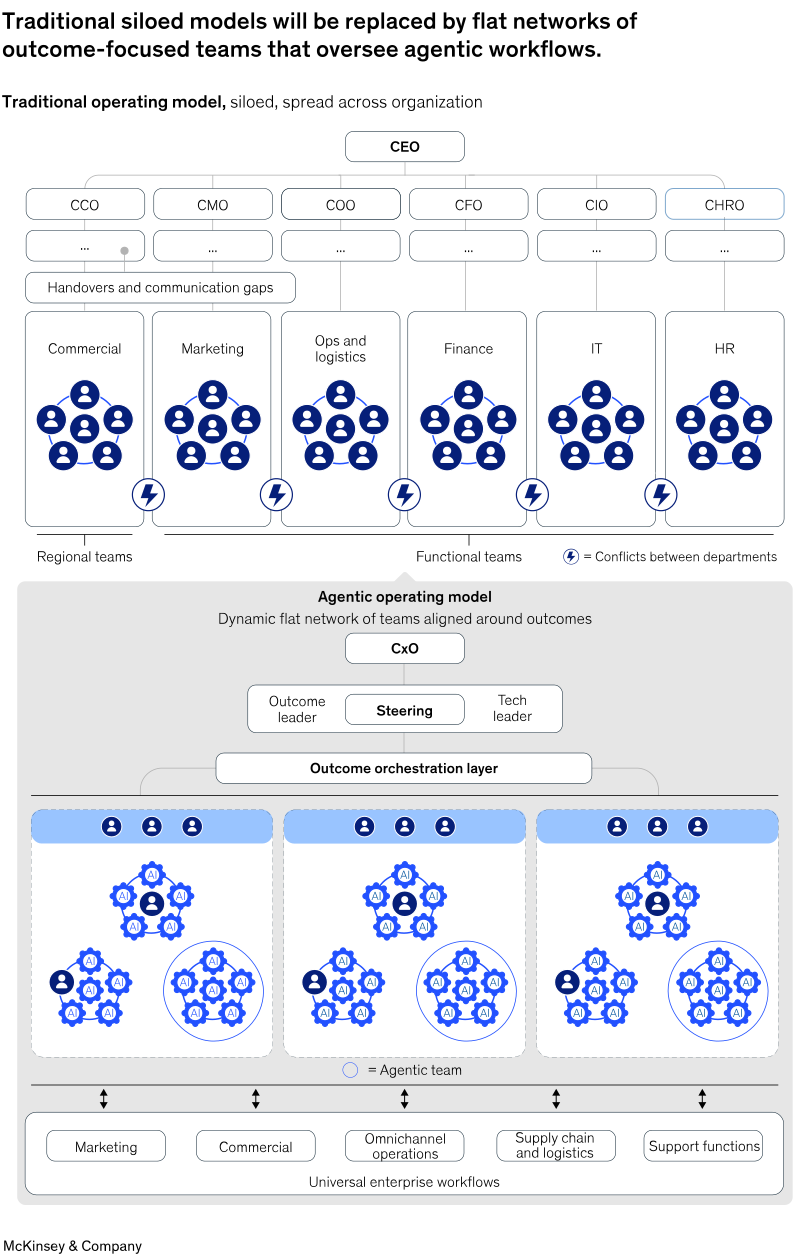
These agentic teams combine humans and AI agents to deliver specific business outcomes. Rather than relying on step-by-step handoffs, decision-making happens in real time, with AI handling execution and humans focusing on oversight. It’s a shift that has the potential to unlock efficiency gains of about 35 percent across role levels—and up to 50 percent in advanced transformations—as a result of the automation of routine decisions and reduced coordination overhead.17
Fragmented use cases improve individual productivity but rarely create enterprise value. Rather than layering AI onto existing processes, leading retailers redesign workflows end to end, unlocking step-change improvements in speed, cost, and decision quality, with more than half of leaders expecting exponential productivity gains.
Jobs: A structural shift, not just automation
AI is not just automating tasks but also reshaping roles. While AI can support employees and improve productivity, up to 75 percent of retail positions are likely to be redefined, requiring new blends of technical, cognitive, and interpersonal skills.18 Additionally, new roles will emerge, such as trust and safety leads and AI product owners.
Three new role archetypes are emerging:
- AI orchestrators managing agents and workflows
- deep specialists handling judgment and exceptions
- AI-augmented frontline workers focusing on customers
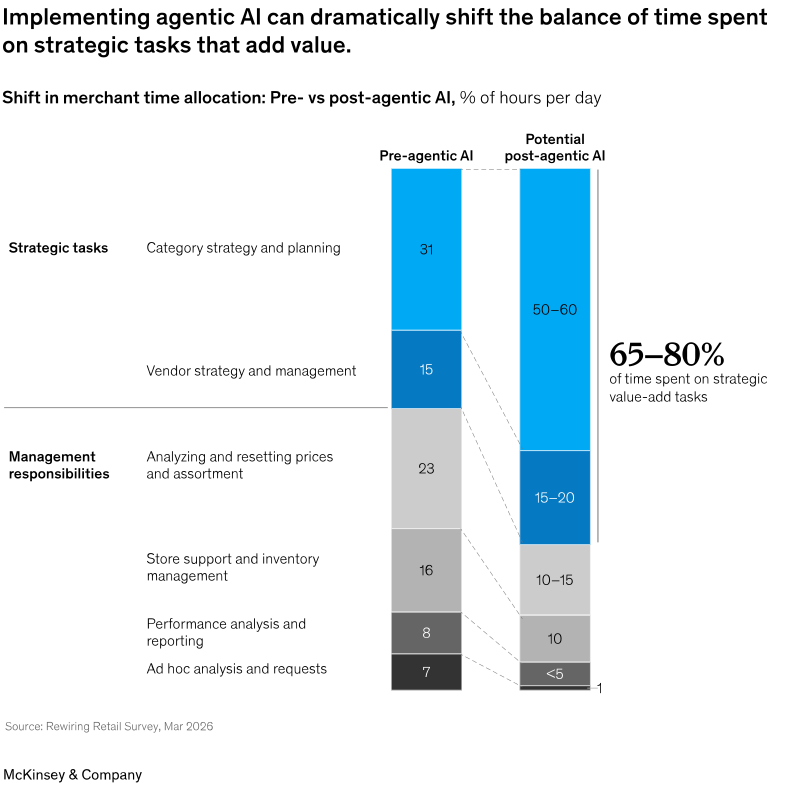
This transformation is already visible. In merchandising, AI can automate data consolidation, forecasting, and promotional planning to unlock capacity gains of about 40 percent.19 This is achieved through merchants shifting toward higher-value activities such as strategy, demand sensing, product discovery, and optimized supplier negotiation while developing new skills in interpreting AI outputs and managing exceptions (Exhibit 9).
Reskilling: The critical AI bottleneck
The primary barrier to implementing AI at scale is talent readiness. McKinsey research found that 86 percent of organizations are not prepared to adopt AI in day-to-day operations, leadership alignment remains limited, and only about half of required AI talent is available globally.20
That’s why reskilling—in combination with efforts to ensure educational systems keep pace—must shift from incremental training to continuous capability-building, combining AI fluency with critical thinking and collaboration. For example, Ikea has trained 8,500 call center workers to become interior design advisers, while its AI virtual assistant handles 47 percent of customer queries.21 At the same time, organizations must themselves redesign talent systems. Traditional “hire to retire” models are becoming obsolete as roles blur and humans increasingly orchestrate hybrid human–AI workflows. Leading organizations are beginning to measure performance not by activity but by value creation and effective agent orchestration.
The urgency seems clear. Within five years, two-thirds of required retail skills may change,22 such as the following:
- Marketer. The increased use of AI in marketing may reduce the time spent on manual campaign execution and basic data analysis. As programmatic ad buying becomes fully automated and gen AI handles content creation at scale, the role could shift from execution to strategy, requiring marketing specialists to acquire new skills, notably related to generative engine optimization (GEO) to ensure brand visibility across AI platforms.
- Merchandiser. The productivity of merchandising teams could rise as AI automates data consolidation, forecasting, and promotional planning. Agentic merchandising may transform the role from manual data work across fragmented systems into thought leadership that sets strategic direction. Staff will likely have more time to focus on high-value tasks such as vendor negotiation and strategic assortment curation. Succeeding may require enhanced skills to interpret AI-driven recommendations for pricing and store-specific SKU selection.
- Stock replenisher. The nature of stock care and replenishment on the sales floor may transform as stores adopt AI-driven systems, computer vision for shelf monitoring, and predictive analytics. The role could shift from manual inventory checking to managing and reacting to AI-generated restocking alerts. Staff may need new technical skills to interact with these digital tools, understand predictive models, and ensure seamless omnichannel operations.
- Warehouse manager. As productivity improves through the deployment of automated order picking and intelligent sorting systems, the complexity of the warehouse environment may increase. The role of the warehouse manager could shift from directly managing human labor to orchestrating mixed fleets of human workers and autonomous robots. These leaders may need new technical capabilities to oversee these integrated systems.
- HR specialist. While AI and automation may significantly reduce administrative burdens in HR, the strategic importance of the role could grow. HR specialists will likely shift toward predictive labor planning, using AI to forecast workforce needs and identify skill gaps—subject to compliance with regional regulations and workers’ information and consultation requirements—across the organization. To master this, HR employees may need strong analytical skills to leverage workforce data, alongside advanced interpersonal skills to coach leaders.
The bottom line
The shift to agentic organizations represents society’s next major paradigm change, comparable to the industrial and digital revolutions. It is likely to redefine business models, operating models, and workforce structures simultaneously.
Retailers that succeed will not necessarily be those who adopt AI tools fastest but those who rewire around flows, not functions; redesign roles toward orchestration and judgment; and build continuous reskilling and AI-native talent systems. In the agentic era, competitive advantage will come from the ability to combine human judgment with AI execution at scale—transforming not just how retailers operate but also how they create value.
For retail executives, the mandate is no longer about tracking technology trends but structural execution. To win in this new era, leaders should consider anchoring their operating committees to some nonnegotiable imperatives:
- Create and prioritize an AI value blueprint, deploying capital to the specific merchandising, supply chain, and operational domains that guarantee near-term EBITDA uplift and margin defense.
- Clarify your strategic position on agentic commerce by engineering customer experience to be “agent ready,” remaining an orchestrator of growth rather than a fulfillment engine.
- Start rewiring the enterprise around AI-augmented flows rather than optimizing siloed functions. That means redesigning roles, shifting human effort toward judgment, and building the bionic workforce (where people and AI work alongside each other) required to scale these technologies out of the pilot phase.
AI may not replace retail leaders. And the sector is still in the relatively early stages of deployment and scalability, which remains uneven across Europe. Yet the technology’s potential to accelerate operational impact when combined with human expertise and judgment means that retail leaders who move quickly to rewire their enterprises around AI are likely to gain a competitive advantage.
Agentic commerce: The next frontier of commerce transformation
Key takeaways:
- Agentic commerce is likely to evolve in three waves: the shift from SEO to GEO, AI-orchestrated commerce, and autonomous commerce, with disintermediation risks higher in commoditized categories than in others.
- AI is already mainstream in the consumer decision journeys of European consumers. Retailers should prioritize GEO while experimenting with commerce-native AI assistants and establishing their position and readiness to engage in the autonomous scenario.
Agentic commerce—shopping influenced or powered by gen AI tools or AI agents acting on people’s behalf—represents a seismic shift in terms of how demand is created and captured. It creates a world in which AI influences discovery, anticipates consumer needs, navigates shopping options, determines how deals are negotiated, and potentially even executes transactions. The stakes are considerable: McKinsey research estimates that agentic commerce could orchestrate $3 trillion to $5 trillion globally by 2030.23
This dynamic presents European retailers with diverging strategic scenarios. On the one hand, proactive retailers can become “orchestrators,” building proprietary, AI-native ecosystems that deepen customer loyalty and capture high-margin advisory value. On the other hand, those who fail to make their environment “agent ready” risk losing direct customer relationships and visibility. By abandoning the direct customer interface to third-party AI platforms, they risk being downgraded to invisible fulfillment engines, competing primarily on price and logistics rather than brand equity and shopper experience.
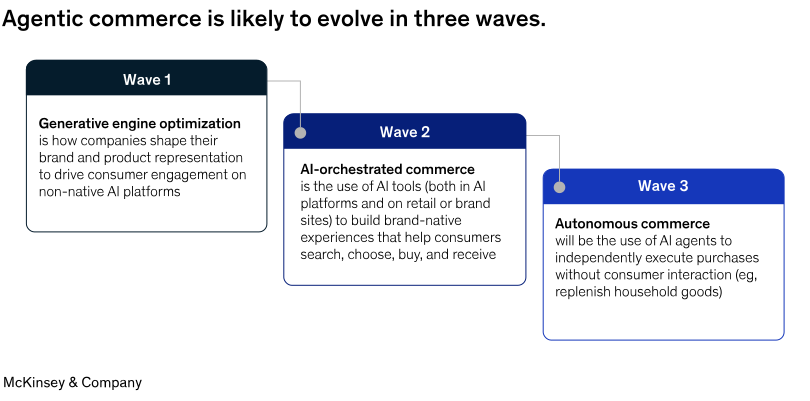
Agentic commerce is likely to evolve in three waves, each requiring distinct strategic and technical capabilities (Exhibit 10). AI-mediated discovery and evaluation are scaling quickly, even as full autonomy remains limited.
Wave 1: Generative engine optimization
GEO is the foundational layer of agentic commerce and is already here. Around half of Europe’s consumers are already using AI to learn about a product or category and comparing options.24 While retailers should seek to retain direct customer relationships, they should treat GEO as a priority, auditing how their products appear in AI-generated answers and investing in structured data, rich product attributes, and authoritative content.
Comparable to SEO, GEO focuses on optimizing how products, content, and brand signals are interpreted and surfaced by AI models in conversational contexts. Retailers can advance their efforts to win in AI-powered search through four actions:
- Conduct a robust GEO diagnostic. Establish a clear baseline of current performance across leading AI search platforms, including visibility, share of voice, and sentiment. Benchmark against peers and traditional SEO—where even leaders may see a 20–50 percent gap—to identify priority opportunities.25
- Reallocate and refine AI-led content strategy. Expand beyond owned channels to include third-party and user-generated or community content that shapes large-language-model outputs.
- Systematically optimize content for AI-native search. Strengthen credibility, structure, and metadata across all content with rich product data, consistent taxonomy, verifiable claims, and scaled trust signals (such as reviews).
- Build GEO as a core, cross-functional capability. Define GEO-specific KPIs such as AI visibility and conversion influence, and implement enabling infrastructure (such as data, tooling, and governance) to support continuous optimization.
Wave 2: AI-orchestrated commerce
The second wave is rapidly unfolding. Orchestrated commerce is the use of AI tools (both in AI platforms and on retail or brand sites) to build brand-native experiences that help consumers search, choose, buy, and receive products. This moves beyond simple discovery and into the active shopping journey.
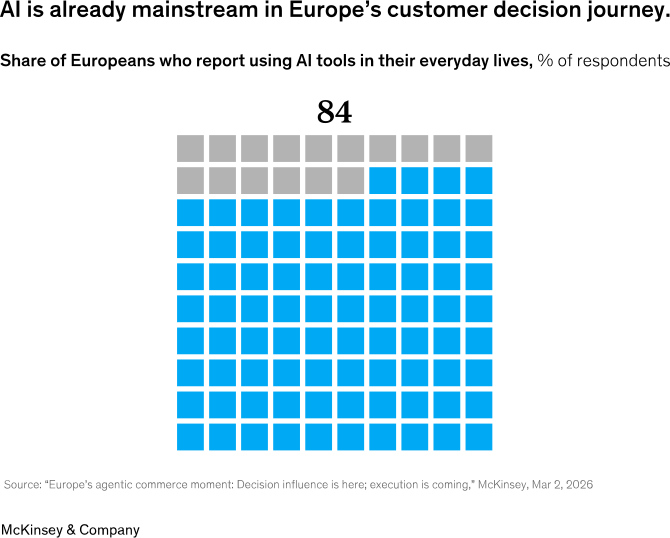
In Europe, the behavioral shift is already underway26: 84 percent of consumers now use AI in their daily lives, and 38 percent actively rely on it to research products and inform purchase decisions (Exhibit 11).27 For example, John Lewis is investing in AI as part of its £800 million transformation program to push its product catalog onto AI platforms so customers can find John Lewis products while chatting with AI.28 And Tesco’s latest in-app gen AI–powered assistant is a growth initiative, initially tested by about 280,000 employees, that generates personalized meal plans and dynamically builds shopping baskets using customer data.29
Yet the environment continues to change rapidly. AI is beginning to connect recommendations directly to embedded purchase options, suggesting that conversational commerce may scale before fully autonomous delegation does. About 15 percent of consumers have used AI tools on retailer sites, and 1 to 3 percent have made a purchase through AI platforms, according to McKinsey analysis.
The priority for retailers, on top of GEO, is to experiment with on-site AI tools to create a more intelligent and frictionless shopping experience. This means implementing conversational search, personalized recommendation engines, and AI-powered assistants to help customers find and configure products more easily.
Wave 3: Autonomous commerce
Autonomous commerce represents the most advanced horizon of agentic commerce, where AI agents are granted the authority to independently execute purchases on behalf of a consumer or business in a concierge-like capacity. While AI is at an early stage of deployment in Europe and remains subject to legal, ethical, and practical constraints, it holds the promise of this fundamental shift from a user-driven process to one of delegation—the user sets the preferences and the AI handles the rest. A classic example is an intelligent agent that monitors household inventory and automatically reorders groceries when they run low, without requiring user interaction.
While European retailers are rapidly adopting the first two waves of AI, the United States is setting the pace in the deployment of full-funnel agentic commerce execution. In the United States, major retailers such as Walmart and Etsy have launched dedicated applications within AI platforms, allowing AI agents to autonomously curate products and build shopping baskets on user’s behalf before handing off the cart to retailer’s own checkout.
For retailers, the rise of autonomous commerce fundamentally redefines the concept of a “customer.” In this new era, the primary interactor with a retailer’s digital storefront is likely to increasingly be a sophisticated AI agent, not a human (Exhibit 12). Success will no longer be measured by clicks and scrolls but by how efficiently an AI agent can analyze product catalogues, understand inventory availability, and execute purchases.
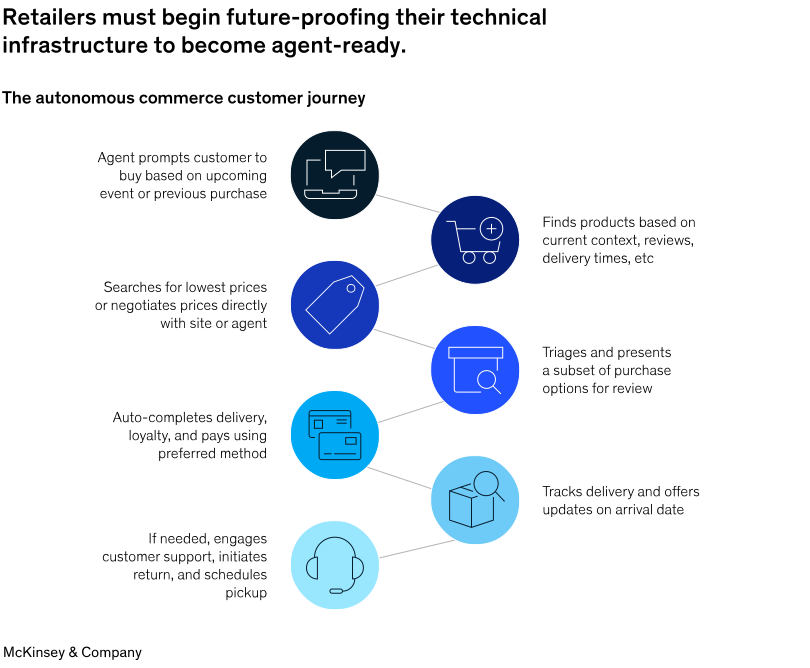
Navigating this new landscape requires retailers to familiarize themselves with the underlying technical architecture. There will be three core interaction models for agentic commerce: agent to site (A2S), where the agent navigates a traditional website; agent to agent (A2A), where a buyer’s agent communicates directly with a seller’s agent; and agent to broker agent (A2BA), where the agent interacts with an intermediary platform. For agents to transact autonomously, new infrastructure is required to securely handle authentication and authorization, enabling users to safely delegate payment authority with specific rules. For example, Shopify is now giving merchants the ability to plug their product catalogues directly into AI platforms to allow seamless discovery and checkout within the chat.30
Retailers must begin future-proofing their technical infrastructure to become “agent ready.” This means proactively building robust, well-documented APIs that allow AI agents to securely and seamlessly interact with core commerce platforms.
What’s next: Questions shaping how agentic commerce scales in Europe
The European data does not point to a single end state.31 Instead, it surfaces a set of unresolved questions that will influence how quickly and how far consumers are willing to delegate decisions to AI systems as agentic commerce matures:
- How does brand loyalty get expressed when decisions are mediated by agents? While commodity goods and services are more at risk, brand loyalty is unlikely to disappear. However, it may be expressed differently, including by the activation of (retailer and consumer) brand-specific ambassador agents explaining differentiation, negotiating terms, and articulating brand intent within machine-mediated flows. The recent history of marketplace development observed similar threats of bypass, yet brands and traditional retailers largely retained strategic control over key aspects of the customer experience.
- Where, when, and for which categories will consumers choose to delegate further? Our data shows consumers are most comfortable with AI that assists decision-making while preserving final human control. This indicates clear conditions under which consumers are willing to delegate: reversibility (the ability to undo actions), accountability (clear responsibility when something goes wrong), and explicit consent (clear boundaries on what the agent is authorized to do). There are important distinctions between what AI systems are technically capable of, what consumers are currently willing to authorize, and what is legally feasible.
- How will payments, identity, and authorization technology and processes evolve? These are the key enabling rails that will determine who captures demand as delegation expands.
Regardless of the scenarios, there are important steps that retailers will have to take if they wish to remain relevant in the emerging agentic-commerce era:
- Compete for AI visibility, not just consumer attention. Winning requires machine-readable content—structured data, strong taxonomy, and credible third-party signals—to ensure inclusion in AI-driven journeys.
- Shift from persuasion to explainability. Retailers must clearly articulate evidence-backed “reasons why” in a structured way that AI can interpret, compare, and carry forward.
- Plan for a web of agents, not a single interface. Treat autonomy as a phased road map, starting with reversible, explicitly authorized actions and expanding only as trust, infrastructure, and consumer comfort mature. Proprietary agents are optional and only valuable where retailers offer differentiated guidance.
- Identify agentic growth opportunities. European retailers must evaluate how agentic commerce can be used to unlock net-new growth avenues, whether by capturing market share through highly personalized customer experiences powered by AI, reaching adjacent customer segments, or creating entirely new, high-margin revenue streams driven by algorithmic discovery.
Conclusion: Priorities for European retailers
AI is not merely another lever for optimization but is reshaping how demand is created, how decisions are made, and who captures value in the retail ecosystem. The imperative to act is immediate, as those that fail to do so may risk gradual disintermediation. Five priorities stand out:
- Anchor AI in a clear value map. Define a business-specific AI value map based on your value chain, subsector profitability, and business model, concentrating investment on the highest-value domains driving measurable impact.
- Become “agent ready” and “agent native” with a step change in data foundations. Transition to API-first, interoperable systems that allow AI agents to seamlessly access product, pricing, and inventory data, and begin designing experiences and capabilities specifically for machine-to-machine interactions. KYC (know your customer) will need to be expanded to KYA (know your agent) to avoid unintended consequences or even malicious use, and this transition to using AI agents may be more challenging for small and medium-size enterprises and smaller retailers or wholesalers, given the required investment and technical transformation.
- Rewire the operating model around AI. Embed AI into frontline decision-making, and transition to cross-functional, outcome-driven teams organized around end-to-end workflows.
- Be intentional about AI investments. Have a clear view of ROI, track returns, and be explicit on where to build (especially in software development and core workflows) versus partnering for speed.
- Prepare the workforce for an AI-native future. Redesign roles, build the right skills, and adopt collaboration models that enable people to effectively orchestrate and work alongside AI agents.