This article was a collaboration with: Alannah Sheerin, senior director of global ads marketing at Google, and the Google Ads Marketing team, who helped shape the focus and research of this effort; and Rebecca Messina, former CMO and McKinsey senior adviser, who sharpened the insights through her experience with CMOs.
Many marketers are wrestling with cognitive dissonance when it comes to AI—evident in our latest research, including a survey of more than 500 global marketers.
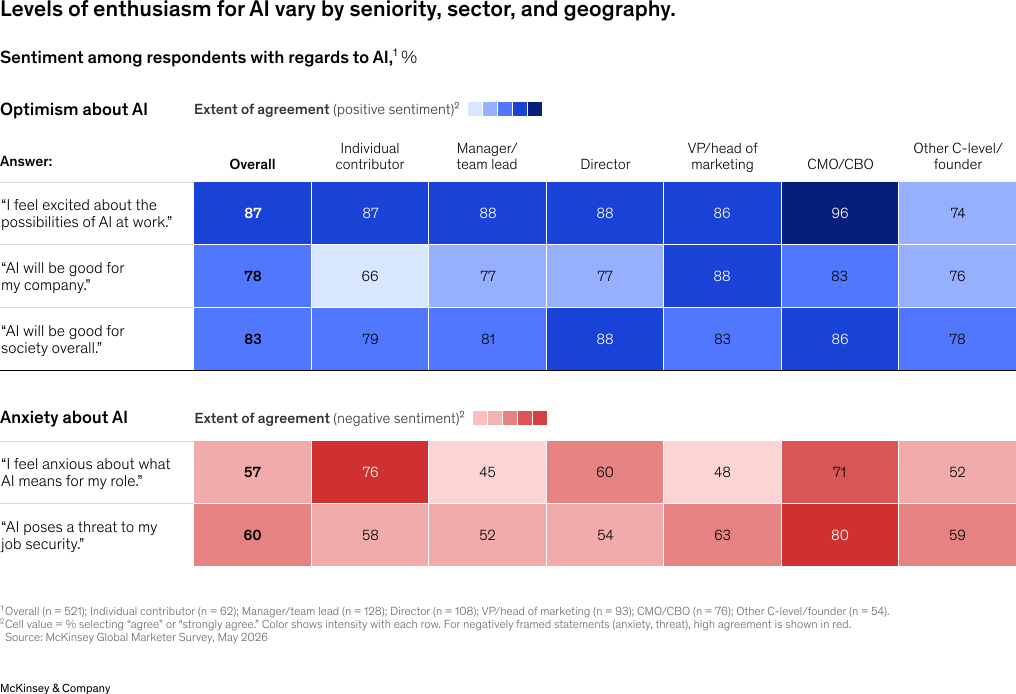
There’s the enthusiasm-anxiety disconnect: Some 87 percent of respondents in our survey say they are excited about the possibilities AI creates, but at the same time 57 percent report feeling anxious about what AI means for their roles.
You see it in the growth-productivity disconnect: Marketers in our survey value AI as a driver of both growth and efficiency, while they believe the C-suite views AI primarily as a driver of productivity.
And it’s in the adoption-value disconnect: Nearly 60 percent of marketers report using AI multiple times per week, but less than 10 percent have started capturing value across end-to-end workflows1 (see sidebar “About the research”).
Why does this matter? After all, change has always engendered discomfort, and misalignment isn’t exactly a new issue. It matters because the stakes around AI are so high and the impact of the technology so far-reaching—on business economics, on how work is done, on jobs—that it is amplifying these disconnect effects with profound consequences.
What emerges is not just resistance to change in the traditional sense, but a surface-level enthusiasm masking indecisiveness and underlying anxiety that hinder meaningful action. This problem is particularly acute given the need to move quickly to keep pace with the changes in the marketplace.
CMOs underestimate this disconnect effect at their peril, especially since expectations around marketing and AI are so high. Gen AI alone could increase the productivity of marketing spend by between 5 and 15 percent, worth about $463 billion annually.2 As Google Global Vice President, Ads and Commerce Marketing Marie Gulin-Merle starkly puts it about the need to act, “We don’t have any choice.”
To build a marketing organization that is AI-ready, CMOs need to understand this is just as much a people challenge as it is a technological one. Meeting the challenge requires CMOs to address the often-tricky issues of organizational alignment and talent redesign while overcoming emotional resistance to new ways of working.
Why progress is incremental
From the outside, AI adoption in marketing appears to be moving quickly. But inside most marketing organizations, progress feels slower. The organizational reasons for this issue play out in three main ways:
A tentative workforce. Marketers are using AI but not embracing it. Or, as former CMO and McKinsey senior adviser Rebecca Messina puts it, “Their heads are in it, but their hearts aren’t.”
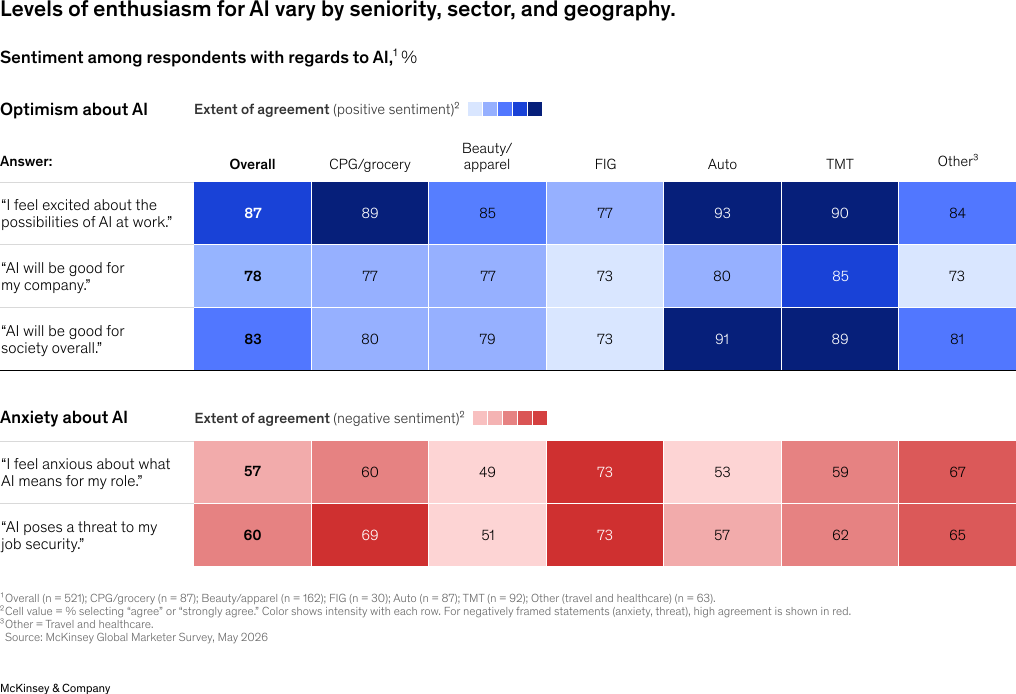
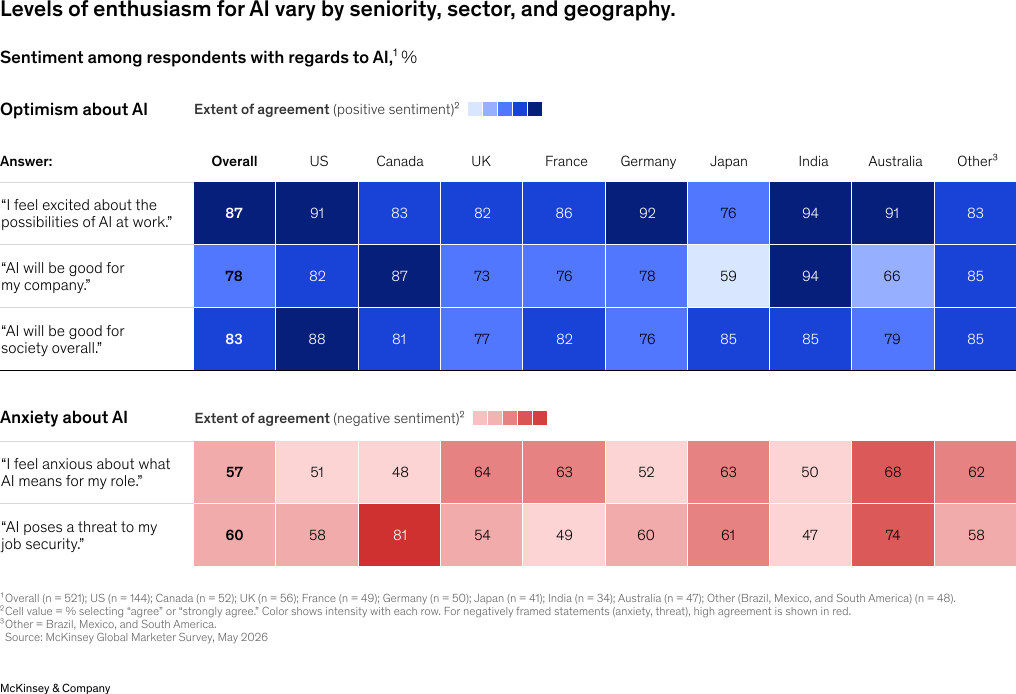
In roles closest to execution—such as marketing operations and performance media—as many as 77 percent of those using AI most frequently are also among the most likely to perceive risk to their roles (Exhibit 1). CMOs are an even more extreme example of this effect. While 96 percent of them report high excitement with AI, 71 percent express anxiety and 80 percent perceive a risk to their own roles.
In our experience, the result of this concern and ambivalence is a form of slow-rolling transformation: steady experimentation but limited willingness to redesign workflows, overcome inevitable setbacks, collaborate with others, or challenge established ways of working.
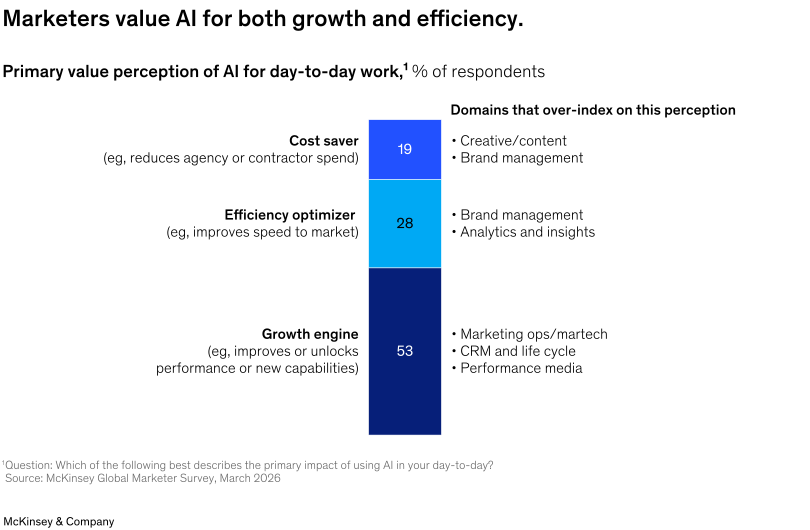
Disconnected and unaligned leadership. There are two elements of this issue. One is at the top level. Marketers and those in the C-suite see AI as both an opportunity to generate growth and drive productivity. Notably, marketers value AI as a driver of both growth (53 percent) and of efficiency and cost savings (47 percent), according to our survey (Exhibit 2). The issue, however, is marketers believe the C-suite values AI for productivity, a concern amplified by the fact that the C-suite, and the CFO in particular, tend to view marketing as a cost center. So even if AI can be an important growth lever, the C-suite’s expectation is to use it to cut costs in marketing.
Left unchallenged, this narrative becomes reality, one that is at odds with CMOs’ aspirations. This misalignment on goals and priorities creates confusion and slows progress.
The other element is the disconnect between CMOs and the people doing the work. In conversations with CMOs, few felt their teams had AI-related anxiety, missing that 76 percent of individual contributors, in fact, do.3 This disconnect can manifest in frustration among CMOs, who expect faster progress, and marketers, who don’t feel their efforts are appreciated, and don’t feel equipped with the right support and resources.
Superficial execution. Despite high levels of AI activity, only 28 percent of marketers from our survey view their companies as pursuing a fundamental rewiring of their marketing teams and workflows. Most are simply layering AI onto existing processes. This shows up in the disconnect between usage and impact: While adoption across common use cases often exceeds 70 percent, little of that leads to P&L impact for the enterprise.
How to overcome the AI disconnect
Overcoming these disconnect issues requires many of the classic elements of change management. Our survey highlighted training, access to best practices (such as a library for proven prompts), and strong governance policies as being crucial for effective adoption. Adding AI to initiatives where decision rights are unclear, for example, often exacerbates these issues.
In our experience and through deep discussions with leading CMOs, however, three bolder approaches emerge as difference makers:
1. Abundance mindset: Set the vision around growth and productivity
Setting a vision is critical to help the organization understand the direction of travel. Without that clarity, confusion and anxiety tend to grow, hampering efforts to reshape the organization. Seth Matlins, founder of The Wisdomous Company, puts it this way: “People don’t feel empowered to help the organization if they don’t know the direction and they don’t understand what drives the business.”
As CMOs consider what that vision should be, it’s worth thinking about how to anchor it in AI’s twin benefits of growth and productivity. Selina Sykes, Unilever Beauty & Wellbeing VP and Global Head of Digital Marketing & Social First, underscores this point, “If you give people the tools, and they have the right mindset, they will find agentic solutions to drive our business performance. It is not just about efficiency; it is about driving growth and effectiveness.”
For decades, marketing leaders have balanced trade-offs between scale and personalization, for example, as well as speed and quality, or cost and impact. AI could mean the end of many of those trade-offs by unlocking capabilities, customer experiences, and growth not previously possible.
As CMOs develop their vision, they will need to do the hard work of identifying how it plays out in terms of specific goals and implications, such as how campaigns are conceived and executed, how personalization is delivered, and how quickly insights can be generated and acted on. These specifics, in turn, will inform decisions about roles, skills, and structure.
It’s worth noting in this context that some companies that have cut staff expecting AI to fill the gap struggle to capture the cost benefits because of unanticipated complexities.
2. Bridge building: Build trust to get your teams and C-suite on-side
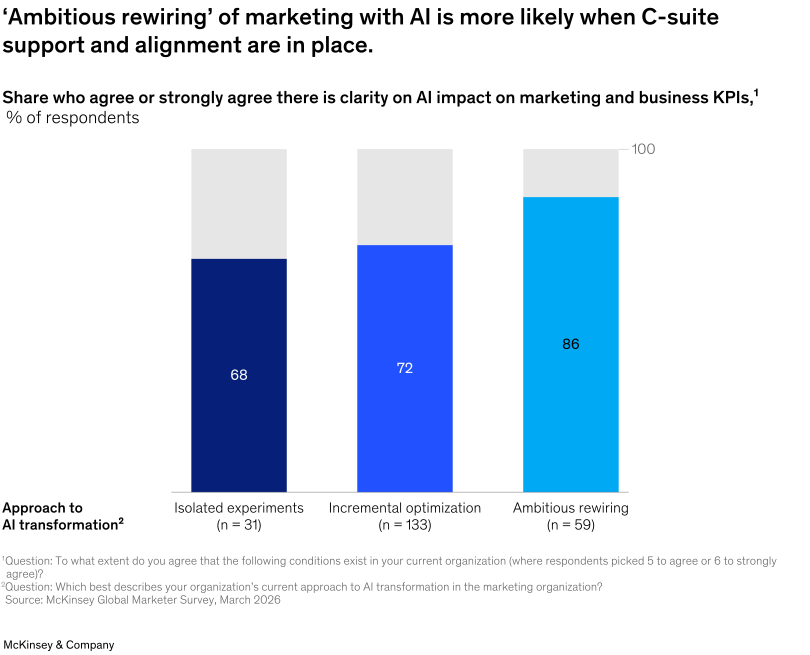
Delivering on the vision requires CMOs to build support with the C-suite and motivate the organization. At the top level, our analysis is clear that organizations that pursue ambitious rewiring efforts are aligned with and supported by the CEO and C-suite (Exhibit 3). CMOs should ground this alignment around a shared view of value that connects productivity gains directly to business outcomes such as revenue growth, pipeline expansion, and margin improvement. A bolder approach would be to select a meaningful marketing workflow, assign a small hybrid human-agent team to reinventing it, and present the results. This builds credibility with the CEO.
That focus on value-oriented measurement should be a particular focus area for CMOs since it has traditionally been a blind spot for them. While roughly 70 percent of CEOs report evaluating marketing partially based on year-over-year revenue growth and margin, only about 35 percent of CMOs track those metrics as key indicators.4
Aligning the marketing organization is a broader challenge. The most effective leaders address the emotional dimension directly by acknowledging anxiety but reframing AI as an amplifier of human capability rather than a replacement.
Vineet Mehra, CMO of Chime, reflected that focus by emphasizing to his teams that they are entering “a golden age of marketing where AI can create faster, test faster, and personalize at scale.”
Making that vision credible for marketers is critical. CMOs need to develop a compelling and credible narrative that builds trust with employees. McKinsey research indicates that employee trust in the organization to support them as AI changes work is, in fact, a significant predictor of reported enterprise value impact from AI among surveyed leaders, regardless of where their organization is in its AI journey.5 Developing that trust requires a number of things, including: (1) scoring and celebrating early wins to show what’s possible with AI; (2) developing targeted support mechanisms for employees (such as role clarity and one-on-one training) as AI changes work; and (3) developing incentives (and removing disincentives) that evolve alongside people’s capabilities.
Unilever has encouraged teams to build AI agents with a clear hypothesis and value case, allowing ideas to be tested bottom‑up before decisions are made about what should scale, while Chime has reduced some creative budgets to encourage teams to innovate internally. The pattern is clear: Focus on the people to make the tech work. (For a deeper dive on how some companies are approaching their AI-driven marketing transformation, see sidebar “Company spotlight: Unilever and Chime.”)
3. Rewire the marketing operating model for the human-agent era
The unit of change in rewiring the marketing organization is the workflow—how the work is done end to end. That means breaking down high-priority workflows by task and determining what AI capability or person can perform those tasks and what skills are needed.
This shift is already starting to have profound implications on how teams operate. Many of the tasks that once required significant human effort can now be partially or fully automated with AI. While some marketing organizations might get smaller, role distribution is also likely to change, with fewer purely executional people and more people focused on orchestration, judgment, integration, and AI management.
The CMOs we interviewed and our own experience highlight the important talent and organizational implications of this shift:
All teams will be hybrid teams requiring new skills. A range of CMOs and marketing leaders have offered a compelling view of marketing skills by breaking them into three types:
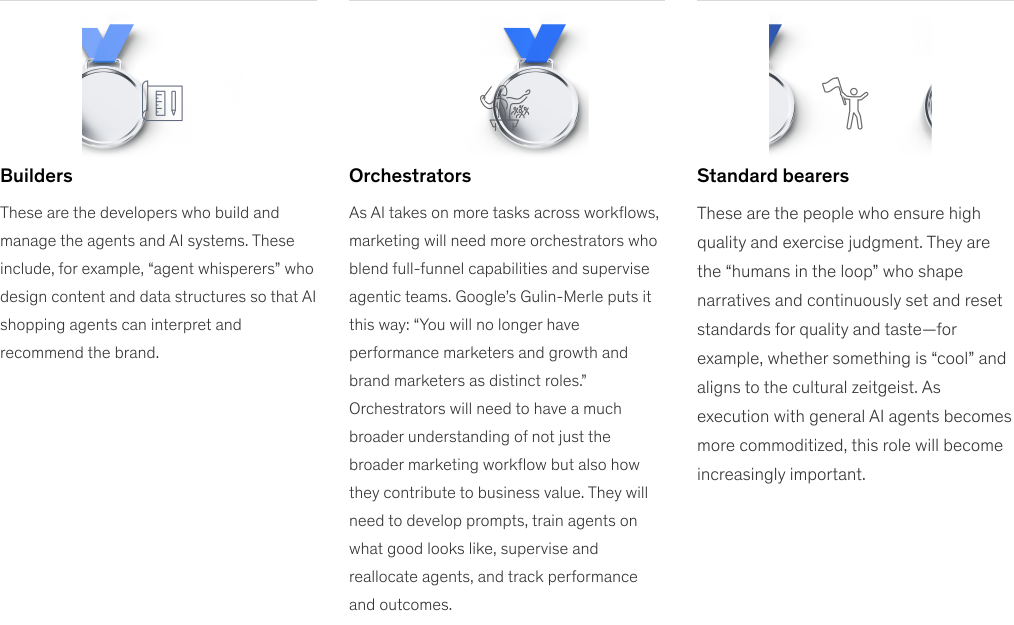
CMOs should start determining what those skills are, rethink roles, then build up small working teams to pilot new ways of working. The survey highlights the importance of role clarity as a critical enabler of adoption, particularly in organizations that have moved beyond early experimentation.
As part of this broader rethink, CMOs need to revisit their hiring practices to find the people they need. At Chime, for example, when hiring creatives, interviewers provide candidates with a brief at 10am and schedule the pitch for 2pm. The only possible way to deliver that is to work with AI.
Silos will erode requiring a new organizational model. “AI agents don’t respect silos.” That insight from Gulin-Merle underscores a massive shift in the marketing organization. Over time, marketing became very specialized. AI agents can now easily broach functional silos, which means traditional reporting structures, organizational models, and career life cycles will change.
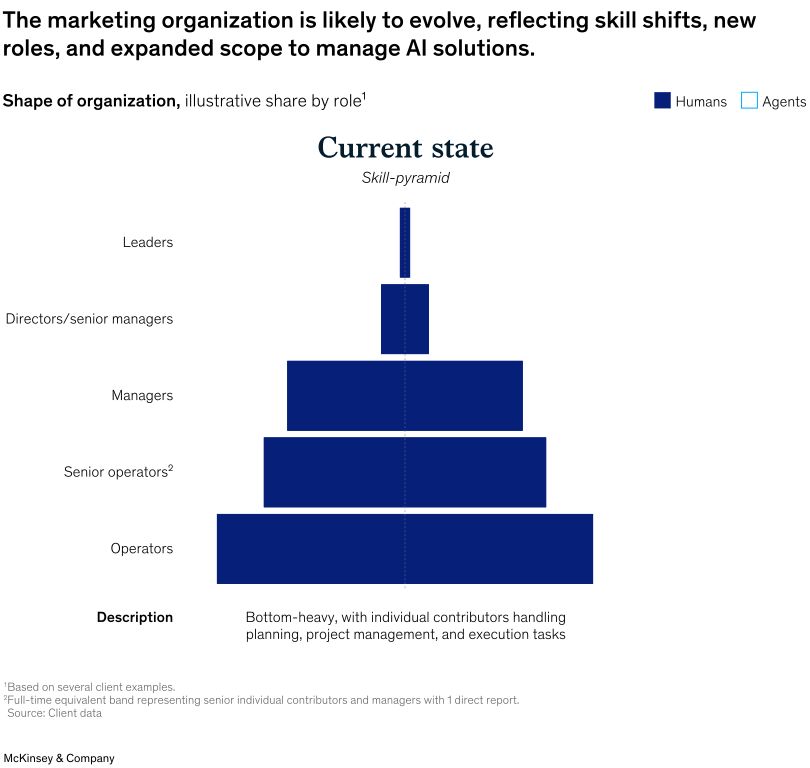
With AI taking over more execution roles, one scenario is that fewer people will be needed in the lower layers of the organization. In that case, the traditional organizational pyramid will shift to look more like a diamond, affecting hiring and skill-building programs (Exhibit 4).
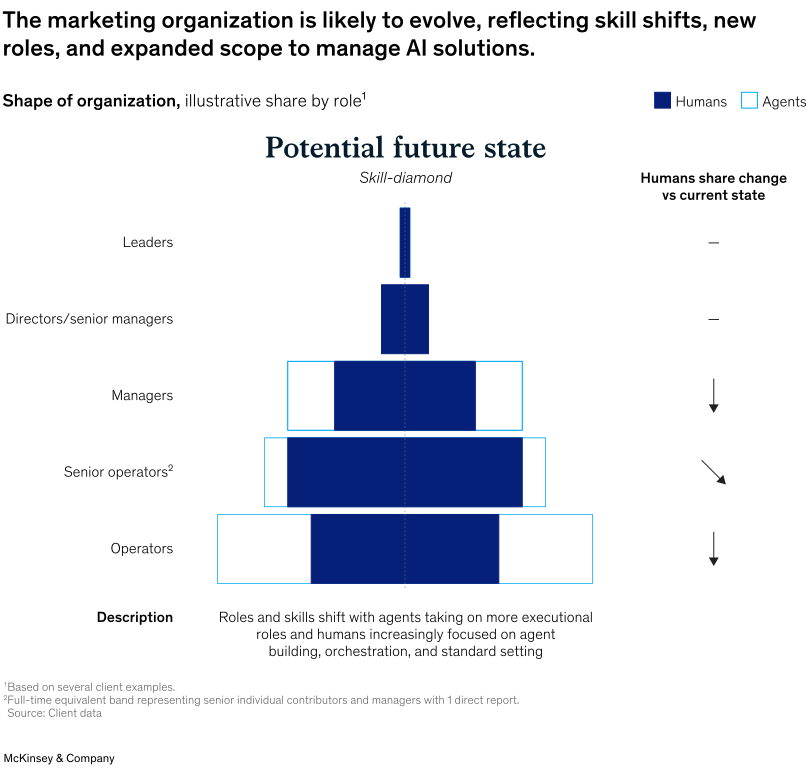
CMOs should start immediately working with HR leadership to rethink spans of control (silos and layers), how reporting and accountability structures should evolve, and what team compositions should be.
Skill building will be more like continuous coaching and less like training. “AI won’t necessarily take your job. But marketers who know how to use AI may.” However you feel about the effect of AI on the job market, this view from Gulin-Merle underscores the urgency of developing new skills.
Traditional episodic training programs aren’t enough. Upskilling needs to be more continual with an emphasis on coaching and support. That includes, for example, providing experts who help teams with hands-on and how-to guidance around their specific issues. To support this effort, CMOs need to identify change champions within the organization to work with teams, set specific skills standards for a range of roles, and put in place metrics that track both skills development and team outcome improvement.
Skills development needs to happen at the top, too. That starts with CMOs building up their own AI muscles and role-modeling AI work habits. Too many still turn to gen AI tools to write reports and then just send them to teams to “implement.” That’s a superficial approach that leads to superficial results. Meaningful impact comes when CMOs embed AI into their own workflows and spend more time with their teams to understand how systems operate.
Unilever has made this point a priority. “We are piloting an AI capabilities index that allows us to benchmark our leaders’ use of AI to understand deeper adoption as well as effective and responsible use of AI,” says Unilever’s Sykes.
AI is a powerful technology, but only CMOs who can manage the people side of the change equation will be able to harness the abundance it can deliver.
This requires CMOs to turn AI enthusiasm into a new operating muscle by building confidence, aligning the C-suite, rethinking skills, and creating a marketing organization where humans and agents can work together effectively.