In this episode of the Century of Plenty podcast, Sven Smit and Chris Bradley are joined by Ed Conway, economics and data editor at Sky News and author of Material World: The Six Raw Materials That Shape Modern Civilization, to explore the materials, energy, infrastructure, and trade that underpin modern prosperity, and what it would take to extend it to everyone.
Subscribe to the Century of Plenty podcast
In this episode, they discuss:
- How the hidden material foundations of modern life, from fertilizer and steel to copper and semiconductors, make abundance possible, and why fears of simply “running out” of resources can miss the role of innovation, discovery, and productivity.
- Why achieving higher living standards around the world will require far more energy and physical infrastructure, and how abundant clean energy, intensive agriculture, and new approaches to manufacturing could reconcile development with climate goals.
- Why pessimism about the future persists despite centuries of progress—and how AI and a renewed focus on energy, infrastructure, and industry could strengthen the case for investing in abundance.
The following transcript has been edited for clarity and length.
Looking back at progress
Sven Smit: Hi, everyone. It’s great that you are joining our Century of Plenty podcast. I’m Sven Smit. I’m joined by my coauthor, Chris Bradley, but more importantly, we’re joined by Ed Conway, who’s adding a very substantial dimension to this discussion. He’s the economics and data editor at Sky News and the author of a bestseller called Material World.
I think he has some favorites, from sand, salt, iron, and so on, with lots of stories that we are looking forward to hearing. But before we dive in, Ed, let me open with a little bit of an introduction. In our book, we introduce ourselves with our family history: how did our family live, and so on.
I don’t know how far back you want to go, but we’d love to hear a little bit about your predecessors’ lives and how that reflects on where you are and who you are.
Ed Conway: Sure. I love that framing, because I think one of the things that I’m struck by—and I was struck by it when I was writing Material World—is the extent to which we take progress for granted. We just don’t even think about how wondrous the world that we live in is. I think about that quite a lot, and your book prompted me to think about my family. I wouldn’t be here without many advances in modern technology, and I know that intimately because my father had tuberculosis.
So he went to a sanatorium and had tried to survive the old-fashioned way. And it wasn’t going very well. Then, eventually, he managed to be one of the first people to get hold of antibiotics. As far as we can tell, his life was basically saved by that course of antibiotics. Had it not been for technological advances, he wouldn’t have survived, and I wouldn’t be here.
We owe so much of our lives to such advances. It’s only when you pay attention and think harder about alternative paths—these sliding-door moments—that you feel grateful and seized with amazement for all this progress.
A Century of Plenty: A Story of Progress for Generations to Come
The hidden material world
Chris Bradley: One of your superpowers, Ed, both in what you do on Sky News and what you do in the books, is bringing basic physical realities to life in a way that people can understand. In your book, you talk about tomatoes. So bring to life for us how a humble tomato teaches us about the actual way of the world and the actual energy intensity of our economy.
Ed Conway: The tomato is quite a good example of this because most food we consume is dependent on fertilizers. Most people, for understandable reasons, don’t spend much time thinking about where fertilizer comes from. But where does fertilizer come from?
There are different types. There’s nitrogen, phosphorus, and potassium. But perhaps the most important of all is nitrogen. The vast majority of that comes through synthetic nitrogen, and that’s the Haber-Bosch process.
We get nitrogen out of the air, but we need a suite of tools, in this case mostly hydrogen, for that incredibly demanding chemical reaction to make it a reality. These days, that is dependent on gas. So fertilizer is almost synonymous these days with fossil fuels, in this case, mostly gas in Europe and America, and in China, a lot of it is from coal. We are eating thanks to fossil fuels. We may not feel comfortable about that, but that is part of the physical reality of the world that we inhabit.
So, to grow tomatoes, first of all, you need quite a bit of fertilizer to make them grow. Second, you need to put them in those greenhouses, at least in the Northern Hemisphere, and you need to keep them at a decent temperature. Third, to heat those greenhouses, a lot of them in the Netherlands, you use gas boilers, a Dutch innovation.
Then you have a lot of CO2 that comes out of those gas boilers. Instead of allowing all that CO2 to go directly into the atmosphere, the Dutch came up with this very clever wheeze of pumping a lot of that CO2 back into the greenhouse.
So within the greenhouse, there are higher parts per million of CO2 than in the atmosphere outside. And what does that enable you to do? Photosynthesis. Photosynthesis, as we all know from school, is about taking carbon dioxide and light and using that to help plants grow even faster.
So there’s this holy trinity—I guess some people call it an unholy trinity—of different fossil fuel dependencies that all go into making this little tomato. No one is thinking about that when they’re eating tomatoes, of course. But the life-support system for the world around us depends on these physical things.
Were we more honest about what it took to grow tomatoes, or indeed anything else, I think we would have had a more functional conversation about things like climate change, about the human rights and climate compromises along the way. Instead, it suddenly takes you by surprise, and it feels like this exogenous factor. No, it’s not exogenous.
Are there limits to abundance?
Sven Smit: Maybe to shift gears a little bit, because the material world that you described is kind of the foundation for Plenty. It’s actually the first of the five tests that Chris went through, from materials to food. I know you touch all the different materials.
But we are in this world where people suggest there is a limit to these materials, and as a result, you couldn’t do Plenty. We contend that that’s not the case. But could you go through your sense of where the limits are, where not, and what it takes to get to common prosperity?
Ed Conway: In terms of limits to the ‘plenty’ of the world, the famous story here goes back to the great bet between Paul Ehrlich and Julian Simon. For a long time now, the conventional wisdom has been that the world is overpopulated and that we are going to start running out of stuff. I think there’s something very compelling about that. People almost want to hear that story.
I think what a lot of people understandably instinctively feel is that there is not enough space, there are too many people, and we will start running out of stuff. The fact that there are definitely human damages to the world, climate change and emissions of CO2 being at the heart of that, gives further currency and strength to those arguments.
But it’s worth splitting them apart. Yes, there is definitely an issue with carbon emissions on the one hand, but on the other hand, there doesn’t seem to be any sign that we’re actually going to run out of minerals.
Yes, the world inherently is a finite place. There is only one planet Earth. But there is also far more copper than most people appreciate in the skin of the planet. There is far more iron. There is far more lithium.
At the time I was writing this book, everyone was fretting about, “Oh, we’re not going to have enough lithium.” But now we have plenty of lithium, and you look at the number of discoveries that we’ve had literally since I wrote that book, so in 2023, and we have way more than we will ever, ever need.
What does that come down to? It comes down to the fact that, frankly, we just weren’t that fixated on lithium before the invention of electric vehicles [EVs]. Now, all of a sudden, we know we need lots of it. So people are incentivized, thanks to the market and the way the world works, to try to find lithium. Lo and behold, they found lots of it.
It turns out there is way more of pretty much everything than we think. But we have this instinctive bias toward assuming that we’re going to run out of stuff. It may be that in 100 years’ time, that’s right. But right now, we have plenty.
Chris Bradley: What we found was the reason there’s this view that resources will end is because if you have a fixed view of the world and you look at current reserves, it’s true: we don’t have enough reserves to last 100 years.
We certainly have enough resources. But if you take something like copper—I was just recently in Chile, which is the miracle zone of copper—copper reserves actually double every 21 years. We just get incredibly better at finding it.
So this idea of limits really comes from zero-sum thinking. We often use the analogy of the Petri dish, because a biologist would say, “Hey, a culture will grow to the edge of a Petri dish very quickly and stop growing.” But that analogy is broken in two ways.
First of all, Petri dishes are small and the world is massive. As you say, when you actually measure what’s in it, it’s really big. And second, it’s this strange Petri dish that doesn’t stay fixed. It grows over time.
Ed Conway: The Petri dish can expand over time.
Chris Bradley: It grows. In our book, I think we use the example that since 1950 we’ve taken 800 million tons out of the copper cookie jar, but 900 million has been added to reserves. So it’s like this magic cookie jar. We take a lot of cookies, but we come back and it’s fuller than it was when we first started.
Ed Conway: If you think about it, how amazing is that? Because without copper, we can’t have electrification, and without electrification, we can’t have anything, basically.
A lot of people, if not most people, understand about Moore’s law, this amazing productivity rise that we’ve had with semiconductors, where they’ve got increasingly densely packed and therefore more powerful over time. When they think about human progress, a lot of people think, “Oh, Moore’s law, that’s part of it.”
Well, there’s an analogous thing happening with something as boring as copper. You could actually do the same thing with steel. Over time, we have become far, far, far more productive at squeezing ever more copper out of the ground, including from what previously would have been considered waste rock and junk that you would never bother getting out.
It is a kind of productivity miracle, because if it wasn’t for that, then China couldn’t have electrified, and the world couldn’t have had the extraordinary AI moment that we’re having at the moment.
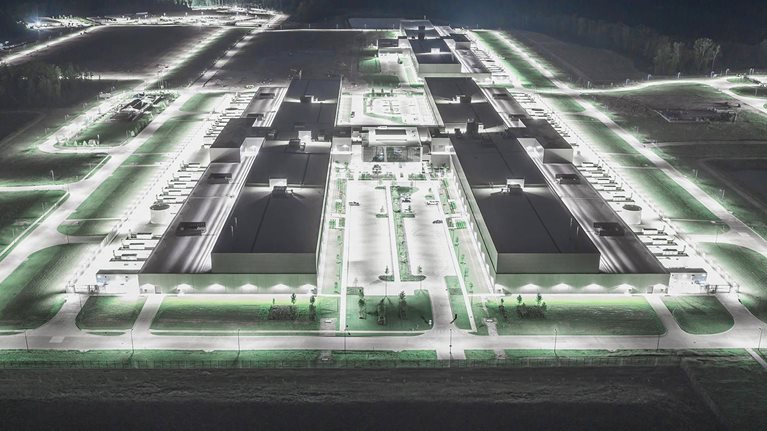
A recent trip I did, which I found pretty gobsmacking, was to see some of the data centers in Data Center Alley, around Virginia, around Dulles Airport, just outside Washington, DC.
Among the many things we looked at, obviously, we looked at the enormous size of those copper busbars and cables that deliver the power there, the enormous amount of water that these data centers need to consume for cooling, and the fact that you have all of these backup generators outside. So it is a physical thing, which obviously is the obsession for me.
But the thing that I was most struck by is when you take one of those server racks and open it up and look at where the GPUs are. You see that each of those GPUs, in most of them, is shrouded by copper metal, and that’s there to do the cooling.
So copper is everywhere. But I think because it’s so often out of sight, people forget that we have nothing without it. Everyone knows that if there’s a power cut, that is a profound moment, and you’re reminded of how much you depend on electricity. But without copper, we just don’t have any of that.
The pull of pessimism
Sven Smit: Thinking about you journalistically, not historically, when you guys write for the people, in the newsroom, what is the attraction of that versus “It’s going to be great”?
Ed Conway: Gosh, that’s a profound question. I think there is this trend. If you look back over the last ten or 15 years, my theory of everything is that up until 2007, 2008, people were used to their personal level of living standards rising at a certain rate each year.
This is talking specifically about Europe, and to some extent the US as well. The line was going up, and then all of a sudden the financial crisis happens, and the line never got up to the projection that it was heading for in the past. Which means we are just all poorer than we thought we were going to be. I think that disappointment—people’s living standards not rising as fast as they thought they would, or thought they deserved—infuses everything.
When people are disappointed and upset with the settlement that they feel they’re getting, I think they try to seek out explanations for it elsewhere. That can underline or redouble their paranoia about all sorts of other things, whether it’s their attitude toward immigration or their attitude toward exploitation of the planet. Therefore, maybe they’re more conducive to having an explanation that feels a bit more zero sum. But newspapers, and just the press in general, we’re often this extreme magnifying glass on the nature of what humanity is thinking about.
Up until recently, it was quite hard to make the case on TV for, “Look, here is the more complex interpretation to the world’s problems right now, but you’re just going to have to bear with me because it takes more than two or three minutes to do.”
When I was making pieces for TV or writing stuff for the newspaper, it had to be tight. It had to be short. It had to be two and a half minutes. In two and a half minutes, you’re never able to have that conversation about, “OK, well, here’s an interesting little rabbit hole we can go down that is going to change your mind. It’s going to change your perspective of how you view the world, but you’ve got to come down the rabbit hole with me.”
We just don’t have that place. The amazing thing about having outlets like being able to talk to you on this podcast, being able to go on YouTube and do long explainers that no one would have commissioned in TV ten years ago, means that there are places where people can actually have that conversation that weren’t necessarily there before.
Chris Bradley: Let me give a vivid example, maybe a controversial one, though, which gets to the problem. That is this scenario of climate change that the IPCC used to have, which was called RCP 8.5.
Now, for the listeners who don’t get into the techno jargon of the IPCC, RCP 8.5 was the most extreme scenario they had for climate change, which was basically, I think, five to six degrees.
But, just very recently, something happened. It got deplatformed, and it got canceled on the basis that it was completely implausible for anyone. But the news heading that, “Hey, great news, that worst-case scenario that everyone was panicked about and led to people talking about global boiling, by the way, that just got canceled because it’s not going to happen.” I can’t think of a mainstream, high-profile news article about that topic.
So it’s just a great asymmetry. The doomerism is amplified on the way up and quietly leaves out the back door. You have to be pretty perceptive to see that, over time, those extreme Ehrlich-esque ideas don’t actually survive, but they get a lot of column inches along the way. What’s your take on that?
Ed Conway: Well, it’s because they’re kind of lurid, and people like apocalypse movies, don’t they? If there is a scientist who’s taking RCP 8.5 and saying, “OK, all of the major cities in the world are going to be flooded,” then that is something that’s going to attract people’s attention.
What is it that ultimately news is trying to do? It’s trying to tell the story of the world, but ultimately, it’s news. It’s trying to tell the most eye-catching stories of the world within certain limits of trying to fact-check. If there is this, within the UN-perceived approved bands of where we might be heading in the future, one that’s at the extreme, then it is in the nature of news to generally focus on the outlier thing, because that’s news. That’s the thing that is different from your normal life.
There’s a misunderstanding. What news organizations are trying to do is just tell you about what’s happening in the world. Well, the vast majority of what happens in the world is normal life, and we’re not trying to tell you the story of normal life. We’re trying to tell you the story of the things that slightly deviate from normal life, because that is news.
Sven Smit: What is interesting is we were quite worried when we wrote the book that the central scenario the world is working around, from the UN to the IPCC to the World Bank and IMF, is that the economy in 2100 would be three times today.
But if you actually have Burundi match Switzerland while the rest progresses, it’s eight and a half times. You would immediately think that would be planetary-boundary territory and climate. Then the counterintuitive result—and this comes very close to your material world—is if you go eight and a half times, you actually need all the oil and gas for materials, from fertilizer to paint to whatever else, plastics that we make with it, because the rest of the world will live to our standards in the West.
Africa catches up with us, India catches up with us, and China catches up further. When we discuss this—and I’ve done this a lot with students, the younger generation that is not very optimistic about their own futures—we thought we would be completely attacked on this side. “You are naive. The energy world will be oil and gas.”
But basically, oil and gas will be used for something else, and the future 2100 energy is going to be solar plus nuclear plus batteries, or some other mix. But it will be very little oil and gas, because we need the oil for the material world.
Ed Conway: A lot of people, when I wrote Material World, said, “Gosh, this is the kind of thing that I wish I’d learned at school.” Actually, I kind of agree. I was trying to teach myself the same stuff that I was never taught at school. It’s not that there aren’t pathways that are unnerving and discomforting. Think about sub-Saharan Africa and bringing it up to similar living standards as Switzerland.
The thing that I focus on as an interesting challenge within that pathway is steel. There’s this analogy in my book about the amount of steel that we have per capita in Europe, the United States, and most developed economies. It’s between ten and 15 tons of steel per capita. Embodied in our lives, the stock of steel. So it’s your car, the public transport system, the structure around your workplace and your house, bridges, the whole thing. It all comes to about 12 tons of steel per capita. I find that such a helpful yardstick, because basically that is your living standards. I find that maybe even more useful than GDP per capita.
Chris Bradley: India is one ton.
Ed Conway: Exactly. India is one ton. Many parts of sub-Saharan Africa are below 0.1 tons per capita. The thing that gives me pause for thought is right now, if that implies that if we want to get Burundi, or indeed every part of the world, at least up to that baseline of being like Switzerland, they are going to be heading toward maybe not 12 tons of steel per capita, but maybe six, seven, eight, nine, ten tons of steel per capita.
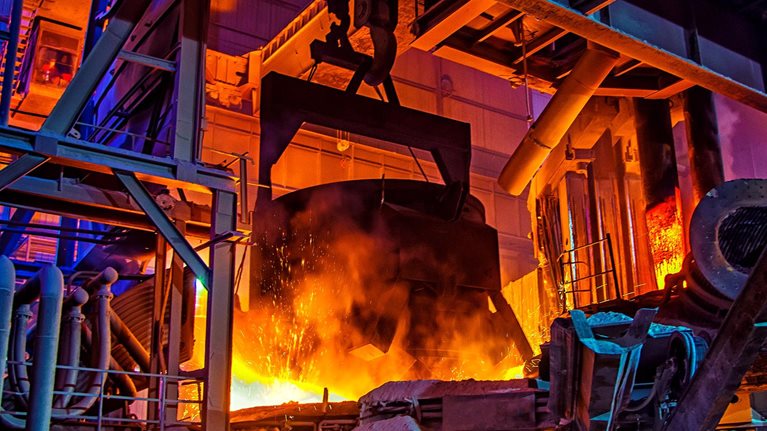
If you are going to achieve that, then we need to produce more virgin steel, not recycled stuff, than we have through the history of humanity. So more steel in the next 50 or so years than we ever have had before. Right now, there is no way of doing that cheaply without blast furnaces. And blast furnaces are incredibly carbon intensive.
The striking thing for me when I went and visited a few blast furnaces, one of the people there said, “Look, the main product of this blast furnace that we’re standing in front of here is not steel or pig iron,” which is what comes out in the form of lava-like molten iron. “The main product is carbon dioxide by weight.” By weight, there are more tons of carbon dioxide that come out than tons of iron.
So how we wrangle with that challenge—that at the same time we want people within the developing, emerging world to have greater living standards and to be able to aspire to greater living standards, which means more things like steel and copper, and at the same time try to find a way of doing that in as low carbon a world as possible—that’s tricky.
Again, I have always been quite surprised at the extent to which this is quite far down the list of things that people are considering when they’re at IPCC and COP meetings. But it’s integral. We can’t have higher living standards without having more steel.
Like it or not, we can’t substitute wood entirely for steel. I talk to a lot of people in politics in areas of the developing and emerging world. For a lot of them, even people who completely understand and agree with the objective of net zero and all of our different climate ambitions, they look at it and worry that it’s an effort to try to stifle their future growth, because they want to have more energy consumption. They want to have more steel. They want to have more physical things in the future. And yet you look at the pathways in IEA net-zero forecasts, and it doesn’t have them going up to Switzerland. I’m pretty sure they’re nowhere near Switzerland.
Making the case for growth
Chris Bradley: We should talk about the case for having the perspective of the Burundian or the Sri Lankan when we’re talking about this, rather than the perspective of someone in Belgium.
But let me come back to your thing about, Sven you started about this, doomerism of young people. In my country, one in five people believe the next generation is better off than the last. I think in England it’s like one in ten. In France, it’s like one in 20. The issue with that—we call it out in our book, and that’s why the subtitle of our book is A Story of Progress for Generations to Come—is that pessimists don’t build the world.
But the tangible expression of that in most countries—and, by the way, until very recently, the United States as well—is if you’re a 30-year-old, in your adult life, you’ve never actually really seen productivity growth. You’ve never seen fundamental tax cuts. You haven’t seen rising homeownership. You haven’t seen houses getting cheaper. Your average inflation has actually been pretty high. So the reality is, the lived experience of a 30-year-old economically is not that great.
I just want to steelman the case for pessimism a little bit, because I don’t think we can overcome the case for pessimism if we don’t understand where it actually comes from.
Ed Conway: I do wonder—and this is not necessarily an explanation for everything—but we have skewed our economies disproportionately, I would say, particularly in Europe, and to some extent in the United States and Australia as well, toward low-productivity sectors. We’re all about services now. We have deindustrialized. We have sent a lot of our manufacturing and processing overseas.
Before starting to write Material World, I’d been an economics correspondent for a long time, and the main thing that people were fixated on, up until the AI boom recently, was secular stagnation and the fact that we had just forgotten how to grow productivity. But you go down the rabbit hole of semiconductor manufacture, and you see how we have gone from transistors that are really very small to transistors that are so small they’re smaller than the wavelength of visible light. I still struggle to get my head around that. The size of a transistor is so small that it’s smaller than the wavelength of visible light, which means you look at it in the most powerful optical microscope in the world, and it’s invisible. It’s literally invisible.
We can do that as a species. And not just do it, we mass produce this stuff. It’s not just in a lab. We’re mass producing this stuff. But, of course, almost all of the mass production of that stuff is happening in Taiwan and, to some extent, in Korea as well.
So you delve into these sectors, most of which involve manufacturing, and you see extraordinary productivity. I do wonder whether, by offshoring a lot of our production in the last 20 or 30 years, we’ve skewed ourselves toward lower-productivity sectors. It used to be the case—a lot of people in this country, I was talking to some of them just recently, come out of university, and they’ve studied engineering, and they are some of the best engineers in the world, or they’ve studied nuclear physics. They come out of university in my country, and what happens to them?
Productivity is in manufacturing. That’s the truth of it. Or in agriculture, where we used to have the vast majority of the population working, as you allude to in your book. We used to have the vast majority of people working in agriculture. It was tough. It was a tough life. Now there’s a tiny, tiny fraction of people working in agriculture. Our lives are much better as a result. The productivity of the agriculture sector is theoretically enormous as a result. And yet we’re not directly connected with it so much, because so few of us are actually working in it.
The race for abundant energy
Sven Smit: When you take the Plenty hypothesis, your material-world thinking is that there are no fundamental limits to materials. Can you just bring us home that we will be fine with energy much more abundant and affordable, even though it’s clean?
Ed Conway: When I started writing Material World, I hadn’t expected the extent to which the subtext is always energy throughout. In hindsight, that was obvious, but for me it was a bit of a revelation. Making anything, doing anything, any amount of GDP, is a form of energy conversion. By extension, if you make energy more expensive, then everything else gets more expensive.
I think the great tragedy of the last 50, 60, 70 years was when we went from having an assumption that what we were aiming for as societies, particularly in the West, was energy abundance to fixating on the alternative, fixating on efficiency.
Efficiency is incredibly important, of course it is. But we need more energy, and ideally we need clean energy, because we want to do more stuff, and we don’t want to stifle people’s ambition. Services depend on energy as well.
What’s tantalizing when you look at the world through a pure materials-engineering perspective is the answers are there. Thermodynamically, it’s tough, but we could do it. To some extent, we are doing it.
What I worry about is, by not having had honest conversations about what it involves to get to net zero, we will, in the next few years, have a backlash. Because, of course, it costs money to invest in this stuff. We in this country, in the UK in particular, are to some extent at the vanguard of really leaning into renewables as early as possible. The problem with the public conversation about that here in the UK is that it was happening at the same time as politicians saying, “Listen, this is genuinely a case of having your cake and eating it. You’re going to have cleaner energy, and it’s going to be far cheaper.”
What’s tantalizing, as I say, is the answers are potentially there from an engineering perspective to be able to have a far, far cleaner, more sustainable world with plenty of energy. But we need to do quite a lot of investment to get there. If we don’t get through this hump, then it’s a very bumpy coming few years, not to mention the increased impacts that we’re seeing from climate change on top of all of that. I worry that politics is the main constraint. This is always the case, really, isn’t it? The main constraint is politics.
But I’m broadly hopeful from the perspective of our ability to do these things. If we can find a way of modularizing and mass producing nuclear power, which, again, for understandable reasons, is something that has become so much more expensive in recent years, then having abundant energy, abundant power, would just be completely transformational. It would be completely transformational.
Chris Bradley: In our book, you’ve got our scenario of 40 percent nuclear. You need 26,500 nuclear plants.
Ed Conway: What do we have at the moment across the world?
Chris Bradley: About 400. But if we built like France did in the ’70s, actually, we’d sail past it very quickly.
Sven Smit: Well, we have to do it everywhere, which is still a step.
Chris Bradley: A big one. Yeah. It’s hard, but there are 60 million kilometers of roads in the world, and there was never a newspaper headline about the road crisis. Humanity can build stuff.
Before I get to trade, your point about going to Data Center Alley, though: Don’t you think this AI thing has changed the energy debate a lot because of this physicalization?
If you look at a gigawatt of compute, which is the new unit, and which, by the way, is about a nuclear plant’s worth, the bill of materials for that—the amount of cement and steel and copper and chips, but even upstream, the amount of transmission equipment and gas turbines—it’s just this enormous pile of stuff. I always think, if you fly over a city, you can’t really see Facebook, you can’t see Instagram, and you can’t see Google. But you will see AI. AI has a very physical footprint.
Ed Conway: I think it has already changed the energy attitude of tech dudes. They’re now thinking about nuclear reactors. They’re thinking about copper and where the copper’s going to come from and all of these things, which is no bad thing.
Right now, it’s hard to express how negative public opinion of AI is in places like the United States. I mean, of data centers. People are not that keen on data centers right now, on having them anywhere near them. So I could see a path where it goes in the other direction and people are back to that zero-sum thinking about, “Why do we have this in our state, in our county? Why have we got more of these things cropping up everywhere?” I think there are still a lot of conversations to be had and work to be done to explain the benefits of it to people.
Perhaps once they see the merits of AI that are not just an LLM generating silly memes online and actually are transformational for their lives, maybe that’ll change things. But knowing people who work in that sector, I think they feel nervous about the extent of negative public opinion, which has become, I think, more negative in the last year or so, particularly in America. America is the culture for it, given that that’s where so much of this is happening. So I think it could go either way. I don’t think there’s enormous public support for it right now.
Sven Smit: While in China and India, the support is much higher.
Ed Conway: Yeah. Again, maybe it’s plugging into that same mood that prevails with general material and construction. The thing I like to think is that in the UK right now some of the grades of copper we have in Cornwall are better than some of the grades that you get in Chile. But there’s not that much of it in practice. Cornwall is a delightful place to have a second home if you live in London and to go on holiday in the summer. But it’s not a popular place to dig a big hole. So everything comes back to politics and public opinion all the time, and that’s where we are again.
Rethinking the world of trade
Chris Bradley: Why don’t we briefly touch on your next book, Trade World.
Sven Smit: Can I add an angle to it? In the spirit of balancing with what you’re working on, what’s the thesis? Where’s the balancing act between dependency, making your stuff yourself, getting more expensive, and all that? Is there an optimistic angle here, or is this actually a tough one?
Ed Conway: I think it is optimistic. Well, it’s both, isn’t it? It’s like Material World. A lot of people said, “OK, are you optimistic or pessimistic?” It depends on the time of day, and it depends on which bit of the book I’m thinking about at any given time. Which is the real world, isn’t it? There’s stuff to be really enthusiastic about, and there’s stuff to be nervous about.
The point of Trade World is to take some of the same things I did with Material World. There, I was looking at physical resources and minerals. This time, I’m diving into certain supply chains to try to understand more about how they actually function as opposed to how they look on the surface.
I’m looking at bread and the nature of grain supply chains that bestride the world. We tend to think that bread—here in the UK especially, and in Europe—we tend to think of bread as being a very domestic, local thing. It goes to your heart, the idea of baking bread. But actually, that’s a supply chain. To get the grain that has high enough protein for us to make nice, puffy bread in this country, we have to import a lot of grain from Canada, and the same goes for a lot of Europe. So I’m trying to understand how a supply chain actually works. Bread is my starting point. Then I talk about clothes and why it is that most of our clothes are made elsewhere in the world.
What is it about fast fashion that’s changing the nature of supply chains? What is Shein? Is it a clothes company? Is it something else? I go on some of the planes taking some of those clothes across into Europe.
The final, I guess, ultimate manifestation of supply chains is cars. I go down the rabbit hole of: Where is a car actually made, and what does that tell us about the world? Who makes the car? I don’t want to give it all away, but generally speaking, it’s not the car company whose badge is on the car that’s actually making the car.
Understanding that incredible pyramid of different companies that contributes to what we actually buy is a big part of what Trade World is about. It’s both optimistic, but there are definitely nerve-racking parts of it at the same time. I hope it will transform people’s attitudes to the world around them.
The idea behind it is that, in the simple objects that surround you all the time, there’s always a backstory. The backstory is actually usually quite fascinating. The backstory might take you to physics. It might take you to the engineering of how something is made. And in this case, I’m focusing quite a lot on the amazing journey that that stuff has been on. Whether it’s that slice of bread that you have in the morning or the wool jumper I’m wearing, it has this cosmopolitan story that we don’t spend that much time thinking about. Or at least I do these days, but many of us don’t.
Sven Smit: Trade was one of the cylinders of the last 100 years’ growth, and it has to be of the future.
Ed Conway: Massively.
Chris Bradley: Absolutely. Well, Ed, thank you so much. It’s been an absolutely fascinating conversation. I think if we take anything away from it, it’s: Don’t take the world for granted, because even the basic stuff, whether it’s sand or a sweater, is actually amazing when you go under the surface. Maybe one of the great hacks for us all to get more optimistic about the world is just curiosity about how the world works and how amazing it actually is.
So thank you for bringing that to life. Thank you for all you’re doing with your book, Material World. We really look forward to seeing Trade World. For any of the listeners out there who are intrigued by some of what we’ve talked about here, you can also check out our book, A Century of Plenty. Thanks again, Ed.
Sven Smit: Thanks so much, Ed. This was great.
Ed Conway: Thank you.
Related Articles