Over the past ten to 15 years, the global packaging and paper industry delivered steady growth, but 2022 marked the beginning of an industry-wide reset.1 As flat and declining volumes; external shocks, including tariffs and volatile raw material prices; and more cautious consumer spending amped up the pressure on the industry, companies strived for a rebound in growth. This rebound has not yet happened. Instead, these ongoing market dynamics have revealed underlying inefficiencies in operations, commercial excellence, and SG&A functions.
What will it take to win amid today’s increasing pressure, and what lies ahead in the coming years? To answer these questions, McKinsey’s Packaging & Paper Practice carried out extensive primary research, including conducting interviews with top industry executives and more than 11,000 consumers, as part of our annual global survey (see sidebar, “Methodology”). Combining these insights with market analysis, we have developed a comprehensive view of the state of the industry today.
To succeed in this new era of lower demand growth, packaging and paper companies will need to embrace new timelines and levers to address underperformance. Four elements could make the difference in creating value moving forward: execution in commercial excellence, a relentless focus on cost, rejuvenated talent and leadership, and the value-oriented application of advanced analytics and gen AI. In fact, our analysis shows that leading companies have already achieved organic growth of more than 200 basis points above the market with targeted interventions in the commercial excellence function alone.
In this article, we lay out our findings on what is happening across the industry and recommend a playbook to help companies adapt to a more constrained era.
State of the industry: A new ‘pressure-verse’
The current state of the packaging and paper industry is in flux, affected by numerous external shocks. Below, we explore how these shocks are putting pressure on the value chain—from consumers to consumer-packaged-goods (CPG) companies and retailers—as well as how sustainability trends have shifted the sector.
External shocks are challenging the operating environment
COVID-19–related disruptions to supply chains and the workforce, growing preferences for online purchases, and geopolitical uncertainty have all challenged the packaging and paper industry and affected bottom lines. Forecasts from 2025 estimate evolving tariffs could slow down global packaging growth by up to 0.5 percent per annum, especially affecting costs for packaging segments that are highly dependent on imports.2
Regionalization is also increasing: Suppliers and brand owners are focusing more on local supply in an effort to increase resilience, and we have seen high volatility in raw material and energy pricing, with large regional differences.3 This is concurrent with tariff-driven trade reflows, which are shifting trade toward geopolitically close partners.4
In addition, a wave of new packaging and paper regulations is emerging quickly. Many countries have implemented restrictions on certain materials and legislation that focuses on waste management and extended producer responsibility (EPR).5 For instance, the European Union is in the process of implementing a larger regulation scheme, the Packaging and Packaging Waste Regulation (PPWR). This legislation targets making packaging reusable or recyclable in Europe by 2030, with most provisions becoming mandatory later in 2026.6
Consumers remain cautious amid macro uncertainties
Looking back on the past five years of our global consumer surveys, there has been a clear shift in consumer sentiments. Price and quality are now the most important product characteristics that influence consumers’ purchasing decisions, with price even more important when compared with previous years.
With discretionary spending under pressure, purchasing behavior among value-oriented consumers continues to favor lower-priced options. For packaging and paper suppliers, this has translated into flat to declining volumes across many consumer-facing end markets, with limited potential for a near-term rebound.
CPG companies and retailers are under pressure—and passing it on
For much of the past decade, packaging companies benefited from favorable demand trends, including e-commerce expansion, SKU proliferation, and premiumization across consumer categories. Those tailwinds have faded as CPG companies navigate their own reset.
Now, growth among top CPG players is coming from price, not volume (Exhibit 1). Our analysis of the top 30 companies in the sector shows that CPG growth began to slow dramatically in 2022, in contrast to prior years. Today, growth continues to decelerate in most categories in the sector, accounting for nearly 85 percent of the sector’s retail sales value altogether.7 But as large CPG companies lost their postpandemic momentum in the United States, private-label and smaller CPG companies maintained their growth.8 This follows consumer sentiments: More than 80 percent of US and European consumers now perceive the quality of private-label offerings as equal or superior to branded products, according to our 2025 global survey.
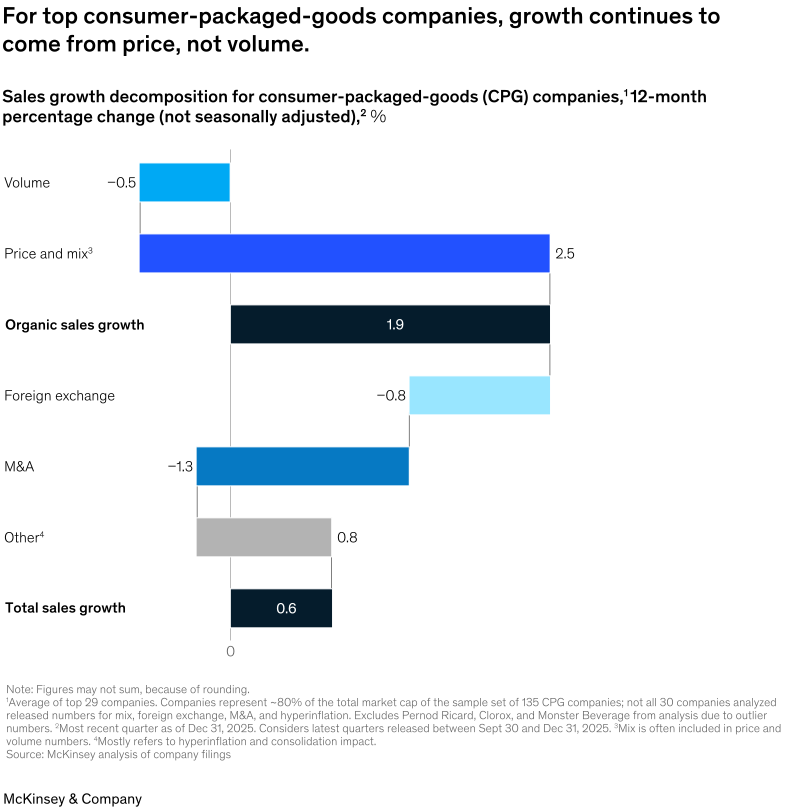
As private-label and challenger brands continue to outgrow large incumbents, this shift in mix is reshaping demand economics. Increasing volumes from private labels can support overall unit demand, but serving private-label customers and emerging brands often comes with lower average selling prices, higher SKU complexity, more “value” products with larger pack sizes and less packaging, and a more fragmented customer base with smaller volumes.9 At the same time, because recent revenue growth across most CPG categories has been driven primarily by pricing rather than volume, there is limited room for further price-led expansion, especially among price-conscious consumers.
Slower demand growth, persistent cost pressures, and heightened investor scrutiny are pushing CPG companies to reconfigure their operating models, a pressure that has only been amplified amid recent market shocks. Our interviews with leaders from the top 30 packaging and paper companies have found two trends that are particularly relevant for suppliers:
- Pricing pressure. Suppliers are being pushed to implement shorter pricing resets and more index-based mechanisms, further affecting customers.
- Inventory reduction. CPG companies are taking working capital out of supply chains, thereby increasing order volatility and shifting inventory risk upstream.
The implications from these trends are clear: Macro uncertainty, cautious consumers, and structural changes in CPG behavior mean that volume growth can no longer be assumed for packaging and paper companies. Instead, these dynamics raise the bar for commercial and supply chain execution for packaging and paper companies.
Sustainability is still important but becoming more driven by regulations
Sustainability remains a priority for consumers and CPG companies but only selectively. Instead, sustainability-led growth is concentrated in specific applications, rather than broadly distributed across portfolios.
A few factors are driving this. First, our global consumer survey shows that sustainability factors, relative to other purchasing decisions for consumers, consistently declined from 2020 to 2025, now ranking within the bottom three considerations for consumers across all regions. However, this is not because consumers care less about the environment today than they did in the past. In fact, the absolute share of surveyed consumers who deem sustainability important has remained fairly consistent from year to year. Rather, consumers in the 2025 survey cared more about a few other factors, especially value for money. Consumers consistently cite recyclability and recycled content as key concerns, but near-term willingness to pay remains constrained for most segments.
Second, our interviews with more than 30 retailers, CPG companies, distributors, and packaging industry executives in major end-user markets revealed barriers that are slowing overall adoption of sustainable packaging. Six barriers that stand out across the value chain are affordability, performance, lack of alignment on the meaning of sustainability, lack of clarity on regulatory standards, limited or unreliable supply, and—in some cases—incomplete knowledge of existing and developing solutions.10
Third, in parallel with these evolving trends, regulatory pressure around sustainability has increased strongly. As discussed above, a few attention hotspots have emerged, including EPR, recycled-content mandates, and labeling requirements,11 as well as mandates for increased use of reusable packaging.12
With the current consumer trends affecting the downstream value chain, demand is no longer compensating for underperformance. Volumes remain weak, with selective growth pockets across both categories and regions. Our research and interviews indicate that industry growth is at or below GDP, with tepid growth expected over the next one to two years in a context of shifting global economic and geopolitical stability. Today, many packaging and paper companies remain under pressure due to demand–supply imbalance and China’s evolving role in the global packaging and paper sector.
What are the outcomes of these factors?
The packaging and paper industry is deeply affected by today’s “pressure-verse.” Broad-based demand headwinds are challenging the industry’s revenue and EBITDA performance, and there is a general environment of consolidation and talent turnover. In this section, we explore these key trends further.
Financial performance
Growth and margins have decelerated overall across major substrates (paper, plastics, glass, and metal), owing to weak demand and inflationary cost pressures (Exhibit 2). Growth in EBITDA margins also remained nearly flat or slightly negative across the industry.
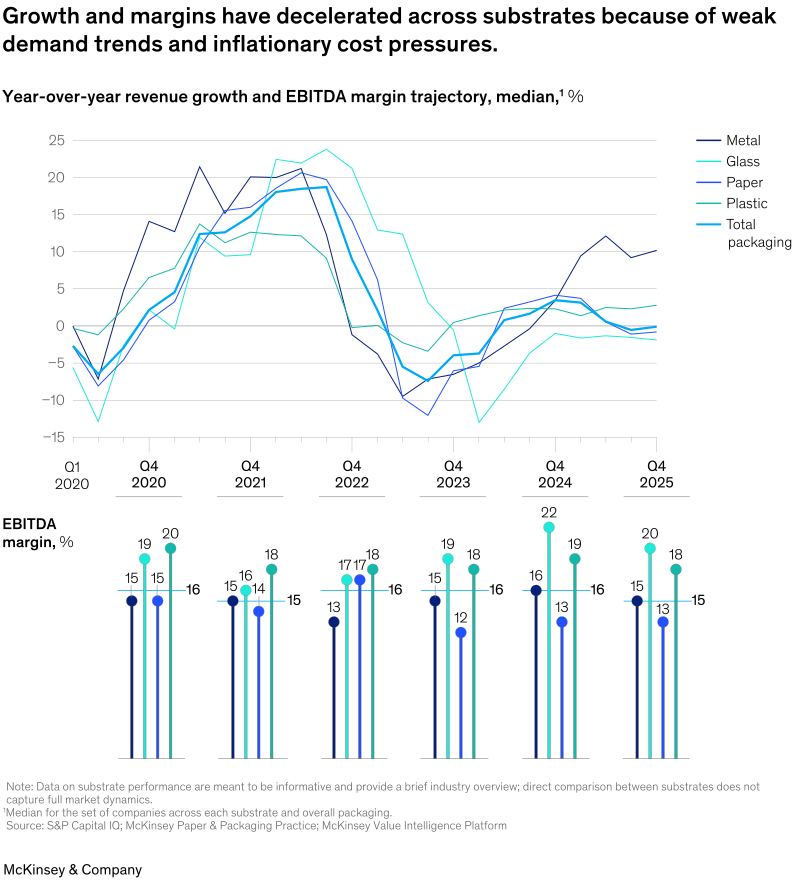
Some example factors to consider across different substrates include the following:
- Paper. In paper and board, the largest segment in the United States, containerboard has experienced declining demand volumes since 2022, driven by a shift in e-commerce toward flexibles, as well as weak macro conditions and an increase in right-sized packaging and lightweighting. High levels of vertical integration and capacity rationalization have allowed top players to preserve margins despite lower volumes. This seems to represent a shift in how the industry responds to downturns.
- Plastics. For rigid plastics, the industry has faced soft CPG demand combined with overcapacity, resulting in sustained pricing pressure. As a result, profitability has deteriorated across many segments, particularly in blow molding. In flexible packaging, continued innovation, such as mono-materials and recycle-ready structures, has helped sustain customer engagement and sustainability positioning. However, similar to rigid plastic packaging, oversupply is putting pressure on pricing, leading to a need for commercial excellence, cost focus, and differentiated capabilities.
- Metal and glass. The overall metal segment continued to show steady volume growth. Certain categories within metal saw relatively high growth rates, where metal continues to gain share due to portability, recyclability, and premiumization trends, according to McKinsey research. Glass continues to experience relatively weak demand, driven by substitution toward other substrates and lower consumption in larger end-use segments such as spirits and wine. However, growth pockets continue to exist in attractive markets, such as premium packaging (for example, for perfumes and fermented beverages).
With declining EBITDA margins across substrates, the overall packaging and paper industry delivered weak returns last year and continues to underperform the broader market index (Exhibit 3). Balance sheets are also becoming a strategic barrier for a growing subset of the industry whose capital structure is a binding constraint for making investments or pursuing inorganic growth.
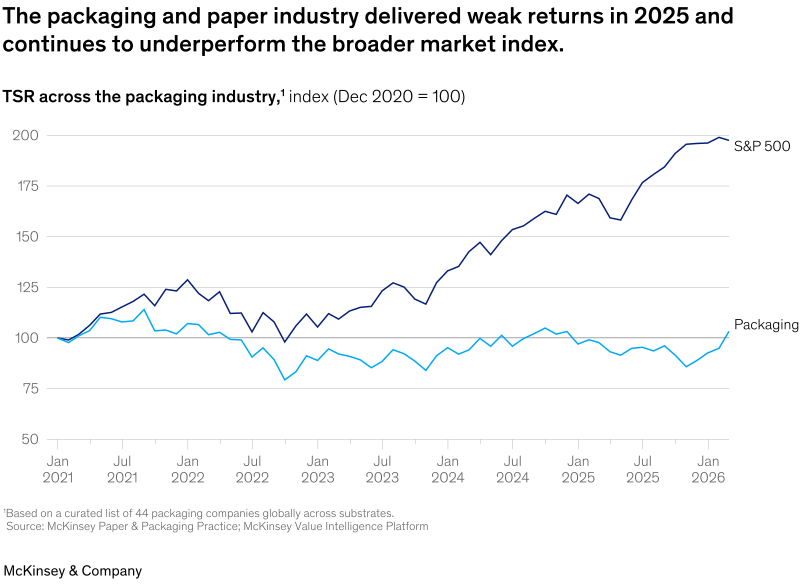
Packaging and paper companies have contended with these low margins and returns and constrained balance sheets with different strategies. Several sponsor-backed packaging companies are now in workout situations, with some recently announcing prepackaged bankruptcies.
Many of these assets share common characteristics. For example, many were acquired at peak valuations between 2019 and 2021, often with high leverages. Capital structures frequently included dividend recapitalizations or refinancings that extracted cash for sponsors, and financing assumptions were set when benchmark rates were near zero. Today, materially higher interest rates have driven a step change in interest expense. With operating performance flat to declining, interest coverage has deteriorated sharply, increasing refinancing risk as maturities approach. For management teams, this has shifted the strategic agenda toward liquidity preservation, covenant management, and difficult trade-offs on growth investments.
Consolidation and footprint optimization
Against this backdrop, we have seen strong consolidation happening but at lower multiples. Several mega deals have been completed across substrates. Cost improvements continue to be a fundamental requirement for M&A deals, particularly for costs related to procurement, SG&A, and footprints. Scale is also increasingly necessary to achieve underwritten deal economics. The best M&A outcomes in the industry have been differentiated by superior revenue synergies, as well as sustained growth through sales built on global customer relationships, innovative offerings, and cross-selling.
Talent
Recent years have seen general talent turnover in the packaging and paper industry.13 The industry reset in packaging and paper is also visible in the C-suite. Over the past several years, CEO and senior leadership turnover has increased sharply across major packaging and paper companies. Several patterns stand out. First, turnover is increasingly linked to sustained performance pressure, rather than single-cycle downturn. Second, leadership transitions have signaled a reset toward portfolio simplification, cost discipline, and capital allocation rigor. Finally, external CEO appointments are becoming more common, reflecting both limited internal succession benches and a desire for accelerated change.
More than three years of limited or negative growth, with intensifying cost competition and leadership turnover, has characterized today’s buyer-driven price reset. With the large push for transformation programs, restructuring, and footprint closures we see today, there are two main strategic trajectories among industry players: Structurally challenged sectors are aiming focus on cost reduction and trying to find selective pockets that are more attractive, while stronger growth sectors are working to capture above-organic growth while enforcing margin discipline and commanding higher valuations.
Winning strategies in current state
Looking at both structure and performance, it’s apparent the global packaging industry has entered a reset. After more than a decade of structural tailwinds, customers are under pressure, balance sheets are tightening, and investors are demanding sharper capital discipline. In this environment, value creation depends less on exposure to growth and more on execution. It will also be important to develop new capabilities and pursue innovation, particularly in data and gen AI.
A sharp focus on four elements could help packaging and paper companies create new value:
- Commercial excellence. Companies should be prepared to make clear choices about where to play and how to win. Players aiming to lead in their target segments can anchor strategies in their customers’ needs with a market-backed mindset, then align their assets to meet those needs. For example, they can implement strategies built on a “win with winners” approach—that is, focusing offerings and investments on winning segments. In addition, they should consider investing in key account management and enforcing disciplined margin management. Investing in innovation will continue to be important, but companies also need to be disciplined about their portfolios with a few high-impact bets. Top performers could achieve organic growth of more than 200 basis points above market, even in low-growth environments, according to McKinsey analysis.
- Relentless cost focus. For leaders in packaging and paper, cost excellence should no longer be episodic but embedded. With demand constrained, value creation is likely to be increasingly driven by execution, procurement optimization, supply chain redesign, footprint rationalization, and SG&A discipline. In addition, driving down operating costs can also allow packaging companies to price more strategically. This is particularly important given that price is expected to remain a top purchasing criterion for most customers.
- Talent and leadership depth. Leading companies are also treating succession planning as a strategic priority. To manage today’s talent turnover, companies could invest deliberately in internal leadership development while supplementing their talent bases with selective external hires.
- Focused data and AI innovation. Leaders are avoiding broad, unfocused deployments in favor of targeted ROI-backed applications. Early value is being captured through targeted use cases such as predictive maintenance, demand forecasting, lead generation, and order management.14 Leaders have expressed the greatest enthusiasm for using gen AI in commercial functions, especially for optimizing marketing spending, increasing the productivity of sales teams, and enhancing pricing capabilities. Other areas to consider include supply chain and procurement, manufacturing, and support functions—although, again, any AI initiative should be focused in scope.
In addition, players pursuing M&A should keep in mind that value creation should be based on deep integration beyond scale, with a focus on operations and procurement, SG&A, and commercial functions.
Demand will no longer bail out underperformance in packaging and paper in the years to come. Instead, balance sheets, leadership capability, and operating rigor will increasingly determine winners and losers. For CEOs and boards, the imperative is clear: Act decisively to reshape portfolios, strengthen fundamentals, and build the capabilities required to compete in a lower-growth, higher-volatility world.