The paper and packaging industry is at a crossroads when it comes to growth, with companies struggling to sustain strong volumes. In mature markets, demand has become more volatile, the customer mix is shifting, and price increases are harder to translate into lasting value creation. As a result, leaders are increasingly looking for new engines of growth—both to strengthen their positions in core markets and to expand into higher-margin, faster-growing adjacencies.
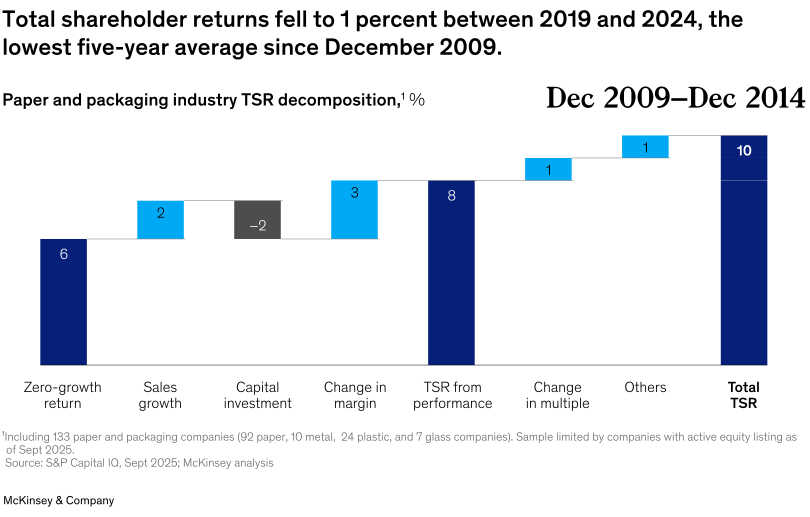
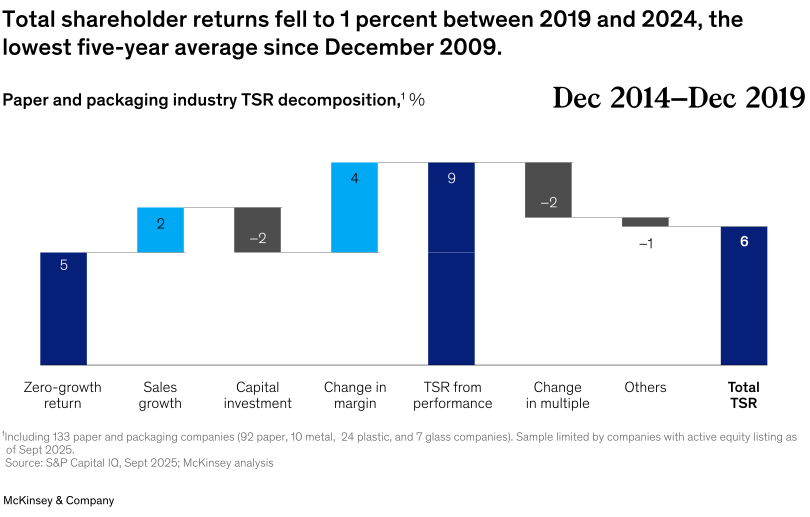
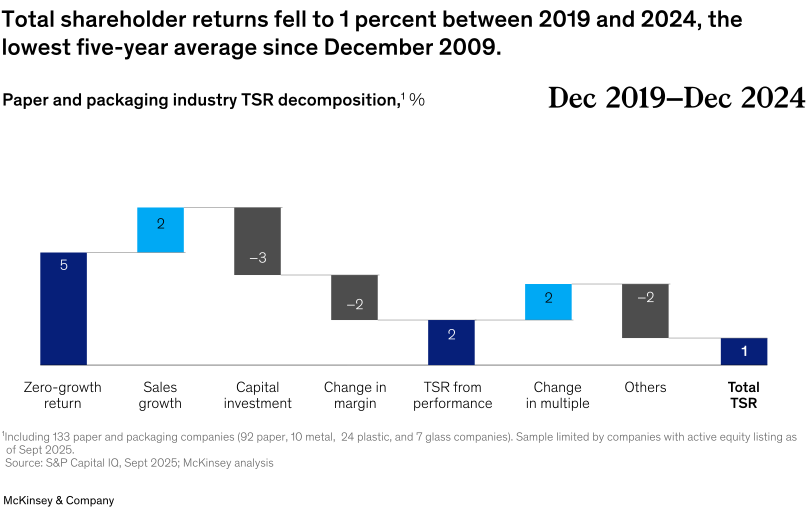
Packaging is a $1.2 trillion1 global industry that underpins modern commerce and daily life, enabling the safe, efficient movement of goods across industrial and consumer supply chains. For decades, the industry benefited from consumers’ desire for new functionalities and innovative packaging solutions, particularly across emerging markets. However, performance has declined in the years since the COVID-19 pandemic—a notable departure from the growth and stability that historically characterized the industry. Between 2020 and 2024, total shareholder returns (TSR) dropped to roughly 1 percent CAGR, the lowest five-year average since 2010, with the sector’s revenue growth lagging GDP growth.
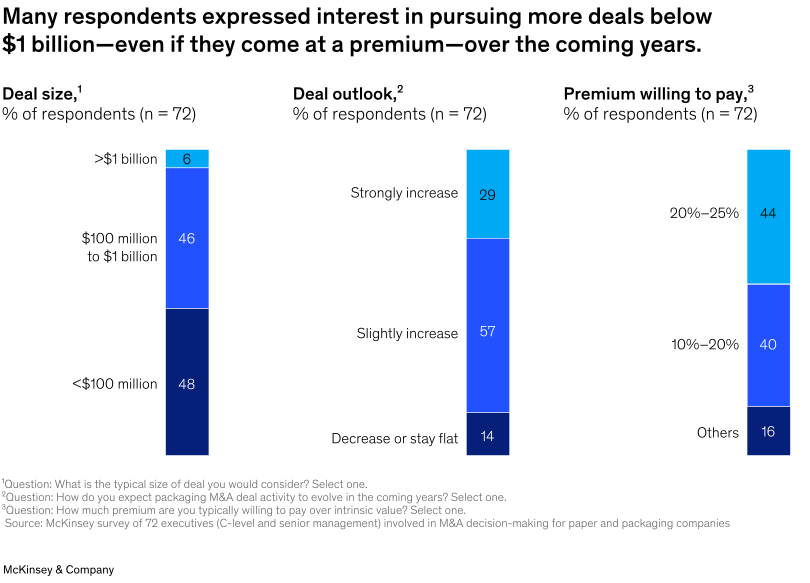
One promising path to more robust sector performance, higher volume growth, and enhanced competitiveness could be M&A—particularly programmatic M&A.2 To understand how industry leaders are thinking about dealmaking, we surveyed approximately 70 C-level and senior executives at paper and packaging companies.3 Over 80 percent of the respondents say they expect M&A activity to increase over the coming years. Moreover, nearly 50 percent indicate a willingness to pay a premium of 20 to 25 percent for the right assets.
Now, pair that with our analysis of the performance of about 100 companies in the industry between 2010 to 20244: We found that the top-quartile performers—those who delivered median TSR of 12.2 percent (compared with the second quartile’s 7.3 percent)—pursued multiple deals with a tailored and disciplined execution approach. Moreover, companies that focused on programmatic M&A achieved excess annual shareholder returns (relative to the industry) of nearly four percentage points versus peers that delivered a negative excess TSR by pursuing growth organically or by making selective, opportunistic deals.
McKinsey has conducted decades of research on programmatic and other approaches to M&A in an attempt to understand what really works when it comes to dealmaking. Programmatic M&A may not be the answer for all companies and industries—but given the modest growth and fragmented structure of the paper and packaging industry, this approach may be the most effective for companies looking to enhance returns, growth, and innovation.
Successful programmatic acquirers are intentional about allocating and rebalancing capital. They know which segments or geographies to target for expansion and which they can divest from. They maintain valuation discipline, even in uncertain times. And they plan integrations with customers and operational continuity in mind. In this article, we explain how paper and packaging players can adopt the same approach.
M&A trends in a cyclical industry
Over the past 15 years, the industry has expanded steadily by roughly 2 to 3 percent annually in mature markets, broadly mirroring global GDP. For the purposes of this article, we include paper, plastic, metals, and glass packaging in our industry overview. However, growth started to plateau, and margins declined in the years since the COVID-19 pandemic (Exhibit 1).
In our analysis of the performance of 133 paper and packaging companies, we found that total shareholder returns averaged 10 percent from 2009 to 2014.
In the subsequent five-year period, total TSR declined to 6 percent.
The notable drop in both performance and TSR between 2019 to 2024 could be attributed to a few macroeconomic factors, including slowing GDP growth; lower consumer demand for discretionary items, durable goods, and industrial products; inflated costs of production inputs; uncertainty around interest rates; and a broad-based destocking of inventory.
While such conditions help to make the case for using M&A as a growth lever, it is worth noting that the packaging industry has faced the same dynamics as other sectors when it comes to M&A—that is, a decline in dealmaking during economic downturns and an increase as markets recover. Paper and packaging deal volumes peaked in 2018, collapsed in 2020, and have since rebounded, although they continue to hover below pre-COVID-19 highs.
Our review of M&A activity during 2010 to 2024 reveals three clear patterns for companies eyeing more deals in this industry. First, overall deal volumes have moderated in recent years, but average deal size has increased, signaling a pivot toward fewer but larger and more strategic transactions (Exhibit 2).

Second, we have observed several recent large packaging acquisitions being financed largely or entirely with stock (equity) rather than with cash or debt. The shift toward more equity financing, likely driven by tightening credit markets and rising interest costs, also signals a desire among buyers to share both risk and upside with sellers.
Finally, many packaging companies are choosing to focus on one or two key product lines and using “roll up” strategies—that is, buying multiple smaller packaging companies or converters and combining them to create a consolidated, scalable, and profitable platform. This focused strategy is in stark contrast to previous norms when we observed packaging companies operating in eight to ten different businesses—often across multiple subsectors within the industry.
Industry perception of M&A
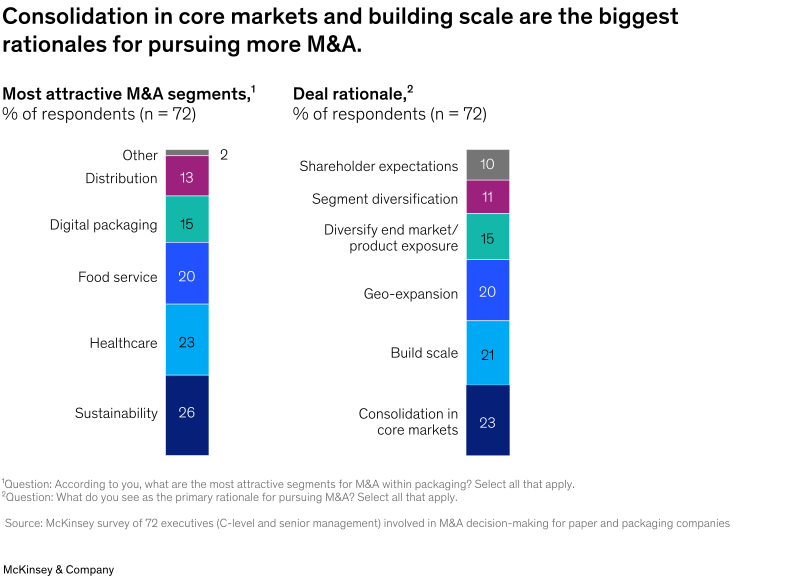
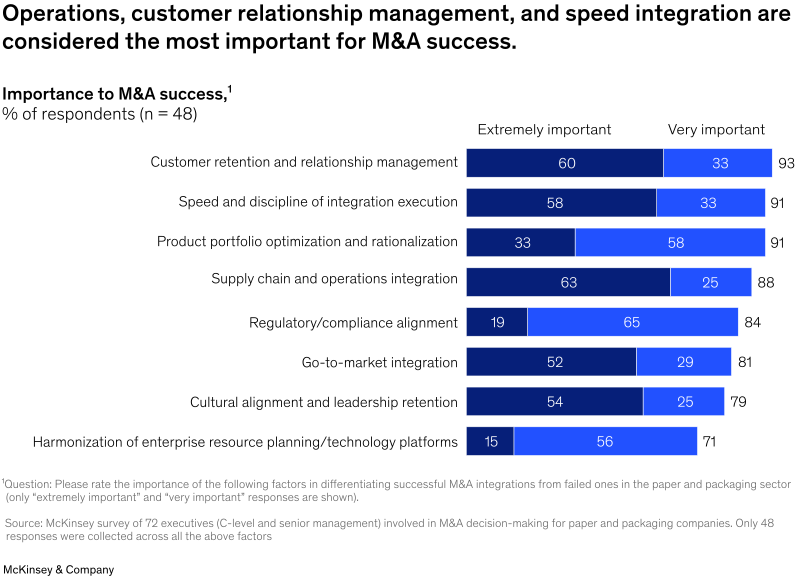
Our survey findings reinforce the growing interest in pursuing M&A (Exhibit 3):
- Many respondents expressed interest in pursuing more deals below $1 billion—even if they come at a premium—over the coming years.
- Consolidation in core markets and building scale are the biggest rationales for pursuing M&A.
- Operations, customer relationship management, and speed integration are considered the most important factors for M&A success.
The preference for smaller acquisitions likely reflects the perception that such deals are easier to integrate, less risky to execute, and better suited to building capabilities incrementally over time.
As end markets mature and organic growth slows, scale seems to have become a key lever in executives’ minds to sustain returns. Meanwhile, within packaging subsegments, executives cited sustainability and healthcare as their top picks.
Executives told us that cultural misalignment and unclear operating norms often slow integration and dilute execution momentum. Loss of critical talent was cited as a frequent reason deals fall short of expected value.
The case for a specific M&A approach
McKinsey’s decades of research on M&A outperformers reveals a key success factor: a through-cycle mindset, or proactively reserving cash and investing both organically and inorganically in opportunities regardless of economic conditions.
In the paper and packaging industry, we see that the top-quartile performers delivered a median TSR of 12.2 percent compared with –1.7 percent returns by the bottom-quartile performers. These top-quartile performers had two things in common: They combined high M&A deal activity with operational excellence, resulting in faster revenue growth (nearly 4 percent annually), higher gross margins (about 27 percent), and better returns on invested capital (nearly 13 percent) compared with their peers (Exhibit 4).
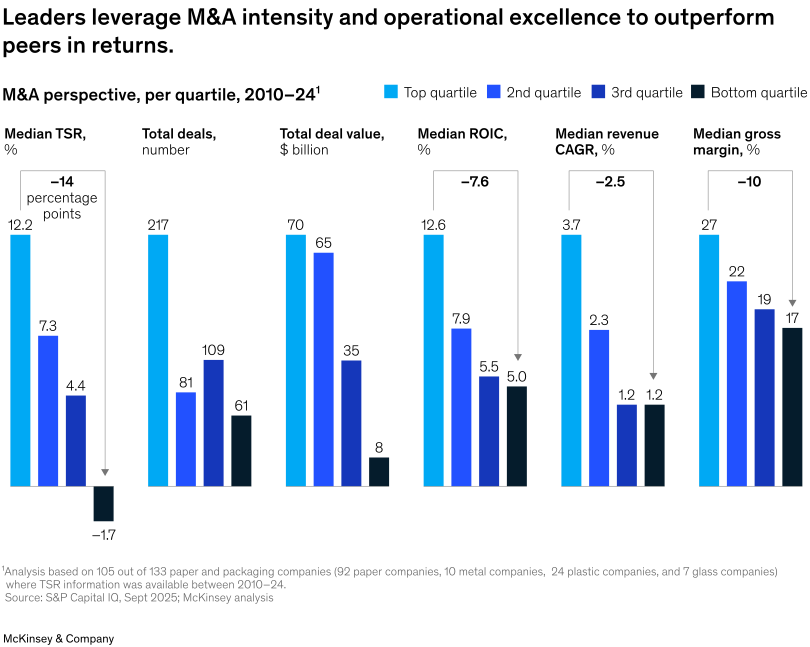
These top-quartile companies also executed two to three times more acquisitions than their peers, completing 217 deals (worth about $70 billion). Roughly two-thirds of their deals were programmatic, with only a minority comprising one-off deals or large transformative mergers (Exhibit 5). Companies in the fourth quartile, by contrast, tended to lean on a few large, infrequent deals with limited follow-through.
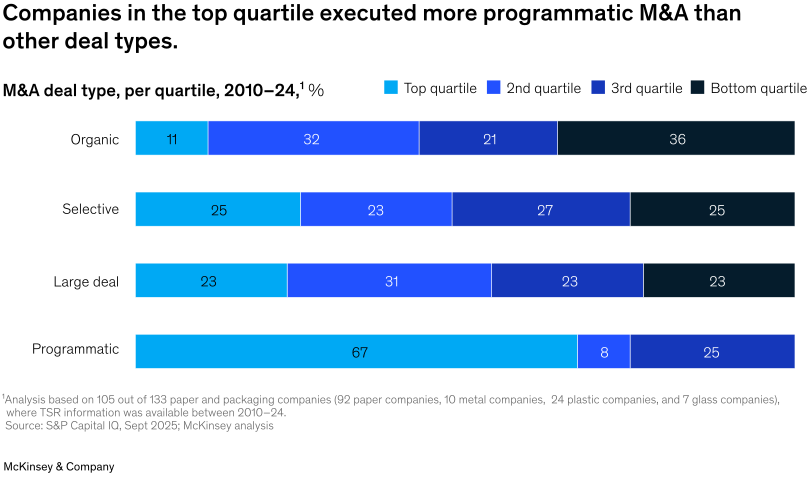
To further understand the impact of different M&A strategies, we categorized these companies into four M&A strategy types (programmatic, large deal, selective, and organic), based on deal volume and intensity, and then compared their TSR performance with the market index from 2010 to 2024. The results revealed that companies following a programmatic M&A strategy achieved a roughly four-percentage-point annual excess TSR (relative to the industry), while other acquirers achieved a negative excess TSR.
These top performers pursued a steady cadence of bite-size deals with disciplined execution to build scale, managed costs efficiently, optimized their product portfolio, and added high-margin capabilities in attractive niches. Consider this example: A large United States–based packaging company reshaped investor perception through a disciplined, programmatic M&A strategy. Instead of relying on large, high-risk transactions, it acquired a few smaller companies focused on closures, dispensers, and other high-margin, value-added components, as these segments benefit from recurring demand, defensible intellectual property, and strong customer stickiness. This led to improved multiples, stronger buy-side sentiment, and greater credibility in the company’s long-term growth agenda.
Blueprint for M&A success in packaging
A programmatic approach to mergers and acquisitions has proven more likely to deliver value over the long term, but a few challenges have come in the way of its widespread adoption (and execution) in the paper and packaging industry. Many players lack a clear, specific M&A blueprint. Oftentimes, they may lack a proactive M&A sourcing engine and partner ecosystem to gain early and privileged access to deals. They may also be unwilling to build or invest in deal models (that could provide a competitive edge during deal sourcing) and integration capabilities (to improve speed of execution).
Resilient packaging leaders have addressed these challenges by adopting a rigorous resource and capital management strategy, robust valuation practices, and a customer-centric integration approach.
Be strategic about allocating and rebalancing capital
Leading players focus resources where they can realize scale and integration efficiencies. While pursuing M&A targets, they double down on segments that have structural leadership, resilient demand, and pricing power. At the same time, they continue to prune and rebalance their portfolio by divesting noncore or underperforming assets and redeploying capital into higher-margin and higher-growth areas.
Diversification without identifying a clear fit or disciplined integration can erode returns. A large metals player struggled to capture synergies from the acquisition of a high-margin food can manufacturer. It also faced investor pushback on its plans to pivot to industrial packaging (an area outside its core business). Another diversified North American packager acquired a chemicals business that required far more capital investment than its returns could justify, creating misalignment with the company’s core strategy. The business was eventually divested as it underdelivered both financially and strategically relative to the resources committed.
Maintain valuation discipline amid market volatility
Successful programmatic acquirers do not let the market set their valuation logic. They stick to the fundamental belief that overpaying can reduce the probability of achieving the targeted return on invested capital.
Our analysis reveals that EV/EBITDA multiples in packaging M&A have recently ranged from seven to ten times. With executives willing to pay premiums of up to 20 to 25 percent, it has become imperative for acquiring companies to maintain valuation discipline. Such discipline, which entails having clear valuation thresholds, a rigorous screening process, and a willingness to walk away when seller expectations outpace fundamentals, is critical in the packaging industry, where synergies are typically modest, integration risk is real, and structural margins are thinner.
Perfect the art of integration to retain customers, ensure operational continuity, and enable growth
In today’s elevated valuation environment, flawless integration can be essential to capture full value from programmatic M&A, yet it is also the phase that business leaders often struggle with the most. Mergers in this industry can often be cross-continental, which makes integration tougher (for example, infrastructure changes like mill conversions can take time).
To address these issues, leading companies define the integration strategy prior to the deal’s closing, setting day one, day 100, and final milestones. They choose whether to integrate centrally or preserve a franchise structure. Postclose, they anchor the operating model in the deal rationale—whether scale, roll up, or adjacency—so that the integration phase supports the deal’s value creation plan and is not built on a one-size-fits-all approach.
These companies use clear financial, operating, and process metrics to track progress. And more importantly, they consistently communicate with all stakeholders, including employees, subcontractors, suppliers, and customers, throughout the deal process, from announcement through postclose.
Successfully sourcing and executing a series of deals is no easy task. Paper and packaging companies need to invest time and resources in strengthening their M&A capabilities and operational practices. Doing this well can lead to improved revenue growth, higher profit margins, and better returns on invested capital.