Around the world, almost all organizations are using AI. McKinsey’s Global Survey, “The state of AI in 2025: Agents, innovation, and transformation,” revealed that nearly 90 percent of respondents said their organizations were regularly using AI, with almost 70 percent reporting regular use of gen AI. Yet the report also highlighted that, despite the enthusiasm for the technology, progress is slow and most organizations are still in the experimentation or piloting phase of AI usage.1
The oilfield services and equipment (OFSE) industry is no different. Leaders in the sector certainly see gen AI’s potential to reshape their business models. In our recent OFSE Leaders Gen AI Survey, over three-quarters of respondents believed that the technology would deliver operational efficiencies (see sidebar “About the 2025 OFSE Leaders Gen AI Survey”). Yet gen AI adoption in the OFSE sector has not met initial expectations, and currently less than 25 percent of companies have progressed beyond pilot phases.
Slow adopters may miss a significant opportunity. Our analysis shows that the OFSE industry potentially could capture up to an additional $20 billion per year by diligently scaling AI—both generative and analytical—in its current operations. To realize this potential, OFSE companies will need to link the technology to defined business outcomes, establish scalable operating models, and institute change management—all as soon as possible.
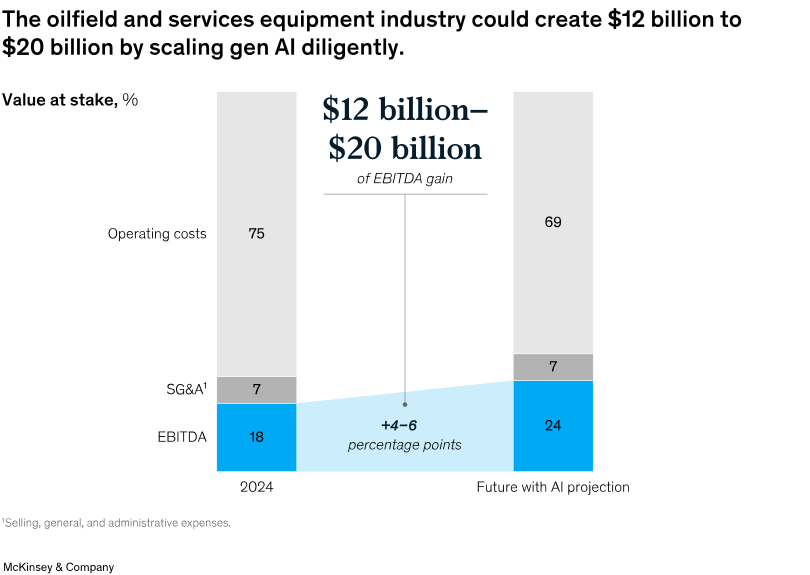
The OFSE industry could capture $12 billion to $20 billion per year by scaling AI in current operations
When leaders were asked what the biggest opportunity was for the OFSE industry going forward, the single most cited avenue for growth was digital and AI-enabled efficiency. Our analysis revealed that scaling gen AI and AI could potentially translate into an EBITDA gain of between $12 billion and $20 billion. And 80 percent of OFSE leaders believed this would be driven by operational efficiencies (such as streamlined execution and maintenance optimization) and competitive advantage (for example, personalized service and improved customer experience) (Exhibit 1).
The optimism about gen AI’s value is reflected in investment intent. When asked where they would allocate $1 billion to strengthen their businesses, 65 percent of leaders said they would prioritize digital infrastructure and AI capabilities (see sidebar “The importance of investing in digital: Survey responses”).
Respondents viewed gen AI as a tool for cost reduction that could enable leaner operations and faster decision-making, and act as a catalyst for differentiation and growth. They further regarded it as a source of competitive advantage through enhanced service quality, accelerated delivery, and the ability to offer more tailored, data-driven solutions to customers.
More broadly, an additional AI advantage for the OFSE industry can be provided by agentic AI. By using agentic AI systems (ones that can autonomously plan and execute multistep workflows), OFSE companies could move from incremental productivity gains to substantial performance improvements.
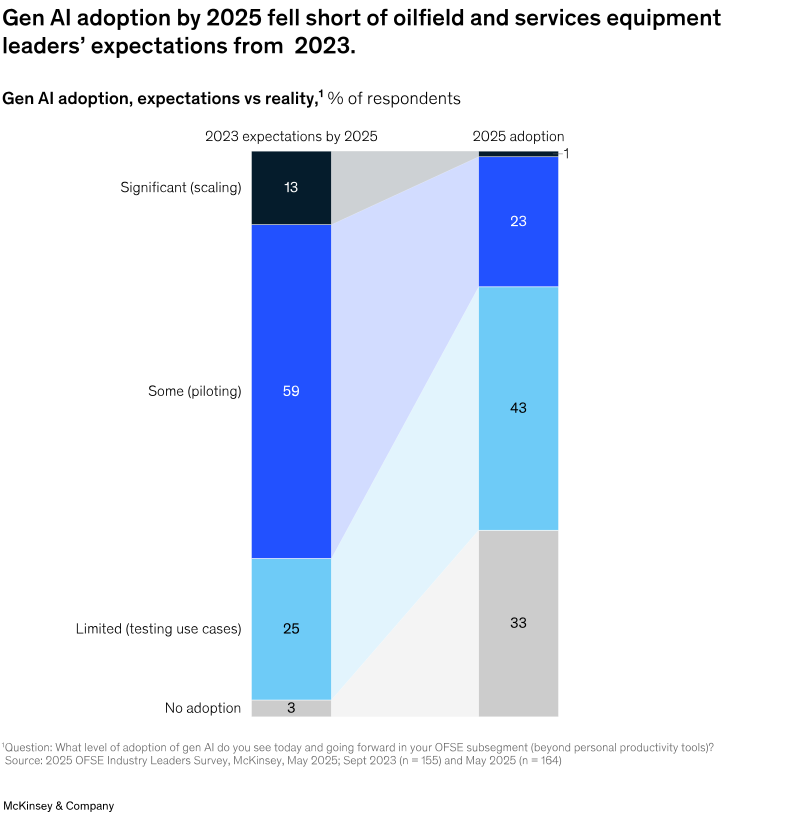
Gen AI adoption by 2025 fell short of OFSE leaders’ expectations in 2023
In our 2023 OFSE Leaders Gen AI Survey, respondents anticipated that over 70 percent of companies would be piloting and scaling gen AI by 2025 (Exhibit 2). The reality? Reported adoption fell short of this target, with less than 25 percent of companies showing some use. In 2025, only 1 percent of respondents said that their company had achieved significant gen AI scale.
Why hasn’t the OFSE industry yet captured gen AI value?
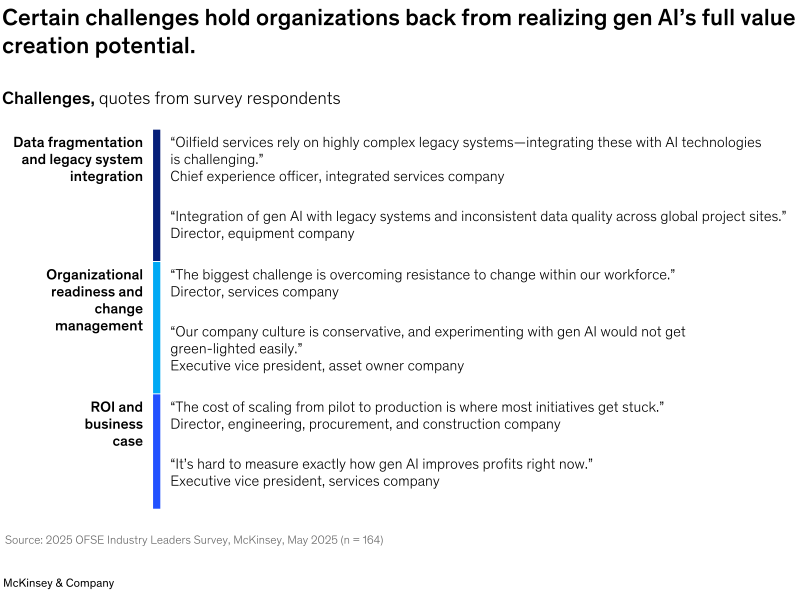
Despite the optimism around gen AI, certain hurdles hold OFSE companies back from realizing the technology’s potential, as reflected in leaders’ responses (Exhibit 3). These challenges have left parts of the industry in “pilot paralysis,” preventing scale. They include:
- data fragmentation and legacy system integration: More than 50 percent of respondents cited data fragmentation and integrating legacy systems as the main barriers to scaling. Successful pilots often failed to scale across geographies or functions because of process and system complexity.
- organizational readiness and efficient change management: In many OFSE companies, gen AI remained positioned as a digital or IT initiative rather than as a core business enabler. Less than 30 percent of leaders said they had a clear strategy or value-backed road map. Such lack of direction has led to scattered, bottom-up pilots that do not reach scale. In addition, resistance to change within the workforce has reportedly held companies back.
- ROI and business case: Respondents often cited the cost of scaling from pilot to production as the reason for initiatives getting stuck. Many leaders expressed that they struggled to quantify gen AI’s ROI, resulting in hesitation for further investment.
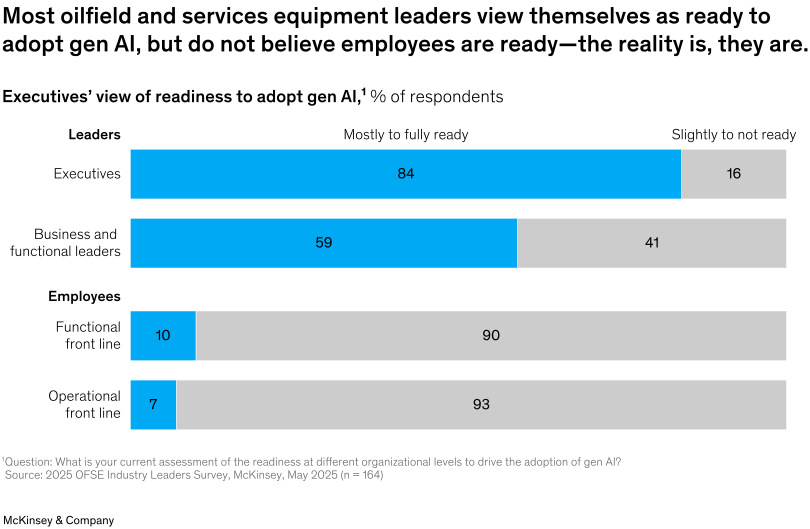
Most OFSE leaders believe they are ready to adopt gen AI, but their employees are not—despite evidence to the contrary
In OFSE companies, 80 percent of executives and 60 percent of business and functional leaders reported being “mostly to fully ready” to adopt gen AI (Exhibit 4). In contrast, these executives and functional leaders considered 90 percent of operational and functional frontline employees to be “slightly ready to not ready” to use gen AI.
Global findings suggest something different. According to a 2025 McKinsey report, Superagency in the workplace: Empowering people to unlock AI’s full potential, the number of employees using gen AI for a third or more of their work is three times greater than their leaders perceive. And, of all employees surveyed, 70 percent believed that within two years gen AI would change 30 percent or more of their work. Yet the same research shows that it is 2.4 times more likely for C-suite leaders to cite employee readiness as a barrier to gen AI usage rather than their own issues around leadership alignment.
A comprehensive approach is required for scaling gen AI to capture value
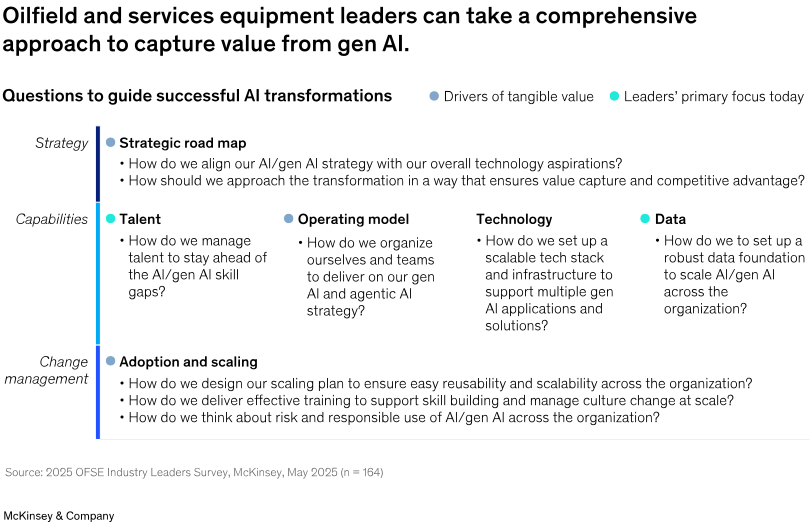
To scale gen AI and create significant bottom-line impact, OFSE leaders can consider six critical enablers, anchored in three pillars (Exhibit 5).
Our survey results show that most industry leaders currently focus on two capabilities as their most important gaps to close: Approximately 50 percent cite data and talent as their top two priorities. However, these two capabilities can be relatively easily addressed through technical solutions and partnerships—gen AI applications can work with unstructured data, and leaders can bridge talent gaps through targeted partnerships and ecosystem collaboration.
To really accelerate value, leaders instead could develop a comprehensive approach by focusing on strategy, capabilities, and change management.
Strategy. They can prioritize value-based business cases and ensure that every gen AI initiative is tied to measurable outcomes. A clear road map, supported by the right capabilities, can enable organizations to progress from pilot phase to impact at enterprise level.
The operating model. Leaders can assess how they structure their organizations and teams to deploy their gen AI strategy effectively. And, in light of a fast-growing agentic AI environment, they can consider how their operating models may need to evolve further to support more autonomous, agent-enabled workflows.
Change management. This can help scale and sustain value creation through using gen AI across the organization, including visible leadership, responsible AI governance, and upskilling or reskilling employees with capabilities that will embed gen AI into daily workflows.
Gen AI and AI could represent a $20 billion opportunity for the OFSE sector, but the industry has yet to move from experimentation and piloting to meaningful impact. Despite high confidence in gen AI, adoption remains slow, with only one in four companies having scaled beyond the pilot phase. Significant barriers such as fragmented data, legacy systems, and limited organizational readiness are holding back progress, but these challenges are not insurmountable.
The moment has arrived for OFSE leaders to make decisive moves from AI experimentation to execution. The potential benefits are clear: operational efficiencies, cost reductions, and a competitive edge. However, the method that operators choose is critical. OFSE leaders need to adopt a comprehensive approach that connects strategy, operating model, technology, and change management. Looking ahead, they will also need to consider how competitive advantage will likely shift toward companies that move beyond pilots to rollout and embed agentic AI into core operational processes.
OFSE leaders can choose either to continue to lag behind peers or to act quickly to lead their organizations into a new era of innovation and growth.