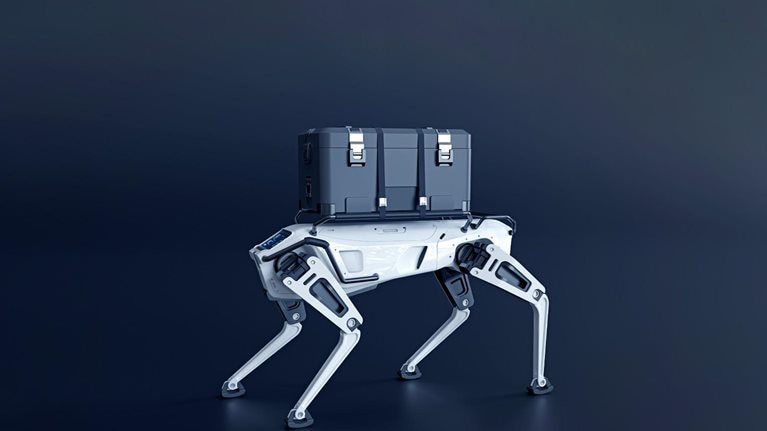
Artificial intelligence has moved off the screen and into the physical world more rapidly than anticipated and on a much greater scale. Capital has followed, with much of it flowing to general-purpose robots, especially humanoids, and autonomous vehicles (AVs). These applications have captured the attention of business leaders across industries and become the most visible symbols of physical AI. Other funding is flowing to less conspicuous areas that don’t grab headlines, such as autonomous forklifts that move materials through warehouses, mobile robots that sort packages in logistics facilities, and factory systems that continuously monitor production and adjust equipment as conditions change.
By 2035, physical AI applications could generate over $1 trillion in economic value resulting from various sources, including productivity improvements, higher quality products, and increased throughput. The challenge is determining how this value will evolve across applications, technology segments, and capabilities as the sector matures. General-purpose robotics and autonomous vehicles—today’s leading applications—are expected to retain their top position in 2035, but other segments, such as intelligent factories, could gain ground. Similarly, value may increasingly shift from hardware, which currently attracts most investment, to software, deployment, and field operations. This article examines where physical AI is already scaling, how value pools may shift across applications and the technology chain, and what these changes mean for investors, technology providers, OEMs, and end users.
Where physical AI is already scaling
Physical AI has advanced well beyond the pilot stage in structured environments such as warehouses, factories, mines, and ports, although adoption varies considerably by sector and application. For customers, the value of physical AI lies less in the technology itself than in the outcomes it delivers: labor substitution and augmentation, higher throughput, better asset utilization, improved quality, reduced downtime, safer operations, faster cycle times, and greater operational resilience.
Physical AI systems may be embodied in a single machine or embedded in multiple devices or pieces of infrastructure (see sidebar, “Physical AI: Embodied or embedded?”). Despite their different forms, all physical AI systems share a defining capability: They use sensory inputs and learned representations of their surroundings to make decisions and take actions in the physical world with minimal human intervention. Unlike conventional automation, which runs preprogrammed scripts under fixed conditions, physical AI applications adapt their behavior based on what they perceive. They also differ from generative AI applications, such as chatbots, which produce digital outputs rather than acting directly on the physical world. Consider a few examples that show the breadth of applications:
- Worldwide, shared AVs are providing more than 700,000 fully autonomous rides per week. Waymo, for example, served 500,000 paid rides per week in March 2026, doubling from 250,000 in less than a year.
- Autonomous haul trucks have been working in mines for more than a decade. Caterpillar’s autonomous fleet, which numbered 690 trucks at the end of 2024, has moved more than 11 billion metric tons of material with no reported injuries, and the company aims to triple the fleet by 2030; in China, solutions provider EACON has deployed its autonomous-driving technology on more than 2,000 haul trucks.
- Shipbuilders are bringing physical AI into highly variable work. HII, the largest US naval shipbuilder, plans to work with GrayMatter Robotics on autonomous surface preparation, coating, and inspection, and with Path Robotics on adaptive welding, with proof-of-concept demonstrations planned for 2026 and a full pilot in 2027.
- Amazon has deployed more than one million mobile robots across more than 300 facilities, coordinated by DeepFleet, a foundation model that the company expects will reduce fleet travel time by 10 percent.
To enable such advanced use cases, companies need access to data for training and improving models. Before deployment, companies typically conduct simulations and collect synthetic data to expose systems to a wide range of scenarios, supplemented in some cases by human-recorded interactions (see sidebar, “Building data sets for physical AI”). Overall, however, the richest insights come from field deployment, when physical AI systems encounter the uncertainties and messiness inherent in daily life.
With each deployment, companies get additional data that improves performance; better performance enables broader deployment. This virtuous cycle is easiest to establish in structured environments with repetitive tasks, where physical AI adoption often begins. As perception and manipulation capabilities improve, deployment costs decline, and regulatory frameworks evolve, physical AI applications can expand into less structured and more safety-critical settings, such as public roads with mixed traffic.
As in cloud computing and other industries, companies that achieve early scale in physical AI may obtain competitive strengths that later entrants struggle to replicate. For instance, industrial automation companies that first established a large installed base often built strong customer relationships, service networks, and application expertise that gave them an edge over later entrants that had technically superior products. These advantages may extend beyond individual applications as advances in models and other technologies become reusable across domains. Chinese automaker XPeng’s VLA 2.0 foundation model was developed for driver assistance in its mass-produced passenger cars but later underpinned both its robotaxis and its IRON humanoid robot.
Funding trends for physical AI
General-purpose robotics illustrates how rapidly investment is growing across the physical AI value chain. The vast majority of the $38 billion invested in general-purpose robotics has come in over the past two years. Funding rose from about $1 billion in 2020 to around $9 billion in 2025 and $21 billion in the first eight months of 2026 alone (Exhibit 1). These numbers exclude autonomous vehicles, which currently account for most physical AI investment.
Investment in general-purpose robotics has grown significantly since 2024, and more funding is shifting to China.
Note: 2026 data cover January–August only and are not annualized. Figures may not sum to totals because of rounding.

Funding for general-purpose robotics is heavily concentrated in certain areas. OEMs that manufacture robots received about $21 billion of the cumulative total, followed by developers of physical AI foundation models at about $12 billion. By comparison, total funding for deployment partners and companies that specialize in training data, actuators, dexterous hands, and force sensing was under $6 billion.
The general-purpose robotics sector also illustrates how funding may be geographically concentrated, although the leading regions may change over time. The United States led in cumulative funding through 2025. In 2026, however, of the $21 billion invested through August, China accounted for about $11 billion, compared with $7 billion for the United States and $3 billion for Europe. Cumulatively, China has received about $17 billion, or 46 percent, of total investments in general-purpose robotics. It now accounts for more than half of global funding for robot OEMs and integrated actuators and about three-quarters for force and precision sensing. Europe, which has accrued about $5 billion in cumulative investment for general-purpose robotics, is a distant third. Its strengths lie in component suppliers, mechatronics competence, and a manufacturing sector that is well suited to physical AI deployments rather than vast private capital funding.
Our revenue projections for 2035 show the breadth of the physical AI ecosystem. In 2035, about $500 billion in revenue could come from two sources: autonomous passenger vehicles (about $470 billion) and general-purpose robots (about $30 billion). The remaining value could come from a broader set of applications, including trucking and freight, factories, and robotic arms (Exhibit 2).
Physical AI’s potential extends far beyond general-purpose robots and autonomous passenger vehicles.
AI market size,
by domain,
$ billion
Note: Cell area is proportional to estimated 2035 total addressable market. All cells share one area scale.
1Includes humanoid and mobile manipulator robots.
Physical AI’s emerging value pools
The physical AI value chain encompasses four broad segments: hardware, software, deployment, and field operations, each with opportunities for both embedded and embodied applications (Exhibit 3). Hardware has attracted most external investment to date and will represent 30 to 40 percent of the 2035 value pool. Software is second to hardware in funding and is expected to account for 25 to 35 percent of future value. Deployment and field operations, by contrast, have attracted relatively little funding but could account for a disproportionately large share of future value. In fact, their combined value could exceed that of either hardware or software alone in 2035. This gap between investment and potential value highlights opportunities for companies that can overcome the practical challenges of deploying and operating physical AI at scale.
Value creation opportunities exist along the entire physical AI value chain.
Note: Treemap areas use the midpoint of each stage’s share range (35%, 30%, 12.5%, and 22.5%), which sum to 100%.
1Enterprise resource planning.
Although robot manufacturers are now in the spotlight, previous technology waves suggest that much of the value could accrue to companies providing the infrastructure and services that support them. The internet created new digital businesses while generating substantial value in networking infrastructure, enterprise software, and cloud computing. Mobile computing created opportunities for semiconductor manufacturers, wireless infrastructure providers, and software developers alongside device makers. More recently, generative AI has spurred investment in semiconductors, data centers, and power-generation equipment. Physical AI could follow a similar pattern, with four areas offering particularly promising opportunities.
Model development
Vision-language-action (VLA) models now underpin many of the most sophisticated physical AI applications. These models can interpret visual data (including information from video feeds), understand natural language, and translate these inputs into actions (for instance, instructing a robot to move an arm). Today’s VLA models are advancing rapidly, performing an expanding range of learned tasks while increasingly generalizing to new tasks and environments.
It remains unclear, however, whether VLA models alone can enable general-purpose robots to perform thousands of tasks in complex, constantly changing settings, such as construction sites. Among other limitations, VLA models can’t reliably anticipate the consequences of their actions because they lack an explicit understanding of how the physical world works. Developers are divided about the best way to solve this problem. Some are using world models, which simulate how environments respond to a robot’s actions. Others believe VLA models can develop this understanding simply by training on more action data. Increasingly, developers are integrating VLA and world models into hybrid systems that can both act and predict the consequences of their actions.
Data management
Robots learn from data gathered in factories, warehouses, and other operating environments, creating demand for platforms that collect, manage, and use that data to refine models. Yet the value of these platforms will depend in part on who has the right to access and use the data. Technology providers, system operators, and individuals may have competing claims, particularly when data collected for one purpose can be used to improve models for another. For instance, data from a humanoid robot performing housekeeping tasks could potentially improve a model used in security or defense applications.
Clear frameworks governing data rights, consent, privacy, security, and reuse could give companies greater confidence to share data and accelerate model improvement. At the same time, control over proprietary operational data could become an important source of competitive advantage.
Systems integration and implementation
Integrating autonomous vehicles, robots, and intelligent devices into existing operations is a daunting prospect for many companies. In our experience, every dollar spent on a robot in a large transformation requires five additional dollars in spending on safety and infrastructure. Companies may therefore turn to systems integrators that can connect autonomous systems with existing operational technology, IT systems, data platforms, and business processes.
Successful implementation also requires workflow redesign, fleet orchestration, safety validation, and ongoing operational support. Providers that combine these capabilities into reliable, end-to-end solutions could capture substantial value as adoption expands.
Enabling technology infrastructure
Simulation and digital twins help train, test, and validate autonomous systems before deployment. Edge computing, cloud infrastructure, and connectivity support real-time processing and low-latency decision-making. Control and actuation systems translate decisions into physical actions, supported by safety systems that enable reliable operation in complex and unstructured environments. Providers of these technologies could benefit as physical AI moves into more demanding applications and operating environments.
Implications for users, providers, and investors
The ability to capture value will vary by stakeholder, with different strategic priorities for each group:
- End users of physical AI. Manufacturers, logistics operators, utilities, and other asset-heavy businesses could benefit from focusing their initial physical AI efforts on the structured settings that involve repetitive tasks and clear economic payback. Rather than waiting for general-purpose robotics to mature, companies would do well to move beyond pilots in applications where the technology is already viable. For best results, companies should own the operational data, redesign workflows around physical AI systems, and build the field-operations skills essential to keep fleets running.
- Technology providers and OEMs. Providers will need to determine whether they can maximize value capture by developing capabilities internally or by working with partners to deliver integrated solutions, particularly in data infrastructure, systems integration, and ongoing operations. The same barriers that constrain humanoids—safety, uptime, dexterity, and cost—also apply to every form factor and deserve as much engineering attention as model capability. If companies are not confident that they can address all these issues, partnerships may be the best option.
- Investors. Capital has concentrated among a small number of robot makers and model developers. Investors will need to look beyond model capabilities and hardware performance to assess whether companies can scale economically, build defensible positions, and generate recurring revenue from software and services. They must also consider how regional dynamics affect returns. For instance, Europe’s strong network of component suppliers and regulatory clarity could provide advantages in some segments of the value chain.
Physical AI is poised to reshape industries, but the biggest opportunities may emerge in unexpected places. Autonomous vehicles and humanoids dominate today’s headlines, yet applications ranging from intelligent factories to autonomous freight transport could unlock vast new markets. Meanwhile, value could increasingly shift toward deployment and field operations, areas that have attracted relatively little investment. These shifts will create new winners and challenge established leaders. Success will depend not only on developing advanced machines and models, but also on integrating them into complex environments, operating them reliably, and continuously improving performance through real-world data. Companies and investors that anticipate these shifts and build the capabilities to capitalize on them will be positioned to lead the next era of physical AI.