Close to one in three adults today already turn to AI chatbots for health information and advice at least monthly—whether to look up symptoms, get explanations of lab or test results, or compare treatment options.1 Adoption is only continuing to grow, with technology companies and healthcare organizations introducing better solutions and clinical AI quickly evolving from answering medical-knowledge questions to completing multistep clinical tasks.2
With this rapid and ongoing progress, AI is reshaping healthcare globally across three vectors of technology-driven change (Exhibit 1). The first, “discursive care”—the reasoning- and dialogue-based aspects of clinical care—is already emerging across consumer platforms, health systems, and clinical workflows. Clinical AI is taking on a growing share of nonphysical care, such as patient intake, triage, diagnosis, guidance, referrals, and follow-up management, that is, clinical interactions that do not require hands-on physical examination or treatment. We expect that when scaled, AI can provide expert-level clinical expertise across many conditions—resolving some patient needs directly and supporting clinicians in providing more consistent, high-quality care. In fact, today, roughly 16 to 22 percent of all US outpatient claims (representing 13 to 19 percent of outpatient healthcare spending) are for elements of care that discursive-care AI can perform, according to our research.
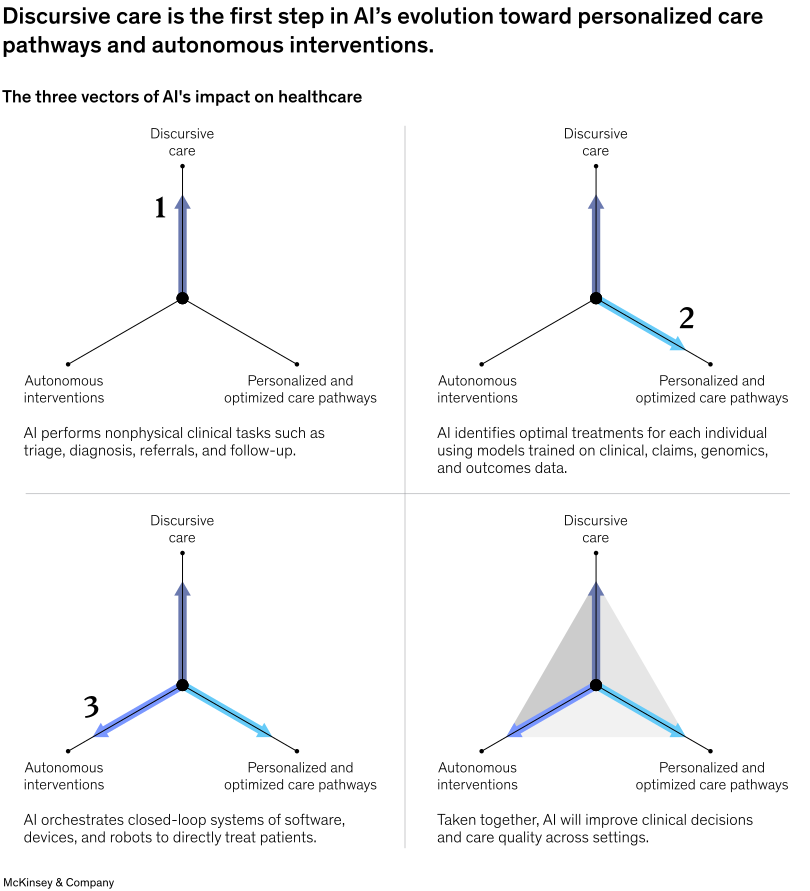
The second vector will be personalized and optimized care pathways, in which AI trained on large volumes of individual history and outcomes data enables more individualized care, improving treatment efficacy and outcomes.
Third, autonomous interventions, enabled by the convergence of AI and robotics, will directly deliver procedural care and interventions rather than just diagnose and plan them, which could lead to greater and more consistent care quality and access alongside major workforce shifts. These vectors can develop in parallel; neither is a prerequisite for the other.
In this article, we focus on the first vector of AI enabling discursive care, specifically, what it could mean for patient volume and access, payments, the workforce, and quality of care, as well as the milestones required to fully realize the potential of discursive care.
Consequences for care
Although the AI capabilities for discursive care already exist, many have not yet been translated into products or deployed at systemwide scale. When discursive care reaches true scale (see sidebar “Signals of scale”), every facet of healthcare delivery and operations will be affected. Beyond simple administrative efficiencies, at-scale discursive care will restructure patient volumes, unlock clinician capacity, and force the evolution of traditional reimbursement models. The effects will be most prominent in outpatient care, which mostly involves diagnosis, care planning, patient guidance, and follow-up management. Ultimately, this shift will redefine the boundaries of medical decision-making and move the industry toward a higher quality standard of care across the board.
Patient volume and access changes
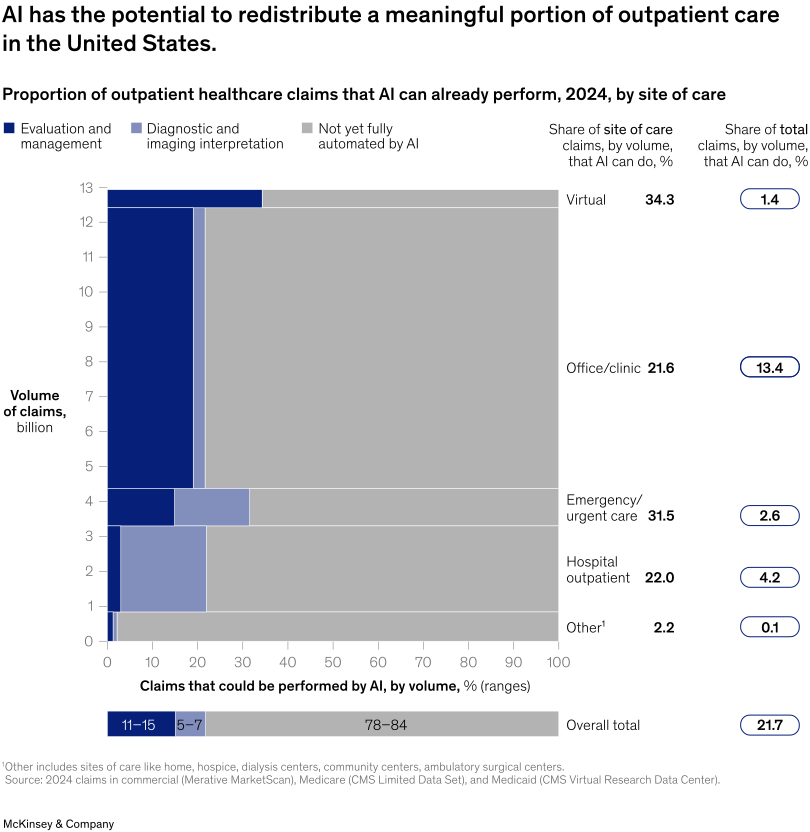
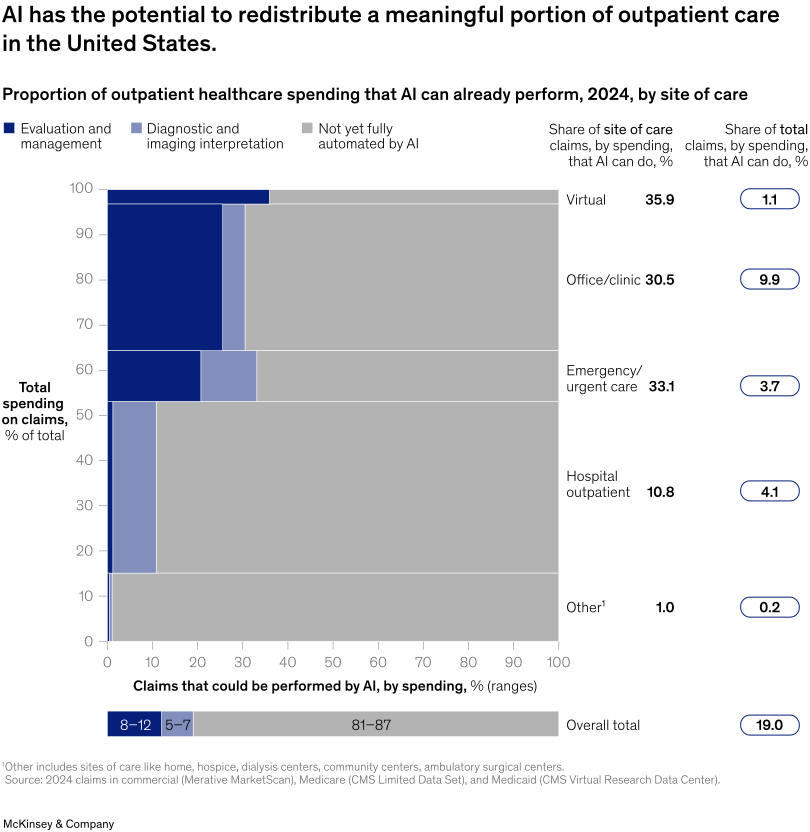
The effects of discursive care will vary by care setting. Physician offices and clinics, virtual settings, and urgent care are likely to experience the greatest share of AI-enabled changes to care in this first vector. We evaluate the impact on outpatient care based on two metrics: volume of claims and total spending (Exhibit 2).
Up to about a fifth of outpatient claims by volume (about two billion to three billion claims)3 involve services that could potentially be performed by clinical AI, based on our analysis of 2024 claims across commercial, Medicare, and Medicaid lines of business (see sidebar “Research methodology”). This comprises evaluation and management (E&M) visits where no other care or only low complexity care was provided, which represented 11 to 15 percent of all outpatient claims (1.5 billion to 2.0 billion claims), and interpretation of diagnostic or imaging results, which was 5 to 7 percent of all outpatient claims (700 million to 900 million claims).
This volume of outpatient care equates to roughly 13 to 19 percent of total outpatient spending.4 This comprises E&M visits where no other care or only low complexity care was provided, which represents 8 to 12 percent of all outpatient spending, and professional interpretation of diagnostic or imaging results (separate from the underlying procedures), which is 5 to 7 percent of outpatient care spending.
These redistributions will likely lead to substantial additional care delivery in areas where demand goes unmet today because of access barriers (see sidebar “The access gap”). These barriers reflect the limits of current care models and incomplete adoption. The gap in care (for example, primary care) could be addressed through fully scaling both discursive-care AI models and existing AI-enabled care models, while upskilling the workforce to engage in more efficient medical decision-making. This would, in turn, improve access for patients without the need to greatly expand the physician workforce.
An increase in primary care could lead to major growth in diagnostic encounters, as well as downstream specialist care. While there is a risk that this could increase low-value cascading care,5 we see the opportunity for AI to give care teams the data and confidence they need to break low-value care cascades and increase the complexity of care that can be managed successfully in a primary care setting.
Payment and risk-bearing effects
Discursive care at scale will challenge traditional reimbursement models. Fee-for-service clinical-care organizations risk losing low-acuity-visit volume and will therefore need to ensure they maintain or expand patients’ “front door” access to care while also reallocating newly freed-up clinician time to develop distinctive and improved outcomes in follow-up care (for example, specialty referrals and complex procedural care). This could offset baseline revenue attrition from lost primary care while maximizing the utilization of clinical resources.
Conversely, clinical-care organizations in value-based care arrangements can use AI to fundamentally improve their underlying care management economics.6 Integrating AI into the system enables clinicians to catch diseases earlier, free up clinical capacity to address care gaps, and ensure more continuous patient engagement and adherence. Furthermore, follow-up care can be more effectively managed as a closed-loop managed network if organizations operate their own clinical models with trusted diagnosis and referral decisions, thus streamlining authorizations and scheduling.
Payers and plan sponsors will also feel the effects of these care changes—and will see more net benefits than providers do. With AI increasingly becoming the “front door” for patients, the top of the care funnel is shifting from primary care physicians to whichever entity supplies the patient’s historical data and clinical context to the AI. This gives payers an opportunity to move from just financing care at a distance to having a more active role in coordinating it: A payer-deployed AI clinician could become the primary interface through which patients access and navigate care, shifting payers from financing care to orchestrating it. This represents a structural change in the role of primary care.
Unlike a health system or consumer platform, a payer can streamline the medical management process and reduce patient financial liability if the experience originates from its clinical AI rather than after care decisions have already been initiated. However, payers have historically been reluctant to take on the full clinical and operational risk of care delivery itself, and clinical-care organizations will have strong incentives to develop clinical AI experiences that engage patients directly. Rather than competing, payers and clinical-care organizations could increasingly share patient-authorized data to deliver better patient experiences.
Workforce shifts
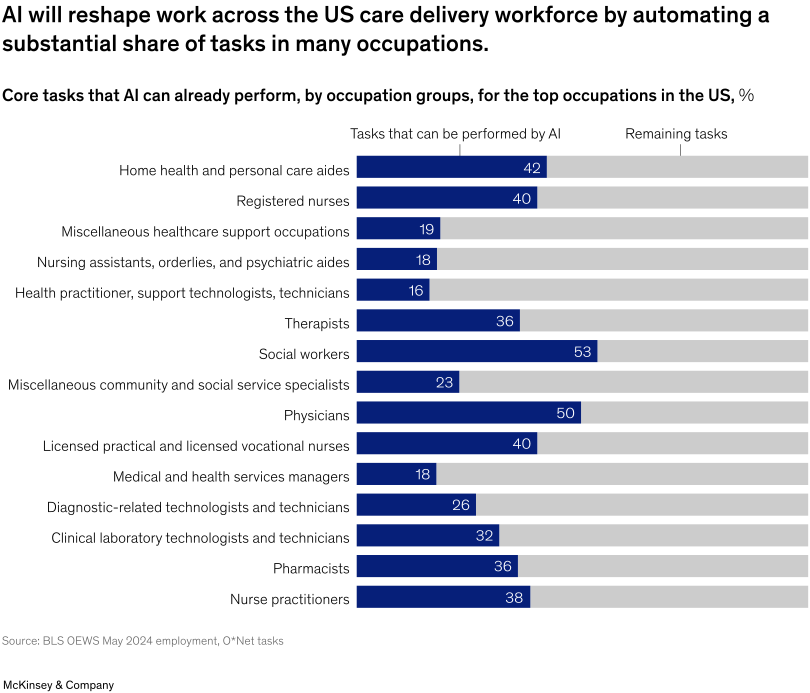
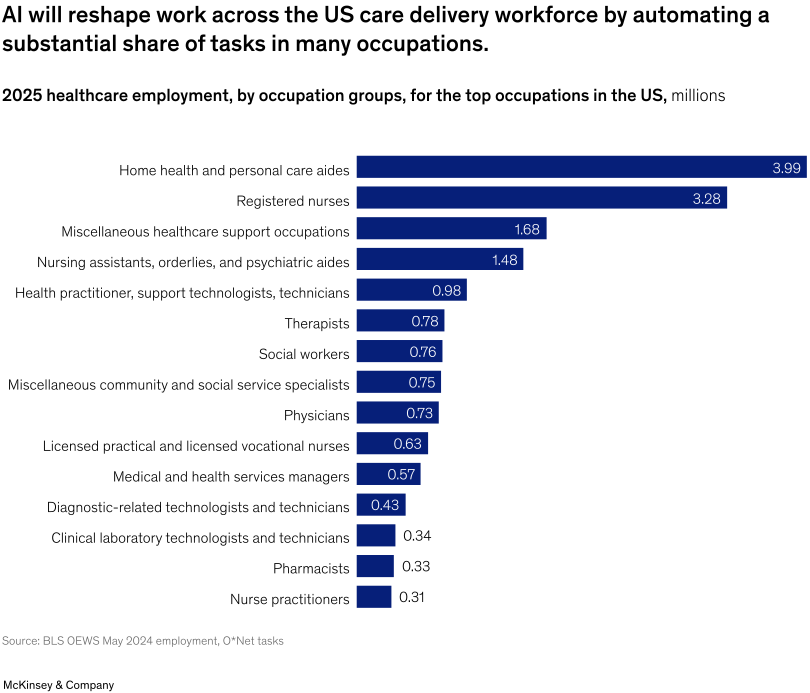
The maturation of AI’s clinical intelligence and agentic capabilities is shifting the tasks healthcare workers do and changing the workforce. Rather than replacing clinicians, AI has the potential to help alleviate persistent shortages of physicians and nurses. Given the expected increase in net demand, we anticipate that, in aggregate, the healthcare workforce is unlikely to decrease. Instead, the core of individuals’ work will change as some tasks are automated and additional demand is generated. Today, AI can perform a substantial portion of core tasks for 11 million out of the 19 million (almost 60 percent) healthcare workers, our analysis estimates. This includes many of healthcare’s largest occupations, spanning both clinical and support roles (Exhibit 3).
The biggest occupation groups include home health and personal care aides; registered nurses; miscellaneous healthcare support occupations; nursing assistants, orderlies, and psychiatric aides; and health practitioner support technologists and technicians. These five groups account for roughly 11.5 million workers.
AI is already completing tasks that occupy much of nurses’ time today, such as documenting symptoms, explaining care instructions to patients, and evaluating patient responses. Likewise, core physician tasks such as reviewing medical history, ordering and interpreting tests, discussing treatment plans with other physicians, and generating differential diagnoses could also be automated or accelerated by AI. The same is true for other healthcare professionals’ nonphysical core tasks, such as evaluating X-rays to determine whether the images are satisfactory for diagnostic purposes (radiologic technologists and technicians) or providing advice regarding drug interactions, side effects, dosage, and proper medication storage (pharmacists).
As AI capabilities move from point solutions to integrated clinical workflows at scale, care will increasingly become AI first, with AI handling tasks such as intake, triage, diagnosis, guidance, referrals, follow-up, and providing treatment options and recommendations. Clinicians will provide oversight, escalation, and higher-complexity judgment. Over time, some lower-acuity encounters may be resolved fully by AI, with the boundary of physician involvement evolving as models meet performance standards and organizations establish appropriate guardrails, risk controls, accountability, and regulatory frameworks.7 Overall, clinicians’ work will increasingly center on what remains uniquely human: listening, building trust, exercising judgment, helping patients make decisions in uncertain situations, and providing hands-on care.
But the transition carries two organizational challenges that technology deployment alone cannot address. The first is workflow redesign. Healthcare organizations will need to redesign roles, workflows, and training so that AI complements clinical practice rather than replacing individuals. Freed-up clinician time could be reinvested in activities that improve patient outcomes and experience.
The second challenge is deskilling. As AI absorbs more cognitive clinical tasks, clinicians who rely on it without deliberate practice may gradually lose the ability to perform those tasks independently.8 Organizations will need to actively design against this by building training structures, supervised unassisted practices, and oversight frameworks that keep clinical judgment sharp even as AI handles more of the routine workload.
Quality improvements
When AI in clinical workflows scales, care quality should become less reliant on individual clinician excellence and more grounded in continuous, system-level intelligence. It will be able to resolve some patient needs directly or support the human clinician, so that clinicians are freed up for oversight, escalation, and higher complexity judgment and decisions. This vision aligns with surveyed consumers’ preference for a human clinician to make or validate important care decisions.9
Discursive care could fundamentally transform outcomes across three primary dimensions:
- Reducing diagnostic and clinical error. Currently, clinical outcomes are highly dependent on the experience, specific training, and fatigue level of the physician that a patient sees. Assuming a well-trained model, AI can act as an equalizer to raise the minimum quality of care. Advanced models are already demonstrating diagnostic reasoning that outperforms human experts.10 As health systems run AI models in the background of every patient encounter, each visit will essentially be supported by a panel of world-class specialists, drastically reducing misdiagnoses, missed rare diseases, and preventable human errors that increase both patient suffering and costs.
- Improving information gathering. Historically, medical decisions have been made based on information gathered during short patient visits. At-scale AI algorithms will be able to ingest and analyze longitudinal patient data from medical records and the latest tests or notes continuously and simultaneously. This will enable the discursive-care AI to ask patients better, more-targeted questions—or prompt the human physician to do so—allowing for better diagnosis and fewer unnecessary tests.
- Elevating patient comprehension and adherence. Ultimately, clinical outcomes rely heavily on a patient’s ability to understand and adhere to their care plan. AI can elevate the quality, empathy, and timeliness of clinical communication11 and holds promise to improve patient adherence to medication.12 Free from the time constraints of a traditional clinic day, AI can translate complex medical language into simple, culturally personalized instructions.
Prerequisites for progress
Realizing discursive care at scale hinges on achieving several key milestones that span trust, privacy, data availability, and operating models.
Societal and patient trust in clinical AI safety
A key prerequisite for progress is that patients sufficiently trust the clinical AI. In practice, that trust depends on clearing the performance floor and reaching the performance ceiling:
- The performance floor is reached when the AI consistently meets the fundamental “do no harm” standard of medicine by not missing diagnoses, not prescribing an incorrect or harmful treatment, and not providing biased results.
- The performance ceiling refers to how much of the clinicians’ core tasks the AI can do and how well it can perform them (for example, accurately diagnose, determine correct treatment, be empathetic).
However, we believe that adoption (particularly on consumer platforms used for everyday information seeking, including health) will continue to grow regardless of the aforementioned factors. For some patients, on-demand access to clinical advice and health management may matter more than perceived risks.13 This therefore heightens the importance AI model-level protections, as well as overall of guardrails, risk controls, and accountability for incorrect, harmful, or missed decisions. Organizations that succeed will be those that can demonstrate consistent, safe, and reliable AI care experience.
Sufficient privacy and security
Patients also need to trust that the organizations delivering the clinical AI experience will keep their data private and safe, although our research on consumer perceptions suggests that patients are willing to share health information when they perceive a benefit. Since events such as data breaches can substantially delay fuller adoption, adoption will also depend on organizations building the privacy and accountability guardrails needed and regulators establishing minimum protections.
In practice, trust is likely to develop incrementally. Today, patients retain control over what personal health information they share with AI systems, whether by selectively providing details in a conversation or sharing full access to medical records. As AI consistently delivers useful, accurate, and personalized guidance, patients may become more willing to share richer clinical histories and other contextual information. Rather than asking all patients to share comprehensive medical histories up front, organizations should enable progressive disclosure, allowing individuals to control what information they share while demonstrating value during each interaction. This approach can help build trust while giving patients confidence that increasingly personal information is being used appropriately and securely.
Fuller patient context
A limiting factor for discursive care is data availability, rather than model capability. Besides making the data available, payers and clinical-care organizations will need to contextualize patient data, including clinical records, benefits, utilization history, and patient preferences. Organizations that can provide this context while maintaining privacy and trust will be better positioned to deliver more personalized experiences, reduce friction, and enable patients to make more informed decisions about their care.
Scalable operating models
There are several business models that can spur adoption and lead to fully scaled discursive care. The paths to scale differ in who owns the patient relationship, where the AI sits in the workflow, and how deeply it connects with existing healthcare infrastructure.
Consumer AI platforms. The patient front door to care and ongoing care management is already beginning to shift to everyday consumer AI platforms and search tools. Adoption will scale further as clinical agents directly connect those AI platforms to existing clinical-care organizations’ systems and electronic health records. This could include agentic actions such as patient history updates, referrals, prior authorization requests, and billing or documentation.
Digital-native third parties. Health tech tools and service providers may also offer “AI clinicians as a product,” whether as a stand-alone subscription service or, for integrated tech players, as a low-cost way to attract patients into their in-person healthcare network. This will likely be the first testing ground for fully integrating AI into the care workflow.
Health systems’ in-house capabilities. Adoption will also grow as health systems build their own capabilities. This will be particularly true for national clinical-care organizations and top-tier academic medical centers, which have the financial resources to train their own models, the clinical expertise and data to build differentiated capabilities, and the brand recognition to encourage adoption. Another business opportunity in this context is the productization of proprietary data and knowledge (for example, by leading cancer centers) through models and connectors offered on the cloud—think “clinical expertise as a service.”
Payers’ in-house capabilities. Payers are also positioned to offer clinical AI capabilities. Some are building their own models and the infrastructure that connects an AI clinician to claims data, enrollment history, and adjudication systems. Others may instead provide the claims and clinical data to outside AI platforms, allowing agents serving members or clinical-care organizations to draw on the payer’s data without requiring the payer to build the front-end experience. Either path lets a payer shape the referral and authorization pathway and encourage adoption of its AI offering by integrating approvals and reimbursement more seamlessly when referrals originate within its own AI experience.
Healthcare leaders should begin preparing for these shifts now, even as the pace of adoption remains uncertain. This means identifying the clinical workflows where AI can create the most value, investing in the required data and technology foundations, redesigning roles and governance around new human–AI workflows, and aligning incentives to support scaling. The goal is not simply to deploy AI but also to build the capabilities and trust to progressively move from AI-supported care to more personalized and autonomous models.
The immediate question is who will operationalize AI first and on what terms, rather than whether AI will play a meaningful role in care delivery. A race is already emerging between healthcare incumbents and technology players to assemble the data, trust, and care delivery capabilities needed to power patient experiences. Access to integrated data and workflows will become a critical source of differentiation. Discursive care is the first vector of development and is serving as the foundation for what comes next. The next vectors of change—personalized pathway optimization and autonomous interventions—are even more consequential. Organizations that succeed will be those that can align risk, data, workflows, and incentives early to create platforms that are not only more automated but also genuinely more personalized, more autonomous, and more effective.