In 2025, the global banking industry outdid itself—again. Net income rose to $1.3 trillion, up 7 percent from 2024’s record-setting tally. Once again, banking recorded the most net income of any industry.1 As rates began to fall in major markets, net interest margins (NIM) declined slightly, globally from 1.65 percent in 2024 to 1.63 percent in 2025. However, some markets improved their margins. US banks’ NIM rose 9 basis points (bps), Japan’s banks (7 bps), and UK banks (6 bps). Emerging markets were not quite as fortunate, as margins slipped slightly, and in Brazil, dramatically (from 3.55 percent to 2.93 percent.) Balances (deposits, loans, and assets under management) grew by 6.5 percent in 2025, up from 6.2 percent annually in 2020–24. Investors benefited from higher dividends and share buybacks; and banks socked away another $853 billion in surplus free cash flow to equity, which, while somewhat lower than previous years, continued the record-setting trend begun in 2022.
It’s a remarkable picture of a flourishing industry. But look elsewhere and some signals are flashing yellow. Banking’s price-to-book (P/B) and price-to-equity (P/E) ratios have lagged behind other industries for many years. And even after all the success of 2024–25, the gap has closed only slightly, and banking continues to have the lowest P/B and P/E of any industry. It seems that investors are likely delighted with recent results but are not buying in to a long-term vision of continued growth and profit. Return on tangible equity has started to decrease again (from 12.4 in 2024 to 11.8 in 2025). Memories are long; last year’s peak in ROTE is a shadow of the truly great years for banks, 2003–07, when the industry touched 20 percent. And few have forgotten the dark years of the global financial crisis (and the increase in regulatory capital requirements, which reset expectations for return on equity) leading to the lost decade of 2012–2021, when the industry did not create real shareholder value. Investors may be questioning whether banks have used their recent success to reset the business for long-term value creation.
Geopolitical dynamics have been making the headlines recently, and for the most part, banks have adapted well. Investment banks have done exceptionally well from volatility in 2025 and 2026. The new frictions are far from settled, of course, and doubtless will require even more agility from banks. Meantime, the industry also faces four rising challenges to its most vital asset: the customer relationship. Fintechs (including neobanks, like Revolut and Nubank) were mostly an irritant to incumbents for the past 20 years—until 2025, when irritation became something more acute. A new breed of mature fintechs has, by one measure, claimed 17 percent of industry revenues and is looking for more. Neobanks pose a second challenge. “The call is coming from inside the house” is a trope of many horror films, and banking is experiencing a version of it. Neobanks such as Revolut and Nubank have broken through the growth/performance frontier and rewritten the expectations of incumbent institutions. Agentic AI and digital assets, such as stablecoins, are a two-headed technological revolution that make it easier for retail and corporate customers to bank without banks. Finally, customers’ attitudes are reaching a tipping point; they now not only favor but also trust more the new entrants delivering everyday reliable services.
Banks have seen off many threats in the past, most often by waiting them out. While the rise of the internet and the smartphone upended other consumer industries, banks chose to adopt the technologies much slower than others. They enjoyed a singular advantage: They derived most of their revenues and profits from older customers, who could be counted on to move at the same pace. That advantage won’t work this time: AI adoption is the fastest in history, and young and old people are piling in at nearly the same rate.
In last year’s report, we outlined the precision strategies that could help banks get past the macro-focused, scale-driven, broad-brush approaches that had run out of steam. Precision strategies are still the order of the day, with a twist: Banks must develop a new and increased velocity of execution, to match the speed of AI development. The brutal pace is a new and defining challenge for bank leaders who have likely never experienced anything like it before.
In this preview of our October 2026 report, we begin by reviewing 2025 performance and the new alignments of business models around the world. We then consider the four developments that threaten to wrest control of the customer away from banks. We conclude with considerations of why banks have less time to act than they are used to and outline the newly accelerated strategies that banks can use to remain relevant to customers and investors in coming years.
State of the industry: Strong economics and new alignments
In 2025, global banking continued to grow; margins remained elevated and were little changed. Less positively, the share of global funds parked on banks’ balance sheets is shrinking, reflecting big changes in how banks earn revenues and profits.
The most salient macro development in 2025 was the sharper prominence of diverse regional models. Simply put, banks in some parts of the world do business differently from their peers—and their results reflect that. While regionalism has always been strong, recent changes are lifting this regionalism to something new. Combined with the emergence of new, scalable technologies, this trend is creating tailwinds for a new model of banking expansion.
Steady growth and continued strong margins
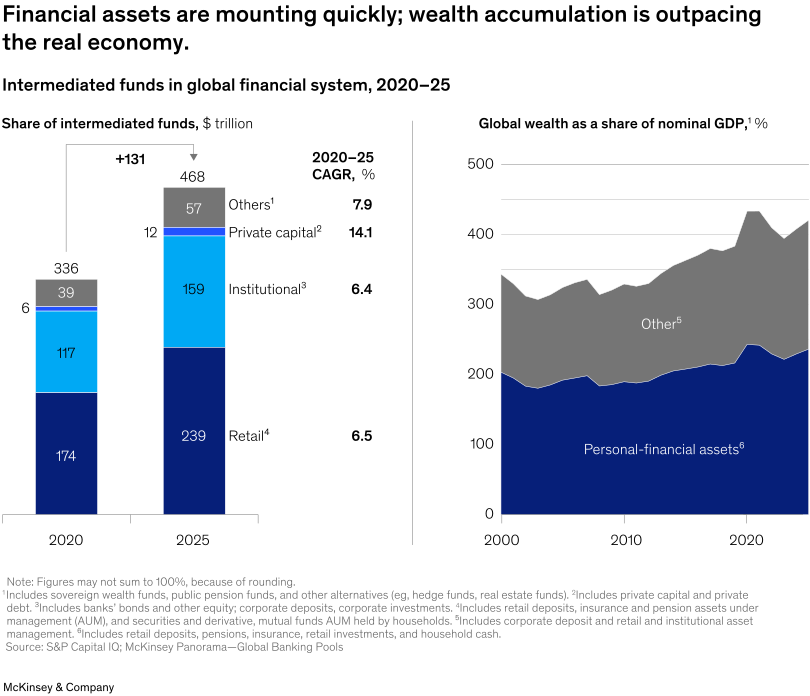
Banking revenues are closely linked to wealth accumulation, and wealth has long been growing faster than GDP (Exhibit 1). From 2020 to 2025, funds intermediated by the financial system (including banks and others) expanded by $131 trillion, reaching $468 trillion in 2025. While all categories grew faster than nominal GDP, private capital’s share took flight, growing 14.1 percent annually. Still, private capital is a small slice of the system, and retail banking remains by far the most important home of accumulated wealth worldwide.
As more capital flowed through the system, banking revenues and profits rose. Balances held by banks (deposits, loans, and assets under management) rose from $381 trillion in 2024 to $406 trillion in 2025. Revenues before risk costs rose from $6.1 trillion in 2024 to $6.4 trillion in 2025. Profits spiked 7 percent year-on-year, to $1.3 trillion.
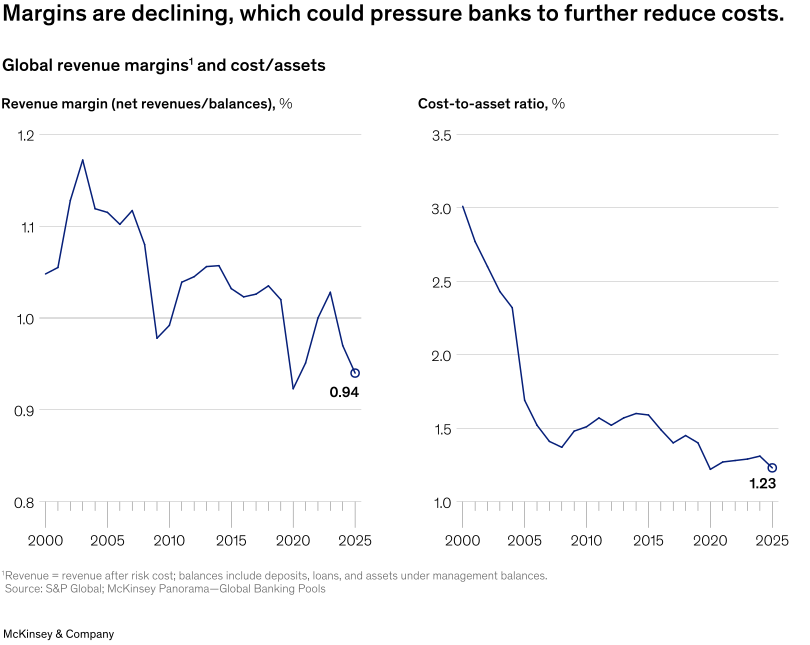
Margins remained consistent. By our measure,2 revenue margins declined slightly from 0.97 in 2024 to 0.94 in 2025 (Exhibit 2). Costs also improved, dropping from 1.31 percent of assets in 2024 to 1.23 percent in 2025. While both stories are positive, it remains the case that revenue margins are still well below the highs achieved in the early 2000s.
Viewed another way, banks’ economics are changing, and not necessarily for the better. The global financial system now holds $468 trillion. Since 2022, the portion of on-balance sheet has shrunk, from 44 percent in 2022 to 40 percent in 2025. This reveals a shift in the way banks earn their keep. As the balance sheet becomes less important, revenues and profits from transaction banking and distribution have leapt in prominence. We estimate that those two categories now account for 47 percent of revenues and 57 percent of profits. The balance sheet remains vital, of course, but accounts for 53 percent of revenues and 43 percent of profits. These areas have far more competition and faster disruption from new business models.
New landscape, new macro strategy
As shifting geopolitical dynamics have roiled the world, McKinsey research has documented some of the biggest changes in the global economy: the new composition of trade, the great trade rearrangement and its effects on business, and the implications for manufacturing footprints, among others.
In all this, where is banking? One way to answer this is to follow the money. A critical feature in the world’s growing wealth has been faster growth in the United States, which has long been the world’s wealthiest. Canadian wealth also expanded sharply. From this large base, North American intermediated funds grew 8 percent from 2022 to 2025, largely because of dramatic inflows to US asset managers. European wealth grew at half that rate. Latin America is something of a puzzle: Growth there was fast, but slower than GDP growth. (We discuss these and other regional variations below.)
A proportionally larger share of flows into North America, despite a lower gross savings rate (18 percent in the United States versus 25 percent in the European Union)3 is made possible, of course, by investors’ trust in the relative stability of the US financial system compared with its peers. Policy changes and a growing national deficit are denting that confidence. But it remains intact for now, even amid regulatory flux around AI and the potential for further consolidation. The United States remains a favored destination for wealth.
A greater share of wealth management revenues benefited the US banking industry (and other financial institutions), lifting ROEs to 12 percent. European banks also improved, from 10.7 percent in 2024 to 11.6 percent in 2025—but this was mainly the result of operational performance improvement. Western European banks’ share prices recovered sharply in 2025, after years in the doldrums. Total shareholder returns surged 62.9 bps in 2025.
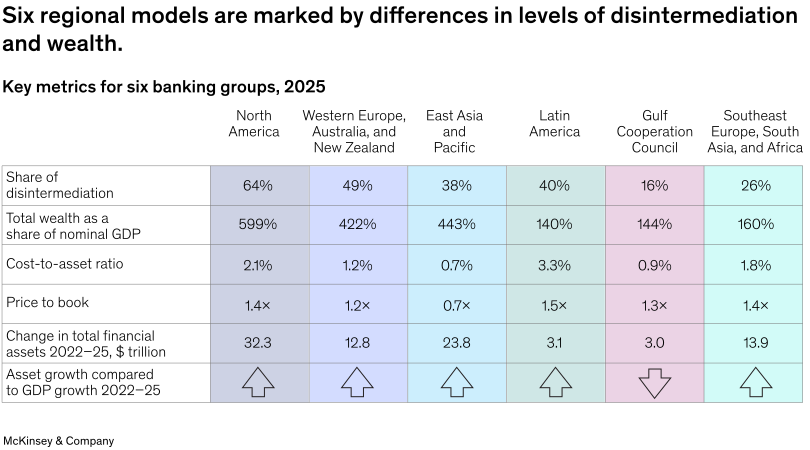
But divergence in performance has deeper roots. We analyzed banks worldwide by the degree to which they have shucked off the balance sheet and moved into fee-based services, and by their efficiency, which we call disintermediation (Exhibit 3). We’re seeing an alignment by business model that reflects traditional regional affinities but also see banks in some countries behaving most like peers thousands of miles away, pointing toward the emergence of a new world map of banking.
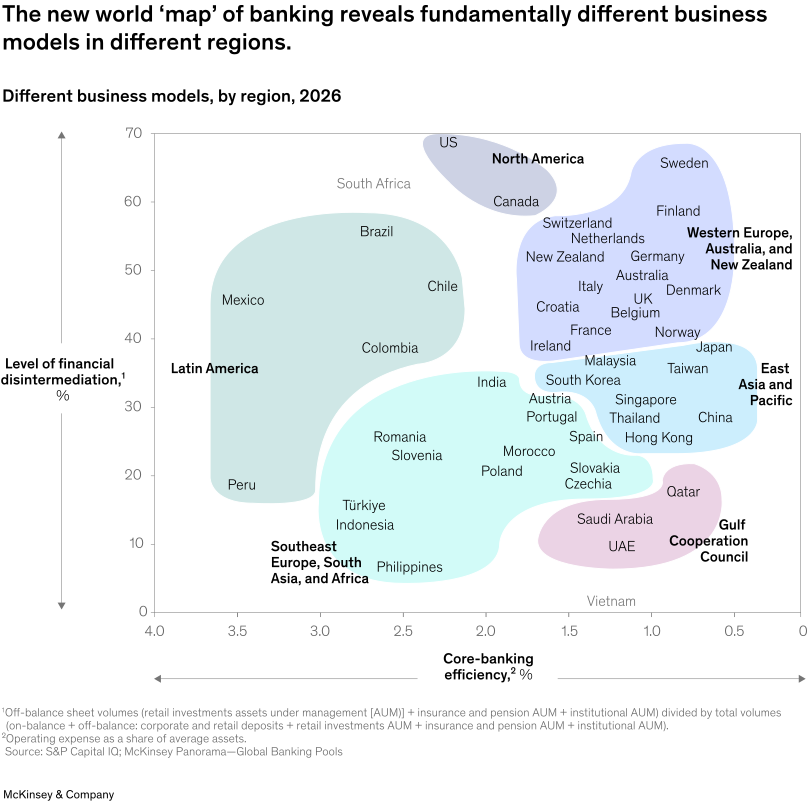
The North American financial system has historically been more disintermediated than others, a result of efficient capital markets and banks’ preference for corporate bonds rather than loans on their balance sheets. Gulf Cooperation Council banks are among the most reliant on the balance sheet, but they counter that with strong cost efficiency. Northwest Europe, Australia, and New Zealand banks, which nearly match US peers on independence from the balance sheet, are broadly more efficient. Sweden and Finland represent the best of both worlds, showing a potential way forward for a highly robust and low-transaction-cost intermediary system for the rest of the world. In other parts of Europe, banks rely more on the balance sheet, and costs are broadly higher.
What accounts for the stark differences among regions and the business models each has developed? Exhibits 4 and 5 lay out the key distinctions, and the sidebar “Regional models” explains the dynamics.
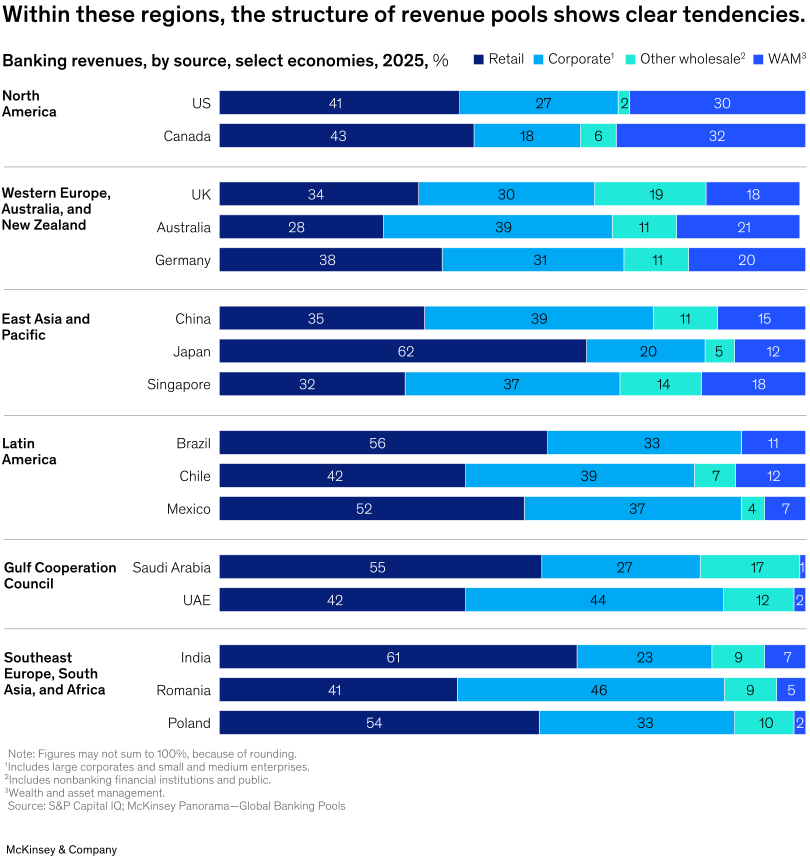
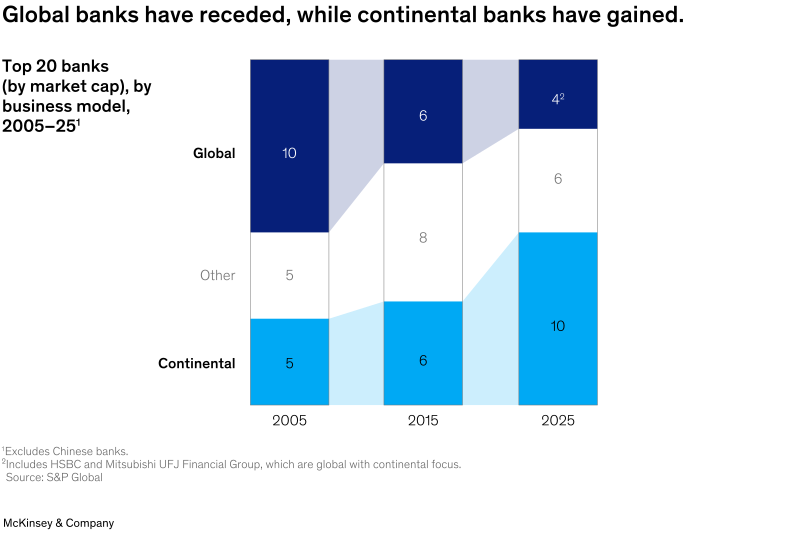
This geographic divergence of business models helps explain why global banking did not fully take hold. As the banking model has standardized, or nearly so, within each group, the global universal bank has evolved. Over the past decade, major institutions such as HSBC (reduced its presence in several markets) and Citi (selling its consumer businesses in 13 Asian and European, Middle Eastern, and African markets), among others, have retreated from global retail footprints to refocus on priority regions.
This trend is also reflected in the market structure: In 2005, ten of the world’s largest 20 banks by market capitalization were global universals (Exhibit 6). In 2015, that number was down to six, and in 2025, it was four. Instead, the top of the league table is now made up mostly of banks that focus on their home country or those nearby.
We see a new pattern emerging—“continental” or transnational banking with digital platforms and new playbooks. Traditional players and new attackers (Revolut, Nubank) are building scale across regions, with some pursuing even greater platform-driven advantages. DBS, for example, expanded from its Singapore presence with the aim of establishing a pan-Asian network, while Hungary’s OTP Bank is growing fast with its Eastern European and Central Asia expansion model. And BBVA is evolving into a multicountry group embracing Spain, Mexico, South America, and Turkey. Wholesale is the one business line that remains consistently global. But it accounts for only about 11 percent of industry revenues.
In short, banks are focusing their efforts geographically—one of the precision strategies we detailed in the 2025 Global Banking Annual Review. While welcome, refocusing the business mix is not sufficient; banks today face an even deeper challenge.
Customer primacy at a tipping point
In the past 20 years, many analysts and banking leaders have predicted that some disruption or other would eventually loosen the grip of banks on their customers. Amid the 2008 global financial crisis, some foresaw that government backstops would result in less risk-taking by banks, pushing them into a utility role. In the 2010s, the explosive growth of technology platform companies had many envisioning a disintermediated future for banks. In the first wave of fintechs, analysts (including us) expected that, absent aggressive action, many banks would retreat into the background and become mere providers of balance sheet to fintechs and their newly captured customers. More recently, the value of bank brands has eroded, prompting yet another wave of discussion about the flight of the customer.
As with most things in banking, these developments took a lot more time than expected in this highly regulated and careful industry, and only in 2025 did they reach the tipping point that many forecasted. Banks’ hold on the customer relationship is not easily displaced. Critically, the earliest banking relationships were founded on trust. (The word “credit” first appeared in the 16th century and comes from the Latin creditum—something entrusted to another.) To this day, trust in banks endures and underpins every banking relationship. Other factors also bind the customer to their bank. Banking relationships are complex webs and famously “sticky”; customers have to make a concerted effort to switch, and even when they overcome their inertia, the switch takes time. The relationship works well for most customers and also for banks, for whom most revenues come from stocks of assets and liabilities, not new business. Banks derive most retail revenues from older customers, who are less likely to switch; and from long-standing relationships with business customers.
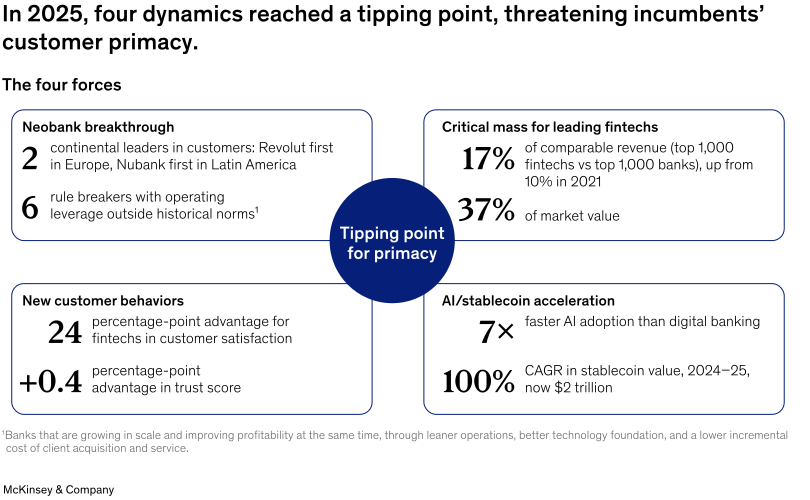
Today, changes across four dimensions are once again raising the question of the durability of the customer relationship (Exhibit 7).
Fintechs are evolving and maturing
Banks have reached an anxious compromise with fintechs. Hundreds of fintechs have washed out, and banks have acquired hundreds more—and built their own digital capabilities to emulate the best of what fintechs have to offer. The takeover that some foresaw never happened: In 2025, fintech revenues reached $650 billion, a small portion of the banking industry’s $7.3 trillion.
However, as our colleagues recently reported, the fintech industry is maturing, and the best are both growing quickly and recording healthy profits. Capital has begun to flow again into the industry, rebounding by some 40 percent since 2023. Much of this is going to established firms that are reaching scale, which are using the investment to attack some of banking’s most valuable profit pools. Payments is most prominent, but wealth management, capital markets, and lending are also coming into focus.
Fintech’s gains come into sharper focus if we consider the true competitors: the world’s 1,000 largest banks and 1,000 largest fintechs, by valuation. The “millenniad” of top banks generated $3.8 trillion in revenues, and the fintech millenniad $625 billion. These fintechs’ revenues grew by 22 percent from 2021 to 2025, compared with 5 percent for banks, and fintechs’ share of their joint revenue rose from 10 to 17 percent. Investors have noticed: The top 1,000 fintechs make up about 37 percent of the banking millenniad’s market capitalization, far ahead of their revenue share.
Fintechs are set on further expansion. Several have reversed their strategy and are now actively pursuing banking licenses: 21 applications were filed in the United States in 2025 (versus one in 2024 and five in 2023); about 38 percent were accepted, and approval times are about 40 percent faster than usual. This reflects a structural shift as fintechs scale—they are expanding their product portfolio, lowering funding costs, and strengthening their resilience.
The competition from fintechs and nonbanks in wholesale banking is especially fierce; many have reached scale. Some trading firms have revenues as large as the biggest investment banks. In lending, private credit firms have built substantial businesses. These firms operate under different regulation, but their critical difference is leaner operations. In wealth management, fintechs have made similar inroads.
Neobanks are breaking out
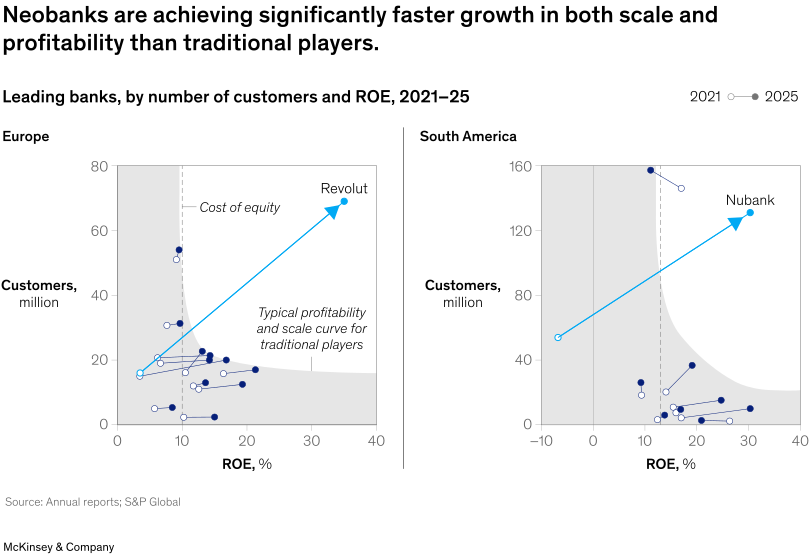
The story is similar for neobanks: digital-only banks offering traditional banking services, leading-edge digital customer experience, and “beyond banking” services complementing the core offering. Leading neobanks are reaching scale at a rate that nobody but their investors and founders thought possible. Revolut now has 69 million retail and corporate customers and is the 11th-most-valuable bank in Europe as of December 2025. Nubank’s customers number 131 million, and it is the most valuable bank in Latin America. For China’s WeBank, the figures are 420 million customers and 11th place in market value among the nation’s (gigantic) banks. Many others are nipping at their heels: SoFi and Robinhood in the United States, Macquarie Bank in Australia, Wealthsimple in Canada, and Wise and Trade Republic in Europe.
This is not the old story of “growth at any cost.” ROEs at these firms are higher than at most incumbents. Nubank’s is about 30 percent, while Revolut and Wise both clock in at about 35 percent; Robinhood is over 20 percent.
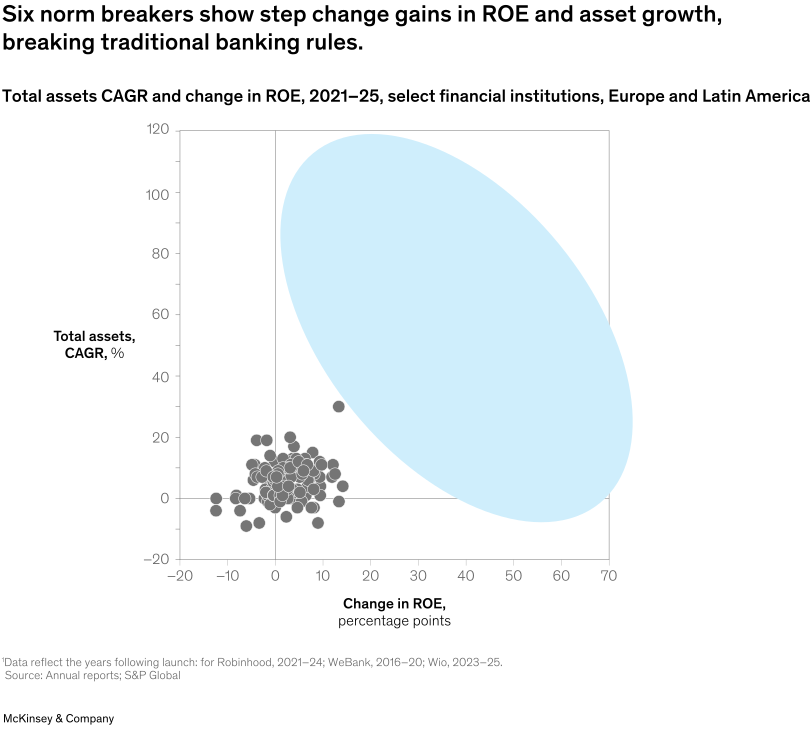
Strong growth and superior returns are supporting a breakout of neobanks (Exhibit 8). For many years, banks have aspired to reach an optimal position on the frontier of growth and performance. Revolut and Nubank have shattered that frontier, completely upending the traditional understanding of banks’ limits. These firms deploy a new talent model; with 12,000 and 10,000 employees, respectively, Revolut and Nubank are much leaner than their incumbent competitors.
These two neobanks, along with Robinhood, Webank, Wio, and Wise, have likewise broken through traditional barriers on growth and profitability (Exhibit 9).
As they’ve grown, neobanks have developed a full suite of banking products and services. Nubank started with credit cards in 2014, and now offers current and savings accounts, debit cards, money transfer, and services for businesses. Revolut’s expansion has been similarly meteoric. In 2015, the company hung its digital shingle, offering three niche services: prepaid cards, foreign exchange, and spending analytics. Today, it offers about 50 products, including capital markets, commodities, and crypto trading; personal loans; a range of credit cards; and a suite of services for small and medium-size businesses. Private banking, mortgages, and corporate lending are on the way. Neobanks succeed by virtue of a stronger technology foundation and lower incremental cost of client acquisition and service.
Technology: AI and stablecoins are dissolving stickiness
Agentic AI—technology that can perform tasks and solve issues largely on its own—is rewriting the rules of digital commerce, and banking is squarely in focus. Consider deposits, which have long powered profitability. Globally, net interest income accounts for roughly 60 percent of retail-bank revenue. Most consumers don’t notice the interest rate they’re receiving, or they lack the time, tools, and incentive to optimize interest returns on their deposits. They instead focus on the convenience of a single low-maintenance banking hub that waives fees and integrates ATMs, bill payments, and wealth portals.
Agentic AI systems flip that logic. They can monitor balances in real time, compare returns across institutions, sweep idle cash into higher-yield accounts, and then sweep cash back to a checking account in time for bills. That allows more of the spreads once captured by banks to go to account holders.
Other banking businesses are similarly vulnerable to agentic intervention. Agents can help consumers shift credit-card balances, exploit sign-up offers, and cash in loyalty points. Agents like Hazel AI make tax planning simple for consumers and might provide an entry point into wealth management and advisory (though as our colleagues argue, that’s far from settled yet). In payments, PayPal’s agentic wallet is now available to consumers; it serves as a personal finance copilot to surface offers, route spending, and manage transactions. Consumer lending and other banking businesses could also lose customers to agent-powered fintechs.
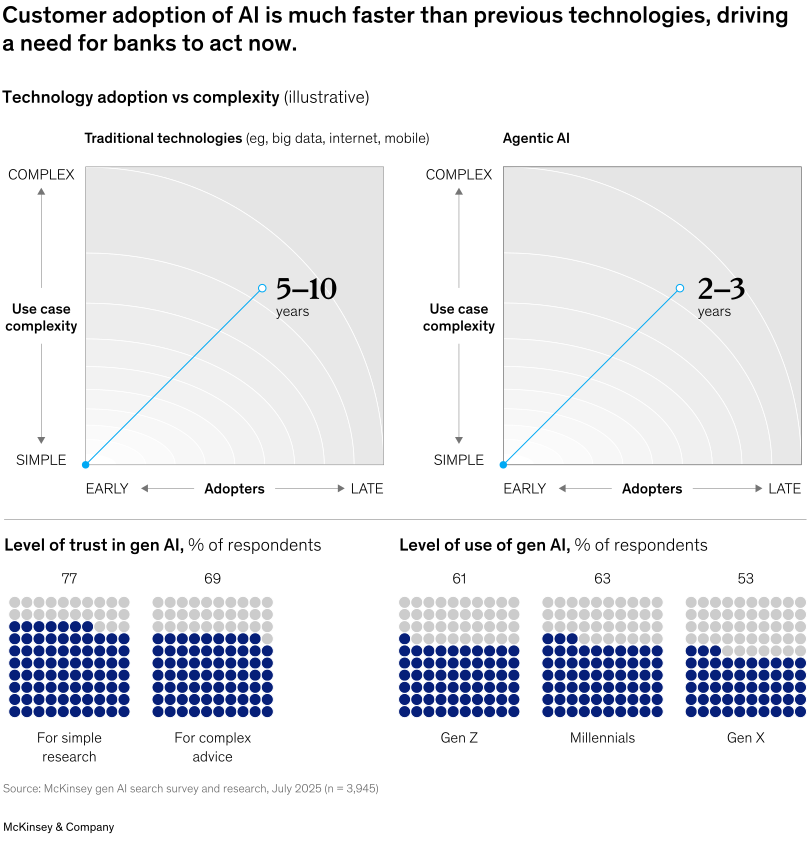
Bankers like to say, “It’s not the speed that kills, it’s the sudden stop.” We might have to rewrite that adage for AI. Adoption of generative AI is the fastest of any technology in recent memory and is not slowing down. By one measure, it took just two years for 45 percent of the US working-age population to adopt gen AI. Digital banking needed 15 years to accomplish the feat.4 This time, speed might kill—a point we discuss below.
Another technology, stablecoins, poses a similar threat to the customer relationship. Stablecoins are solidly in the hype cycle, with forecasts of $4 trillion in adoption by 2030 and high-profile unicorn valuations for independent issuers.5 However, the headlines are running well ahead of the economic facts.
Global stablecoin circulation remains modest at roughly $300 billion.6 In 2025, this base supported only about $400 billion of real payment activity. While this represents meaningful progress, it is negligible relative to the volumes that define global money movement.
But momentum is shifting to stablecoins. They can make it cheaper and faster to send money across borders, which is particularly valuable for uses such as trade finance or remittances involving jurisdictions with less developed payments systems. As more bank customers adopt stablecoins for these kinds of payments, banks’ deposits will start to change, including the mix of deposit types and depositors. Fiat deposits could shift into stablecoin reserves. And as the use of stablecoins grows, businesses may not need to hold cash buffers (for cross-border payments, operations, and so on). Stablecoins offer near-instant programmable settlement, letting retail customers and businesses shift deposits to higher-return accounts or investments. Stablecoins could materially degrade banks’ sources of strength in coming years.
Customer behavior is shifting quickly
Banking relies on older customers for an outsize share of revenues and profits. That’s becoming a problem, as younger customers are revealing quite different preferences for how they want to bank. These customers are more highly engaged and expect services that put the customer at the center. They value innovation and prize responsiveness. All are qualities that traditional banks have sometimes struggled to provide. To make sure their needs are met, younger customers are much more willing to change to nonbanks. In a recent survey,7 65 percent of Gen Z respondents would be willing to try an e-wallet provider, versus 30 percent of boomers. The same pattern of greater willingness extends to online retailers (50 percent versus 20 percent), large retail chains (50 percent versus 10 percent) and large tech companies (50 percent versus 5 percent).
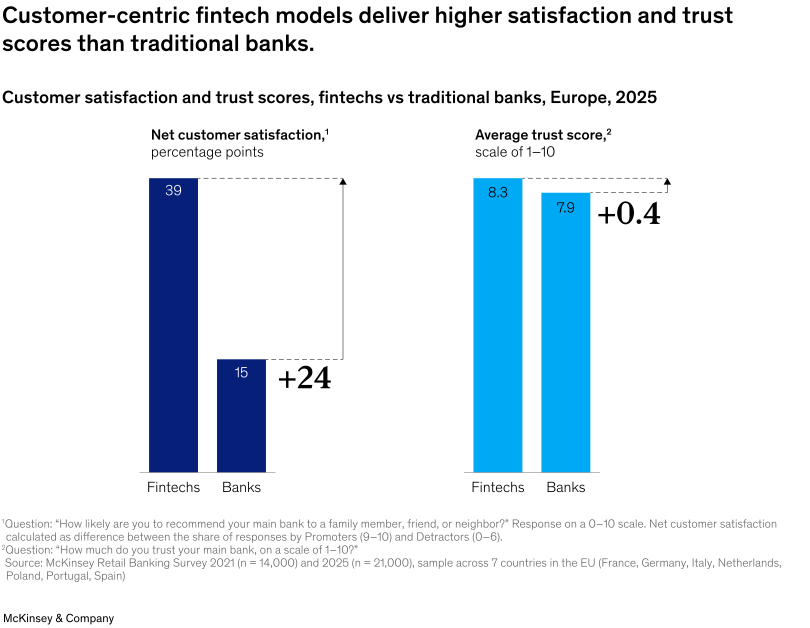
Perhaps the starkest view of customers’ shifting allegiance is shown in Exhibit 10. Not only are fintechs and neobanks delivering greater satisfaction, they are also now leading on trust, the long-time privilege of traditional, high-street banks.
No grace period this time
As a risk-averse, highly regulated industry, banking has always been among the slowest to adopt new technologies. In this century, many industries were quick to embrace the seismic implications of the internet and the smartphone, seeing the ease of use they offered customers and the chance (or, for some, the necessity) to reinvent their business to keep up with their customers’ expectations. Early peer-to-peer file-sharing companies pioneered the digital distribution of recorded music. Apple’s iTunes, Spotify, and other music streamers emerged, and within a few years, the industry’s dominant unit of sales was streams, not CDs. Film and television experienced similarly momentous changes in their business model, and in how end users consume their products. In retail, e-commerce grew from 5 percent of sales in 2010 to about 20 percent in 2023, remaking the landscape of high streets and malls.8
But banking lagged far behind. In 2013, as smartphone adoption reached 56 percent in the United States, most users were streaming and shopping. But only half were banking by phone, and very few of those were buying banking services by phone. As adoption slowly rose, instead of fully reinventing the business model, banks offered internet and mobile banking as additional options. Legacy channels persisted; branch networks shrunk, but by only 20 to 30 percent. Customers stayed wedded to the branch for many core journeys, especially high-value interactions. In part, that’s due to the nature of the transaction: Taking out a $500,000 mortgage is different from buying $50 of groceries. But it’s also due to inertia among banks.
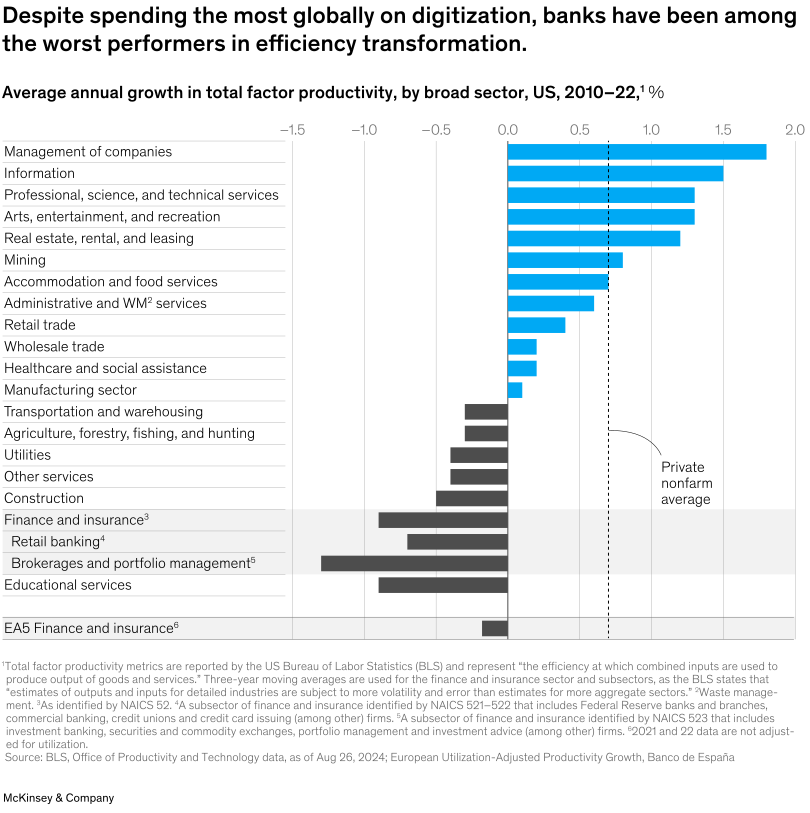
Delaying a revamp of the business model has had serious implications for costs. In music, customers paid the costs to replace their records with CDs; to replace their CD players with smartphones; and to subscribe to streaming services. In banking, banks paid the costs to add call centers, online banking, mobile apps, and now chat and other AI services to the core branch network. Their customers captured the surplus created by technological innovation. Where other industries reinvented themselves, leaping to the next S-curve of innovation and economics, banks built complex operating models. This has been a factor in banks’ lagging productivity despite spending more on technology than the next four sectors combined (Exhibit 11).
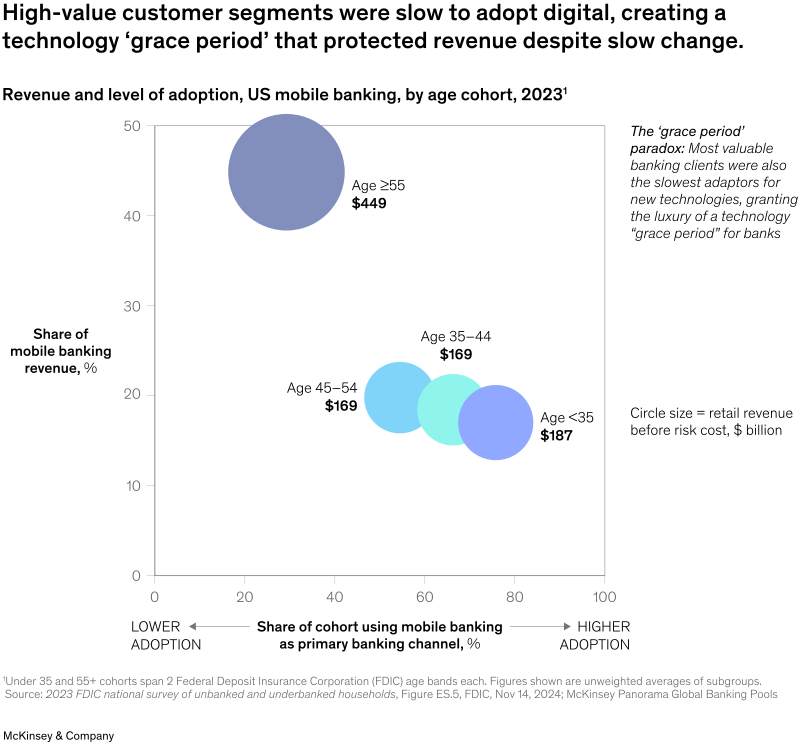
This drag on productivity was not fatal, of course. The traditional banking strategy for new technologies, call it “smart followership,” worked reasonably well, for one reason. Banks’ high-value customer segments (aged 55 and up) were also slow to adopt digital, preserving core revenue pools and allowing banks to maintain their market share (Exhibit 12). The result was a grace period for banks that allowed them and their customers to ease into new technologies together.
Customers’ rapid AI adoption across age groups signals that this time there will be no grace period for banks (Exhibit 13). ChatGPT launched in November 2022; by 2024, fully 45 percent of US working-age adults were using gen AI, rising to 55 percent by 2025. The usual generational gaps are not as prominent as in the past; the gap in usage between young people and older adopters is small. Moreover, people are also entrusting the technology with vastly more complex tasks—which was both not technologically possible with other technologies, and, because of the earlier tech’s limitations, was beyond the limits of trust for consumers.
In banking, customers are already using gen AI and agentic AI for a myriad of tasks. Claude is outperforming professional stock pickers. Customers are finding and switching to higher-yield savings accounts; refinancing or consolidating debt to lower-cost options; paying down credit card balances more efficiently; comparing and selecting the best financial products; getting instant, low-cost financial advice; and much more.
Precision at speed
Over the past year, the global banking sector has delivered record financial performance. Top- and bottom-line results were better than ever. Yet beneath these headline figures, structural challenges are percolating. Customer primacy is increasingly at risk, and the pace of technological change—particularly driven by AI—is accelerating beyond what most banks are equipped to handle.
The battle for primacy and acceleration from AI won’t allow banks to go slow. The solution for banks is to find the future business model that ensures truly differentiated customer ownership (including hyperpersonalized distribution and a distinctive beyond-banking value proposition) and maintain operating leverage with close to zero additional cost of acquisition and serving. To get there, banks will need to transform into a network of platforms to achieve resilience, precision, and speed.
Last year, we argued for a shift toward resilience and precision—a more targeted, data-driven approach to technology development, customer segmentation, capital allocation, and M&A. We stand by those insights. In an increasingly complex and competitive landscape, banks cannot rely on broad, undifferentiated strategies. They must be sharper, more selective, and more deliberate in where and how they compete.
However, resilience and precision alone are no longer sufficient. Today’s environment demands an equally critical capability: speed. This is not a marginal adjustment; it represents a fundamental shift in how banks operate.
Tortoises become hares
For decades, banks have succeeded not by being fast, but by being thoughtful, disciplined, and risk-aware. Slowness, in many cases, was not a bug—it was a feature of a system designed for resilience, regulatory compliance, and capital efficiency. Speed was never the primary goal. Many of the processes, governance structures, and cultural norms that define banking today are optimized for control and stability, not rapid iteration. Historically, banks could afford this trade-off. They benefited from a degree of structural protection—a long on-ramp in which slower execution did not immediately produce competitive disadvantage.
Banks must now achieve what was previously considered a contradiction in terms: maintaining risk discipline and resilience, while operating at significantly higher speed, on four dimensions:
- Customer strategy and segmentation. Precision must evolve from static segmentation to dynamic, real-time, hyperpersonalized engagement. Banks need to run continuous microcampaigns, rapidly test and iterate propositions, and scale what works—and stop what doesn’t—quickly. This requires building a high-velocity commercial engine, not just a better targeting model. A full customer value management engine includes decisioning models working on all relevant customer data, an always-on marketing technology platform to analyze campaigns, and a clear operating model. Leading banks are lifting customer engagement by 20 to 30 percentage points and customer value by 10 to 25 percent.
- Technology and AI execution. These are domains where success rates are inherently low, outcomes are uncertain, and learning comes through experimentation. As a result, banks must aspire to scalability at incremental cost, moving away from traditional, linear delivery models—where every initiative is expected to succeed—and toward a fail-fast, portfolio-based approach. Speed here is not just about execution—it is about learning faster than competitors and the constant reinvention of core banking systems toward leaner, more modular models, while not replicating the highly expensive full-scale changes of the past.
- Capital allocation and business model evolution. Capital allocation is becoming a key driver of performance as ROE gaps continue to widen among products and geographies, reflecting regulatory, macro, and business model shifts. Geopolitics, evolving regulation, and agentic AI will continue the trend redrawing the “world map” of capital efficiency. Banks must rethink capital allocation, actively reshaping portfolios toward structurally advantaged segments. Banks will need differentiated strategies by archetype, combining portfolio rebalancing with business model reinvention. Over time, optimization alone is insufficient—unlocking capital efficiency requires shifting toward more fee income and beyond-banking revenue. Expanding into adjacent or nonbanking propositions requires a fundamentally different approach—one that is experimental, partnership-driven, and iterative.
- Smarter scaling for capabilities and new regional expansions. Speed must also extend to how banks engage externally and how they achieve inorganic growth of capabilities and smart scaling. Winning institutions will maintain large, active pipelines of acquisitions, fintech partnerships, and investments; rapidly evaluate and onboard new capabilities; and operate with significantly higher throughput across deals and collaborations. M&A is shifting from scale to precision—focused on plugging discrete capability gaps (for example, AI, data, or specific customer segments) rather than pursuing size for its own sake. This is a shift from episodic partnerships to continuous ecosystem orchestration. Institutions will also need to evaluate their international expansion plans to focus on smart scaling where business model similarities provide competitive advantage. Leading banks complement this with programmatic, capability-led dealmaking and disciplined integration to capture value quickly—avoiding large, unfocused transactions that dilute strategic focus.
In our forthcoming report, we will look more closely at two of these topics: tech execution and capital allocation.
Multispeed banking: Fast, faster, fastest
Precision at speed is a tall order. It must be done without abandoning the core principles of banking: Risk management, resilience, and control remain essential. Moreover, banks face an extra challenge: Their innovation landscape is especially biased toward high-risk, early-stage ideas (Exhibit 14).
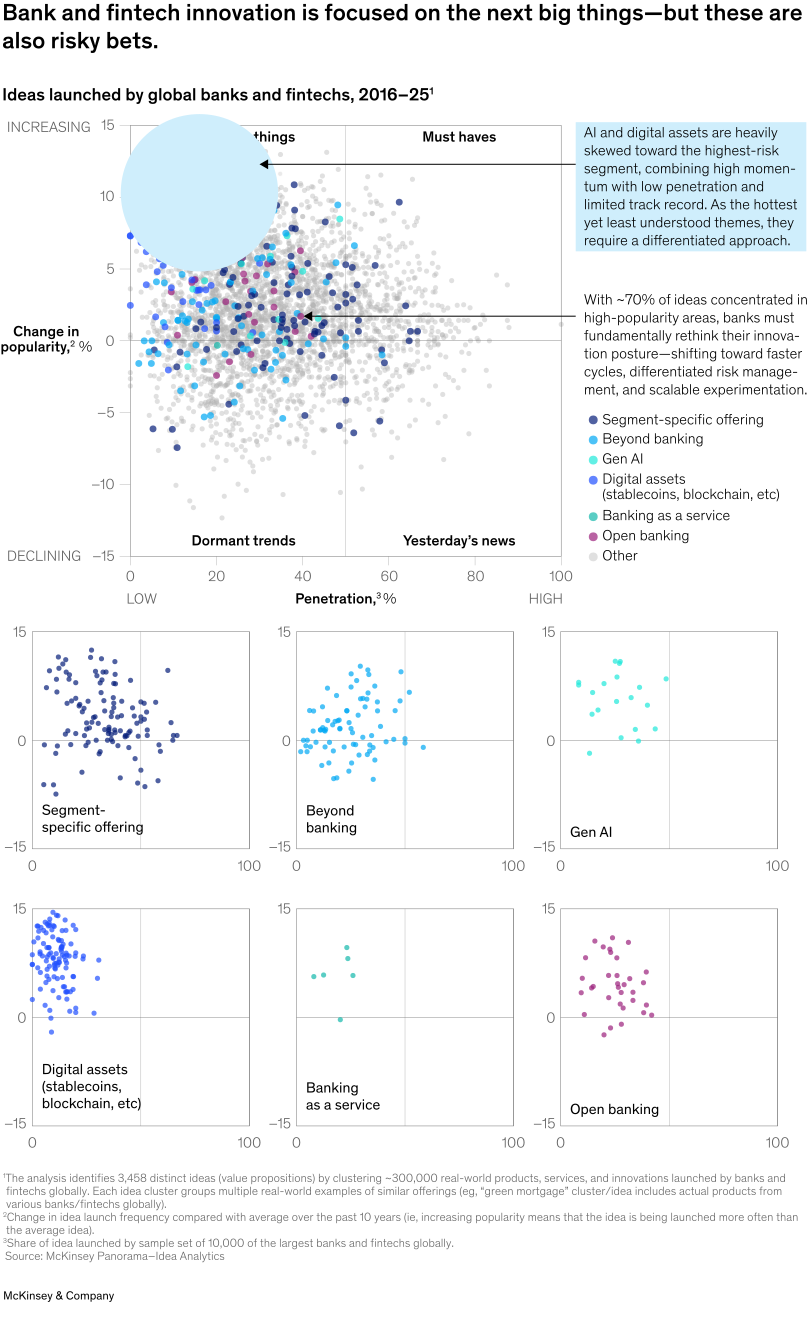
Banks and fintechs are putting most of their innovation effort into the “next big things,” especially AI and digital assets (blockchain, tokenization, and so on). It’s an aggressive, risk-taking, and forward-leaning posture toward a subset of innovation. But at the same time banks also have to be extremely careful and resilient. Meeting both goals simply cannot be done with a single operating model running at one speed. Banks must manage innovations to the core with care and control, while another part of their portfolio will need to be managed at the business equivalent of the speed of light.
Uniform acceleration to light speed across all functions is not a realistic expectation. Instead, banks should consider a three-speed organization for technology development and innovation (Exhibit 15). Most banks currently operate at what we call “fast—business as usual” speed, focusing on familiar, incremental use cases embedded in the core, with proven ROI and scaled across the organization. These are delivered through agile pods and rapid-cycle prototyping, enabling continuous improvement in areas such as core modernization, end-to-end customer journey optimization, omnichannel servicing, and agentic operations. These projects deliver high success rates of 90 percent or more. Apart from innovation, this speed has implications for business as usual: Banks can fundamentally rethink their staffing needs for the AI age.
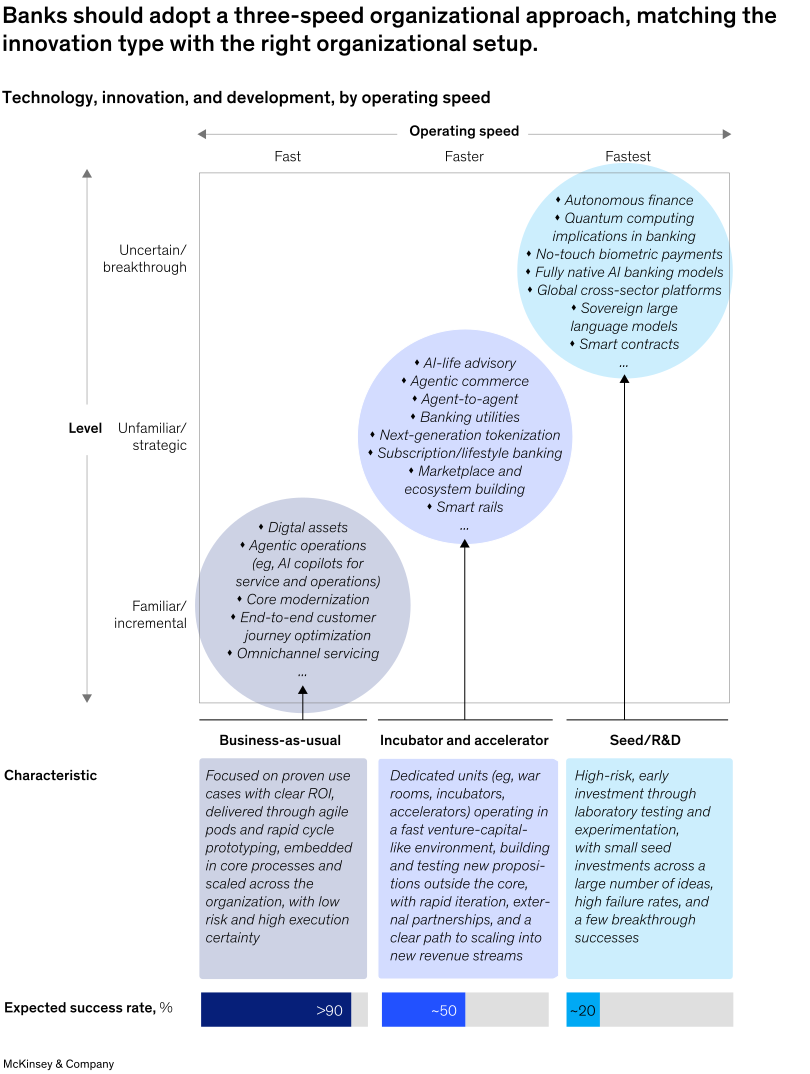
Beyond the core, a second speed, “faster—incubator and accelerator,” governs the work done by dedicated units (such as war rooms, incubators, and accelerators), operating in a fast venture-capital-like environment, building and testing new propositions outside the core. With rapid iteration, external partnerships, and a clear path to reach scale, these efforts focus on more strategic innovations such as embedded finance and banking utilities, marketplace and ecosystem platforms, AI-enabled advisory, agentic commerce, smart payment routing, and digital assets and tokenization. These have moderate success rates (about 50 percent).
At the frontier, “fastest—seed/R&D” involves high-risk, early investment through laboratory testing and experimentation, with small seed investments across a broad portfolio of ideas. These include breakthrough innovations such as autonomous finance (end-to-end automation of financial decisions), sovereign LLMs, next-generation AI-enabled banking models, smart contracts, biometric payments, and quantum computing applications. Few of these innovations (20 percent or so) will succeed, and most of those will not scale. But a few breakthrough successes can reshape the bank.
We do not suggest that banks need to operate fully at the speed of technology businesses. Banks are subject to different regulations and must carefully manage a broader range of risks. We do suggest, however, that banks can accelerate their baseline, business-as-usual speed to move faster while continuing to observe their current risk and compliance obligations. They can move even faster to incubate new noncore technologies and letting the laggards fail fast. And they can go even faster—at true tech speed—to seed “sandbox” innovation outside the regulatory moat around core production. Some banks already have a three-speed setup, but even these banks could stand to clarify their roles, incentives, and governance to increase the intensity of innovation output.
Operating at higher speed also requires a cultural shift, beyond adjusting the organizational setup. It brings higher failure rates, greater uncertainty, and new performance expectations. Banks must adapt incentives, risk tolerance, and leadership expectations accordingly, something they can emulate from inspirational examples in other sectors.
Done well, banks will be able to layer always-elusive agility onto their traditional stability and achieve the required pace to stay relevant amid technology shifts and the war for customer primacy.
Building the multispeed bank won’t be easy, but this is a historic opportunity—even for the most traditional banks and smaller players. While banks were slow in digital and paid a price, AI is hurtling forward and taking no prisoners. Both AI and digital assets offer the opportunity to leapfrog the competition, to not just protect current revenue pools but also attack broader ecosystems, truly rewarding those that master velocity.
More about McKinsey Panorama and Banking Pools
McKinsey Panorama equips financial institutions with data and insights to help them define strategies and accelerate innovation. Panorama offers granular intelligence on banking market sizing, customer segmentation, and innovations through a model designed around client needs. Panorama’s core offerings include Banking Pools and Idea Analytics.
Banking Pools, the database underpinning the analysis in this report, provides granular insights into banking value pools across markets, customer segments, and individual players. Covering more than 70 products and segments across 100-plus countries, it allows for consistent, product-level comparisons across geographies, as well as deeper insight into customer behavior and preferences. It also supports tailored diagnostics for banks in specific contexts.
In practice, Banking Pools is used to quantify market size, develop customized projections, and stress test long-term strategies. It can also inform product origination, support decisions on international expansion or retrenchment, and provide a benchmark against market performance to help optimize portfolios.