In the first few months of 2026, dairy processors across the United States and Europe find themselves operating in a challenging environment—one defined by persistent cost inflation, labor constraints, input volatility, and rising uncertainty around trade and regulation, particularly in Europe. At the same time, supply-side risks are increasing as producers contend with animal health issues (such as highly pathogenic avian influenza, New World screwworm, and bluetongue), alongside climate-related disruption and structural constraints on milk supply growth in several European markets.
Yet core demand remains resilient. Consumers continue to prioritize dairy as a primary source of nutrition, sustaining growth in key categories even amid a more cautious macroeconomic backdrop. For executives, these crosscurrents translate into a clear imperative: protect margins and execution in the near term, while investing selectively behind durable growth themes—most notably, protein-led innovation.
These are among the findings of McKinsey’s eighth annual US dairy survey, complemented this year by expanded interviews and survey data from European dairy executives (see sidebar, “About the research”). Our research reveals industry leaders’ top priorities and concerns. It also highlights emerging trends, including a more pragmatic stance on sustainability and a deliberate approach to digital and AI adoption.
What are dairy executives’ top priorities?
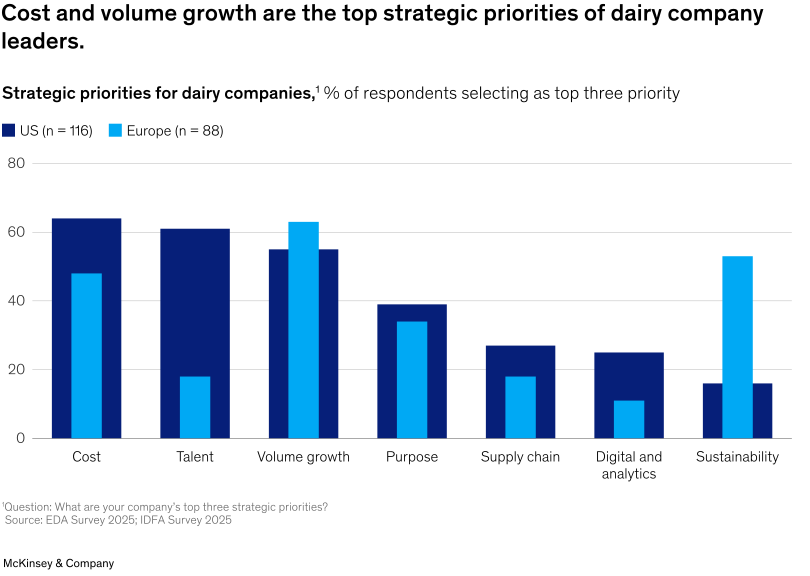
In both Europe and the United States, cost management and volume growth are among the top strategic priorities (Exhibit 1). US dairy executives’ priorities are broadly similar to last year. Talent is high on US leaders’ agendas but less of a priority in Europe. Sustainability, on the other hand, remains a top priority in Europe but not in the United States.
Cost and margin discipline
Across regions, cost inflation and commodity price volatility continue to compress margins and shape value chain decisions. Approximately 65 percent of US respondents rank cost management among their top three priorities—consistent with 2024 (69 percent) and up from 2023 (48 percent)—reflecting sustained cost increases in raw materials and logistics. European leaders report similar pressure, with roughly half placing cost among their top three priorities.
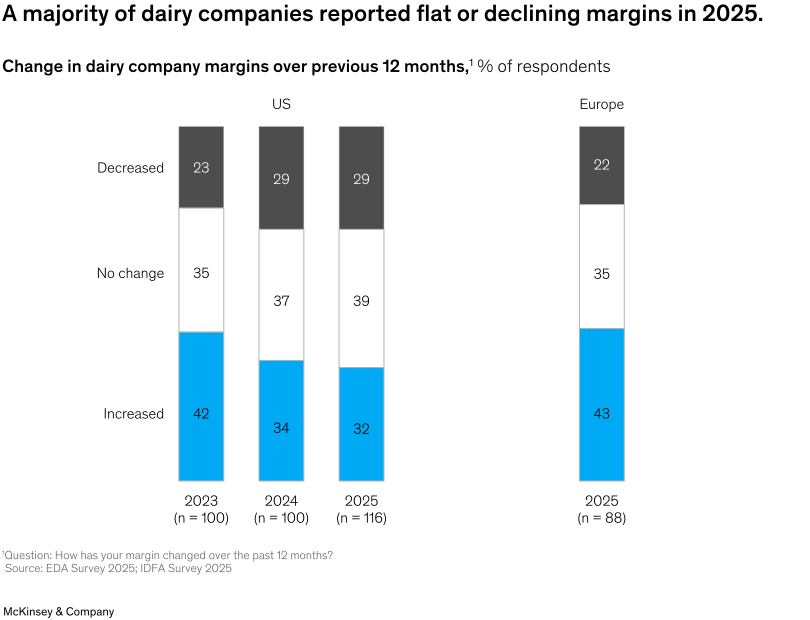
These cost pressures are evident in margin outcomes. In the United States, nearly 70 percent of surveyed dairy companies reported flat or shrinking margins in 2025, up from 66 percent in 2024 and 58 percent in 2023. Europe shows a comparable dynamic, with 57 percent reporting flat or shrinking margins in 2025 (Exhibit 2).
How are dairy processors responding to market pressures? Nearly 40 percent of US respondents report making strategic or operational changes—most commonly, switching suppliers (61 percent) and rationalizing SKUs (52 percent). In Europe, a larger share of leaders (66 percent) report taking action, with the most common moves being portfolio rationalization (52 percent) and changes in the geographic distribution of products (48 percent).
The high costs of raw materials and logistics have squeezed our margins, forcing us to look for efficiencies in other areas of the business.
Despite these headwinds, executives expect stabilization in the near term. Optimism is stronger in the United States, where 95 percent of respondents expect margins to increase, compared with 76 percent in Europe. US consumer purchasing trends support that outlook: Retail milk sales rose nearly 5 percent in value in the 12 months ending August 2025, and total refrigerated dairy sales increased 15 percent in value over the three years ending 2024.1
Revenue and volume growth
In both markets, revenue and volume growth remain top strategic priorities. Approximately 55 percent of US dairy processors rank volume growth among their top priorities, consistent with 2024 and up from 2023 (48 percent). Volume growth expectations are reflected in the $11 billion that US processors are investing in new dairy manufacturing capacity.2
In Europe, 65 percent identify volume growth as a top priority. European leaders are more measured in their outlook than their US peers: Around 40 percent expect their volumes to remain flat or decline, compared with about 20 percent of US respondents, potentially reflecting heightened concerns around supply constraints and labor shortages.
Consumption is going very well within dairy. . . . I think we have a bright future, although production across Europe is unlikely to increase.
Revenue expectations are more aligned across regions: 87 percent of US respondents and 84 percent of European respondents anticipate revenue increases over the next three years. Consumer demand signals support this confidence. In the United States, 38 percent of consumers report actively prioritizing more dairy, and 70 percent plan to increase protein intake, with dairy products among the most preferred protein sources (41 percent for yogurt, cottage cheese, cheese; 38 percent for milk).3
Talent pipelines
Talent represents one of the sharpest points of divergence between regions. In the United States, 61 percent of respondents (down from 67 percent in 2024) cite talent as a top strategic priority. Leaders describe persistent challenges in labor availability and retention in manufacturing and processing, particularly in frontline, maintenance, and skilled roles.
Even with really competitive wage and benefit structures . . . we have serious challenges filling those positions and retaining our current workforce.
US executives note that the issue has evolved. Broad pandemic-era head count gaps have given way to targeted shortages of skilled labor, exacerbated by elevated retirement rates and thin succession pipelines for critical operational roles, such as plant managers and frontline leaders. In response, US producers are rebuilding labor pipelines through partnerships with community and technical colleges, expanded internship programs, and more intensive upskilling initiatives.
Ultimately, there are a lot fewer people coming out of school who want to run dairy plants, which puts us in a tough spot.
In Europe, by contrast, only 18 percent of respondents cite talent as a top strategic priority at the processor level—although labor shortages are a major concern when it comes to farm-level supply risk.
Sustainability initiatives
Sentiment on sustainability also diverges. In Europe, 53 percent of executives rank sustainability among their top three priorities, compared with only 16 percent in the United States (up slightly from 12 percent in 2024 but still well below 44 percent in 2023). Across both regions, the framing has shifted from broad environmental, social, and governance (ESG) narratives to an execution-oriented focus on regulatory compliance, emissions reduction, and operational efficiency.
We have changed some of our sustainability goals to narrow down our focus.
We’re trying to minimize waste. From a business standpoint, that’s a good motivator.
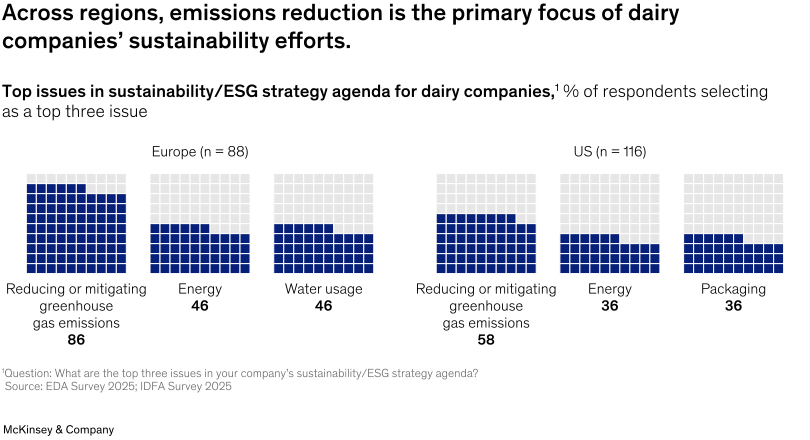
Other survey results further highlight the narrowing scope. Among European executives, 86 percent cite greenhouse gas reduction or mitigation as a top sustainability priority. In the United States, 58 percent do so (Exhibit 3). By contrast, fewer than 5 percent of respondents in both regions (down from 18 percent of US executives in 2024) rank diversity, equity, and inclusion among their top three ESG priorities.
There are also differences in what’s driving sustainability efforts in Europe and the United States. European executives primarily cite customer requirements (81 percent) and regulatory requirements (65 percent) as the main drivers. By contrast, the majority of US executives point to alignment with corporate culture or mission (83 percent), followed by customer requirements (64 percent).
Companies across regions are increasingly focused on more tangible and pragmatic sustainability initiatives that emphasize cost savings, risk reduction, and measurability—for example, methane emissions reduction, energy and water efficiency, and logistics optimization. Executives cite transportation, energy efficiency, and packaging improvements as initiatives they plan to pursue to reduce greenhouse gas emissions.
People might say they want sustainable food, but at the moment, consumers are not prepared to pay for it.
Consumer demand remains a low-ranking catalyst for sustainability investment, with less than one in five European executives citing it as a top driver of sustainability efforts. Similarly, US executives acknowledge stated consumer preferences for sustainability but express skepticism about consumers’ willingness to pay a premium for lower-carbon products.
Are leaders’ concerns consistent with their priorities?
US executives’ top concerns closely mirror their strategic priorities, signaling a tightly aligned agenda. Profitability (57 percent) and the broader domestic economy (50 percent) rank as the most pressing issues, directly supporting the emphasis on cost discipline and margin management. Concerns about commodity price volatility (38 percent) and labor shortages (34 percent) reflect continued attention to input costs and workforce stability, while concerns about demand and working capital underscore the emphasis on sustaining revenue growth.
This pattern is less evident in Europe, where executives’ most pressing concerns diverge from their stated strategic priorities. European dairy leaders cite security of supply (45 percent) and labor shortages (37 percent) as their top concerns—well ahead of profitability and commodity price volatility. This disconnect reflects an operating environment in which structural constraints—such as stricter environmental regulations—increasingly shape what is feasible, even as leaders maintain long-term ambitions.
We [in the European Union] have a lot of risk and uncertainties on the supply side.
European dairy processors view supply security and labor availability as intertwined challenges reshaping the outlook for the milk pool and key inputs. Regulatory complexity and tighter financing are limiting farm expansion, while shortages of critical inputs, including whey, raise concerns that demand could outpace supply. Animal health issues (such as bluetongue and New World screwworm) and increasing climate volatility further strain the system.
An aging farming population compounds these pressures. Sixty-four percent of executives at dairy processors express concern about the farming industry’s demographic trends and succession gaps. Several executives note that the number of farmers is declining faster than milk volumes—a signal of structural fragility beneath near-term production stability. Quality-of-life considerations and the demanding nature of dairy farming, relative to economic returns, are also discouraging new entrants, perpetuating a cycle in which labor availability and supply security increasingly constrain the industry’s growth potential.
What are this year’s emerging opportunities and trends?
Two trends are moving to the forefront of dairy’s future: protein and AI. Companies’ investments in protein-led product innovation and manufacturing are positioning them well for both current and future growth. In addition, many players are beginning to embed AI across their businesses, at varying levels of maturity.
Protein as an innovation and growth engine
Protein could become the central growth engine for the dairy industry in both markets. Eighty-eight percent of US dairy executives cite protein as the most influential consumer demand trend, far ahead of convenience, premiumization, or plant-based alternatives. Market performance reflects this trajectory, with Western Europe’s high-protein dairy segment delivering 17 percent CAGR between 2019 and 2024.4 US per capita consumption of cottage cheese—a leading high-protein dairy offering—grew at a 6.2 percent CAGR between 2020 and 2025.5
High-protein, simple-ingredient, functional foods are exploding in popularity.
Executives increasingly view protein not as a short-term marketing angle but as a long-term investment thesis shaping portfolio strategy and capital allocation. Across both regions, companies are expanding capacity, reformulating existing products, and rebalancing portfolios toward high-protein offerings—ranging from ingredients and ready-to-drink beverages to cottage cheese and functional dairy snacks.
Protein fortification is where the future is—and we’re investing accordingly, because that’s where global demand is accelerating.
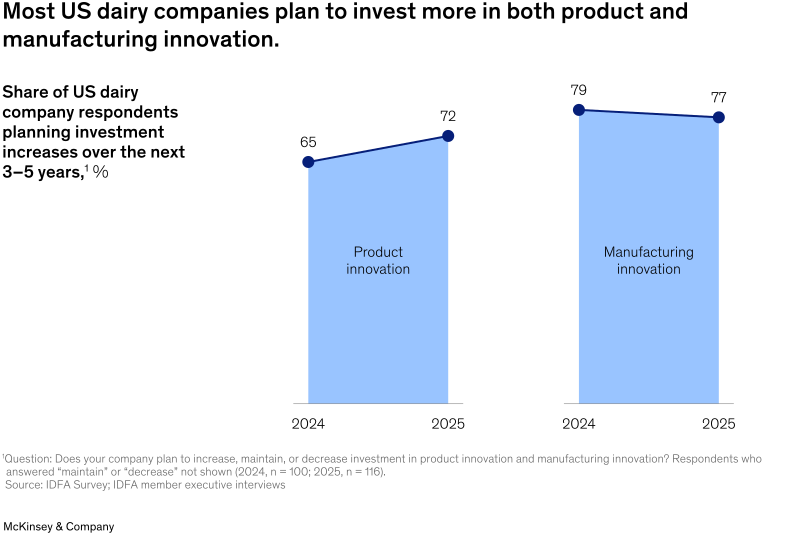
This strategic orientation is translating into forward investment despite sustained margin pressure. In the United States, 72 percent of respondents plan to increase investment in product innovation over the next three to five years, and 77 percent plan to invest more in manufacturing innovation (Exhibit 4). European figures are slightly lower, at 71 percent and 58 percent, respectively.
Updated US nutritional guidelines calling for a 50 to 100 percent increase in protein intake further reinforce the opportunity.6 And an emerging nutritional trend on the horizon pairs protein with fiber and prebiotics, reflected in 11 percent year-over-year growth in high-fiber packaging claims.7 For many dairy leaders, protein has become the primary lens through which they evaluate future growth opportunities, innovation road maps, and even upstream economics.
AI: Deliberate adoption, rising expectations
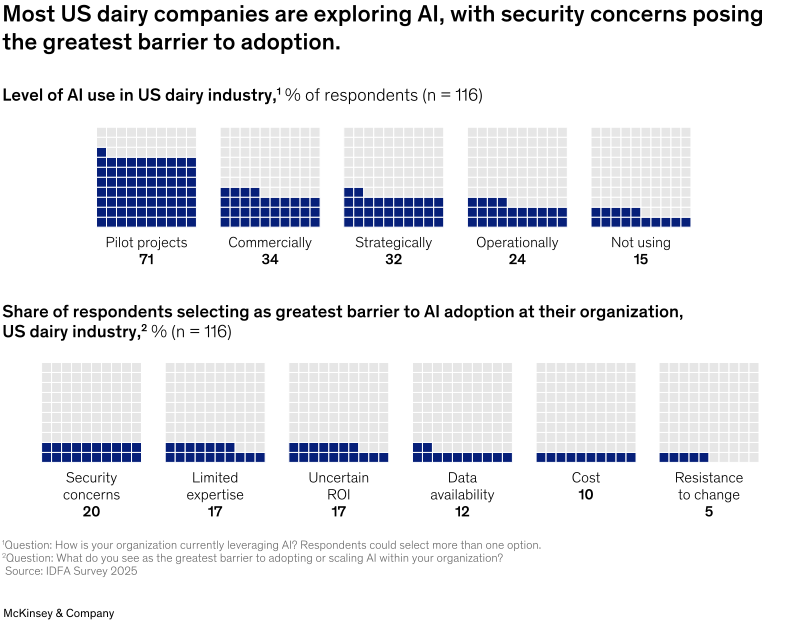
Digital and analytics capabilities are expected to play a more central role in dairy companies’ performance, though they are not yet among today’s top-tier strategic priorities. Roughly four in five US dairy executives report using AI or advanced analytics in some capacity—primarily in administrative efficiency, maintenance, planning, and knowledge retention.
The progress we’ve made with AI so far in our pilots is mind-blowing . . . but we are not ready to let it loose on our plants yet.
Near-term progress is likely to remain incremental. More than 70 percent describe their organizations as being in pilot phases for most AI technologies, with initiatives split primarily across commercial applications (34 percent), strategy (32 percent), and operations (24 percent).
Here’s the problem, here’s the end state. Now, how do I leverage the technology to get there?
While leaders recognize the potential productivity gains from AI, many expect adoption to scale selectively rather than rapidly. Approximately 20 percent of US respondents cite security concerns, limited expertise, and uncertain ROI as the primary barriers to broader deployment (Exhibit 5). Executive sentiment in Europe is broadly similar but more cautious, with leaders tending to view AI technologies as practical efficiency tools rather than transformative differentiators.
We’re deliberate about AI because the risks are real, but the productivity gains are too good to ignore.
That said, leaders are mindful of the performance gap emerging across adjacent sectors: Digital and AI leaders in consumer and agricultural markets have generated approximately 1.3 times and 1.7 times total shareholder returns, respectively, from 2019 to 2024, compared with peers. This trend suggests that sustained investment in digital capabilities could become an increasingly important source of competitive advantage for dairy companies.
Success in 2026 requires focus and resolve
Dairy leaders remain optimistic about long-term demand fundamentals, even as cost pressures persist. Across the United States and Europe, the agenda is sharpening around a small number of value-creating priorities:
- Protect margins through disciplined cost and operational management.
- Pursue profitable volume growth anchored in protein-led innovation.
- Stabilize and strengthen talent pipelines, particularly in skilled operations roles.
- Prioritize sustainability initiatives that deliver measurable impact and operational value.
- Make deliberate investments in AI and advanced analytics, with clear use cases and economic accountability.
These focus areas offer a path to navigate the 2026 operating environment, which is marked by resilient demand, persistent cost pressures, ample milk supply, and regulatory and trade uncertainties. Leaders who pair disciplined execution with sustained investment in the capabilities that matter most will be best positioned not only to weather volatility but also to capture the industry’s next wave of growth.