Consumer expectations are changing across nearly every aspect of mobility. Economic pressures are influencing purchase decisions, new technologies are changing vehicle preferences, digital channels are altering how people buy vehicles, and disruptive transportation options, some of which are on the brink of scaling, are giving people more choice. These shifts vary across markets and customer segments, but together they are reshaping the future of mobility.
Drawing on the McKinsey Mobility Consumer Pulse 2026 Survey of more than 20,000 mobility users across China, Germany, Japan, the United Kingdom, and the United States, this article examines how evolving consumer preferences are changing the automotive and mobility landscape (see sidebar, “Our methodology”).
Several themes stand out from our survey:
- Affordability is affecting demand. Many consumers are delaying purchases, reducing budgets, and considering smaller vehicles, but expectations for quality, technology, and customer value remain high.
- Electrification continues to advance. Interest in electric vehicles (EVs) is steadily rising, and the customer base of potential EV customers is broadening to include more mainstream buyers. EV adoption pathways increasingly differ by market. While range anxiety has decreased, charging infrastructure concerns and vehicle costs are still barriers to wider adoption.
- Advanced driver assistance systems (ADAS) and AI are becoming key differentiators. Consumers are placing greater emphasis on ADAS, powertrain technologies, digital experiences, and vehicle software, while traditional sources of differentiation—such as brand image, design, and comfort—are taking a back seat.
- Competitive dynamics are shifting. New brands are strengthening their position domestically and in overseas markets with innovative products, increasing pressure on incumbent OEMs and raising customer expectations for product value, technology, and costs.
- Consumers are researching and buying vehicles in new ways. Digital channels and AI tools are cornerstones of an increasingly omnichannel car-buying journey, requiring OEMs to create seamless transitions across channels while also providing a personalized customer experience as they engage potential car buyers and future owners.
- New mobility modes and transportation options are emerging, with some on the brink of scaling. Consumers expect to use a broader mix of transportation modes in the future. Micromobility and shared autonomous vehicles (AVs) are emerging as the most promising growth opportunities, putting pressure on providers of traditional shared mobility solutions.
While these trends are progressing at different speeds across markets, they point to a common reality: Consumers are increasingly willing to reconsider what they buy, which brands they trust, how they buy vehicles, and how they travel. Companies that can anticipate and adapt to these changing expectations will be best positioned to compete.
The affordability challenge: Customers seek quality and value on constrained budgets
Economic uncertainty and inflation are affecting car buyers globally. To be competitive in this environment, OEMs must deliver high feature value and quality at low cost to customers.
Car buying is under pressure as financial constraints tighten
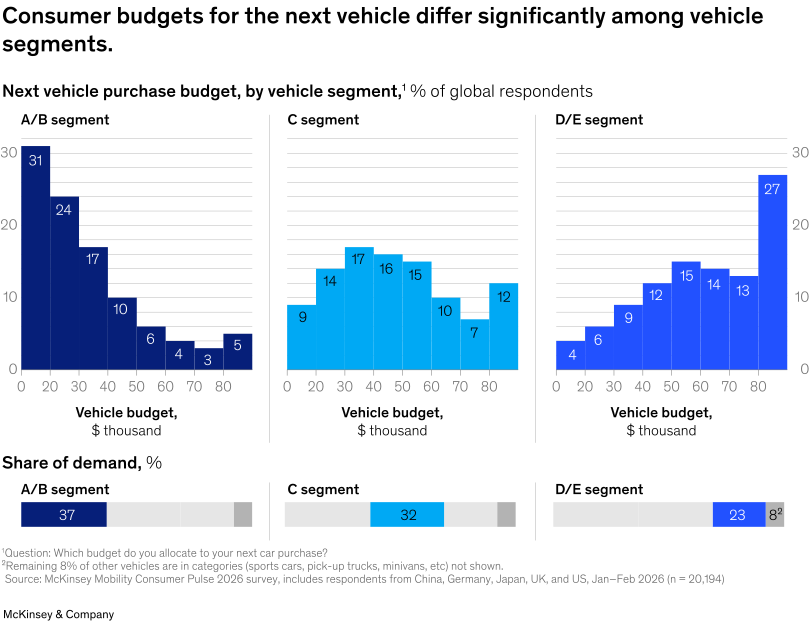
On average, 32 percent of respondents plan to postpone their next vehicle purchase because of financial constraints, and 45 percent say they will consider smaller vehicle categories than originally planned to remain within budget. Financial pressures are even greater among certain groups—such as households with children, consumers with lower disposable income, and rural residents—affecting both vehicle budgets and purchase timelines.
About 50 percent of global respondents plan to budget under $40,000 for their vehicle purchase across all vehicle segments, and 37 percent (up four percentage points from last year) indicate that they plan to purchase a car in the A- or B-vehicle segment. Customers shopping for A/B vehicles (compacts or subcompacts) allocate even less than other consumers, with 31 percent stating that they only plan to spend up to $20,000 on a new car and another 24 percent allocating under $30,000 (Exhibit 1).
Cost-conscious consumers still have high expectations
Overall, 60 percent of respondents cited value for money—the overall value consumers perceive from a product or service by weighing its price alongside features, technology, and performance—as one of the most important purchase criteria, second only to quality. Customer expectations for vehicle features, technologies and service levels were similar for both budget-conscious consumers and the more affluent customer cohort, indicating that affordability does not involve compromise in any group.
New OEMs gaining stride in the market provide compelling vehicle offerings at highly competitive price points. As a result, product substance efficiency—the ability to offer high value at a relatively low price point and profitable margin—will play a significant role in determining which OEMs compete successfully.
EV uptake: Adoption varies by region and customer segment
Consumer demand for EVs continues to evolve, but not uniformly. While electrification is progressing steadily across major markets, adoption pathways differ by region and customer cohort. Overall, the EV customer base is broadening. Early adopters were primarily affluent, sustainability-driven customers who wanted leading-edge technologies, but potential buyers in current and future waves include more mainstream consumer groups.
Steady momentum for electrification continues
Consumer interest in EVs is rising steadily across major markets, despite fading purchase incentives and other headwinds in selected market regions (Exhibit 2).
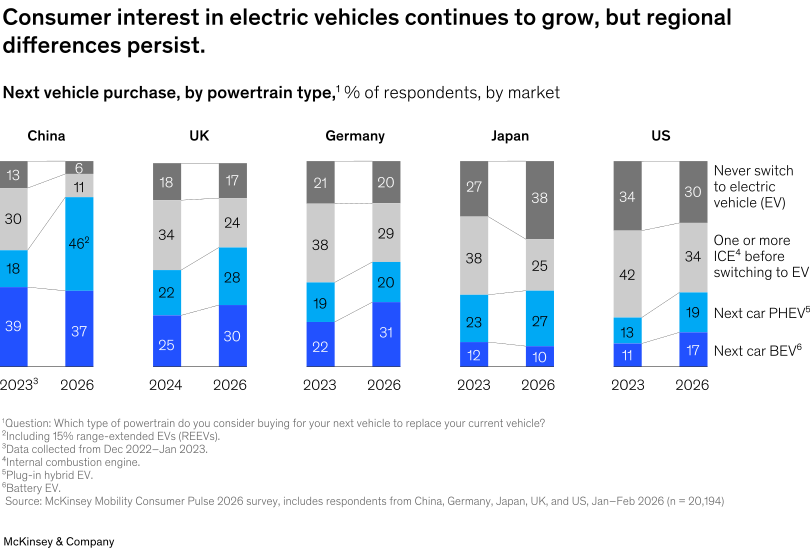
China continues to lead globally in EV interest, with more than 80 percent of respondents indicating that their next vehicle is likely to be an EV. In Europe, about half of respondents state that they are likely to purchase an EV next, compared with 37 percent in Japan and 36 percent in the United States.
Consumers who would never consider an EV account for only between 6 and 38 percent of respondents, depending on the region. Most others might be motivated to buy an EV because of fluctuating energy prices or purchase incentives, or in response to bold moves that OEMs make when entering new markets. Such developments have already contributed to rapid EV growth in many countries, including Norway and, more recently, Uruguay.
The transition to electrified mobility involves different powertrain technologies, with plug-in hybrid electric vehicles (PHEVs) remaining the preferred option for many consumers across markets. In China, the emergence of range-extended electric vehicles (REEVs) has created a distinct and growing source of demand, partly because many consumers believe this powertrain combines the benefits of battery electric vehicles (BEVs) with additional driving range and flexibility. Among Chinese survey respondents, 15 percent are likely to purchase a REEV.
The customer base for EVs is broadening
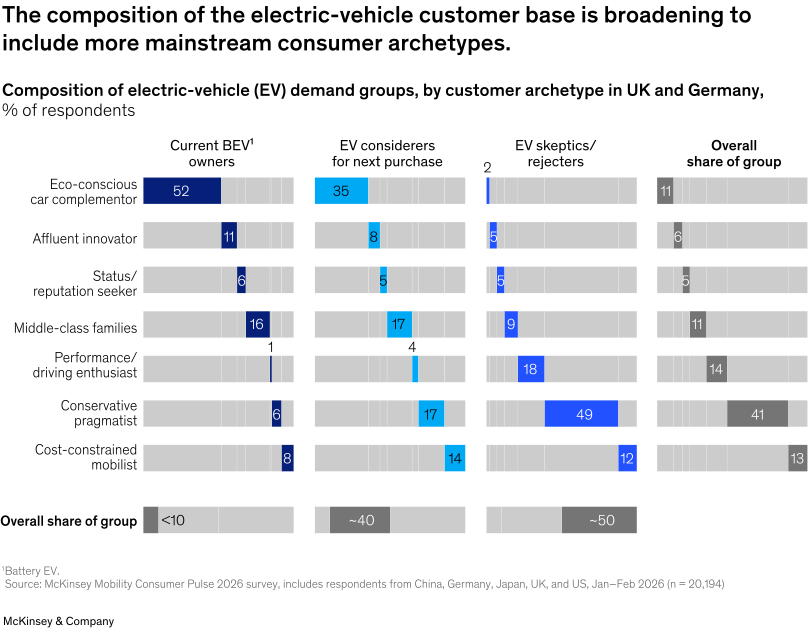
When we classified EV customers into archetypes, we found that early adopters included a disproportionate number of more affluent, technology-curious, and sustainability-driven customers (Exhibit 3). While these archetypes are still highly represented among consumers considering an EV for their next vehicle purchase, their relative share is declining.
The trends shown in Exhibit 3 are for European respondents, but a similar pattern is emerging across markets. The next wave of EV buyers includes a higher share of conservative pragmatists and middle-class families—two of our archetype categories—signaling a shift toward a more mainstream customer base.1 This change suggests that OEMs will need to refine both their marketing strategies and product offerings. Messaging that emphasizes tangible everyday benefits, along with vehicle features tailored to mainstream use cases, is likely to become increasingly important. Affordability will also play a larger role: The average budget of more conservative and cost-constrained customer cohorts may be up to $15,000 lower than that of more affluent early adopters.
Direct exposure to EVs increases purchase interest
Consumers who have direct experience with EVs in their household are more likely to choose an EV for their next vehicle than those from households where ownership is limited to internal combustion engine (ICE) cars. Across regions, mixed households that already own both an ICE vehicle and an EV are three to four times more likely to transition to BEVs than households that own only ICE vehicles. Notably, households with PHEVs show considerable interest in transitioning to a BEV at the next purchase. The majority of current BEV owners plan to remain with electric-drive technology for their next purchase, and only about 10 percent are considering switching back to an ICE car.
Consumers have less range anxiety but are still concerned about charging availability
For many consumers, barriers to EV adoption primarily involve economic and practical considerations, rather than ideological resistance. When asked why they are reluctant to purchase a BEV, consumers across regions most frequently cite concerns related to charging, battery longevity, and vehicle cost. More than two-thirds of EV charging is conducted at private locations, rather than public facilities, and lack of access to home charging is a major deterrent to EV adoption for many consumers.
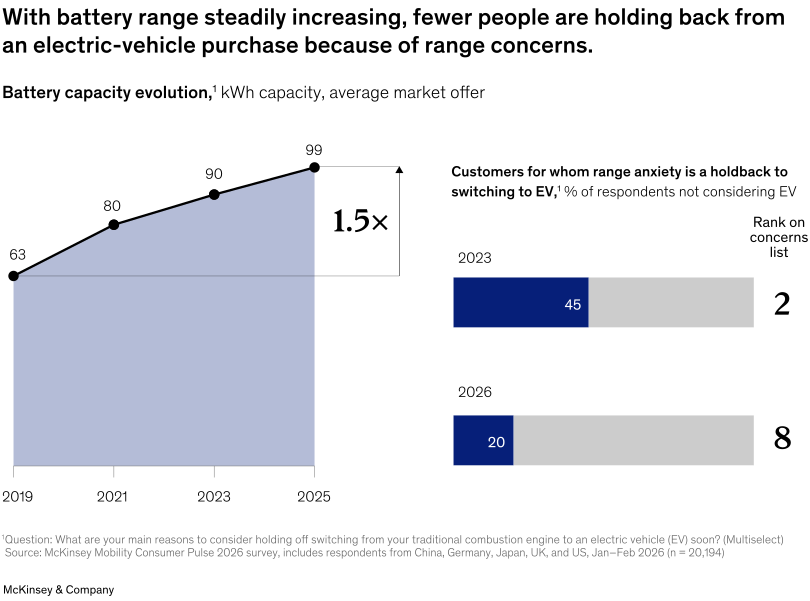
In past surveys, many consumers stated that they were delaying an EV purchase while waiting for vehicles with a longer driving range. The recent increase in battery capacity by OEMs may now be allaying these fears, however (Exhibit 4). While range anxiety was the second highest concern in 2023, it dropped to eighth place in 2026. Only about 20 percent of consumers who are skeptical of EVs cite driving range as a reason to refrain from going electric, down from 45 percent just three years ago.
In other areas, consumer perceptions of EVs have yet to catch up with reality. Concerns about public charging infrastructure readiness remain high despite improvements to EV recharging speed and the continued expansion of public charging networks. The next phase of EV adoption will depend not only on further improvements in products and infrastructure, but also on increasing consumer confidence, either through education or awareness campaigns. Firsthand exposure to EVs through ownership will also help alleviate concerns.
Brand challenges: Technology is becoming a key differentiator
In addition to electrification, consumers are placing greater emphasis on sophisticated vehicle technologies and ADAS. Vehicle features on which legacy brands traditionally rate highly, such as comfort and quality, are becoming less decisive competitive differentiators, potentially leading to a dip in brand loyalty. Simultaneously, many consumer perceptions of new market entrants are improving, placing even more pressure on legacy brands.
Brand considerations are evolving and consumers are more open to switching brands
Overall, 28 percent of respondents indicate that they will likely switch brands at their next vehicle purchase. Openness to brand switching is higher in the premium segment (34 percent) compared to the mass market segment (25 percent). In line with past surveys, customers are more open to switching brands when they transition to electric mobility.
When purchasing a vehicle, consumers in this year’s survey cite quality, value for money, safety, pricing/total cost of ownership, driving efficiency, size/functionality, drive performance, and branding as their top buying criteria. They believe their priorities will shift, however.
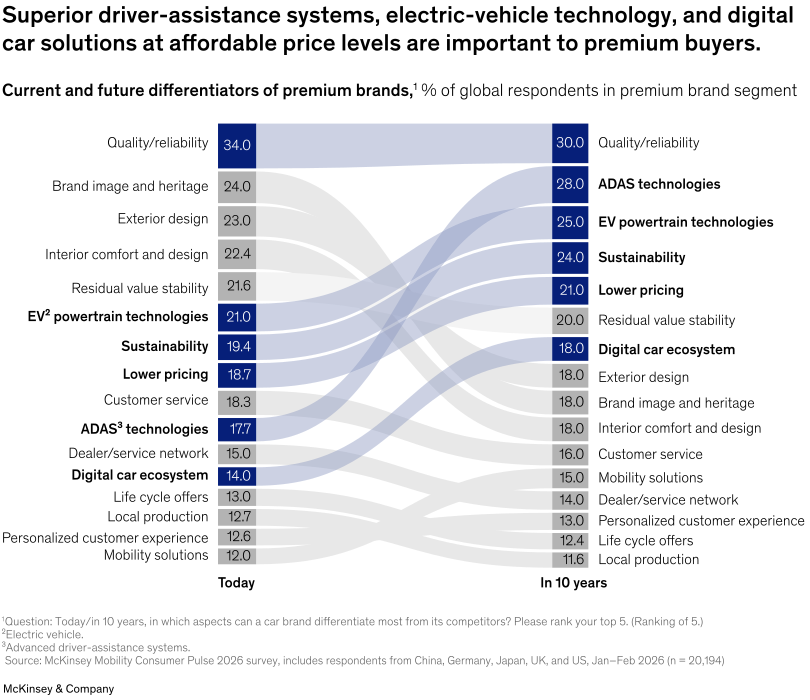
When asked what differentiates brands now, premium customers are most likely to cite quality (Exhibit 5). They also believe that quality will be the top criteria ten years from now. The importance of many other features is in flux, however. Customers believe that ADAS, sustainable powertrain technologies, and digital car ecosystems will gain importance at the expense of other brand differentiators. Affordability is becoming more important to premium customers, although not to the same extent as it is for customers in the mass market segment. Overall, ADAS shows the greatest jump in importance.
ADAS features are gaining popularity with consumers
Purchase intent is higher for most ADAS features in 2026, compared to past surveys. Automated parking generates the strongest interest among survey respondents, and many also want Level 2+ or even Level 3 self-driving capabilities. OEMs need to find ways to invest in these features, despite still slow early-stage adoption curves of these sophisticated ADAS capabilities.
Across markets, roughly one in four respondents say they would be very likely to switch brands for better self-driving functionality. That interest is highest in China (50 percent) and among younger generations, EV buyers, and those buying a premium brand car.
As ADAS becomes more widely available, manufacturers that can clearly communicate how these capabilities improve safety, convenience, and the driving experience may be better positioned to influence both brand perception and purchase decisions.
European consumers are increasingly interested in Chinese brands because of value-for-money combined with technological sophistication
As consumers place greater value on advanced vehicle technologies, perceptions of technology leadership are playing an increasingly important role in shaping brand consideration. Few trends illustrate this shift more clearly than the growing interest in Chinese automotive brands.
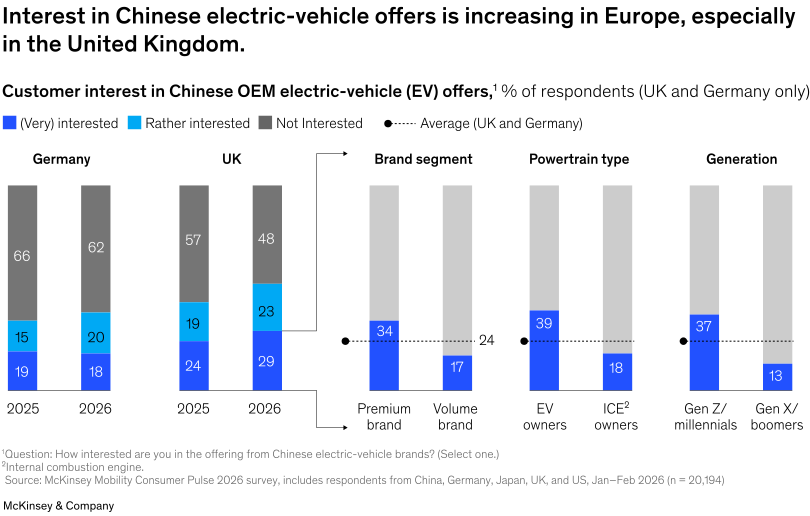
Interest varies significantly across our two surveyed European markets, with the United Kingdom much more receptive than Germany (Exhibit 6). Across markets, Chinese brands spark higher interest among younger generations, current EV owners and, notably, in the premium brand segment.
Respondents cite those OEMs’ superior value for money, innovation, and advanced EV and ADAS technologies as top reasons for their interest in Chinese brands. Customers that remain skeptical tend to cite distrust in brands from China, lack of familiarity, concerns about data security, and unclear dealership and aftermarket networks.
Chinese automakers are beginning to translate their perceived strengths in technology and electrification into broader consumer acceptance. As awareness and familiarity continue to grow, new Chinese brands may be increasingly well positioned to gain share in European markets.
Perceptions of Chinese brands are improving rapidly in Europe
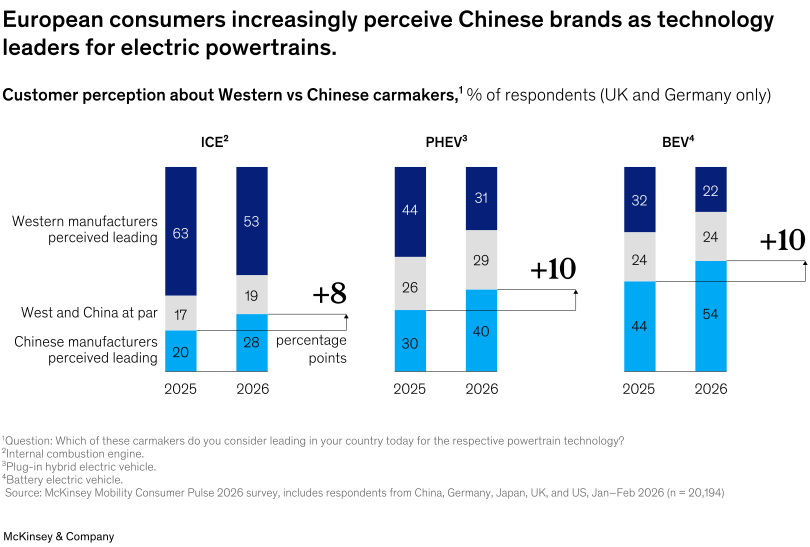
When asked which manufacturer is considered the market leader for different powertrain technologies in their home market, 54 percent of European respondents cite Chinese OEMs for BEV technology and 40 percent for PHEV technology, despite the notable evolution of Western OEMs’ EV portfolios. By contrast, 53 percent of European respondents state that Western incumbent OEMs lead in ICE technology (Exhibit 7).
While consumer perception about these Chinese brands is strong, actual sales penetration still lags. Currently, Chinese brands account for roughly 12 percent of new EV sales in Germany and about 21 percent in the United Kingdom, signaling that customer concerns still play a factor in adoption. Incumbent OEMs may benefit from strengthening the messaging and positioning of their vehicle technologies to maintain or increase market share.
Despite growing interest, Chinese brands continue to face significant barriers in Europe. Many European consumers still expect Chinese brands to offer a meaningful price advantage over established alternatives. Early owner feedback in the surveyed European markets also points to opportunities for improvement in service-network coverage, maintenance quality, customer support, and social recognition. Further scaling in European markets will therefore depend on Chinese OEMs not only maintaining a strong technology and value-for-money proposition but also building customer trust, strengthening the ownership experience, and developing stronger brands.
Western brands in China: New strategies are needed to appeal to local consumers
The competitive landscape in China’s automotive market has shifted dramatically as domestic OEMs have launched cutting-edge products at competitive price points and are building their brands. Their efforts have captured the attention of local consumers, including those who used to buy Western brands. Brand loyalty has become more fluid in the past few years.
Chinese OEMs continue to build a positive brand image in their home market
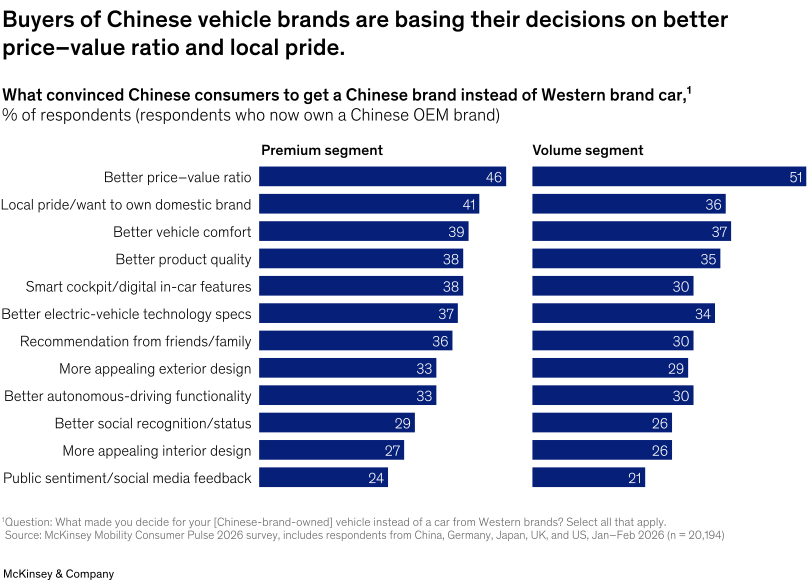
Western OEMs face intense competition in China, with domestic manufacturers having gained significant share across key customer segments in recent years. Among Chinese respondents who purchased domestic brands, 49 percent say their decision was based on a better price-to-value ratio. Notably, 37 percent cite local pride in domestic brand ownership.
Chinese consumers rate domestic cars higher than Western ones for vehicle comfort, quality, EV technology, smart-cockpit features, and self-driving capabilities (Exhibit 8). Notably, about one third of respondents say that recommendations from family and friends, or the opinion of their parents and extended family members, played a major role in their car-purchase decision.
Western OEMs may still win back Chinese customers
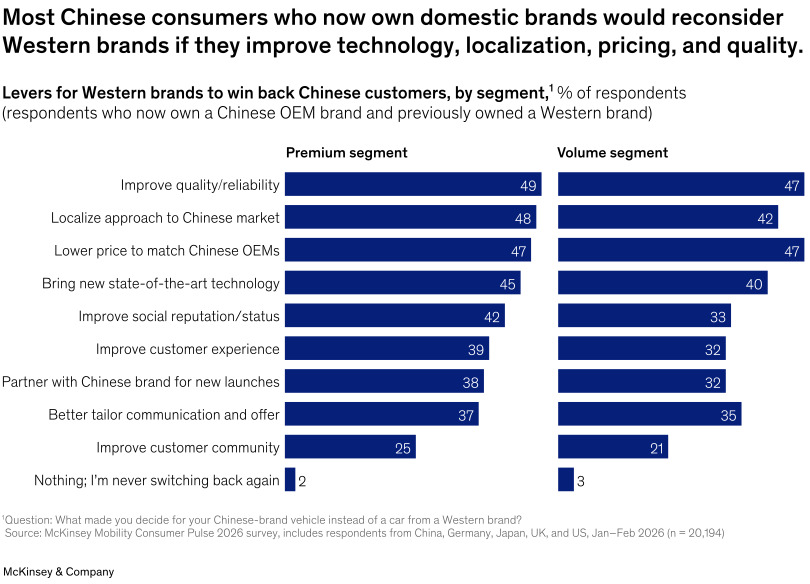
Brand switching is common in the Chinese market, and Western brands could still win back their previous customers. Among respondents who now own a Chinese-brand car and previously owned a Western brand, fewer than 5 percent say they will never switch back to a Western brand but they note that Western OEMs will have to address various issues to win them back (Exhibit 9). Notably, around 50 percent of customers who switched to Chinese brands state that Western OEMs must improve vehicle quality and reliability while also providing more competitive pricing and improved vehicle technologies. Localization is also important. They want vehicles, digital experiences, communications, partnerships, and customer engagement approaches that reflect local preferences and needs, rather than global offerings adapted for China.
The purchase journey: Consumers explore new ways to research and buy vehicles
Worldwide, the vehicle purchase journey is becoming increasingly omnichannel and AI-enabled. Personalized experiences are a key driver of customer satisfaction throughout both the purchase and ownership journey. Striking differences remain in how consumers engage with the market throughout the buying process, however, particularly across age groups and powertrain preferences.
Three customer-journey archetypes have emerged
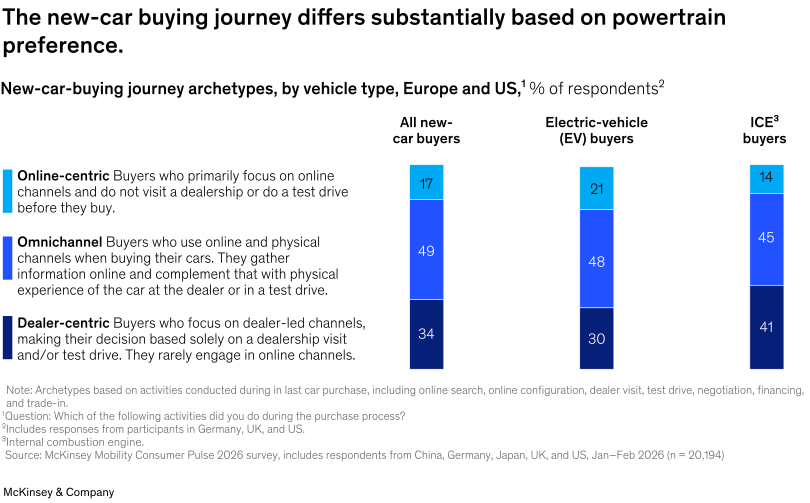
Our survey reveals that the customer journey typically follows one of three archetypes: dealer-centric, omnichannel, or online-centric. The archetype varies significantly by customer cohort (for instance, premium versus volume buyers, ICE versus EV buyers, or older versus younger consumers).
In Europe and the United States, younger consumers, EV buyers, and those in the premium segment are most likely to prefer an omnichannel journey, consulting both online- and dealer-centric sources. By contrast, older generations and traditional ICE buyers are more likely to take a dealer-centric approach. Younger consumers and EV buyers are more likely to take an online-centric approach, with no dealership visit, compared with older consumers and ICE buyers.
Overall, 34 percent of new-car buyers (41 percent for ICE buyers) skip online search and configuration completely, going directly to a dealership to see vehicles or take a test drive (Exhibit 10). The remaining two-thirds of new-car buyers take an omnichannel or online-centric approach. For OEMs, these findings highlight the importance of delivering consistent, compelling information across channels and ensuring smooth and seamless transitions between channels. These capabilities are especially important when dealing with EV buyers, who tend to prefer omnichannel journeys.
Younger consumers and EV buyers are more likely to use AI tools
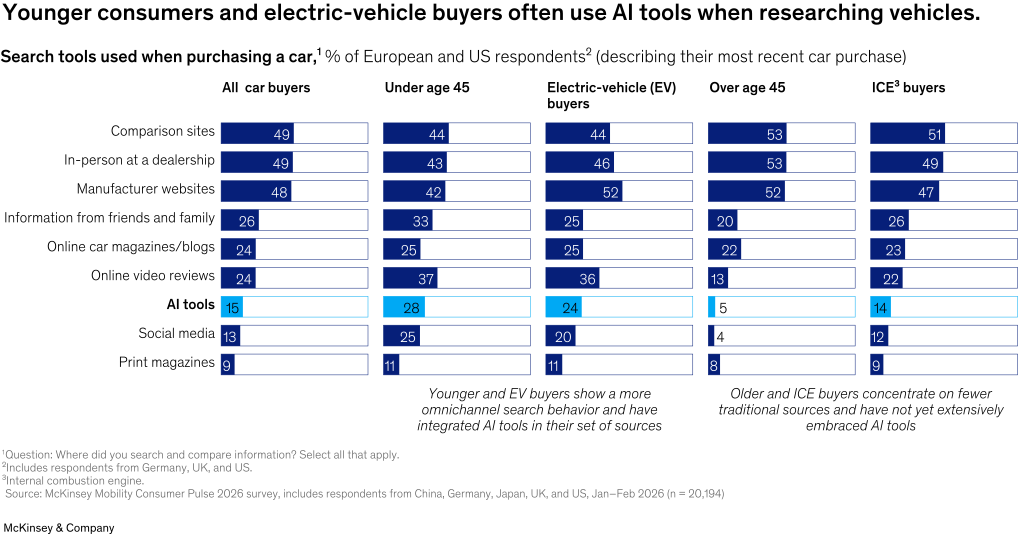
In addition to preferring omnichannel journeys, younger consumers and EV buyers in Europe and the United States are more likely to use AI tools during the vehicle-search process (Exhibit 11). Our survey shows that 28 percent of buyers under 45 used AI tools during their last car purchase, as did 24 percent of EV buyers. AI tool use was much lower for buyers over age 45 (5 percent) and ICE buyers (14 percent).
Hyperpersonalization can significantly increase customer satisfaction
Customer satisfaction with the purchase experience varies widely across touchpoints. Overall, 71 percent of customers were satisfied with their experience at the dealer, but they ranked some elements higher than others. Test drives and service and maintenance are rated satisfactory by 76 percent and 78 percent of respondents, respectively. Notably, only 60 percent are satisfied with the degree of personalization in their interactions. This finding is significant because about half of younger consumers, prospective EV buyers, and premium segment buyers say that personalized dealer communications is a relevant factor in their purchase journey.
By personalizing customer interactions more, OEMs can build stronger relationships throughout the ownership life cycle—not just at the point of sale—and foster loyalty in an environment where brand preferences are increasingly dynamic. AI-powered hyperpersonalization, grounded in a deep understanding of customer needs and behaviors, can enable OEMs to deliver differentiated experiences that raise the standard for customer engagement.
New mobility ecosystem: Shared AVs and micromobility could transform how we travel
Alongside shifting preferences for brands and technologies, consumers are also changing their overall mobility mix, especially how often they use their private vehicle versus other modes of transport.
Consumers are using more mobility modes
Private vehicles remain the most frequently used mode of transportation. Looking ahead, however, consumers across all locations expect their travel behavior to become more diverse (Exhibit 12).
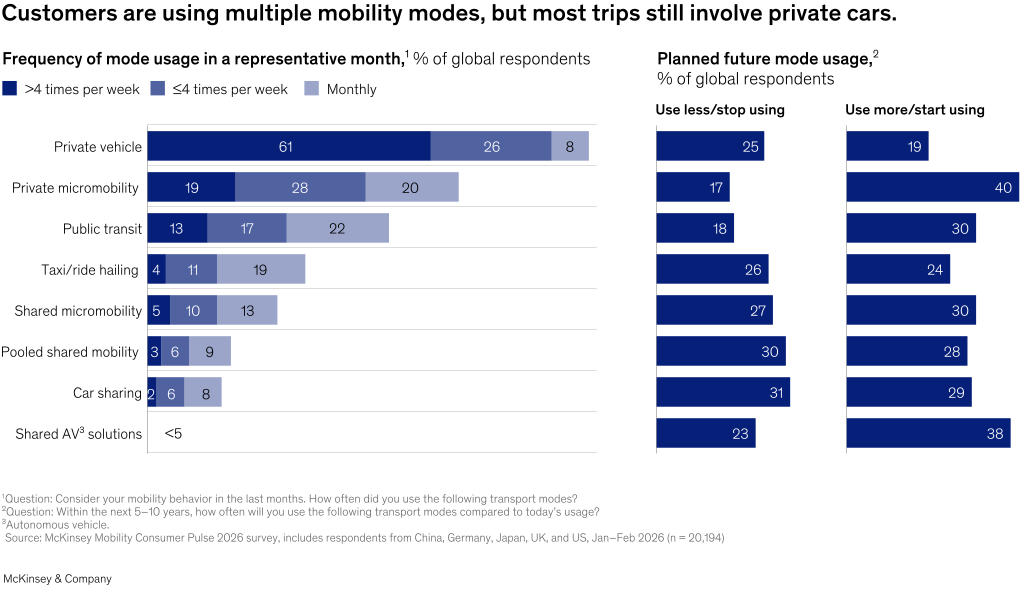
The shift toward alternative mobility modes varies significantly by region. Consumers in traditionally car-dependent markets such as the United States continue to rely heavily on private vehicles, particularly outside dense urban areas.
While the growth of alternative transportation options is unlikely to displace private vehicle ownership entirely, it may reduce its relative importance. Mobility providers will face both expanding opportunities and intensifying competition to capture a greater share of daily travel.
While previous surveys have shown similar patterns, some new trends stand out this year. For instance, 2026 respondents expect their use of shared AVs to increase more than their use of shared micromobility and shared mobility—such as taxis, ride hailing, and car sharing. This finding aligns with McKinsey’s market outlook, which projects that shared AV usage would increase significantly between now and 2035.
Shared AV services are gaining traction, but challenges to scaling remain
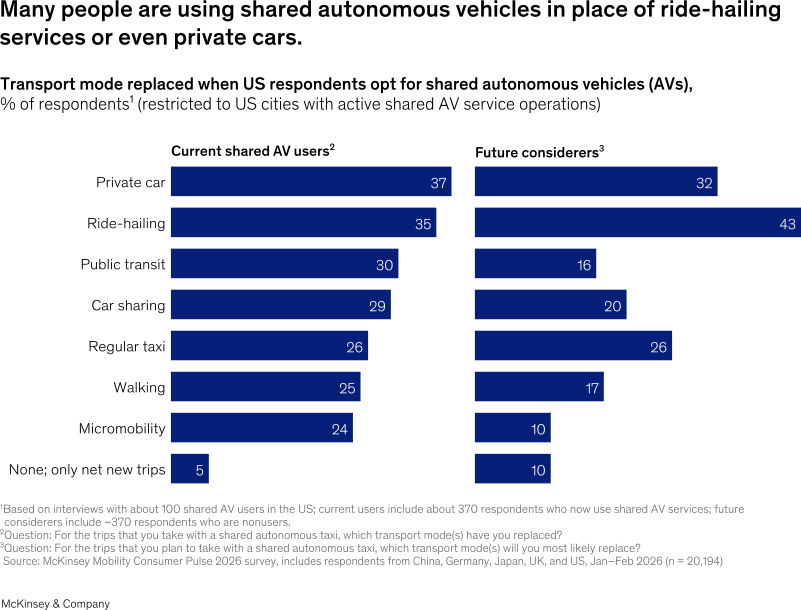
Shared AVs are now available in select cities worldwide. Interviews with shared AV users in the United States indicate that many early adopters started using these services because they were curious about the technology and wanted to try it, in keeping with their general preference for a technology-supported lifestyle. Others enjoyed the convenience of shared AVs. Interviewees were not deterred by the fact that shared AVs are more expensive than many other mobility modes, such as ride hailing.
Our research suggests that users of shared AVs are primarily replacing ride hailing or—even more interesting—private car trips for a wide variety of use cases, such as commuting, leisure trips, and errands (Exhibit 13). As shared AVs scale, they could intensify competition across the transportation ecosystem, with implications for mobility providers, automakers, infrastructure planners, and city governments.
Direct experience with shared AVs can build trust
Consumers cite several barriers to adopting shared AVs, including limited trust in the technology, reluctance to relinquish control of the driving experience, concerns about safety, and higher prices relative to other transportation options. Ultimately, market growth will depend on delivering a safe, reliable, and convenient user experience for which customers are willing to pay. Respondents who have already used shared AV services report substantially higher levels of trust in the technology, suggesting that firsthand experience may be one of the most effective drivers of broader adoption.
Several factors could affect micromobility adoption
While shared AVs may reshape how consumers travel longer distances, micromobility is becoming an increasingly important option for shorter trips, especially in urban areas. Rather than competing, private and shared micromobility appear to reinforce one another. Eighty-seven percent of regular shared micromobility users also use privately owned micromobility. This finding suggests that these services complement existing private micromobility habits for flexible, short-distance travel.
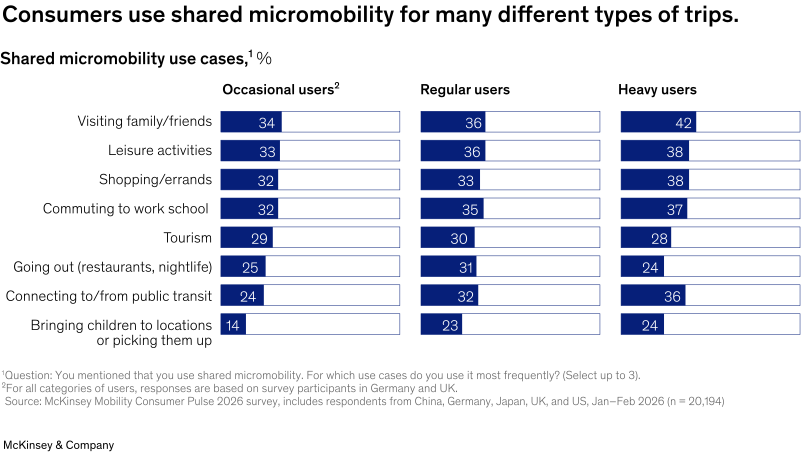
Shared micromobility is already serving a balanced mix of urban use cases (Exhibit 14). No single trip purpose case clearly dominates, suggesting that shared micromobility is moving beyond occasional or purely recreational use and becoming a mobility mode for everyday life. For consumers, the value of micromobility lies in the ability to choose a lightweight, on-demand option that suits the trip, the distance, and the urban context.
Consumers evaluate multiple factors when selecting micromobility options
Among regular shared micromobility users in Germany and the United Kingdom, price is the most important consideration (33 percent), followed by the availability of nearby vehicles (29 percent). Vehicle quality and battery status also rank highly, indicating that users evaluate the quality of the overall service rather than simply choosing the lowest priced provider or the most familiar brand.
A similar pattern emerges in private micromobility. While prospective e-bicycle owners consider purchase price, they also place significant importance on battery range, performance, theft protection, maintenance support, and other ownership services.
Continued growth in micromobility will depend on strengthening the broader ecosystem that supports everyday use. The priorities for doing so differ between shared and private micromobility.
For shared micromobility, safety and operational reliability remain the primary challenges. Among regular users in Germany and the United Kingdom, 26 percent cite safety concerns, almost as many as those pointing to high prices (29 percent). Low battery levels, limited vehicle availability, damaged vehicles, and restrictive parking rules further undermine confidence in the service.
For private micromobility, the greatest opportunities lie in improving riding conditions. Roughly one-third of bicycle and e-bicycle owners report feeling unsafe because of insufficient cycling infrastructure, while nearly half cite aggressive car traffic as a key safety concern. To increase usage of both shared and private micromobility, therefore, the strongest levers are better cycling infrastructure, lower theft risk, and more convenient parking.
Five takeaways for mobility ecosystem players
Amid the complexity of the evolving mobility landscape, five strategic priorities emerge for mobility ecosystem players:
- A focus on building products that customers value while keeping costs in check. Many consumers have reached a ceiling on their mobility spending and are seeking more affordable solutions. They are unwilling to compromise on technological sophistication or product experience, however, and have rising expectations for products, partly because many new entrants are offering quality vehicles at lower price points. Manufacturers will need to deliver strong product substance efficiency—greater value for the cost—to remain successful.
- A stronger technology value proposition for customers. In addition to affordability, consumers are placing greater emphasis on vehicle technology, including advanced and emerging features. For many OEMs, ADAS–not EV range–will be the most important area of competition for customer attention in the coming years. In this transition phase where new technologies are becoming available to users, consumer choice is increasingly influenced by products and technology and is less anchored on brand. Manufacturers might strengthen brand perception in the long run if they highlight the technology evolution of their products and help customers become comfortable with new technologies.
- Greater efforts to capture business and reach new segments as the EV customer base expands. The transition to EVs is continuing steadily, although progress varies across markets and customer segments. While OEMs have addressed concerns about driving range, vehicle costs and charging access remain top of mind for many consumers. OEMs should offer hybrid vehicles as a transition pathway for customers who are not yet ready to purchase a BEV. For all EV purchases, OEMs should consider the needs of more mainstream buyers, who are increasingly represented in the customer pool.
- The creation of a seamless, omnichannel, AI-powered car buying experience. The customer journey is evolving into an omnichannel experience, and AI tools are rapidly gaining relevance for both research and decision-making. The dealer touchpoint remains highly relevant, but OEMs must manage seamless transitions between online and offline customer interactions. With customer expectations rising, hyperpersonalizing interactions may provide a competitive edge.
- A deep understanding of the new mobility ecosystem. New mobility solutions are becoming part of everyday routines for many consumers, especially in dense urban areas, although private vehicles remain the top mobility mode. To win in this evolving landscape, mobility providers must thoroughly understand—and develop solutions for—the increasingly integrated ecosystem. For shared AVs, that means building consumer confidence and improving unit economics. For micromobility providers, infrastructure limitations and perceived safety concerns remain key challenges to overcome.
The McKinsey Mobility Consumer Pulse 2026 survey shows that consumers are becoming harder to categorize. Cost-conscious buyers still expect advanced technology, mainstream consumers are embracing EVs, brand loyalty is weakening just as new competitors emerge, and more consumers are combining vehicle ownership with other mobility options. As traditional boundaries continue to blur between customer segments, technologies, and mobility models, companies that can anticipate and respond to rapidly evolving consumer expectations will be well positioned to build lasting competitive advantage.