The automotive software and electronics market is transitioning to zonal and central computing architectures that help enable more scalable, software-defined vehicles (SDVs) that support advanced features such as over-the-air updates, enhanced connectivity, and gen AI integration.1 Other factors influencing market growth and investment include changing customer preferences; regulations that prioritize safety and permit higher autonomous-driving (AD) levels; and technology innovations such as high-performance computers, advanced software, and light detection and ranging (LiDAR) sensors.
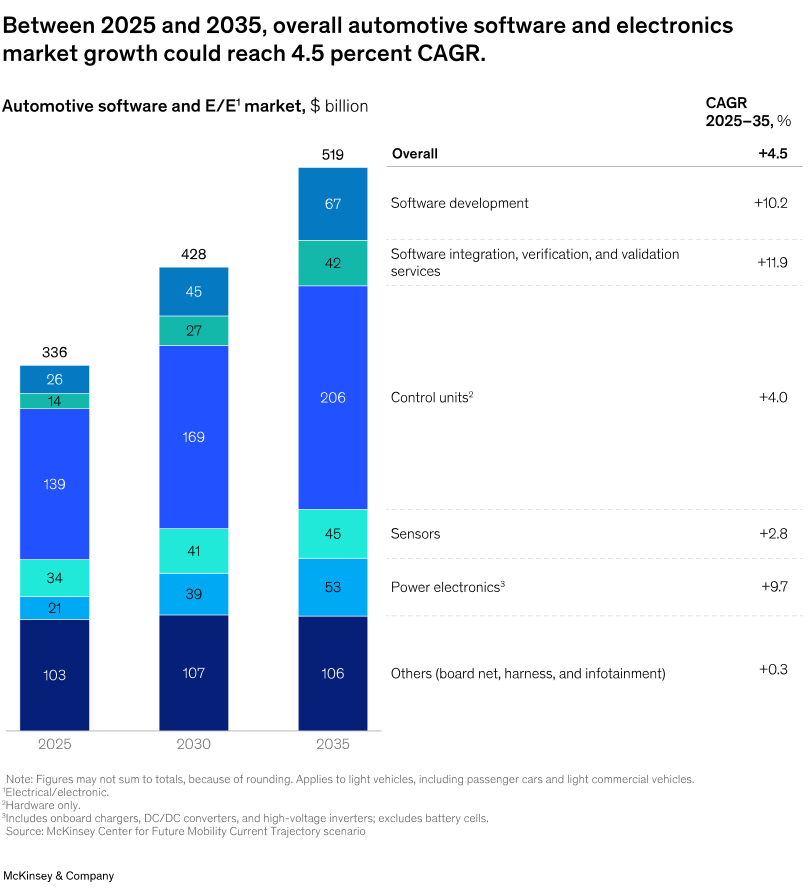
Gen AI is accelerating innovation as autonomous driving, connected vehicles, electrification, and shared mobility (ACES) continues to reshape the automotive industry.2 In fact, in contrast to the overall vehicle market, which is growing by around 1.0 percent CAGR annually, the global automotive software and electronics market could grow by 4.5 percent CAGR and reach $519 billion by 2035. This potential disparity in growth reflects how vital software and electronics may be to achieving differentiation amid electrification, nonownership models, and evolving consumer expectations. Nonetheless, viewing this growth more granularly and within the broader vehicle market reveals that software and electronics growth is not homogenous and that considerable challenges and uncertainties persist.
For example, continued advancements in capabilities have been accompanied by significant delays in the deployment of level 3 or level 4 driving automation.3 These delays have tempered expectations for fully autonomous vehicles to be deployed in the near term. Likewise, while electric vehicle (EV) penetration has grown since McKinsey’s last automotive electronics and software market outlook in 2023, regulatory demand drivers around EVs have changed considerably. Because new EV platforms are often the first adopter of a new electric and electronic (E/E) architecture, delays in EV platforms often also delay the introduction of advanced E/E architectures. While few OEMs have launched level 3–capable vehicles in recent years, overall dissemination of autonomous vehicles capable of level 3 or higher is slower than expected previously. Thus, while OEMs continue to make long-term investments in fully autonomous vehicles, they have shifted their investment focus to more immediate opportunities, such as advanced driver assistance systems (ADAS) and connected services.
All of these developments have reduced overall demand in the software and electronics market. Further, it is important to note that while our research shows advanced architectures and ADAS could promote growth for the automotive software and electronics industry, various factors could come into play that may alter the future landscape. Disruptions in demand, for example, could delay launch of new platforms as well as the advanced technologies that support them, potentially leading to stagnation within the industry. In the European market, the outlook could shift as cost pressures mount for materials as well as development efforts.
At the same time, however, infotainment system complexity and dissemination have increased demand for these systems, and gen AI has yielded significant gains in complex features for vehicles. Thus, despite setbacks and broader uncertainty, software, electronics, and gen AI have emerged as critical enablers of innovation, transforming vehicle development and customer experience and business models for OEMs and suppliers.
Our latest research provides an updated perspective on the modeled trajectory of the automotive software and E/E market through 2035 (see sidebar, “How we derived our insights”).
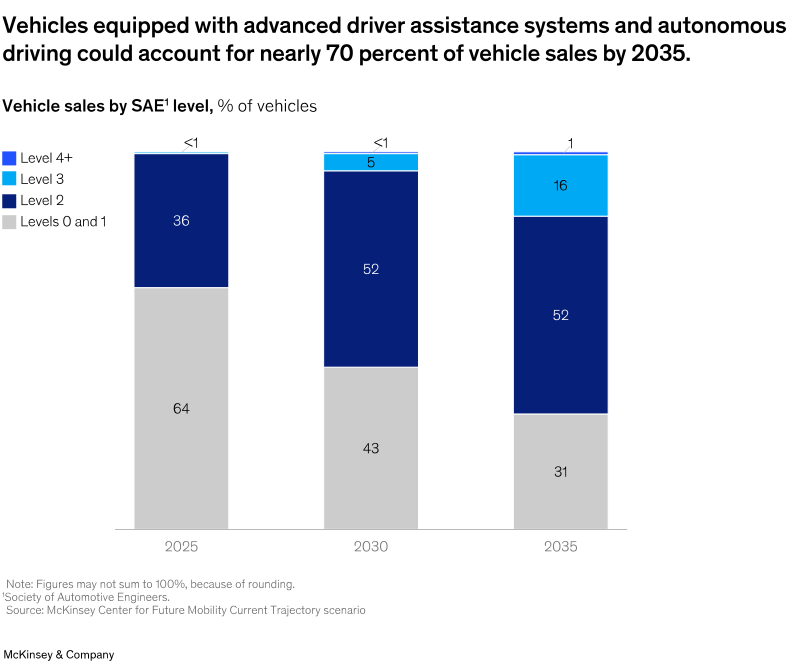
Vehicle sales by SAE level.
According to McKinsey analysis, vehicles with level 2 ADAS could make up 52 percent of vehicle sales by 2030. Safety regulations that require new vehicles to have more of the sensors used in level 2 ADAS will likely spur much of this market growth; as adoption increases, the overall cost of the required hardware and software will likely decrease. OEMs now offer level 2 ADAS packages at a much more affordable price than in the past, for example. Meanwhile, increasing customer preference for and willingness to buy AD-capable vehicles could boost sales of vehicles with level 3 AD to 16 percent of vehicle sales by 2035, compared with less than one percent in 2025. In anticipation of this shift in customer purchasing patterns, technology readiness is increasing as OEMs develop software and algorithms to enable level 3 AD capabilities. In contrast, only 1 percent of vehicle sales in 2035 will come from vehicles capable of level 4 AD and above (Exhibit 1).
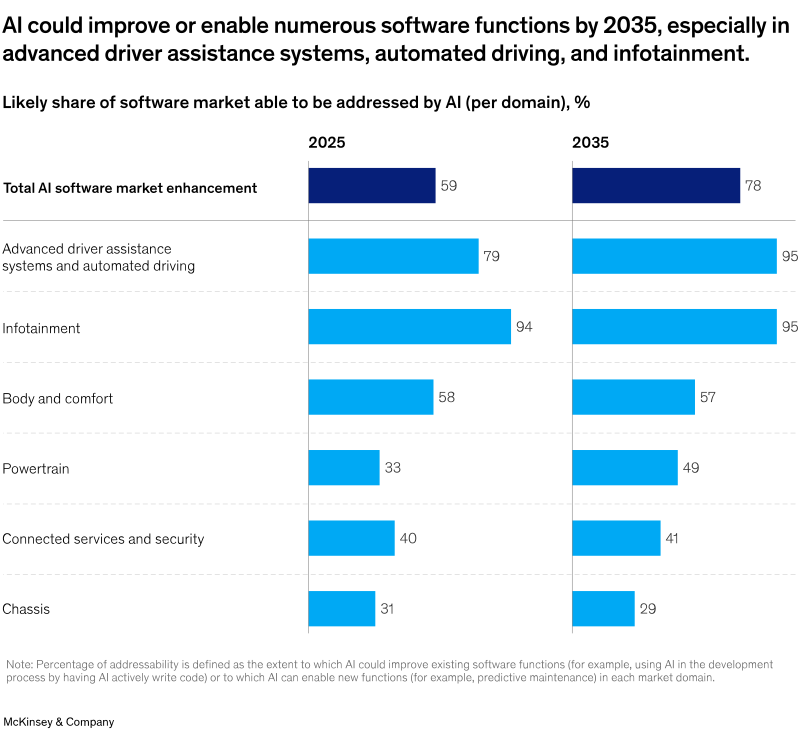
AI-enabled software functions.
AI has the potential to improve software features that make up 70 percent of the total market size. The market share for ADAS and infotainment is significantly higher—due to end-to-end learning for level 2 and above ADAS and voice control or personalization in in-vehicle infotainment, for example. Nonetheless, AI also shows potential to improve the functionality of features in other domains, such as in body (57 percent of the market in 2035), powertrain (49 percent), and connected services (41 percent). Some of the key features AI could enable include range estimation, lighting personalization, predictive maintenance, and intrusion detection. Given the high share of safety-relevant but also real-time capable software in chassis control (in electronic stability programs, for example), the degree of AI enablement is lower, but some use cases do exist, such as adaptive suspension (Exhibit 2).
Overall automotive software and E/E market.
Our modeling for 2025–35 CAGR in the overall market reflects the integration of AI to enhance ADAS capabilities, because the potential CAGRs for software and power electronics components far outpace CAGRs for control units and sensors. More power electronics will likely be needed as EV sales rise, given EVs’ greater reliance on these components compared to internal combustion engine (ICE) vehicles. SDVs and AI-powered capabilities could also contribute to increases in the software market. The central and zonal architectures that enable SDVs require less-complex (and less-costly) wiring harnesses; however, because the necessary control units have increased processing power, they can carry added cost. Further growth in the control unit market may be possible if synergies in hardware centralization lag or fail to materialize (Exhibit 3).
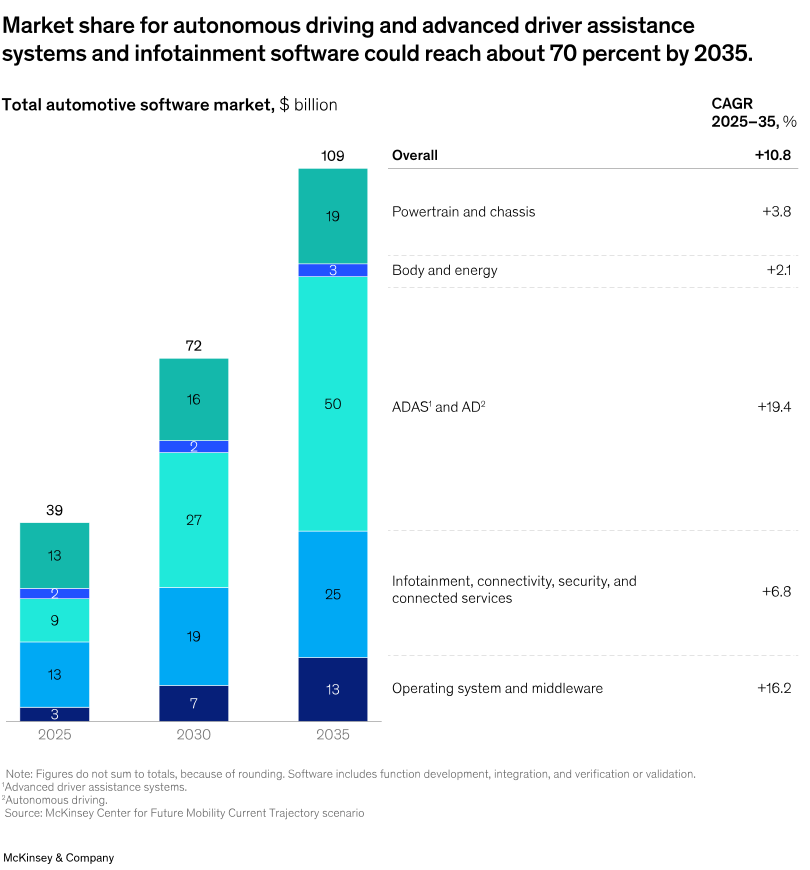
Software market.
Delays in deploying highly autonomous vehicles has shifted which segments of the automotive software market could grow (and by how much) between 2025 and 2035. The largest potential gains in CAGR remain tied to ADAS and AD, which will still likely make up around half of the market by 2035; the potential 2025–35 CAGR for this segment is nearly 20 percent, compared with a 2019–30 CAGR of around 12 percent. Notably, the 2025–35 CAGR for operating systems and middleware could reach around 16 percent. This growth reflects the complexities involved in developing ADAS, including the much greater and more complex coding and complex integration required for domain control units (DCUs), central control units (CCUs), and zone control units (ZCUs) relative to coding for electronic control units (ECUs). ADAS and AD software will likely represent the largest software market in 2030 and beyond, stemming from not only the development of the software but also the verification and validation of software features, as well as OEMs’ integration of software system components from various suppliers with vehicle electronics systems and the vehicle overall (Exhibit 4).
E/E architecture market.
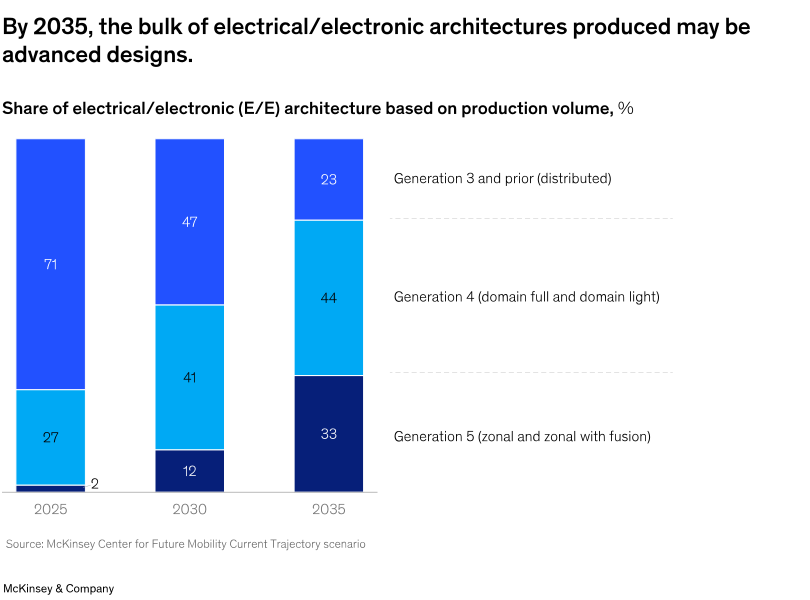
Development in ACES requires the advanced in-vehicle computational capabilities that advanced E/E architectures enable.4 Autonomous driving, for example, requires the development of new, complex, and safety-related software algorithms alongside high-performance computers capable of analyzing massive amounts of sensor data in real time. Delays in EV platforms have delayed adoption of advanced E/E architectures. Nonetheless, by 2035, the shares of E/E architecture production could be nearly the inverse of what they are today: Generation-three distributed architectures’ current 70 percent share of production could decline by nearly 68 percent, while production of generation-four domain-based architectures and generation-five ZCU architectures could account for more than 75 percent of production (Exhibit 5).
Control unit market.
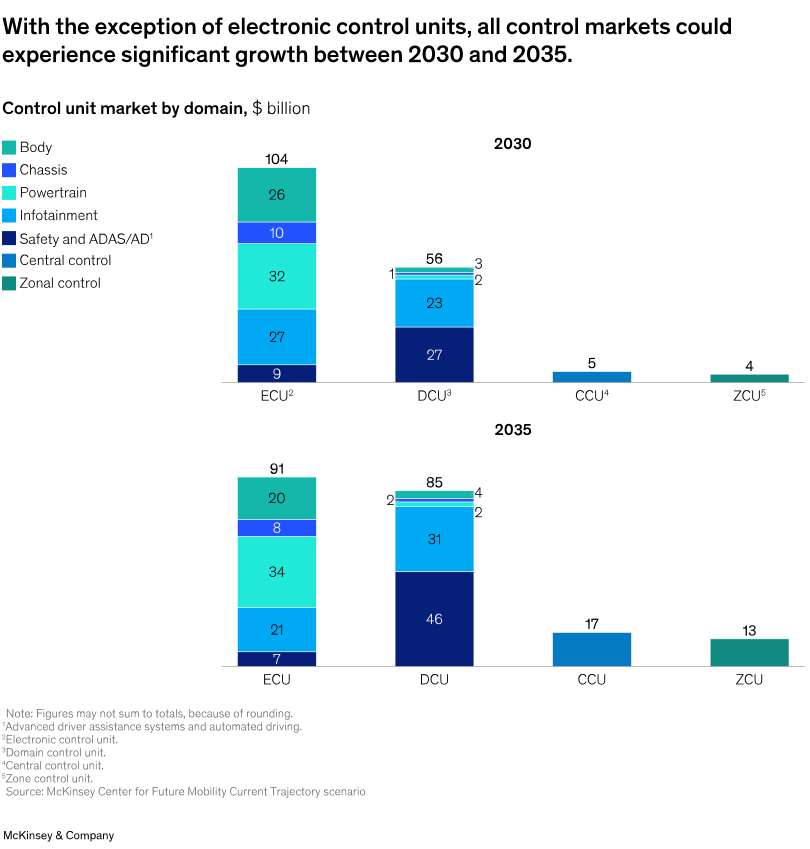
According to McKinsey analysis, the control unit market size could rise between 2030 and 2035. The market size for DCUs used in the safety and autonomous driving domains could nearly double while also rising in infotainment. The potential increase in cross-domain control units—zonal and central—could be substantial, more than tripling between 2030 and 2035, as production of generation-five E/E architectures that require these controls rises. Meanwhile, the ECU market size in the body domain may remain relatively steady while decreasing slightly in all other domains, because ECUs are increasingly replaced by DCUs and CCUs (Exhibit 6).
Sensor market.
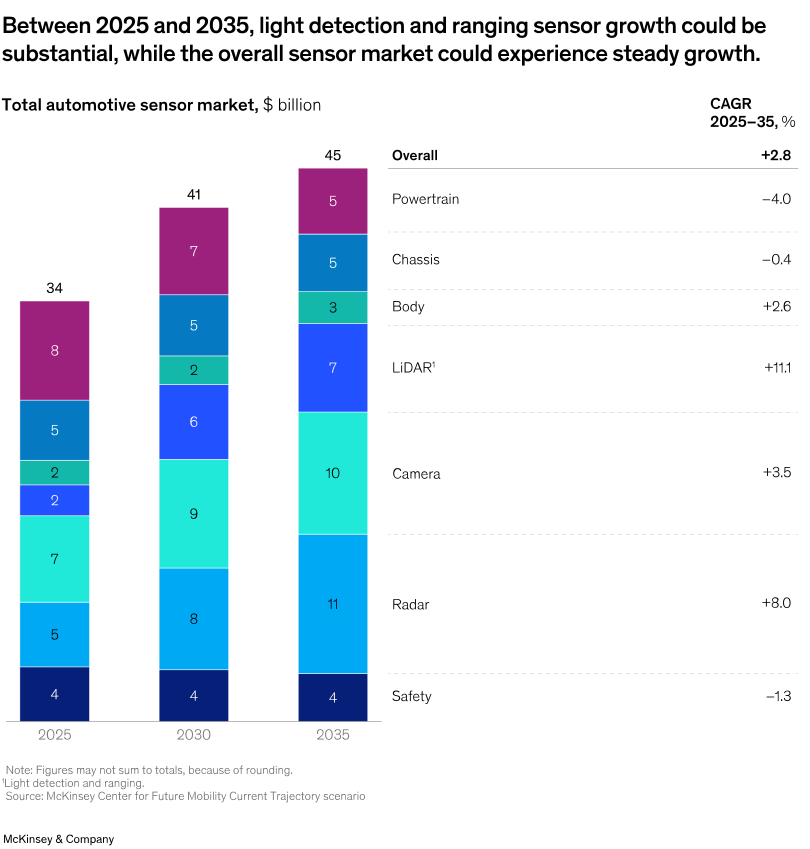
Between 2025 and 2035, the powertrain sensor market could decline gradually, given that EVs require fewer and lower-cost sensors per powertrain than ICE vehicles. Additionally, ICE vehicle sensors are typically expensive to produce—especially nitrogen-oxide and fuel ratio sensors. Meanwhile, the LiDAR sensors market could see an exceptional spike in growth as ADAS and AD adoption increases. In our experience, there is general consensus among OEMs that for level 3 and higher AD systems to function reliably, LiDAR sensors (potentially multiple per vehicle) are essential. Due to their high resolution and accuracy (greater than either cameras or radars), LiDAR sensors can detect and classify objects reliably, even in difficult lighting and weather conditions. The potential decline in powertrain sensors would be linked to a decline in the ICE vehicle market. Nonetheless, demand for ICE vehicle sensors could still outpace demand for EV sensors; as noted above, ICE vehicles contain more sensors than their electric counterparts (Exhibit 7).
According to our research, ultimately two trends could shape the future of automotive electronics and software: the shift toward zonal and central E/E architectures and the increasing integration of gen AI into vehicles. Zonal and central architectures simplify vehicle design, reduce complexity, and enable scalability, while gen AI can help enhance in-car experiences with advanced personalization, predictive capabilities, and safety features. Beyond the vehicle, gen AI is lowering costs and shortening R&D cycles significantly for software development, enabling faster innovation and more-efficient resource allocation.5
To adapt, OEMs must align their strategies with these trends. How? By simplifying E/E architectures, fostering cross-functional collaboration, and building end-to-end software capabilities. Leveraging gen AI tools can further enhance development efficiency, reduce costs, and accelerate time to market. And the more AI-centric an ADAS and AD stack is, the more it will determine a vehicle’s E/E architecture. Large perception and planning models mean that OEMs must shift from distributed ECUs to centralized compute, implement high-speed sensing and networking, select the appropriate sensors, ensure adequate memory and storage requirements are met, and implement safety-redundant compute islands. In essence, AI model architecture is now a first-order design input for the E/E architecture of next-generation vehicles. Implementing the system-wide changes needed to enable new E/E architecture builds is essential to unlock SDVs and remain competitive; leading OEMs are approaching these transformations holistically, promptly, and concurrently, rather than incrementally. Partnerships with other OEMs and technology providers and investments in reusable software platforms will also be critical to achieving economies of scale and boosting competitiveness in this rapidly evolving landscape.
Tier-one suppliers must redefine their strategies to align with OEMs’ evolving needs. How? By positioning themselves as thought partners in shaping zonal and central architectures. Investing in software development, gen AI integration, and system-level expertise can help suppliers capture a larger share of growth while streamlining their own R&D processes. Companies that embrace these shifts decisively will be well-positioned to lead in the era of the software-defined vehicle.