
Is micromobility shifting to a new gear? After years of hypergrowth but lagging profitability, market consolidation, and greater regulatory scrutiny, there are signs the sector is on the cusp of a new chapter—one dedicated to steady, profitable growth that may result in the emergence of long-term winners.
A key factor is cost management. While many micromobility providers struggle with profitability (bankruptcies remain common), it’s not because of declining top-line revenue. The culprit is usually a high cost base resulting from complex supply chains and ineffective production processes. In a world of scarce funding and a renewed focus on profitability, the providers that can best manage expenses will likely have a competitive edge. One emerging option for controlling costs is digital manufacturing and operations platforms, which have the potential to reduce the dominant cost in the micromobility value chain.
An established market
Micromobility has come a long way. After the emergence of shared micromobility in 2017, dozens of players jostled in a land grab for market share, figuring out business models on the fly as they undertook a market-making approach to shape the behavior of both consumers and cities. The COVID-19 pandemic resulted in market consolidation and gave regulators a chance to catch up. The net result was, and is, an established global shared micromobility market: Shared micromobility trips in the United States grew by an average of about 10 percent per year from 2018 to 2023, and 2024 may have set a record.1 In European countries such as Germany, passenger kilometers of private and shared bicycles increased by 5 percent between 2017 and 2023, mainly from longer distance trips.2
We expect this positive trajectory to continue. About 70 percent of global consumers are willing to use micromobility in the future3—especially electric kickscooters and regular and electric bicycles—while about 60 percent of European and American cities are building new micromobility infrastructure and providing tax subsidies for micromobility products such as electric bicycles, according to McKinsey analysis. We estimate this growth may result in a doubling or tripling of the global value pool for private and shared micromobility, possibly reaching $340 billion by 2030, led by Europe ($140 billion), China ($80 billion), and the United States ($35 billion).4
Digital manufacturing and operations platforms
Even with strong market growth, however, many micromobility companies continue to struggle because their issues are more likely driven by costs rather than revenue. To reach a new gear, companies may want to look for ways to refine unit economics to improve profitability and secure the trust of investors as the sector enters a phase in which funding volumes will likely be scarcer.
The shared micromobility value chain is complex, spanning across vehicle manufacturing, asset provision, fleet operation, and mobility services. Yet about a third of costs typically reside in manufacturing: the design and production of batteries and components as well as the design, integration, testing, and sale of vehicles. As a result, reducing expenses associated with the prototyping, assembly, and fulfillment of micromobility vehicles is a primary mechanism to drive profitability.
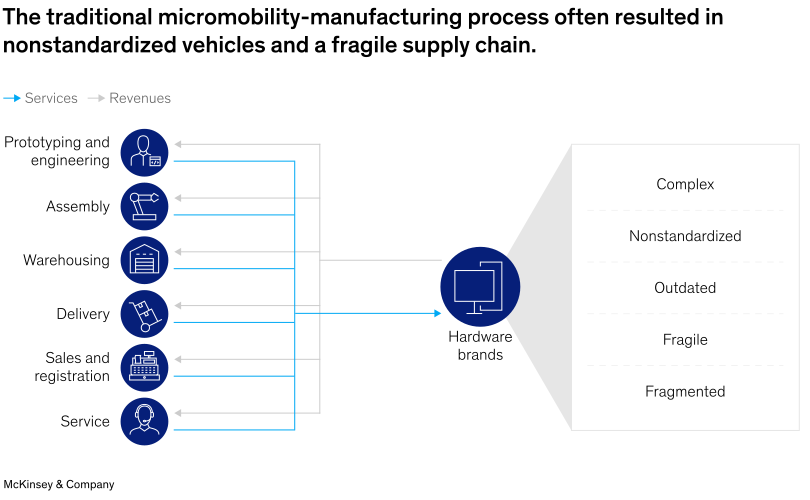
It’s not easy, though: Traditionally, many companies in both private and shared micromobility have collaborated individually with contract manufacturers or internalized production processes only to either lose control over the production process or struggle with a lack of technical know-how. This has created a fragmented and complex manufacturing process (Exhibit 1).
One emerging solution instead bundles the orders of various micromobility companies on a digital manufacturing and operations platform (Exhibit 2). These platforms provide companies with access to a large network of suppliers along the manufacturing, logistics, and after-sales value chain. In exchange, suppliers can get quick access to a broad spectrum of customers across the private- and shared micromobility ecosystem.
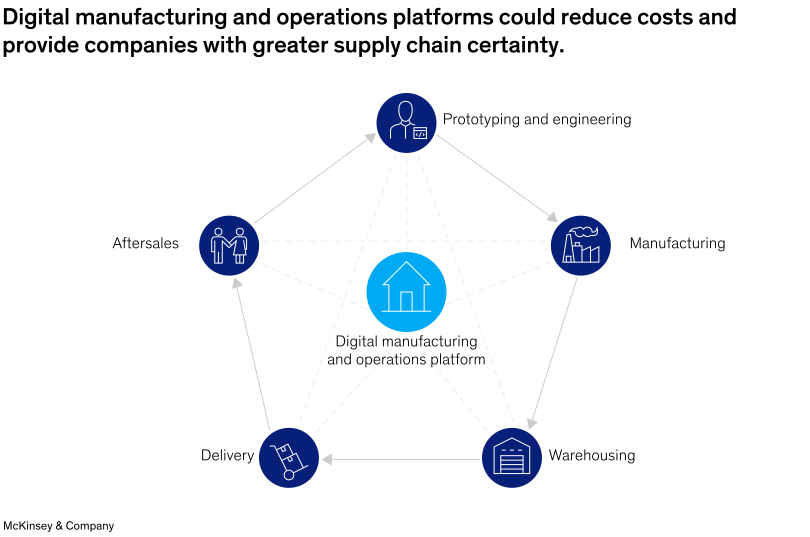
This bundling may take different forms depending on the underlying use case, including sharing production facilities and resources, consolidating freight, or aligning on things such as packaging standards or fulfillment processes. However, the core of this approach is matching companies with the right partners based on capability, geography, and availability so companies can focus on what they do best while still benefiting from economies of scale. In our experience, two questions often emerge from those seeking reassurance of the merits of adopting digital manufacturing platforms:
- How is critical intellectual property (IP) on vehicle design and R&D kept safe? Micromobility companies maintain full control of their IP, protected by nondisclosure agreements and by exposing only information crucial to the matching process. In most cases, the manufacturing platforms act as facilitators rather than operators—connecting brands with trusted partners without ever needing to take possession of core IP.
- Can we still differentiate? Micromobility companies can still differentiate as the digital manufacturing platforms help to offload operational overhead—such as warehousing, logistics, and assembly—while retaining elements such as design, customer experience, performance tuning, sales, or brand voice. As the platforms help their customers move faster and respond more quickly to demand, companies can test, learn, and evolve in ways that are hard to do when bogged down by managing the back end by themselves.
In summary, digital manufacturing platforms may provide significant advantages across the following stakeholders:
- Contract manufacturers benefit from higher, continuous order volumes and greater utilization of production lines, reducing unit and sales costs.
- Micromobility providers get access to manufacturers despite their lower order volumes or proven sales, allowing them to focus on core competencies such as vehicle design, R&D, or branding. This can help with cost and speed: For example, one hardware company used a digital manufacturing platform to scale in the United States without leasing warehouses or building additional logistics operations. Platforms may also assist operation agility by repositioning supply chains closer to customers—which lowers shipping costs and enables scalable operations—and by driving efficiency and sustainability by improving inventory placement.
- For the financial industry, capital can be allocated more effectively as less money is lost through ineffective production processes and supply chains.
- Regulators can establish technical standards across the industry thanks to the potential for bundled production orders from different micromobility providers. Such standards are increasingly relevant to winning city tenders and gaining public trust.
According to McKinsey analysis, recent data shows digital manufacturing platforms have the potential to reduce fulfillment costs by more than 50 percent while helping micromobility providers react more quickly to market demands. This approach could herald the next stage in the industry’s development: sustainable profitability.
This blog post was written with the kind support of Bloom, a US-based operations and manufacturing platform for hardware sectors, including micromobility, drones, robotics, and cleantech hardware. It provides customers nationwide access to warehousing, final assembly, delivery, and service capabilities.
1 McKinsey analysis; Shared micromobility report: 2023, NACTO, accessed June 13, 2025.
2 Mobilität in Deutschland: Kurzbericht [Mobility in Germany: Short report], German Federal Ministry of Transport and Digital Infrastructure, May 2025.
3 Kersten Heineke, Benedikt Kloss, Felix Rupalla, and Darius Scurtu, “Why micromobility is here to stay,” McKinsey, December 2, 2021.
4 “What is micromobility?,” McKinsey, April 29, 2025.