Surveys of investor sentiment tend to reveal a similar list of issues from year to year. But how investors rank those concerns can change dramatically, signaling where companies need to focus their messaging. McKinsey’s latest investor survey (see sidebar, “Our methodology”) reveals that geopolitics surged ahead of other preoccupations even before the conflict in Iran began at the end of February. The survey reveals two other themes—AI disruption and capital allocation discipline—to which investors are paying maximum attention.
Each of these themes is important for companies to bear in mind as they communicate with investors. But our experience suggests they are best addressed in tandem. Companies that can demonstrate resilience, connect AI to operating economics, and show disciplined capital allocation are more likely to earn long-duration investor commitment.
Geopolitics has become a top concern for investors
Sixty-nine percent of respondents place geopolitics among the top three macro themes influencing their investment decisions this year (Exhibit 1). This finding echoes the results of McKinsey’s previous CFO survey, where geopolitics was also top of mind for finance team leaders. Over a third of investor respondents rank it as their very top concern, nearly double the rate of any other single theme, and also rank it as the most underpriced risk in markets and their top concern for the investment climate.
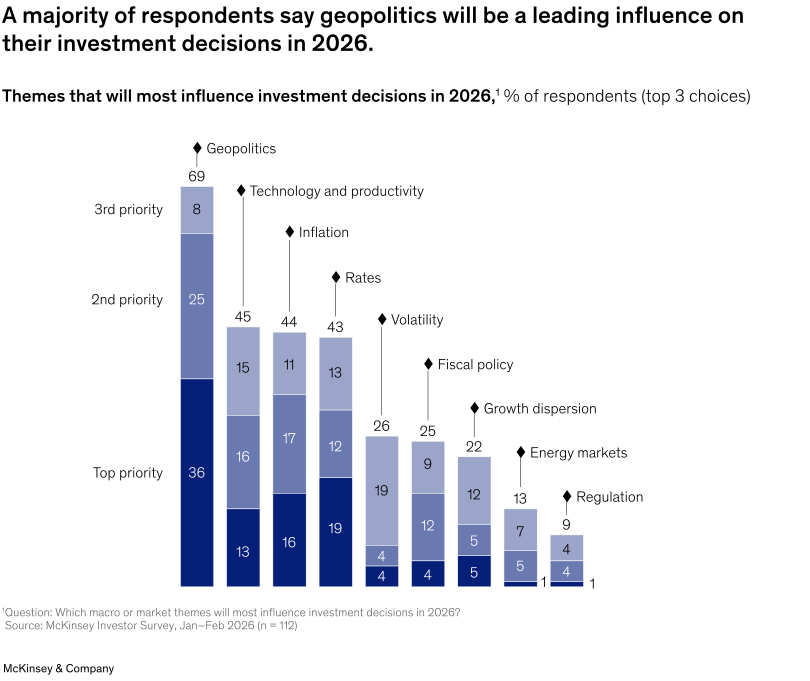
Three themes are roughly tied for the second-most-cited topics that are influencing investment decisions this year: technology and productivity, inflation, and interest rates. By contrast, in the next-most-recent survey, conducted in late 2024, investors ranked geopolitics, inflation, and interest rates as of roughly equal importance.

Strategy and value in turbulent times: The four foundations that drive long-term performance
November 12, 2026, 8:30 a.m. ET / 2:30 p.m. CET Join McKinsey experts Andy West, Whitney Zimmerman and Tim Koller for a discussion on what it takes to create and sustain value in an increasingly turbulent environment. They’ll explore four timeless foundations of strategy and how leaders can apply them to today’s hardest decisions.
Investors are intensely concerned about geopolitical risks
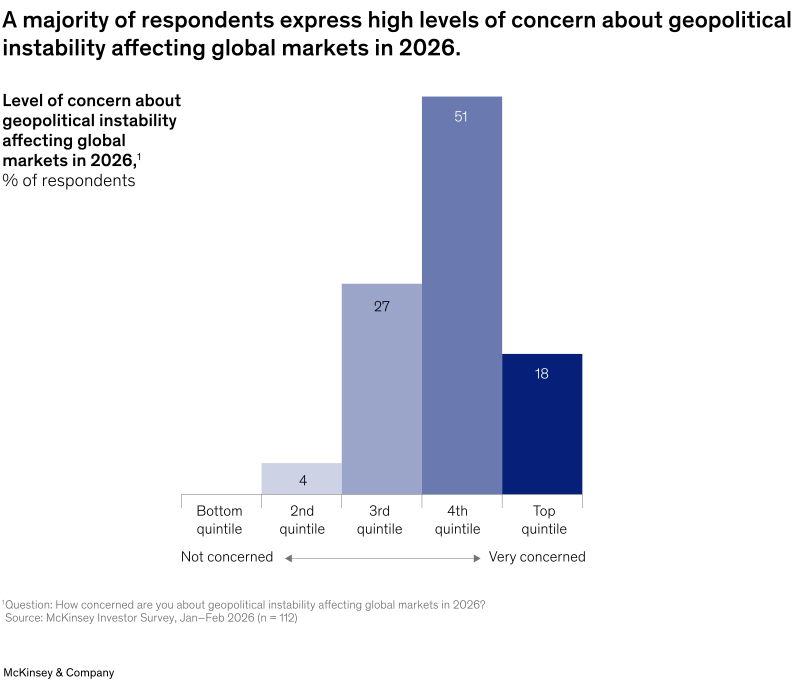
Respondents not only rank geopolitics at the top of their lists of preoccupations but also express high degrees of worry about it (Exhibit 2). Sixty-nine percent of investors report high levels of concern about geopolitical instability (giving it a 4 or 5 rating on a five-point scale), including 18 percent who select “extremely concerned.” Notably, no respondents select “not concerned.”
Within geopolitics, respondents appear most focused on great-power systemic risks, as opposed to regional instability. When asked to choose their three most pressing geopolitical concerns, 74 percent of respondents choose “trade restrictions and tariffs,” 67 percent “major power conflicts,” and about half “sanctions or fragmentation of global systems.” About a quarter include emerging-market political instability, and just under a quarter choose energy security.
Investors believe geopolitical risk is underpriced
A question asking respondents to choose up to ten underpriced risks reveals perhaps the most consequential finding of this survey: Respondents most frequently choose (at 32 mentions) geopolitical conflict as the most underpriced risk, well ahead of persistent inflation (20 mentions), tariff uncertainty (18), financial liquidity (10), climate transition (9), and AI disruption (9) (Exhibit 3).
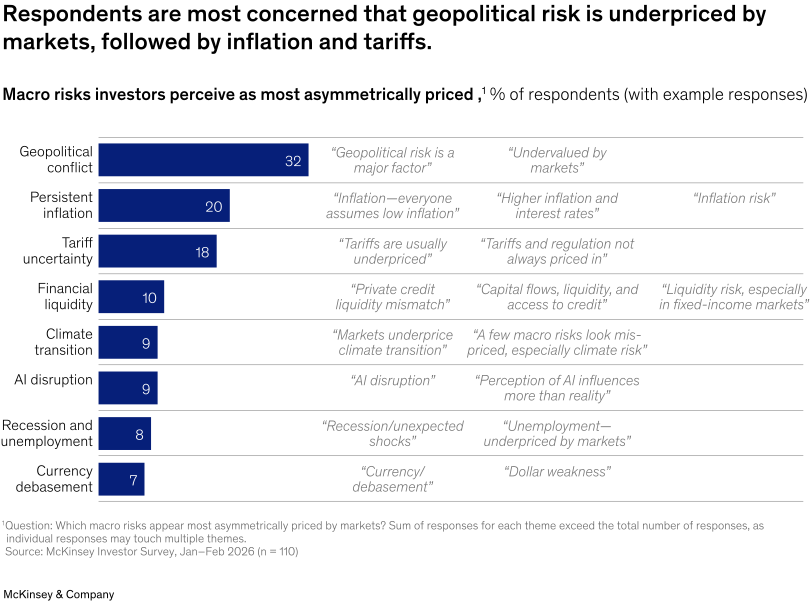
When investors say a risk is “underpriced,” they mean markets are too complacent and that the probability or magnitude of a negative outcome is higher than current valuations reflect. This perception matters because it indicates where investors look for differentiation: If they believe geopolitical risk is underpriced, they are likely to actively probe whether a company’s management team has quantified its exposure or is simply hoping the risk doesn’t materialize.
Perceptions of mispricing have practical implications for corporate leaders. Investors who believe a risk is underpriced are acutely sensitive to companies’ exposure. They are likely to feel more positively about management teams that articulate their approaches to tariff pass-through mechanics, supply-chain resilience, and geographic-revenue concentration.
Investors now consider AI adoption crucial—but want to see results
In this survey, respondents resoundingly express how important it is for a company to have a clear and dynamic approach to AI adoption. That’s a big change from just four years ago, when AI didn’t even come up as a topic in our 2022 investor survey, and from two years ago, when it was a rising but not yet central theme.
But another notable shift since the previous survey is the emergence of AI-related anxiety. “AI bubble risk” and “market concentration” now rank fourth and fifth among investment climate concerns.
Respondents think AI adoption and tech clarity make companies winners …
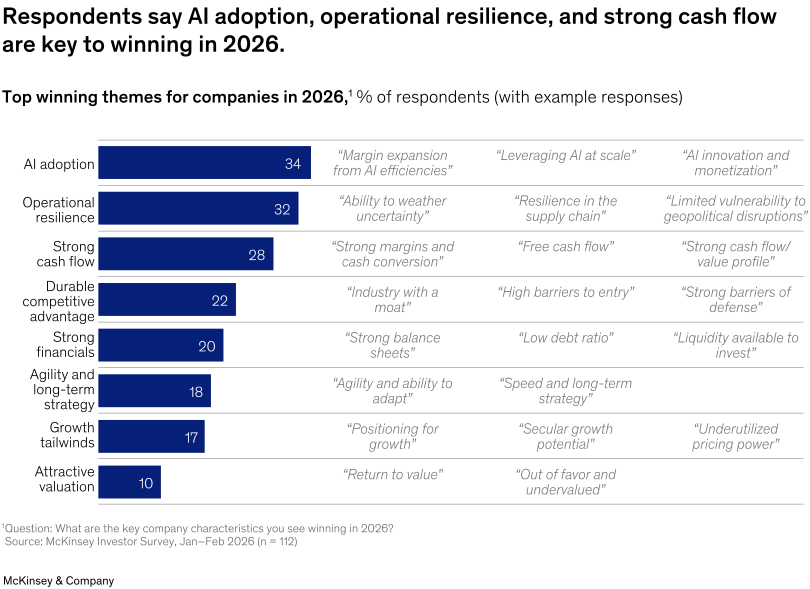
In open-ended descriptions of what makes a company a “winner” in 2026, respondents most frequently (34 times) mention something relating to AI, followed by topics relating to operational resilience (32), strong cash flow (28), and durable competitive advantage (22) (Exhibit 4). In our 2024 survey, only 31 percent of respondents even included AI and technology utilization as a characteristic of a winning company.
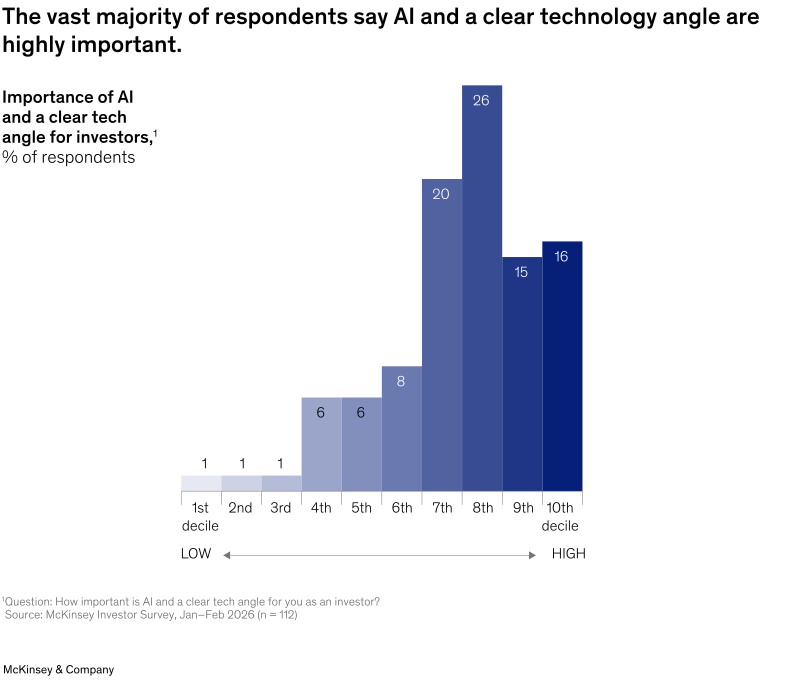
In the 2026 survey, 77 percent of respondents rate AI and a clear tech angle as highly important (7 or above, on a 1 to 10 scale), and 31 percent rate it as a 9 or 10. Only 3 percent assign relatively low importance to AI adoption (Exhibit 5).
… but when it comes to AI, respondents want to see results
A question about what investors view as the greatest risks to the investment climate reinforced that geopolitics and inflation and interest rates are major concerns. But large numbers of responses also reflect worries about “AI bubble risk” and “market concentration” (Exhibit 6).
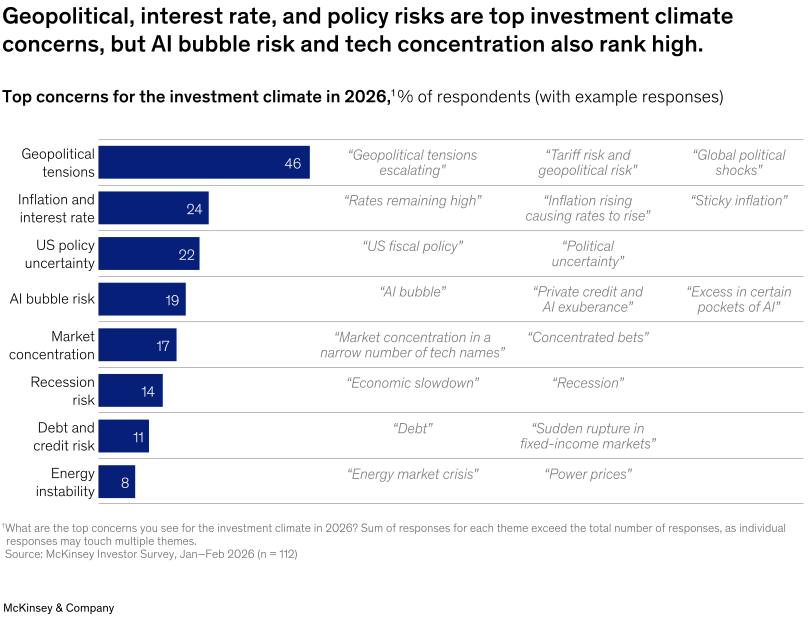
We surmise that investors make a distinction between companies that connect AI investments to measurable operating outcomes—margin improvement, productivity gains, customer acquisition economics, or defensible technical advantage—and those that aren’t clear about the profit-and-loss impact of their AI investments. Given rising concerns that AI enthusiasm may have outpaced reality, it’s unsurprising that investors are demanding tight capital discipline and a clear path to ROI.
Capital allocation discipline: The constant across every survey
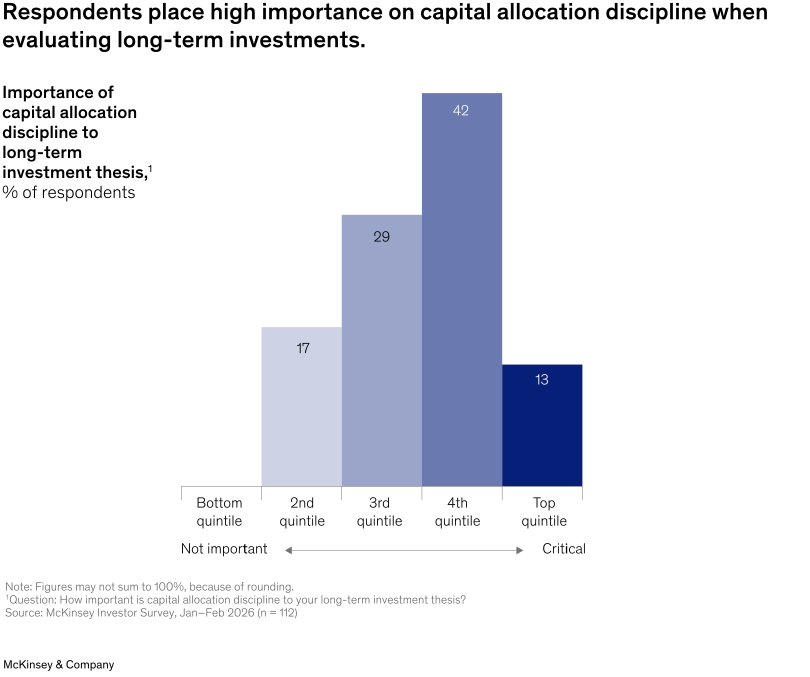
A majority of respondents considers disciplined capital allocation to be a core condition of their long-term investment theses (Exhibit 7).
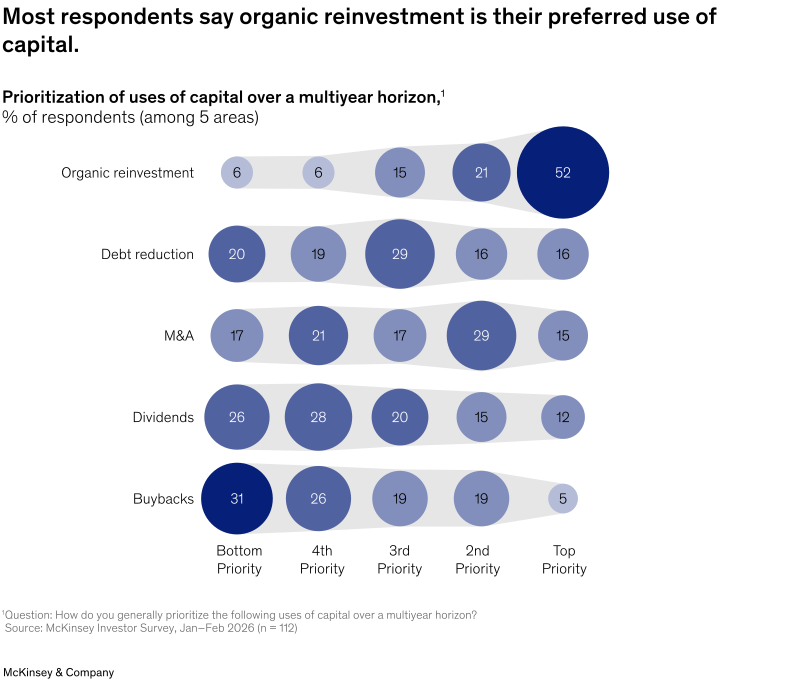
It’s important to note that organic reinvestment leads as the preferred use of capital (52 percent of respondents rank it first) (Exhibit 8).
For 63 percent of respondents, ROIC discipline is the hallmark of a quality capital allocator while 54 percent look for a clear allocation framework (Exhibit 9). These responses echo our survey from 2022, when capital productivity ranked among the top three drivers of long-term value creation, and our 2024 survey, when half of respondents said they prioritize EBITDA to evaluate company performance and a third said they prioritize ROIC.
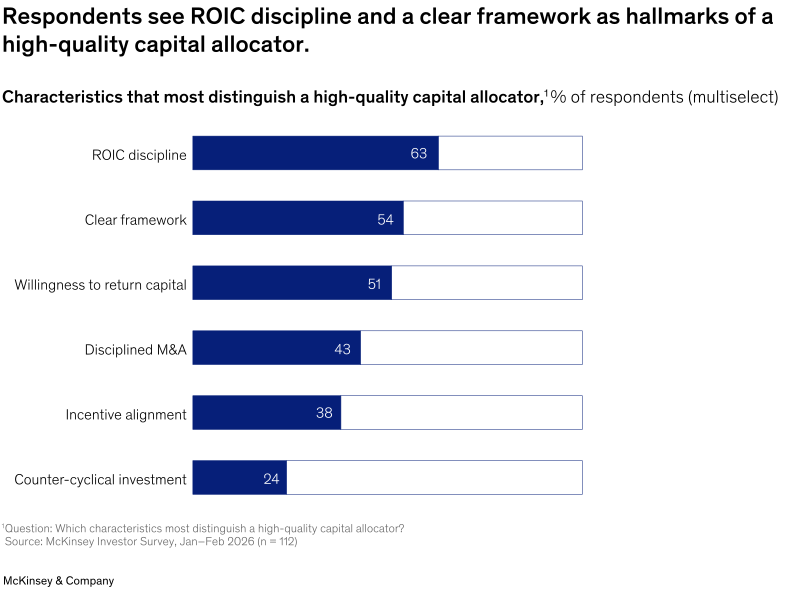
In short, even as the macro backdrop changes, some investor expectations do not: Intrinsic investors want to see disciplined capital allocation governed by return on capital.
Implication for companies
In our experience, investors assess three elements to gauge how attractive a company is as an investment:
- Resilience: How able is the company to make strategic bets amid uncertainty?
- AI credibility: Is the company’s AI story grounded in operating economics? Can it connect investments to margins, productivity, and/or defensible advantage?
- Cash and capital discipline: Does the company generate cash and allocate it rigorously, even amid uncertainty?
These considerations work best in unison. A strong AI story without geopolitical resilience could leave investors worried about concentration risk. Cash discipline without a credible growth narrative makes investors wonder where compounding will come from. Our read of the data is that companies best positioned to attract long-duration capital are those that can address all three filters in a coherent, integrated way.
In light of investors’ current concerns and priorities, we propose the following recommendations for companies:
- Respond to geopolitical risks tactically and strategically. Many companies have done a good job offering investors a clear-eyed view of exposure and resilience in the face of uncertainty. The best communicators explain what percentage of revenue is exposed to tariff-affected corridors, what the pass-through mechanics look like, and what contingency plans exist if a second-order disruption (such as sanctions escalation or supply chain rerouting) materializes. However, this kind of tactical resilience is now table stakes, while strategic resilience can set management teams apart. Those able to make strategic bets, even under conditions of uncertainty, are more likely to capture investor attention.
- Connect AI investment to operating economics. AI has swiftly moved from an emerging theme to the most-cited “winner” characteristic, but investors are also concerned about overshooting the target. Companies should be prepared to explain how their AI investments translate into financial results, whether through margin expansion, productivity improvement, customer acquisition economics, or a defensible technical moat.
- Emphasize capital allocation and cash discipline in the company’s equity story. Investors will be interested not just in whether companies have a capital allocation framework, but whether it holds under stress. The strongest signal a management team can send is that AI investment, M&A, and organic reinvestment are all governed by the same ROIC discipline, and that the framework has been pressure-tested against the scenarios of greatest concern to investors.
Taken together, these recommendations speak to what investors are really looking for: not a strategy that changes with every headline, but one that was stress-tested against a range of macro scenarios. Strategies need to be flexible enough to absorb geopolitical shocks, disciplined enough to hold the line on capital allocation, and—if relevant—grounded enough in AI that the investment thesis holds even if the market reprices. Rapid tactical responses to unexpected risks are now table stakes. The leaders who can create a robust strategy in the face of uncertainty and stick to it are likely to lead their companies to outperformance.