Geopolitical uncertainty is rising—but so is CFOs’ awareness of and responsiveness to it. In McKinsey’s latest CFO Pulse Survey,1 conducted in late 2025, finance leaders identify geopolitical issues as one of the biggest risks to their company’s growth, expressing more concern than they did in a survey conducted in early 2025. The recent conflict in the Middle East has proven them right, particularly as oil prices and other ramifications swell.
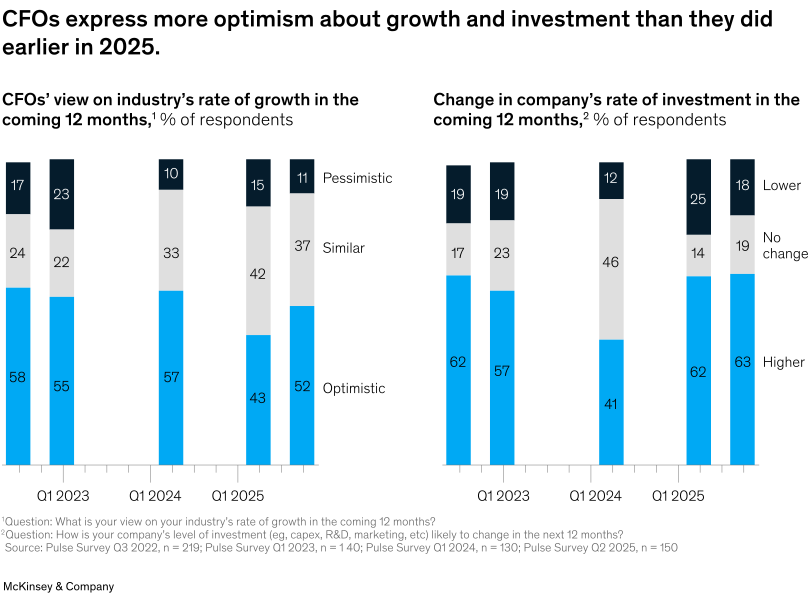
Despite concerns over the challenges they faced when the survey was conducted last year and a presentiment of further disruption, CFOs also report a more optimistic view of industry growth than they did in early 2025. Nearly nine in ten expect their industries’ growth rates to be similar to or better than they were over the past 12 months, and almost two-thirds anticipate higher company investment levels over the next year (across capital expenditures, R&D, and marketing) (Exhibit 1). Regionally, respondents in Asia–Pacific are the most upbeat on industry growth, followed by those in North America, while respondents in Europe have more neutral expectations. Despite these differences in sentiment, investment intent remains strong across regions.
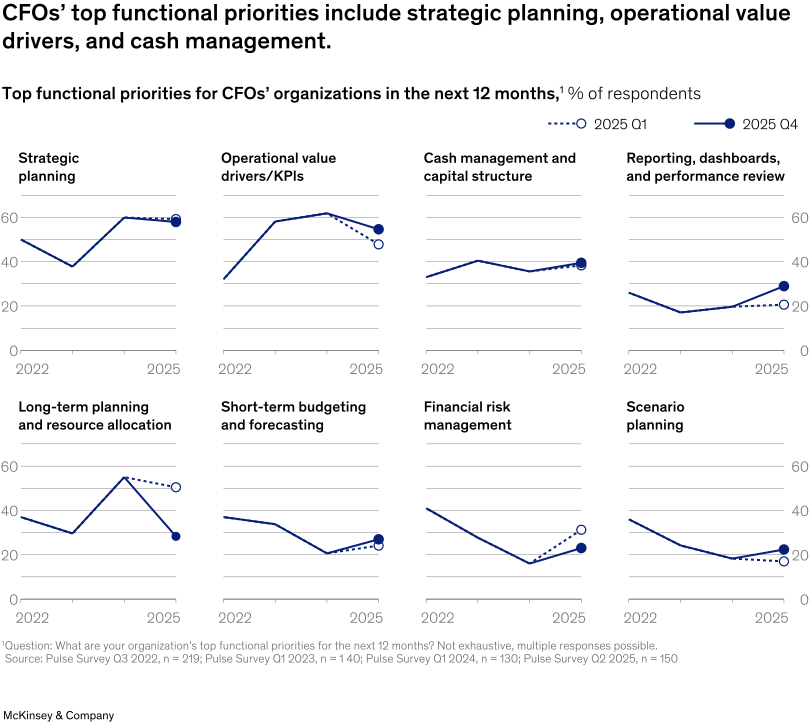
CFOs may be upbeat about growth, but they’re keeping a close eye on performance and near-term results. Respondents say their top functional priorities for the next 12 months are strategic planning and managing operational value drivers/KPIs (Exhibit 2). These rank well ahead of other priorities: In the earlier 2025 survey, half of respondents chose “long-term planning and resource allocation” as a top priority, which is now prioritized by 28 percent of respondents. This change suggests that respondents are focused on securing short-term company value rather than making long-term strategic decisions. Short-term focus is also illustrated by a shift in priorities over the past 12 months: Compared with the previous survey, respondents report that they have spent less time on organizational transformation and cost and productivity management and more on strategic leadership and performance management.
CFOs are concerned about external risks
Geopolitical instability has become an even greater concern for CFO respondents than it has over the past three years. In this survey, 37 percent identify geopolitical instability and/or conflicts, and 32 percent cite changes in trade policy and/or relationships as the biggest risks to their companies’ growth over the next 12 months. A large number of respondents also say their top concerns include inflation (31 percent) and weak demand (29 percent). More than a quarter of respondents list technology disruption or cyber risk as top potential risks (Exhibit 3).
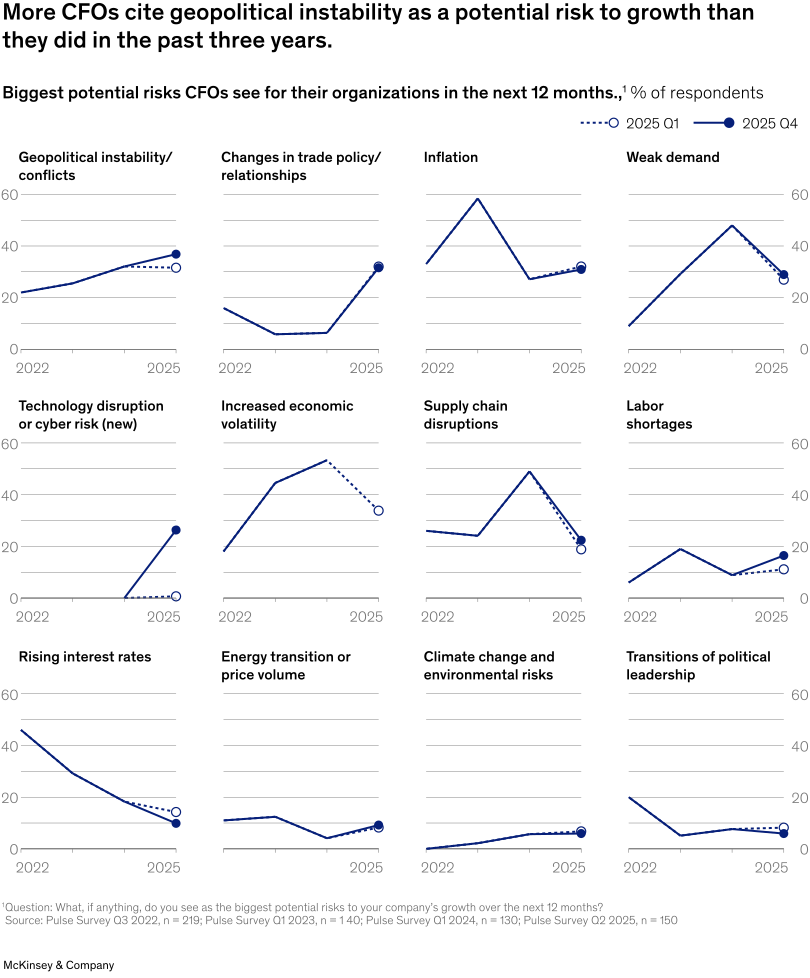
The survey responses indicate that CFOs see risks across the full value chain: from market access and pricing (via tariffs and regulatory constraints), to cost and supply continuity (via trade barriers and logistics disruption), to investment choices (via incentives and restrictions), to technology strategy (via IP and cybersecurity controls).
Taken together, these external pressures are likely compelling CFOs to control what they can by closely tracking performance, stress testing their plans, and ensuring their companies can adjust without abandoning long-term strategies.
Tariffs and industrial policy are among top concerns
When asked which geopolitical or macro topics they will pay the most attention to over the next 12 months, more than 60 percent of respondents name “tariffs and other trade barriers” (Exhibit 4).
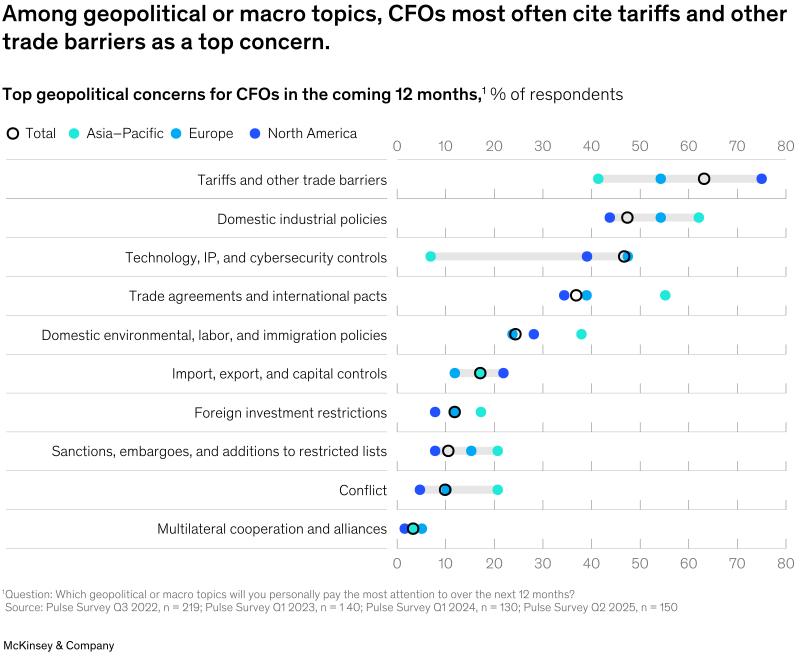
There is regional variety among top CFO preoccupations. In North America, three-quarters of respondents say they will pay most attention to tariffs and other trade barriers. In Europe and Asia–Pacific, domestic industrial policies are top of mind. CFOs in North America and Europe include technology, IP, and cybersecurity controls among their top three concerns, while fewer than one in ten Asia–Pacific CFOs cite this as a leading area of attention.
Responses also vary by company characteristics. Respondents at small-cap companies are more likely than peers at larger firms to pay attention to technology, IP, and cybersecurity controls as well as domestic environmental, labor, and immigration policies. Respondents at public companies report planning to pay significantly greater attention to tariffs and trade barriers than those at private companies, who cite technology, IP, and cybersecurity controls as top focus areas.
Notably, CFOs place comparatively less emphasis on multilateral cooperation and alliances, suggesting that they perceive direct policy instruments to have a bigger impact on their businesses.
How CFOs are responding to uncertainty
Across regions and company sizes, nearly two-thirds of CFO respondents report responding to geopolitical uncertainty by increasing cash and liquidity buffers (Exhibit 5).
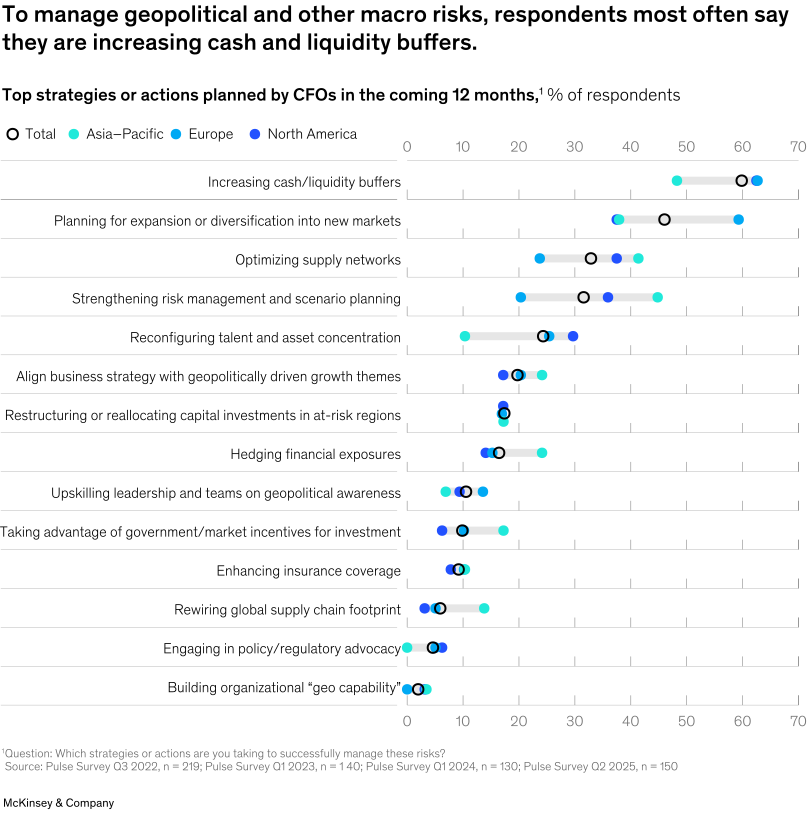
The second-most-popular risk management approach differs somewhat by region. European respondents are significantly more likely than their peers to plan for expansion or diversification into new markets. North American respondents say they, too, are planning expansion or diversification into new markets, but are equally likely to say they are optimizing supply networks. Asia–Pacific respondents are comparatively more inclined to strengthen risk management and scenario planning. More structural moves—such as restructuring their global supply networks, reallocating capital investment in at-risk regions, and building internal capabilities to assess and manage geopolitical risk—are less frequently cited by respondents in all regions.
The missing ingredients for navigating uncertainty
It is little surprise that a preponderance of respondents say their greatest challenge in managing geopolitical risks is simply the uncertainty and unpredictability of events. The second-most-cited constraint is intelligence: Some CFOs—particularly in Asia–Pacific—report a lack of timely, reliable information on the impact of geopolitical events on their companies. Only 8 percent of respondents identify balancing short-term mitigation with long-term strategy development as a challenge in volatile and uncertain times.
Asked which additional resources or capabilities would help them feel more confident in navigating geopolitical uncertainty, respondents most frequently cite clearer regulatory guidance and government support (24 percent) and real-time intelligence and risk monitoring (22 percent). The remaining responses indicate that CFOs want tools to help them make decisions, model different scenarios, and get expert advice (Exhibit 6).
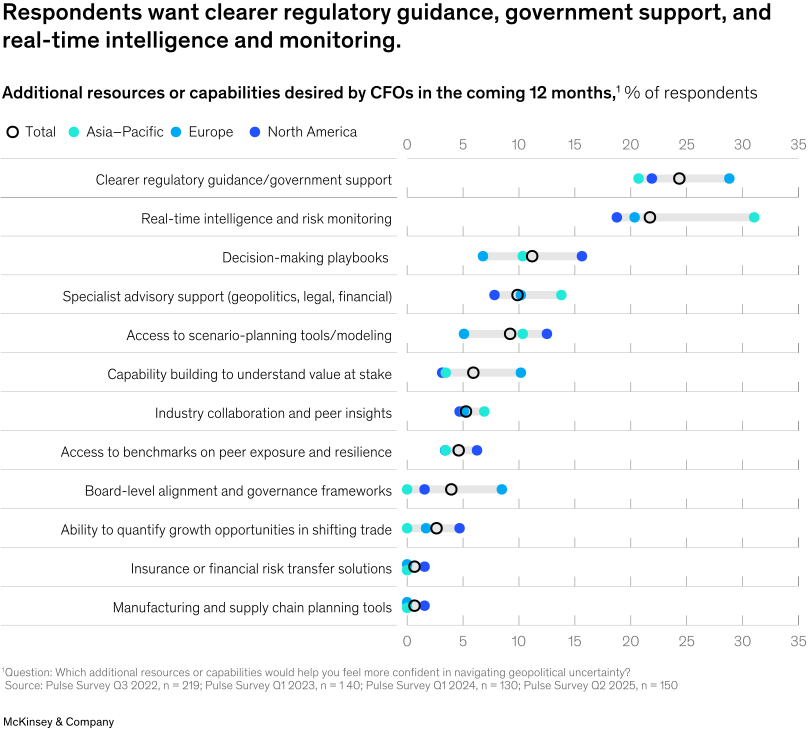
Answers by company profile reveal some nuances. Respondents at large companies express a desire for a combination of clearer regulatory guidance, government support, and real-time risk monitoring, while those at mid-cap organizations prioritize regulatory guidance. Meanwhile, respondents at small-cap companies also express a desire for specialist advisory support, something that is of minor importance to most mid- and large-cap respondents.
Understanding and reacting to risks and opportunities
Survey respondents’ focus on geopolitical risks dovetails in many ways with McKinsey’s position that rigorous risk monitoring and scenario planning are of the utmost importance for understanding implications and navigating a company through uncertainty. Scenarios should reflect geopolitical stress testing and translate potential shocks to GDP, rate, and inflation that can inform business actions. CFOs can link KPI systems that track whether growth and margins meet targets, play through crisis scenarios early, and plan responses.
While respondents primarily focus on minimizing the impacts of geopolitical risks, we believe that CFOs can also seek opportunities for risk-adjusted value creation arising from uncertainty. Scenarios can be used to accelerate entry into markets where shifts create openings and to move operations or footprints to emerging geographies. Growth strategies can be tailored to incorporate opportunities that arise from volatility. These should consider the impact of geopolitical uncertainties on competitor behavior, M&A opportunities, investment decisions, new trade corridors, incentives, opportunities for improving internal cost structures, and the optimization of capital deployment. CFOs can be the driving force in identifying these opportunities.
CFOs should also be aware of the risks of overindexing for near-term volatility and not thinking strategically about the long-term strategy. They can integrate broader geopolitical factors into long-term scenarios to understand the sustained effects these factors have on specific business models. Analytics can help generate insights.
The latest survey shows that CFOs are responding to geopolitical risk and uncertainty by protecting liquidity, assessing their exposure to risk, and adjusting markets and supply chains where needed. In the short run, such measures are practical ways to manage risk.
The next step is to move from a defensive to an offensive stance. Though finance leaders cannot control external forces, they are well positioned to bring geopolitical risk into strategy and long-term capital planning. As the survey shows, many CFOs feel they lack strong real-time intelligence. Companies that invest in better intelligence are better positioned to quickly respond as trade patterns, policy incentives, and competitive landscapes shift and opportunities emerge.
No CFO can see the future. But those who build better real-time intelligence, protect the business today, prepare for various future scenarios, and align short-term steps with long-term strategy will be best positioned for whatever comes next.