At a glance
- More than half of today’s work hours in Latin America could theoretically be automated using artificial intelligence and other existing technologies. This is similar to what we find in advanced economies. AI-driven agents account for most of the region’s automation potential, as they do elsewhere, but Latin America’s greater share of physical work means robots play a larger role. These estimates reflect technical feasibility, not a forecast of adoption or job losses.
- Automation could unlock roughly $450 billion in annual economic value across Latin America by 2030. Realizing that value will depend on adoption, which our analysis suggests is likely to lag behind that of advanced economies because of lower wages, the higher relative cost of robotics, and differences in organizational readiness.
- Most human skills will endure, even as they are applied differently. Some 66 percent of the skills sought by Latin American employers today are used in both automatable and non-automatable work. This overlap means skills such as problem-solving, teamwork, and effective communication are more likely to be used in collaboration with AI than replaced by it, at least in the near term.
- Demand for AI fluency—the ability to use, manage, and create with AI tools—has grown 11-fold in two years, roughly twice as fast as in the United States and Europe. It is now the fastest-growing skill category in Latin America’s labor market.
- Case studies show that the value of AI comes from redesigning workflows, not technology alone. Across sectors, companies in Latin America are combining people, agents, and robots to move more quickly, expand coverage, improve decisions, and make previously impractical work possible.
AI has expanded what machines can do—changing how work gets done everywhere. In Latin America, some 57 percent of current work hours could theoretically be automated using technologies that already exist.1
But technical potential is easily misunderstood. It is not a forecast of job losses. Instead, it signals how profoundly work could be reorganized. An important point is that most jobs combine tasks that machines can do with those they cannot. Even as AI-driven agents and robots take on more work, people will continue to exercise judgment, interpret context, build and manage relationships, and remain accountable for outcomes.
Just as important, only part of what is technically feasible is likely to be adopted. That is true in advanced and developing economies alike, but the gap between potential and adoption may be wider in Latin America. Overall, work in the region is more physical than in the United States and Europe—and physical automation often requires robots, which can be more expensive to deploy than agents that perform cognitive work. At the same time, wages are generally lower, weakening incentives to automate.
Yet slower adoption does not imply a lack of innovation. Companies across Latin America are already deploying AI at scale. In some cases, the technology makes work faster, safer, and more efficient. In others, it enables capabilities that would be difficult—or impossible—to achieve through human effort alone. For example, there are AI agents that listen to thousands of customer service calls and help representatives identify sales opportunities in real time. There are also AI systems that help airlines evaluate operational disruptions and identify the least disruptive response within minutes.
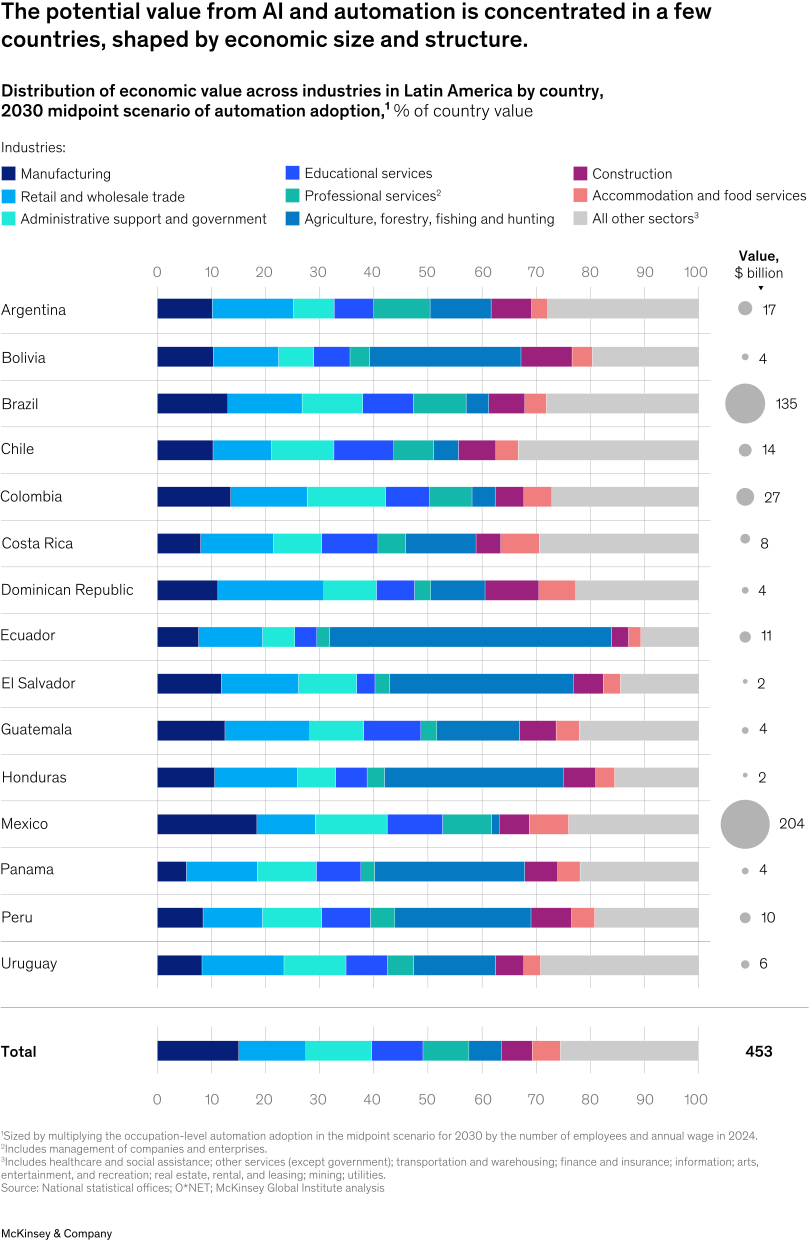
The variety of these use cases reflects the diversity of the region itself. There is no single Latin American automation story. Latin America includes service-oriented economies such as Costa Rica and Panama, where AI-enabled agents may play a larger role; larger, more diversified economies such as Brazil and Mexico, where agents and robots may advance together; and economies such as Bolivia, Ecuador, and Honduras, where agriculture accounts for a larger share of work.
These differences will shape how quickly technologies spread, how work changes, and which skills workers need as they increasingly work alongside agents and robots. The transition is already visible. In Latin American labor markets where job-posting data are available, demand for AI-related skills is growing roughly twice as fast as in advanced economies.
Latin America faces slowing population growth, aging workforces in many countries, and a long-standing productivity challenge. Raising living standards will increasingly depend on how effectively people and technology work together.
The economic stakes are enormous. By 2030, automation could unlock about $450 billion in annual value across the 15 Latin American countries analyzed.
Building on recent McKinsey Global Institute research on the United States and Europe, this report examines how automation could reshape work and skills in Latin America, with lessons for developing and middle-income economies more broadly.
Even where adoption may be slower overall, organizations are already finding creative ways to combine people, agents, and robots. How broadly those approaches spread will help determine how much of Latin America’s automation potential is ultimately realized.
Country dashboards
The dashboards below offer a country-specific view of automation potential, demand for AI-related skills, and MGI’s Skill Change Index (SCI), which measures how exposed skills are to automation. They cover five large, data-rich labor markets where job-posting and skills data are robust enough to support comprehensive analyses. The full report follows.
Work will increasingly involve collaboration among people, agents, and robots
Automation potential offers a glimpse of how work could be reorganized in the years ahead. Across the 15 Latin American countries analyzed, 57 percent of today’s work hours could theoretically be automated using existing technologies—39 percent through agents and 18 percent through robots.2 The remaining work hours cannot currently be automated because they involve judgment, contextual reasoning, or work performed in unpredictable physical environments where machines do not yet operate reliably (Exhibit 1).
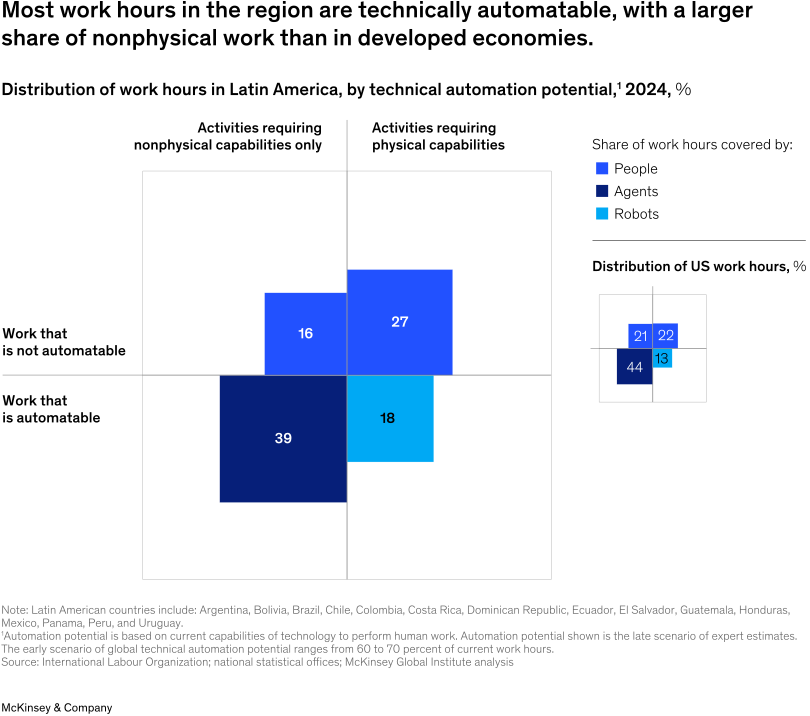
In this report, we use “agents” and “robots” as broad, practical terms for technologies that automate nonphysical and physical work, respectively.3 Estimates of automation potential reflect what is technically feasible, not what organizations will necessarily adopt in practice, which depends on cost considerations, organizational readiness, and other factors. Nor do these estimates capture how work itself may evolve as activities are redesigned, new tasks emerge, and new occupations appear.4 The top-line figures also mask meaningful differences within the region in the balance between agent- and robot-led automation.
Robots play a larger role in Latin America than in advanced economies
Automation potential in Latin America is broadly similar to that in the United States and Europe, despite important differences in economic structure and work composition.
Even within Latin America, where economies differ substantially, the share of today’s work hours that could be automated is relatively tightly clustered, with most countries falling between 55 and 59 percent. Panama sits below that range, at 53 percent.
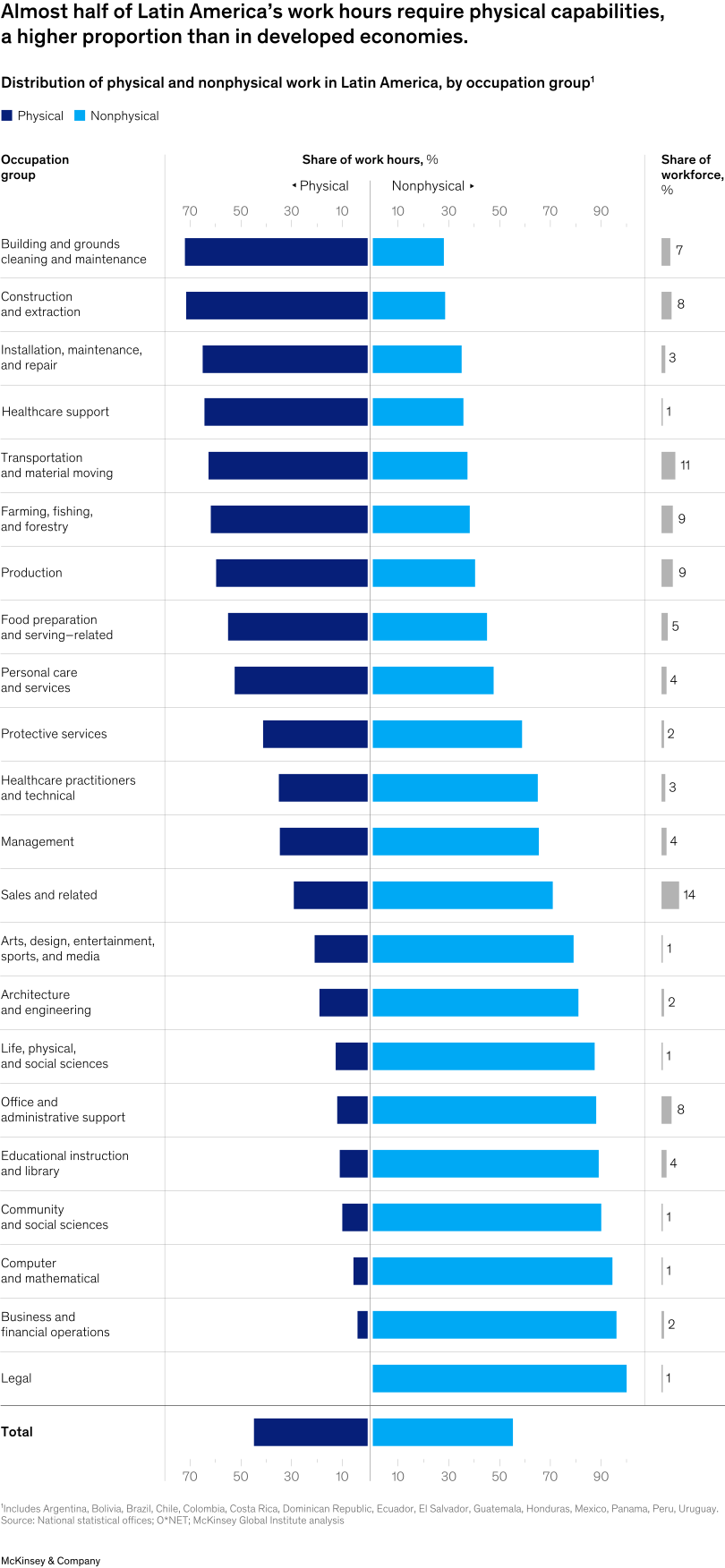
The larger variation is in the automation mix. Agents account for most automatable work across Latin America, as they do in the United States and Europe. But robots account for a larger share of automation potential in Latin America because physical labor occupies nearly half of all work hours in the region, compared with roughly a third in the United States and Europe (Exhibit 2).
Within Latin America, Bolivia, Ecuador, and Honduras have particularly large shares of employment in farming, construction, transportation and material moving, and other physically intensive sectors.
Argentina, Uruguay, and Chile, by contrast, have more office-based work and therefore greater potential for agent-led automation. Brazil, Colombia, Mexico, and Panama sit closer to the middle in terms of composition, with more balanced mixes of physical and nonphysical work, including office, service, production, and logistics roles.
We return to these country groupings in the pathway section below.
Jobs fall into seven archetypes combining people, agents, and robots
Technical automation potential varies significantly across jobs. To understand how work may be reorganized, we group roughly 800 occupations into seven archetypes that reflect the relative role of people, agents, and robots (Exhibit 3).
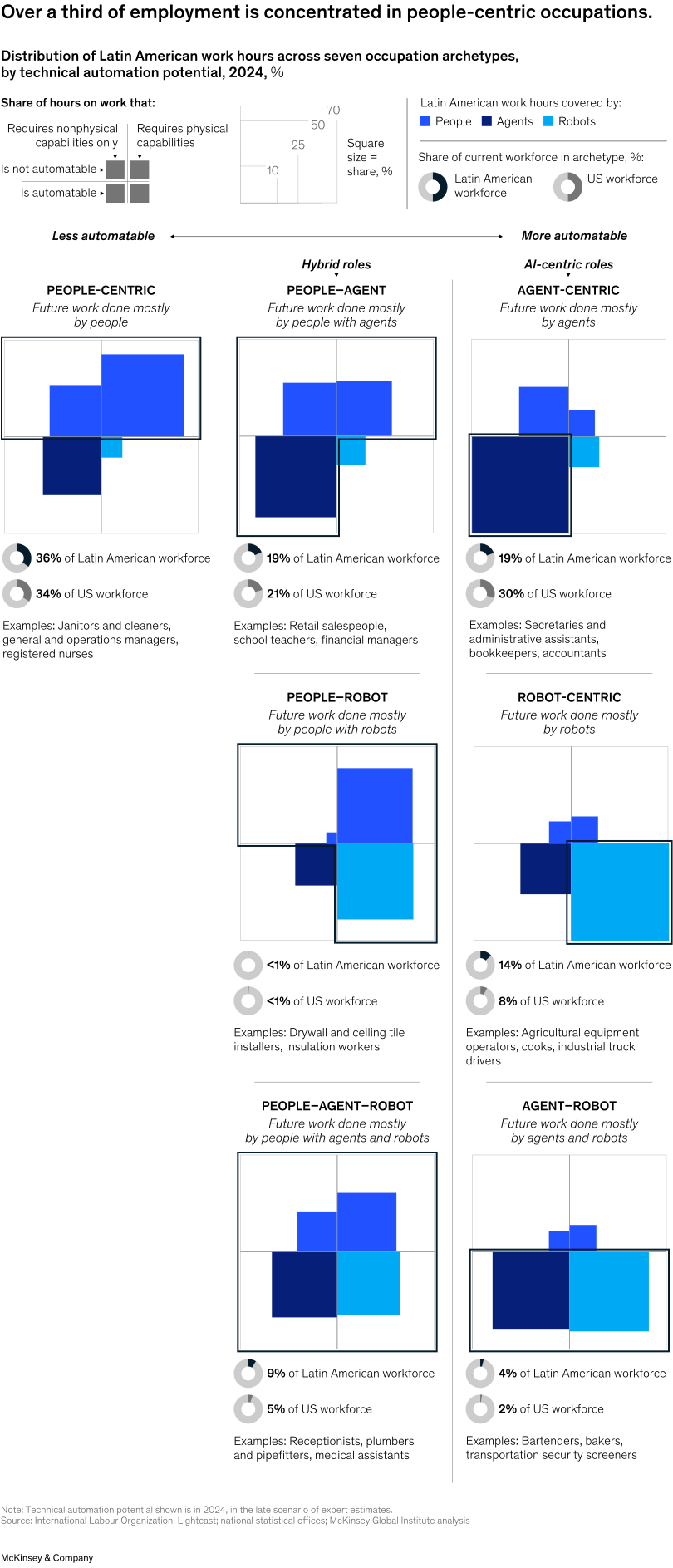
People-centric roles account for about 36 percent of employment across Latin America. These occupations rely heavily on human judgment, interpersonal interaction, and adaptability in unstructured physical or social environments. Examples range from janitors and healthcare practitioners to general managers.
An additional 28 percent of employment falls into hybrid roles, in which people work alongside agents, robots, or both. In these occupations—such as salespeople, plumbers, and medical assistants—humans remain central, but workflows may change substantially as agents and robots take on more structured and repeatable tasks.
The remaining 37 percent of employment is concentrated in occupations that could become more AI-centric. These occupations typically involve more routine, codified, or rules-based activities, making them easier to automate than other work.
Panama stands out for its relatively large share of employment in people-centric and hybrid roles, helping explain why its overall automation potential sits below the regional range.
Automation pathways reflect Latin America’s economic diversity
As adoption unfolds, three broad automation pathways are likely to emerge across Latin America.
The first group—Argentina, Chile, Costa Rica, and Uruguay—has an automation profile closest to that of advanced economies. These countries have larger service sectors than the regional average, and more than 70 percent of automatable work is nonphysical. AI-enabled agents are therefore likely to play a larger role.
The second group—Brazil, Colombia, the Dominican Republic, Mexico, and Panama—sits closer to the regional middle. Neither agents nor robots dominate to the same degree as in the two other groups, reflecting a more balanced mix of physical and nonphysical work.
The third group—Bolivia, Ecuador, El Salvador, Guatemala, Honduras, and Peru—has more physically intensive employment profiles. Because around 40 percent of automatable work is physical in these countries, capturing value will depend more heavily on robotics, autonomous systems, and the infrastructure needed to deploy them.
Automation could unlock $450 billion in value in Latin America—depending on the pace of adoption
Major new technologies have taken decades to spread, from electricity to industrial robotics to cloud computing, which is still expanding. The pace of AI and automation adoption will hinge on cost-benefit considerations, investment levels, and organizational readiness, as well as the time required to develop and deploy systems.
We model two scenarios based on historical patterns of technology diffusion. In our midpoint scenario, AI and automation could generate about $450 billion in annual economic value by 2030 in Latin America (Exhibit 4).5 In a more gradual scenario, this falls to roughly $230 billion. The difference shows how strongly outcomes depend on the pace of adoption.
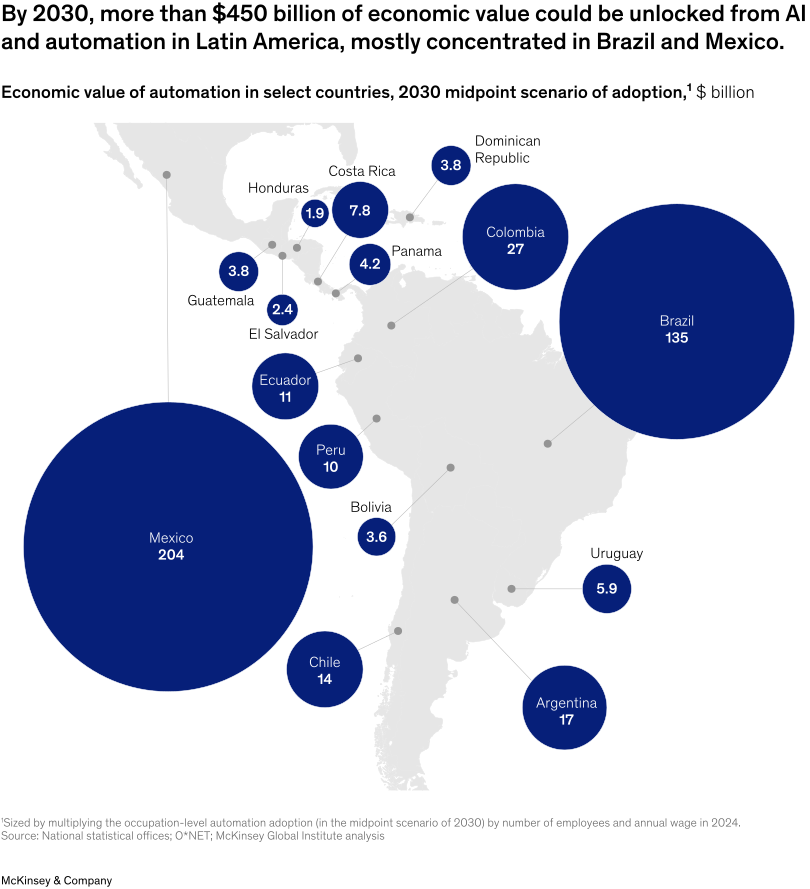
Potential gains are also highly concentrated. Brazil and Mexico account for roughly 75 percent of the region’s automation value, largely because of the scale of their workforces and, in Mexico’s case, relatively higher wages. Smaller economies could also see substantial gains relative to their size.
These estimates describe potential benefits at the organizational level rather than direct increases in GDP (see sidebar “Methodology for estimating the economic value of AI”).6 They reflect the value of work hours that could be automated—and therefore freed up for other activities—under different adoption scenarios, taking into account both the diffusion of established technologies such as robotics and the emergence of newer, AI-enabled agents.
In our midpoint scenario, Latin America’s adoption rate is materially lower than in advanced economies, at 14 percent compared with 27 percent in the United States and 25 percent in Europe. One reason is economics. Lower wages reduce the incentive to automate because technology remains more expensive relative to the labor it would replace. Countries with higher labor costs tend to have a stronger business case for adoption.
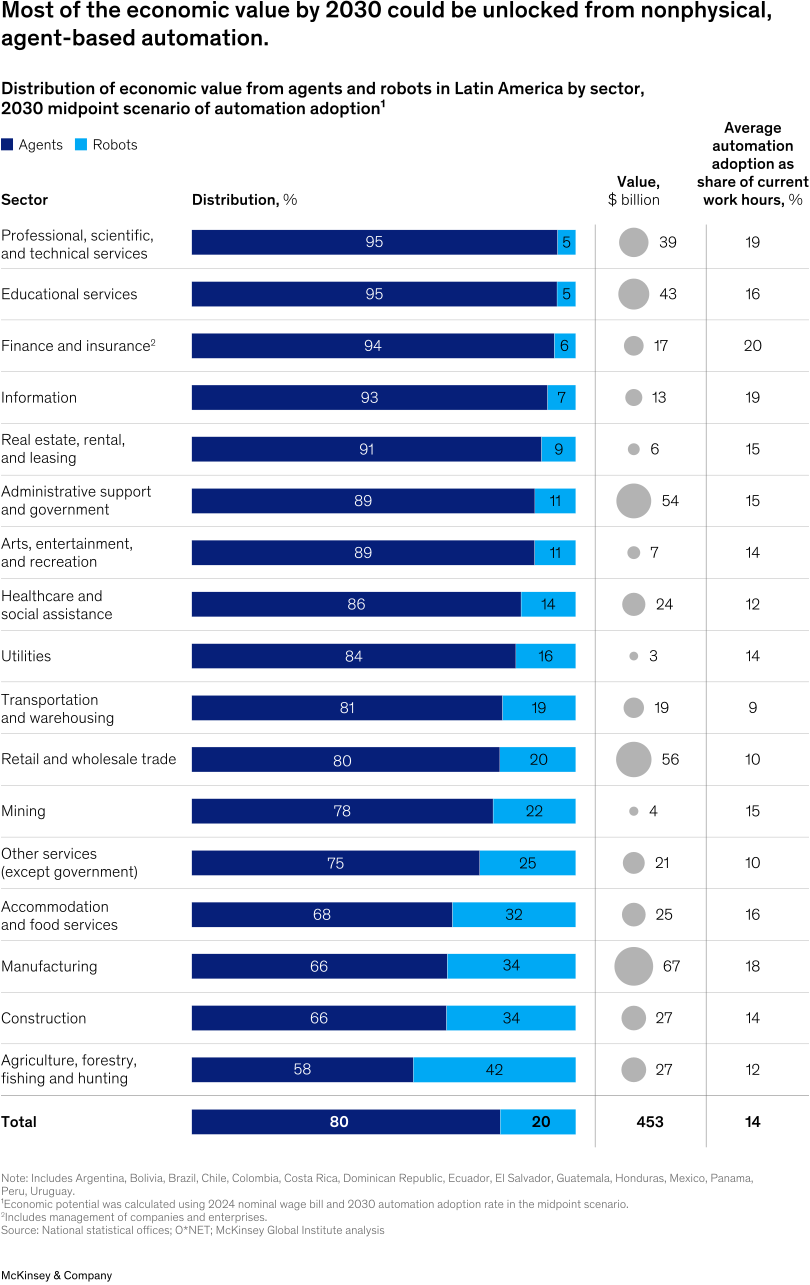
The mix of technologies also matters. Although robots play a larger role in Latin America than in advanced economies, most of the potential value still comes from nonphysical automation delivered by agents—about 80 percent in the midpoint scenario (Exhibit 5). In all sectors, even in physically intensive ones, at least two-thirds of the potential value comes from nonphysical automation, underscoring the importance of software in reshaping workflows. This pattern is consistent with findings in the United States and Europe.
The potential sources of gains from automation also differ across the region, reflecting differences in economic structure (Exhibit 6).
Workers will increasingly apply their skills alongside agents and robots
To understand how AI may be reshaping demand for human skills in Latin America, we analyzed job postings from five of the region’s 15 economies, where data are sufficient to track changing employer demand. Argentina, Brazil, Chile, Colombia, and Mexico account for roughly 75 percent of the region’s workforce and economic output. While they do not capture the full diversity of Latin America, they provide a useful window into how employer demand for skills is changing.
Our analysis finds that roughly 66 percent of skills currently demanded by employers are used in a mix of work activities—some that can be automated and others that cannot (Exhibit 7; see sidebar “How we assess skill exposure to automation”).
As a result, most skills are more likely to be applied in new ways than replaced outright. As AI takes on more common and structured tasks, the value of many skills may increasingly come from areas where people provide judgment, context, and accountability. Workers may spend less time executing routine tasks directly and more time directing, interpreting, and improving the work of automated systems.

Consider, for example, how crop management might evolve. AI could process satellite imagery, soil sensor readings, and weather forecasts to identify patterns and risks across large cultivated areas, while an agronomist interprets those signals and makes decisions about treatment, planting, and land use.
Similarly, safety compliance in manufacturing and industrial operations may involve automated systems monitoring sensor data and flagging potential violations in real time, while a person determines the response and remains accountable for outcomes. In both cases, machines identify patterns or issues, while people apply judgment and ensure accountability.
An additional 21 percent of skills are mainly associated with automatable activities. These skills are more likely to become embedded within agent-led or robot-enabled workflows as automation spreads. Examples prominent in the Latin American data include bookkeeping and financial record management in back-office operations, and trade documentation and customs compliance in many of the region’s export-oriented industries.
The remaining 13 percent of skills are mainly associated with non-automatable activities that rely on interpersonal interaction or contextual decision-making, including managing relationships, leading teams, caregiving, and clinical support.
Employers are already demanding more AI-related skills
Between late 2023 and late 2025, demand for AI-related skills grew faster than any other skill category in the five Latin American economies we tracked (Exhibit 8). Demand also rose sharply for several complementary skills—including teaching, process improvement, software development, and business analysis. Together, these trends suggest that employers are seeking skills that help organizations incorporate and use AI effectively.

The increase is spreading across a wide range of occupations, although the number of affected workers remains relatively limited. To understand how broadly demand is diffusing through labor markets, we examine two measures: the share of occupations that now require AI-related skills and the share of workers employed in those occupations.
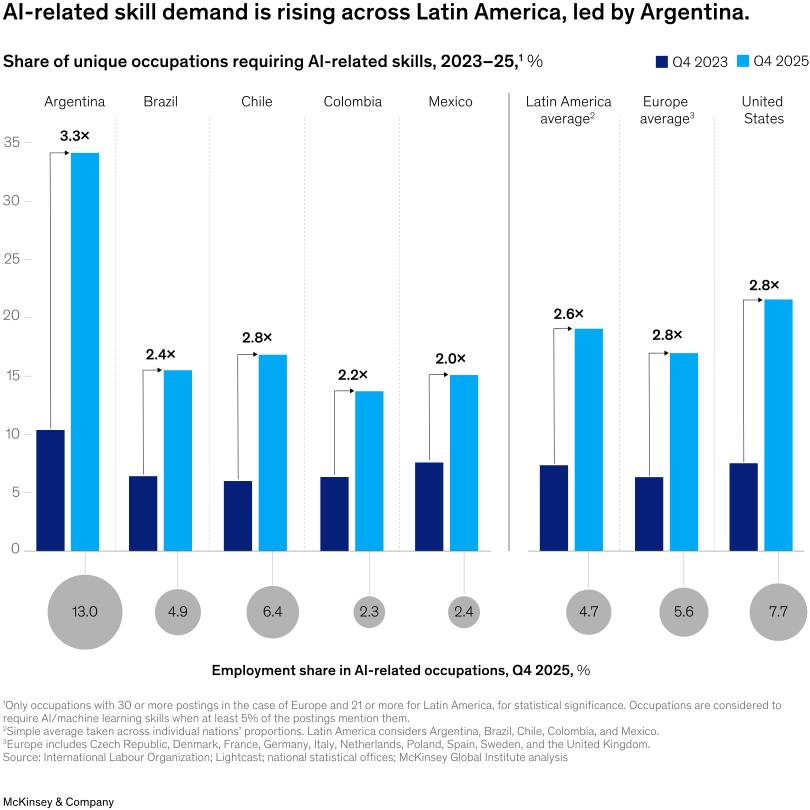
Over the same time period, the share of occupations requiring AI-related skills nearly tripled, reaching about one in five. The share is highest in Argentina, at about one-third, reflecting the country’s large concentration of office-based work, particularly in administrative support and sales occupations where AI tools are being adopted rapidly.
The spread across occupations overstates the number of workers currently affected. In Argentina, for example, about 34 percent of occupations now require AI-related skills, but those occupations account for only about 13 percent of employment. The corresponding shares are lower in Chile, Brazil, Mexico, and Colombia (Exhibit 9).
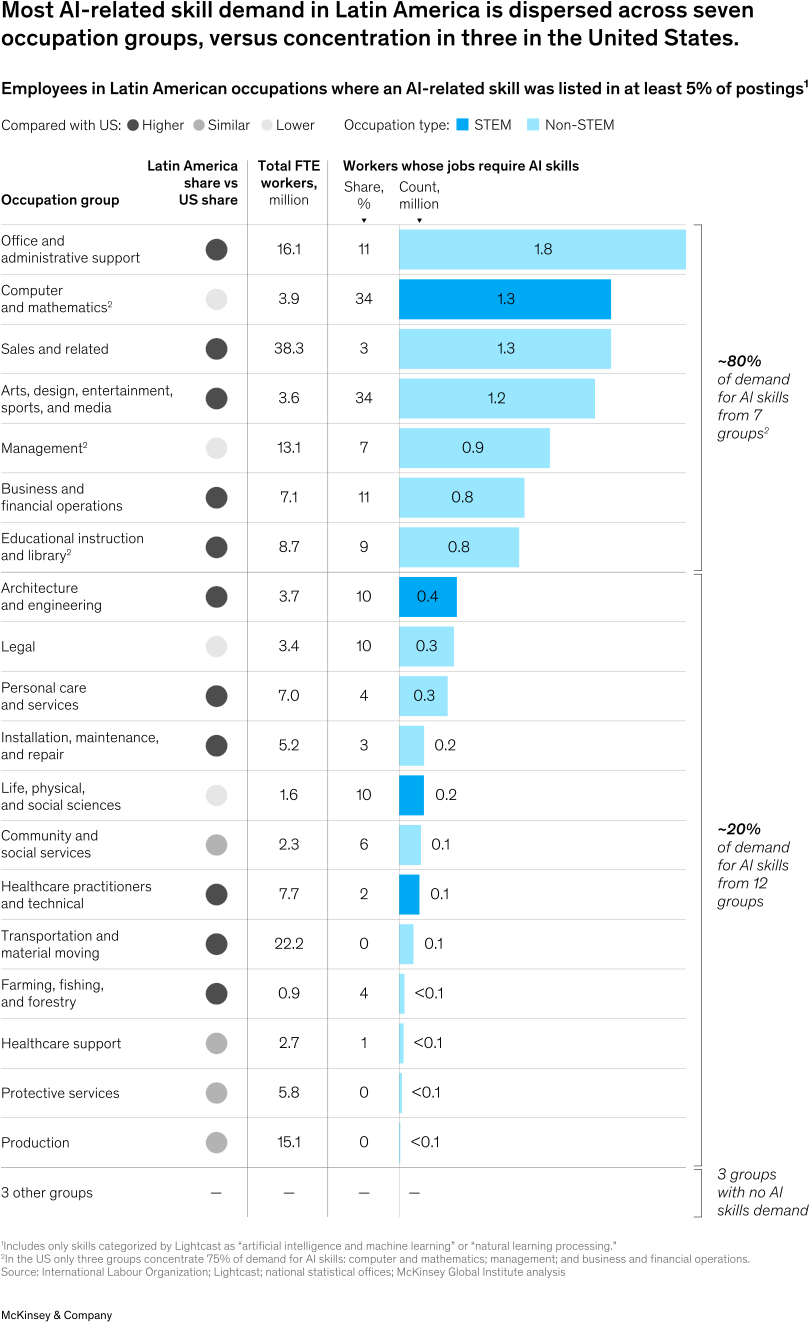
Across the five countries included in our skills analysis, about 9.9 million people work in occupations where AI-related skills are now a requirement, a number representing roughly 5 percent of total employees. Demand for these skills is more broadly distributed across occupations than in the United States and Europe. Across the region, the top seven occupation groups account for about 80 percent of demand, compared with concentration in just three groups in the United States and Europe (Exhibit 10).
Demand is emerging in some unexpected places. Strikingly, about one-third of workers in arts, design, entertainment, sports, and media occupations are employed in roles that now require AI-related skills—the same share as in computer and mathematical occupations. Demand is spreading not only through technical roles but also through creative and content-oriented work. This broad distribution implies that AI training may need to reach a much wider segment of Latin America’s workforce than is often assumed.
Across the region, demand for AI fluency—the ability to use, manage, and increasingly create with AI systems—is growing much faster than demand for technical AI skills (see sidebar “What is AI fluency?”). Between 2023 and 2025, jobs requiring AI fluency rose nearly 11-fold, with most of the increase in non-STEM roles (Exhibit 11). Growth outpaced that in the United States and Europe, where demand rose about fivefold in the same period. The pattern suggests that workers and employers in Latin America are readily adopting accessible AI tools even if deploying entirely new systems takes longer.

The Skill Change Index points to widespread shifts in skills by 2030
To gauge how skill demand may change in Latin America, we apply a tool developed in earlier MGI research that maps skill exposure to automation. As in the United States and Europe, the Skill Change Index (SCI) suggests that most worker skills will be affected to some degree by 2030, with all 100 of the most widely demanded skills in the Latin America sample showing some exposure (Exhibit 12).
Data management and administrative processing skills are among the most exposed, particularly database administration, scripting languages, and financial record management. Mineral processing, an important skill in Latin America’s mining industry, also appears near the high end of the distribution.

The least exposed skills share a common feature: Their value depends less on processing structured information than on human presence, trust, and situational judgment. First aid and nursing require proximity and real-time response to unpredictable needs. Building trust, customer service, and managing relationships with clients and partners all depend on understanding people, context, and intent. Their lower SCI values suggest that automation has made less headway where work is deeply relational, embodied, or context specific.
For reference, the region’s most in-demand skills are generally less exposed to automation than those in advanced economies. This likely reflects Latin America’s position on the adoption curve rather than a fundamentally different pattern of change. As technology spreads and adoption rises, many of the same skills that are changing in advanced economies are likely to face growing exposure in Latin America as well.
The skills most exposed to AI in Latin America are already beginning to change in some workplaces. The following case studies show what that looks like in practice.
AI at work in Latin America
Our analysis suggests that AI adoption may progress more slowly in Latin America than in the United States and Europe, partly because lower wages reduce the economic incentive for labor substitution and because many opportunities depend on physical automation, which is often expensive.
Yet there are already many examples of companies across the region deploying these technologies at scale.
The case studies below illustrate a common pattern: the largest gains often come not from automating individual tasks but from redesigning workflows around the complementary strengths of people and AI.
Some deployments improve existing work, making processes faster, safer, more consistent, and more efficient. Others enable capabilities that would be difficult—or impossible—to achieve through human effort alone.
Select a case study to learn more.
Latin America has a similar scale of automation potential as the United States and Europe, but a different mix of opportunities and constraints. Physical work accounts for a larger share of employment, making robots and other forms of physical automation more important. At the same time, lower wages and higher costs for robotics may slow uptake.
Yet slower adoption should not be mistaken for a lack of innovation. In Latin America, demand for AI fluency is growing roughly twice as fast as in advanced economies, suggesting that companies are already incorporating AI into everyday work, even if they are not always deploying entirely new systems.
The case studies in this report show what deeper adoption can look like. Some companies are already redesigning operations around agents and robots—sometimes improving existing work and, in other cases, enabling capabilities that would be difficult or impossible through human effort alone.
One finding stands out across Latin America, the United States, and Europe: people remain essential to most work. AI and automation are likely to change many jobs, and some workers will face significant disruption. But the central challenge is redefining how people and machines work together to create value.
Workers will need greater AI fluency, organizations will need to redesign workflows and invest in training, and educators and policymakers will need to provide support to help workers adapt.
Different countries and industries will take different paths, and outcomes are not predetermined. If managed well, the transition could raise productivity across Latin America and create new opportunities for people to contribute alongside agents and robots.
Glossary
Adoption: The deployment of AI and automation technology into real work activities and workflows within an organization or labor-force context, determining how much of the automation potential is captured, how fast, and how broadly.
Agents: Machines that perform work in the digital world, augmenting or substituting a person’s nonphysical capabilities (for example, natural language generation, social and emotional reasoning, creativity).
AI-powered agents: Agents with AI embedded, allowing them to act more autonomously and orchestrate workflows; also known as agentic AI.
AI-powered robots: Robots with AI embedded, allowing them to act more autonomously and orchestrate workflows.
Artificial intelligence (AI): The ability of software to perform tasks that traditionally require human intelligence, potentially augmenting or substituting people’s capabilities.
Capabilities: Physical or nonphysical abilities that support the application of skills, assessed based on human levels of performance required to perform work activities. Nonphysical capabilities include cognitive (for example, natural language, logical reasoning, creativity, navigation) and social and emotional capabilities.
Generative AI: Applications of AI that take unstructured data as inputs and generate unstructured data through foundation models (large artificial neural networks trained on vast amounts of varied data).
Nonphysical work: Work that involves cognitive or social/emotional capabilities rather than physical movement, such as problem-solving, information processing, creating, and collaborating with others.
Occupations: A set of jobs that share similar tasks or work activities that can be described in terms of their skills, work contexts, and other qualifications. We use the United States’ formal classification of occupations, maintained by the Bureau of Labor Statistics. Occupations can be synonymous with “roles” and are not to be confused with employment.
Physical work: Work that involves direct interaction with the physical world, requiring motion-based capabilities such as gross motor skills, fine motor skills, and mobility. These tasks typically include operating or moving objects, tools, or machinery; assembling or positioning materials; and performing actions that depend on human strength or dexterity.
Robots: Machines that perform work in the physical world, augmenting or substituting a person’s physical capabilities (that is, gross motor skills, fine motor skills, or mobility).
Skills: Knowledge, competencies, and attributes that people deploy to perform work activities, often acquired through formal education, training, or work experience. Lightcast and ESCO provide market-driven classification systems for skills.
Technical automation potential: The share of work hours that theoretically could be automated with certain levels of technical capabilities. We assessed economies’ technical automation potential through an analysis of the detailed work activities of each occupation, completed for about 800 occupations in each of the 15 Latin American countries analyzed.
Work activities: Observable work behavior that represents what people do to accomplish the objectives of an occupation. In the United States, activities are formally classified by O*NET into detailed work activities (DWAs).
Workflows: A structured sequence of work activities that collectively advance work toward a defined goal, guided by processes (for example, rules, dependencies, information flows) and involving people and technologies.