At a glance
- Societies have adapted to their climates for millennia. From the Mesopotamians to the Inuit, extreme weather has shaped how people live. Today, many proven, cost-effective measures to adapt already exist, and we examine 20 of them, ranging from air conditioners to irrigation and sea dikes.
- The world currently spends $190 billion annually to defend against extreme weather. This safeguards 1.2 billion people to protection standards in developed economies. Providing that level of protection for all 4.1 billion individuals living in places exposed to climate hazards, who today may face trade-offs and challenges in adapting, would cost $540 billion.
- As the climate warms, exposure to heat and drought will increase the most. On current emissions trajectories, the world is expected to warm by 2°C compared with preindustrial levels by about 2050. This could expose an additional 2.2 billion people to heat stress and 1.1 billion more to drought. By contrast, coastal flooding would threaten just 40 million more.
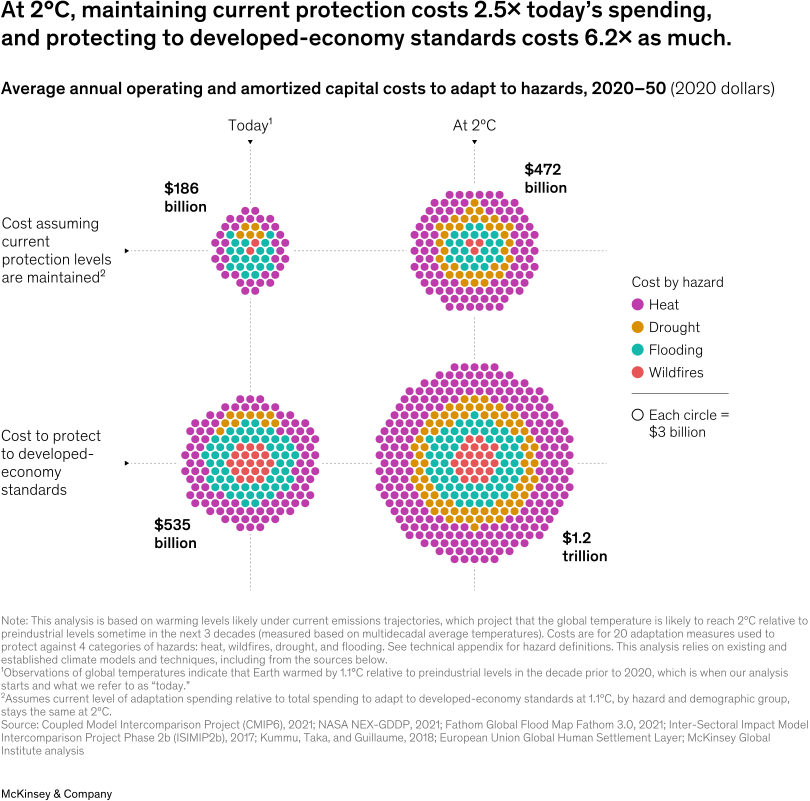
- At 2°C, maintaining current protection levels would cost 2.5 times today’s spending, while protection at developed-economy standards would require 6.2 times as much. Of the estimated $1.2 trillion needed to achieve such standards globally, more than half would go to air conditioning and irrigation. Increasing spending in line with anticipated economic growth could cover 60 percent of total costs, but gaps would remain in lower-income places.
- Adaptation is a good buy—but spending is not a given. At 2°C, its benefits outweigh costs by seven to one, but factors like capacity to pay, competing spending priorities, collective action challenges, operational hurdles, and political will complicate implementation. Going forward, the ability to finance and scale adaptation—and mitigation—as well as the evolution of damages from extreme weather events and the limits of adaptation will determine the risks that societies bear.
For millennia, economies and societies have adapted to their local climates. Mesopotamian civilizations developed extensive irrigation systems to combat drought and sustain agriculture starting about 8,000 years ago. In what is now the Netherlands, people began building artificial mounds known as terpen more than 2,000 years ago to defend against floods. A thousand years ago, the Thule people of the Arctic began building snow-block igloos, enabling survival in outdoor temperatures less than –45°C. In ancient Egypt, builders mastered passive cooling techniques like thick mud-brick walls and windcatchers to cope with blistering desert temperatures that could exceed 45°C.
Today, tried-and-true measures exist to protect against a range of hazards, from extreme heat to frigid cold and from crippling droughts to devastating floods. For instance, the Netherlands maintains the extensive and advanced Delta Works—a series of dams, sluices, locks, dikes, and storm surge barriers designed to protect against recurring flooding.1 Lee Kuan Yew, the first prime minister of Singapore, credited air conditioning as the key to the country’s success, saying in an interview, “Air conditioning was a most important invention for us, perhaps one of the signal inventions of history. It changed the nature of civilization by making development possible in the tropics.”2
Yet the world has a resiliency gap. We are not all protected from today’s extreme weather patterns, even before considering prospective climate change. About one billion people are protected by at least one of 20 commonly used adaptation measures, while three billion others remain unprotected.3 Not surprisingly, gaps are wider in low-income places, although about 700 million people who lack protection do live in higher-income areas. As the global temperature climbs, the pattern and occurrence of hazards will shift, changing adaptation needs.
Advancing our understanding of adaptation both today and in the future is therefore essential. Ultimately, individuals, governments, and companies decide whether to adapt, based on multiple considerations ranging from capacity to spend and risk tolerance to political will and operational feasibility. Yet spending on adaptation isn’t simply a matter of having available funds. Rather, it is how resources are prioritized to address competing demands, including the energy transition, municipal services, and household expenses. Informed decisions about adaptation begin with identifying current resilience gaps, anticipating how they may evolve, and determining what is needed to protect against hazards now and as they shift.
To be sure, explicit adaptation planning has increased recently. As of October 2025, 141 countries had a formal adaptation plan, up from 84 countries five years ago.4 But only a fraction map out clear priorities and include cost estimates.5
In this report, we undertake a first-of-its-kind comprehensive analysis of adaptation costs today and through 2050, using a granular, pixel-level, geospatial analysis.6 The 20 adaptation measures we studied offer broad-based protection against four categories of hazards—heat, wildfires, drought, and flooding—and can be applied across diverse economies. Equipped with an understanding of how hazards could play out and the costs and benefits of adapting to them, leaders can make informed decisions about resilience today and for the long term.
As with all climate modeling, some caveats are in order. Climate modeling is an area of live refinement and debate and, like any modeling of complex phenomena, carries uncertainties. We aren’t climate scientists, so we rely primarily on external climate models used in the sixth assessment report by the Intergovernmental Panel on Climate Change (IPCC).7 We also do not examine all hazards, types of places, sectors, and categories of impact—such as impact on small island nations, biodiversity, and supply chains—that could require adaptation measures beyond our scope.8 Instead, our findings aim to provide an order-of-magnitude analysis to help inform decision-making for different demographic groups and regions.
The world today spends $190 billion annually to defend against extreme weather
About 40 percent of Earth’s landmass periodically experiences severe heat, destructive wildfires, prolonged drought, and intense flooding rooted in current patterns of weather extremes.9 This area is home to roughly four billion people, nearly half the global population.10 These extreme weather events, which we call “climate hazards,” can occur only rarely or can take place every year, and they are likely to span more of the planet and intensify in some places as the world warms. An additional 35 percent of the world’s terrain experiences extreme cold, which could decline as the global temperature increases (see sidebar “The hazards we examine”).
The hazards we examine
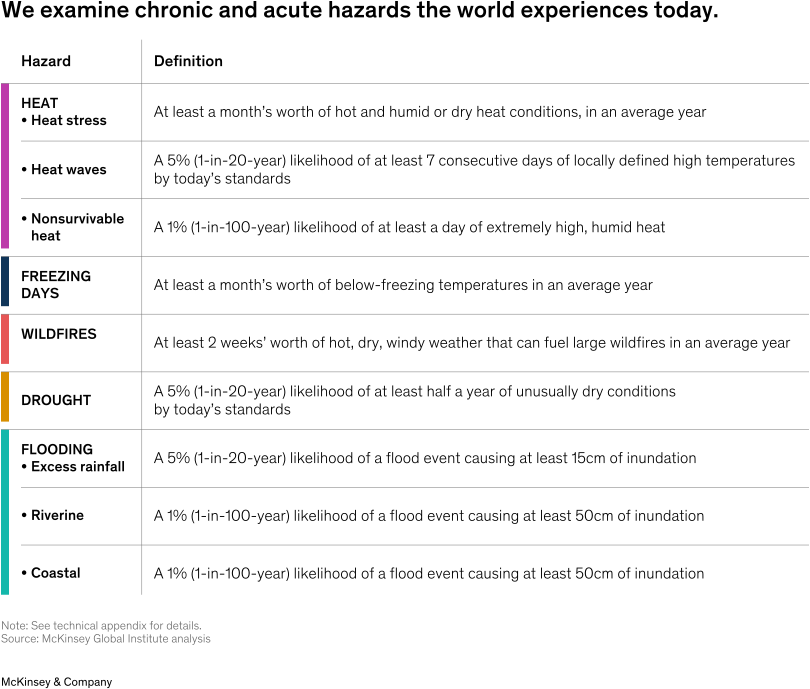
We analyze eight types of hazards across four categories—heat, wildfires, drought, and flooding—to understand how people and places are exposed to them today and going forward, and analyze the costs to adapt. Separately, we also look at how cold might evolve.
While hazards are often described as “extreme weather events,” in climate science the term refers to broadly both chronic and acute hazards. Two hazards we examine, heat stress and wildfire weather, are chronic and happen every year in the places that are exposed to them. The remaining six hazards we analyze—coastal flooding, riverine (fluvial) flooding, flooding caused by excessive rainfall (pluvial), heat waves, nonsurvivable heat, and drought in agricultural areas—are acute, meaning they are intense but rare events. For acute events, places may be exposed to them, but the actual event may not manifest every year.
These hazards can occur along a continuum of intensity, frequency, or duration, requiring a threshold for each in order to define the hazard. Thresholds can be established in various ways. Since our focus is on understanding and quantifying adaptation costs, we define them by drawing on protection standards commonly established in developed economies. Of course, even though the hazards we examine are considered meaningful enough to protect against, not all hazards are created equal, and their impacts could be very different. Heat stress, defined as more than a month of very hot and humid conditions each year, and heat waves, rare, multiday occurrences of local temperature extremes, can differ markedly in the nature and magnitude of their impacts, but both are considered important enough to warrant protection. Similarly, coastal flood protection standards in developed economies typically aim to withstand a one-in-100-year flood event, while pluvial flood protection standards often correspond to a one-in-20-year flood event.
Because protection standards are not always strictly defined, we exercised some judgment in our choice of thresholds and further validated them using literature from the Intergovernmental Panel on Climate Change (IPCC) on typical hazard definitions and their impacts (exhibit).1 Continued efforts are needed to develop robust and comparable ways to quantify the impact of hazards and their link to adaptation metrics.
Naturally, impacts do not begin to appear only when a particular threshold is crossed. Rather, our thresholds are a way to dimensionalize exposure and protection levels and apply a consistent approach in line with typical design standards for protection.2 We focus on a subset of climate hazards that meet three criteria: (1) they have a well established and direct link to climate change as the primary driver; (2) they are not slow-onset events, the impacts of which emerge over time; and (3) they have sufficient data to enable spatial analysis.3
For example, the link between water stress and climate change is not direct, since other factors, particularly population growth and rising demand for water, are at play.4 While these and other hazards may be highly relevant for adaptation planning in any given location, they fall outside the scope of our global analysis. See the technical appendix for more details.
Individuals, governments, and companies currently spend about $190 billion on capital and operating expenses in total each year for protection against heat, wildfire weather (also referred to as “wildfires” in this report), drought in agricultural areas (referred to as “drought” in this report), and flooding (see sidebar “What about cold?”).11 This investment provides at least some protection to 1.2 billion people and their livelihoods around the world.12
Yet an additional three billion of the world’s citizens are not protected from extreme weather, bearing the risk from these hazards.13 These people face what we call a “resiliency gap,” the difference between their current protection and the standards typically established in developed economies today. Not surprisingly, such standards are not always followed, and even wealthy urban areas have a small resiliency gap.
Even though the hazards in the four categories are considered meaningful enough to protect against, they are not all created equal, and their impact can be very different. Consider two forms of heat. What we call “heat stress” is defined as a period of more than a month of very hot and humid weather annually, reducing productivity and possibly harming health.14 “Heat waves” are rarer and briefer—at least a week of locally high temperatures.15 While such conditions can pose real risks, especially to vulnerable populations, they don’t occur every year and are of relatively short duration when they do, often with lower overall impact than heat stress events.16
When resiliency gaps do exist, they may reflect an explicit choice to accept risk, such as when a person makes the choice to build a home in a wildfire or flood zone. In other cases, factors like imperfect information, political deadlock, and lack of finances dictate the level of risk taken. Whatever the reasons for gaps in protection, what would it cost to close them and protect the three billion people living with risk today?
Proven, cost-effective measures exist to protect against extreme weather
Humanity has the know-how to defend itself against extreme weather, at least in principle. Many approaches, or what we refer to as “adaptation measures,” already protect against such patterns of weather. We examine 20 measures that are cost-effective, are broadly applicable in diverse economies, and protect widely against the four categories of hazards we analyzed (see “Library of adaptation measures”). Examples range from large-scale measures that protect many people and require coordination and collective action, such as sea dikes to prevent coastal flooding and stormwater networks to divert heavy rainfall and surface water flooding, to measures that individuals and companies can adopt, such as air conditioning and fans that reduce heat impacts. (Other adaptation measures and approaches exist; see sidebar “What is adaptation, and what are its limits?”)
These measures are at work today in myriad places around the world. Air conditioners, for example, are a commonly used cooling solution. In places affected by heat stress, an estimated 100 million air-conditioning units shield about 340 million people, primarily in high-income regions. Other heat protection measures are in use in some places. In Dubai, for example, centralized district cooling systems deliver cool air to residential and commercial buildings, while Spain has implemented a localized heat wave protection alert system.17
Adaptation in action
Undergrounding power lines to reduce wildfire risk in Australia
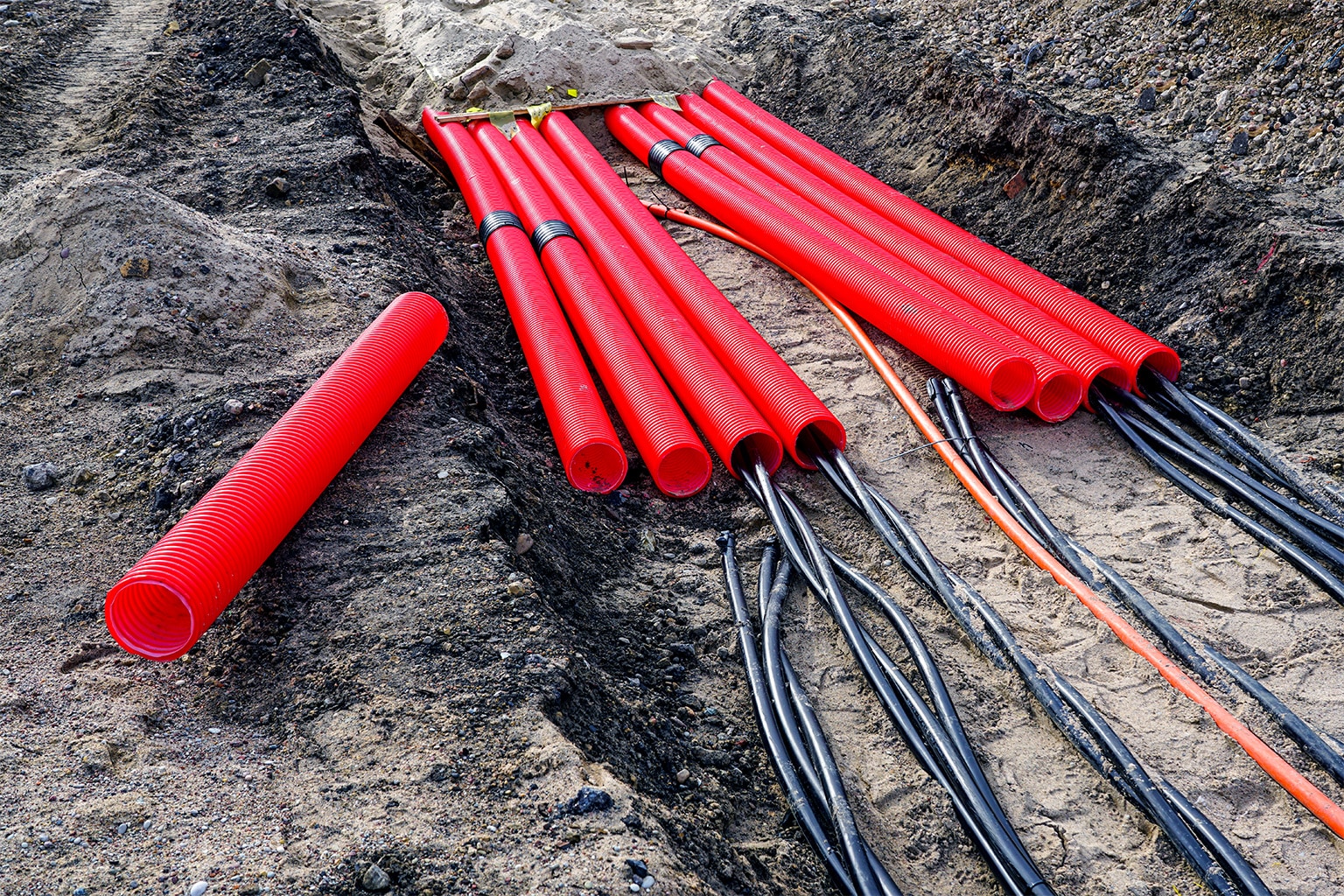
In 2009, the “Black Saturday” bushfires swept through the Australian state of Victoria, killing 173 people and causing widespread damage. Investigations found that power lines sparked many of the worst fires. In response, the state launched the Powerline Bushfire Safety Program in 2011. Its goal was to stop power lines from sparking on hot, windy days.
Victoria prioritized undergrounding for sections that posed the highest risk. Crews dug trenches along roadsides and installed underground cables, replacing bare overhead wires that could hit branches or flap in the wind. In total, utilities moved more than 500 kilometers of power lines underground.
Undergrounding is highly effective but too costly to apply everywhere. For remaining overhead lines, the state added fast-acting shutoff devices and insulated high-risk sections to cut spark risk. Laying power lines underground, combined with insulating overhead lines, is estimated to have cut the chance of ignition in treated places by more than 98 percent.
Beyond the grid, Victoria conducts planned burns to manage vegetation and reduce fuel. Together, these steps can lessen the chance that power lines will ignite major fires and can reduce the strength and spread of those that do occur.18
Implementing a heat action plan to save lives in India
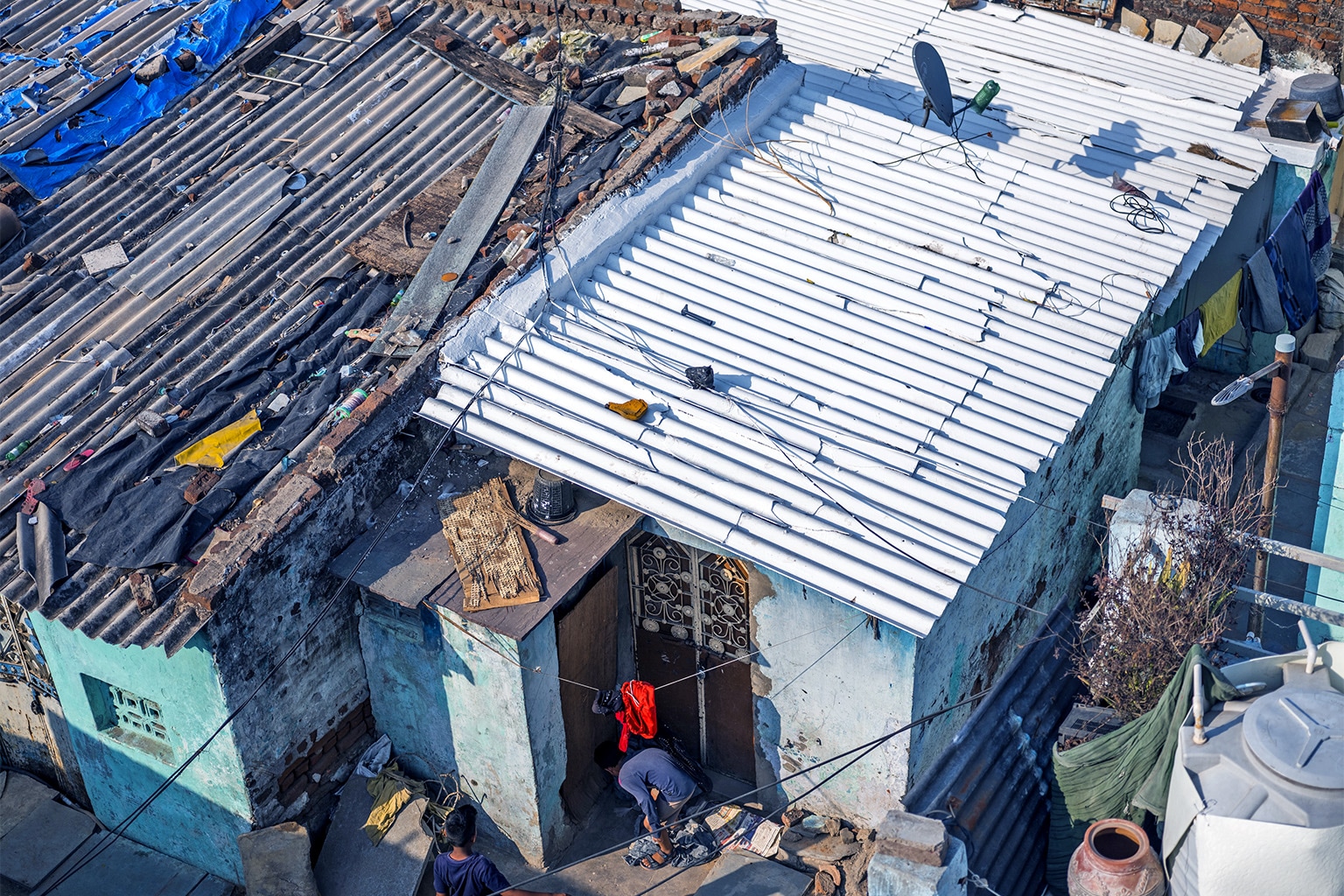
Ahmedabad, home to seven million people in western India, endured a deadly heat wave in May 2010 that caused more than 1,300 deaths. In 2013, the Ahmedabad Municipal Corporation launched South Asia’s first city heat-health action plan. A color-coded early-warning system tied to national forecasts triggers clear public messages, opening of extra cooling and hydration rooms, hospital readiness measures, and priority electricity for key sites.
More recently, the city has been working to cut indoor heat with low-cost “cool roofs.” A pilot project in 2017 and 2018 painted the roofs of about 3,000 low-income households, and in 2020, the city announced plans to paint the roofs of about 15,000 homes in informal settlements and 1,000 municipal buildings. Longer hot spells will keep testing the city, so Ahmedabad is adding upgrades such as cooled bus stops and reflective roofs on busy bus shelters.19
Restoring mangroves to reduce flooding in Brazil
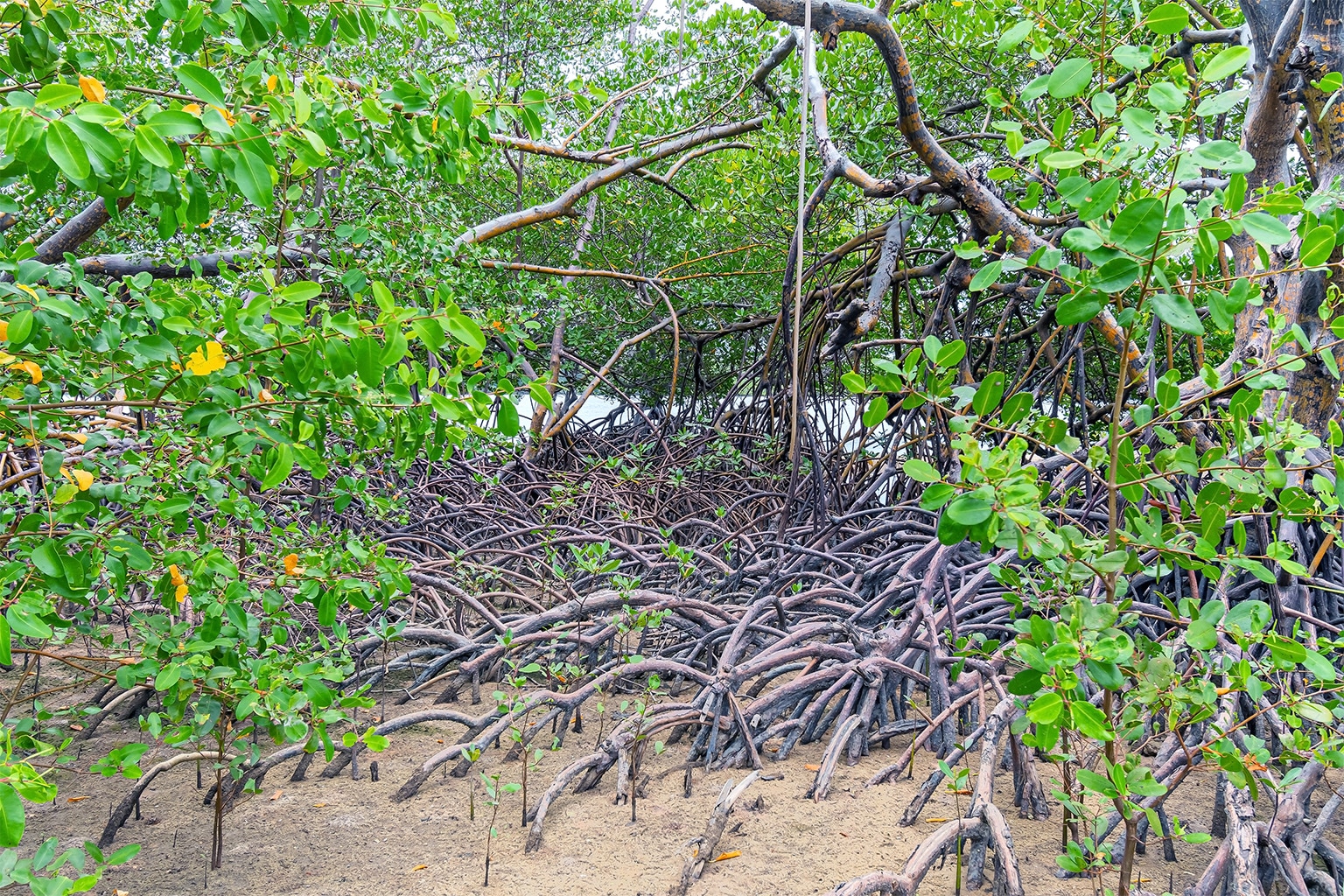
Frequent flooding has caused coastal erosion in Rio de Janeiro’s Guanabara Bay, threatening homes and infrastructure along the water’s edge. To reverse this, local organizations including Guardiões do Mar and Instituto Mar Urbano began restoring the mangrove forest in 2021, rebuilding a living buffer to slow storm surge, stabilize the coast, and protect the people and assets there.
By 2024, crews had planted more than 30,000 mangrove seedlings on 12 hectares, the largest community-led effort in the bay in more than a decade. Monitoring shows that about 90 percent of the seedlings mature into trees, reaching as high as four meters and spreading along the once-eroded shoreline. While a major coastal flood hasn’t yet tested the restored mangroves, studies of similar environments indicate that healthy and mature mangroves can reduce wave energy, stabilize sediment, and curb erosion, helping to protect coastal areas from flooding.20
The adaptation measures we studied confer benefits, measured as the value of avoided economic damages, that outweigh their costs by at least a factor of 1.5 on average globally.21 Many measures may also yield benefits beyond avoided damages, such as irrigation that can both protect against damages from drought and boost agricultural yields, and urban tree planting that cools with shade and can also enhance the quality of city life.22
Measures vary in the protection they offer. Some adaptation measures offer significant protection against their target hazard. For example, when well designed and effectively implemented, levees and stormwater networks ensure that daily life and work continue, infrastructure and real estate are unharmed, and natural capital like crops and livestock is unaffected by the scale of events those measures protect against. Other measures address a meaningful portion of the impacts, but not all. For instance, natural defenses like mangroves can reduce the impact of storm surges but do not prevent all flooding.23
The resiliency gap is more than three times larger in low-income areas than in high-income ones
Each city, town, and rural area is unique in its built environment and topography, as well as in the details of its extreme weather patterns and in how it experiences and adapts to them. For instance, heat stress could make it difficult for rural smallholder farmers to work while the productivity of workers in air-conditioned offices in high-income cities is unaffected. Just as all politics is local, so, too, is all adaptation.
To capture the local dynamics of exposure and vulnerability to hazards globally, we divide the world into pixels of one square kilometer and then group them into nine demographic groups based on income levels and degree of urbanization (see sidebar “Our research methodology”).24 We then examine how pixels in each group are exposed to various extreme weather events similar in magnitude to those that developed economies often protect against today. We identify places currently protected against such events and where resiliency gaps remain for eight specific hazards spanning heat, wildfires, drought, and flooding.25 Two hazards, heat stress and wildfire weather, are chronic and happen every year in the places that are exposed to them. The remaining six, coastal flooding, riverine (fluvial) flooding, pluvial flooding caused by excessive rainfall, heat waves, nonsurvivable heat, and drought in agricultural areas, are acute. They are intense but rare, and places exposed to them may not experience one every year.
Those living in low-income places have the largest resiliency gap today.26 Some 85 percent of people living in low-income places lack protection against the four categories of hazards we analyzed. By contrast, only a quarter of those living in high-income areas lack such protection (Exhibit 1). Around the world, many factors such as funding constraints, awareness of risk, risk tolerance, political will, and operational barriers can influence how much locales choose to invest in adaptation.27
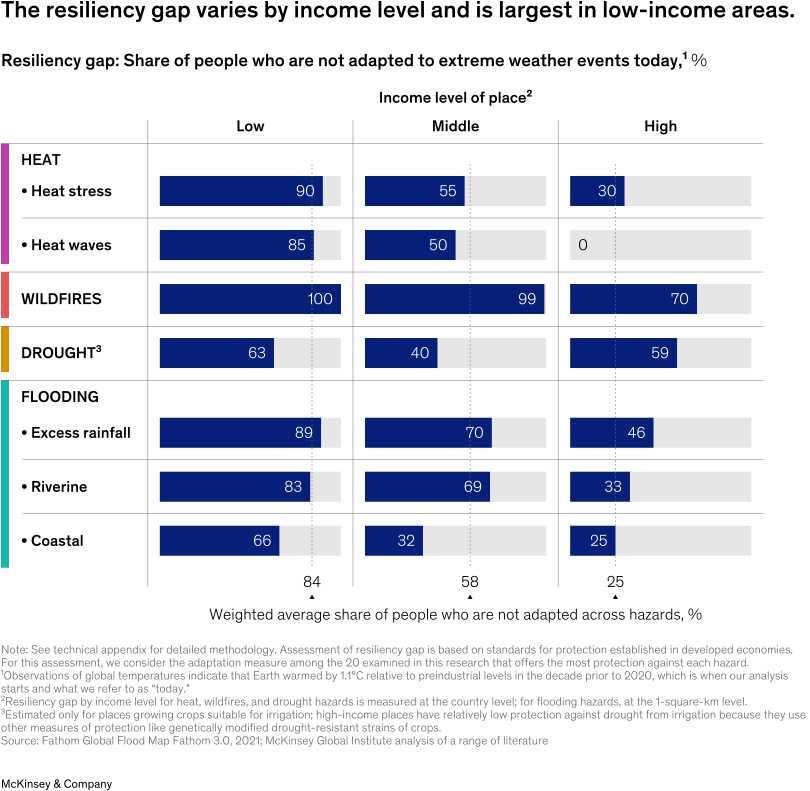
The disparity is greatest in protection from heat. For example, some 60 percent and 30 percent of the respective populations of India and Nigeria live in places that already experience heat stress each year. Yet air-conditioning coverage in these countries remains scant, at about 10 percent in India and 3 percent in Nigeria.28 By contrast, in the United States, where just 4 percent of the population may experience heat stress today by our definition, air-conditioning coverage exceeds 90 percent. In general, advanced economies tend to have higher penetration of many adaptation measures (Exhibit 2).29
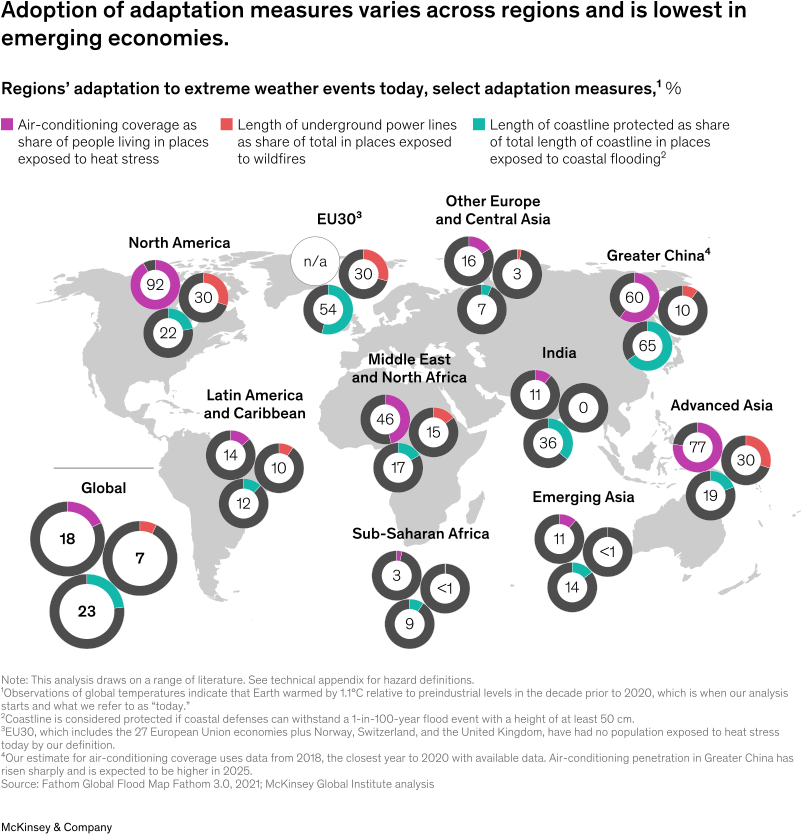
Lower-income people and places may struggle to meet basic, immediate needs like housing and food, let alone invest in adaptation measures, the benefits of which are primarily in avoiding a future cost that is uncertain and becomes evident only if and when a hazard occurs. A range of academic research has found that rich people are more likely to invest in insurance, which is one indicator of the willingness to spend on protection against an evolving climate.30
In general, cities are best adapted regardless of their income level. For example, four-fifths of people living in high-income cities are protected against today’s one-in-100-year riverine flood that exceeds 50 centimeters. Only 35 percent of residents in rural areas have such protection.31 Since many adaptation solutions, such as seawalls, protect a specific area of land, the per-person cost of adaptation is lower for densely populated cities than for rural areas. Cities and their residents may also have a greater capacity to spend on adaptation than rural areas.
Protecting everyone today to developed-economy standards would cost $540 billion annually
Places around the world currently spend a total of $190 billion annually using one of the 20 adaptation measures we studied to protect themselves against hazards, collectively providing 1.2 billion people some form of protection.32 Adapting to standards typically established in developed economies in all places exposed to extreme weather events today would cost almost three times more, or $540 billion annually, and protect all 4.1 billion individuals exposed today. Thus, the cost to close the resiliency gap, or the difference between what is spent today and spending to protect to standards established in developed economies, is $350 billion. The cost is highest in low-income places, about $200 billion, or 2.7 times the $75 billion each for middle- and high-income places (Exhibit 3).33
Across income groups, cities need to spend less than towns and rural areas to close today’s resiliency gap as a share of affected GDP. For example, high-income cities that currently lack protection would need to spend about 0.3 percent of GDP to close their resiliency gap, compared with 0.8 percent in high-income rural areas. The disparity is even more pronounced in middle- and low-income places: closing rural resiliency gaps requires 1.0 to 1.5 percentage points more of GDP than closing urban gaps.
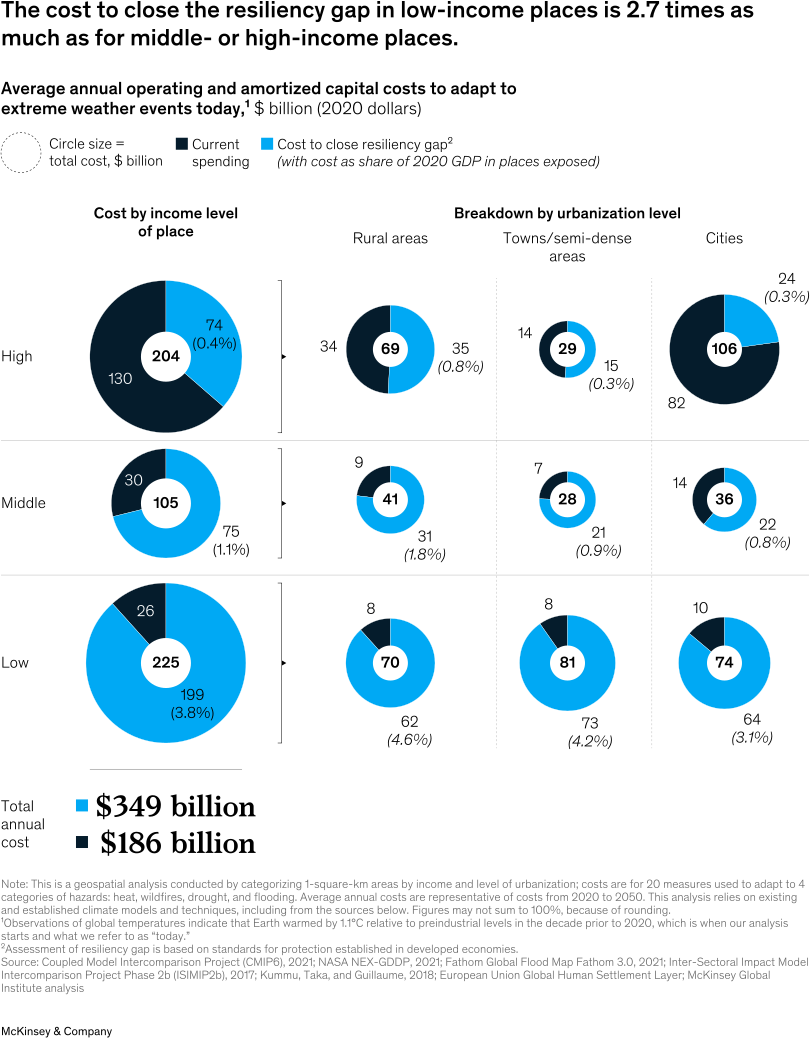
More than half of the $190 billion spent annually today is directed to protection against heat hazards, primarily heat stress. Yet the largest resiliency gaps remain in protecting low-income places from heat. Closing this gap would require about $125 billion. About $40 billion would be needed to close the gap to protect against excessive rainfall flooding in low- and middle-income regions, and $50 billion to close wildfire protection gaps across all income groups. Indeed, wildfire weather is the hazard that high-income cities are least protected against.
Of course, in applying developed-economy protection standards across the world, it is important to note that not all adaptation measures will be feasible everywhere. As individual stakeholders make spending decisions, they also weigh considerations of cost-effectiveness and physical feasibility of the adaptation measure. For example, the cost to implement a seawall in a low-income rural place may far exceed the magnitude of avoided damages. Measures like mangroves may often be far more cost-effective, even though they do not offer the same level of protection. Similarly, air conditioning is physically not feasible in places lacking access to electricity, making passive cooling a more practical alternative. Our estimates account for both cost-effectiveness and physical feasibility, assessed at a demographic group and region level.34 And in reality, many other considerations may also be taken into account as stakeholders make decisions to adapt.
Adapting to developed-economy standards at 2°C could cost $1.2 trillion annually by 2050
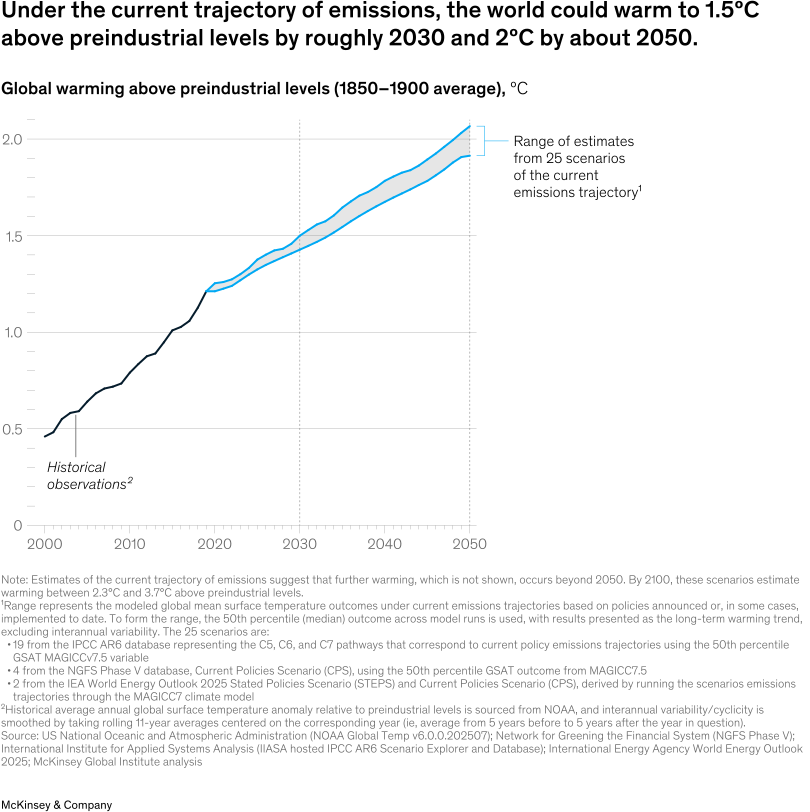
On the current trajectory of emissions, global temperatures are expected to rise (Exhibit 4). Various estimates suggest that by roughly 2030, the global, multidecadal mean surface temperature would rise to 1.5°C above preindustrial levels on a path to warm to 2°C by about 2050, with further warming anticipated after that.35 Since some adaptation measures take more than a decade to implement, anticipating needs at least for 2050 and a 2°C world now is prudent, even as the world works to reduce emissions.36 So when we refer to 1.5°C or 2°C in this report, we mean a scenario where such temperatures are reached by 2030 and 2050, respectively.


Places exposed at 1.1°C
Currently, about 40 percent of the Earth’s landmass, including cities such as Ho Chi Minh City, which experiences coastal flooding and Phoenix, Arizona, which has periods of heat stress, is exposed to extreme weather events that occur at magnitudes typically protected against in developed economies.
Places exposed at 1.5°C
More places could become exposed to such hazards at 1.5°C. For example, places in northern parts of Asia could newly experience heat waves, and wildfire weather could newly occur in parts of South America. Some places exposed to a hazard today could also experience more severe conditions as well as additional hazards.
Places exposed at 2°C
On the current trajectory of emissions, as Earth further warms to 2°C, this trend of growing geographical expansion of hazards and, in some instances, rising severity could continue. For example, cities in Europe could become exposed to heat waves, while parts of Sub-Saharan Africa are likely to newly experience excess rainfall flooding.
Hazards like excessive rainfall flooding and drought, while increasing in severity in many parts of the world, may diminish in some locales, though to a much lesser extent. Exposure to freezing days is expected to decline—and nowhere in the world will experience an increase. Thus, hazards will increase around the world, changing the adaptation landscape—but not everywhere, not in the same way, and not all at once.

Learn about climate hazards
Advancing adaptation: How evolving hazards could shape the agenda examines patterns of extreme weather events today and how they could shift going forward as the world warms, providing a foundation for understanding adaptation needs and costs.
At 2°C, protection at developed-economy standards would cost more than six times than what is spent today
Climate hazards will affect more places and people, sometimes with greater severity, as the global temperature rises and populations increase. At 2°C by 2050, some 8.9 billion people will live in places that are exposed—in line with developed-economy protection standards—to climate hazards.
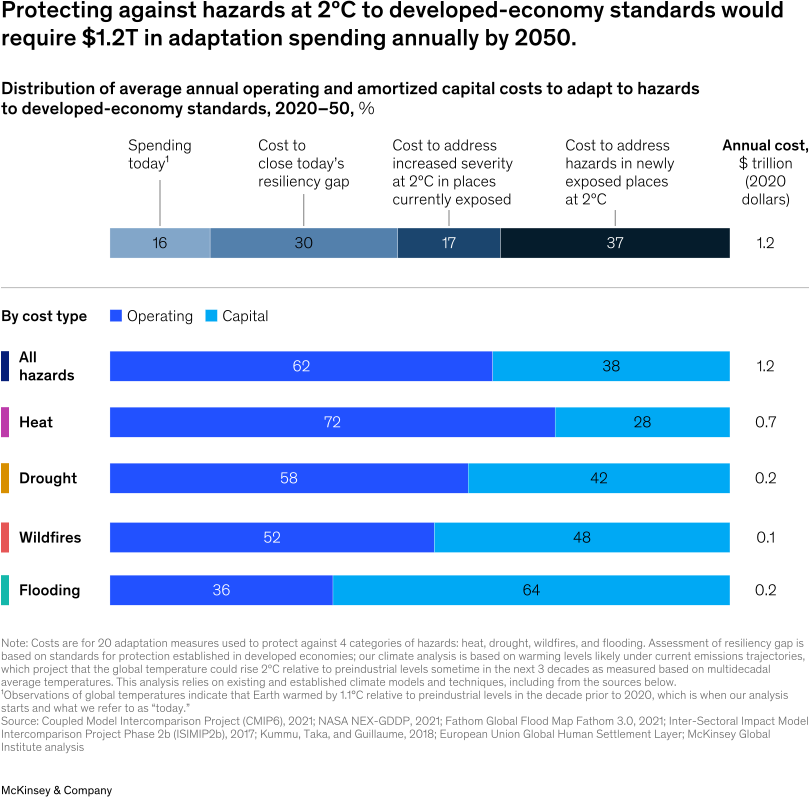
As a result, costs of protection to developed-economy standards would rise. If the 20 adaptation measures were implemented in a physically feasible and cost-effective way, annual adaptation costs to achieve developed-economy standards would be 6.2 times what is spent today. Overall costs would rise from $540 billion to protect against today’s conditions to $800 billion at 1.5°C and would reach $1.2 trillion at 2°C through 2050 (Exhibit 6).37 These costs are equivalent to about 0.8 percent of GDP in areas exposed to climate hazards by 2050.
This figure, however, is not a projection of actual spending. After all, the world spends only $190 billion of the $540 billion that protecting against today’s hazards to developed-economy standards would require. Rather, this calculation provides a benchmark for decision-makers weighing future adaptation choices.
About 40 percent of the $1.2 trillion in annual adaptation costs would go toward capital expenditures, such as building infrastructure like levees and detention basins or purchasing durable goods like air conditioners and fans. The remaining 60 percent would be spent on operating costs, including infrastructure maintenance, electricity costs to run cooling technologies, and water costs for irrigation.
The composition of capital and operating costs varies by hazard. For instance, nearly two-thirds of flood protection costs are capital expenditures associated with building structures like sea dikes, which require significant up-front investment. By contrast, about three-fourths of heat protection costs are ongoing operating expenses, for example, to run air conditioners.
These costs are only for protection at 2°C through 2050. Further warming would likely entail higher adaptation costs and additional adaptation measures beyond those considered here.
Heat and drought account for more than three-quarters of the costs to adapt to developed-economy standards at 2°C
At 2°C, more than half of the $1.2 trillion in adaptation spending would go into protection against heat, with active cooling solutions like air conditioning accounting for the largest share.38 Drought would account for one-fifth, the largest share of which, about 15 percent, is related to installing irrigation systems. Building levees and detention basins to mitigate riverine flooding and flooding from excessive rainfall would also require sizable investments (Exhibit 7).39 The composition of adaptation spending is broadly similar at 1.5°C.
That heat stress–related measures would eat up most of the costs while coastal flooding linked to sea level rise accounts for only a small sliver may seem surprising.40 However, at 2°C by 2050, more than 40 percent of people would live in places exposed to heat stress, while less than 1 percent would live in areas exposed to coastal flooding. That share could rise over time, however, even if global temperatures stabilize, as sea levels continue to climb.41
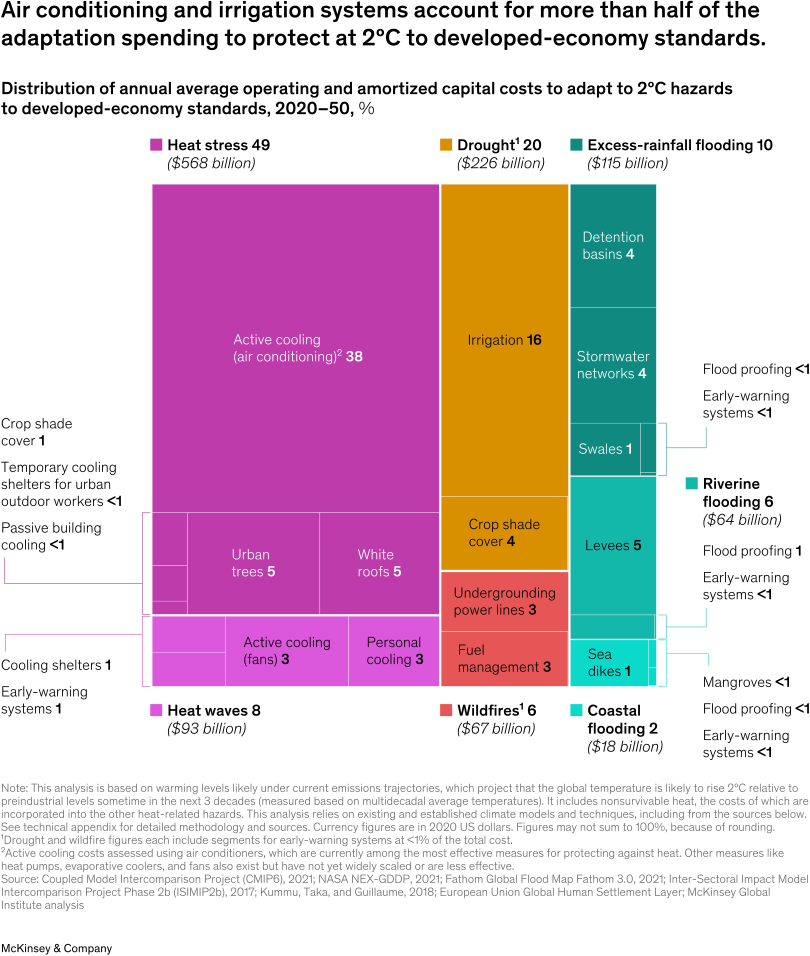
From an implementation perspective, more than half of the costs would be directed toward private actions typically undertaken by individuals and companies, such as air conditioning, flood proofing of individual assets, and crop shading; about 30 percent would fund public goods like sea dikes, levees, mangroves, and early-warning systems; and the remaining 20 percent would be allocated to measures such as irrigation, which can be implemented through private initiatives or public programs.
Careful planning is needed to avoid maladaptation when implementing measures. For example, building a seawall or flood defense in one area may inadvertently push flooding to another location, scaling irrigation must take into account basin-level water availability and competing uses for water, and implementing air conditioning requires consideration of emissions related to energy use and refrigerants, which can be material.42
Coordinating flood management across administrative boundaries, jointly assessing upstream and downstream impacts, and aligning defenses with natural hydrology and land use can help manage the maladaptation risks related to flooding.43 Employing efficient irrigation systems and drought-tolerant crop varieties can reduce maladaptation risks of irrigation.44 Similarly, adopting high-efficiency cooling equipment, refrigerants that contribute less to global warming, and effective cooling demand management, as well as combining active and passive cooling measures, can help reduce energy use and emissions from air conditioning. Continued innovation to lower the cost and improve the effectiveness of energy-efficient alternative cooling technologies like heat pumps and evaporative coolers can also help.45
At 2°C, adaptation measures could deliver benefits about seven times their costs
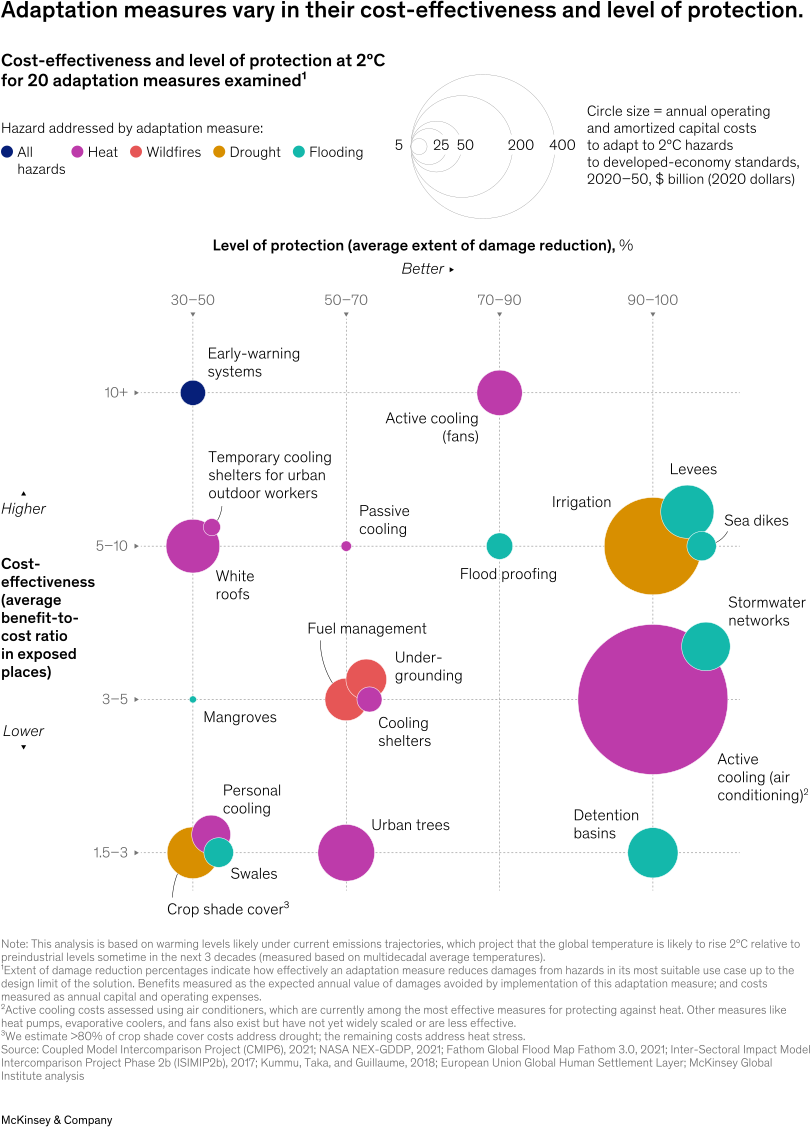
As with hazards, not all adaptation measures are created equal. The 20 measures vary in costs, benefits, and level of protection, offering a spectrum of investment choices (Exhibit 8).46
Approaches to address heat illustrate this diversity. Air conditioning, for instance, eliminates almost all heat-related damages when it can be used, such as in places with access to electricity and to protect indoor workers. It has benefit-to-cost ratios (BCRs) of between roughly three and five. Though offering less protection, fans deliver higher BCRs because they are much cheaper. Similarly, white roofs have higher BCRs than air conditioning. While they provide less than half the protection, they also cost much less.
For wildfire adaptation, no one adaptation measure can fully prevent fires. Laying power lines underground limits ignition risk from power-line sparks but requires high capital investment, while fuel management limits fire spread and requires continuous maintenance expenditures, both yielding similar BCRs.
When effectively implemented, structural measures, such as sea dikes and detention basins for flooding and irrigation systems for drought, can protect up to the intensity of the hazard and the associated impacts that they are designed to target. Their relative costs for construction and maintenance primarily dictate their BCRs.
These BCRs are global averages across measures in places exposed to hazards and can vary significantly at a local level, a necessary consideration in adaptation planning in specific locations. For example, sea dikes in urban areas yield BCRs of more than ten due to the concentration of economic activity they protect, while sea dikes protecting rural areas have BCRs lower than 1.5, reflecting less economic activity there.
Looking across measures, more than 80 percent of the adaptation costs would be directed toward measures that deliver benefits exceeding three times their costs on average. And in aggregate, the average BCRs of these adaptation measures could reach seven at 2°C, up from four at 1.5°C and about three in today’s climate. As hazards become more severe, the cost of adaptation measures goes up, but often more slowly than the damages that are avoided. For example, air conditioners need to cool more and run for more days with rising heat stress, as well as to protect a growing population over time—but cost would rise more slowly than the benefits they deliver, at least up to 2°C (see sidebar “What is adaptation and what are its limits?”).47
Of course, these 20 measures don’t protect against all hazards or all impacts, or in all places. For example, while temporary cooling shelters may benefit urban outdoor workers in areas exposed to heat waves, those in sectors such as agriculture may be harder to protect due to the geographically distributed nature of their work and the challenges in reaching them. For outdoor workers in areas exposed to both heat stress and heat waves, other measures beyond those described here may need to be considered—for example, behavioral adaptations such as modifying work hours, taking regular breaks, and maintaining proper hydration, and using other measures like air-conditioned equipment in, say, agriculture or mining, where feasible.48 Additionally, some places such as small island developing states, may also begin to encounter the limits of adaptation at 2°C and beyond, as rising risks outpace the effectiveness of measures, particularly those designed to reduce vulnerability (for a discussion on the limits of adaptation, see sidebar “What is adaptation and what are its limits?”).
Adaptation costs rise as hazards become more widespread and sometimes more severe
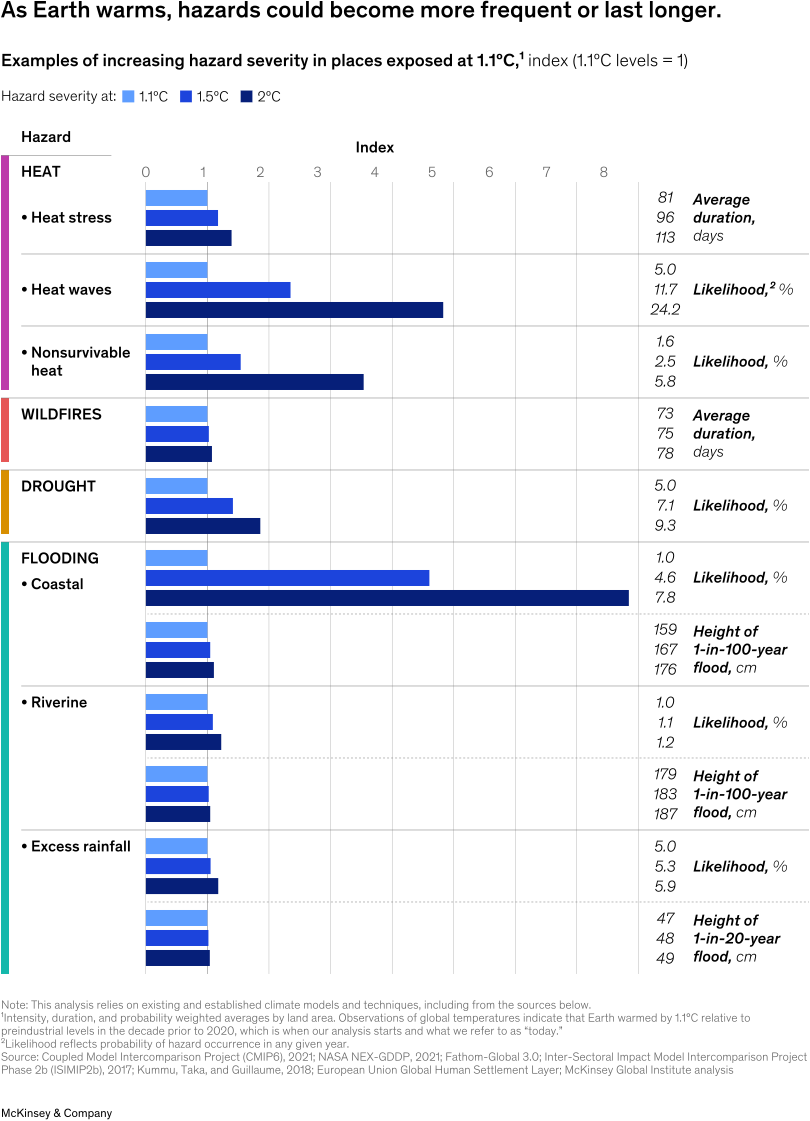
Places like Toronto, Warsaw, and Kyoto are not currently exposed to the four categories of hazards by our definition but are likely to be by 2°C.49 At the same time, some places would experience more severe hazards compared with today. For example, the average duration of heat stress could grow from less than 12 weeks currently to about 16 weeks at 2°C, increasing demands on electrical grids and operating costs as air conditioners run longer.
Together, these factors explain why the annual costs of protecting to standards established in developed economies increase from $540 billion today to $1.2 trillion at 2°C. About two-thirds of this increase would go to protecting people in areas exposed to new hazards, while the remainder would go toward addressing costs from rising severity (for more information, see sidebar “Evolving hazard patterns”).
Evolving hazard patterns
At 1.5°C or 2°C relative to preindustrial levels, many places are expected to experience more severe hazards relative to today and, in some cases, face more hazards than they currently encounter. Understanding these shifts is important in estimating how adaptation costs are likely to evolve. It is also important in considering how the nature of adaptation planning may need to change.
Consider severity. Some climate hazards are projected to intensify, become more frequent, or last longer at 2°C. For example, the average duration of debilitating heat stress in places currently exposed to the hazard could increase from less than 12 weeks to about 16 weeks at 2°C, in turn increasing demand for electricity for cooling and raising operating costs (exhibit).1
Similarly, a coastal flood that currently occurs once every 100 years could happen as often as once every 13 years at 2°C—which can result in increased average annual damages.2 It could also become more intense and have a greater flood depth, requiring higher sea dikes for protection. However, the increase in capital costs related to higher sea dikes is likely to be modest globally, because flooding heights for future one-in-100-year events may be only 10 percent higher than today, on average. Given these limited increases, adaptation costs may not rise sharply. Perhaps more important than the spending level are understanding how flood heights may evolve and ensuring that adaptation measures are designed to remain effective even as hazards intensify.
Not all hazards are expected to become more severe, however. Globally, compared with the changes in severity projected for other hazards, inland floods due to rising rivers and excessive rainfall in places already exposed today are unlikely to occur much more frequently, and the duration of wildfire weather is expected to increase only slightly (though specific locales may see greater severity increases).
People may also need to increasingly consider protection against multiple hazards. Currently, about 60 percent of land areas exposed to climate hazards face more than one type of hazard, and that share could rise to roughly 80 percent at 2°C. For example, people facing heat stress today primarily experience only one other hazard, but going forward, they may also need to consider protection against heat waves, drought, and wildfires.
Beyond increasing adaptation costs, these shifts could influence how adaptation planning is approached. Some places may need to account for the evolving nature of hazards—those that are becoming more intense, longer, or more frequent—when designing adaptation measures. This includes ensuring that assets with long lifespans, such as stormwater networks, are built to withstand changes in the future climate and that electrical grids are designed to accommodate higher cooling loads. Some may need to develop new capabilities to address emerging hazards, and places facing multiple hazards may need to adopt integrated planning and synergistic adaptation measures, such as flood proofing infrastructure that protects against multiple types of flooding and early-warning systems that can help manage multiple hazards.
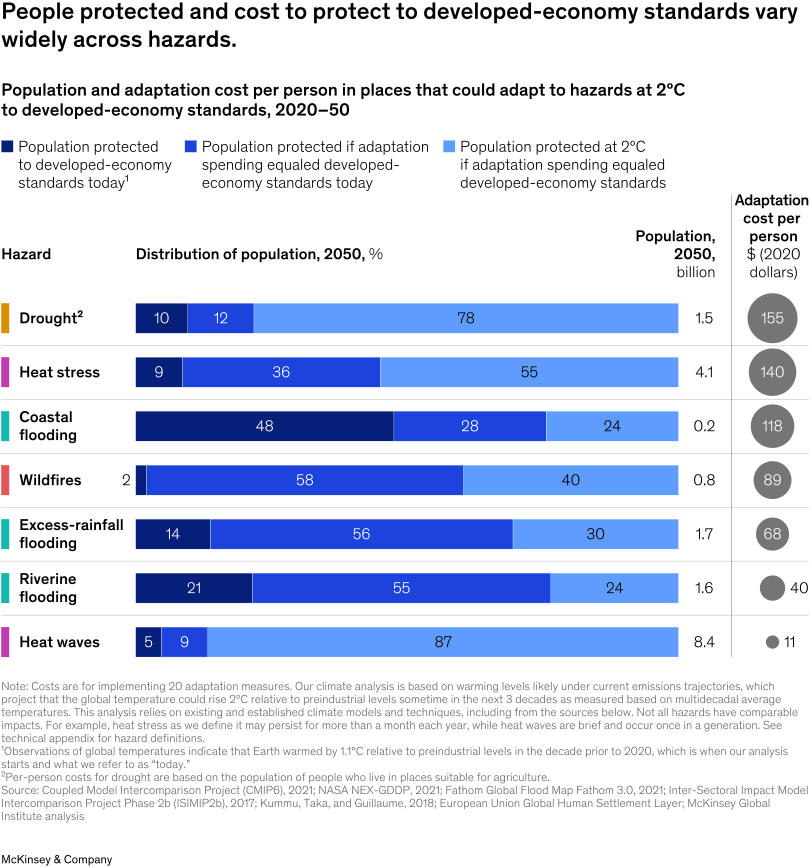
At the level of individual hazards, the adaptation cost per person is highest for heat stress, drought, and coastal flooding. At 2°C, providing protection in line with developed-economy standards would mean safeguarding roughly 4.1 billion people against heat stress, 1.5 billion against drought, and 200 million against coastal flooding through measures such as air conditioning and white roofs, irrigation and crop shading, and sea dikes and flood proofing (Exhibit 9). The largest increases in people needing protection compared with today are expected for heat stress and drought—an additional 2.2 billion and 1.1 billion, respectively. On the other hand, just 40 million more people may live in places that could become exposed to a one-in-100-year coastal flood at least 50 centimeters high, though everyone exposed would experience such an event eight times more frequently on average.
Protection against heat waves falls at the other end of the cost spectrum, at only about $10 per person to adapt to developed-economy standards. Defined as rare periods of at least seven consecutive days exceeding local temperature extremes, heat waves are place specific, for example, occurring when daily maximum temperatures rise above 35°C in Nice, France, or above 45°C in New Delhi. More places may have a chance of experiencing such heat waves at 2°C.50 Although generally less debilitating than long periods of heat stress, these events could still particularly affect vulnerable populations. Protecting to standards established in developed economies means that places around the world would be prepared should such a heat wave occur, even if only every ten or 20 years. With protection to developed-economy standards, many people would be covered by inexpensive measures such as early-warning systems and cooling shelters, ready to activate as needed.
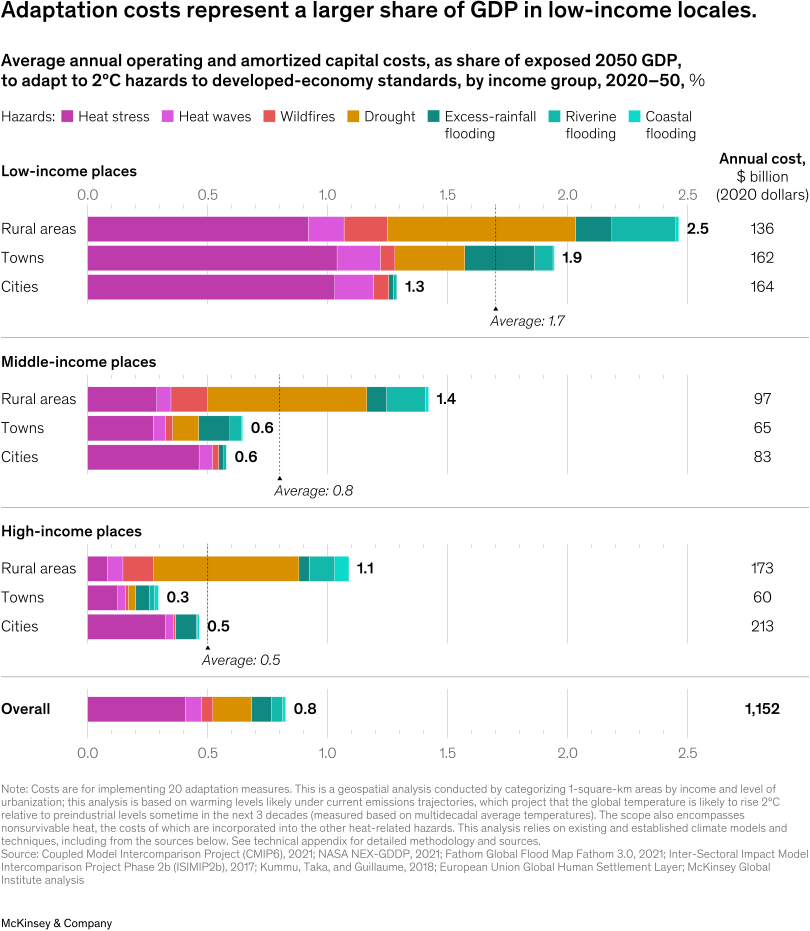
Relative to GDP, cost to adapt would be higher for low-income places
At 2°C, the costs of adaptation would fall unevenly across demographic groups. Protecting low-income places exposed to hazards at developed-economy standards would cost an average of 1.7 percent of GDP in those regions (Exhibit 10). Protecting low-income rural areas against hazards would require even more, 2.5 percent of GDP. By contrast, adaptation would require a significantly smaller share of GDP in wealthier places, just 0.5 percent in high-income areas and 0.8 percent in middle-income places on average. This disparity is driven by more people living in places exposed to hazards as well as lower GDP in low-income places.
Across income groups, 60 to 80 percent of the total adaptation costs we estimate in cities would protect people from heat stress. In rural areas, by contrast, estimated adaptation costs could fall more evenly across multiple hazards, reflecting lower population density (and therefore overall lower cooling costs, which typically scale per person) and a greater prevalence of drought.
How much will be spent on adaptation?
If adaptation spending decisions were based only on cost-benefit economics, there would be no resiliency gap today. As discussed, the combined benefits of the 20 adaptation measures we analyzed total about three times adaptation costs today, and the benefit-to-cost ratios will increase to about seven at 2°C.51 Clearly, multiple factors beyond cost-benefit economics determine how much households, governments, and companies spend to defend against extreme weather today, and a similar set of considerations may influence their adaptation choices at 2°C. We have no crystal ball, and so we outline several trajectories to “bookend” how much stakeholders might spend to adapt to 2°C by 2050.
Why stakeholders might not pay the costs of protecting to developed-economy standards at 2°C
Stating the obvious, governments, companies, and individuals have multiple demands on their pocketbooks, from national priorities like economic development and energy security to local considerations like civic priorities and individual needs. These competing demands in an often resource-constrained world, together with each stakeholder’s risk tolerance and level of risk awareness, shape the prioritization of adaptation spending.
Today, providing protection to match developed-economy standards would cost roughly $130 per person on average, yet current spending averages only about $45 per person.52 Per-person adaptation costs at 2°C would be roughly the same as today.53 In some places, this may be a manageable cost. For example, $130 is equivalent to less than four hours of average wages in the United States, or about one-sixth of the average minimum premium to insure a car.54 However, in Bangladesh, that amount is equivalent to about half the monthly average household income, more than 40 percent of which currently goes toward buying food.55
The situation is further complicated by the fact that the upside of adaptation takes the form of avoided damages. This can seem intangible and be difficult to appreciate, and upsides are also realized, as we have noted, only if and when hazards materialize. Evidence suggests that people are more likely to invest immediately after extreme weather events, when the benefits of adaptation are readily apparent.56 For example, government agencies and businesses in California accelerated investment in fire protection following the 2025 Los Angeles wildfires.57 As such events recede into the past, their influence on adaptation behavior can diminish.58 Furthermore, risk awareness may be calibrated to today’s climate, yet as the world warms to 2°C, adaptation needs could look quite different, as discussed earlier.
Additionally, incentives to invest in adaptation are not always aligned; those who pay are not always the ones who benefit, reducing the motivation to spend. For example, under traditional funding models, all taxpayers may finance projects such as sea dikes, while the direct benefits accrue to specific coastal communities.
Beyond financial considerations, adaptation projects can be challenging to execute, slowing down or even stopping their deployment. Supply chain issues may impede progress on large projects, as may technical challenges, coordination hurdles, and political will. For instance, the Netherlands’ “Room for the River” program, designed to increase safety for four million people living in the Dutch river delta, involved a decade of multilevel coordination and consultation among stakeholders.59
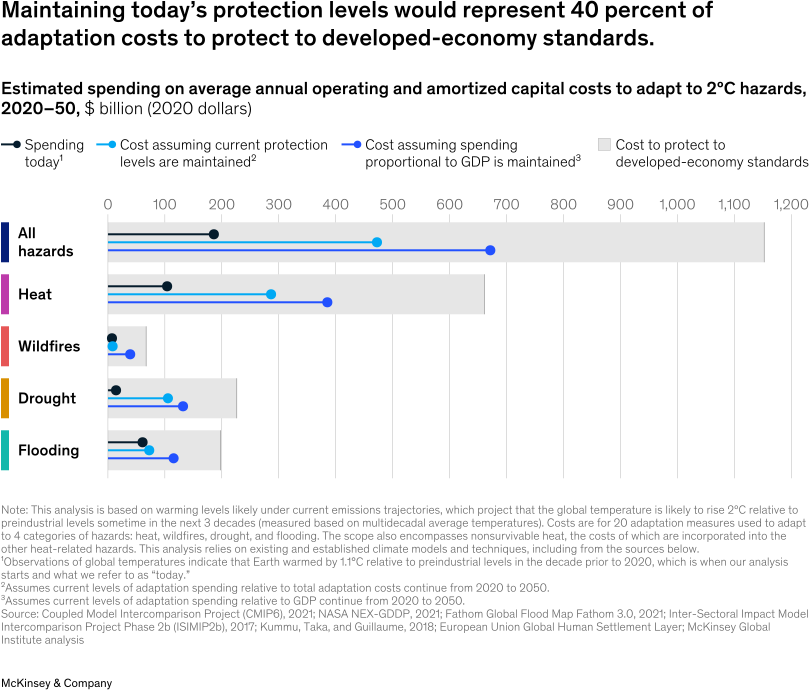
Maintaining current levels of protection would cost $470 billion annually at 2°C, 2.5 times current spending
In a warmer world, places facing new or more intense hazards may make spending decisions and trade-offs similar to those of places with similar climatic conditions and demographic characteristics that face hazards today. In other words, the factors that influence how places make adaptation spending decisions today, as evident in current levels of protection, could remain the same. For instance, if 70 percent of high-income urban households are currently protected against heat stress, a similar share might seek protection in the future.
In this case, adaptation spending to protect against 2°C could reach approximately $470 billion annually through 2050, or about 40 percent of the total $1.2 trillion price tag for protecting to standards established in developed economies (Exhibit 11).60 This would be about 2.5 times current spending. The largest relative gap by hazard on this trajectory is for protection against wildfires, which isn’t surprising given that only about 10 percent of land area exposed to wildfires is protected today.
Maintaining spending proportional to GDP would cost $670 billion annually at 2°C
As global economic growth continues, the capacity to spend on adaptation could increase. More people can better afford air conditioning as they become wealthier, and richer cities can build more robust flood protection.
Beyond having a bit more to spend, other reasons could motivate people, governments, and companies to spend more in the future; for example, if extreme weather becomes increasingly common. And as we have noted, the cost-benefit economics of adaptation improves with warming.
Should adaptation spending increase in line with anticipated income growth across demographic groups going forward, total annual spending would increase to about $670 billion.61 This would be 3.5 times today’s spending and roughly 60 percent of the estimated costs to adapt to standards established in developed economies in a 2°C world.
The degree to which economic growth helps meet adaptation costs by 2050 is likely to be uneven across the world. If adaptation spending scaled in tandem with economic growth, that growth could offset almost all additional costs of adapting to 2°C in high-income places. In low-income places, however, growth could offset some but not all of the costs.
Adaptation costs and current spending at a regional level illustrate these differences. Take North America. Exposed places there currently spend 0.4 percent of their GDP on average on adaptation measures, or more than enough to cover the costs of protecting to developed-economy standards at 2°C by 2050, assuming spending as a share of GDP stays constant with anticipated economic growth. But emerging economies have a different calculus. For example, current adaptation spending in emerging Asia equals about 0.6 percent of GDP on average in places exposed to climate hazards, yet costs for protecting to developed-economy standards at 2°C could rise to 1.4 percent of exposed GDP by 2050.62
Of course, spending may not scale in lockstep with GDP. There is no evidence that spending on adaptation stays constant as a share of GDP as countries grow wealthier.63 The Netherlands has invested in flood protection for centuries, yet even as total spending has risen over time, the share of spending relative to GDP has declined.64 And spending patterns are different even among relatively similar places with similar GDP levels. For example, Texas and Missouri have relatively high GDP per capita, yet Missouri has developed comprehensive early-warning systems for riverine flooding while coverage in Texas is uneven across local jurisdictions.65
And economic development trajectories themselves are not a given. Importantly, the presence or absence of adaptation measures is itself likely to influence the pace of economic development.66 Researchers have found that labor productivity among outdoor workers could fall by 25 percent if heat conditions persist at a wet-bulb globe temperature averaging 29.4°C or higher daily.67 Similarly, drought or flooding can slow income growth for smallholder farmers by reducing agricultural productivity, which in turn could dampen economic growth in countries heavily reliant on agriculture.68
A view of adaptation across the world
Hazards vary significantly across the world. So, too, will the costs of adapting to them. As a general rule, a smaller share of places in advanced economies will be exposed at 2°C and will face relatively lower adaptation costs, both on an absolute basis and relative to their GDP. Emerging economies will have greater exposure, and protection to standards established in developed economies could cost more. Nearly everywhere in the world, heat and drought will become more common and contribute most to overall costs.
Advanced economies are more likely to cover a larger share of their adaptation costs
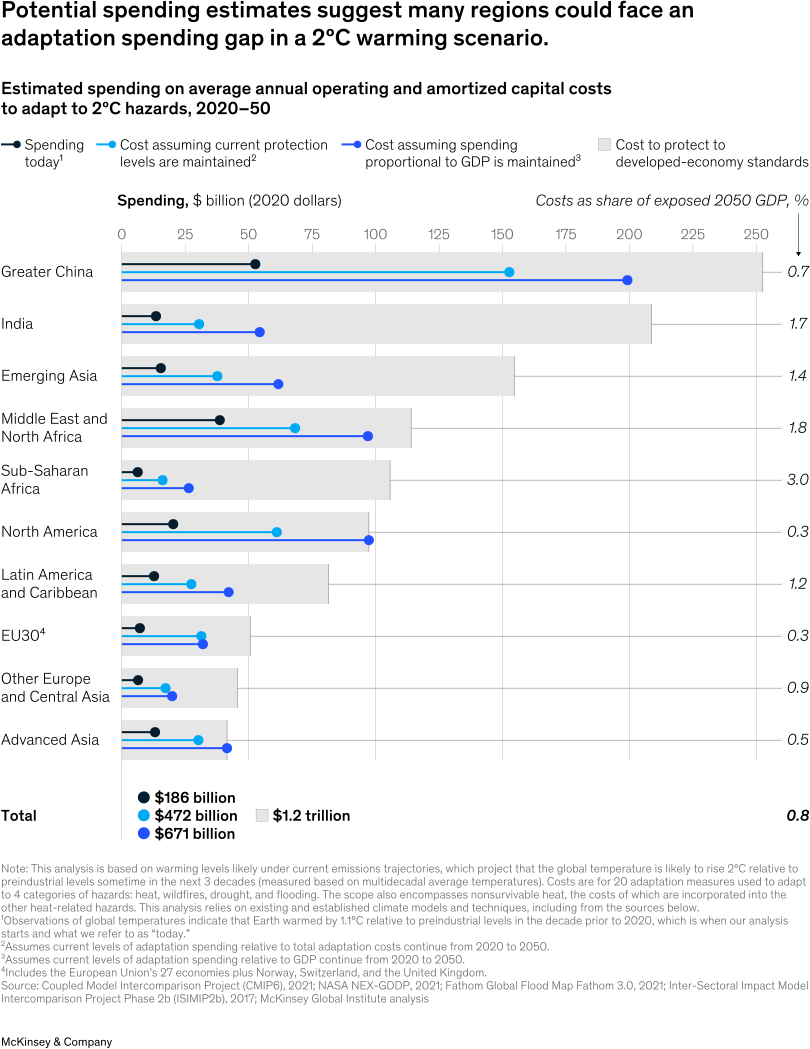
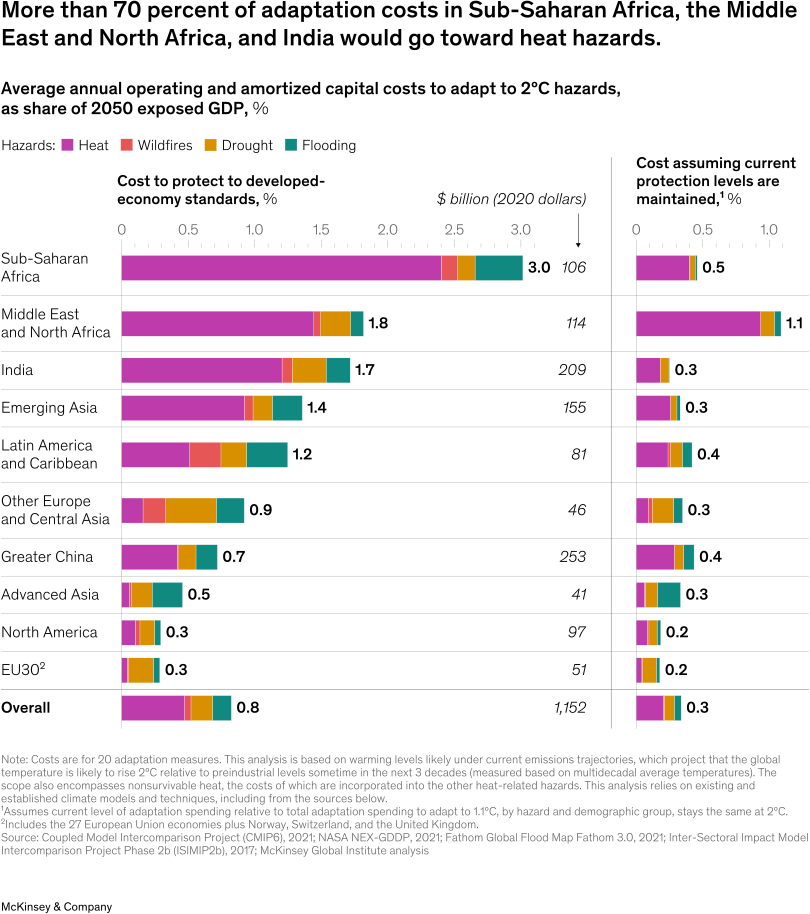
In absolute terms, Greater China and India would incur the highest adaptation costs to provide protection in line with standards established in developed economies—more than $200 billion each annually at 2°C in 2050 (Exhibit 12). Much of this relatively high total compared with other regions is due to each place’s large population in places exposed to hazards. Yet in India, even the per capita number of $125 per person is more than a third of the amount budgeted to spend per person in its 2025 central government budget.69
Relative to GDP, the costs of protecting to developed-economy standards would be highest by far in Sub-Saharan Africa, with 3 percent of the region’s projected GDP in exposed places. That is about 50 percent more than governments in the region paid to service their external debt as a share of GDP in 2024.70 The costs of such protection in the Middle East and North Africa and in India are a somewhat distant second and third, respectively.
If lower-income regions, including Sub-Saharan Africa and India, maintain their current protection levels at 2°C, they would cover only about 15 percent of the costs to protect to developed-economy standards. Even if adaptation spending in these regions grows in line with anticipated economic growth, it would cover just 25 percent of that cost.
By contrast, advanced economies benefit from higher protection levels today, as noted earlier. If these levels are maintained at 2°C in Advanced Asia and North America, for example, two-thirds of those regions’ protection costs may be covered, and increasing spending in line with anticipated income growth could even lead to full coverage of adaptation costs at 2°C.71
Heat stress and drought contribute most to increase in costs to protect to developed-economy standards at 2°C
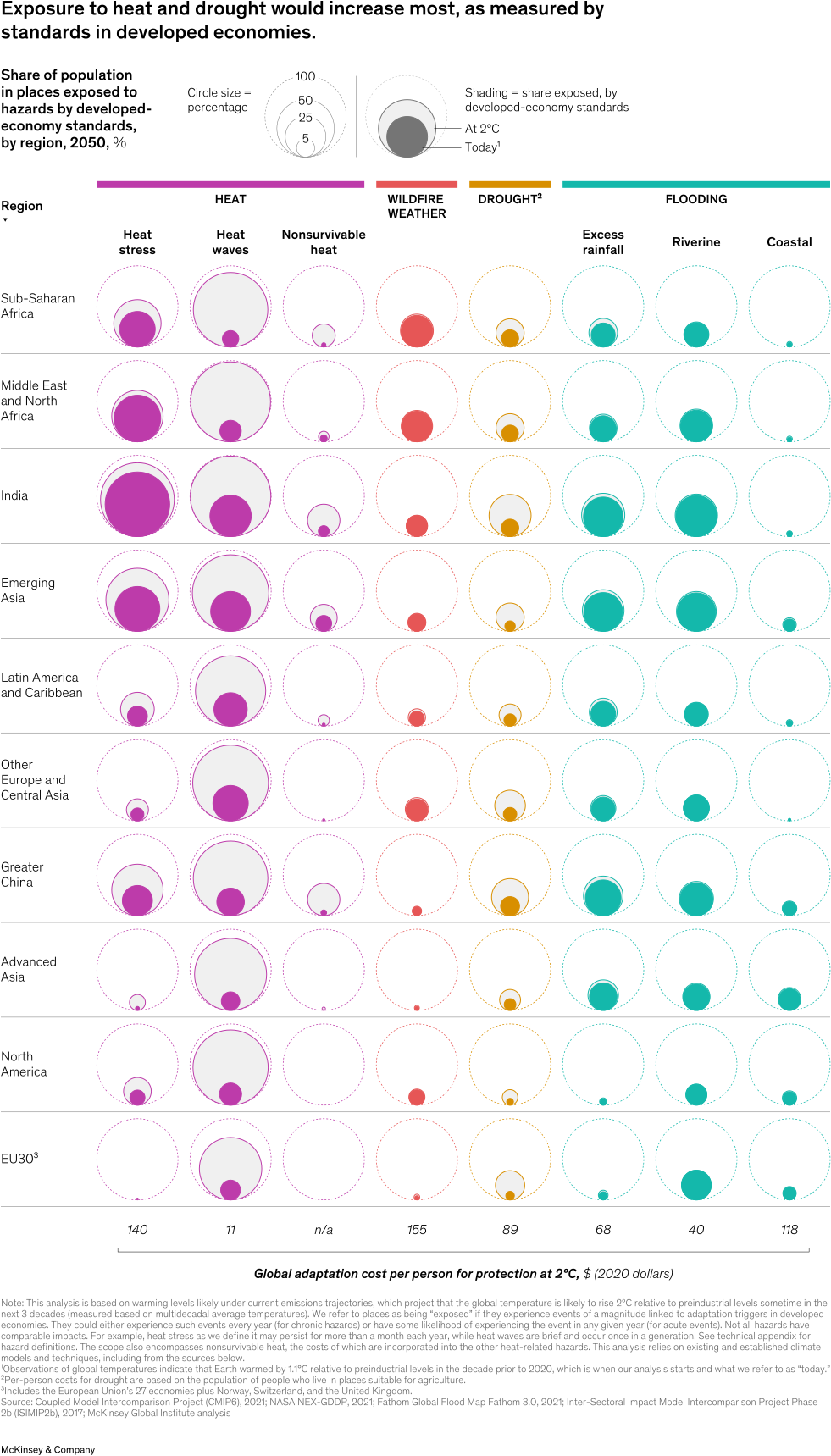
As the climate warms to 2°C, heat and drought could see the largest increases in places exposed across regions (Exhibit 13). Floods and wildfires present a different picture. In both cases, a meaningful number of people live in places already exposed today. However, geographic expansion of exposures is likely to be minimal, though some currently exposed places may experience these events more severely.72 Across the board, adopting standards of protection in developed economies would shield people living in places exposed to hazards at 2°C.
The land area and people living in places exposed to heat will increase most, a pattern that requires an understanding of various heat hazards to interpret properly. Heat stress can have large impacts every year in affected places and is among the most expensive hazards to protect against. Exposed places endure at least a month of very hot and humid weather every year, compromising productivity and potentially affecting the health of residents unable to stay cool. Many regions are expected to see an increase in heat stress exposure at 2°C, and lower-income regions are expected to see the largest exposures at that level of warming. Across China, emerging Asia, India, and Sub-Saharan Africa collectively, more than half of the population could live in locations exposed to heat stress. With protection, people living in these places would be safeguarded by measures such as air conditioning and urban greening.
At protection standards established in developed economies, even more places across all regions would be exposed to heat waves at 2°C compared with today. While heat waves can hit vulnerable people particularly hard, they are relatively rare and short events and affect the average person less, as previously discussed.73 The adaptation measures to address heat waves are also relatively inexpensive, accounting for only a minimal portion of overall adaptation costs. Protecting to developed-economy standards would mean putting in place measures like early-warning systems ready to deploy should an event occur.
Exposure to nonsurvivable heat, a near-theoretical concern today, may increase in some emerging economies as the global temperature rises to 2°C. Nonsurvivable heat occurs when temperatures and humidity are so high that the body can no longer cool itself by sweating, a condition that can lead to fatal overheating. Exposure is defined as having a greater than 1 percent probability of such extreme heat and humidity occurring. Places exposed to nonsurvivable heat generally are also exposed to heat stress and heat waves, and adaptation measures for those hazards also offer protection against nonsurvivable heat.
The costs of providing protection in line with standards established in developed economies at 2°C would increase across regions corresponding to these shifts. In emerging Asia, Greater China, India, the Middle East and North Africa, and Sub-Saharan Africa, about 70 percent of the adaptation costs at 2°C would go toward combating heat hazards, primarily air-conditioning costs to cool people during protracted periods of heat stress (Exhibit 14). Even if protection remains at current levels, these regions would devote almost three-fourths of their adaptation spending to addressing heat.
By contrast, less than 10 percent of the population of the EU30, North America, and Other Europe and Central Asia would live in places exposed to heat stress.74 The largest share of spending at 2°C in these regions would go toward managing drought. If current levels of protection were maintained at 2°C, more than 40 percent of their spending would be allocated to addressing drought, and slightly more than a third toward managing heat stress.
Who pays?
Ultimately, households, governments, and companies decide what to spend on. As noted, numerous factors beyond cost-benefit economics, ranging from capacity to pay to risk tolerance to operational challenges, could shape adaptation decisions. Importantly, spending on adaptation isn’t just a matter of availability of funds but also of how resources are prioritized to address competing demands (see also sidebar “Adaptation in the context of other spending priorities”). Going forward, the ability to finance and scale adaptation—and mitigation—as well as the evolution of damages from extreme weather events and the limits of adaptation will determine the risks societies bear.
How might different actors make adaptation decisions? And who bears the cost ultimately? Crucially, these decisions are not made in isolation. Each actor’s decisions are shaped by and, in turn, shape the choices of others.
Individuals and households are on the front lines of heat adaptation
About half of the estimated $1.2 trillion of the costs needed to adapt to 2°C is tied to protection against heat, about three-quarters of which are operating costs. Many of the measures that address heat, such as air conditioning, passive cooling, and reflective roofs, can be implemented by individuals, provided they can afford them.
Economic development linked to rising incomes for individuals can help, as we’ve noted. Yet household-level adaptation is more than a question of personal finances. Governments can shape how individuals approach decision-making by improving awareness of climate risks and enhancing affordability through rebates, tax incentives, and procurement plans that lower costs and strengthen supply chains. Government flood-resilience grants that support retrofitting in Queensland, Australia, and the Eco-Roof Incentive Program in Toronto, Canada, illustrate how targeted policies can support adoption.75 New York City helps vulnerable residents purchase and install air conditioners.76 Insurers, too, can encourage adaptation, as we discuss later. In practice, the balance between private capacity and public support could shape how widely and quickly households adapt.
Governments can build and enable large-scale infrastructural defenses, especially for floods and wildfires
For hazards requiring large-scale, infrastructure-related defenses such as flood barriers and wildfire prevention, measures for which capital expenditures amount to about $160 billion annually, governments may play a more central role. In such cases, the collective risk tolerance of communities and their degree of exposure influence decisions on whether to adapt or accept the risk.
Moreover, these projects require significant financing, raising questions of capital availability and how to best spread costs across taxpayers and beneficiaries of these investments. Some projects, like London’s £16 billion Thames Estuary 2100 program, have pursued “beneficiary pays” models with contributions from businesses, developers, and protected landowners using tools like planning obligations and community levies.77
Given the scale of funding required and the typically long lifetimes of these projects, such measures need to be designed carefully, taking into account not just the climate conditions of today but future climate changes as well. This can be done through flexibility or modularity that allows upgrades as risks evolve, for example. An illustration of this is the Thames Barrier, a major component of the Thames Estuary program, designed to accommodate additional gates and increase defenses over time as sea levels rise.78 Keeping warming beyond 2°C in mind can also be important for specific places, where taking a long-term view could result in a different suite of measures than a short-term view alone might. For example, zoning could limit the construction of assets in hazard-prone areas, rather than merely building defenses. Furthermore, when governments undertake broader public infrastructure investments such as urban planning projects or building infrastructure related to the energy transition, they could ensure that these investments are designed to be climate resilient.
Another consideration is how to manage the uncertainties associated with climate modeling, especially at the more granular levels relevant to local decision-making. This could influence design parameters such as the carrying capacity of stormwater networks and the height of coastal flood defenses.79 Adaptation planning could account for these uncertainties through a range of approaches, from implementing “no regrets” measures that deliver benefits under any future scenario to applying more conservative or stringent design standards and adopting flexible strategies, as described above, that include trigger points for future interventions as conditions evolve.
In addition to playing a central role in large public adaptation projects, governments also play an enabling role in supporting adaptation. They can provide social protection, supporting the most vulnerable with direct subsidies or community-level investments, approaches that vary widely across contexts and political philosophies. Cities like Seoul and Phoenix, Arizona, for example, provide subsidies to low-income households for cooling measures like air-conditioning installation and repair.80 In India, public programs invest in drought-resilient crops and irrigation systems to support the adaptation efforts of smallholder farmers.81 Another approach is to offset the up-front costs of adaptation measures, such as home flood retrofits, and allow repayment over time via property tax assessments.82
Planning and setting standards are other tools that governments use to support adaptation. Land-use rules can prevent new development in high-risk areas, and updated building codes can encourage more resilient real estate development. Such standards can be put in place proactively to address potential climate shifts down the road. For example, New York City restricts new construction in flood-prone areas, while France requires new public buildings to incorporate shading and ventilation.83 Another approach is to establish recognized standards that enable private stakeholders, such as insurers, to encourage adaptation. For example, the FORTIFIED Home program in the United States certifies storm-resistant properties, which can then qualify for lower insurance premiums.84
Companies could navigate resilience across hazards and consider opportunities
Ultimately, companies from the largest to the smallest need to decide where and how to invest in resilience and where to bear some level of risk. Of course, larger companies may have greater resources, so their calculus will differ, whereas small businesses may be more financially constrained.
No matter the landscape in which companies make these decisions, the broader context of public infrastructure and household income levels will shape them. A business operating behind a government-built levee will have a different calculus from one directly exposed to flooding. Similarly, a company operating in a region with extensive, government-supported irrigation systems, such as India’s Indira Gandhi Canal, will approach drought risk differently from one operating where drought is not managed by any public entity.85
For companies that choose to invest in managing direct or indirect exposures in their operations, supply chains, or distribution channels, many options exist. Even today, many firms in sectors ranging from utilities to food and beverage are actively considering how to manage climate risks. Measures being put in place include site-level defenses like flood proofing and firebreaks around buildings, microgrids, and cooling systems, to name a few.
Embedding adaptation decisions into forward-looking capital planning is another important consideration. For instance, some agricultural businesses may consider moving cultivation zones, as specialty crops like coffee and wine may thrive in new regions. New assets could be built in locations that have lower exposure to risks.86
Additionally, companies may also extend support to their employees, customers, and even surrounding communities, as many already do. Some businesses are investing directly in local resilience efforts by funding community infrastructure such as cooling hubs, supporting rural livelihoods through ecosystem restoration and water-access initiatives, and even creating biodiversity corridors that help buffer surrounding landscapes against droughts and floods.
Shifting climate conditions can also create new opportunities to meet demand for adaptation products and services. Revenue pools may emerge as private actors—individuals and companies—seek to manage their exposure to risk and as governments invest to protect their populations. For example, companies that provide roofing, insulation, and waterproofing systems that increase the resilience of buildings against heat and water damage can find revenue opportunities. One vital ingredient for adaptation is companies’ participation in providing solutions, including the innovation they can bring to reducing the costs of adaptation measures and enhancing the efficiency and effectiveness of technologies such as undergrounding, irrigation, and air conditioning.
Unlocking capital: Financing and scaling adaptation
Adaptation cannot happen without financing. Some 40 percent of the overall adaptation costs for the 20 measures we analyzed are capital expenditures, a share that’s still higher for hazards requiring major infrastructure such as flood defenses. Consumer-led measures such as air conditioning may have relatively lower up-front capital costs, but the investments required could nonetheless be material for an individual or household.
Yet financing for adaptation measures is challenging, and many structural barriers exist. Incentives to invest can be misaligned, as those who pay and those who benefit are not always the same. Benefits often come in the form of forgone damages rather than direct cash flows, and underlying climate risks can be hard to evaluate, resulting in uncertainty about the value and timing of benefits.
Maintaining today’s protection levels at 2°C by implementing the 20 adaptation measures we examine would require a total of $6 trillion in capital investment by 2050.87 While some of this could come from individuals, governments, and companies funding the adaptation measures themselves, much would likely require external financing. Financial institutions can play a pivotal role in mobilizing this capital, starting with scaling existing financial products. Banks, for instance, could extend targeted loans for household retrofits such as flood proofing, particularly where mortgage relationships already exist. Similarly, up-front resilience investments could be included in project finance for large infrastructure projects.
If protection were raised to developed-economy standards everywhere at 2°C, a total of roughly $15 trillion in capital investment would be needed, further increasing financing demands. Meeting these needs would likely require scaling traditional financial products and innovating new, adaptation-focused financing solutions.
Blended finance models that combine concessional and market-rate capital as well as instruments like municipal bonds are already supporting adaptation and could be scaled further.88 For instance, Miami’s $400 million Miami Forever Bond financed climate resilience as well as other municipal priorities such as infrastructure and public safety initiatives.89
Emerging mechanisms such as resilience bonds go further by channeling capital exclusively toward adaptation and, in some cases, linking payouts directly to measurable resilience outcomes. Tokyo’s certified Resilience Bond directs funds to projects like flood defenses and undergrounding utility poles.90 In parallel, institutional investors are beginning to show interest in funding resilience and investing in companies that supply adaptation products and services, supported by emerging taxonomies that identify such businesses and enable the development of focused investment strategies.91
To serve this expanding adaptation finance market, financial institutions will need to build new capabilities, such as climate-risk modeling, techniques for quantifying returns from adaptation, and embedding resilience metrics into underwriting and investment frameworks.
Finally, while overall adaptation financing is of course contingent on demand from individuals, governments, and companies looking to manage their risks, in some instances financial institutions are proactively undertaking measures aimed at spurring demand and driving scale. In California, insurers have begun offering discounts on property insurance for homeowners who adopt wildfire adaptation measures, though it is too early to determine the uptake.92
Picking up the pieces: Who pays when adaptation is absent or insufficient
As with any form of risk, people and organizations hoping to manage climate-related risks can invest to adapt to various degrees or to bear the risk. As we have discussed, various factors ranging from risk tolerance to spending priorities and the decisions of other actors can influence how households, governments, and companies make this decision.
Those who choose to bear some or all of the risk may use insurance to help them manage and shift its financial burden. Under typical property insurance plans, policyholders pay annual premiums that they cash in on, say, in the event of flood-related damages. Parametric insurance is a variation on this, paying out a fixed amount to the policyholder when a specific, measurable trigger event occurs, like a heat wave above a certain temperature and over a certain number of days. Unlike traditional property insurance, parametric insurance doesn’t require an assessment of actual physical damage, although establishing and monitoring trigger parameters must be done carefully. Recently, such insurance plans were launched for women farmers in India and construction workers in Hong Kong to protect them from income loss during extreme heat waves.93
Of course, stakeholders may instead opt to absorb the risk and not rely on insurance, which may not always be available or affordable, especially as risks intensify.94 And even in cases where an adaptation measure or insurance is in place, hazards can still generate residual losses that must be absorbed somewhere in the system. To absorb losses, households may need to draw down savings or go into debt, businesses may need to write off assets, insurers and reinsurers may pay claims, and governments often need to step in with disaster relief. In many high-income settings, the expectation that public authorities will act as insurers of last resort may also dampen incentives for private adaptation and risk reduction.95 Ultimately, someone will have to pay for risks.
Humans have long adapted to extreme weather, using often ingenious methods to survive droughts, wildfires, heat stress, and flooding. The world has developed many cost-effective adaptation measures that are in use today. Yet resiliency gaps persist and will increase and evolve as our climate shifts. Ultimately, households, governments, and companies will decide if and how to spend more on adaptation. Understanding today’s gaps and future needs will help inform those choices—and support increased well-being and prosperity for all.