A single failed switch during peak hours can cascade across an entire rail network. A maintenance intervention postponed by a few days can quietly erode capacity until speed restrictions become unavoidable. A localized disruption in one control area can ripple far beyond its origin—straining operations, frustrating passengers, and driving up costs.
Meanwhile, the operating environment is becoming more demanding. Passenger and freight volumes are growing, infrastructure assets are aging, extreme weather events are becoming more frequent, and expectations around punctuality, safety, and transparency are rising sharply across stakeholders, from regulators to end customers.
Today’s rail ecosystems are complex and deeply interconnected. Delivering reliable rail service depends not only on infrastructure managers, but on the coordination of multiple actors across the value chain—including train operating companies, rolling stock providers, station operators, and (increasingly) digital and technology partners. From planning and capacity allocation to real-time operations, passenger experience, and asset life cycle management, performance is shaped by how effectively this ecosystem is integrated.
Rail infrastructure operators play a central role in these efforts. As the custodians of network capacity, reliability, and safety, they are uniquely positioned to enable system-wide performance improvements—but also face a distinctive set of operational and asset-related rail infrastructure challenges.
Our assessment of railway technology adoption across leading rail infrastructure operators suggests that many of the tools needed to respond to these pressures already exist. Adoption, however, remains uneven. While some technologies are now embedded in day-to-day operations, others have not progressed beyond the pilot stage. The next phase of value will depend less on experimentation and more on disciplined focus and scale.
In this article, we synthesize insights from our study of more than 20 rail infrastructure operators across Europe, North America, and Asia, informed by in-depth discussions with executives and technical leaders. We examine ten core, highly relevant technologies that are within operators’ control and highlight five areas where technology initiatives could have the greatest impact.
Which technologies should rail infrastructure operators prioritize?
Rail infrastructure operators face a distinctive set of constraints: Safety requirements are uncompromising, operational margins for recovery are narrow, maintenance activities are complex and often disruptive, and network capacity is expensive and slow to expand.
Across regions and network sizes, operators consistently emphasize five outcomes as priorities, making them natural anchors for technology-enabled improvement.
Safety and reliability: Detecting issues earlier to limit their impact
Safety is central to rail operations, yet issues such as asset degradation or equipment failures are often identified only once they begin to affect service, leaving limited time to intervene and increasing the risk of cascading delays and wider disruption across the network.
Automated inspection, sensorized assets, and advanced detection capabilities are starting to change this dynamic. Earlier identification of anomalies affecting tracks, switches, and structures can help operators intervene before conditions deteriorate—reducing safety risks and avoiding emergency restrictions. Faster detection also limits secondary delays, helping maintain reliability on busy corridors and improving overall network resilience.
Operational efficiency: Sustaining performance on dense networks
Operating a modern rail network increasingly requires managing an integrated system instead of a set of independent lines. Control teams must balance punctuality, safety, and recovery decisions in real time and often under significant pressure.
Real-time traffic management platforms are becoming central to this task. By bringing together information on train movements, infrastructure status, and emerging disruptions, these systems enable control rooms to quickly assess knock-on effects, reprioritize services, and coordinate recovery actions across multiple lines. More advanced deployments—such as systems that recommend optimal train reroutes to minimize delays during unexpected disruptions—are beginning to move beyond visibility toward structured decision support, helping operators stabilize performance on high-density networks.
Maintenance and asset life cycle management: Achieving more with constrained resources
Rail infrastructure maintenance is costly, complicated, and can often lead to major disruptions. Traditional inspection regimes and fixed maintenance schedules can result in teams intervening too early on healthy assets, while emerging issues elsewhere go unnoticed until they trigger failures, emergency repairs, and service restrictions.
Predictive maintenance, digital representations of assets, and automated inspection tools enable a more targeted approach. Data from diagnostic trains, trackside sensors, and asset-level digital models are increasingly used to inform and guide intervention decisions (such as detecting early indications of a rail crack and initiating repair to prevent further decay and potential derailment), helping operators extend asset life and reduce unplanned disruptions.
While the benefits are clear, attempts to scale these practices can be thwarted by fragmented data, limited integration with maintenance planning systems, and the large up-front investments required to modernize asset management processes.
Workforce resilience: Confronting skills shortages
Rail infrastructure operations depend on highly specialized skills—including traffic control, signaling, and maintenance engineering—that are increasingly difficult to replace. Many operators face aging workforces, tight labor markets, and rigid labor frameworks, all while striving to keep denser networks functioning with limited margin for error.
Technology can help address this challenge by improving workforce planning, reducing manual workloads, and better supporting frontline teams. Advanced crew planning systems, often integrated with traffic management systems and rail operation management systems, can improve resilience during disruptions by ensuring the right skills are available at the right time—for instance, by automatically reassigning certified crews to cover gaps during service disruptions. Digital work management tools and maintenance copilots that draw on equipment manuals and historical interventions can also help standardize execution and reduce reliance on individual experience.
While adoption remains uneven, operators that invest in workforce-focused technologies are better positioned to sustain performance as operational complexity grows.
Financial sustainability: Extracting more value from existing assets
For most rail infrastructure managers, financial performance depends less on pricing flexibility than on how effectively they coordinate and deploy assets, capital, and operating budgets.
Technologies that improve capacity utilization, reduce unplanned downtime, and support better maintenance and inventory decisions can materially improve long-term cost performance. Advanced planning tools, condition-based maintenance supported by asset monitoring systems, and inventory optimization (for instance, being able to store fewer spare parts without increasing the risk of system failures) can help operators allocate resources more selectively and extend asset life.
Adoption, however, remains limited, particularly in situations where benefits accrue across multiple functions and budgets rather than to a single entity. The absence of a consolidated mechanism to capture cross-functional returns can complicate the business case for single-department funding.
How mature is technology adoption in rail infrastructure today?
Our assessment highlights ten technologies that are already changing how rail infrastructure is operated and maintained. While adoption levels vary, early deployments can offer a view of where value is emerging and of which factors continue to limit scale.
Optimized crew planning
For most operators, crew planning remains largely manual or rule-based. It tends to focus on required activities (such as complying with labor agreements by building schedules that avoid violating maximum shift limits or rest periods) while neglecting to prioritize more strategic deployment of skills to improve network resilience and productivity.
A small number of operators are deploying workforce planning software platforms to manage shifts, qualifications, and availability across control rooms and maintenance teams. When linked to traffic management and maintenance planning tools, these systems allow staffing to be adjusted more dynamically during disruptions or major works, improving coverage and reducing reliance on individual experience. For example, if a train delay unexpectedly shortens a nighttime maintenance window, the system might automatically reassign a crew to a smaller, quicker repair that fits into the new time frame.
Broader adoption remains limited, however, due to labor agreements that can limit dynamic workforce reallocation, unclear division of ownership between HR and operations, and weak integration with planning processes.
Capacity planning optimization
Capacity planning in rail—the process of allocating limited track space and scheduling train slots—is typically carried out years in advance and governed by well-established regulatory and coordination processes. As passenger and freight demand grows and networks become more saturated, infrastructure managers face increasingly complex trade-offs between keeping commercial services available, allowing for maintenance access, and building operational resilience. They might need to, for example, balance the insertion of additional peak-hour services against the risk of propagating delays, or weigh the implications of sacrificing lucrative freight path availability to secure access windows for preventive maintenance.
A small number of operators are beginning to use advanced planning tools to analyze historical traffic patterns, simulate bottlenecks, and test alternative train path allocations on heavily used corridors. These tools are often applied to specific lines or planning cycles, supporting scenario analysis and stress-testing rather than day-to-day operations. In practice, their effectiveness remains limited because planning decisions span multiple stakeholders—including infrastructure managers, train operators, and regulators. These entities often operate with conflicting objectives, meaning a technically optimal schedule can sometimes stall if it requires any single party to sacrifice commercial revenue.
Passenger flow management
Passenger flow management is most commonly applied in large stations and major transfer hubs, where congestion can quickly create safety risks and degrade service quality. In these environments, crowding on platforms, concourses, or access points can escalate rapidly during peak periods or disruptions.
Across many rail networks, operators still rely on manual observation, fixed thresholds, and static crowd management rules to manage these situations. While effective in stable conditions, these approaches often limit responsiveness when passenger volumes fluctuate or when incidents occur. For example, if a service is abruptly canceled, reliance on visual monitoring can delay the rerouting of passengers until a severe bottleneck has already formed.
More advanced initiatives use camera-based monitoring to estimate crowd density on platforms, concourses, and trains in near real time, supporting operational decisions such as staff deployment, access control, or passenger routing. For example, instead of waiting for staff to manually spot a platform crush on CCTV during a sudden downpour, an AI-powered system could predict the surge using weather data and automatically redirect foot traffic before a bottleneck ever forms.
These deployments have typically been concentrated in flagship stations or during specific events, rather than rolled out systematically across the network. Broader adoption is slowed by privacy considerations and by limited integration with station operations and passenger information systems.
Automated inspection and robotics
Manual inspection of tracks, structures, and trackside environments can create major cost and safety issues for rail infrastructure operators. Inspections often require track access, service interruptions, or staff working in hazardous conditions—particularly on bridges, tunnels, and heavily trafficked sections of the network.
To address these constraints, operators are increasingly experimenting with inspection trains equipped with cameras and measurement systems, drones that can handle structure inspections, and sensorized maintenance vehicles. These tools can improve inspection frequency and protect staff safety while reducing disruption.
Most deployments remain project-based at this point. Inspection data is often reviewed manually and only loosely connected to maintenance prioritization. Scaling impact depends on better integration with maintenance systems and a clearer business case across asset classes with different risk and investment profiles.
Service scheduling
Designing service patterns requires operators to balance passenger demand with infrastructure availability, rolling-stock availability and maintenance cycles, and workforce constraints. In practice, much of this work still relies on legacy tools and expert judgment, especially when difficult trade-offs must be made among robustness (the schedule’s ability to absorb minor delays), capacity use, and operational resilience.
Some operators are beginning to pilot more advanced scheduling approaches to stress-test timetables, explore disruption scenarios, and refine service patterns on selected lines or corridors. If a train breaks down, for instance, a fully integrated system could instantly generate a revised network timetable, automatically reassign displaced crew members to new routes, and update passenger apps in real time.
These efforts remain largely localized and are rarely embedded in end-to-end planning processes. Wider adoption can be held back by limited integration with crew planning, asset availability, and real-time operational systems, making it difficult to translate analytical insights into sustained, network-wide impact.
Fraud and incivility detection
Fare evasion, vandalism, and antisocial behavior remain persistent challenges across rail infrastructure—particularly in large stations, interchanges, and access-controlled areas where high footfall makes manual oversight difficult. Infrastructure managers often rely on physical patrols, fixed CCTV monitoring, or post-incident reviews, which can delay response and limit the ability to prevent issues from escalating.
More advanced initiatives use video analytics combined with access and validation data to identify higher-risk locations and time periods and investigate recurring patterns around station entrances, platforms, and sensitive infrastructure areas. This enables more targeted deployment of security resources and closer coordination with station operations. While pilots and localized deployments are increasingly common, network-wide rollout remains limited. Privacy considerations, fragmented responsibilities between infrastructure managers and train operators, and limited integration with station management systems continue to slow broader adoption.
Inventory management
The availability of spare parts and replacement components is critical to timely maintenance and overall network reliability, yet inventory decisions made by many infrastructure managers are still driven by historical usage patterns and local depot rules rather than forward-looking needs. This often results in situations where critical spare parts are unavailable when failures occur, while other components sit idle across multiple locations.
Some infrastructure operators are beginning to test forecasting tools to better anticipate demand for high-criticality spares and reduce working capital tied up in inventory. These initiatives can help ensure that the right components are available ahead of planned maintenance or in areas prone to recurring faults. In practice, however, most efforts remain localized and only loosely connected to maintenance planning. Linking inventory decisions with asset condition data and maintenance schedules would allow infrastructure managers to coordinate procurement, storage, and interventions more proactively across the network.
Digital twins and sensorization
Digital representations of rail assets are increasingly used to support planning and monitoring, particularly for safety-critical and high-value infrastructure. Many infrastructure managers have developed asset-level digital twins focused on tracks, switches, bridges, tunnels, and power systems, drawing on data from diagnostic trains and trackside sensors measuring geometry, vibration, temperature, and strain. These tools are most often applied to assets with the highest operational impact, such as switches on busy corridors or structures exposed to heavy loads and weather stress, helping engineers understand degradation patterns, assess risk, and test maintenance scenarios before interventions are planned.
Network-wide digital twins, however, remain at an earlier stage of maturity. Most current deployments are still used primarily for visualization, condition tracking, or reporting rather than predictive simulation or automated decision support. Scaling impact across the network will depend on standardizing data models across asset classes, expanding and harmonizing sensor coverage, and strengthening integration with maintenance planning, capacity management, and operational systems so that insights from individual assets can inform broader network-level decisions.
Real-time traffic management and decision support
Real-time traffic management is among the most established digital capabilities in rail infrastructure today. Control centers increasingly rely on integrated platforms that consolidate train movements, signal status, infrastructure conditions, and disruption information into a single operational view.
This integrated visibility supports faster incident detection and response and helps limit delay cascades, particularly on dense and highly interconnected networks. While monitoring and coordination capabilities are largely mature, further value can be realized by strengthening decision automation and linking traffic management more closely with maintenance activities, crew availability, and planning systems. In complex disruption scenarios, many operators still rely heavily on the experience and judgment of individual controllers, highlighting the opportunity to provide more consistent decision support at scale.
Looking ahead, satellite technologies are emerging as a complementary enabler of real-time traffic management. In the next five to ten years, low-Earth-orbit (LEO) satellites could begin to enhance monitoring of long, linear rail infrastructure, while use of the Global Navigation Satellite System could bolster existing trackside systems (including the European Rail Traffic Management System). Falling satellite costs, lower latency from LEO constellations, and the need to improve coverage where terrestrial connectivity is uneven are increasing the relevance of these solutions as rail communication frameworks continue to evolve.
Rail infrastructure predictive maintenance
Rail infrastructure maintenance has traditionally relied on fixed inspection cycles and reactive interventions after failures occur. As a result, deteriorating track sections or signaling components are often addressed only once they have already caused speed restrictions, service disruptions, or emergency repairs, driving up operational impact and cost.
Predictive maintenance is shifting this approach by enabling operators to anticipate degradation earlier. Rather than relying solely on physical inspections, infrastructure managers use advanced analytics, machine learning, and historical maintenance records to calculate the remaining useful life of components. This allows them to identify early warning signals and intervene in a more controlled way, transitioning from rigid, calendar-based schedules to condition-based repairs.
When these insights are embedded into maintenance planning, teams can move work to planned windows, reduce unplanned outages, and target budgets toward assets with the highest operational risk. Scaling this approach across the network remains challenging, however, due in part to ingrained legacy workflows and also regulatory guidelines that can limit the flexibility of inspection timelines.
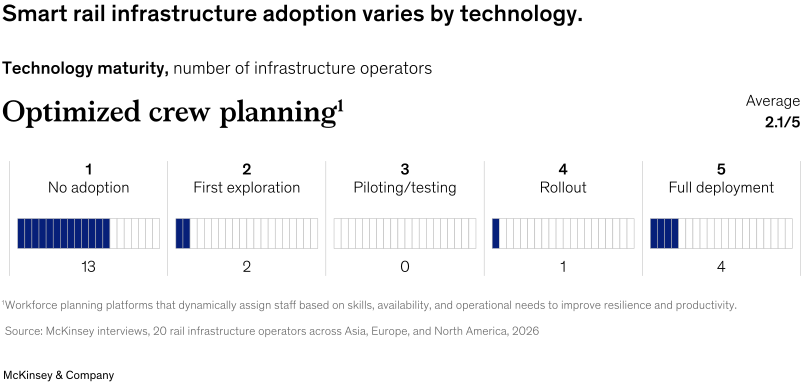
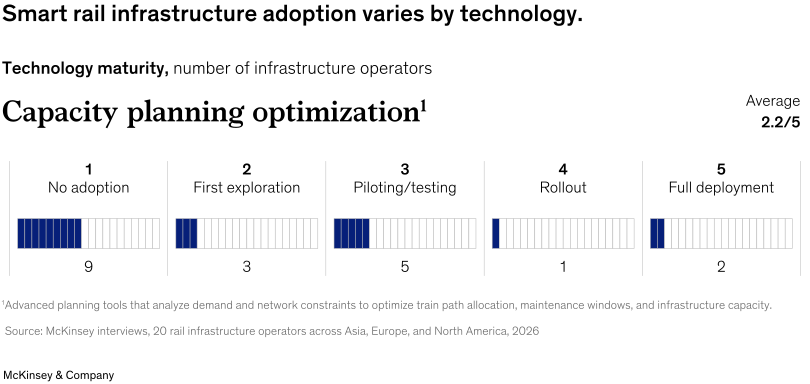
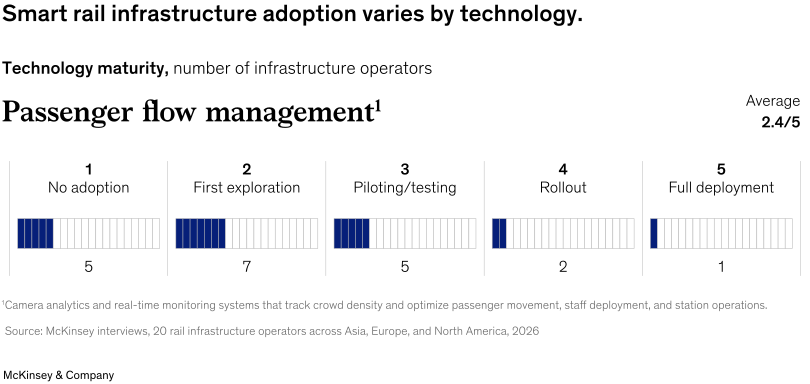
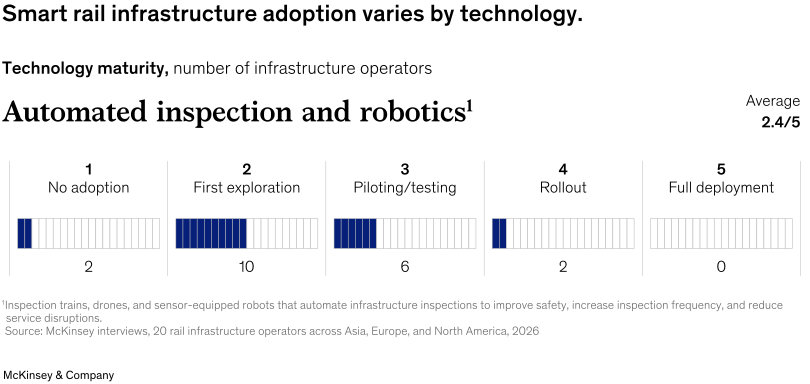
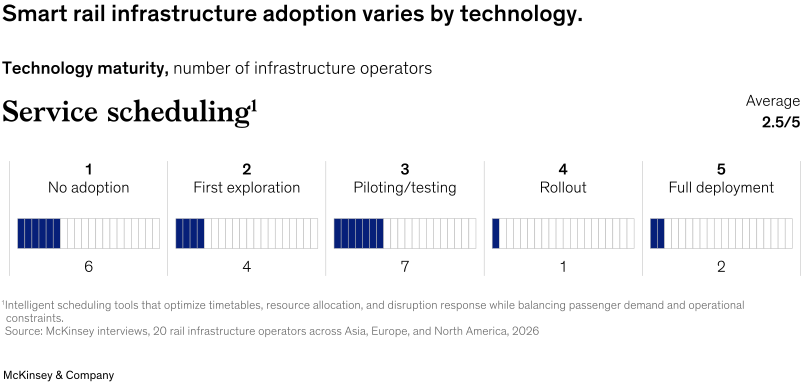
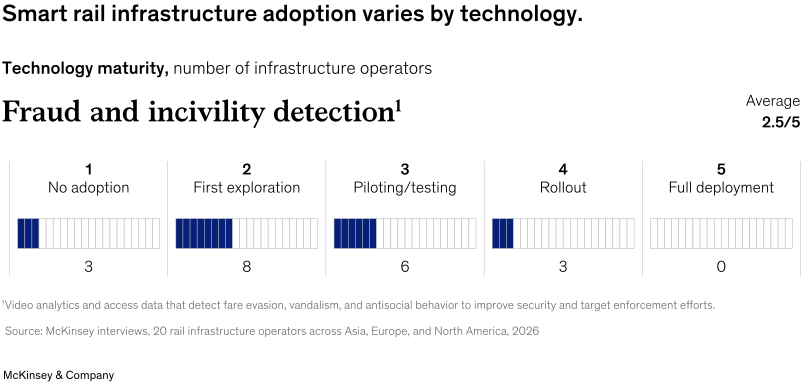
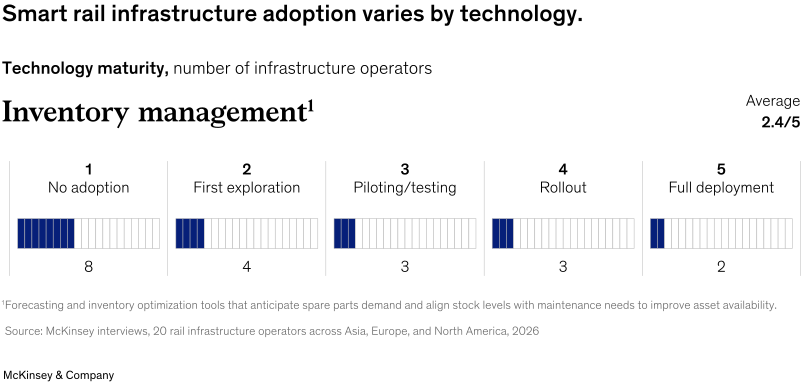
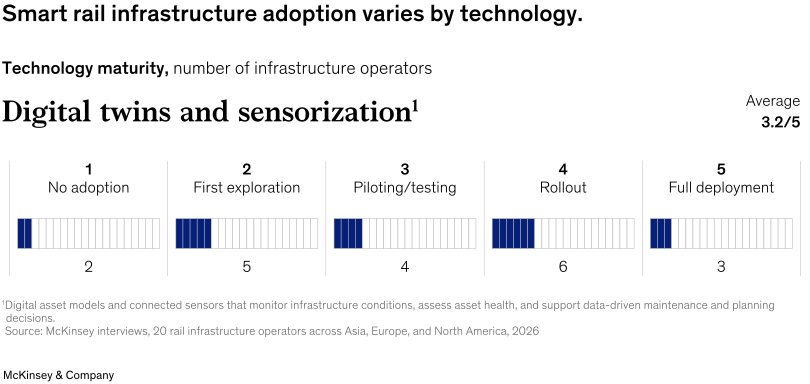
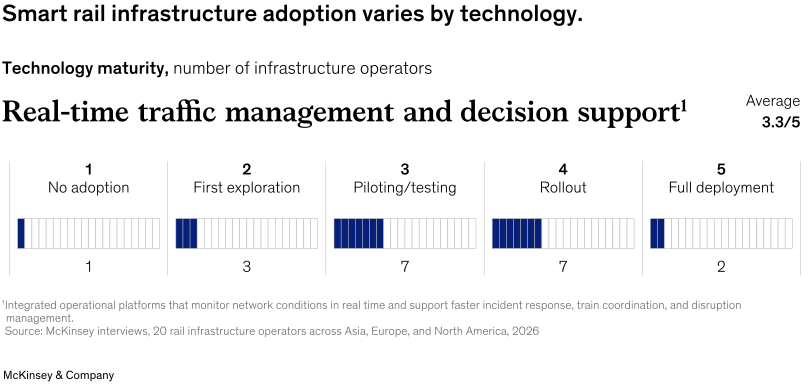
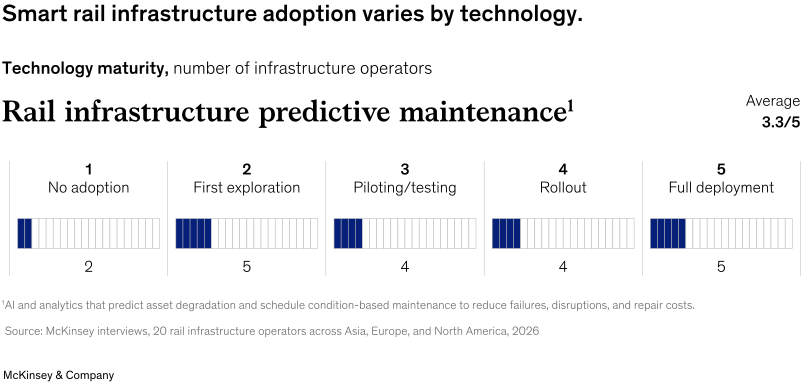
Across technologies, maturity increases as use cases move closer to day-to-day operations and asset reliability. Planning, workforce, and support functions lag behind primarily due to organizational and integration barriers rather than technical limitations.
For rail infrastructure operators, the opportunity is to scale proven capabilities while building the data and system foundations needed to catalyze the next wave of value.
Charting a pragmatic path forward
Operators that are making real progress share several common traits. They prioritize clearly defined outcomes over individual tools, scale proven solutions instead of launching a jumble of new pilots, and make deliberate investments in strong data and integration foundations.
Based on our analysis, four practical moves can help rail infrastructure operators accelerate impact.
Anchor technology initiatives to core operational priorities
Operators that deliver measurable impact typically focus first on the most critical parts of the network, such as high-density corridors, safety-critical assets, and operations with limited recovery margins. Technology initiatives anchored in these areas help address tangible challenges—from limiting delay propagation on saturated lines to stabilizing operations during incidents to improving availability of assets that frequently trigger service restrictions.
Use cases closely tied to safety, reliability, and asset performance tend to generate the fastest and most visible benefits, as they directly affect day-to-day operations. By contrast, planning and optimization applications often span multiple functions and decision layers, requiring greater organizational alignment and system integration before their impact can be realized at scale.
Expand what is already delivering results
Several technologies have already demonstrated consistent value across operators—particularly in real-time operations, inspection, and asset monitoring. When these technologies are scaled across larger portions of the network, they help standardize ways of working, reduce reliance on individual expertise, and create a more consistent operational picture, whether in control rooms managing disruptions or maintenance teams monitoring asset conditions along busy corridors.
Operators that rush to deploy complex AI scheduling or routing tools without first integrating workflows, data, and training staff often find themselves managing isolated pilots—limited to specific lines or assets—that struggle to influence day-to-day operations or gain traction beyond local teams.
Treat data and integration as core operational capabilities
In rail infrastructure, many transformation efforts stall not because tools are missing, but because data remains fragmented across assets, systems, and functions. In practice, asset registers, condition data, and operational information are often maintained separately, making it difficult to form a consistent view of what is happening on the network at any given time.
Organizations that invest early in connecting operational, maintenance, and planning information are better positioned to scale digital capabilities. A shared, reliable view of the network reduces dependence on manual judgment and one-off solutions, enabling teams to make faster, more consistent decisions across day-to-day operations.
Prepare for future network demands
Automation of operations, more frequent climate-related disruptions, and rising traffic density will continue to reshape how rail networks are planned and operated. Increasingly, infrastructure managers will need to cope with heavier loads, tighter recovery margins, and more variable operating conditions, making flexibility a core requirement rather than a design choice.
Future-proofing investments therefore requires adaptable data architectures, operating models, and vendor choices that can evolve as network demands change. While one-off deployments may deliver short-term improvements, railway operators will generate sustained value only when they embed technology into core planning, day-to-day operations, and asset maintenance processes across the network, allowing them to respond faster and more effectively as conditions shift.
Rail infrastructure is critical to economic growth and sustainable mobility. As pressures on reliability, capacity, and cost continue to intensify, technology is becoming central to maintaining and improving network performance.
Our assessment shows that many rail infrastructure operators already have important building blocks in place to integrate digital and AI technologies into core operations. The opportunity now lies in sharpening priorities, extending proven capabilities, and strengthening the foundations needed to translate digital investments into sustained operational improvement.
Related Articles