On any given day, anywhere in the world, a single stalled truck on a motorway might set off a chain reaction creating halted traffic, secondary crashes, and delays rippling through logistics networks. Elsewhere, a crack in a bridge that has gone unnoticed for weeks could suddenly force an emergency closure. Or a highway rest area that’s reached capacity more quickly than expected could force trucks to park on hard shoulders, creating severe safety risks.
These are familiar, concrete challenges for road operators—the public and private sector entities responsible for the day-to-day operation, maintenance, and monetization of road networks. These challenges can be exacerbated by dense congestion, aging infrastructure, extreme weather, budgetary constraints, and ever-growing user expectations. They can create not only frustrated road customers but also higher costs for road operators.
But our new examination of global road operations offers encouraging findings: Technologies that could help address many of these problems already exist, and in some areas, they are beginning to take hold. While digital maturity still varies widely, there is a clear path toward a future of smart-road networks that are safer and more efficient.
This article synthesizes insights regarding the technological maturity of leading road operators across Europe, the Americas, and Asia. It covers ten core smart-road technologies that fall squarely within operators’ control, and it integrates dozens of conversations with more than 15 executives and technical experts from these regions, all of whom are experiencing this digital transformation firsthand. The article strives to help road operators understand which technologies, applied in which areas, could have the greatest impact.
Where can smart-road technology make a difference for operators?
Road operators today face a combination of old problems and new pressures.
Congestion is rising in most countries. Extreme weather is putting stress on assets more frequently. Many bridges and tunnels are decades old and require increasingly complex maintenance. Funding constraints persist. And user demands have leveled up—drivers expect predictable and reliable journeys, real-time information, and elevated safety.
Most operators know that technology can help. The real question is: Where can technology make a material difference? Our findings indicate that operators consistently prioritize four outcomes over all others—suggesting they could be first-in-line candidates for tech innovation.
Safety: Reducing incidents and their severity
Safety remains the undisputed foundation of any road operator’s mission. Yet many road incidents—such as a stopped car in fog, debris that’s fallen from a truck, and a vehicle driving the wrong way—can still go undetected for extended periods if no user reports them. During that time, risks can escalate quickly.
New technologies are beginning to change this dynamic. AI-enabled cameras can detect a stopped car within seconds. Sensorized tunnels can identify smoke or abnormal heat levels from a fire before an operator has noticed the video feed. These early detections enable faster interventions and can significantly reduce the rate of secondary crashes, which represent a large share of motorway fatalities.
Operational efficiency: Enabling network fluidity, even under pressure
Road operators increasingly describe their control rooms as “air traffic control for roads.” And as is true in the aviation realm, the ability to make coordinated, real-time decisions is becoming essential for those who oversee motorways.
Integrated traffic management systems (ITMS) can merge information from hundreds of devices—including cameras, weather stations, and road sensors—and help operators respond to congestion, storms, or unexpected events. Mature ITMS deployments can now automate parts of the response by taking actions such as lowering speed limits, activating detours, and triggering warning messages within seconds.
Maintenance and construction: Achieving more with less
Inspections of infrastructure remain essential, but traditional methods (such as manual checks and scheduled bridge visits) can be costly, time consuming, and sometimes dangerous to the inspector. Operators have told us stories about teams spending days coordinating lane closures for small visual checks, and technicians making difficult climbs on viaducts during bad weather. In some cases, delayed inspections have led to minor defects going unnoticed for weeks, ultimately forcing costly emergency interventions.
Digital tools are already altering this equation. Drones and lidar scans can inspect a viaduct in minutes. Sensors embedded in structures can detect early stress patterns. Digital models can simulate how an infrastructure asset might age under different conditions.
Predictive maintenance remains in early stages. Our maturity assessment indicates significant room for growth. But operators view predictive maintenance as one of the most promising levers for reducing unexpected failures and optimizing budget allocation.
Revenue optimization: Ensuring sustainable funding
As funding models evolve, many operators must take care to ensure that tolling systems remain efficient, fair, and financially sustainable. Toll leakage, outdated equipment, or manual enforcement can lead to revenue shortfalls that directly reduce the resources available for maintenance and upgrades.
Technologies such as automated toll fraud detection, free-flow tolling, and smarter pricing mechanisms (where allowed) can strengthen revenue collection. Although adoption is still nascent in many regions, interest is growing as operators modernize their tolling architecture.
How mature is the adoption of the smart-road technologies reshaping infrastructure?
Our analysis, drawing on interviews with road operators around the world, examines the varying adoption maturity levels of ten technologies. These are not long-term vehicle-dependent technologies but instead tools that can be directly implemented by road operators now to improve safety, daily operations, maintenance, and revenue collection.
Smart-parking and rest area management
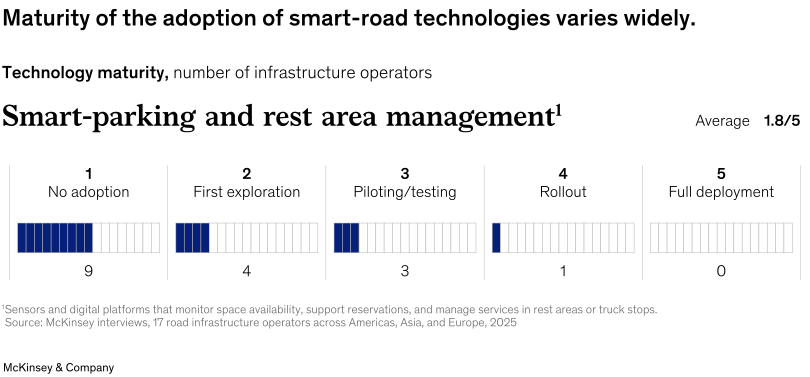
Truck parking shortages are a daily safety and operational challenge, leaving trucks parked hazardously on roadsides. Yet sensor-based systems that track availability remain rare, with scattered pilots and limited scale. Only a small number of operators have implemented smart-parking solutions, and most deployments remain isolated to single rest areas or specific freight corridors instead of being integrated across wider networks.
Where implemented, these solutions can reduce illegal parking, improve rest area utilization, and support logistics operators. Real-time space availability, digital reservations, and automated payments could significantly reduce illegal stopping, ease congestion, streamline logistics flows, and enhance the overall driver experience—especially for long-haul trucking.
Expansion has been slowed by fragmented ownership and unclear operating models. Wider adoption could require coordination among concessionaires, service area operators, and public authorities, and could be accelerated with the aid of interoperable platforms and viable revenue-sharing frameworks.
Integrated traffic management systems
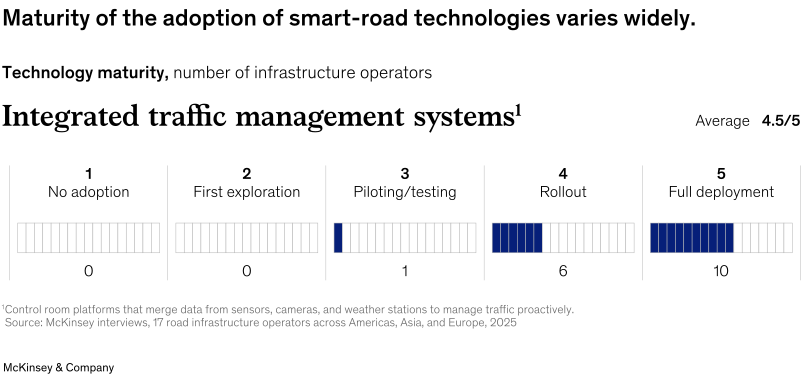
ITMS centralize vast amounts of field data, help coordinate responses, and increasingly use automated decision rules. Some operators report that ITMS automation has already reduced travel time variability and improved consistency of operations. In a few cases, control rooms that combine ITMS automation with clear escalation protocols have been able to manage major incidents while using fewer manual interventions and achieving faster coordination with emergency services.
ITMS are widely deployed, forming the backbone of many modern traffic operations. Most operators currently run ITMS platforms that consolidate inputs from sensors, cameras, and weather systems, enabling proactive management across major corridors and metropolitan areas.
ITMS improve incident response and network reliability, but inconsistent data standards, legacy field equipment, and siloed platforms can still reduce the effectiveness of real-time coordination. Many operators are now focusing on automating rerouting, incident prioritization, and traveler information updates, shifting ITMS from a monitoring tool to an intelligent system that optimizes traffic flows end to end. Imagine a major incident on a busy corridor: Advanced ITMS could automatically detect the incident via video analytics, adjust speed limits upstream, activate dynamic message signs, and reroute traffic through alternative corridors within minutes. At the same time, the system could coordinate with emergency services, update traveler information channels, and monitor resulting traffic patterns in real time, continuously refining routing and signal strategies as conditions evolve.
Robotics and automation
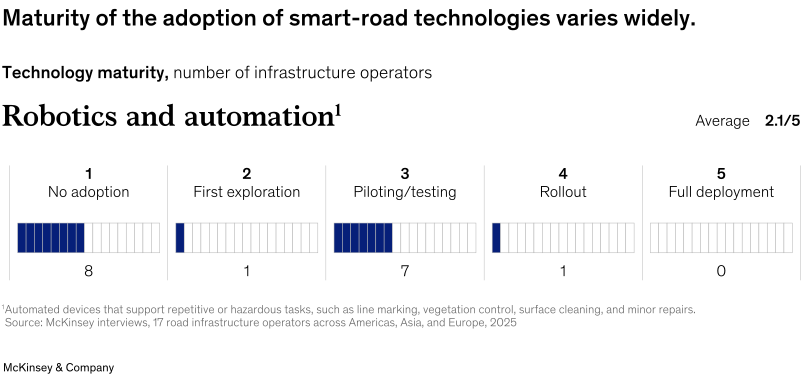
Robots that can perform line marking, vegetation control, and tunnel cleaning are beginning to appear but mostly remain at the pilot stage. Several operators have tested autonomous-crash-cushion trucks (which can shelter workers from potential accidents) or robotic mowers (which eliminate the need to place road crews near traffic), and results suggest strong potential safety benefits.
Yet widespread adoption remains low. Initiatives remain small scale and often driven by single departments rather than coordinated programs. Robotic tools often operate as stand-alone pilots, with few operators integrating them into traffic management workflows, maintenance planning systems, or routine operations.
Unclear ROI outcomes can make scaling challenging, and operators cite concerns about high up-front costs and regulatory uncertainty. In many cases, limited scaling reflects a combination of factors: Some technologies are still maturing under real-world conditions, while others show promise but struggle to scale because of integration or operating-model constraints. The low adoption we observe reflects this mix of technological readiness and organizational barriers.
Dynamic tolling and congestion pricing
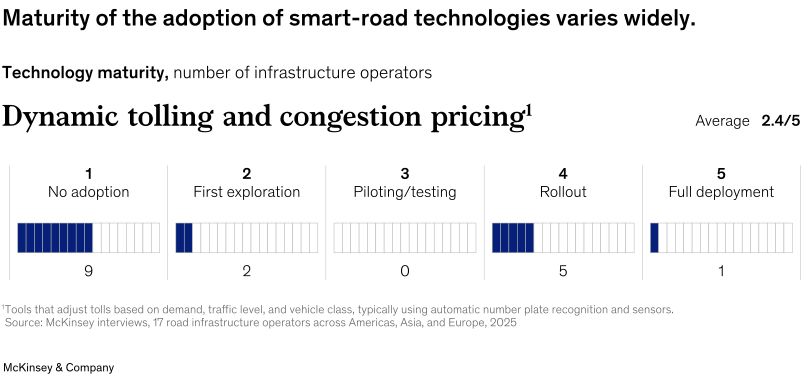
Demand-based pricing for tolls exists on some express lanes, especially outside Europe, and has shown meaningful congestion reduction potential. When combined with demand forecasting and real-time condition analysis, adaptive pricing can reduce congestion peaks, optimize network utilization, and strengthen financial sustainability.
But widespread adoption on full motorway networks remains limited, in part due to technical readiness. Most operators experiment with dynamic pricing only on specific managed lanes or high-demand corridors, with few examples of network-wide implementation or integration into core tolling operations. Wider rollout will likely depend on aligning data standards across concessionaires and connecting pricing engines with traffic management and forecasting systems.
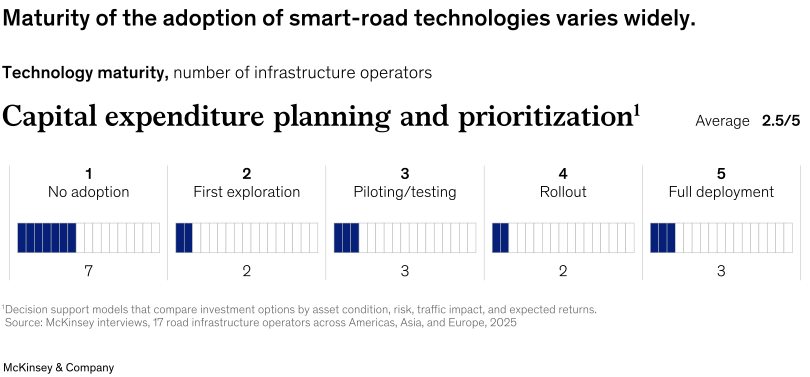
Capital expenditure planning and prioritization
Few operators use integrated digital tools to prioritize investments across their thousands of assets. Most decisions still hinge on engineering judgment and budget constraints instead of using scenario-based, multiple-criteria models that are embedded into organization-wide workflows.
End-to-end digital governance of design, procurement, and construction could cut overruns and accelerate delivery by enabling predictive scheduling, real-time progress tracking, and automated reporting. Scaling this impact depends on unifying data, registries, inputs, and models into a single decision support environment—allowing operators to prioritize investments by risk, impact, and expected returns.
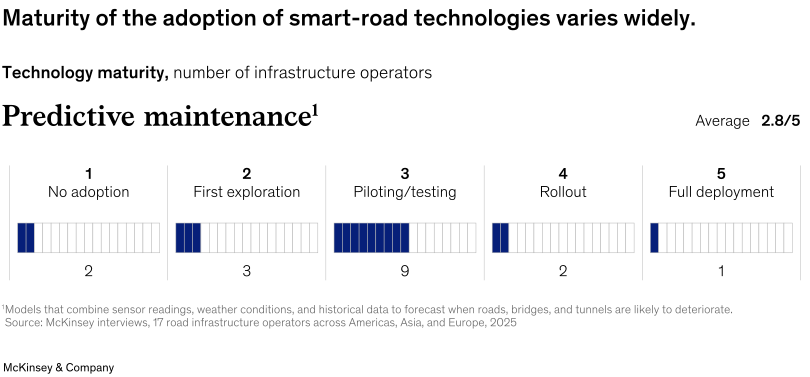
Predictive maintenance
While many operators gather asset condition data, only a few use predictive models that can accurately forecast deterioration. Most operators still rely on reactive or scheduled maintenance. When predictive approaches are adopted, they are often applied only to selected asset classes—such as bridges, tunnels, and pavement—and rarely across the operator’s full network.
Early adopters have shown that combining historical degradation data with real-time sensor inputs can shift maintenance from a find-and-fix approach to a predict-and-prevent one. But effective models require consistent condition data, comprehensive historical performance records, and strong links to systems and registries—elements that remain incomplete or siloed for many road operators. As sensor coverage improves and maintenance workflows become more digitalized, predictive approaches could reduce unplanned failures, optimize operating expenditures, and extend asset life, especially for aging infrastructure.
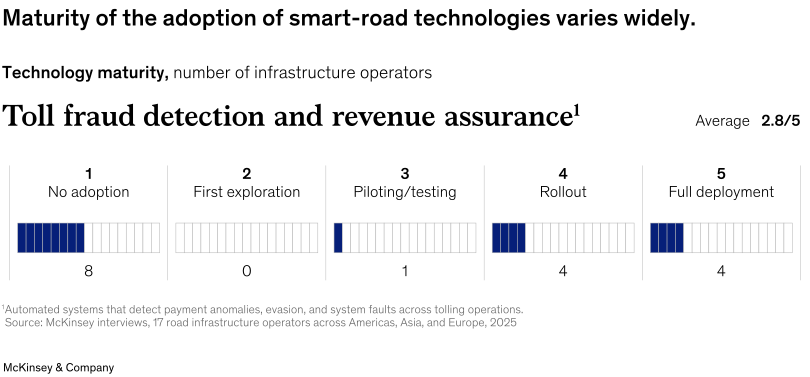
Toll fraud detection and revenue assurance
As more operators adopt free-flow tolling, automated enforcement becomes critical. Most operators still rely on manual audits, batch reconciliations, or sample-based checks to detect leakage, with limited deployment of automated fraud detection or end-to-end reconciliation tools.
AI-driven identification of evasion patterns, payment anomalies, and system faults could materially reduce revenue leakage and improve transparency across tolling partners and concessionaires. Modern systems use automatic number plate recognition (ANPR), vehicle classification sensors, and back-office analytics to reduce leakage and improve collection rates. Systems can flag a malfunctioning camera or sensor when toll revenue on a high-traffic corridor suddenly drops despite stable traffic volumes; identify recurring nonpayment patterns linked to specific vehicle classes, entry points, or times of day; or detect mismatches between vehicle classification and charged tolls that point to calibration issues. In other cases, analytics can highlight delays or failures in back-office reconciliation across tolling partners.
To move beyond isolated tools, operators need unified data flows connecting tolling transactions, ANPR systems, payment gateways, and financial controls in ways that enable real-time validation and rapid exception handling.
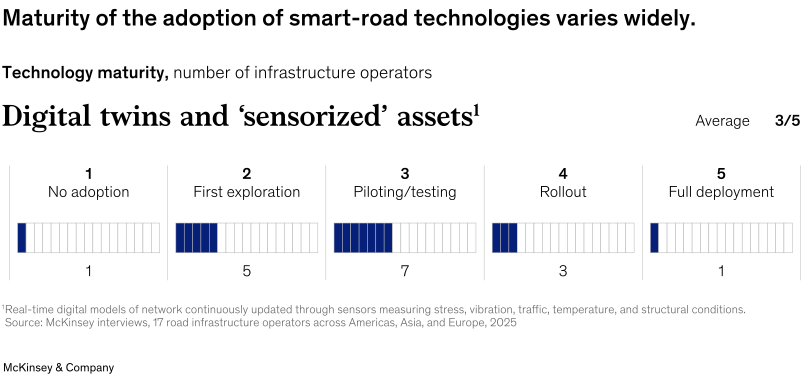
Digital twins and ‘sensorized’ assets
A digital twin of a bridge or tunnel can help operators test scenarios, understand vulnerabilities, and plan maintenance. Operators can use digital twins to run what-if scenarios—such as testing the impact of deferring maintenance on a bridge by one or two years, simulating how extreme heat or flooding would affect an aging tunnel, and assessing how increased traffic loads might accelerate asset deterioration—helping prioritize interventions before problems emerge.
Real-time, network-wide digital twins are still in early development. A few operators now maintain partial digital twins fed by vibration, strain, or temperature sensors, but usage is still largely focused on basic condition tracking instead of on predictive simulations or automated recommendations. Scaling will depend in part on data standardization and tighter links to decision support systems.
Remote inspection and monitoring
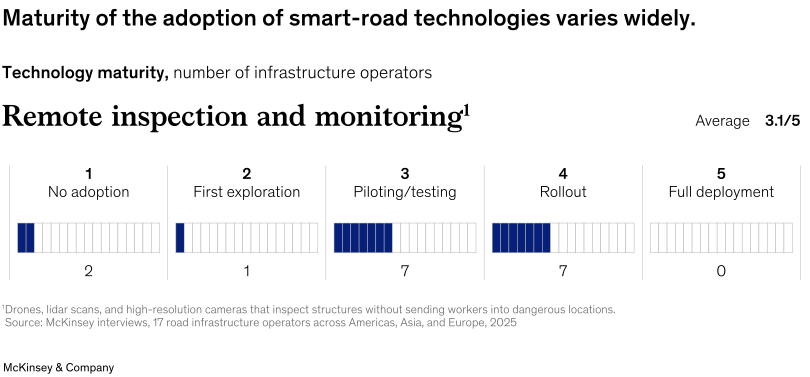
Drones, lidar, and high-resolution imaging can reduce the need for lane closures, enabling safer and more frequent inspections. Remote inspection reduces the need to put personnel in hazardous environments and aids faster detection of damage after storms, landslides, or other extreme events—improving response times. Some operators use drones to inspect bridges in minutes rather than hours. Others have mapped hundreds of miles of roadway using mobile lidars mounted on patrol vehicles.
That said, most remote deployments are still project oriented instead of standardized across an entire network. A key barrier is the need for manual review of imagery and scans. Unlocking full value will require AI-based defect detection and seamless integration of inspection data into maintenance planning and asset management platforms.
Incident detection and video analytics
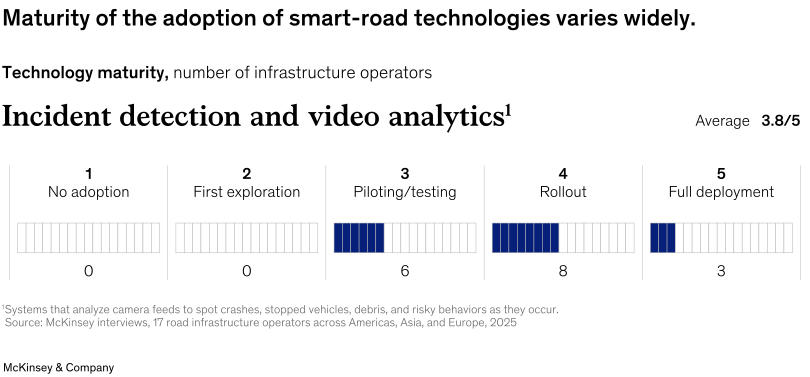
Many tunnels today use automated detection to identify stationary vehicles, smoke, debris, or pedestrians within seconds of an incident occurrence. Some operators have also deployed analytics along open-road segments, reducing incident detection times by factors of three to five when compared with manual monitoring. Faster detection reduces the number of secondary crashes and supports smoother traffic flow, making this a proven and ROI-positive technology for road operations.
This technology is relatively mature. Most operators have deployed camera-based incident detection across major corridors. Yet capabilities vary widely, from basic video monitoring to AI-enabled real-time analytics, leading to inconsistent detection accuracy and response times across networks. To fully scale on the tech side, operators could need more robust and accurate analytics software, better integration between video systems and traffic management platforms, and improved sensor coverage to reduce blind spots and false alarms. Equally important are operating-model elements—such as clearly defined response workflows, closer coordination with emergency services, and teams with the skills to tune, monitor, and trust AI-driven alerts. In most cases, the constraint is less about raw IT spending and more about integration, process design, and having the right technical and operational capabilities in place.
Charting the smart roads of the future
Across geographies, top performers share some qualities. They understand that progress comes from focus—not from launching a flurry of pilots. And they seek to simplify instead of complicate. From our analysis, four practical moves can help road operators accelerate impact.
Anchor the tech agenda to core priorities
It’s important to focus on what matters. Efforts to improve safety, efficiency, maintenance, and financial sustainability should be at the heart of digital decisions. Operators that start with these priorities are better able to filter tech options and avoid investing in tools that are technically sophisticated but operationally marginal.
Safety-related technologies tend to show the most immediate and measurable impact, while maintenance technologies often offer the greatest long-term potential by extending asset life and reducing life cycle costs. Successful programs will begin by translating strategic priorities into a small set of outcome-based targets—such as “reduce incident response time by 30 percent,” “extend bridge life by five years,” and “cut toll leakage by 20 percent”—and then select technologies that directly support those outcomes.
Scale proven technologies first
Initiatives that work can be expanded. Incident detection, ITMS, and remote inspection have each shown consistent benefits across operators, improving safety, response times, and asset visibility. When deployed at scale, these technologies also help standardize operating processes and generate reliable data streams—thereby creating the foundation for more advanced tools such as AI-driven analytics and predictive decision support.
Several operators have described situations in which advanced analytical tools were piloted successfully but later abandoned because underlying processes and data standards had not been scaled across the organization.
Strengthen the organization’s data spine
Even modest data upgrades—such as clean asset registers (meaning comprehensive, standardized inventories of infrastructure assets), structured condition data, and integrated traffic feeds—can unlock significant value. These foundations enable consistent analysis across functions, support better maintenance and investment decisions, and reduce reliance on manual, asset-by-asset judgment. Operators that skip this step often struggle with stalled pilots and advanced solutions.
Successful operators tend to invest early in data foundations by connecting feeds of input with analysis systems. When these links are missing, even advanced analytical and AI tools struggle to deliver value because data remain fragmented or unreliable.
Prepare for future infrastructure demands
Autonomous driving, electric-vehicle charging, and climate resilience could all reshape how road networks function by altering traffic patterns, asset utilization, and maintenance needs. Operators that anticipate these shifts can design systems and investments to remain flexible—avoiding costly retrofits as requirements evolve.
Protecting the long-term value of today’s investments will require embedding adaptability into data architecture, operating models, and vendor choices, instead of pursuing one-off tech deployments. It’s important to understand that integrating AI into systems and processes is an enabler—not a transformation on its own.
Road networks keep economies moving. They connect people to jobs, goods to markets, and communities to each other. As pressure on road networks grows, technology is becoming essential for maintaining safety, reliability, and sustainability.
The encouraging message from our research is clear: Operators are not starting from zero. Many have already implemented foundational technologies, and the next wave of advances (including predictive maintenance, digital twins, and AI-assisted operations) is within reach. Successful operators will focus on what matters, scale what works, and build the capabilities needed to turn tech upgrades into lasting performance. The future of roads is being constructed now, and the opportunity is as vast as the network itself.