The European energy sector is at an inflection point. Four forces are driving change: accelerating electrification and the need for flexibility at scale; the rapid rise of a digital, AI-driven economy; an acute focus on sovereignty and affordability; and sustained regulatory intervention. Together, these forces are reshaping utility economics.
The utility paradigm of a decade ago—anchored in merchant markets, developer-led renewables, and network unbundling—no longer holds. Value is shifting, and tomorrow’s leading utility will be defined less by the scale of its physical assets than by the flows it controls.
This report examines the forces refocusing value creation across the European utilities industry, unpacks the four strategic responses emerging, and considers the implications for energy companies.
Four shifts are causing a migration of value across the European energy utilities sector
Electrification, rising AI-driven demand, security and affordability pressures, and regulatory intervention are reshaping where value sits in the sector. Each brings its own challenges.
1. Electrification demands more capacity, but the harder challenge is turning raw renewables megawatts into usable power
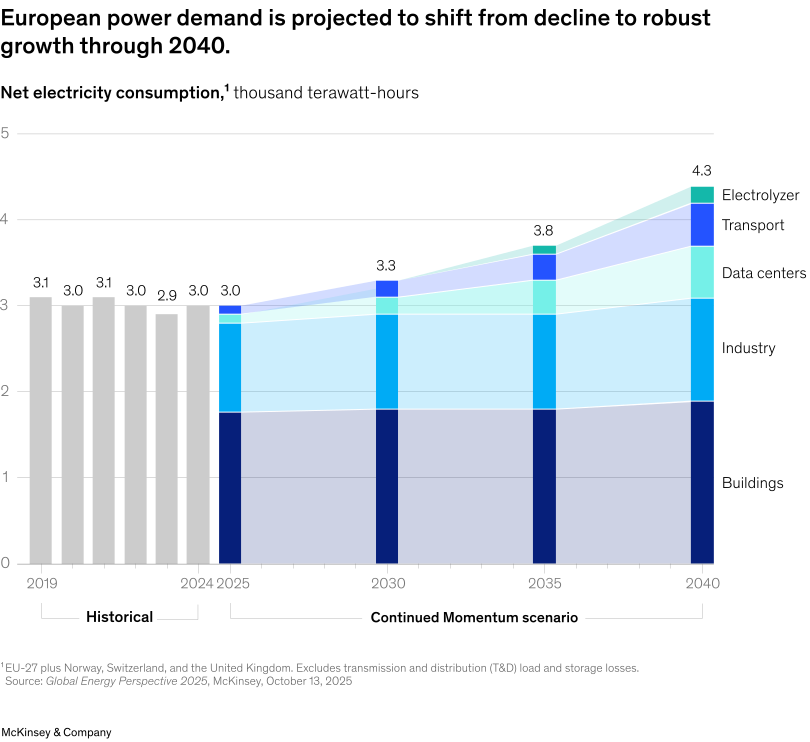
European1 power demand is projected to grow from about 3,000 terawatt-hours (TWh) in 2025 to about 4,300 TWh in 2040, driven by electrification in transport, buildings, data centers, and industry (Exhibit 1).2
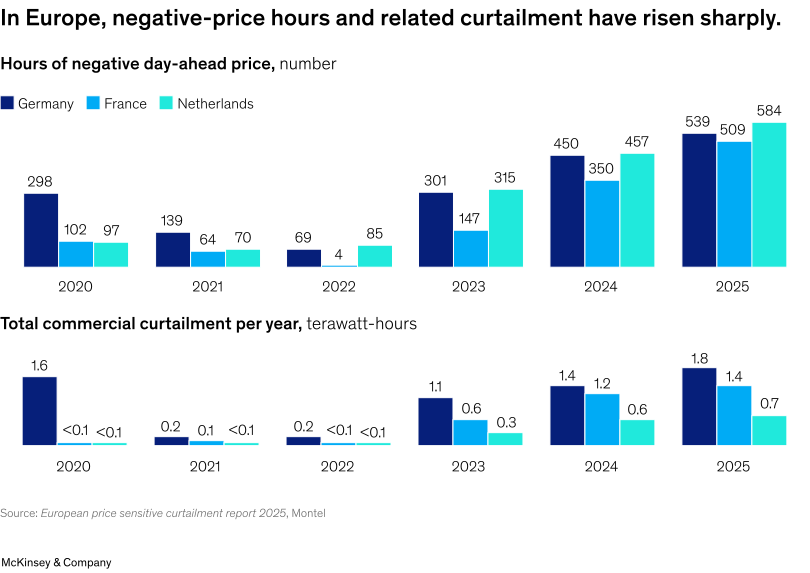
Meeting this demand requires a significant acceleration in renewables, but the fundamental challenge is shifting from merely expanding generation capacity to delivering usable, connected, and flexible clean power. The primary bottleneck is the system’s ability to absorb, move, and store electricity, reflected in record volumes of curtailed power and frequent negative pricing (Exhibit 2).
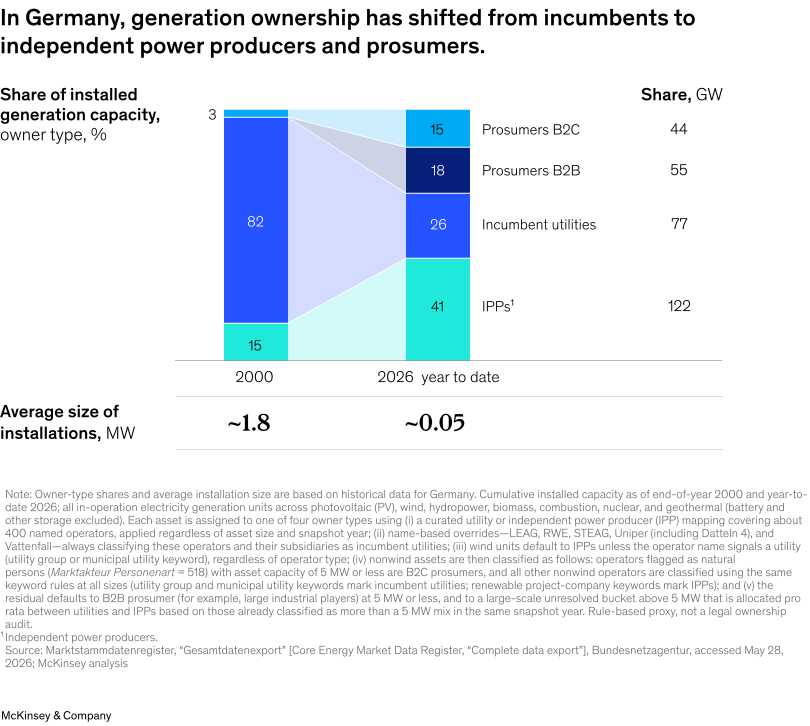
Meanwhile, ownership of generation assets has become increasingly fragmented, moving away from incumbent utilities toward a diverse mix of independent power producers and prosumers (Exhibit 3).
2. AI adoption is accelerating data center build-out and creating new demands and flexibility value pools
The rapid expansion of data centers, driven by AI, is becoming a defining trend. Europe’s data center capacity3 is expected to roughly double by 2030.4 This growth is spurring new services tailored to data center operators, including orchestrated flexibility, on-site storage, and microgrid services. For utilities, this presents an opportunity to move up the value chain beyond simple power provision.
3. Sovereignty and affordability concerns are driving regionalization across generation, supply chains, critical materials, and grids
Since the 2021–22 energy crisis, efforts to diversify energy supply have accelerated. The European Union has raised its renewable energy targets, but these ambitions are clashing with market realities, such as high capital costs and supply chain bottlenecks. This has led to a greater focus on supply chain resilience, reflected in policies such as the Net-Zero Industry Act, which aims to increase the manufacturing of clean technologies in the European Union, shifting the priority from pure cost optimization toward strategic autonomy.5
4. Sustained regulatory intervention is ending the pure merchant era
Policymakers are increasingly using long-term support mechanisms such as contracts for difference (CfDs) and capacity markets to encourage investment while limiting price volatility. This marks a shift away from pure merchant exposure, with a growing share of investment flowing toward assets with more stable, infrastructure-like returns. Regulatory strategy is becoming a core competitive capability for utilities.
Four strategic responses are emerging
To navigate these shifts, European utilities are pursuing four strategic responses (Exhibit 4): an integrated utility 2.0 play, an AI-orchestrator play, a token-merchant play, and a tech-scaling enabler play.
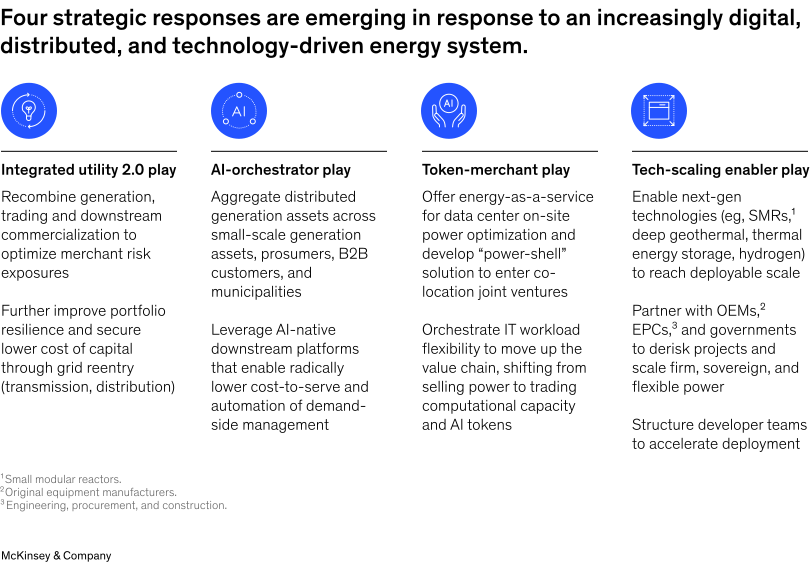
Of the four, the token-merchant play is the most forward-looking: utilities move from commodity supplier to direct participant in the AI and token economy (Exhibit 5).
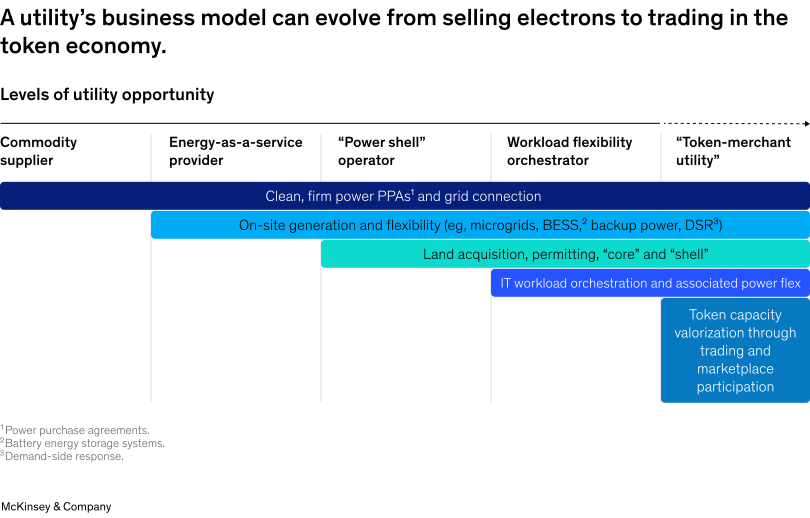
Ultimately, the future utility landscape will be defined less by the physical assets a company owns than by its ability to control critical scarcities—grid access, system flexibility, firm sovereign capacity, and the digital customer interface.
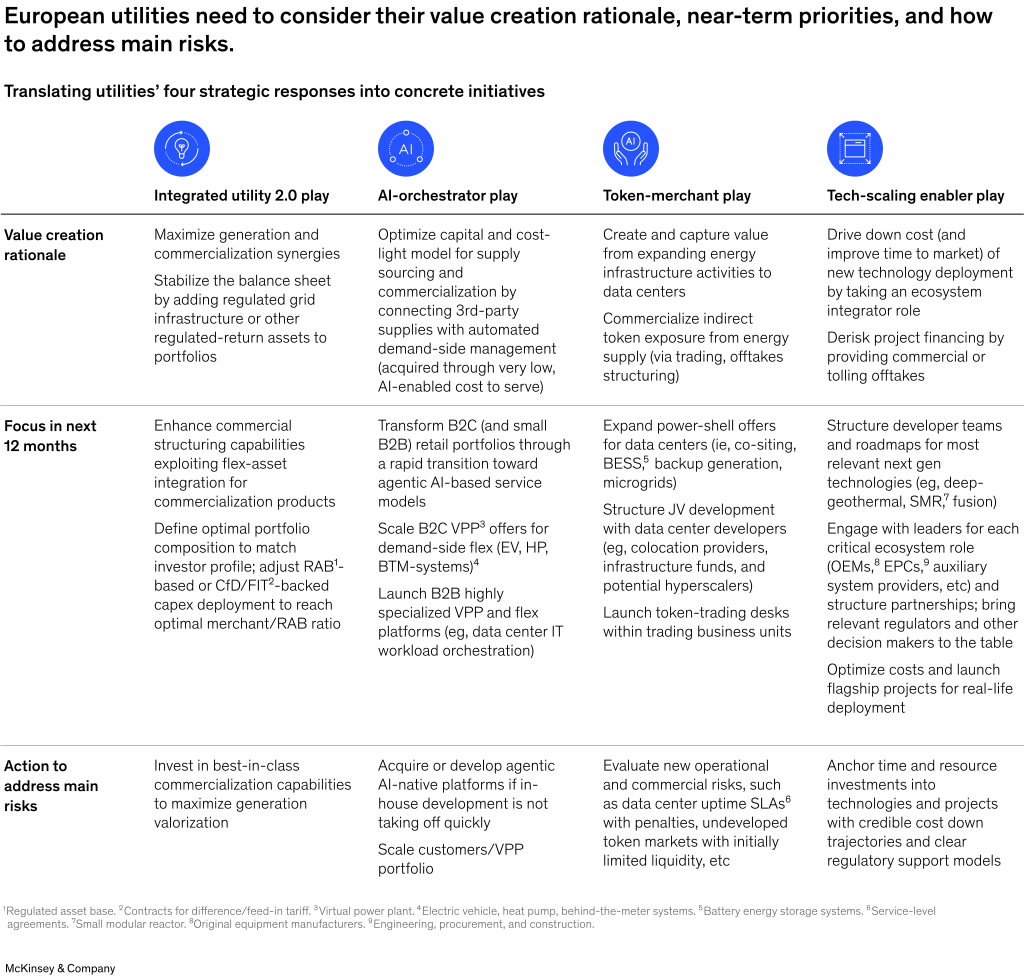
Rather than relying on historical blueprints, leadership teams will need to translate one or more of these four strategic responses into concrete initiatives over the next 12 months (Exhibit 6). How organizations respond, and how quickly they can execute, may determine who successfully captures value in the next era of the European energy transition.
.jpg?cq=50&mw=767&car=16:9&cpy=Center)