Every day, consumers make small but consequential choices in their food purchases—swapping familiar names for private-label substitutes, splurging on function-forward brands with inventive packaging, filling grocery baskets with ingredients to cook at home, and, in some markets, turning to food delivery for greater convenience and a chance to treat themselves. In aggregate, these choices reflect a reordering of consumer priorities and the slow erosion of the growth model that built modern food and beverage (F&B) giants.
The traditional F&B consumer-packaged-goods (CPG) playbook was built on a straightforward equation. For years, this model translated into steady volume growth, expanding margins, and rising valuation multiples, which delivered superior investor returns.
But the old value creation model—which hinged on mass-market brand building and product innovation, partnering closely with grocers for broad distribution, driving costs out of the operating model, and using M&A to consolidate markets—began to break down in the 2010s. Pandemic-era pricing tailwinds briefly masked these pressures, but not for long. Today, volume gains remain constrained at less than 1 percent annually, far short of what the sector once delivered.
F&B CPG players are also underperforming the broader market. Since 2023, TSR for the world’s largest F&B CPG companies has declined by roughly 7 percent, even as TSR for the S&P 500 expanded by 9 percent.

The State of Grocery 2026: North America
Tuesday, August 18, 11 a.m. EDT Join McKinsey’s Tom Kilroy, Bill Aull, and Joshua Reuben for a discussion on “The State of Grocery 2026: North America.”
Consumers expect more value and better benefits from their F&B products—and competition, particularly from private-label and disruptor brands, will only intensify. Without decisive action, the model that sustained CPG organizations for decades will continue to erode. The choice facing leaders is urgent: reshape portfolios to increase exposure to structural growth and strengthen performance by restoring product superiority and rebuilding brand relevance. Each is achievable—but requires stepped-up investment across the value chain, which AI-enabled productivity gains can fund.
Drawing from a global survey of 15,000 consumers across ten markets,1 we have identified the most impactful consumer behavior shifts shaping the global F&B CPG space in the years ahead. Together, they point to strategic imperatives that separate future growth leaders from those trapped in structural decline.
How the CPG food and beverage value equation unraveled
For decades, CPG giants sold products that consumers eagerly bought. These products tasted good and offered convenience and affordability—fueling consistent revenue and margin growth, which in turn delivered top-quartile returns to investors.2 In the nearly 40 years before the global financial crisis of 2008, CPG players reshaped their portfolios, concentrating on their strongest brands, while expanding into emerging markets that elevated those brands to a global stage. Products, of course, were only one part of the CPG success equation. Fit-for-purpose manufacturing operations enabled consistency at scale, and sophisticated marketing and sales engines built demand and secured a strong shelf presence. Efficient global supply chains helped sustain performance across markets.
But the model started to break down in the 2010s. Segmenting the period from 2002 to 2024 into five distinct eras, we found that during the first, from 2002 to 2012, publicly listed CPGs generated average annual revenue growth of 9 percent, with constant margins and 22 percent return on invested capital (Exhibit 1). From 2012 to 2019, population growth and international expansion slowed, constraining top-line growth; consumer attention fragmented, making it harder to engage at scale; and discounters, private labels, and disruptor brands captured a growing share of incremental demand. While these pressures marked the early stages of structural change, F&B CPGs still sustained growth through a relatively balanced mix of price and volume expansion.
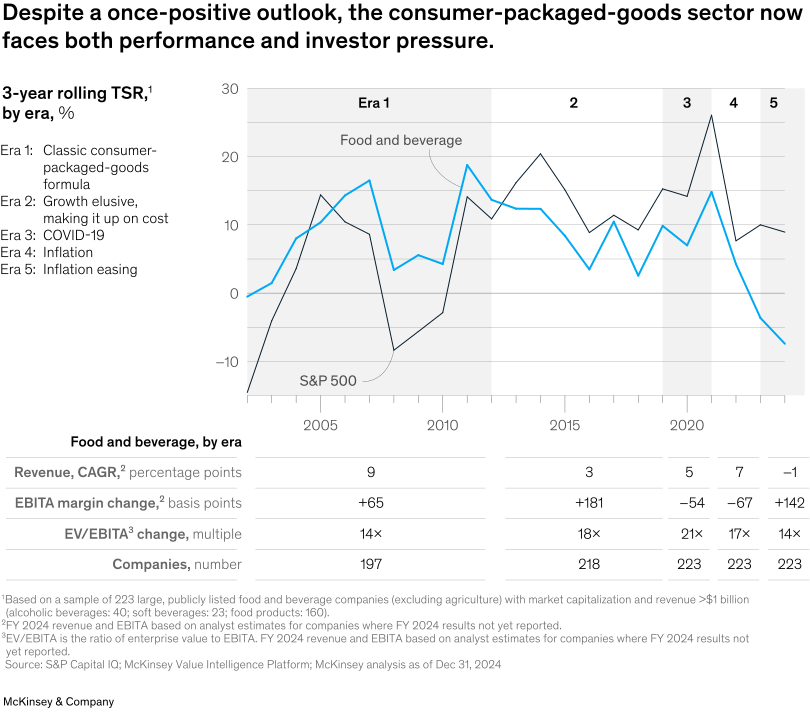
F&B CPGs continued to deliver revenue growth from 2019 to 2021. Volumes initially declined during this period but rebounded during the COVID-19 pandemic as demand for “food at home” surged. Although volume gains supported top-line growth over this period, CPGs also began raising prices in response to input inflation and margin pressure. Still, investor confidence held: market capitalization growth improved and enterprise value to EBITDA (EV/EBITDA) multiples expanded, reflecting optimism from investors that pandemic-era CPG sales momentum would extend beyond the crisis.
The gains proved short lived. As inflation surged through the end of 2021 and into 2022, price increases underscored CPG growth. While global supply chain disruptions peaked during this time, F&B CPGs saw a slight competitive advantage over disruptor brands, given their scale (private-label brand volumes, meanwhile, grew). Once again, margin pressure, volume regression, and multiples contraction increasingly offset the benefits of this price-led growth. Despite these forces, investors remained confident in the sector’s outlook.
Throughout 2025—and continuing today—price growth has reverted to historical norms, while volume growth remains constrained (F&B CPGs specifically are underperforming in the US market, which, given its scale, is troublesome). Complicating matters, price increases risk further volume declines. Gross margins are still below prepandemic levels, and efficiency gains from prior productivity programs have plateaued, leaving CPGs with fewer near-term margin levers to pull. Additional factors—such as climate-change-related input price volatility—may intensify pressure on CPGs.
Investors are now skeptical of whether F&B CPGs can deliver. Our own research suggests that the long-standing CPG growth model has exceeded its limits. Without a shift in how they generate growth, incumbent CPGs are likely to face sustained pressure on volume and profitability.
Why consumers are moving away from incumbent brands
In 2023, alarm bells began to ring across the CPG industry. In earnings calls, executives warned investors about expected growth challenges and looming volume declines. F&B CPG leaders debated potential causes: Were consumers simply eating and drinking less? Was the adoption of glucagon-like peptide-1s (GLP-1s)3 propelling volume declines?4 Were people funneling more of their spending toward food service and eating out?
Our analysis indicates that two powerful forces—affordability pressures and demand for higher-benefit products—are affecting how consumers spend on food.
Consumers under pressure: Fundamentally reevaluating value in F&B
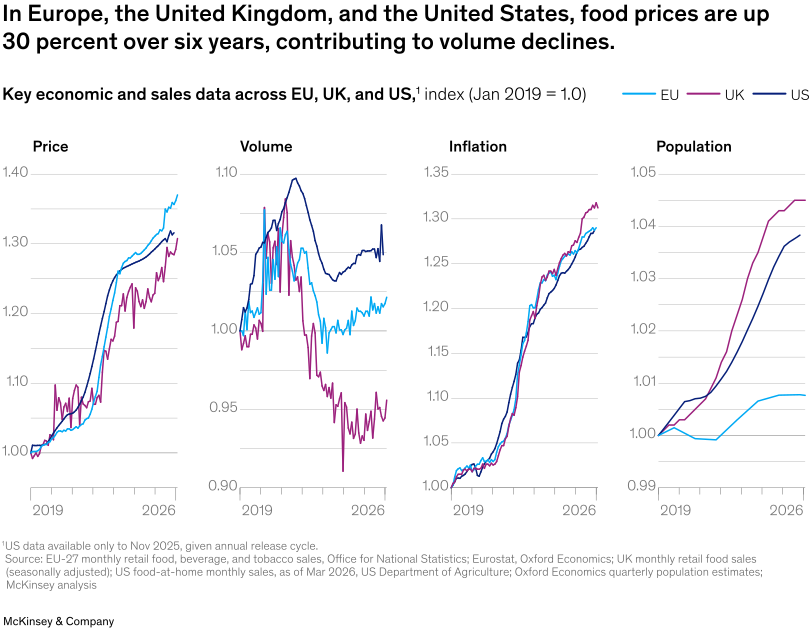
Affordability is constraining volume recovery across F&B CPGs. Globally, food prices have increased faster than overall inflation, forcing households to reevaluate spending and become more discerning about which products deliver real value.
In the United States, food prices were 31 percent higher on average through the third quarter of 2025 than in 2019, compared with 26 percent total consumer price index (CPI) growth over the same period.5 In other markets—including France, Germany, and the United Kingdom—food price growth similarly outpaced overall inflation (Exhibit 2).
However, inflation is only part of the affordability story. Although US consumers on average spent 10 percent of their pretax income on food in 2024, that figure masks growing inequality between income groups: the lowest-income households now spend about a third of their after-tax income on food, compared with just 8 percent for the highest-income quintile. (Not all markets show the same disparity in food spending. In Germany, for instance, higher-income consumers have increased their food spending relative to their income.)
For many consumers, food purchasing has shifted from preference-driven to constraint-driven decision-making. In our global consumer survey, 61 percent of consumers say price matters more to them today than it did two years ago, and cost and the perception of value are the top two reasons shoppers stop buying a given brand (followed by diminished quality, a limited product range, and a lack of new offerings).
In some categories, “shrinkflation”6 may further encourage consumers to look for substitutes. More than eight in ten US consumers who report noticing shrinkflation say it feels deceptive, and roughly two-thirds say they have stopped purchasing a product as a result—an effect that is especially pronounced among Gen Z shoppers.7
The end of the ‘say–do’ gap? Choosing health, functionality, and flavor
Taste, price, and quality remain the factors consumers prioritize most when making a purchase. Healthiness, however, is the fastest-rising consideration. Today, 57 percent of consumers rank it among their top three decision factors—representing the largest increase in importance of any attribute over the past two years. Rather than rejecting legacy brands outright, consumers are demanding proof of value: simpler ingredients, clearer benefits, and fewer perceived trade-offs.
Across markets, more consumers report actively seeking healthy foods than avoiding ingredients or products they see as unhealthy. About three-quarters of consumers in our survey say they actively seek out fresh fruits and vegetables, and roughly 60 percent say they seek out protein, fiber, and nutrient-dense foods. Meanwhile, half of consumers report avoiding or limiting artificial flavors and sweeteners, alcohol, sugar, and highly processed foods.
The catalysts driving these shifts differ across markets. The German government has launched healthy-eating initiatives and invested in the plant-based protein sector; in the United Kingdom, lawmakers extended soft drink levies to other high-sugar drinks; Indian government scientists worked with fast-food restaurants to develop new vegetarian protein offerings; the Brazilian government has set a goal to reduce processed foods in public school menus. And in the United States, the ongoing debate over what constitutes “healthy” food is gaining traction among consumers and in both state and federal governments. Some state leaders have proposed legislation to ban ultra-processed foods, while the Food and Drug Administration is actively considering updates to its rules based on safety assessments and efforts to modernize. US consumers are also increasingly using digital transparency tools—such as ingredient scanners and AI-powered nutrition apps.
But the say–do gap persists: While consumers express strong intent to avoid certain ingredients and prioritize healthier attributes, that intent doesn’t always translate into purchases. This may reflect budget constraints, product availability, a bias toward convenience, a lack of product transparency or understanding, and ingrained habits. The result is a consumer who aspires to eat healthier—but does so selectively and inconsistently.
That said, GLP-1 adoption could materially alter this dynamic, changing what people buy, how much they eat, and what they prioritize. Early data show that active GLP-1 users are cutting back in categories such as chips and other savory snacks, sweet snacks, and soft drinks (Exhibit 3).
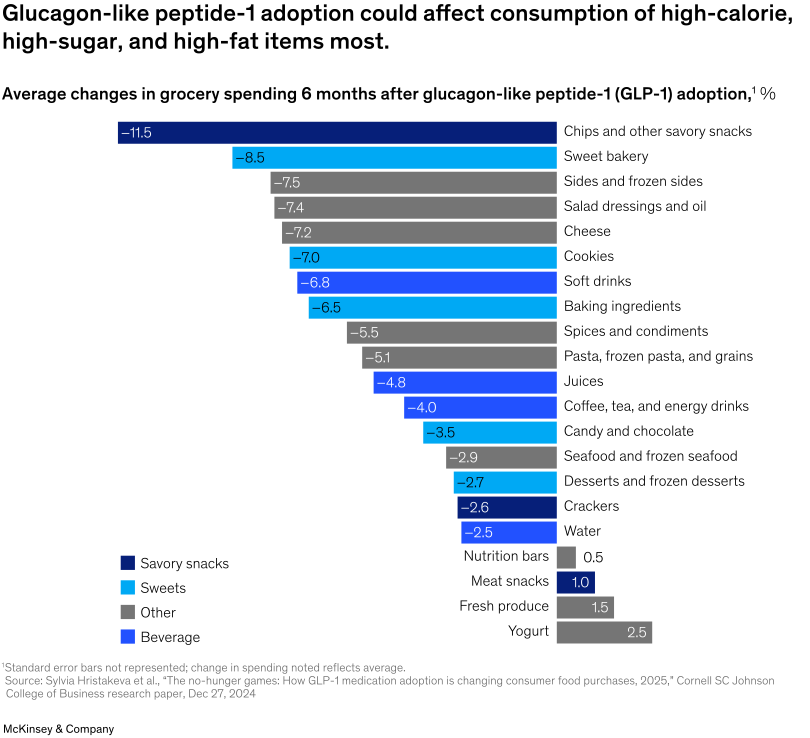
At the same time, consumers may be increasing their spending on high-protein foods and fresh produce. Although GLP-1 use is relatively low today, especially outside of the United States, it is projected to grow8 and could be the first instance of metabolic outcomes driving measurable shifts in what consumers buy.
Four food spending shifts: Why CPG incumbents are losing share of wallet
In pursuit of greater value and food with higher perceived benefits, consumers are diverting spend away from CPG incumbents in four distinct ways, which we list here in order of their impact: trading down to lower-cost alternatives, trading up for added benefits, paying more for the convenience of food away from home and delivery, and buying fresh food and staples to cook at home.
These decision patterns are not mutually exclusive: The same household may trade down in one category, splurge in another, cook more at home to manage spending or for enjoyment, and still pay for convenience when time or energy is constrained. In most cases, spending is moving away from scaled CPG brands, redirecting growth to other parts of the F&B ecosystem.
Paying less for ‘just as good’: Private label gains momentum
As consumers search for value, private labels, long a European phenomenon, have grown in popularity across global markets. These goods now frequently offer the same quality as name-brand items, often at prices 30 percent lower.
In our survey, 28 percent of respondents say they purchase more private-label products today than they did two years ago. This figure increases to 34 percent among US respondents, the highest share by region. Although value-for-money and low prices still anchor private-label appeal, price is no longer the sole motivator. Consumers also believe private-label goods offer equal or superior quality, value, and variety compared with branded options (Exhibit 4).
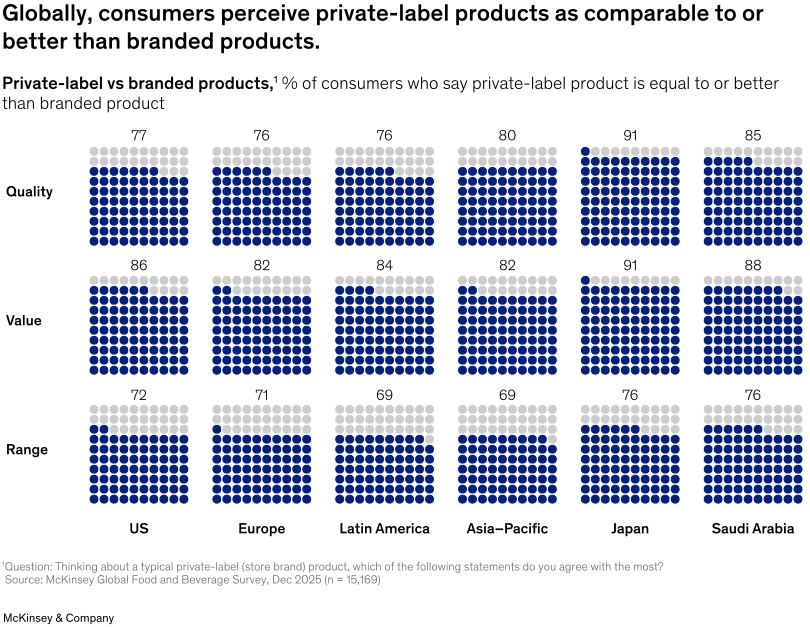
In the United States, the pressure from private-label offerings on F&B CPGs will only intensify as retailers evolve toward full-fledged “private brand” strategies with tiered assortments. Retailers are improving their capabilities and access to data and technology to draw directly on real-time sales, pricing, and promotion data. This allows them to identify white spaces faster, optimize product formulations and pricing, and rapidly translate emerging consumer trends into new products. In doing so, they can bring concepts to shelf at scale far more quickly than branded CPGs, which face additional barriers to launch, such as slotting fees and assortment trade-offs.
An example of this comes from Singapore, where the retailer FairPrice has built its own private-label, scaled CPG portfolio. Its house-brand business now spans more than 3,500 products across over 70 categories, with nearly half of shoppers purchasing at least one own-brand item. Rather than competing on price alone, FairPrice applies disciplined product development—requiring products to outperform incumbents in blind tests while maintaining a meaningful price advantage—allowing it to win leading positions in multiple categories and expand beyond essentials into premium and ready-to-eat offerings. FairPrice has even begun exporting its private-label products into other regional markets through retail partnerships.
Today, retailers are building multitiered, trend-led portfolios spanning entry, core, and premium price points, alongside organic, plant-based, and free-from offerings. In Germany, Edeka has operationalized this approach with its affordable Gut & Günstig, premium Genussmomente, dietary-restriction-focused MinusL, and plant-based My Veggie lines. In the United States, Walmart’s premium Bettergoods line, launched in 2024, has become one of the fastest-growing private-label brands (complementing Walmart’s popular Great Value–owned line focused on budget-conscious shoppers). In the year after launch, Bettergoods approached nearly $500 million in sales and helped increase the retailer’s private-brand penetration.9
Momentum behind another German grocer, Aldi, shows how private brands have replicated their regional success in international markets with lower private-label penetration. With more than 90 percent of its assortment sold under private labels, Aldi operates a curated model of more than 2,000 SKUs per store. This assortment allows the company to reduce operational complexity, lower supply chain and merchandising costs, and optimize performance across each item in its portfolio. Seasonal rotations, limited-time “Aldi Finds,”10 and selective premium offerings further drive traffic and basket expansion.
As private labels increasingly win consumers on both quality and price, national brands can no longer rely solely on speed-to-market or incremental innovation. They must create truly distinctive products that earn their place in consumers’ baskets.
Paying more for ‘better’: Premium offerings have differentiated benefits with fewer trade-offs
Even as they confront affordability pressures, many consumers are seeking products that deliver differentiated function, quality, or experiences. In some markets, such as the United States,11 consumers are willing to try disruptor brands, even if that means paying more. (In our survey, about two-thirds of consumers globally say they would be willing to pay 10 percent or more for a healthier alternative to their usual snack.)
An example of this more-for-better dynamic can be seen in sweet snacks. Disruptor brands such as Barebells and Built are increasingly competing less with traditional protein bars and more with candy bars and other indulgent snack categories, helping the consumer minimize the trade-off between taste and function. Both brands position their products as dessert-like treats—featuring indulgent flavors, soft or confectionery-like textures, and chocolate coatings—while delivering functional benefits such as high protein content (typically between 15 and 20 grams per bar) and low or no added sugar. Consumers get to have their proverbial cake and eat it, too.
These brands command a meaningful price premium: A 12-pack of Barebells bars, for example, typically retails for around $30, compared with roughly $15 to $20 for mainstream candy bars or legacy protein bars. Despite this premium, both Barebells and Built rank among the fastest-growing small, independent F&B brands in the United States12 and Europe.
While the protein bar category is growing overall, much of the growth for the disruptor brands is not coming from consumers who regularly purchase protein bars. Instead, these brands are winning in everyday snacking occasions.
In the years preceding the COVID-19 pandemic, small, independent brands drove a disproportionate share of category growth across US F&B. That momentum slowed during the pandemic and the inflationary period that followed, as operational disruptions, retailer prioritization of large suppliers, and higher input costs created headwinds for smaller players. Now, however, disruptors are again contributing an outsize share of growth. Although small, independent brands (those with less than $100 million in sales) represented just 13 percent of the US F&B market in 2021, they delivered 15 percent of the category’s growth from 2021 to 2023.13 By 2025, they accounted for 35 percent of category growth (Exhibit 5).
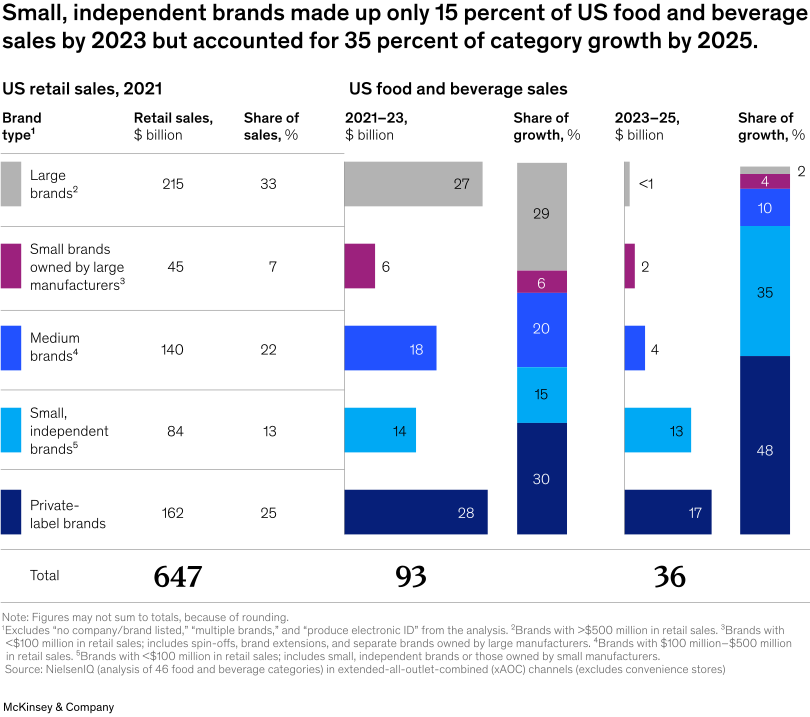
The impact of disruptor brands varies meaningfully by F&B subcategory (it’s also worth noting that the disruptor brand phenomenon, while relevant in other markets, is strongest in the United States). Small, independent brands have accounted for a disproportionate share of growth in categories such as tea, butter and oils, seasonings and sauces, cheese, and functional shakes and powders, where consumers have been more willing to try new entrants.
Consumers choose disruptor brands because they perceive them to deliver superior functional benefits, even at a price premium. Thirty-seven percent of consumers in the United Kingdom and the United States say they purchase small brands most often for functionality, compared with just 18 percent for large brands (Exhibit 6). Convenience remains an advantage for incumbents, but the data suggest that this alone is insufficient to drive growth.
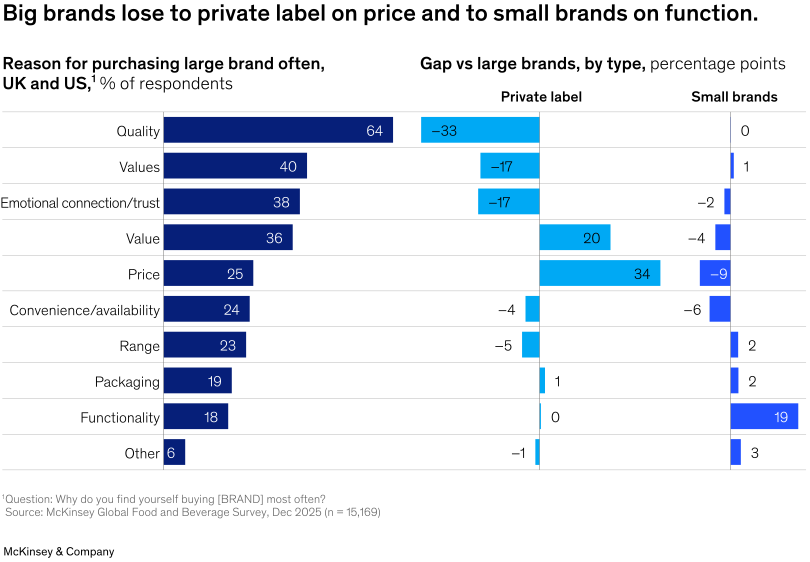
Although large brands have a leg up on quality, the trait has really become table stakes for all players, and functionality is where small brands consistently outperform. As a result, private label tends to win on price, small brands win on function, and many large brands find themselves caught in the middle, without a meaningful edge on either dimension.
Paying more for convenience: Consumers opt for delivery and dining out
Over the past two decades, US consumers have spent a rising share of their F&B spending on food away from home (which encompasses restaurant dining, takeout, and food delivery)—from roughly 48 percent in the late 1990s to about 55 percent prepandemic and an estimated 58 percent by 2025 (Exhibit 7). Even as consumers face affordability pressures, spending on food away from home remains elevated compared with historical levels.
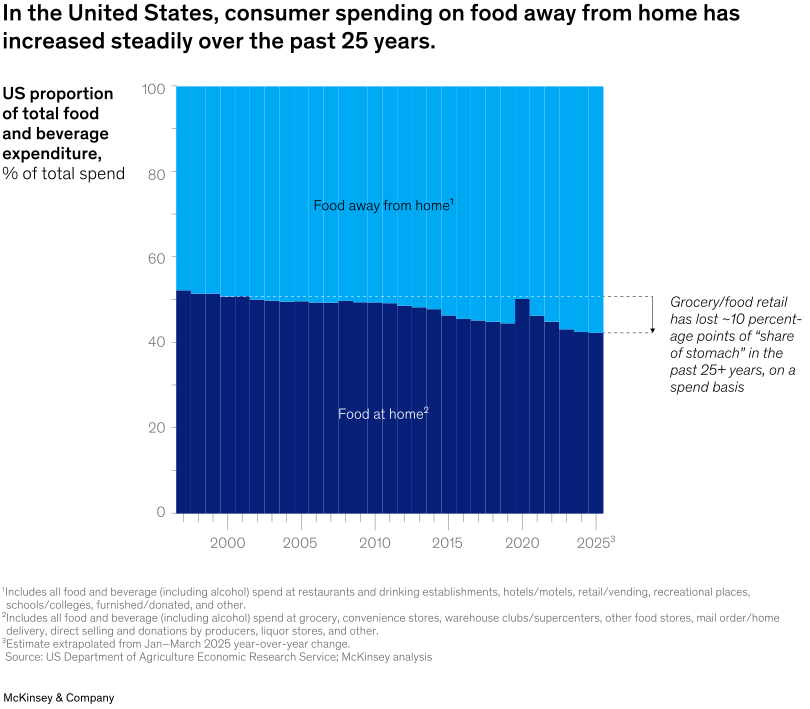
In our US consumer sentiment surveys, as well as in other regions, consumers—especially baby boomers with disposable income—consistently tell us that food away from home is an area in which they intend to splurge. The convenience, accessibility, and perceived value of food away from home continue to make it a strong competitor to at-home CPG food spend.
Food delivery is also steadily capturing a larger share of consumer food spend outside of the United States. In Europe, what began as a pandemic habit has increasingly become part of everyday life (Germany is the largest market for online food delivery in Europe, followed by the United Kingdom and Ireland, according to McKinsey research). Even as their growth has slowed from its pandemic peak, delivery platforms are broadening beyond restaurant meals into groceries and convenience items, further blurring the line between eating out and eating at home.
For CPGs to remain relevant, they should offer products that reduce friction, shorten meal-preparation time, or elevate the at-home food experience (for example, through restaurant-inspired flavors, formats, or complementary sauces and sides). Delivery platforms also present a new channel for CPGs to expand their reach, unlock incremental occasions, and test products and formats designed specifically for immediate or on-demand consumption.
Paying less for more effort: More people are cooking from scratch
Consumers are also making decisions about when to forgo convenience. For many consumers, cooking at home is a practical way to manage food costs.
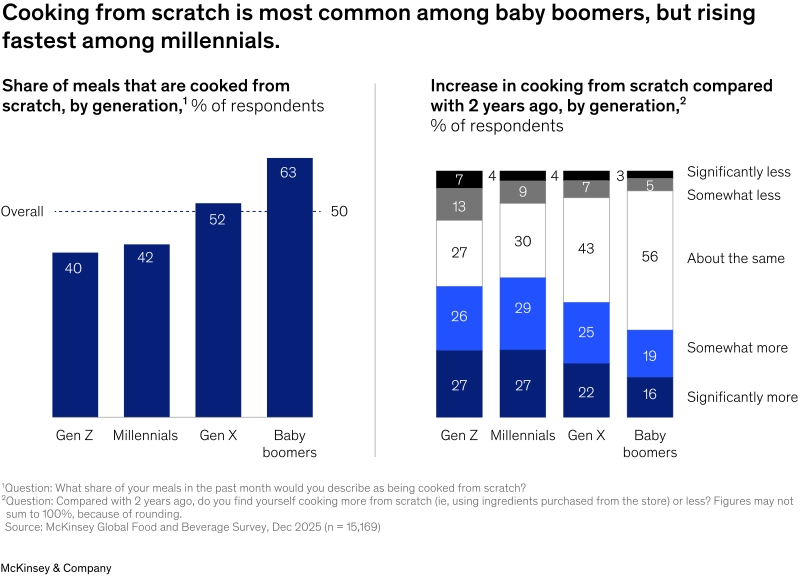
In our survey, consumers across regions say they prepare roughly half of all their household meals from scratch on average.14 In Latin America and Asia–Pacific,15 consumers report cooking from scratch more than they did two years ago. Even in markets where consumers did not report cooking from scratch more often, such as Saudi Arabia, retail volume growth for basics and pantry staples, such as rice, pasta, and bread, has grown more than overall food growth over the past three years. In the United States, consumers may not have reported an increase in cooking from scratch, but they are purchasing fewer frozen and ready-to-eat meals and more spices, oils, and sauces.
Across generations, millennials are leading the shift to at-home cooking (Exhibit 8). Consumers most frequently cite healthier outcomes and personal enjoyment as added benefits of cooking more often, though they also cite cost savings.
The choices CPG leaders can make to renew growth: A dual agenda
Incumbent CPGs possess unmatched scale, deep reservoirs of consumer insight, and R&D engines capable of moving from concept to commercialization at scale. Yet those advantages have not consistently translated into sustained volume growth. In recent years, many companies relied on productivity to protect earnings as top-line growth slowed—protecting their P&Ls but not fully restoring investor confidence.
The path forward requires leaders to pursue two agendas at once. Agenda 1, a board-level imperative focused on the portfolio, is about reshaping exposure to the right categories and geographies through active portfolio management to improve growth prospects. Agenda 2, focused on performance, must mobilize the full organization by strengthening commercial execution, rebuilding brand relevance, and unlocking the next wave of productivity. The following imperatives translate this dual agenda into deliberate choices CPG leaders can make to steer their organizations back toward sustained growth.
Agenda 1: Choose to forge structural portfolio growth through M&A&D
When industry growth averages 2 percent, opportunities to outperform may seem limited. But the fact is, growth is unevenly distributed: Within most F&B CPG categories, subsegments tied to health, functionality, and premiumization are expanding at rates 200 basis points or more above average. Over time, even incremental shifts in exposure toward these segments—along with shifts away from underperforming categories and geographies—can materially change a company’s overall growth trajectory. In a slower-growth environment, outperforming structurally depends less on squeezing more from mature categories and more on deliberately increasing exposure to the parts of the portfolio where demand is expanding fastest.
Keurig Dr. Pepper provides an example of active portfolio management. The energy drink subcategory’s CAGR was roughly 10.5 percent over the past two years, while ready-to-drink coffee declined by 2.3 percent. In response, Keurig Dr. Pepper increased its exposure to functional and performance-oriented beverages. Rather than relying solely on acquisitions, it leveraged its direct-store-delivery (DSD) network as a strategic asset, forming distribution partnerships and taking minority stakes in emerging brands such as C4 and Bloom. These arrangements provided access to high-growth segments—energy and gut health—while allowing the company to scale brands through its existing distribution platform. Equity stakes were structured with milestone-based options, enabling increased ownership as performance targets were met. In 2024, the strategy culminated in a majority acquisition of energy drink brand Ghost, further strengthening its position in performance energy and Gen Z–led flavor innovation. This staged approach—testing category strength before fully committing capital and scaling investment as sales validated demand—tilted the portfolio toward faster-growing segments while managing risk.
Divesting or separating noncore assets can be as important as acquiring growth platforms when the goal is structural growth. Portfolio discipline also requires a hard look at business-model fit: Brands that do not benefit from a company’s core capabilities—whether in distribution, manufacturing, or brand building—can dilute focus and absorb capital that could be redeployed into higher-growth platforms.
Geographic expansion remains an important lever for portfolio-wide growth—but the imperative today is sharper capital allocation, not simply entering new markets. Most large CPG players have invested in emerging markets for years; the question now is where incremental investment will generate durable returns in a slower-growth global environment. PepsiCo, for example, identified India as a “key anchor market” and said it aims to double its revenue there within five years.16 To do so, it plans to invest in new manufacturing capacity and create a regionally tailored go-to-market model.
With overall growth moderating across many regions, companies are increasingly aligning geographic bets with underlying macro tailwinds rather than relying on broad-based international expansion. Building and scaling in the right categories and markets ultimately depends on anticipating demand shifts early. Too often, incumbents wait until growth pockets are obvious—by which point disruptors have already built scale, distribution, and brand loyalty. Getting ahead requires systematically reallocating capital, management attention, and M&A firepower to growth pockets before they are fully priced in. CPG incumbents should also invest in stronger market-sensing and decision capabilities: AI-enabled signal scanning to identify emerging demand patterns, integrated consumer insight platforms that surface microtrends in near real time, and disciplined M&A scouting to secure promising brands before valuations reflect their full potential.
Agenda 2: Core excellence, brand relevance, and productivity
Delivering the next phase of performance calls for coordinated action across the enterprise. CPG leaders must sharpen how brands win with consumers, rebuild the pipeline of new buyers, and unlock the next wave of productivity to fund reinvestment and sustain growth.
Choose to win on product. Years of price-led growth and cost pressure have eroded the value proposition for many CPG products. These products are neither meaningfully better than the competition nor more affordable, leaving consumers questioning what they are paying for.
Restoring volume growth requires CPG leaders to decide how each brand competes on value. One way to do that is to deliver superior products across four dimensions: functional benefits, format, texture, and flavor. These can be net new innovations or improvements to existing products; either way, the goal is to develop products that are more responsive to consumer needs and get them to market faster (see sidebar, “How leading CPGs are using AI for product innovation”).
To be sure, winning on product is an enterprise-level imperative that often happens further upstream in the value chain. The companies that consistently outperform mobilize every function around delivering clear product superiority, aligning R&D, procurement, supply chain, marketing, and sales against a shared consumer-backed definition of what “better” means. And upstream decisions, such as ingredient sourcing and supplier co-design, nudges to recipe formulation to reduce input costs without degrading sensory performance, and comanufacturing or SKU rationalization where appropriate, make superior products economically scalable. Product superiority frameworks pursued by industry leaders—from P&G’s integrated superiority model, which aligns product, packaging, communication, retail execution, and value to consistently drive consumer preference, to Unilever’s new SASSY framework, which amplifies science, sensory experience, design, social proof, and cultural relevance—illustrate how leading portfolios mobilize cross-functional capabilities, not just R&D, to win on product. Without this cross-functional alignment, even strong concepts struggle to translate into sustained market share gains.
When superiority becomes an operating discipline rather than a slogan, it forces sharper choices about what stays, what is renovated, and what no longer earns its place in the portfolio. F&B CPG leaders should ensure that every SKU in the portfolio has a clear, defensible value proposition aligned with the consumer segments it serves.17 When they do so, household penetration—a metric many organizations allowed to erode over the past few years as they focused instead on revenue and margin expansion through price increases—should begin to rebound.
For example, Nerds is a US candy brand that launched in the 1980s but saw little evolution in its value proposition for decades. After Ferrara acquired Nestlé’s US candy portfolio in 2018, it mobilized its R&D team to reinvigorate the Nerds brand. Consumer data pointed to rising demand for “multi-textured” candy, leading to a two-year effort to develop Nerds Gummy Clusters—a product combining a crunchy shell with a soft gummy center. Rather than overhauling the brand or launching a sub-brand, the team leveraged existing manufacturing capabilities and iterated based on consumer feedback, preserving the taste and cues that made Nerds recognizable.
The result felt both novel and authentic to the brand. Gummy Clusters generated roughly $500 million in sales in 2024 and helped drive at least a fourfold increase in brand sales growth between 2021 and 2025. The subsequent launch of Juicy Gummy Clusters demonstrated that the innovation was not a one-off hit but a scalable platform for continued iteration. Importantly, the renovation reinforced—not diluted—the brand’s equity, demonstrating that superiority must be rooted in what consumers already trust about a brand.
For other brands, the path to restoring volume is to deliver better affordability. As price sensitivity has increased across many consumer groups, brands that fail to offer credible entry-level and midtier options risk losing shoppers not only to private label but also to value-focused branded competitors that meet needs more effectively.
Delivering more affordable options requires rethinking how value shows up across the portfolio, not simply lowering prices on existing products. Leading players are redesigning price–pack architecture to better match consumer willingness to pay by occasion, channel, and region. This often includes introducing smaller packs to restore entry-level access points, alongside larger value bundles that reward loyalty and scale. Other CPGs might choose to rebalance assortments toward simpler, no-frills offerings in entry-level and mid-value tiers, which many brands have deprioritized as their portfolios have skewed premium. In some cases, this means launching or expanding value-oriented sub-brands deliberately designed with fewer features, tighter cost structures, and recognizable price–value cues—while protecting the equity and differentiation of core and premium lines.
PepsiCo’s Sting energy drink illustrates this approach. Rather than relying solely on price promotions for its flagship energy brands, PepsiCo built Sting as a distinct offering positioned at more accessible price points in several emerging markets. By clearly differentiating Sting from its premium portfolio, the company has been able to compete more effectively with lower-priced alternatives while protecting the equity of its core brands.
Many CPGs understand these moves in principle but struggle to execute them consistently. Affordability is operationally complex: Input costs have risen structurally, and budget constraints differ sharply across consumer segments, geographies, channels, and consumption occasions. As a result, organizations often default to blunt levers—such as broad promotions or delayed price increases—rather than building the granular, repeatable capabilities needed to deliver targeted affordability at scale. AI is increasingly helping close this execution gap. Advanced models can identify which consumers, channels, and SKUs require intervention; simulate price–pack architectures across markets; and predict promotional incrementality at a granular level. Applied well, these tools reduce wasted trade spend and support design-to-value efforts—removing cost without degrading consumer-perceived quality.
Leading players take a structured approach, distinguishing between relative affordability (offering better value per unit through larger packs or multipacks) and absolute affordability (ensuring there is a true entry price point that allows cash-constrained consumers to buy in). Consider a national snacks brand facing volume pressure in value channels. Rather than discounting its flagship SKUs across all retailers, the company maintains premium pricing in grocery and, if in the United States, in club stores—where loyalty and bulk purchasing remain strong—while introducing a deliberately simplified entry offering in convenience and dollar channels. In practice, that often means differentiated assortments by channel: premium or family packs in grocery and club stores, opening-price or single-serve formats in convenience, and tightly engineered value packs in discount channels.
Lowering prices works only if the business can afford to do so sustainably; otherwise, the company just ends up subsidizing volume. Affordably priced products should be simpler (and therefore less costly) to produce, tightly managed in trade discounts and retailer support, and clearly positioned in the market. Instead of managing pricing, packaging, and promotion as separate decisions, leading companies design them together—anchored in distinctive price ladders—so that consumers immediately understand what they are getting and why.
Choose to refill the funnel. Once the product and value proposition have been established, the next step is to confront a harder truth: Many incumbents have lost meaningful pools of consumers over the past decade. In too many cases, companies allowed household penetration to erode while relying on price for growth. Refilling the funnel requires an honest assessment of which consumer segments have disengaged and what it would take to win them back—not simply retargeting existing loyalists.
Winning brands are stretching beyond traditional marketing playbooks to drive acquisition. Rather than relying solely on media spend, they are borrowing tactics more commonly associated with disruptors—sampling, field marketing, experiential moments, and culturally resonant rituals and digital marketing—to spark trial and social momentum. (In Brazil, for instance, small, independent brands such as Xeque Mate have scaled by anchoring themselves in high-energy social occasions—becoming closely associated with Carnival and street-festival moments—and turning that cultural presence into repeat purchase through both alcoholic and nonalcoholic ready-to-drink formats.) The objective is to improve incremental household penetration and bring new buyers into the category or the brand.
For many heritage brands, engaging younger consumers (who may be aware of the brand but not emotionally attached to it) can be challenging. Guinness illustrates how a 267-year-old brand renewed its appeal: Between 2023 and 2024, Diageo more than doubled the brand’s social sharing by leaning into “Splitting the G,” a pub-born pouring ritual that “Guinfluencers” amplified on social media. Other players are focusing on getting products into new consumers’ hands.
Rebuilding penetration also strengthens retailer relationships. In an environment where grocers, too, face margin pressure, brands that expand the total category profit pool become more valuable partners than those competing for existing volume. To that end, customer acquisition programs that recruit new households, expand occasions, or compel consumers to trade up create value not just for the brand but for the retailer, restoring a more collaborative working relationship.
Brands must also ensure they show up in the discovery pathways that increasingly shape purchase decisions. Among US consumers who report using gen AI to discover products, brands, and services, 31 percent say they do so for grocery purchases, according to McKinsey ConsumerWise research. Millennial and Gen Z consumers are even more likely to rely on these tools.
Appearing in gen AI search results requires investment in the emerging field of generative engine optimization (GEO). Although this space is still evolving, gen AI algorithms today tend to favor clear, trustworthy content from reputable sources; content with high social media engagement or robust online reviews; and backlinks.18 Companies must ensure that product descriptions are complete and consistent across retailer and brand websites, with clear explanations of ingredients, benefits, and use cases that both consumers and algorithms can easily interpret. It’s also important to actively manage customer reviews—by encouraging verified buyers to leave feedback, responding to complaints, and building a strong base of credible ratings—so that AI systems and consumers alike recognize the brand as trusted and relevant. Coordinating digital shelf content, retailer data, and consumer feedback ensures that recommendations reflect the brand’s intended positioning rather than a fragmented or outdated picture.
Choose to use AI to fund the ambition. In the past decade, productivity gains often flowed directly to quarterly earnings, helping companies offset cost pressure and stabilize margins. That discipline must continue, but with a sharper purpose. The next wave of AI and technology adoption now has the potential to unlock an additional 200 to 300 basis points of cost reduction across profit and loss (P&L), creating the funding required to reshape portfolios, renovate brands, and rebuild penetration at scale.
The opportunities span every major cost line. Front-runners are already using AI to accelerate marketing effectiveness and reduce wasted media spend; redesign trade and revenue growth management with precision; transform procurement through next-generation analytics; automate finance and back-office processes; and optimize supply chains through predictive planning and autonomous decision systems. What was once incremental automation is becoming structural cost reengineering. It’s worth noting that many CPGs are reassessing costs across other initiatives; in doing so, however, they should ensure that their approach first identifies and removes cost burdens that neither contribute to growth nor create competitive advantage, then reallocates freed-up resources toward the high-impact commercial bets and innovations, including AI, that will propel sustainable top-line momentum. In many cases, CPGs are able to realize double-digit improvements in material costs and production efficiency while accelerating innovation cycles.
Consider Danone: As part of its ambitions to digitalize its operations, the company’s chief operations officer said it is piloting various AI and machine learning use cases to better forecast costs and develop should-cost models for each product ingredient. For any CPG player, the goal in doing so is not just incremental cost savings but structurally more responsive operations that convert better decisions into both margin improvement and reinvestment capacity.
Treating AI-driven productivity as a funding strategy is a CEO-level choice. Leaders should set explicit, enterprise-wide productivity targets and make clear that a meaningful share of savings will be redeployed into growth initiatives. Brand leaders, in turn, should be accountable for identifying efficiencies within their own P&Ls—streamlining complexity, improving trade effectiveness, and lowering nonessential costs—so that resources can be reallocated. When AI-led productivity gains are systematically reinvested rather than absorbed, it becomes a growth flywheel: efficiency funds investment, investment restores volume, and restored volume compounds performance.
The past few years have been a stress test for food and beverage companies, exposing the limits of old playbooks. Our analysis shows why: Persistent affordability pressure, greater consumer demand for functionality and health, the rise of competitive private-label and disruptor brands, and shifting discovery pathways (including gen AI) have together eroded household penetration and compressed growth opportunities.
What comes next for CPGs depends on the choices they make today. Leaders must act on two fronts: The boardroom needs to reshape portfolios to increase exposure to structurally growing pockets (Agenda 1), while the full organization must lift performance—winning on product, refilling the funnel, and driving AI-enabled productivity to fund the reinvention (Agenda 2). Taken together, these actions create a coherent pathway back to sustainable volume, margin, and investor confidence. Companies that commit the capital, talent, and operating rigor to follow this path can reignite durable growth; those that don’t will keep chasing it.





The authors wish to thank Abhishek Goel, Ananya Poddar, Courtney Buzzell, David Shen, Jannik Buddenberg, Mariela Tioli, Nadya Snezhkova, Nelly Kaidan and Vrinda Vrinda for their contributions to this report.
This report was edited by Alexandra Mondalek, an editor in the New York office.