Every growing season, farmers make choices that will have consequences lasting months or years: what to plant, which inputs to apply, what equipment to buy, which technologies to trust, where to sell, and how much risk to take. These decisions are shaped by factors ranging from the intensely local, such as soils, microclimates, or labor dynamics, to the powerfully global, such as commodity market prices or access to trade routes. Together, these choices sustain billions of rural livelihoods and the global food system.
This fourth edition of our biennial Global Farmer Insights survey, fielded to 5,500 farmers between April and July 2026 (see sidebar, “Survey methodology”), captures how farmers around the world are making choices in a fast-changing, complex environment. Pressures on agriculture are acutely high, and supply chains are exposed, affecting how farmers manage risk and allocate scarce capital.
Since farmer profitability last peaked in 2021–22, commodity prices have declined, and the cost of fertilizer, labor, land, equipment, and financing have remained elevated or volatile. Geopolitical tensions and conflicts, particularly in the Strait of Hormuz, have shifted trade flows while contributing to higher energy and input costs. These forces—combined with local policy uncertainty, increasingly unpredictable weather, and labor shortages—are making farm-level decisions harder and riskier.
These factors don’t just affect farmers; they also put the players serving farmers under pressure. Businesses globally are contending with supply disruptions, persistent cost volatility, and shifting competitive dynamics, particularly as lower-cost products from Asia have proliferated. Now is a dynamic moment across the industry, raising the stakes for how agriculture players invest, innovate, and support their customers.
Here are some highlights from the full report.
Economic outlook
Farm economics have been squeezed across the agricultural value chain. Yields have remained relatively strong since the last survey, driving commodity prices down, while input costs have stayed high. Fertilizer, energy, labor, equipment, and financing costs rose sharply during the last inflationary cycle—exacerbated by geopolitical uncertainty. Farmers are responding to these lower margins by preserving cash, delaying purchases where possible, and requiring a clear near-term return on any new investment.
Farmers are proceeding with caution
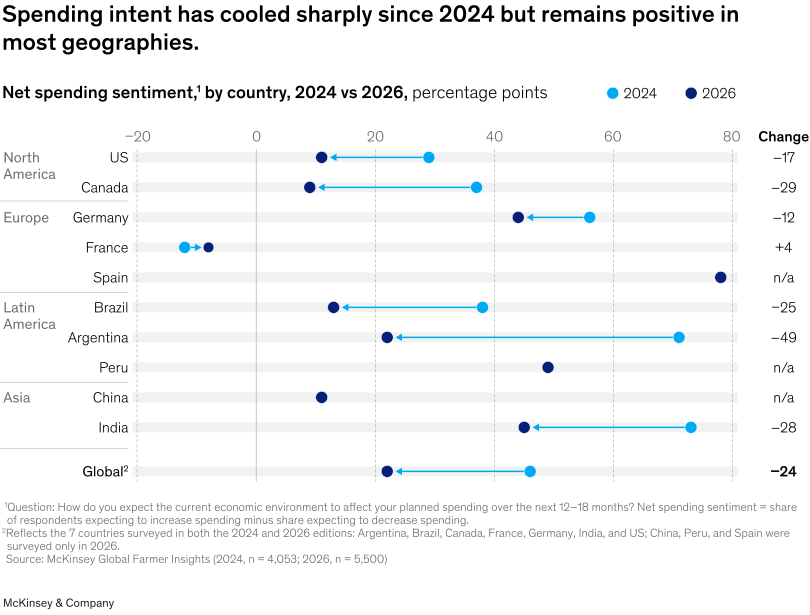
Responses indicate that farmers are acting cautiously. Despite the turbulence the agriculture industry faces, respondents in nearly all countries indicate that they are open to future spending. That said, intent to spend has decreased meaningfully since 2024. The largest decline in net spending1 sentiment is in Argentina (49 percentage points), followed by Canada, India, and Brazil (29, 28, and 24 percentage points, respectively) (Exhibit 1). In Argentina, the decline could be influenced by ongoing macroeconomic and policy uncertainty, which can make farmers more cautious about committing incremental capital.2 Spain and France sit at opposite ends of the sentiment spectrum. Spain’s larger specialty-crop base and resilient export markets may support a more positive outlook, while French farmers face greater pressure from costs, regulation, climate uncertainty, and—particularly in wine—softer demand.3
Preserving cash is a priority
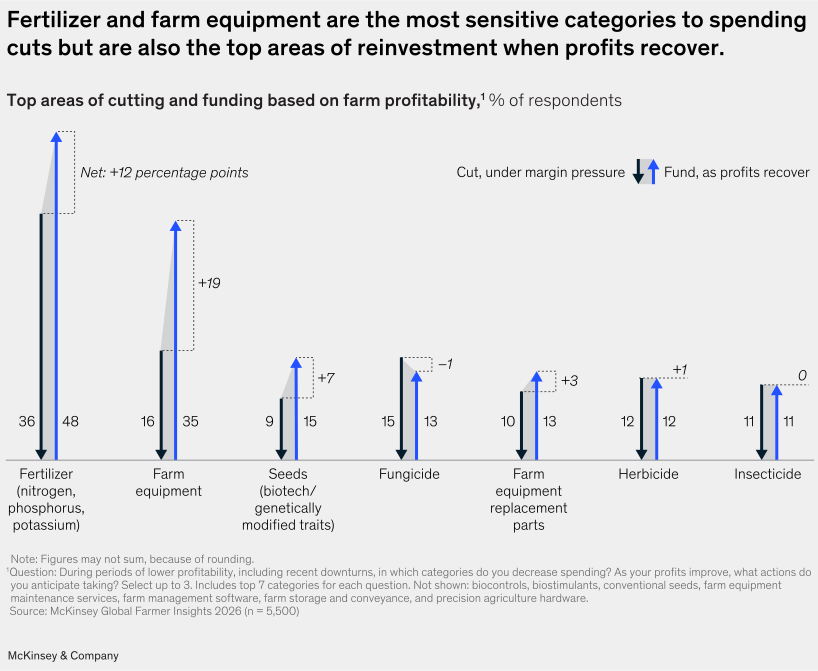
When faced with margin pressure, farmers maximize short-term ROI. Fertilizer is the clearest example: It is often the first major input farmers cut when margins tighten and the first they restore as profits recover (Exhibit 2). While this may preserve cash in the near term, under-fertilizing could reduce yield potential down the line.4 Although our survey may have coincided with heightened fertilizer supply concerns resulting from the Middle East conflict, the takeaway remains consistent: When margins tighten, farmers scrutinize even core inputs if the cash outlay is large and the near-term payback is uncertain. They may also switch to less input-intensive crops.
Farm equipment shows a similar dynamic. Sixteen percent of farmers cite equipment as an area to cut first, while 36 percent expect to fund it first as profits recover—the largest positive swing across categories. Machinery purchases are often relatively easy to defer, setting the stage for a sharper rebound when profitability improves or replacement can no longer be postponed.
Innovation adoption
Innovation remains part of the farmer agenda despite the challenging economic environment. But, as with spending on established products, technology adoption is becoming more sharply focused. The categories gaining the most traction are those that address specific farm-level problems, fit into existing workflows, and demonstrate value under local conditions. We surveyed farmer adoption and attitudes across three categories of innovation: biologicals, established agtech solutions, and gen AI.
Biologicals are a bright spot
Biologicals are an important area of innovation in agriculture, spanning a wide range of technologies, from products such as plant extracts that predate conventional chemical inputs, to emerging platforms such as designed proteins and peptides. Innovation in this category is therefore driven not only by new product classes but also by improvements in consistency, formulation, and targeting. Our 2026 survey examines the adoption of biostimulants (which support plant growth, nutrient uptake, stress tolerance, and crop quality) and biocontrols (which manage pests and disease through biological modes of action).
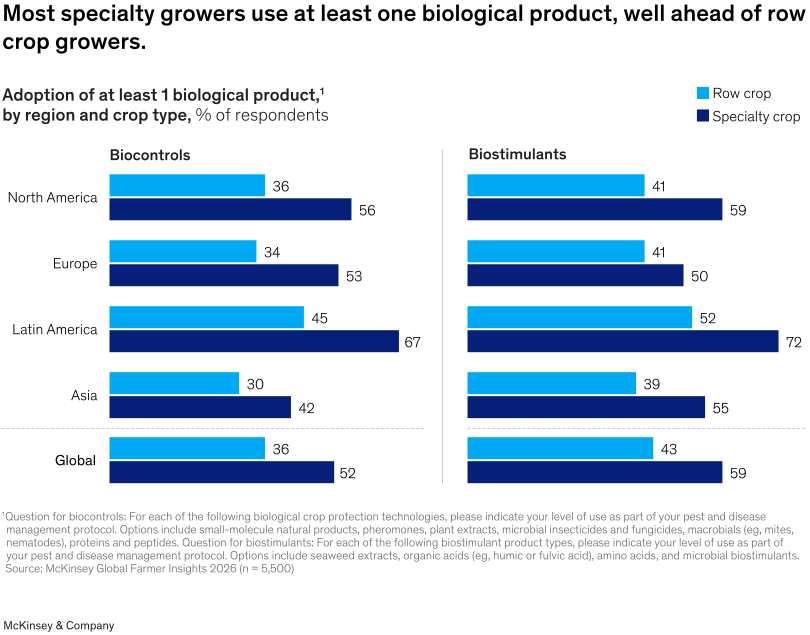
More than half of specialty crop farmers now use at least one biological, whether a biocontrol or a biostimulant. Adoption among row crop farmers is lower globally, with 36 percent using biocontrols and 43 percent using biostimulants. The higher commercial value of specialty crops can help justify the greater investment in biologicals. Latin America, led by Peru, has the highest adoption rates, supported by a mature input-distribution network and high pest and disease pressure in tropical cropping systems (Exhibit 3). Across regions, adoption of biostimulants exceeds that of biocontrols, in part due to the more general applicability of many biostimulants; biocontrols are much more targeted toward specific pests and diseases.
Gen AI is moving quickly to support day-to-day decisions
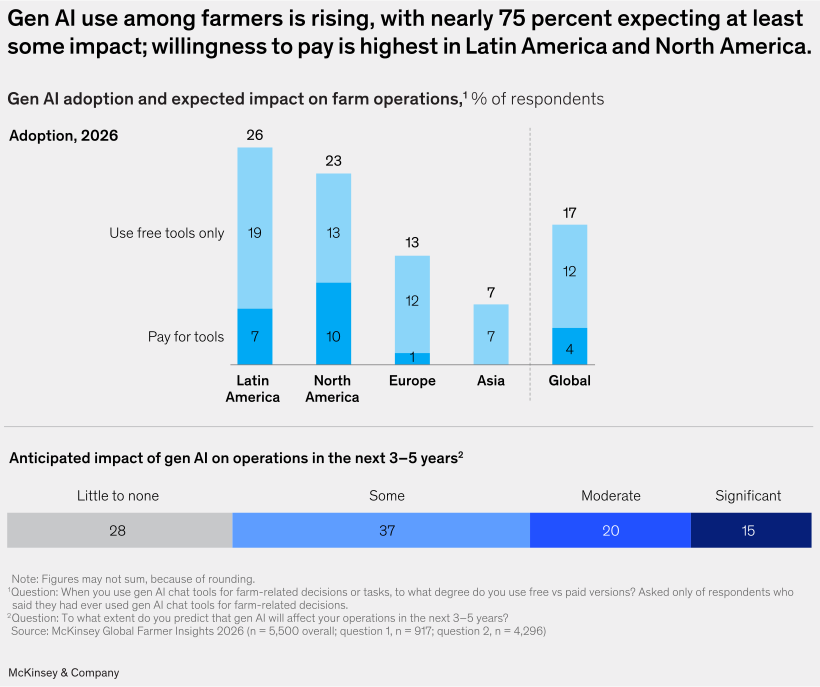
Generative AI, although new to the farm technology landscape since the last edition of the survey, has quickly gained traction among farmers. Already, 17 percent use gen AI for farm-related tasks, although only 4 percent are paying for solutions (which may include general paid AI subscriptions that are not farm specific). Adoption is highest in Latin America and North America (Exhibit 4).
Farmers are demonstrating notable openness to gen AI. Both overall and paid use have increased in the United States, at a pace on par with the fastest adopted technologies for agriculture. Of course, gen AI is easier to adopt than equipment- or hardware-dependent technologies and has broader applications. Even so, farmers’ willingness to pay suggests that they find gen AI useful and expect it to have at least some impact on farm operations.
The purchasing journey
As the range of agricultural products and technologies continues to expand, the purchasing journey is becoming more complex. Farmers need ways to research options, compare value, validate performance, and build confidence before committing scarce capital. Digital channels are playing a larger role in that process, especially in the early stages of research and evaluation, but trusted advisers remain central to turning interest into action.
The purchasing journey is increasingly digital
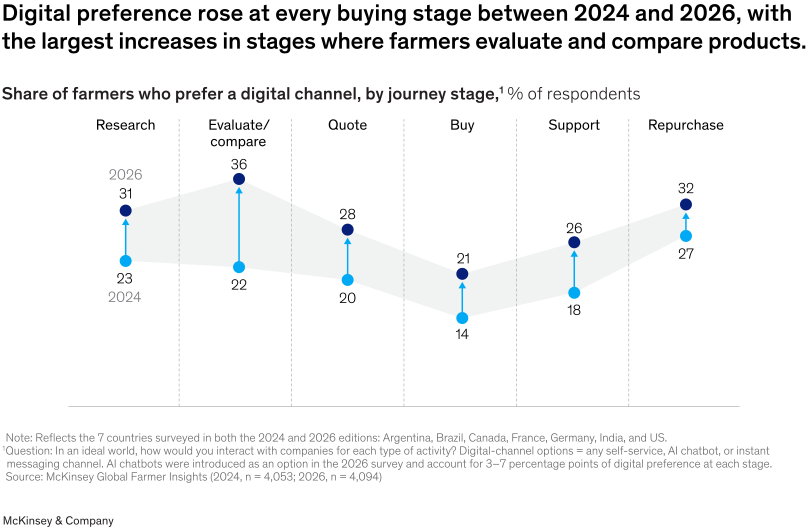
Preference for digital channels increased across every stage of the purchasing journey between 2024 and 2026, with the largest gains in the initial stages, when farmers research new products, evaluate alternatives, and compare purchase options across suppliers. Thirty-one percent of farmers report using digital channels to research products, and even more—36 percent—report using them to evaluate and compare products, up 14 percentage points from 2024 (Exhibit 5). For these top-of-the-funnel moments, digital and gen AI tools offer convenient access to information, quick insights, transparent price comparisons, and third-party validation. Digital adoption has also increased for repurchasing, likely because established products and supplier relationships make repeat transactions easier to complete online.
Trusted advisers are central to purchasing decisions
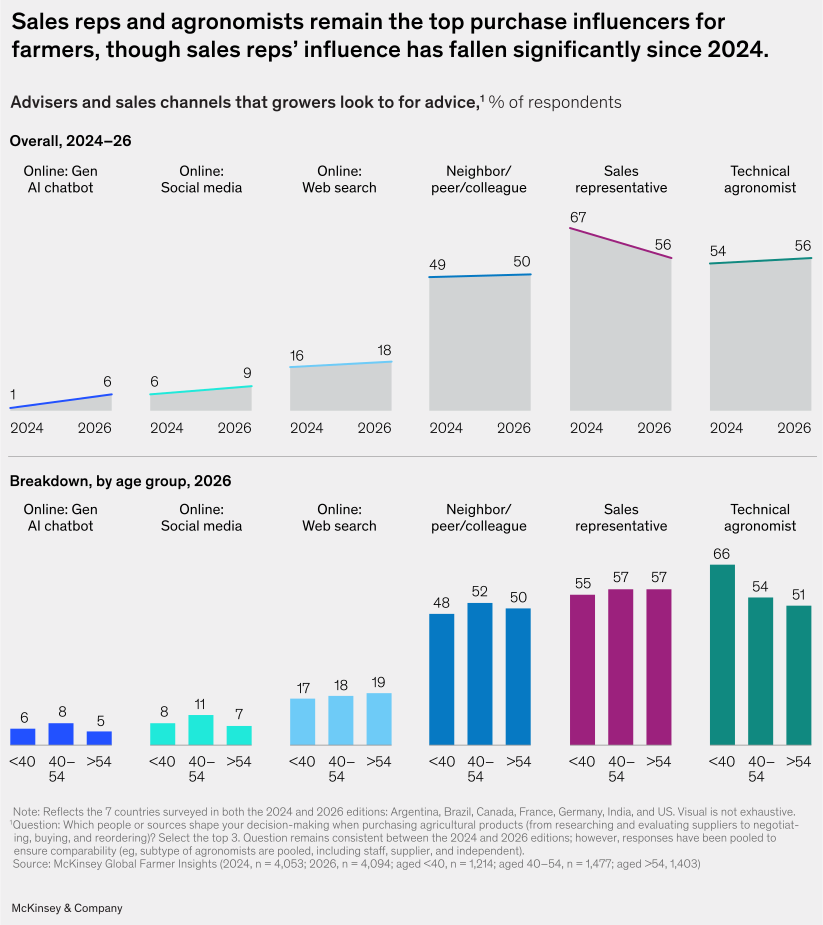
With the rise of AI, there is more competition for farmers’ mindshare, and for the first time in our survey, we saw a significant decline in the influence of sales reps (down 11 percentage points globally). At the same time, in-person technical experts still play an important role in conversion, trust-building, and validating insights. Agronomists remain a top influence for 56 percent of farmers and are especially important to younger farmers, a trend that persists across regions (Exhibit 6).5 While digital channels are growing, only 6 percent of farmers cite gen AI tools or AI search as a trusted source for decision-making.
In interviews, farmers said that because product information is now widely available online, they are less inclined to rely on potentially biased sales representatives in making their final purchase decisions. Instead, they look to agronomic experts with contextual knowledge to validate and advise on their choices.
Looking ahead
This agricultural cycle raises a central question: Are today’s pressures creating a new normal for agriculture—one characterized not only by pressured commodity prices, elevated input costs, and geopolitical volatility, but also by a lasting change in how farmers make decisions? Farmers will adjust to the conditions they face, but many in the industry wonder whether the downturn has reset farmers’ behavior. As profitability improves, will spending quickly recover, and which categories will benefit first?
Our survey reveals a consistent pattern. Faced with volatility, farmers are becoming more disciplined, deferring spend in the near term while planning to reinvest as profitability improves. They remain open to innovation but demand demonstrable returns. And although they are relying less than they used to on nontechnical advisers, they continue to seek expert guidance even as the volume of information available online grows.
For agriculture players, the implication is that the spending recovery is likely to be uneven. The companies best positioned to support farmers will be those that help them identify where value exists—with the necessary granularity across crops, geographies, farm types, product categories, and seasons.
Together, these imperatives point back to the farmer. The agriculture industry’s success will depend on helping farmers make better decisions—about where to invest, where to innovate, and where value truly exists. Feeding the world ultimately depends on millions of local decisions made on individual farms, acre by acre and season by season.
This report represents our view on the most important themes shaping farmer decision-making today, but does not cover the full scope of our survey findings. To learn more about this research, including the other topics explored, or to speak with our team, please contact us at Global_Farmer_Insights_2026@mckinsey.com.