The natural ups and downs of agriculture have always kept industry players on their toes. However, this has been more challenging in recent years. The agriculture industry has underperformed the broader S&P 500 since 2010, according to McKinsey analysis. Despite the industry’s overall underperformance, a small cohort of individual companies has outperformed on their TSR, a key measure of value.
The common link? Superior returns on invested capital, or ROIC, driven by greater capital efficiency. These leading companies achieved higher ROIC by managing their strategies differently to stay agile and play in comparatively high-growth areas, regardless of cycle volatility.
We analyzed 134 listed agrifood companies across the globe to understand what differentiates leaders from laggards (see sidebar, “Methodology”). In this article, we dive into what we found and sector-wide trends that could affect agrifood players moving forward. By applying five bold moves—programmatic M&A, dynamic resource reallocation, big investments, productivity leadership, and product differentiation—to global profit pools, agrifood companies stand to break free from the crowd and succeed.
Over the last 15 years, agriculture has underperformed many sectors in TSR
Recent years have been challenging for many agriculture companies. Compared with other industries, TSR in agriculture has been low at an average CAGR of 6 percent from 2010 to 2025 (Exhibit 1).
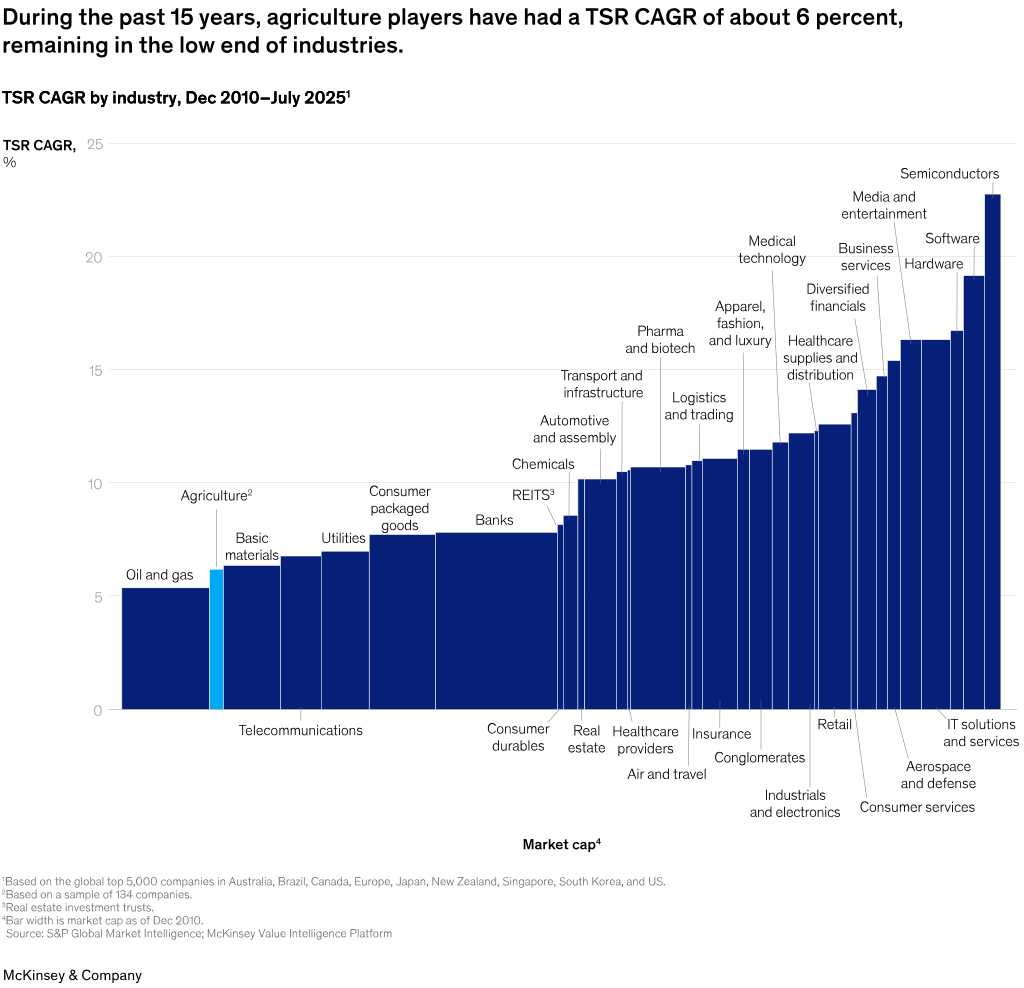
McKinsey analysis found that a few factors appear to have been driving this underperformance. First, agricultural companies have been unable to outgrow GDP growth, with 45 percent of agriculture companies underperforming global or regional GDP growth since 2010.
Second, there has been a slowdown in innovation. Median R&D spend has remained flat at about 1 percent of revenues since 2010; accounting for inflation, real R&D investment has contracted meaningfully over time. This has caused the industry’s innovation pipeline to stagnate across many subsectors. Meanwhile, there has been a more than 70 percent decrease in venture capital investments in agrifood tech since its peak in 2021.
Third, the industry continues to lag in digital adoption and has not seen efficiency or effectiveness gains equivalent to those of other sectors. In a 2024 McKinsey survey, only about half of US farmers reported adopting precision agriculture hardware, with adoption even lower in other regions (about 30 percent for Brazil and the European Union and about 5 percent for India).1 Adoption rates for remote-sensing technologies, farm management software, and automation were lower still. Agriculture also spends less on IT than other sectors. For example, McKinsey finds that United States agriculture companies spend about 1 percent less on IT as a percent of revenue than the US private sector average.
Fourth, headwinds in capital productivity have prevented growth. Fixed capital (infrastructure, equipment, and storage) in the system is extensive relative to the value of goods produced, and there has been limited change in fixed asset turns since 2010.
Last, there have been structural working capital challenges. Agriculture’s median cash conversion cycle has slowed faster than that of its peers, growing by more than 32 days since 2010. Inventory turnover has also dropped, perpetuating inefficient supply chains. Consequently, more than $60 billion in additional working capital is needed today compared with 2010 levels, according to McKinsey analysis.
Combined, these factors have caused the agriculture industry to lag, rather than beat, the overall market.
In a cyclical environment, some come out on top
While there is natural variation across agriculture cycles, agriculture players have underperformed compared with those in other industries over the past 15 years. Recent years have contained significant volatility in agriculture, including a biofuels-driven expansion (2009–13), a return to trend (2013–19), an inflation reset (2019–22), and a second return to trend (2022–25). Across these periods, some players notably outperformed (Exhibit 2).
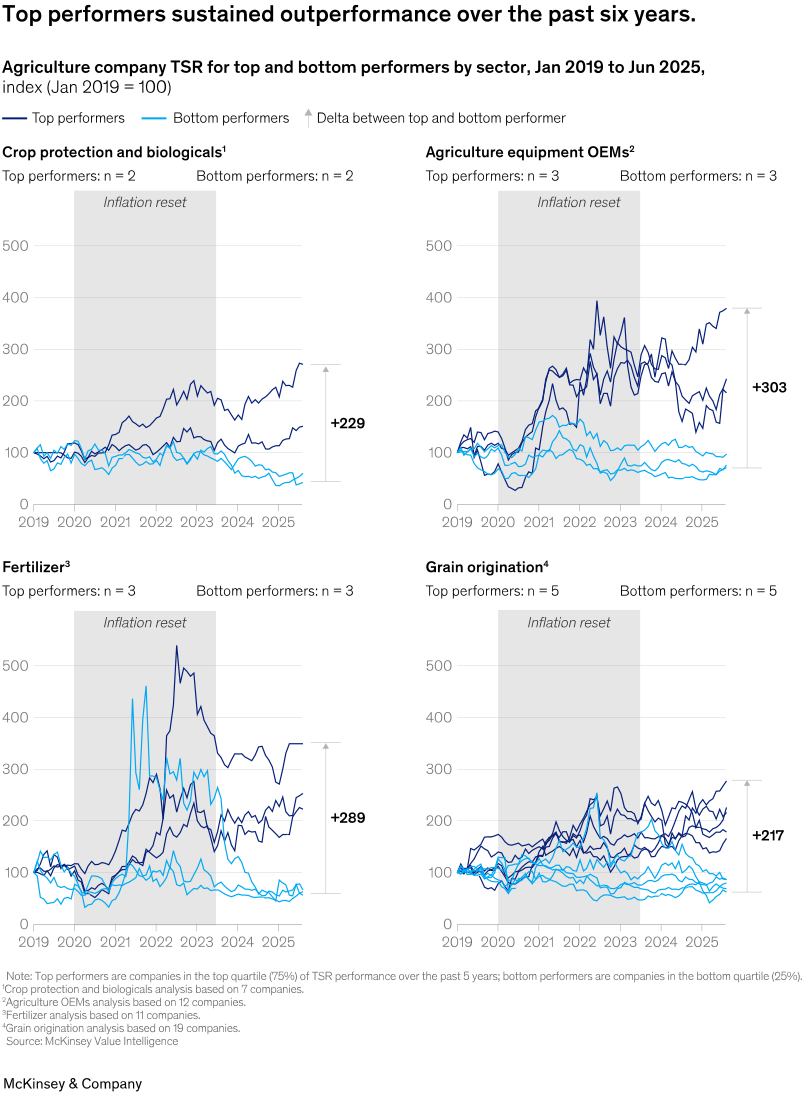
Although external factors such as market conditions can influence TSR, ROIC is a strong driver. ROIC is directionally linked with TSR, and when ROIC growth is combined with revenue growth, the effect on TSR is amplified. Together, growth across these metrics drives sustainable value creation and long-term shareholder value. Our analysis found that like TSR, ROIC also varies within and between subsectors, with the largest gap between underperformers and outperformers in fertilizers (Exhibit 3).
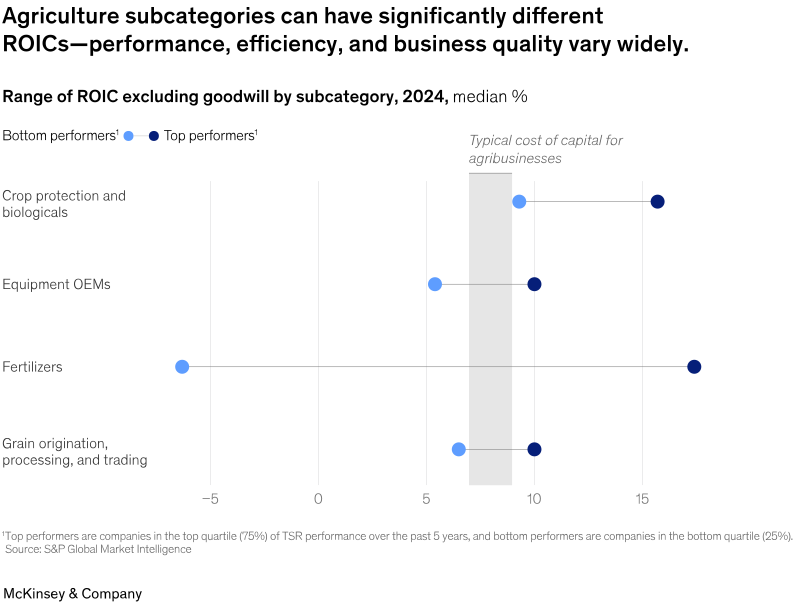
Analyzing 134 agrifood companies yielded important insights into what differentiated leaders from laggards. Our analysis showed that leaders across four subsectors of agriculture—crop protection and biologicals; equipment OEMs; fertilizers; and grain origination, processing, and trading—made strong moves that set them apart from the crowd.
- Crop protection and biologicals. While laggards saw ROIC slide, leaders expanded margins as prices normalized. They narrowed their offerings to intellectual property–rich segments such as patent-protected or proprietary-blend agrichemicals, cleaned up subscale exposure by shifting fixed costs to variable costs (including contract manufacturing), and tightened channels and trade spend to focus on must-win markets and geographies.
- Equipment OEMs. In the upswing, most equipment OEMs grew, but leaders sustained their ROIC after the peak by moving to build-to-demand models and reassessing dealers based on their inventory and performance. Leaders also developed software-enhanced machines with features such as autonomy, computer vision technology, and over-the-air updates and priced these machines to farmer outcomes. In addition, leading OEMs selectively rebalanced their footprints following demand, not habit—in other words, they changed the dealers they worked with by pruning the worst-performing ones and adding others where there were gaps.
- Fertilizers. Leading and lagging cohorts both peaked in 2022, but top performers held positive margins through 2023–24 by reducing conversion costs, offering premium products such as multinutrient blends and proprietary micronutrients with field-proven nutrient use efficiency claims, and exiting assets with sustained heavy capital expenditures.
- Grain origination, processing, and trading. Outperformers built their success on capital turns that increased their revenue-to-asset ratios through greater efficiency and improved operations. Leaders consolidated underutilized sites, rebalanced toward advantaged feedstock and logistics corridors, built digital grower platforms to lower cost to serve, and decommodified outputs to offer lower-carbon-intensity options, traceable ingredients, and more.
In each of these subsectors, it appears that leaders foresaw market shifts and changed their operating models to match.
The ‘big moves’ that matter
Winners did not outguess the cycle. They changed how they allocated resources. Five bold moves show up repeatedly in outperforming cohorts2:
- Programmatic M&A: Large companies pursue about one deal a year, which requires regular, disciplined efforts to identify new target acquisitions, conduct due diligence, and submit bids. For leading players across sectors, on average, no single deal exceeds 30 percent of market cap, and deals cumulatively reach about 60 percent of market cap over the course of a decade.3
- Dynamic resource reallocation: Budgeting agility is critical. Leaders move about 50 percent of their capital expenditures across businesses over a decade.4 This allows companies to fuel business units with greater potential to succeed while reducing losses from underperforming units. This might involve restructuring portfolios geographically, such as targeting specific business–market combinations (that is, specific businesses in specific regions).
- Big investments: Leaders in the top 20 percent of the industry spend about 1.7 times the median capital spending on sales.5 This can mean investing in R&D, developing new sites, building businesses, and more. Players stand to have a particular advantage when buying in a trough.
- Productivity leadership: Those companies that made top third gains in productivity, visible in EBIT and cash, took steps such as consolidating business units and locations, investing in new technologies such as automation, exiting unprofitable business units, taking steps to boost sales productivity, and otherwise optimizing selling, general, and administrative costs.
- Product differentiation: Companies that outperform (70th percentile and above) focus on expanding their gross margin faster than peers by differentiating their offerings. This requires a clear view of where the industry is moving and can potentially mean a company “out innovates” itself, with the goal of long-term success. Success requires making any differentiating factors clear to customers through targeted communications.
Our research shows that these five enduring principles of value creation deliver the biggest impact, provided leaders act on them boldly. These moves are not slogans; they are choices that leave fingerprints on cash flow—as well as profit and loss (P&L) and balance sheets—and they are hard for competitors to copy quickly.
Where profit pools are heading
We expect six shifts to shape the industry in the next five years. As agriculture companies explore big moves, they can act in each of these areas to come out on top of the industry’s shifting cycles.
Input value pool shifts
Alternatives to traditional inputs (biologicals for crop protection, soil health platforms for fertilizer, and so on) have grown roughly twice as fast as conventional categories in the past five years as conventional inputs have faced competition from generic players. As a result, companies in the future will need to reinvent their portfolios to protect margins and drive growth. Moving toward alternative inputs means keeping an eye out for any new developments and opportunities moving forward. Companies can also consider investing in proprietary offerings, whether developing them on their own through increased R&D or developing them through partnerships and M&A activity.
Supply and trade flow rewiring
Extreme weather events and geopolitical tensions are changing today’s supply and trade flows, and they will continue to do so in the future. Players will need to contend with trade reroutes; biological and weather pattern effects on production of cocoa, oranges, and other geographically concentrated crops; and more. To prepare, leaders today are diversifying into specialty products for higher margins and consolidating their operations by integrating their value chains.6 It’s important to note that granular bets on advantaged routes and assets are more likely to beat strategies that focus on global-share optimization and could allow players to get an early competitive presence in key areas. Flexibility and resilience (assisted by improved logistics and AI technologies) will also be key, including keeping abreast of evolving tariffs and being able to work with alternative suppliers.7
Broader use of farm output
As more commodities go to nonfood uses such as biofuels and biochemicals, there will be more optionality tied to factors beyond commodity price. For example, more than 30 percent of corn in the United States is expected to be processed for nonfood and nonfeed uses in 2025, compared with about 10 percent in 2000.8 In line with these trends, players can invest in new technologies that could open and diversify end markets for agricultural commodities beyond food and feed. Areas of note include advanced pyrolysis, distilleries, and other biorefining technologies to convert crop and forest residues into sustainable fuels9; anaerobic digestion and manure sequestration to convert manure into biogas and biofertilizer; “bio diol” plants,10 which produce biologically produced and biodegradable diols that can be used in polymers; and fermentation technologies,11 among others.
Automation adoption
New technologies such as autonomous row-crop harvesting systems and labor-saving livestock management systems are ROI positive, but they may face adoption challenges due to the upfront capital required from farmers. Winning strategies pair autonomy and precision stacks with financing and monetization models that allow farmers to access this technology. For instance, companies could offer data-linked precision feeding and ration delivery systems for livestock and dairy that use recurring revenue models to help offset upfront costs for farmers.
AI across the value chain
The agriculture industry stands to gain $100 billion on the farm and $150 billion at the enterprise level by integrating AI solutions (including gen AI and agentic AI) to increase productivity.12 AI can improve precision farming by optimizing farmers’ use of water, fertilizer, pesticides, and more. It can also be used to analyze crop imagery and identify signs of disease to facilitate early interventions as well as to analyze weather data and satellite imagery to give farmers forecasts and recommendations for the best planting and harvesting times. Overall, these applications can help farmers improve yields, environmental impact, and labor and input costs. Because the agriculture sector has lagged others in AI adoption, there is room for fast followers to win, even those that are not first to market. Leaders can jump forward to embed AI to rewire existing processes or build new ones, especially in R&D, field support, supply chain, and commercial functions, where most of the potential value lies.
Dietary shifts
GLP-1 use and changing diets around the world will shift demand, not erase it. About 13 percent of US consumers have used a GLP-1,13 which could lead to different dietary preferences (for example, shifting from high-calorie diets to low-volume, high-protein diets).14 Globalization is also affecting dietary preferences. For instance, in regions such as India and Asia, rapid economic growth and urbanization are shifting diets away from traditional plant-based staples toward greater consumption of meat, dairy, processed foods, and sugar-sweetened beverages.15 Meanwhile, in high-income countries and regions such as North America, Western Europe, and Australia, there is growing interest in plant-based, sustainable eating, but change remains uneven and slow. For global agrifood companies, accessing growing and profitable categories, including those with profitable disruptors, will matter more than chasing total volume. To start, companies need to identify profitable food disruptors and figure out how to partner—and profit—with them.
The leadership agenda: Decisions for the next 12 months
Given the trends and what we have learned from top performers, companies can build a leadership agenda to reshape the competitive landscape over the coming years regardless of the agriculture cycle. To follow the path of leaders, agriculture players across sectors can consider a few targeted actions:
- Focus on growing where profit pools are going. Screen businesses against the six shifts and move capacity toward advantaged corridors. At the same time, aim to exit or partner out subscale positions.
- Pick (and fund) two big moves. For most, this may mean programmatic M&A plus productivity or portfolio reallocation plus differentiation. For example, to encourage long-term growth, companies could reallocate at least 20 percent of the next year’s capital expenditures to the fastest-growing market segments as a “down payment” on the investments needed for the next horizon of growth. They could also free up cash by targeting ten to 20 days of cash conversion cycle improvement (for example, via SKU and dealer programs and terms).
- Make productivity and differentiation show up in the P&L every quarter. Treat productivity like a product. In other words, build a road map that will drive improved productivity and track it ruthlessly—don’t expect it to happen on its own. Create differentiated offerings (for example, autonomy to farmer ROI, verified traceability premiums, nutrient use claims) and price them to value, not cost.
Agriculture will remain cyclical, but performance does not have to be. To ensure a major leap in performance, CEOs must act decisively as they set their agendas in the coming months. There will be new pockets of growth as GDP grows, especially for nonfood use cases (for example, fuel). Tapping into these opportunities while adapting to shifting demand patterns can allow companies to maintain revenues and market share. The next five years will reward discipline in addressing these shifting profit pools and weathering the growth cycles of the agriculture industry.