With 2025 in the rearview and the year ahead coming into sharper focus, the real estate industry is showing signs of selective acceleration rather than broad normalization. Capital is moving again, but momentum is concentrated in specific sectors and strategies. Overall investment and deal activity remain well below historical highs. There likely won’t be a return to prior-cycle exuberance, at least in the near term.
When will real estate get back to normal?
The question misses the point. Foundations of the real estate industry are shifting, and the old normal is not returning; instead, the industry is evolving. While falling cap rates and rising valuations drove returns in the last cycle, that tailwind is fading. The prevailing cycle is defined by strong execution, capital structure discipline, and platform scale. These dynamics create significant opportunities—and new challenges—for value creation. Across private and public capital, general partners (GPs), limited partners (LPs), and operators alike are confronting a new terrain.
A look at 2025: What the metrics show
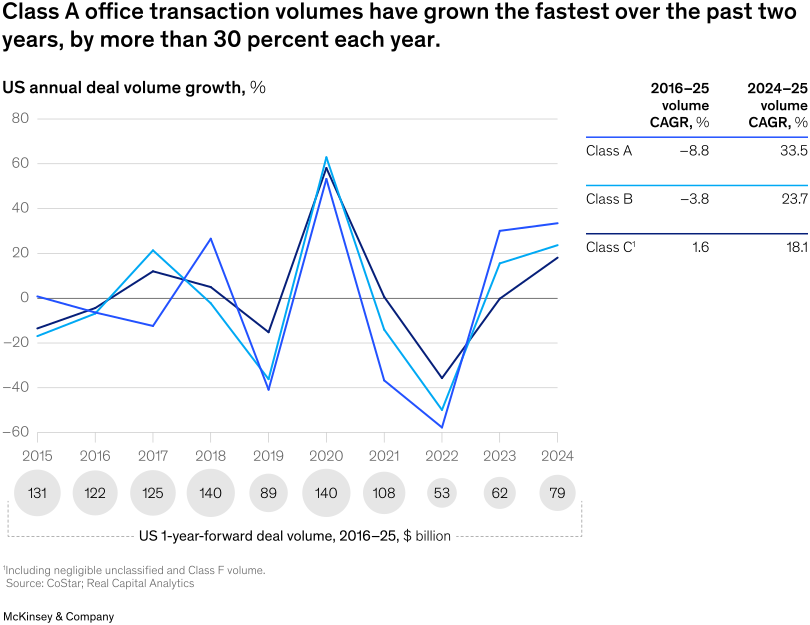
Global real estate deal value reached $873 billion in 2025, up about 12 percent year over year, even as transaction count remained broadly flat (Exhibit 1).1 The value increase primarily reflected larger average ticket sizes rather than a broad-based surge in activity, which suggests, in turn, that capital is concentrating on more targeted opportunities. Specialty property (such as data centers, senior and student housing, and flex industrial) has been gaining share each year since 2023. In 2025, that trend continued: Specialty property accounted for 14 percent of the 2025 total deal volume. Within this shift, data center deal volumes surged 37 percent, making the sector one of the fastest-growing segments globally. Additionally, in traditional real estate, office deal volume jumped approximately 17 percent year over year, driven by a “flight to quality” in Class A assets (where deal volumes grew 34 percent year over year in the United States). Lower-quality segments continue to face distress amid concerns about structural obsolescence (such as outdated layouts or weaker amenities) and difficulty in conversion to alternate uses.
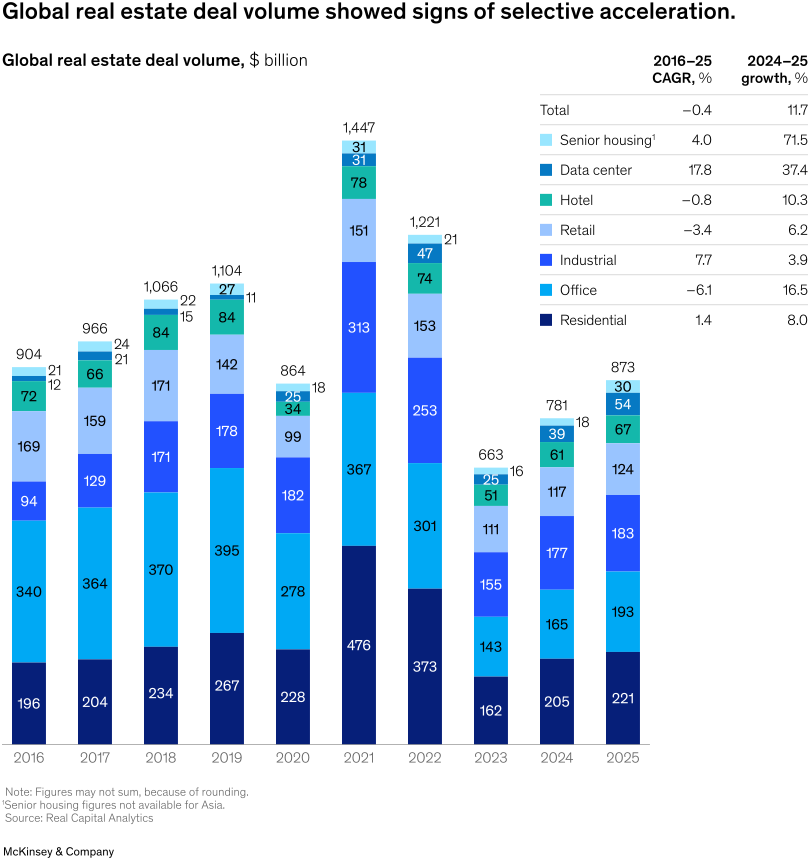
Private-market volumes are still below prior-cycle levels, as public and private valuations remain diverged. Public markets repriced more rapidly—today, listed real estate operates at implied cap rates that are about 130 basis points (bps) higher than private-market appraisals (down from an approximate 240 basis point difference in 2023).2 While the private–public gap has narrowed meaningfully, private valuations remain less conservative than public pricing. Alignment is still in process and gradual, as evidenced by moderating appraisal uncertainty in private markets (reflected in transaction amounts and deal volumes) and continued discounts to net asset value (NAV) in public markets (at a median of 18 percent). 3 These dynamics are more conducive to take-private transactions.
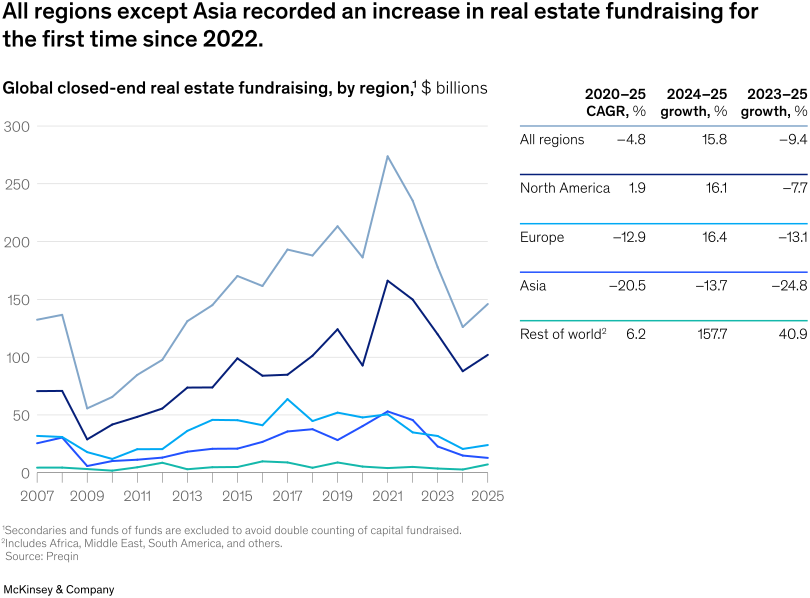
Fundraising in 2025 showed early signs of recovery but remained selective. Closed-end real estate fundraising rebounded about 16 percent year over year to $146 billion—though that level constitutes the second-lowest annual total of the past decade and is approximately 50 percent below prepandemic peaks. Value-add strategies have declined each year since 2022 (from $93 billion that year to roughly $27 billion in 2025), while opportunistic strategies have gained traction as LPs seek to capitalize on market dislocations (with fundraising up 65 percent year over year in 2025). North America and Europe returned to growth (both up 16 percent) for the first time since 2022, while Asia declined for a third consecutive year (14 percent) (Exhibit 2). A McKinsey survey finds that LP sentiment toward Western Europe and Asia–Pacific (excluding China) strengthened significantly, with a net 32 percent and 54 percent of investors planning to increase their exposure over the next three years to these regions (respectively), compared with 28 percent for the United States. Open-ended commitments in the United States rebounded to $18 billion in 2025, up 70 percent year over year—an impressive gain, but still significantly below the highs of just a few years ago ($31 billion in 2022).
Retail fundraising remains well below cycle highs (nontraded real estate investment trusts [REITs] totaled $5.7 billion in 2025, down 6 percent year over year and more than 80 percent from 2021),4 but performance has improved meaningfully over the past two years. The Stanger NAV REIT Total Return Index, after declining 3.0 percent in 2023, rebounded 1.1 percent in 2024; it’s expected to finish 2025 up 5.8 percent, reaching an all-time high. This suggests that even if retail flows have yet to recover fully, fundamentals are stabilizing.
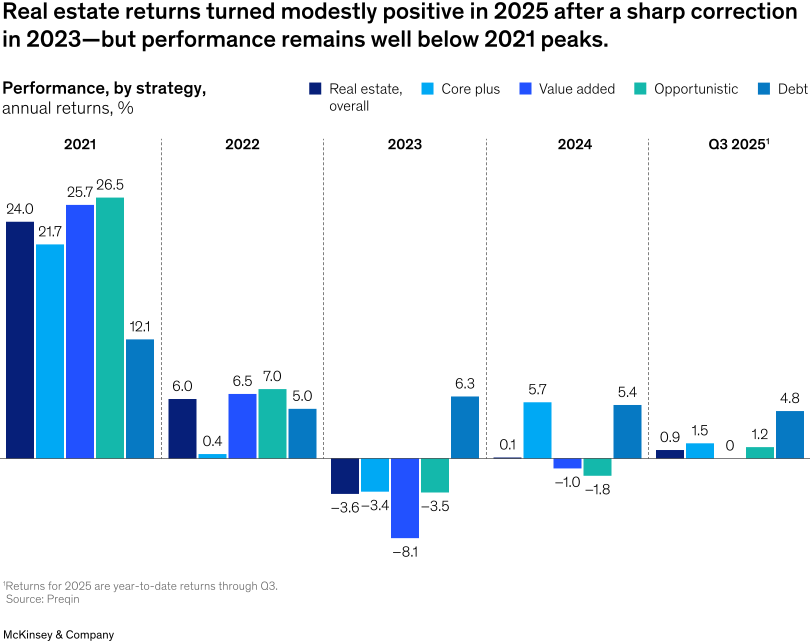
After sharp drawdowns in 2023 and an uneven recovery in 2024, returns turned modestly positive in 2025 across most real estate strategies. Debt and core-plus categories led the rebound (with 4.8 percent and 1.5 percent annual returns, respectively), while opportunistic strategies more recently moved back into positive territory (1.2 percent annual returns) (Exhibit 3). Yet returns remain well below the peak levels seen in 2021—pointing to a gradual, rather than complete, recovery. The current environment may favor strategies that have a stronger income orientation and more robust downside protection; higher-risk strategies may require a more sustained improvement in fundamentals to generate outsize returns. Although returns have improved recently, cumulative three-year performance remains negative across much of the debt and core-plus categories (a 2.6 percent decline overall), indicating that while the market may have stabilized, it has not fully recovered.
Although the sharp 2025 maturity spike has largely been absorbed through extensions and refinancing—with only about 17 percent of projected 2025 maturities actually coming due—overall refinancing pressures remain elevated. Approximately $2.1 trillion of US commercial real estate loans are scheduled to mature over the next three years (broadly in line with last year’s estimate), indicating that the “wall of maturities” has shifted forward rather than materially declined. At its core, this maturity wave reflects equity impairment: As valuations declined, many assets pushed toward extension, restructuring, or recapitalization rather than immediate sale. Meanwhile, monetary policy eased across major economies in 2025. The Federal Reserve cut interest rates by 75 bps over the year, the Bank of England reduced its Bank Rate by 100 bps, and the European Central Bank lowered rates by approximately 50 bps—reflecting differing inflation and growth dynamics across regions.5 At present, markets appear to be pricing in additional reductions in 2026, which, if sustained, could support current valuations and encourage transaction activity.
At the same time, geopolitical instability, election cycles, and diverging regional growth trajectories continued to elevate uncertainty across capital markets.6 A shift toward more protectionist and security-oriented policies has further complicated cross-border capital flows. Against this backdrop, investors have looked to real estate for durable cash flows, contractual income streams, and inflation-linked characteristics. At the same time, the sector’s position in portfolios is shaped by liquidity, pricing, and leverage. While sustainability has encountered pushback in the United States, it remains embedded in Europe’s regulatory agenda (as evidenced, for example, by recent refinements to the European Union’s Corporate Sustainability Reporting Directive [CSRD],7 and the United Kingdom’s tightening of energy performance certificate requirements).8 In fact, 78 percent of institutions in Europe, the Middle East, and Africa reported that environmental, social, and governance factors influence their investment process (compared with 13 percent of US institutions and 40 percent globally).9
Capturing value on new terrain: Five global, foundational trends
Across the real estate industry, value creation is shifting from market beta to operational alpha: Outcomes are increasingly driven by manager execution at the asset and subasset levels, rather than by rising valuations or favorable market cycles. Firms that embed operating capabilities—and, increasingly, AI and advanced analytics—into core workflows are positioning themselves to gain share. Leading allocators, for their part, are rethinking platform design, vertical integration, and capital formation to compete in a market that rewards scale and execution (see sidebar, “An evolving industry: Key implications for industry participants”).
An evolving industry: Key implications for industry participants
Multiple, global trends—including capital flows, operating models, technology adoption, and asset allocation—have critical implications for participants across the real estate industry. Most notably, these include the following:
- AI is transitioning from an efficiency tool to a competitive moat. Platforms that embed AI holistically will move faster, make more consistent decisions, and reduce execution leakage. The gap between firms that redesign workflows and those that simply layer on tools will likely compound over time.
- This is no longer a beta market—it’s a capability market. As conditions become more complex, the winners will be those who can consistently extract operational alpha at the asset level through clear differentiation (through scale, niche specialization, or proprietary sourcing). Broad, undifferentiated positions will become increasingly difficult to sustain; capital won’t easily flow to those who merely keep pace.
- Operating models are becoming more important. Firms that treat property management and asset operations as strategic capabilities—as opposed to outsourced utilities—will have a significant competitive advantage. At the same time, capital structure creativity at both the asset and fund levels will be critical to managing refinancing risk, unlocking liquidity, and protecting equity.
- Scale is becoming a differentiated enabler. Scale increasingly underpins competitive advantage. Larger platforms are better positioned to invest behind strategic priorities, revamp operating models (for example, by improving verticalization or better enabling AI), and meet growing limited partner preference for larger managers with demonstrated performance outcomes.
- Competition for high-growth sectors is intensifying. As infrastructure capital expands into sectors such as data centers, logistics, and other long-duration assets, competition for the most value-creating real estate segments will increase. Investors who can underwrite flexibly across real estate and infrastructure categories will be better positioned to compete.
Real estate isn’t getting back to normal, at least in the traditional sense. Instead, the industry is advancing into new terrain. Our analysis highlights five global trends that will be increasingly consequential.
AI: Accelerating from pilot to production
Generative AI is catalyzing value creation across the real estate ecosystem. Agentic AI represents the next wave, enabling a more effective partnership between humans and autonomous AI systems, deploying human judgment where it matters most. Leaders are no longer asking, “Can a model write a polished paragraph?” but rather, “Can technology safely take the next step in a workflow, directly inside the systems that run the business?” Critically, this next step is about enabling greater focus on human decision-making (such as weighing trade-offs, interpreting ambiguity, and applying judgment in uncertain contexts) as AI surfaces insights and accelerates workflows. Already, priorities are shifting from piloting isolated use cases to redesigning entire domains, many of which are candidates for people–agent collaboration (Exhibit 4). The potential value is significant: Agentic AI could generate roughly $430 billion to $550 billion in value annually across real estate, construction, and development globally.10
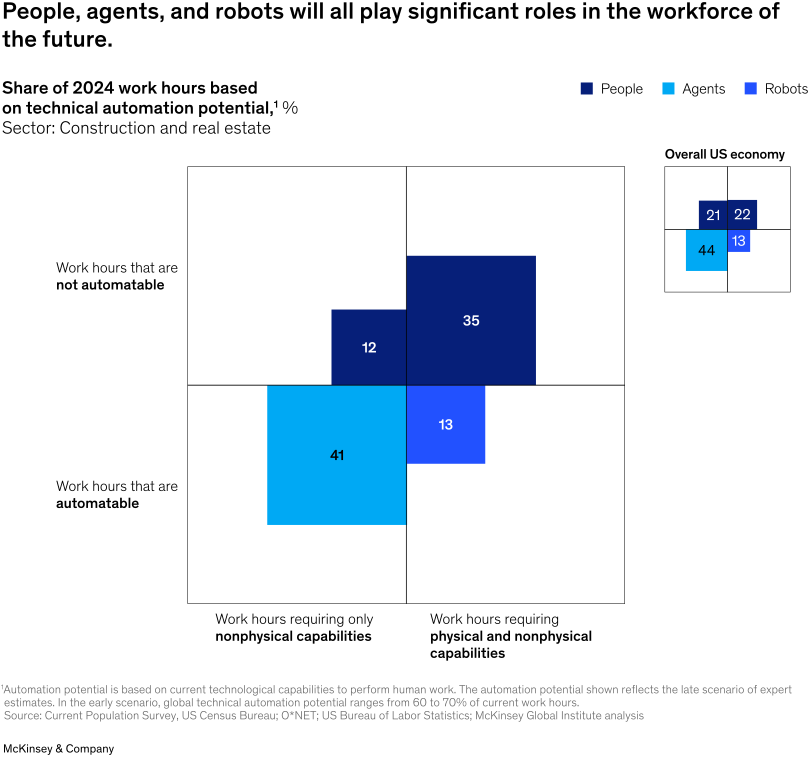
Capturing this value, however, requires more than experimentation; it demands structured data, integration into core operating systems, disciplined workflow redesign, and clear controls (rules, approvals, monitoring) to manage risk. Without these foundations, AI will remain in the pilot phase. With them, it can become a meaningful performance lever.
Four domains offer particularly high-impact points for redesign:
Maintenance and facilities: From ‘dispatch’ to ‘done automatically.’ Maintenance operations can be redesigned around end-to-end incident workflows rather than fragmented handoffs, enabling agentic systems to triage requests, route crews, manage updates, and automatically document actions. The opportunity is not to build one “maintenance agent” but instead to rewire the full end-to-end process (across detection, triage, access, dispatching, and beyond). By handling routine coordination and escalating only when needed, AI can reduce preventable delays and inconsistencies. The shift would free maintenance staff to focus on solving problems on-site—automating steps aggressively while protecting human judgment at critical moments.
Leasing and renewals: Service, speed, and compliance. Agentic AI can reduce the friction in leasing and renewals that is typically associated with high-volume coordination tasks (such as responding to inquiries, scheduling tours, managing documentation, and supporting applications) while maintaining consistent tone, transparency, and compliance guardrails. Rather than layering chatbots onto existing processes, domain redesign embeds agents directly into customer relationship management and property management systems, enabling seamless routine coordination. By embedding escalation rules and audit trails, next-generation systems can improve responsiveness and documentation without sacrificing human judgment—where empathy and discretion matter most.
Asset management and investing: Faster cycles and clearer judgment. Asset management workflows often suffer from manual data gathering, fragmented systems, and repetitive reporting. Agentic AI should address those deficiencies: It can centralize and structure lease and performance data, automate recurring analyses and materials, and surface early warning signals, reducing delays in decision-making. The goal, in fact, is not to replace judgment, but to remove friction around judgment: assembling context, drafting materials with sourcing, logging outcomes, and creating a traceable audit trail. The result will be faster, more consistent, and more defensible investment processes, with humans spending less time on low-value, rote work and more time on judgment-intensive decisions such as capital allocation and portfolio strategy.
Construction and capital expenditures: Controlling complexity. Construction and capital expenditure processes are characterized by extensive documentation, sequencing, and change management, making them well-suited to workflow automation. Agentic systems can organize project documents, manage requests for information and permitting workflows, monitor schedule risks, and flag cost overruns or change orders that require human review.
At scale, AI-enabled operating models favor larger platforms. Firms with greater capital, richer data sets, and tighter control over end-to-end workflows can invest more consequentially, embed tools across functions, and generate compounding learning advantages over time. While the AI opportunity exists across regions, in Europe, stricter regulatory regimes focused on consumer protection (such as General Data Protection Regulation and the EU AI Act) could increase implementation costs and governance requirements, especially for pricing and leasing. More vertically integrated platforms, which control core functions in-house, are positioned to capture greater AI benefits given increased oversight over workflows and data. In the near term, early movers can achieve differentiation through execution; over the longer term, AI capabilities will likely become table stakes. Those dynamics will shift the advantage to those who own the workflows, control data traces, and continuously refine their operating models.
Notably, AI also introduces risks that extend beyond execution. As technology reshapes how economic activity is conducted, services are delivered, and space is used, it may alter underlying asset fundamentals. For example, offices leased to call centers or consolidated front-, middle-, and back-office functions may face greater exposure. As a result, AI could shift use patterns, tenant demand, and long-term asset relevance in ways that are still unfolding. (For a deeper exploration of the implications of AI in real estate, see “How agentic AI can reshape real estate’s operating model.”)
Investment: Shifting from market selection to asset selection (and operational execution)
Broad exposure on its own is becoming less sufficient to drive real estate performance. Asset selection accounted for approximately 70 percent of performance differentials in 2025 (relative to country-specific benchmarks), materially outweighing the effect of country- or property-type allocation decisions.11 This marks a meaningful increase from 2020 to 2022, when asset selection accounted for less than 50 percent of return dispersion, and reflects widening dispersion within sectors, where choosing the right submarkets, tenant profiles, and capital structures can matter as much, if not more, than broad asset-class exposure. In 2025, capital increasingly flowed not toward entire property categories but toward more specific subcategories. As a dispersion in outcomes within asset classes has widened, players are more frequently adopting niche positioning to differentiate beyond broad market exposure, particularly as capital has concentrated in select high-growth themes where demand momentum is strong but return outcomes may vary meaningfully depending on entry pricing, capital intensity, and execution.
Data centers illustrate this shift. Due to the uptick in demand for the asset class in recent years, power-constrained, top-tier hubs are becoming increasingly consolidated, pushing incremental development and leasing into power-rich, next-tier markets. In the United States, nearly eight gigawatts of leasing in 2025 occurred in next-tier locations as hyperscale and AI demand chased available power rather than traditional core markets. A similar dynamic is emerging in Europe, where demand is shifting from constrained tier-one hubs (such as Amsterdam, Frankfurt, London, and Paris) to next-tier markets such as Iceland and Sines, Portugal, where power availability and cost are more favorable.12 At the same time, financial structures are evolving: Data center–related debt issuance surpassed $17 billion in 2025, with cryptocurrency miners raising more than $10 billion in secured and convertible debt within six months. The investment thesis, therefore, is no longer simply exposure to data centers (and capitalization of demand), but advantages in power access, tenant mix, capital structure, and geographic positioning that can support durable returns.
A similar dynamic is visible in the office category, where a clear flight to quality continues to drive the recovery amid vacancy pressures across much of the sector. Overall, US office deal volume rose more than 25 percent year over year in 2025. But the recovery has been highly selective. Activity was concentrated in higher-quality, well-located assets, as Class A deal volume increased 34 percent year over year in the United States, reflecting a preference for assets perceived as more resilient in a structurally evolving demand environment (Exhibit 5). As performance remains highly asset-specific, leading occupiers are redesigning the workplace to support collaboration and hybrid work, with some experts projecting the share of space dedicated to collaboration in Class A offices to increase by more than 20 percent by 2030.13 Increasingly, companies are optimizing and reallocating space—introducing modular floor plans, reducing fixed desks and stand-alone offices, and investing in tech enablement and amenity-rich spaces—to create more flexible, experience-led workplaces. Several large European employers have also formalized return-to-office mandates of three or more days per week, reinforcing the demand for high-quality, well-located spaces. For example, HSBC has linked bonus eligibility to in-office attendance requirements,14 and Barclays has increased the number of days its employees must be in the office.15 In key Asian cities, premium Class A office demand is particularly strong; employees consistently spend more time in the office than many of their European peers (averaging, for example, 4.0 days per week across Hong Kong, Shanghai, Shenzhen, and Singapore, versus 2.7 days in London).16 This dynamic is also evident in critical parts of the Middle East, where Class A occupancy has reached near-record highs (exceeding 90 percent) in Saudi Arabia and the United Arab Emirates.17
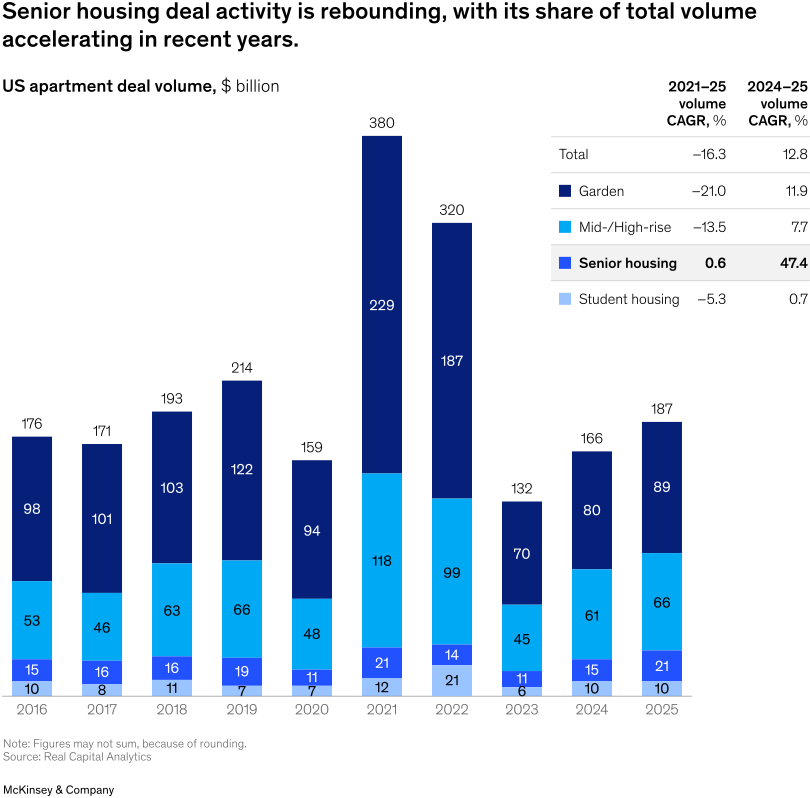
Within the residential category, senior housing is reemerging. Its share of total US apartment-related deal volume in the past year increased from 8 percent to 11 percent, the highest level in the past decade, while transaction activity rose 47 percent year over year (Exhibit 6). Additionally, 71 percent of surveyed investors now expect further cap rate compression in 2026—a dramatic reversal from 2023, when 68 percent anticipated additional cap rate expansion, and even from 2025, when only 33 percent expected declines. The shift underscores a pronounced swing in sentiment, reflecting renewed institutional demand and growing confidence in the sector’s trajectory, although it remains sensitive to operational intensity and local supply–demand conditions, meaning realized returns will depend heavily on operator quality rather than demographic tailwinds alone.18
This trend of growing interest in specialized residential segments is reflected outside of the United States, as well. For example, although more nascent, demand for senior housing is emerging in the Middle East due to rising life expectancy, increasing prevalence of chronic diseases, and a growing market for long-term and home-based care solutions.19 At the same time, residential markets across Saudi Arabia and the Gulf States are experiencing strong demand for apartments and luxury villas supported by urbanization, select megaprojects, policy reforms, and population growth.20
These shifts also reflect a more demanding capital environment across sectors. Higher financing costs, uneven rent growth, and tighter underwriting standards have reduced the margin for error (including in sectors currently attracting significant capital inflows). As a result, GPs increasingly require evidence-backed, highly specific theses within each asset class and must demonstrate that performance derives both from selecting the right niches and executing within them. For LPs, this environment underscores the importance of manager selection (for example, prioritizing sponsors with demonstrated underwriting discipline and track records of execution). For operators and developers, success will likely hinge on stronger execution (for example, driving cost control and improving leasing) to create value, as strong thematic demand alone may not be sufficient to ensure attractive risk-adjusted returns.
Vertical integration: A structural advantage
Across the real estate industry, vertical integration is increasingly emerging as a structural advantage rather than a tactical choice. Leading allocators are bringing operating capabilities in-house, so that the same organization making investment decisions can also control day-to-day execution. When capital deployment and operational oversight sit under one roof, performance insights from the asset level typically create a tighter feedback loop, feeding directly into underwriting, portfolio construction, and capital allocation decisions. Scale strengthens this advantage by spreading investments (including in technology, data systems, and specialized operating talent) across larger portfolios to generate operating leverage more rapidly.
At present, the primary enabler of verticalization is M&A. Leading capital allocators are acquiring embedded property management, property development, and asset-level execution capabilities. For example, Apollo’s acquisition of Bridge Investment Group expands its real estate footprint while adding Bridge’s vertically integrated operating model (including origination, asset management, and sector-specific execution capabilities).21 Moreover, Brookfield’s announced agreement to acquire Peakstone Realty Trust is intended to enhance its industrial and net lease platform by adding scaled assets alongside embedded leasing and asset management infrastructure.22
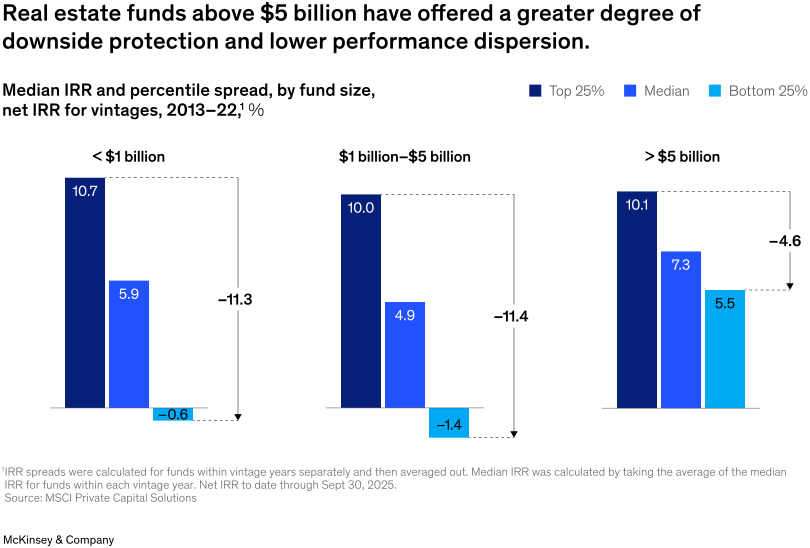
While larger, more scaled funds have delivered an improved return profile in more recent vintages (Exhibit 7), the vertical integration trend is not limited to megafunds. For example, an Affinius Capital–led consortium recently agreed to acquire multifamily REIT Veris Residential for $3.4 billion, taking the company private and securing its Class A, Northeast-focused operating platform to gain direct control over property-level execution.23
Vertical integration is not without complexity. Achieving true operating leverage requires time, cultural alignment, and sufficient portfolio scale. Unfortunately, subscale integration can increase overhead without improving outcomes. A performance advantage materializes when integration actually drives execution—not when functions are simply consolidated on paper.
For allocators, these developments raise a strategic question: How can pure capital allocators compete most effectively against platforms that can integrate both capital and operations? Potential avenues for outperformance include specializing in a narrow asset class or geography to build differentiated expertise, forming deeply embedded partnerships with best-in-class operators, or employing creative capital structure solutions—at both the asset and fund levels. These may include NAV loans, continuation vehicles, structured secondaries, and hybrid capital structures designed to extend hold periods, bridge liquidity gaps, or reposition portfolios. For LPs, solutions may imply an increasing tilt toward managers that control execution in priority sectors, particularly if vertically integrated platforms can demonstrate stronger performance, greater resilience, and more repeatable value creation.
Consolidation: Concentrating capital and reshaping the manager landscape
Consolidation is gaining momentum across real estate and the broader private-markets ecosystem. Larger platforms are acquiring managers, taking minority stakes in GPs, and expanding into adjacent capabilities. Many LPs, for their part, are streamlining their GP rosters, allocating to fewer managers overall, and directing a greater share of capital to scaled, institutionalized platforms. The result is a reshaping of both the GP landscape and the capital flows that underpin it.
On the GP side, transactions such as Ares Management’s acquisition of GLP Capital Partners (GCP) illustrate the strategic rationale at a larger scale. GCP, which managed $44 billion of third-party assets under management (AUM) at the time of the announcement, significantly expanded Ares’ real estate platform. The acquisition added meaningful scale in Europe and established a truly global footprint with presence in Japan24; beyond the increase in AUM, the acquisition enhanced Ares’ vertically integrated logistics platform, adding established local operating teams and further sourcing capabilities across key global markets.
Minority GP stake sales have emerged as an additional dimension of consolidation, accounting for approximately 57 percent of manager M&A activity—the highest level since 2020.25 In Asia, a proposed merger between giants Capital Investments ($117 billion AUM) and Mapletree ($31 billion AUM) would be driven in large part by the potential to accelerate private funds management, an explicitly stated strategic priority for both parties. In effect, GP stake investing is becoming another lever through which capital, control, and growth accrue to larger managers.
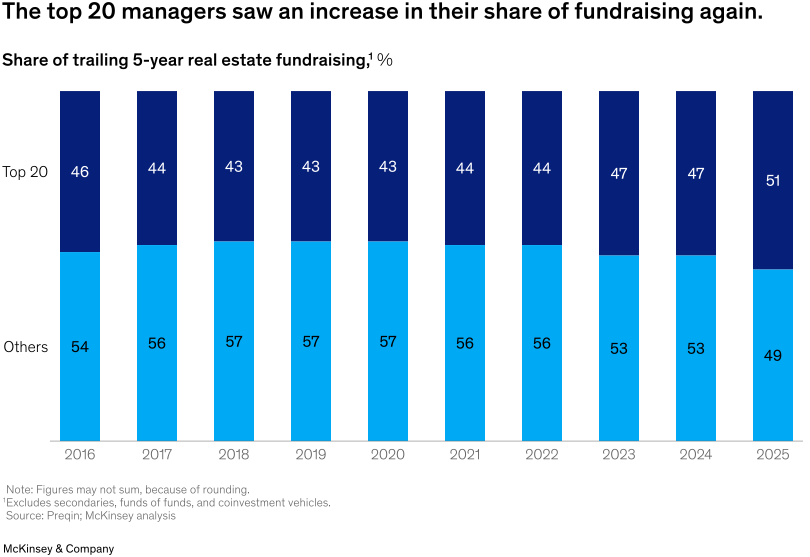
LPs are increasingly seeking to capture the benefits of scale. One primary enabler is to streamline their GP roster; 17 percent of institutions expect to decrease the number of managers in their rosters (in the short term), continuing a steady, multiyear trend. Fundraising patterns reflect this shift. The top 20 managers’ share of trailing five-year closed-end real estate fundraising increased to roughly 51 percent in 2025, approximately five percentage points higher than in 2016 (Exhibit 8). As LPs consolidate their deployments, they are scaling their relationships toward platforms that are viewed as diversified and capable of deploying capital at scale.
Additionally, where feasible, there have also been instances of LPs merging and pursuing scale more structurally. Recent examples include CareSuper’s merger with the Meat Industry Employees’ Superannuation Fund in Australia26 and the continued pooling of Local Government Pension Scheme assets in the United Kingdom.27 As these institutions scale, they gain greater leverage to negotiate bespoke mandates, enhanced co-investment rights, and differentiated access. Co-investment opportunities are becoming increasingly important to LPs, with more than 20 percent of pension funds, sovereign wealth funds, and private wealth offices reporting that manager-sponsored co-investments have grown in importance.28 Collectively, these dynamics reinforce capital concentration toward managers capable of underwriting and deploying larger commitments.
Taken together, consolidation will likely favor large, diversified platforms and highly specialized niche operators that have a distinct edge. For midmarket GPs, the strategic choice is increasingly stark: either scale up through mergers, acquisitions, and partnerships, or specialize deeply (such as by sector specialization, geographic advantage, or proprietary sourcing relationships). Managers caught in the middle—without the balance sheet of scaled players or the differentiation of specialists—can expect harder going.
Transcending categories: The boundary between real estate and infrastructure is becoming increasingly blurred
The traditional distinction between real estate and infrastructure is becoming less clear. Although infrastructure and real estate capital can pursue different objectives (with infrastructure investors typically underwriting longer-duration, lower-leverage profiles), a growing set of asset types now sits at the intersection of these two categories. These assets combine high capital intensity and essential service roles; examples include data centers, logistics networks, select storage formats, data infrastructure complexes, and life sciences facilities.
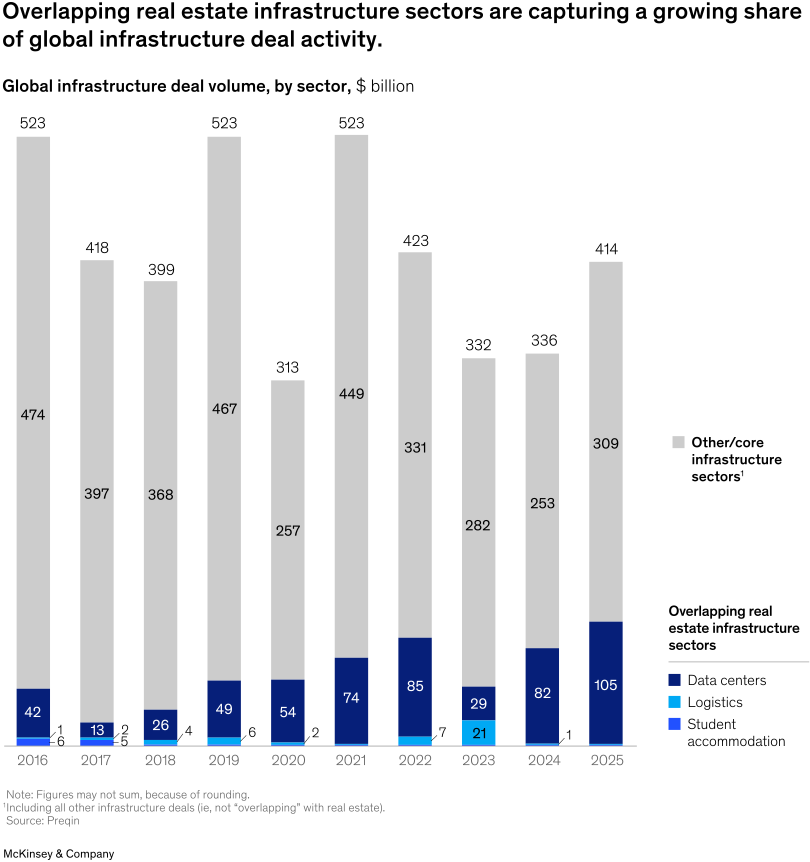
Within global infrastructure deal activity, traditionally real estate–focused sectors (such as data centers, student housing, and logistics) have increased their share of total infrastructure volume in recent years (25 percent in 2025) (Exhibit 9). Importantly, several of these sectors (particularly data centers and logistics) have historically been among the most structurally attractive areas of real estate, meaning that, in some cases, investors can access the highest-quality segments of the real estate market through infrastructure investments. While the pursuit of robust returns likely bodes well for investors, it could pose challenges for legacy capital allocators; as infrastructure-themed funds increasingly expand into real estate–like assets, traditional real estate managers will face heightened competition for deals.
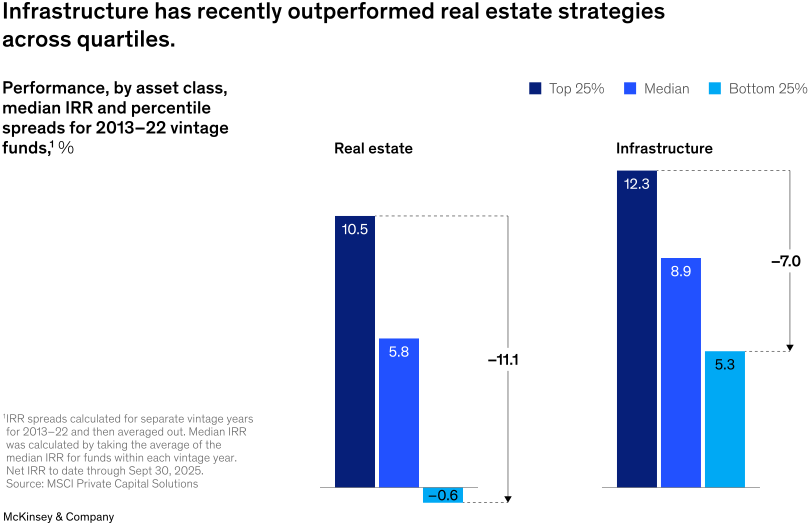
From a performance lens, infrastructure has recently delivered stronger downside resilience than real estate strategies. In the lowest quartile of 2013–22 vintages, infrastructure funds generated approximately 5 percent IRR, compared with negative outcomes for real estate. This further underscores the asset class’s strength in preserving capital, even when fund outcomes are weakest (Exhibit 10).
Institutional target allocations indicate that infrastructure is capturing a growing share of overall real asset exposure, rising from approximately 32 percent of total real asset allocations in 2023 to approximately 36 percent in 2025. While investors have increased their target allocations to infrastructure, actual allocations have not yet fully caught up; infrastructure continues to exhibit a larger gap to target allocations relative to real estate (average gap of 114 bps versus 50 bps over the past three years), suggesting additional room for capital deployment and a potential tailwind for fundraising activity.29 In many respects, the era of broad asset-class exposure as a sufficient strategy is fading; outcomes are increasingly determined by the specific asset, its demand drivers, capital structure, and operating model—not whether it is labeled as infrastructure or real estate.
In response, select managers are actively addressing this convergence by integrating real estate and infrastructure capabilities under unified “real asset” platforms. Firms such as KKR have aligned their digital infrastructure and real estate teams to more holistically underwrite assets such as data centers and energy-adjacent facilities, leveraging shared sector expertise and capital flexibility.30 Similarly, Blackstone has increasingly structured mandates that span energy transition and built-environment strategies, reflecting a more integrated approach to assets that sit at the intersection of infrastructure and real estate.31 Stonepeak, traditionally one of the world’s largest infrastructure investors, has built and scaled a dedicated real estate platform (closing its inaugural $764 million property fund in 2024).32
With infrastructure funds increasingly competing for real estate–like assets such as data centers, cell towers, and certain logistics facilities, managers may find themselves limited if they cling to a traditional segment approach. By contrast, managers who can operate flexibly across real estate and infrastructure frameworks should be better positioned to capture hybrid opportunities. (For additional perspectives on the intersection of real estate and infrastructure, see “The outlook for real estate and infrastructure in a changing world.”)
As real estate recovers from its recent declines, it’s tempting to conclude that the industry is stabilizing. But that term is inexact. More precisely, real estate is evolving rapidly, with new opportunities—and obstacles—for players across the ecosystem. The past year has been marked by selective acceleration. But the full implications from the industry’s five most important global trends have only just begun.