At a glance
- Roughly one-third of the women’s health gap (34 percent) arises from care delivery inequities, notably preventable underscreening, underdiagnosis, and undertreatment.
- Improving care delivery for women—ranging from standardized screening to improved referral pathways and reporting—could close a third of the women’s health gap and avert nearly 70,000 medical events in the United States across three pathways alone.
- Preventive care for women could help avoid costly events and would allow each woman to reclaim 2.5 days annually of better health through improvements to care delivery.
- Exploring three pathways—breast arterial calcification and cardiovascular disease risk, pregnancy and cardiovascular disease risk, and perinatal depression—shows the value of clear, evidence-based interventions in women’s health.
- The CARE framework—Conduct research and gather clinical evidence; Align care and integrate referral pathways; Report using clear guidelines and standards; and Engage patients and other health system stakeholders in patient-centered care—offers a new path forward.
Women spend more than 25 percent of their lives in poor health compared with men, on average. The failure to deliver consistent, high-quality healthcare for women contributes to one-third of the women’s health gap.1 Better sex- and gender-appropriate care delivery could reduce the women’s health burden by 26 million disability-adjusted life years (DALYs) per year globally by 2040, corresponding to 2.5 days per woman per year.2
The care delivery gap means that the implementation of evidence-based practices needs to be strengthened, assessed, and often redesigned for optimal care for women. The gaps can be grouped into three categories:
- underscreening: missed opportunities for early detection of cancer, mental health conditions, and cardiovascular risk; lack of standardized guidance for screenings
- underdiagnosis: delayed recognition of conditions such as heart attack due to atypical symptoms; lack of sex- and gender-specific criteria for diagnosis
- undertreatment: lower rates of guideline-recommended interventions, such as cardiac rehabilitation; lack of provider awareness of treatment options; and delays in treatment escalation
Health systems could address each of these categories by enacting the CARE framework, developed by the World Economic Forum (the Forum) and the McKinsey Health Institute (MHI), together with a consortium of more than 20 expert leaders from different health institutions:
- C: Conduct research and gather clinical evidence
- A: Align care and integrate referral pathways
- R: Report with clear guidelines and standards
- E: Engage patients and other health system stakeholders in patient-centered care
This report deepens the investment case for women’s health, highlighting opportunities in care delivery and estimating their potential to support the health of women and economies. It explores three pathways—breast arterial calcification (BAC) and cardiovascular disease risk, pregnancy and cardiovascular disease risk, and perinatal depression—that are representative of a broader set of conditions across cardiovascular disease, maternal health, and mental health conditions. It includes an interactive road map that allows healthcare systems, providers, and other stakeholders to delve deeper into solutions across CARE to close gaps.
While this report focuses on improving care delivery within existing clinical pathways, it addresses only one component of the broader women’s health challenge. Many of the largest drivers of disease burden—including chronic condition management, disparities in access across rural and underserved populations, and affordability constraints—require systemic changes beyond the scope of this report. This report instead focuses on a complementary and actionable opportunity: improving how care is delivered today by building on existing infrastructure and patient touchpoints to enable earlier intervention and prevent avoidable downstream outcomes, as illustrated by three pathways. Shifting from reactive to proactive care can reduce the incidence and progression of chronic conditions over time, as earlier risk identification and management compound across populations and life stages. In this way, strengthening care delivery within existing pathways delivers near-term value while also contributing to reducing the long-term burden of chronic disease for women, health systems, and economies.
The report and road map are actionable: Governments, health systems, practitioners, and other stakeholders can begin making meaningful improvements across pathways today. Additionally, the road map is global in scope but locally adaptable. While challenges differ among and within countries, the imperative to act is universal.
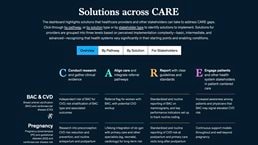
Explore the solutions across CARE
Understanding gaps through three pathways
Three clinical pathways with major gaps in the treatment of women provide a focus for identifying and scaling better practices.
The evidence is unequivocal: Women receive less evidence-based care (from screening to diagnosis to treatment) for many high-burden conditions, leading to worse outcomes. Cardiovascular diseases account for the largest share of care gaps for women, followed by cancer, gynecological conditions, maternal disorders, and mental health conditions.
In cardiovascular care, even though men are more likely to experience a heart attack, several global studies point to worse outcomes for women, including higher mortality rates. Women are also less likely than men to receive cardiovascular care. For example, in an analysis of select high-income economies, women were 13 percent less likely to receive percutaneous coronary intervention, used to treat blocked coronary arteries due to blood clots, and 6 percent less likely to receive cardiac catheterization treatment, often used to diagnose the presence of blockages.3
Cardiovascular guidelines often do not reflect women-specific treatment or diagnostic criteria, despite cardiovascular diseases accounting for approximately 35 percent of all deaths among women globally.4 Providers recognize this gap: A 2019 survey of US primary care physicians (PCPs) and cardiologists found that only 22 percent of PCPs and 42 percent of cardiologists reported being extremely well prepared to assess cardiovascular disease risk in women,5 leaving the vast majority feeling underprepared to treat cardiovascular disease in women. At a broader level, the opportunity to improve the global economy is estimated at $43 billion annually by 2040 if the gender gap in ischemic heart disease were closed.6 This reflects estimated annual gains in DALYs and GDP, where women live longer and in better health.
Cardiovascular disease are a leading cause of maternal mortality, with hypertensive disorders responsible for around 16 percent of maternal mortality cases.7 This is one reason cardiovascular disease risk is important to assess not only during pregnancy but also long term. In the landscape of mental health, untreated perinatal depression is linked to effects on mother and baby, ranging from preterm birth, low birth weight, and intrauterine growth restriction to a long-term risk of suicidal behavior.8
Improved care delivery is within reach—and it can harness what already exists. For example, as of 2026, a small percentage of radiologists globally assess mammograms for BAC. In this report, the World Economic Forum and the McKinsey Health Institute team, alongside a consortium of more than 20 institutions, show how these pathways can identify where gaps are most persistent and how they could be closed (see sidebar, “Methodology”).
The three pathways are breast arterial calcification and cardiovascular disease, pregnancy and cardiovascular disease risk (focused on preeclampsia and gestational diabetes), and perinatal depression. Navigate these journeys through our interactive.
Across these three pathways, evidence suggests gaps in optimal care delivery for many women. The accompanying patient journey visualization maps the main touchpoints along the patient journey, alongside key pain points experienced by women.
The challenges and chance to act: Key gaps in care pathways
The three pathways presented in the previous section—breast arterial calcification and cardiovascular disease; pregnancy and cardiovascular disease risk (focused on preeclampsia and gestational diabetes); and perinatal depression (a type of perinatal mood disorder)—highlight four cross-cutting challenges that consistently emerge across care delivery for women.
The Forum and the MHI, in collaboration with the care delivery consortium, developed the CARE framework to address these challenges:
- C: Conduct research and gather clinical evidence—developing additional evidence and research is needed to implement solutions.
- A: Align care and integrate referral pathways—care pathways are fragmented and need to be aligned across practices.
- R: Report with clear guidelines and standards—there is a lack of standardized reporting and integration of guidelines across pathways.
- E: Engage patients and other health system stakeholders in patient-centered care—patient-centered care and provider-level awareness are needed to address challenges.
C: Conduct research and gather clinical evidence
While this report focuses on the care delivery gap, more than half of the overall gap comes from a lack of understanding about how different conditions affect women (the efficacy gap), while another 8 percent stems from a lack of research (the data gap). This means that more clinical evidence and research are needed to establish best practices that account for sex-based differences and adapt to local populations.
For example, while BAC is associated with an increased risk of heart disease, there is limited consensus on scoring, reporting, and integration into overall cardiovascular risk assessment. Similarly, while preeclampsia and gestational diabetes are recognized by major professional and academic societies as sex-specific cardiovascular disease risk enhancers, there is limited consensus on what constitutes optimal postpartum risk assessment and what long-term monitoring should look like to determine future cardiovascular risk.
For perinatal depression, although validated tools such as the EPDS and PHQ-2 and PHQ-9 are widely considered appropriate screening tools, there is less universal or mandated screening across countries. This variation likely reflects differences in resources—not only for screening but also to ensure adequate follow-up care and treatment. These tools may also underdetect milder or atypical presentations or may not capture cultural differences in how perinatal depression manifests.
A: Align care and integrate referral pathways
CARE fragmentation remains a substantial barrier. Follow-up referral pathways based on BAC findings have not been implemented, as BAC is currently not commonly used as a marker of cardiovascular risk and mammography is focused on breast cancer screening. Responsibility for postpartum cardiovascular risk monitoring after adverse pregnancy outcomes also remains unclear and may fall on the patients themselves.
For perinatal patients with depression or other perinatal mood disorders, collaboration between obstetrics and psychiatry care teams may be limited, or patients may decline further treatment for a multitude of reasons. For example, a 2019 Portuguese study of more than 2,000 women identified 10 percent with a positive depression screening, of whom 48 percent refused psychiatric referrals.9 A 2010 US study found that while 59 percent of at-risk women accepted mental health referrals, only 27 percent ultimately engaged in treatment.10 More research is needed to investigate mental health follow-up levels globally.11
R: Report with clear guidelines and standards
When no standard exists for who should report findings and to whom, it becomes difficult to consistently identify at-risk women. BAC is not routinely quantified or consistently included in mammography reports, reducing its potential utility in cardiovascular prevention and its usefulness for interpretation by providers after the mammogram. A woman with preeclampsia or gestational diabetes may not have her obstetric and primary care records integrated into her long-term cardiovascular risk profile, leading to missed opportunities for early prevention.
In perinatal depression, while many guidelines recommend screening using clinically validated tools, not all settings incorporate expert guidelines into practice. Many providers report identifying perinatal depression through informal or qualitative methods, such as clinical observation and patient conversation (for example, “How are you feeling?”).12 When regions or countries vary in what qualifies as perinatal depression, two consequences may arise: It is challenging to accurately measure prevalence, and women who have perinatal depression may receive suboptimal care if comprehensive screening tools are not used.
E: Engage patients and health system stakeholders in patient-centered care
Patient-centered care and provider awareness remain a large gap, for example around long-term risk monitoring, and patients may lack support systems to encourage follow-up care. Many patients and clinicians are unaware of the cardiovascular implications of BAC or adverse pregnancy outcomes, and stigma surrounding perinatal depression continues to hinder disclosure and care engagement. For example, a 2025 Austrian study found that one-third of healthcare providers counseled women on cardiovascular risk reduction only when they had known cardiovascular disease risk factors, and 11 percent said they did little to no counseling due to a lack of time.13 In Canada, more than 57 percent of provider respondents said they did not receive, or were unsure whether they received, specialized training in perinatal mental health.14
Collectively, these gaps highlight the need for clearer clinical evidence and research, aligned and integrated multidisciplinary pathways, standardized reporting, and improved education could translate evidence into life course preventive care.
The economic case for strengthening care pathways
Closing gaps in care pathways represents a triple win: better outcomes for women, economic gains through greater workforce engagement, and increased health system productivity through a reduction in avoidable costs. Inaction continues to drive unnecessary burden while limiting the potential benefits across broader markets beyond health systems. For health systems in particular, the gains from earlier intervention could lead to lower costs of care. Globally, narrowing the gap could create at least $1 trillion in annual GDP by 2040.15 Roughly one-third of the gap—and therefore a meaningful share of this opportunity—is tied to care delivery, the component health systems control most directly.
In the United States, closing gaps across five selected conditions to support preventive and longitudinal care could lead to an estimated $50 billion opportunity for health systems.16 In parallel, untreated maternal mental health conditions are estimated to cost $14.2 billion in economic opportunity each year among US births, underscoring the economic burden of underdiagnosis and undertreatment.17
Across the three pathways studied, claims-based analyses demonstrate that improving screening, follow-up, and treatment can reduce avoidable events and generate positive returns for health systems. Preventive pathway-specific interventions deliver meaningful clinical impact at a fraction of the cost of treating downstream events. This Forum and MHI analysis finds that, across pathways, preventive care in women’s health generates threefold or greater returns, conservatively estimated, compared with the cost of events averted, without factoring in full lifetime costs. Up to 70,000 adverse events—such as heart attack, heart failure, stroke, preterm birth, and inpatient psychosis admissions—could be avoided, which currently cost US health systems billions of dollars.18 While this analysis is based on US figures, it indicates immense potential at a global scale.
This opportunity is also separate from the boost in economic productivity, or potential GDP uplift, that would result from more women remaining in the workforce rather than leaving or being absent due to adverse health events. If this contribution were to be factored in, it would likely result in a more substantial return on investment.19
The magnitude of impact is driven by three factors: large, identifiable at-risk populations, the availability of low-cost preventive care embedded in existing care pathways, and the high cost of avoidable downstream events. For health systems, investing in closing these gaps is not only clinically necessary but also financially and strategically advantageous.
BAC and cardiovascular disease
In cardiovascular disease prevention using breast arterial calcification, there is a compelling economics case. Among US women, engagement with longitudinal primary care is relatively low in their 20s and 30s, meaning that mammography starting at age 40—often through an ob-gyn referral—may be the first preventive care touchpoint indicating cardiovascular risk.20 In the United States, the BAC pathway applies to approximately 40 million annual mammograms, corresponding to roughly 25 million to 30 million eligible women after excluding those with prior cardiovascular disease. This reflects a large at-risk screening population.
The cost to treat a woman who experiences a major cardiovascular event—such as a heart attack, heart failure, or stroke—is approximately $100,000 to $120,000, including acute care and follow-up.21 These outcomes are modeled over a seven-year time horizon, reflecting the period in which cardiovascular risk manifests for these populations.
By contrast, implementing preventive care triggered by BAC identification—such as follow-up visits, laboratory testing, and guideline-based treatment—costs approximately $500 per woman.22 This translates to roughly three- to fivefold returns on investment for health systems, driven by avoided downstream events. Notably, these returns can be achieved using the existing mammography infrastructure, without requiring new screening programs.
Scaling improved BAC reporting and follow-up across the United States could avert around 17,000 to 60,000 cardiovascular events (including heart attacks, heart failure, and stroke) over seven years. This corresponds to approximately $2 billion to $7 billion in avoided medical costs. Compared with prevention costs of $700 million to $1.5 billion for the total population, this reflects the value generated by avoiding reactive, costly care.
This modeling reflects the expected time frame for events and is a conservative estimate compared with the likely higher costs over the full lifetime of managing cardiovascular care for women. As highlighted, this opportunity also differs from the uplift in economic productivity, or GDP impact, resulting from more women remaining in the workforce rather than leaving due to cardiovascular issues.
Pregnancy and cardiovascular disease risk
A similar opportunity is observed in pregnancy-related cardiovascular risk pathways. In addition to the risk of developing preeclampsia following delivery, women with preeclampsia or gestational diabetes face elevated long-term cardiovascular risk, yet many do not receive adequate postpartum follow-up. Improving follow-up rates and ensuring appropriate longitudinal management increases preventive care uptake at a relatively low incremental cost.
In the MHI and Forum model, approximately $400 to $450 per woman would be required to provide preventive cardiovascular care for those identified at elevated risk, including antihypertensives, statins, and the costs of laboratory testing and cardiology visits.23 This compares with approximately $100,000 to $120,000 per major cardiovascular event, such as heart attacks, heart failure, or stroke, over the modeled 15-year period.24 Across the US annual birth cohort of approximately 3.6 million women, a subset with pregnancy-related risk factors (such as preeclampsia or gestational diabetes) progress through follow-up, risk identification, and treatment. This results in an incremental treated population of up to hundreds of thousands of women annually.
At this scale, total preventive investment is estimated at approximately $2 million to $5 million, with associated avoided medical costs of approximately $6 million to $25 million over 15 years. This corresponds to an estimated three- to fivefold return on investment for health systems, driven by avoided downstream cardiovascular events.
While the absolute population impact is smaller than in the BAC pathway, targeted improvements in postpartum care continuity can create better clinical outcomes and positive economic return. These estimates are conservative, as they do not account for the full lifetime cost of cardiovascular disease or broader societal impacts. (For more, see “Technical appendix.”)
In addition, new therapies, technologies, and care pathways could further affect the standard of care. For example, recent studies show that glucagon-like peptide-1 receptor agonists can reduce cardiovascular events and provide broader benefits, including improvements in obesity-related outcomes.25 However, their use in the pathways for breast arterial calcification and cardiovascular disease risk and pregnancy-related cardiovascular disease risk needs further research, given the limited literature and evidence. As such, they are excluded from the current analysis. As the evidence base matures, their impact on overall value is likely to become clearer.
Perinatal depression
For perinatal mental health, there is also a compelling economic opportunity. Expanding screening, diagnosis, and sustained treatment for perinatal depression can reduce costly emergency department visits and inpatient admissions within the first year following pregnancy. MHI and Forum claims-based modeling suggests that treating approximately 65,000 to 140,000 additional women, with an annual US birth cohort of approximately 3.6 million, could avert approximately 5,000 to 10,000 adverse events. These include acute psychiatric episodes, preterm births, and excess infant healthcare use.
These numbers do not include women who experienced stillbirth or miscarriage, due to data limitations in modeling the impact on these women. However, given that the prevalence of perinatal depression among women with prior miscarriage or stillbirth stands at around 30 percent,26 including these additional women would likely increase the number affected and the related event costs.
In addition to reducing these near-term events, effective treatment can also lower the risk of persistent or recurrent depression in the years following pregnancy, further improving long-term outcomes for mothers. From a cost perspective, perinatal mental health conditions drive meaningful healthcare use across maternal and infant care pathways. Modeling suggests that the costs of adverse events resulting from perinatal depression could be between approximately $250 million and $700 million in the United States, depending on uptake and effectiveness assumptions. With preventive care, costs would be between approximately $95 million and $125 million, demonstrating a three- to sixfold return on investment for health systems.
Given the well-documented long-term effects of perinatal mental health on both mothers and children, this analysis extends beyond direct medical costs to quantify broader health impact. Treating perinatal depression not only reduces healthcare utilization but also improves overall quality of life. Each effectively treated woman gains approximately 60 additional healthy days in the first year, increasing to roughly 110 healthy days over time when accounting for persistence and recurrence. Aggregated across the US population, this corresponds to approximately 25,000 to 32,000 healthy life years gained. If translated into an economic opportunity, the return would be substantially higher, on the order of approximately 15-fold.27 (For more on this modeling, see “Technical appendix.”)
From a healthcare system perspective, value is reflected in medical costs averted through reduced acute events and downstream care needs. Beyond this, these health gains can be contextualized using standard US willingness-to-pay benchmarks for health improvements, corresponding to approximately $20,000 in near-term and $35,000 to $40,000 in lifetime value per woman.
These estimates do not fully capture broader societal and intergenerational effects, such as impacts on maternal workforce participation and child development, which likely further increase the overall value of effective treatment.
For example, maternal perinatal depression has been associated with poorer social-emotional, cognitive, language, motor, and adaptive behavioral development in children.28 Factoring in earlier treatment for both mothers and children suggests substantial long-term societal and economic benefits.29
Pathways for the three conditions demonstrate positive economic implications. Beyond direct medical cost savings, closing care delivery gaps in women’s health can also improve overall health outcomes and reduce disease burden, giving women more years of life and more life to those years.30 The Forum and MHI analysis estimates that inequities in women’s healthcare delivery and efficacy account for approximately 26 million DALYs globally,31 reflecting a substantial opportunity to improve both quality and length of life. Healthier populations are also more economically productive: Improved cardiovascular and mental health outcomes for women are linked to increased workforce participation, reduced absenteeism, and long-term productivity gains.
Closing the women’s health gap could create approximately $1 trillion in global GDP annually by 2040, with cardiovascular, maternal, and mental health conditions representing around one-third of the GDP opportunity. Broader MHI research further shows that scaling proven health interventions across many conditions could generate up to $12.5 trillion in annual economic value globally by 2050.32
Scaling solutions across systems
Experts have developed a set of graded solutions to help healthcare delivery professionals and broader stakeholders tackle the implementation challenges across the CARE initiative.
The Forum and MHI convened a group of more than 20 experts from different healthcare institutions to highlight the challenges and identify solutions that could be implemented across the CARE framework. The solutions identified highlight opportunities for healthcare delivery systems and providers, as well as stakeholders beyond care delivery, such as payers, the private sector (biopharma, medtech, and healthtech), governments, and patients and advocacy groups.
Solutions can be grouped into three levels based on perceived complexity of implementation—basic, intermediate, and advanced—recognizing that health systems vary substantially in their starting points and enabling conditions. Factors such as healthcare worker capacity, digital infrastructure, and financing are critical for health systems to assess their current positioning. At the same time, experts emphasized that progress need not be linear or uniform.
Depending on local realities, action can be initiated at different entry points. For example, early steps may include expanding access to mammography,33 increasing the number of pregnant women with preeclampsia or gestational diabetes assessed for cardiovascular risk, and implementing a screening-based tool to assess perinatal women for depressive disorders. As health systems evolve, they can strive to move toward more integrated and continuous models of care: one in which BAC assessment is a routine, seamlessly integrated part of routine mammography; where primary care and cardiovascular teams follow high-risk women throughout their lives; and where any woman with perinatal depression receives adequate treatment and makes a full recovery.
The subsections below first focus on what providers can do and second on the roles stakeholders can play in supporting the creation of an enabling environment for providers. Closing the CARE gaps will require action by multiple players to improve the health of women and realize the opportunity.
BAC and cardiovascular disease
C: Conduct research and gather clinical evidence
Providers can support further research and clinical evidence focused on screening tools and assessing risk for breast arterial calcification (BAC) and its links to cardiovascular disease. For instance, increasing evidence supports the validation of mild, moderate, and severe BAC presence and the associated cardiovascular risk. However, additional research could uncover how BAC independently links to cardiovascular disease, beyond traditional risk factors such as calcium score and lipid profile. In certain high-income countries, such as within some health systems in the United States, providers are already working to clinically validate BAC risk. For example, Mayo Clinic is researching the use of AI algorithms to validate hazard ratios and risk levels associated with cardiac events.34 Other institutions, such as Northwell Health and Onsite Women’s Health, are also using AI algorithms to appropriately triage risk associated with BAC present on mammograms.
A: Align care and integrate referral pathways
Providers support aligned care pathways, including by referring patients to specialists. For BAC, this includes ensuring clear handoff points along the patient pathway—from radiologists identifying and reporting BAC on mammograms, to primary care physicians (PCPs) or other providers assessing cardiovascular risk profile based on BAC and other cardiovascular risk factors, to follow-up cardiology visits if needed. In some health systems, this may mean integrated electronic health record (EHR) flags for patients or linking BAC risk to the appropriate cardiovascular risk flags. In practice, for a patient presenting with cardiac symptoms who visits a PCP, another specialty, or the emergency department, a note regarding BAC results may appear alongside other cardiovascular indicators, such as high blood pressure or calcium score.
R: Report with clear guidelines and standards
Providers and healthcare systems can support standardized and universal reporting of risk factors, along with guidelines that incorporate sex-specific considerations. Guidelines can evolve to require reporting on BAC while also providing radiologists and PCPs with clear guidance on how to evaluate it. Standardizing grading criteria and incorporating these into guidelines can improve consistency in BAC reporting across providers. Embedding BAC findings into clinical workflows and EHRs can support risk stratification and ensure appropriate follow-up. Clear communication pathways between radiology and primary care can help translate findings into actionable cardiovascular prevention.
E: Engage patients and health system stakeholders in patient-centered care
For providers, the first step is to offer additional training and education on the importance of noting BAC on mammograms and its link to long-term cardiovascular risk. Awareness campaigns for patients and providers could also focus on future long-term cardiovascular risk associated with BAC.
At a practical level, systems and providers may need to test the best ways to communicate BAC results to patients. For example, one 2026 trial at Mount Sinai in New York is studying the effects of including BAC results in standard postmammography letters to women.35
Pregnancy and cardiovascular disease risk
C: Conduct research and gather clinical evidence
Internationally, preconception counseling is inconsistently delivered and often not part of routine care across many health systems, particularly in primary care and low- and middle-income settings. Yet optimizing blood sugar control before conception among individuals with type 1 and type 2 diabetes is associated with improved perinatal outcomes, while adherence to the Dietary Approaches to Stop Hypertension (DASH) program or Mediterranean diet in the preconception period is associated with a reduced risk of hypertensive disorders of pregnancy.36 Additional research, accurate coding in claims data, and records that follow the patient through pregnancy and beyond can help mitigate risk.
A: Align care and integrate referral pathways
For pregnancy-related cardiovascular disease, there is both an immediate priority—meeting women where they are to ensure access to care—and a longer-term effort to sustain engagement through regular follow-ups throughout a woman’s life.
For example, even in a best-case scenario, a woman who has experienced preeclampsia may receive primary care and cardiology assessments only in the months following pregnancy, despite her higher long-term risk of cardiovascular events.37
Optimal care from her primary care or cardiology providers would extend far beyond this window, with ongoing monitoring of blood pressure, lipid levels, weight, and stress over time. Providers may also want to closely evaluate signs of neurological complications. For example, a long-term study of 2,239 participants found that those who had high blood pressure during pregnancy had a higher risk of cognitive problems later in life than those who did not.38 A long-term plan for follow-up ophthalmology visits is also helpful, as one analysis found that women with preeclampsia had 1.6 times the risk of retinal detachment and nearly double the risk of other retinal diseases, including retinal breaks and diabetic retinopathy.39
R: Report with clear guidelines and standards
Giving pregnant women a “passport” of their maternal health journey—documenting whether preeclampsia or gestational diabetes was present—can support patients and give providers a better sense of long-term cardiovascular risk. In low-income settings or in settings with digital or fragmentation challenges, this may look like a physical passport—a document indicating risk level that mothers can carry around, much like a vaccination record—an initiative proposed at Maputo Central Hospital in Mozambique. In high-income settings, EHR flags can support this digitally, a practice already in use at Cedars-Sinai Medical Center in Los Angeles to indicate cardiac risk in patients with pregnancy complications such as preeclampsia and gestational diabetes.40
E: Engage patients and health system stakeholders in patient-centered care
Providers can consider how to ensure continuous support for pregnancy and postpartum cardiovascular risk for their patients. This may include conveying the availability of low-cost solutions, such as prescribing low-dose aspirin for elevated cardiovascular risk. It could also include task sharing to support the management of cardiovascular risk, such as having nurses, pharmacists, or community health workers monitor blood pressure. For example, one analysis of low- and middle-income countries found that task-sharing interventions with nonphysician healthcare workers were effective in reducing blood pressure.41 Another large cohort study from Brazil found that earlier gestational diabetes diagnosis—paired with standard nutrition-centered management during pregnancy (including guidance on healthy eating patterns, portion control, and physical activity)—was associated with lower gestational weight gain.42 Excess gestational weight gain is a known risk factor for hypertensive disorders of pregnancy and poorer birth outcomes.
Perinatal depression
C: Conduct research and gather clinical evidence
Women are often missed at early screening points for perinatal depression due to limited understanding of how it may present early in pregnancy. Supporting women earlier in the pathway, such as through preconception counseling or regular primary care visits, could help them find the mental health support services they need sooner or identify those who may be inherently more at risk. The University of Illinois at Chicago has led research during pregnancy that shows how perinatal depression screening can help providers identify comorbidities, noting that nearly half of women who meet the criteria for depression during pregnancy also meet a diagnostic criteria for another mental health disorder.43 A recent analysis of task sharing and telemedicine found that these programs and systems—delivered virtually or by nonspecialists—worked as well for pregnant patients as specialist, in-person visits when evaluating depression and anxiety.44 This indicates a potential path forward for increasing access.
A: Align care and integrate referral pathways
Aligning care and integrating referral pathways are critical to addressing gaps in perinatal depression care, where fragmentation between maternity and mental health services often leads to missed or delayed treatment. Health systems can improve continuity by establishing clear, standardized referral pathways that connect obstetric care to mental health services, while also leveraging nonspecialist providers as accessible entry points for early identification and support. Embedding automated EHR alerts and telehealth-enabled screening can further streamline referrals, particularly for patients with elevated Edinburgh Postnatal Depression Scale (EPDS) scores, ensuring timely escalation to appropriate care. In parallel, the development of perinatal mental health centers of excellence—grounded in a two-generation care model45—can provide coordinated, multidisciplinary support that addresses both maternal mental health and broader family needs.
An example of how this can work in practice is research showing that two-generational clinics for mothers and babies with HIV transmission reduced overall clinic visits in South Africa.46 Together, these approaches enable a more integrated, proactive care model that reduces fragmentation and improves outcomes for mothers and infants.
R: Report with clear guidelines and standards
For perinatal depression, it is critical to ensure universal screening across the antepartum and postpartum periods. Updating clinical guidelines to require the use of combined screening tools (for example, EPDS and Patient Health Questionnaire–9 [PHQ-9]) alongside structured reporting, could improve early identification. Expanding screening locally, nationally, and internationally, supported by updated guidelines that reflect enhanced tools and protocols, would help ensure that more women are identified, receive care at an earlier stage, and that the magnitude of the condition is better understood.
E: Engage patients and health system stakeholders in patient-centered care
Increasing awareness and improving access to resources such as coaching and counseling for perinatal depression can support pregnant and postpartum women with unmet mental health needs. Many private sector organizations are partnering with providers to expand access to care through digital offerings and connected care communities. In the United States, providers such as Mass General Brigham in Boston run postpartum connect programs to ensure longer-term management of patients through community visits,47 with the aim of increasing patient access to care and of meeting women where they are. The WHO also supports a community-based program focused on addressing perinatal depression during pregnancy, in which community leaders are trained to identify women at risk, alleviating the strain on physicians.48
Implementing CARE in action
Stakeholders have been working to improve care and identify women’s cardiovascular risk as well as the effects of depressive disorders. As these pathways mature and contexts evolve, ongoing efforts toward progress can be bolstered through a multistakeholder approach to CARE. The CARE framework lays out a structured procedure for assessing gaps across pathways—starting with three example pathways—and identifying actionable interventions to close care delivery gaps. Implementing CARE is also dependent on context within healthcare systems, available resources, and broader national priorities. Across pathways, cross-cutting enablers such as healthcare worker capacity, digital health maturity, access to care, and healthcare system financing all play a role in determining where systems are today and how to take action to close the gaps.
CARE begins with identifying the starting point. For many stakeholders, assessing local and regional unmet needs fits into the first part of the CARE framework: conducting research on the mechanisms behind pathways and generating clinical evidence. Experts, including many consortium members, posit that this first part of the framework would allow the other levers to open up and improve care.
The next step for many stakeholders is to focus on feasibility and prioritizing at least one or two evidence-based interventions to roll out, identifying the level of change—from basic to advanced—or considering a full rollout if resources allow. Alongside this, applying CARE could help quantify the value at stake across pathways and help prioritize the resources needed to drive change. Small and large providers, payers, or governments should be encouraged to invest in programs that bring primary care, radiologists, ob-gyns, and cardiologists together, while states and local governments should be called on to standardize perinatal depression screening across healthcare systems.
The goal is not only to scale solutions for BAC, pregnancy and cardiovascular risk, and perinatal depression but also to translate interventions into sustained change across pathways to improve women’s lives, the healthcare industry, and economies. Replicating this approach across pathways takes a multistakeholder effort to create an enabling environment, and progress toward closing the gap is possible only when all stakeholders work together.
How the broader ecosystem can enable effective care delivery for women
The many stakeholders across the health ecosystem help create the enabling environment. Institutions can set the right incentives, provide accountability mechanisms, develop effective products, services, and solutions, and empower the patient voice.
Payers
Arguably, both private and public payers have one of the more central roles to play in the implementation of solutions. Whatever the payer system, whether value-based or fee-for-service, systems are forgoing cost-saving opportunities due to care delivery misses for women. With reduced long-term costs, the business and health case for investing resources in closing care gaps is clear. Payers can consider reimbursing hospitals and healthcare systems for maternal health pathways, telehealth and digital access to care, and follow-up care for conditions linked to increased cardiovascular risk. Additionally, they can support the development of guidance for these pathways. By embedding best practices into guidance and introducing payment models such as value-based payment and quality or care management programs, payers can make early identification and longitudinal follow-up financially viable while improving care for women.
Examples include the following: In 2025, BAC reporting was included as a Centers for Medicare & Medicaid Services (CMS)-approved Qualified Clinical Data Registry measure under the Merit-Based Incentive Payment System (MIPS) for radiology in the United States.49 While MIPS is tied to Medicare reimbursement, CMS quality measures often shape broader clinical standards and workflows across health systems. Adoption can influence care delivery not only for Medicare beneficiaries but also for commercially insured women—many of whom are in their 40s and 50s and eligible for routine mammographic screening.50
In Kerala, India, the government integrated perinatal depression screening and management into routine antenatal and postnatal care through programs such as Amma Manasu, delivered by public health nurses and linked to the National Health Mission. These state-led models show how maternal mental health services can be embedded within publicly financed maternal care systems.51
Governments
Governments are often the primary stewards of national health systems, with the ability to update guidelines that encourage the use of sex- and gender-specific evidence in clinical practice. They act as the payer in many systems and are also the primary actors in financing care delivery models by investing in healthcare workforces, supporting community health worker programs, and developing financial incentives and accountability mechanisms to ensure that care models are appropriately set up.
By offering guidance, supporting payment models, establishing national and local centers of excellence, strengthening integrated care models, and leading targeted education campaigns, governments can help close the care delivery gap. This is not simply a “nice thing to do” but an economic imperative. Addressing the women’s health gap could add at least $1 trillion annually to the global economy by 2040 by reducing years lost to poor health, boosting workforce participation, and enhancing productivity—better health for women translates into stronger economies.
In Canada, the Canadian Society of Breast Imaging issued a position statement on reporting BAC when seen on mammograms, encouraging radiologists to document it and trigger follow-up with the patient’s PCP.52 While this is not a government-mandated screening guideline, position statements such as this could lead to future guideline changes.
In Nepal, maternal deaths from hypertensive disorders such as preeclampsia and eclampsia have been reduced through a focus on early detection during antenatal care, community-based screening, and the implementation of standardized treatment protocols.53
Private sector (biopharma, medtech, and healthtech)
The private sector can advance research and therapeutic innovation, develop new diagnostics and therapeutics targeting biological drivers of disease, investigate postpartum biomarkers linked to long-term cardiovascular risk, and deploy diagnostic and AI-enabled tools with algorithms to support better health outcomes. Developing new therapeutics, AI algorithms, or screening tools allows for faster and more accurate diagnoses and treatment of disease across all three pathways. However, further work is needed to train AI systems on unbiased or incomplete data sets to minimize the risk of perpetuating existing disparities in women’s health.
For BAC and cardiovascular risk, algorithms to detect the presence and severity of BAC are already being used across a number of hospital sites, with further operationalization to follow at others. For example, AI algorithms are already being used by US-based providers, such as the “Mammo with heart” program at Onsite Women’s Health, and at Northwell through the Northwell Women’s Heart Program Clinical Care Algorithm to identify women at high risk.54 Mayo Clinic has also run algorithms across its population of women receiving mammograms.55
For preeclampsia, AI is being developed to support earlier prediction of the disorder using existing technology. Siemens Healthineers, with funding from the Gates Foundation, is developing a machine learning approach using complete blood count data to improve screening and risk stratification, particularly focused on supporting low-resource settings.56 New York University Grossman School of Medicine in the United States, with Gates Foundation Grand Challenges funding, is also developing an AI-enabled diagnostic platform that uses noninvasive retinal imaging for the early prediction and detection of preeclampsia in pregnancy.57
For perinatal depression, digital support tools are expanding access to critical care. For example, platforms such as Calm Health help refer women to appropriate clinical providers, therapists, and digital cognitive behavioral therapy solutions. Additionally, organizations such as Progyny provide integrated, longitudinal coaching and care navigation across preconception, fertility, and postpartum care—ensuring continuity across clinical pathways and facilitating access to appropriate mental healthcare when needed.
The Philips Avent Pregnancy+ app supports the care of pregnant and postpartum women by providing online resources for perinatal depression and cardiovascular disease risk. Through the app, these women are supported in managing their care with access to online resources for perinatal depression and cardiovascular disease risk.58 Siloam Hospitals, in partnership with Bot MD, also offers a WhatsApp-based AI buddy that supports the care of postpartum women and scales and collects patient-reported outcomes.59
Patients and patient advocacy groups
Patients can be empowered as active participants and partners in their care—for example, by seeking information about BAC findings and their implications for cardiovascular health, attending postpartum and long-term cardiovascular follow-ups, and engaging with screening and community resources for perinatal depression. Patient advocacy and peer networks can also help reduce stigma and create bottom-up support for more integrated, continuous care models.
The PANDAS Foundation in the United Kingdom provides peer-led support groups and helplines for families affected by perinatal mental illness. This includes face-to-face support groups, online resources, and support for fathers. Trained volunteers serve 5,000 people every year through their callback telephone service.60
Australian Action on Preeclampsia provides education and regional support groups to women and families who have experienced preeclampsia, advocates for research, and hosts webinars for health professionals.61
Academia and research
Academia and research institutions can offer the critical additional research and evidence-based recommendations needed to strengthen and refine care pathways. These stakeholders can provide support by quantifying BAC severity and associated cardiovascular disease risk, studying the links between pregnancy complications and later-life major adverse cardiovascular events and other cardiac outcomes, and improving perinatal depression screening tools (for example, enhancing EPDS and PHQ-9 screening tools). This evidence can inform risk stratification, coding standards, and guideline updates.
Across the Netherlands, numerous research initiatives have supported further understanding of how cardiovascular health presents in women, specifically for those with preeclampsia and other pregnancy complications.62 Rates in the country are similar to those in other high-income regions—around 3 percent of women experience preeclampsia during pregnancy.63 The Dutch Heart Foundation is a notable example, launching the first dedicated research consortium on women’s heart health in 2013 and contributing to the establishment of Erasmus MC’s Netherlands Women’s Health Research and Innovation Center in 2025.64
In 2024, the Milken Institute School of Public Health introduced state-by-state “report cards” assessing maternal mental health across the United States, using metrics such as antenatal and postpartum depression screening rates and the presence of perinatal quality collaboratives.65 The results revealed consistently poor performance nationwide.66 By establishing clear, comparable metrics, the report cards highlight gaps and create accountability, helping drive targeted action to improve maternal mental health outcomes.
Together, these stakeholders act as enablers, aligning incentives, regulation, innovation, evidence, and patient activation to support healthcare systems and practitioners in closing care delivery gaps across the three pathways and beyond for systemwide change.
Conclusion
Closing the women’s care delivery gap requires improving today’s workflows while redesigning tomorrow’s care models and supporting women. For example, women who have experienced a pregnancy complication should know they have an elevated cardiovascular risk and have the right to ask their provider for long-term monitoring. Healthcare delivery systems play a critical role: One-third of the women’s health gap can be closed by implementing baseline improvements and care model transformations that are within reach today.
The opportunity is equally clear: Value can be unlocked through better screening, treatment, engagement, and management. The road map outlined in this insight report demonstrates how providers and stakeholders can act. Caring for women means CARE for women: conduct research and gather clinical evidence, align care and integrate referral pathways, report with clear guidelines and standards, and engage patients and health system stakeholders in patient-centered care.
All healthcare systems and practitioners can support improving care delivery by quantifying gaps in their systems using claims and clinical data. Additional stakeholders also have a role to play—from biopharma companies researching biomarkers and disease causality, to governments institutionalizing national guidelines for reporting and integrated care, strengthening public–private partnerships to collaborate on change, and patients being empowered to advocate for their care.
Public–private cooperation is a critical enabler of system transformation, bringing together the innovation, scale, and resources of the private sector with the stewardship and reach of governments and public institutions. By fostering trusted collaboration and co-investment, such partnerships can accelerate the adoption of best practices, close evidence gaps, and ensure that solutions are both scalable and inclusive across diverse health systems.
Closing the care delivery gap is not just about equity and health. It is also about value creation, workforce stability, and trust. Providers who act will not only deliver healthier lives and better care for women but also realize financial and strategic benefits for their systems.
Related Articles

Closing the women’s health gap: A $1 trillion opportunity to improve lives and economies

Closing the Black maternal-health gap: Healthier lives, stronger economies
