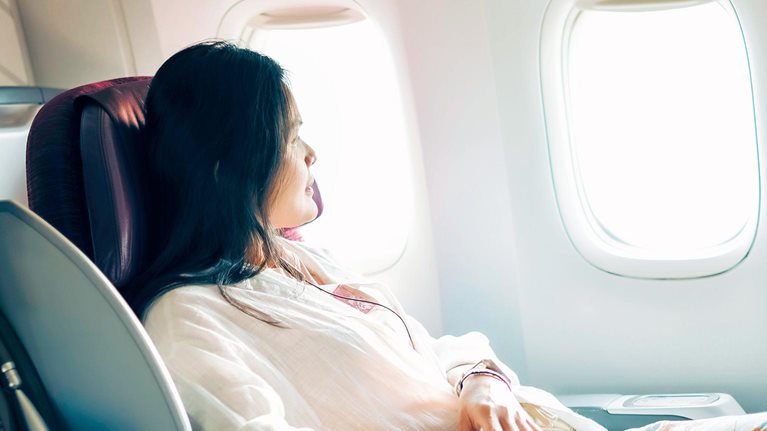
Window or aisle? These days, if you’re at the front of the plane, you don’t have to choose: “Everything is about having direct aisle access from every seat,” says Steve Saxon, coleader of McKinsey’s Travel Practice. And that’s just one of the many ways airlines are reinventing the premium experience for a burgeoning customer segment: the affluent vacationers now occupying seats once dominated by corporate road warriors. In this episode of The McKinsey Podcast, Saxon talks with Global Editorial Director Lucia Rahilly about why premium leisure travel is on the rise, what that means for airline economics, and how it’s prompting carriers to rethink everything from pricing to service to cabin design and product innovation.
The McKinsey Podcast is cohosted by Lucia Rahilly and Roberta Fusaro.
The following transcript has been edited for clarity and length.
Healthy demand, fragile economics
Lucia Rahilly: I’d like to start with a tough question that is the topic of much debate among my children. It’s going to draw on your more than two decades of consulting work with our Travel Practice at McKinsey. Steve, when you fly, are you a window or an aisle man?
Steve Saxon: I’m definitely a window man.
Lucia Rahilly: You’re a window man?
Steve Saxon: You’ve got to look out and see the world below you! But these days, in the premium classes, window and aisle are the same. Everything is about having aisle access at every seat.
Lucia Rahilly: You and your colleagues have published an annual review of airline economics for something like two decades. Any trends that you see emerging overall in the latest research?
Steve Saxon: The airline industry currently is relatively healthy. Many airlines are reporting good profits. However, the airline sector is still not quite returning its cost of capital. Even in its most successful years, the industry is not quite earning the returns its shareholders and investors would expect.
Lucia Rahilly: We’re recording this in high summer, when vacation travel is probably at its peak. Lots of folks are flying, but fewer, I would imagine, really understand the economics of how airlines make money when we buy a plane ticket. Give us your best quick and dirty on what most travelers misunderstand here.
Steve Saxon: The key thing people don’t understand is how thin the margins are for airlines. Yes, you’re paying hundreds of dollars for your ticket, or maybe thousands if you’re in the premium classes. But all that money gets spent—on the fuel, the aircraft, maintenance, and the crew. The actual margins of airlines are very thin. The average profit per passenger is barely more than a cup of coffee.
Lucia Rahilly: If airlines are becoming more profitable, why is the industry struggling to earn its cost of capital consistently?
Steve Saxon: Some airlines have become consistently more profitable. The large US carriers and some of the leading European carriers are earning healthy profit margins, which hasn’t been true historically. However, the global average is being dragged down by losses in other areas. For example, most recently, many Asian carriers have not been returning their cost of capital.
The actual margins of airlines are very thin. The average profit per passenger is barely more than a cup of coffee.
Airlines are a uniquely challenging industry. The ticket prices are highly transparent. You can go to an online travel agency to see pricing, and people are choosing among airlines with only a few dollars difference between them.
At the same time, the power of suppliers in the industry is high. This could be because there’s really only two aircraft manufacturers, or because the power of labor is strong, or because many airlines are highly unionized. As soon as airlines start to generate profits, the suppliers try to take that away from them.
It’s also an industry with relatively low barriers to entry—you can start a new airline with only a few million dollars—and quite high barriers to exit as well. Many governments will support national carriers in times of challenge. It’s a competitive market, its suppliers have strong bargaining power, and customers switch for only a few dollars. All that leads to low returns.
Lucia Rahilly: How does seasonality affect airline economics, and what do airlines do to plan for those kinds of dynamics and trends?
Steve Saxon: Summer is when airlines make a large share of their profits. Many airlines are unprofitable through the winter. With leisure travel growing in popularity, this is even more emphasized. Business travel is reasonably consistent throughout the year and provides a good base load. With leisure travel growing faster, we actually see the airline industry overall becoming more seasonal and therefore more airlines make their profits in the summer.
Want to subscribe to The McKinsey Podcast?
Lucia Rahilly: Have the changing geopolitical dynamics affected travel at all? For example, has demand changed?
Steve Saxon: People still want to take vacations, but destinations for those vacations have somewhat shifted. We are also seeing where passengers want to transit. A growing category has been people not flying directly to their destination but stopping over somewhere on the way. This is especially true for premium travel as well.
Lucia Rahilly: It’s probably an understatement to say that many industries have undergone disruptions in recent years. How has the airline business been affected? Has it fundamentally changed over the past decade, or are the economics largely the same?
Steve Saxon: The industry has always been subject to shocks. I think airlines are unique in how many different types of shock hit them. Pandemics, terrorism, volcanoes, weather effects—all these have hit the airline sector at some point. But there have been some changes over time, and one of those changes is the increasing importance of premium travel.
The premium pivot
Lucia Rahilly: You and your colleagues spend a lot of time studying airline profitability, and as you just mentioned, a theme that keeps emerging is the growing importance of premium cabins. Why are they becoming so central to airline economics?
Steve Saxon: For some airlines, premium cabins are making up more than half of the total revenue of the aircraft. That didn’t use to be true. Obviously, premium cabins are a smaller proportion of the number of seats. But those cabins have been expanding, their ticket prices have been increasing, and for several carriers, premium cabins are now more important than economy class cabins.
Lucia Rahilly: Who’s flying in these cabins? Business class is called business class for a reason, obviously—people have historically used business class when traveling for work. Is that changing?
Steve Saxon: Yes. That has been changing consistently over the past 20 years. Business travel is relatively flat. Premium business travel is not really growing, but premium cabins are growing, and it’s because nonbusiness travelers are paying for themselves. It’s because of premium leisure travel.
Customers are deciding that they want to spend more money to make their vacations enjoyable. They’re spending their own money to fly business class, first class, or some version of premium economy class as well, which many airlines have now introduced because of this trend.
There has also been a long-term trend of people wanting to spend more money on experiences over physical goods.
Lucia Rahilly: What do you think is driving that? It’s interesting because we know from our State of the Consumer research that folks are growing increasingly cost conscious in this uncertain macroeconomic environment. How does the rise in leisure travelers among premium fliers square with that trend?
Steve Saxon: While large segments of the population are cutting back and are price sensitive, some segments of the population have been doing quite well. There has also been a long-term trend of people wanting to spend more money on experiences over physical goods. We saw this trend emerge post-COVID. We thought it was revenge travel, but it has continued.
So today, while some segments of the population are cost conscious, there is an affluent segment that is increasingly willing to spend. They’re spending on themselves, and on better experiences.
Lucia Rahilly: When travelers pay for premium, what are they primarily after? The better seat? A lower-friction journey end to end, curb to destination?
Steve Saxon: It’s everything. It starts with the ability to have premium check-in and not have to stand in a long line to get through security. If you’re paying for your own ticket, you want to enjoy the lounge, have a glass of wine before you get on board, and have some food.
They’re paying for a nicer experience. They are paying for the luxury of nobody sitting next to them, direct access to the aisle, a seat that extends to lay completely flat, a swifter arrival experience through immigration, and better treatment on board with higher service. We are seeing that customers are willing to pay for all these things.
Lucia Rahilly: Within premium cabins, what kind of product innovation is happening that might make travelers want to splurge?
Steve Saxon: Because growth is being driven by leisure travel, we see a lot of innovation. For example, many airlines are now introducing private cabins for first class seats, which can convert into double beds on board. In the business cabin, aisle access is now common. There are innovations in catering being introduced where there’s no fixed menu but you can dine on demand. Some airlines have put a chef on board the aircraft.
We’ve seen better lounges than ever before, with spas and other treatment areas in them. We’ve seen innovations like private terminals or a private car to take you to directly to the aircraft. When people are spending their own money, they’re willing to spend on these kinds of experiences.
Because growth is being driven by leisure travel, we see a lot of innovation.
Lucia Rahilly: How do airlines decide how to allocate capital toward those innovations?
Steve Saxon: There’s a lot of experimentation. People can come up with endless ideas. Of course, all these ideas cost money, so airlines will introduce them to trial. You’ll see them double down on some of the things that work and quietly withdraw some that don’t. For example, maybe the massages on board didn’t work, and so the airlines removed them. I do see a lot of investment now going into premium catering, which the leisure customer is willing to pay for.
Lucia Rahilly: Presumably business travelers and leisure travelers might have different preferences within the same cabin. How does that affect the way airlines think about service?
Steve Saxon: It’s a big challenge. Hypothetically, you’ve got people who are looking to get some work done and get some rest versus others who want to have a great experience and enjoy luxury, all in the same cabin. They might have brought their children as well. There are more children than ever in the business and premium classes.
And what should the cabin crew do if somebody is sleeping at breakfast time? Wake them up, because of the premium luxury experience of the breakfast? Or let them sleep to get their rest? This is one of the challenges of service. The crew needs to understand their customers and what they’re expecting.
Lucia Rahilly: I’m just thinking about traveling with my own kids when they were babies. They were high maintenance on flights. What does the crew do if there is a fussy baby in first or business class?
Steve Saxon: They need to do the best they can. Unfortunately, babies do interrupt business class, and there are more babies than ever in the business class cabin. For example, I was on a flight with my family, from Melbourne to Shanghai. My wife and I were both incredibly sick on board the plane with food poisoning, and it was the cabin crew who looked after our kids.
Lucia Rahilly: That’s incredible! And I’m so sorry to hear. It sounds very unpleasant to be trapped on a flight during an illness.
Steve Saxon: I don’t often write after a flight to thank the crew, but that was one of the times I did.
Optimizing for value, not volume
Lucia Rahilly: Let’s turn to the implications for airlines. What does the rise in premium leisure travel translate into for them? Has it changed the assumptions airlines historically have made about their customers?
Steve Saxon: Part of this is what we were talking about: innovations in the product. Airlines are refocusing on service and on the food and wines on board, which are more loved and paid for by leisure travelers than by business travelers. We’ve seen investments in new lounges because the leisure customer arrives at the airport earlier. Airlines have had to upgrade internally as well. If more of your customers are premium travelers, you need to make sure that seats are being priced correctly and that you’re managing the inventory of those seats correctly.
Lucia Rahilly: And if premium demand remains strong, what are the implications for the future structure of airline business models?
Steve Saxon: Airlines respond to demand, and that’s why we see the increasing size of premium cabins in many aircraft. Some airlines have reintroduced first class, which was seen as a dying product, because there is a segment of people willing to pay significantly more for a differentiated experience.
We see business cabins taking up more of the plane, so more of the square footage of the aircraft is dedicated to premium seats. And we see airlines introducing premium economy class as well. People who maybe can’t quite afford business, but who are willing to pay a bit more than the standard coach seat, can now take advantage of premium economy.
Lucia Rahilly: Is it fair to say that if one premium seat can earn several times the revenue of an economy seat, maximizing seat count will become less important than maximizing customer mix?
Steve Saxon: Yes. Airlines will approach this by thinking about how many economy class seats a single business seat will take up. It’s usually somewhere between three and four seats, so you need to make sure that the revenue for that business class seat is three to four times that of the economy seat. If it is, you want to add more business class seats to the aircraft.
Lucia Rahilly: What are the implications for economy travelers when the number of premium seats increases? Is it fair to say that premium travelers help make the economics of the whole flight work, which in turn helps economy travelers?
Steve Saxon: Yes, it helps make the economics of the whole flight work. The more revenue the airline is getting from premium, the less it needs to make from the economy cabin. A healthy premium demand can help reduce fares in economy class, and that’s especially true on routes which are very premium heavy. Flights where the premium cabin is always full and the airline is flying to meet premium demand, you can find some very cheap economy class fares.
Lucia Rahilly: When a relatively small cluster of premium seats can generate a disproportionate share of profits, how do airlines decide how much space to allocate to those products?
Steve Saxon: The space on board the aircraft is the limiting factor. As we discussed, if a premium seat takes the space of three or four economy class seats, the airline must weigh how much revenue it can make from an economy seat versus a business seat. However, an aircraft doesn’t fly just one route. Airlines are ordering aircraft, and they need that same aircraft to fly lots of routes on the network. They’re looking at an average as well, and so for some routes there aren’t quite enough premium seats whereas for other routes there are too many.
Lucia Rahilly: How do airlines address that issue?
Steve Saxon: They address it through pricing, and that’s why sometimes you can get great value prices in business and premium classes.
Lucia Rahilly: I tried to upgrade to business on a flight a couple of weeks ago, and business was sold out so I upgraded to premium economy. There must have been room there because it didn’t cost me very much to upgrade.
Steve Saxon: If you look at the profit per square foot of the aircraft, premium economy is usually the highest. A premium economy seat takes up maybe 1.5 times the space of a standard economy seat, but the fare is often at least double.
Lucia Rahilly: It’s interesting, because years ago the trend was toward really densifying airline cabins.
Steve Saxon: That’s still the case in economy class, because there’s a segment of traveler flying purely based off the lowest price. That’s why we’ve seen airlines introduce things like a basic economy class—a stripped-back version of economy that doesn’t include seat selection, a bag, or in some cases, a meal. For people choosing only on price, you’ve got economy and basic economy classes. For those willing to spend a bit more, you’ve got premium economy. For those willing to spend to fly in luxury, you have business and first class. They’re further differentiating the product to meet different ranges of customer needs.
The challenge for airlines is how to keep the high revenue from those business customers while also attracting leisure customers.
Lucia Rahilly: Many airline revenue management systems were built around very predictable customer segments and booking behavior. If today’s premium customer might as easily be a vacation traveler as a corporate road warrior, what are the implications for how airlines should forecast demand?
Steve Saxon: This is a particular challenge for airlines. Typically, business customers book relatively late and are reasonably price insensitive. They might pay $6,000 to $7,000 for a one-way transatlantic flight because, in many cases, they were spending their company’s money, not their own. Leisure customers are typically spending their own money, and so what we see is an increasing sensitivity to price.
The challenge for airlines is how to keep the high revenue from those business customers while also attracting leisure customers. They do that through various methods, like lower-cost tickets if you book your flight earlier. It might be cheaper if two people travel together than if one person travels alone. They might charge less for a connecting flight than for a direct flight. Airlines call these pricing factors “fences,” where they determine how to charge the business customer more while keeping fares competitive for the premium leisure customer.
Who owns the customer?
Lucia Rahilly: Let’s shift to a question on AI, which is obviously top of mind for many leaders. Is AI affecting airline decision-making in any meaningful way? Has AI enabled anything that would have been difficult or impossible just a few years ago?
Steve Saxon: First, AI isn’t going to change that people want to travel, but the way people book their flights is changing. Instead of going to the airline website and choosing some drop-down list boxes, maybe you go to an AI agent or go to the LLMs [large language models] to explore destinations. Currently, the LLMs can’t book your travel for you, but it’s only a matter of time until they’re able to. Airlines are now worried about losing the direct relationship with the customer because people go through agents and LLMs instead of visiting the airline directly.
The second change is internal. Airlines can do a lot to improve their internal efficiency, whether it’s great chatbots to improve customer service, or agents bringing in more data sources to improve revenue management, or advanced models to better predict flight routes for aircraft turnaround. There’s lots of analytics being used to improve airline efficiency as well.
Lucia Rahilly: On that first point, do you see airlines acting to increase visibility on LLMs? How are airlines responding to the fact that folks are no longer coming to their website or working through a traditional online travel agent, for example?
Steve Saxon: Airlines are absolutely working with LLMs. Ideally, they would like the LLMs to pass the customer through to them directly. For example, if somebody says, “I want to book a flight,” the agent would say, “Great, a good way to do that is to go to airline.com,” or even “I, the agent, can help you book on airline.com.” Airlines are working with LLMs to enable that.
Some airlines are also making their prices transparent, by making them easily discoverable. If someone goes on an LLM and searches for a particular flight or schedule, the agent can come back and give you the pricing and availability through the model.
Lucia Rahilly: Steve, what did you find most surprising about the latest research on premium cabins and airlines?
Steve Saxon: The biggest insight was how airlines need to think differently internally, since the majority of growth is coming from leisure customers and not business customers. That growth factor has implications for how they develop and price their product. It has implications for how they distribute their product as well. Airlines are going through an internal transformation to focus more on these premium leisure customers.
Lucia Rahilly: Before we close, what’s your favorite packing or travel hack?
Steve Saxon: You can travel on any length of vacation with a carry-on suitcase.