As the global energy landscape evolves, demand for liquefied natural gas (LNG) is projected to grow to 2050, with LNG playing an important role in energy security and grid stability as a transition fuel. But with a widening supply gap likely to emerge by the mid-2030s, new sources of LNG are needed to meet this demand—and quickly.
Argentina’s Vaca Muerta shale formation is among the most promising unconventional1 oil and natural gas resources in the world. Long recognized as one of the biggest shale formations that has the potential to play a pivotal role in meeting global demand, the basin is now on the cusp of a transformative expansion that could reshape Argentina’s economic trajectory and redefine the country’s role in global energy markets, particularly in natural gas.
Under favorable execution and market conditions, the development of Vaca Muerta could account for up to 5 percent of Argentina’s GDP by 2030, generating as much as $30 billion in annual exports, and creating 25,000 additional oil and gas jobs per year—as well as substantially more jobs to support this activity.
Recent economic and regulatory changes—along with advances in well productivity and the build-out of enabling infrastructure—have reignited momentum in the country’s oil and gas sector. However, rapid and concerted action will be needed to take advantage of this window of opportunity. Fully unlocking Vaca Muerta’s potential will require coordinated investment across the value chain, from drilling and midstream infrastructure to LNG export facilities and downstream industrial demand.
This article explores the scale of this opportunity and what it will take for Argentina to seize it, including critical requirements across the country’s oil and gas ecosystem.
Developing Vaca Muerta could fuel growth for Argentina and help meet global demand
The transformation of the global energy system continues at pace, with natural gas projected to be a key destination fuel for most economies. Demand for natural gas is expected to grow steadily to 2050, with LNG remaining a cornerstone of energy security and global supply diversification.2 McKinsey Energy Solutions modeling suggests that, while excess supply—driven by new capacity from Qatar and the United States—may be seen in LNG markets until 2030, a widening supply gap of between 135 and 220 million tons per annum (MTPA) could emerge by the mid-2030s. This gap would need to be filled by new pre-final investment decision (pre-FID) projects that will come online in the early 2030s.
Thanks to its large natural gas reserve base, Argentina could be well placed to help meet this supply gap. Although Argentina’s LNG projects currently occupy a midtier position in cost competitiveness relative to global benchmarks, its offering is strengthened by factors that are increasingly prized by LNG buyers: flexibility, reliability, and investment partnership potential.3 As such, Argentina could approach global cost competitiveness in LNG supply and help meet the growing global supply gap.
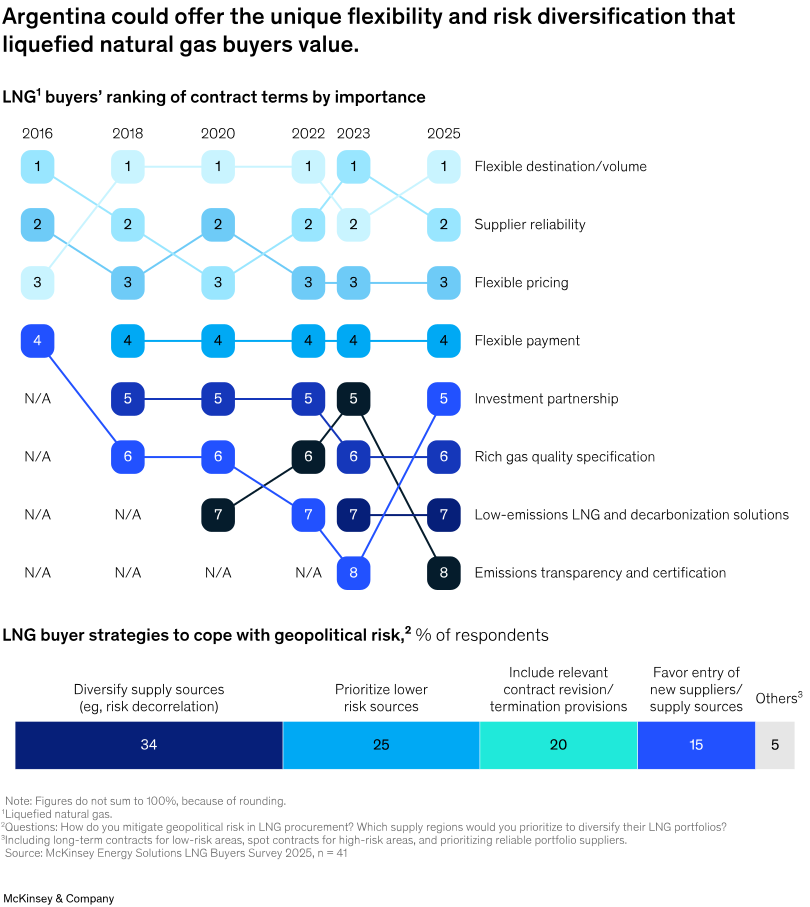
Recent McKinsey surveys of LNG buyers show that flexibility in destination and volume has overtaken price as the top priority, followed by supplier reliability and transparent emissions reporting (Exhibit 1). Argentina’s proximity to Atlantic trade routes could potentially position it as a new entrant capable of meeting shifting demand profiles, especially as buyers seek to diversify from geopolitically exposed regions.
Fully developing Vaca Muerta could make Argentina a net exporter of energy for the first time in over a decade and transform its macroeconomic trajectory.4 The scale, quality, and cost competitiveness of Vaca Muerta’s reserves could be used to position the country as a credible contender in the next wave of global LNG development.5 The volumes from the development of these reserves could place Argentina among the world’s leading global exporters of both oil and gas, but execution would need to accelerate for the country to take advantage of this window of opportunity.
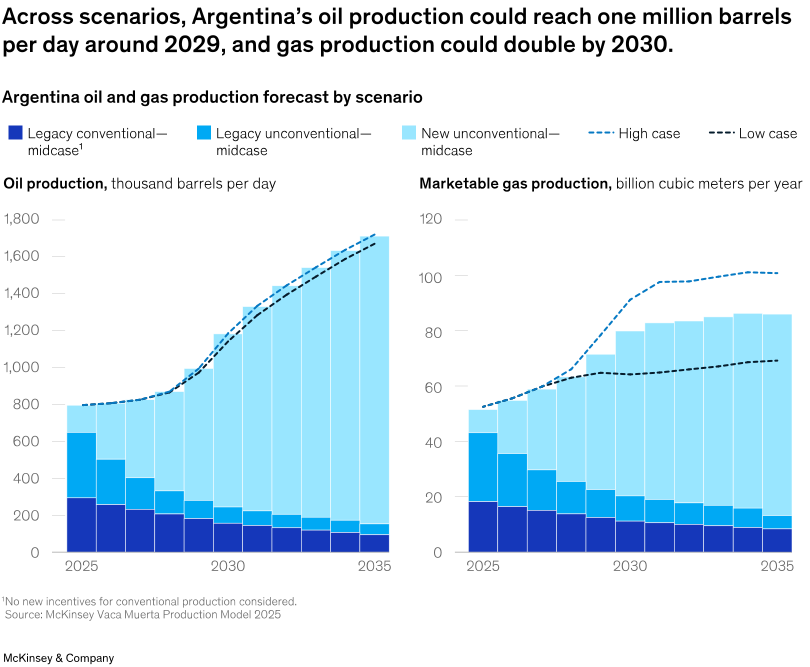
Vaca Muerta’s resources are estimated to be able to support gas production of 70 to 100 billion cubic meters (bcm) annually by 2035, up to double Argentina’s current output. Additionally, developing Vaca Muerta’s oil reserves could lead to oil production exceeding 1.0 million barrels per day (MMb/d) by 2030 and 1.7 MMb/d by 2035—about twice the current levels—helping meet global demand and promote domestic energy security (Exhibit 2).
Cumulative investment to 2030 could reach between $60 billion and $95 billion, with annual spending stabilizing between $10 billion and $15 billion beyond 2030. Up to 50 percent of this capital is projected to come from international sources, underlining the need for Argentina to develop a globally attractive business environment to ensure that Vaca Muerta’s potential is realized.
If the reserves were to be fully developed, the returns could be substantial. Export revenues could reach up to $30 billion per year by 20306 (representing around a third of Argentina’s total exports for 2025),7 and up to 25,000 oil and gas jobs per year, many of them highly skilled, concentrated in Neuquén province and extending through Argentina’s industrial and logistics corridors. At full scale, Vaca Muerta could contribute up to $34 billion in annual gross value added, equivalent to around 5 percent of Argentina’s GDP in 2025.8
Sustained and coordinated investment will be required to unlock Vaca Muerta’s potential
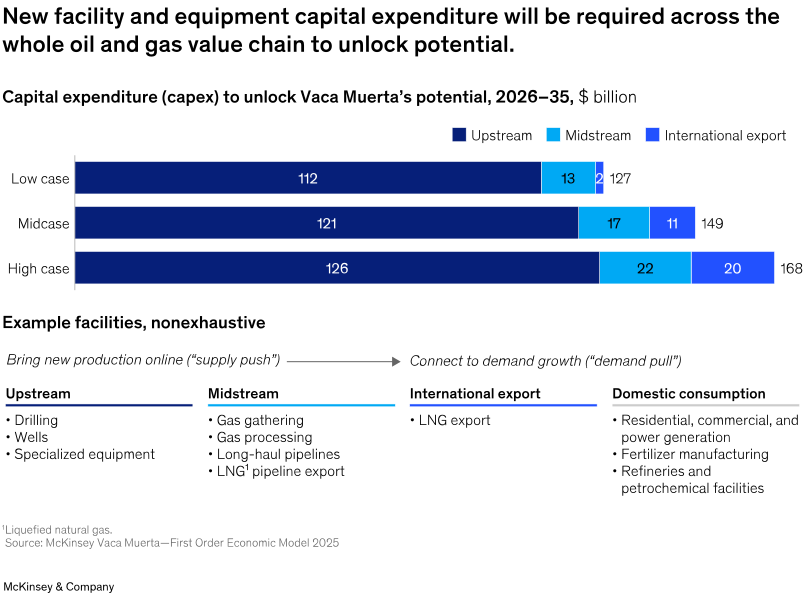
Developing Vaca Muerta represents a considerable opportunity, but unlocking its full potential will require sustained and coordinated investment across every link in the oil and gas value chain, from upstream exploration to downstream markets. Our analysis identifies four interconnected segments that would need to be developed: upstream, midstream, export, and domestic consumption infrastructure. Overall, this would require between $125 billion and $170 billion in investment over the next decade—roughly 10 to 15 percent more annually than the total investments in 2025 (Exhibit 3).9
Upstream: Scaling efficiently with specialized equipment
Scaling production at Vaca Muerta would require drilling and completion activity to be increased substantially, from around 450 unconventional wells drilled per year in 2025 to over 900 in 2030, with this activity plateauing through 2035.10 Our analysis suggests that annual upstream investment, currently sitting at about $7 billion, would need to double to $14 billion by 2030 in the same midcase scenario, with about 90 percent of spending directed to drilling and completions. We have seen this in other shale basins that have matured and moved to the “factory model.” For reference, in the Permian Basin in the United States, $46 billion was spent on similar activities in 2024.11
Sustaining this ramp-up would require between 15 and 25 new high-spec drilling rigs to be deployed over the next five years—an increase of between 40 and 75 percent, depending on the scenario. While Argentina currently operates just over 30 such rigs, more than 200 high-spec idle units are available across North America, presenting an opportunity for redeployment and technology transfer. Ancillary equipment would need to expand, while frac pumping units, coiled tubing systems, and proppant supplies would all have to scale 1.7 to 2.6 times by 2030 compared to current usage levels (Exhibit 4).
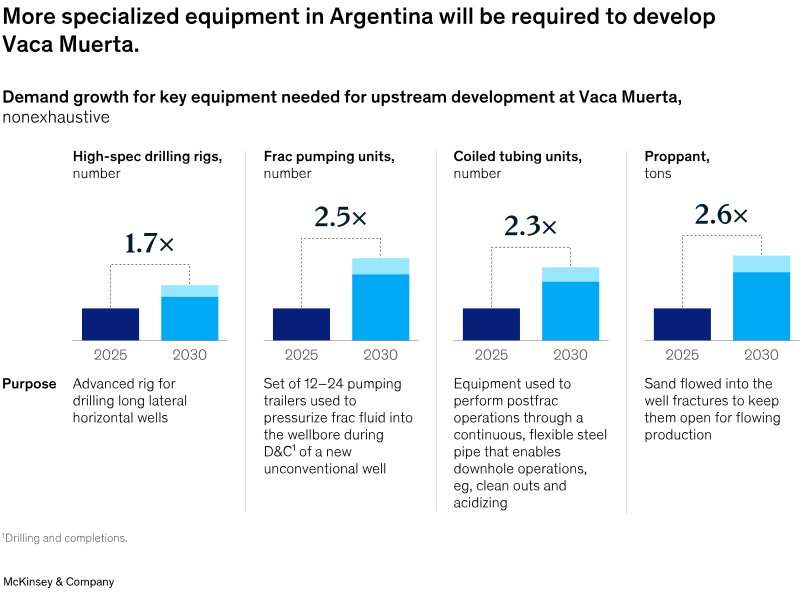
Managing upstream costs will be critical. Currently, average costs for a well can range from $12 million to $16 million for a 2,800-meter well.12 When normalizing for geology, this is 30 to 40 percent more expensive than comparable wells in the Permian Basin in the United States. Without narrowing this gap, Argentina risks structural disadvantage in global LNG markets.
This industrialization of the upstream segment could create opportunities for domestic manufacturers and service providers, particularly in steel, cement, and maintenance services. However, realizing these benefits at scale will depend on addressing key competitiveness factors, including more efficient logistics, a stable and predictable operating environment, and improved access to specialized labor and capabilities.
Midstream: Connecting resources to markets as Argentina becomes a net exporter of energy
Midstream infrastructure will likely act as the backbone of Argentina’s transition to a net energy exporter since, without it, production growth could become stranded. Our analysis suggests that Vaca Muerta would require more than $10 billion, and as much as $21 billion, in midstream investment to 2030, encompassing long-haul pipelines, gas processing facilities, natural gas liquid (NGL) fractionation plants, and gathering systems.
Long-haul pipelines would be necessary to anchor Argentina’s future LNG export capability. In our base-case scenario, around $1.6 billion in midstream capital would be needed to finance a 450-kilometer (280-mile), 36-inch gas pipeline linking Vaca Muerta to the first floating LNG terminal (Exhibit 5).13 In a high-case scenario, the investment required could reach $5 billion to build a larger, 48-inch trunkline extending to Punta Colorada, which would unlock associated liquids value and secure long-term gas evacuation routes.
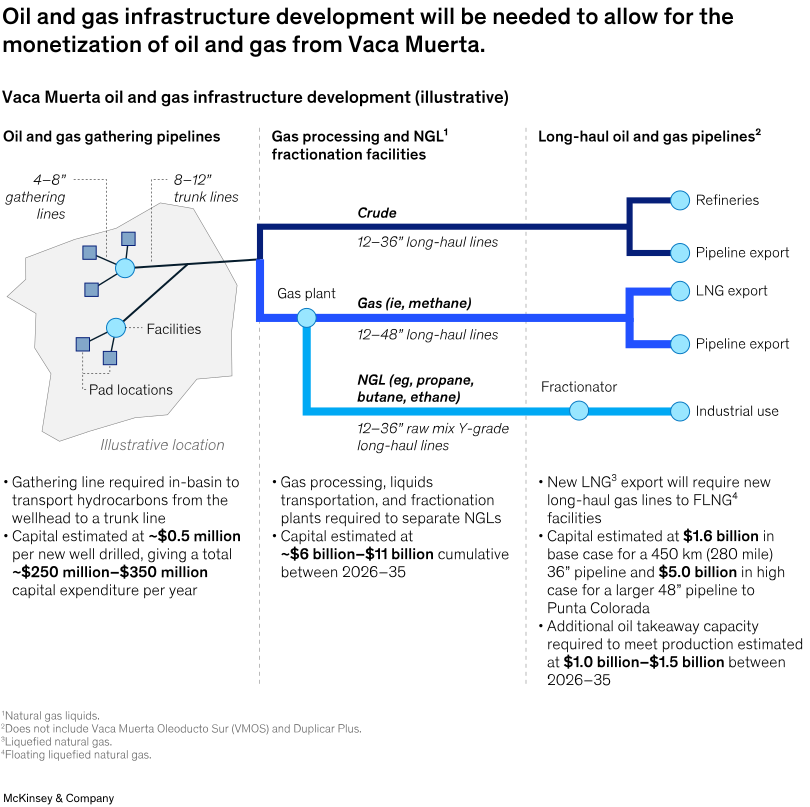
At the same time, gas processing and NGL infrastructure would be central to sustaining production growth and LNG competitiveness. As LNG exports scale, the ability to recover and monetize NGLs from rich gas streams becomes important to lowering effective feed gas costs and improving project economics. Our analysis indicates that NGL production could increase 3.5 to 4.6 times by 2030, implying $6 billion to $11 billion of cumulative investment in processing plants, fractionation units, and associated liquids handling infrastructure in the next decade. Without this build-out, liquids handling could emerge as a binding constraint on both gas and oil production.
Regarding crude oil, the Vaca Muerta Oil Sur (VMOS) pipeline, which is under construction, together with the existing Oldeval systems, would provide sufficient crude transport capacity to mid-2030. Additional expansion of the VMOS over and above the announced capacity of 700 thousand barrels per day (kbbl/d) would be needed to accommodate growing capacity post-2030. Transport capacity has historically been a bottleneck that has limited production and constrained the development of the basin, and this network could be key to alleviating the oil takeaway constraint as production ramps up.14
Finally, in-basin gathering systems would need to scale in parallel with drilling activity. We estimate $290 million to $320 million per year to 2035 would be required to connect new wells and integrate them into processing and export infrastructure. As seen in other mature shale basins, delays in gathering, processing, or liquids handling capacity can quickly translate into upstream curtailments—underscoring the importance of coordinated, timely midstream investment.
International exports: LNG as a growth catalyst
Given increased oil and gas production from Vaca Muerta, Argentina could become an important net exporter of energy. LNG infrastructure would likely act as the keystone of Argentina’s energy export strategy. A set of LNG projects at different stages of maturity—including the Hilli Episeyo floating liquefied natural gas (FLNG) vessel, the MKII FLNG vessel, and the broader Argentina LNG concept—could collectively attract around $30 billion in investment between 2026 and 2030 and create up to 28 MTPA of LNG export capacity by the end of the decade.15
Although the set of announced LNG projects has evolved over time, the scenarios modeled are not tied to specific project labels. They represent different degrees of LNG export realization—from projects that have reached FID to broader scale-up of export capacity. This approach reflects ongoing uncertainty around the pace and scale of future LNG development and provides a robust framework for assessing Vaca Muerta’s potential across a range of outcomes.16
Capital spending for LNG processing is projected to increase from just $1.1 billion in 2025 to nearly $7.0 billion annually by 2028, before tapering off as construction completes.17 Between one-quarter and two-thirds of total investment could come from FDI, underscoring the basin’s integration into global capital markets.
The strategic implications are significant. Gas exports could eventually account for up to 25 percent of Argentina’s total hydrocarbon revenues, assuming oil prices at around $60 per barrel and LNG prices at around $8 per million British thermal units (MMBTU), which could contribute to stabilizing the balance of payments and the diversification of the national export base. At full ramp-up, LNG exports alone could generate up to $13 billion annually by 2034. That said, global decarbonization policies and carbon pricing frameworks could impact these projections and influence long-term LNG competitiveness.
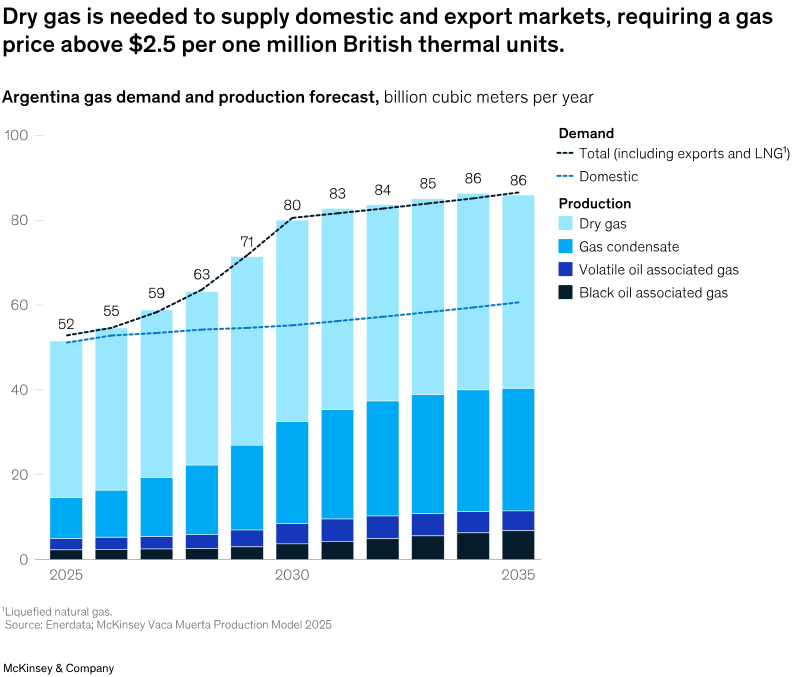
Our analysis indicates that associated gas production would not be sufficient to meet both domestic requirements and export volumes, making dedicated dry gas development necessary to supply the domestic market and support LNG exports (Exhibit 6). This, in turn, underscores the importance of a price environment that can sustain incremental dry gas investment, particularly after 2028 when the current Plan for the Promotion of Argentine Natural Gas Production expires.18
Creating demand for associated liquids
Management of NGLs, which do not have as clear a market as oil and LNG, will be key to balancing the value chain. The increased output of ethane, propane, and butane from the development of Vaca Muerta could provide feedstocks for Argentina’s petrochemical industries, and the surplus could create regional export routes for new products, such as ethylene.
Enabling a competitive and sustainable ecosystem
Targeted and sustained investment across the value chain is crucial to develop the potential of the Vaca Muerta reserves, but it is not sufficient on its own. International experience shows that large-scale basin development depends not only on capital, but also on effective coordination across industry, government, and local stakeholders.
In several basins, industry-led collaboration platforms have played a decisive role in aligning incentives and accelerating execution of projects. For example, in Nigeria, the Oil Producers Trade Section (OPTS) provides a platform bringing together collective expertise to develop solutions, set standards, and drive progress across the oil and gas sector,19 while the Decade of Gas initiative is focused on transforming the country into a gas-powered economy by 2030 through project maturation, infrastructure expansion, capacity building, and investment attraction.20
Against this backdrop, we identify three targeted actions that could help realize the full potential of Argentina’s energy opportunity.
Establish a competitive investment environment
Capital inflows at the scale required will depend on a predictable and globally competitive fiscal environment. Investors prioritize transparent tax regimes, consistent royalty structures, and regulatory stability when allocating resources to long-cycle energy projects. Argentina’s recent Incentive Regime for Large Investments (RIGI) framework represents progress in this area. However, greater clarity on export taxes, foreign exchange access, and capital repatriation may be essential.21
Given global competition for energy investment—especially from North America, the Middle East, and Africa—Argentina’s fiscal incentives must ensure that projects remain cost competitive, even amid commodity price volatility. According to McKinsey’s benchmarking, total cost performance gaps of up to 35 percent relative to US basins persist, largely driven by logistics, infrastructure, and financing costs, all of which can be addressed in Argentina through consortiums.22
Build local talent and capabilities
Attracting and retaining skilled labor may be a defining factor in Argentina’s competitiveness. As activity scales, the sector will require a mix of local expertise and international specialists across several disciplines, including engineering, geoscience, digital operations, and maintenance. Policies that facilitate labor mobility, streamline permitting for international experts, and align training programs with industry demand can help prevent talent shortages.
Lessons from global peers offer valuable insights. The Permian Strategic Partnership in the United States, for instance, brought energy operators together to invest in education, healthcare, and workforce development across New Mexico and Texas.23 Similar multistakeholder initiatives can be replicated in Neuquén and Río Negro to support community well-being and build a sustainable local labor base.
Upgrade logistics and supporting infrastructure
Ensuring that the necessary infrastructure and logistics are in place would be a significant challenge for Vaca Muerta to reach its full potential. Efficient logistics and social infrastructure would be essential to sustain the site’s development. Upgrading road and rail networks could reduce the high costs of moving rigs, sand, and equipment—currently accounting for up to 20 to 30 percent of Argentina’s 35 percent cost gap with the Permian Basin in the United States. Transitioning from long-haul trucking to rail-based freight could improve safety, reliability, and emissions performance while easing pressure on regional roads.
At the same time, social infrastructure, including housing, schools, hospitals, and amenities, would need to scale to accommodate the anticipated influx of workers and families into Neuquén and Río Negro provinces.
Public-private partnerships, modeled after initiatives such as the OPTS in Nigeria that has enabled shared resources and reduced logistics costs, could help align development priorities between industry, government, and communities.
Unlocking Vaca Muerta’s substantial potential is not a question of geology—it is now a question of coordination, capital, and confidence. The basin contains resources that could position Argentina as a leading global LNG exporter and a net energy supplier to the region. The next decade will determine whether it fulfills that promise.
With the right enablers in place, underpinned by coordinated action from industry, government, and local stakeholders, Vaca Muerta has the potential to become a driver of national prosperity and a cornerstone of global energy stability in the decades ahead. If Argentina can seize this opportunity, it would be testament to the country’s capacity to execute at scale, compete globally, and deliver sustainable, long-term growth.